Monthly Archives: November 2012

How History’s Greatest Inventions Really Happened

In my earlier post on the “current wars” and Nikola Tesla, I already debunk much of the myth on Edison.  In truth, Edison was brilliant at creating the “skunkworks” a gathering of scientists and inventors in one place to develop and make practical applications for science advances.  As a scientist himself, he was not so good.  In fact, he was uneducated, was intimidated by smarter people, and refused to test theories mathematically.  He preferred his trial and error method of “finding 1,000 ways that is does NOT work,” instead of finding the way it works by math.  He was also a dishonest and immoral competitor, who killed both animals and created the electric chair for no other reason than to scare people from using AC electricity.

Here is a story I found which shed further light on Edison, from The Atlantic:

– Derek Thompson is a senior editor at The Atlantic, where he oversees business coverage for the website.

Forget Edison: This is How History’s Greatest Inventions Really Happened

The myth of the solitary inventor — in 8 short stories

Screen Shot 2012-06-15 at 11.54.38 AM.png

The world’s most famous inventors are household names. As we all know, Thomas Edison invented the light bulb, Alexander Graham Bell invented the phone, and Eli Whitney invented the cotton gin.

Except they didn’t. The ideas didn’t spring, Athena-like, fully formed from their brains. In fact, they didn’t spring fully formed from anybody’s brains. That is the myth of the lonely inventor and the eureka moment.

“Simultaneous invention and incremental improvement are the way innovation works, even for radical inventions,” Mark A. Lemley writes in his fascinating paper The Myth of the Sole Inventor.Lemley’s paper concentrates on the history and problems of patents. But he also chronicles the history of the 19th and 20th century’s most famous inventors — with an emphasis on how their inventions were really neither theirs, nor inventions. Here is a super-quick summary of his wonderful distillation of the last 200 years in collaborative innovation.

439px-Patent_for_Cotton_Gin_(1794)_-_hi_res.jpg
COTTON GIN

The fabric cotton comes from cotton fibers that mix with seeds in the pods of cotton plants. To make the fabric, therefore, you have to separate the fibers from the seeds. For centuries this was done mostly by hand, until Eli Whitney “invented” the cotton gin in 1793. But various forms of roller gins (i.e. technologies for separating fibers from seeds) had been around for thousands of years. Five years earlier, in 1788, Joseph Eve developed his own mechanized self-feeding roller gin. Whitney’s true innovation was to improve existing cotton gins by “replacing rollers with coarse wire teeth that rotated through slits to pull the fiber from the seed.” If this insight was a breakthrough, the glory goes to Whitney only he was faster than his competitors. In 1795, John Barcley filed a patent on a gin featuring circles of teeth — awfully similar to Whitney’s wire-tooth model (see left). In short, the modern cotton gin was a eureka moment that multiple inventors experienced nearly simultaneously and was expedited by their competition.


TELEGRAPH


As the tale goes, Samuel Morse was having dinner with friends and debating electromagnetism (like you do) when he realized that if an electrical signal could travel instantly across a wire, why couldn’t information do the same? Like most fun eureka stories, L-Telegraph1.pngit’s a fib. The telegraph was invented by not only Morse, but also Charles Wheatstone, Sir William Fothergill Cooke, Edward Davy, and Carl August von Steinhiel so near to each other that the British Supreme Court refused to issue one patent. It was Joseph Henry, not Morse, who discovered that coiling wire would strengthen electromagnetic induction. Of Morse’s key contribution — the application of Henry’s electromagnets to boost signal strength — Lemley writes that “it is not even clear that he fully understood how that contribution worked.”


TELEPHONE

Like Morse, Alexander Graham Bell invented a technology that would later bear his name. But how much did he deserve it? The problem that Bell solved was to turn electrical signals into sounds. But this was such an obvious extension of the telegraph that there were many people working on it. Philip Reis had already designed a sound transmitter in 1860, and Hermann Ludwig Ferdinand von Helmholtz (one guy) had already built a receiver. Bell’s real contribution was “to vary the strength of the current to capture variations in voice and sound,” Lemley writes. In this tweak, he was racing against Thomas Edison. Even Bell’s final product — which combined transmitter, fluctuating current, and receiver — had company. Elisha Gray filed a patent application on the exact same day as Bell, only to lose the patent claim in court. Lemly’s conclusion: “Bell’s iconic status owes as much to his victories in court and in the marketplace as at the lab bench.”

Light_bulb.pngLIGHT-BULB

As just about everyone is taught, Thomas Edison invented the light-bulb. And as just about everyone later learns, Thomas Edison in no way invented the light-bulb. Electric lighting existed before him, incandescent light bulbs existed before him, and when other inventors got wind of Edison’s tinkerings, they roundly sued him for patent infringement. So what did Edison actually do? He discovered that a special species of bamboo had a higher resistance to electricity than carbonized paper, which means it could more efficiently produce light. Edison got rich off the bamboo, and filthy disgusting rich from superior manufacturing and marketing of his product. But within a generation other inventors had developed better filaments and today’s light-bulbs

THE MOVIE PROJECTOR

Most of these stories here are about how we mistake incremental improvements for eureka moments. But the story of the movie projector is simpler. It’s basically a story about theft. Francis Jenkins built what we consider the ur-instrument of the motion-picture industry with a projector that showed strips of films for 1/24th of a second, creating the illusion of moving pictures. But his financial backer stole the Jenkins prototype and sold it to a theater chain, which called it the “Edison Vitascope” for no better reason than the word Edison was familiar and useful for branding. That Edison was tinkering with his own movie projector is true, but besides the point. His legacy here was mostly the work of a thief.

THE AUTOMOBILE

1885Benz.jpgToday’s cars bear the names of their founders and innovators: Benz, Peugeot, Renault. But have you ever heard of a Dodge bicycle? Or a Mercedes tricycle? In fact, both companies specialized in bikes before moving the autos. The car industry represents the epitome of incremental innovation. Take a tricycle. Add an engine. You’ve got a car. (Just look at the picture to the right, of the the original Benz Motorwagen from 1885). Condensing the invention of cars to those six words leaves out a lot of detail and a few main characters. It was Gottlieb Daimler and Wilhelm Maybach who designed the first four-wheel car with a four-stroke engine and Henry Ford who perfected the assembly line. But the long story short is that the car was a typical “invention” that was far too complicated for one person to conceive on his won.

399px-Wright_Flyer_III_above.jpg
THE AIRPLANE

Speaking of building bikes, that’s exactly what Orville and Wilbur Wright did before they became the first team to fly a heavier-than-air machine. But, as we’ve learned, every great inventor stands on the shoulders of giants. When the Wright brothers asked the Smithsonian for all available information on the history of flight in 1899, they opened  a history that had begun with DaVinci’s scribbling and continued all the way to the 19th century gliders of Otto Liliental. But the Wrights solved one of the most nagging problems facing airplane developers — stability — by having “a single cable warp the wing and turn the rudder at the same time.” That was the tweak that put the first plane in the air.

TELEVISION

The “Farnsworth Invention” was named after Philo T. Farnsworth, the nominal father of television. But his invention was neither his nor an invention. Teams of scientists and tinkerers all around the world were working to build, essentially, a radio for images — i.e.: to combine the technology of a wireless telegraph with the magic of a movie projector. One key was the cathode ray tube, a vacuum with an electron gun that beams images onto screen that can receive or transmit signals. But the cathode ray tube itself has so many fathers that it’s difficult to say exactly who invented even the central organ of the television, much less the television itself. In 1927, Farnsworth projected a straight line on a machine he called the Image Dissector, which is truly the basis for the all-electronic television. But, unlike Edison, he was not as gifted at marketing, producing, and becoming a household name for his tweak. “It may be accurate to describe Farnsworth as an inventor of the television, but surely not as the inventor,” Lemley writes.

***

At the end of this section, Lemley lists four inventors who, yeah, okay, really were alone. But the funny thing about the exceptions is that they’re almost all accidents.

Alexander Fleming discovered the anti-bacterial properties of penicillin because a sample of bacteria had accidentally been contaminated with mold. No one is sure where the mold came from; Fleming’s discovery was true serendipity. Even in that case, there is some evidence that others made the same accidental discovery. The adhesive behind the Post-It note was developed in 1968, and languished in 3M for six years before a different 3M employee hit on the idea of putting it to use attaching a bookmark to a book.

Charles Goodyear discovered vulcanized rubber when a batch of rubber was accidentally left on a stove; Goodyear had previously thought that heat was a problem for rubber, not the solution.

Wilson Greatbatch developed the pacemaker when he accidentally grabbed the wrong resistor from a box when he was completing a circuit.

Louis Daguerre invented film when, having failed to produce an image on an iodized silver plate, he put the plate away in a cabinet filled with chemicals and the fumes from a spilled jar of mercury produced an image on the plate.

It would seem that eureka is Greek for “oops.”

Images above from top: the cotton gin patent by Eli Whitney; a Morse key; Edison’s patent; the Benz patent; the Wright brothers take off, 1905; All credit: Wikimedia Commons

1 Comment

Filed under Humor and Observations

100 Exquisite Adjectives

I saw this on Daily Writing Tips and thought you all might appreciate it.  It misses a couple of my favorites:

Obsequious – servile – subservient – slavish – menial – fawning

Volatile – 1. evaporating rapidly; passing off readily in the form of vapor:Acetone is a volatile solvent.  2. tending or threatening to break out into open violence;explosive: a volatile political situation.  3. changeable; mercurial; flighty: a volatile disposition.  4. (of prices, values, etc.) tending to fluctuate sharply andregularly: volatile market conditions.  5. fleeting; transient: volatile beauty.

Capricious – subject to, led by, or indicative of caprice  or whim; erratic

Mercurial – changeable; volatile; fickle; flighty; erratic

Beneficent – doing good or causing good to be done; conferring benefits;  kindly inaction or purpose.

I suggest as a writer, use these sparingly, as some of our reading population has grown lax on their vocabulary due to watching more TV than reading literature.

100 Exquisite Adjectives

by Mark Nichol
Adjectives — descriptive words that modify nouns — often come under fire for their cluttering quality, but often it’s quality, not quantity, that is the issue. Plenty of tired adjectives are available to spoil a good sentence, but when you find just the right word for the job, enrichment ensues. Practice precision when you select words. Here’s a list of adjectives:

Adamant: unyielding; a very hard substance
Adroit: clever, resourceful
Amatory: sexual
Animistic: quality of recurrence or reversion to earlier form
Antic: clownish, frolicsome
Arcadian: serene
Baleful: deadly, foreboding
Bellicose: quarrelsome (its synonym belligerent can also be a noun)
Bilious: unpleasant, peevish
Boorish: crude, insensitive
Calamitous: disastrous
Caustic: corrosive, sarcastic; a corrosive substance
Cerulean: sky blue
Comely: attractive
Concomitant: accompanying
Contumacious: rebellious
Corpulent: obese
Crapulous: immoderate in appetite
Defamatory: maliciously misrepresenting
Didactic: conveying information or moral instruction
Dilatory: causing delay, tardy
Dowdy: shabby, old-fashioned; an unkempt woman
Efficacious: producing a desired effect
Effulgent: brilliantly radiant
Egregious: conspicuous, flagrant
Endemic: prevalent, native, peculiar to an area
Equanimous: even, balanced
Execrable: wretched, detestable
Fastidious: meticulous, overly delicate
Feckless: weak, irresponsible
Fecund: prolific, inventive
Friable: brittle
Fulsome: abundant, overdone, effusive
Garrulous: wordy, talkative
Guileless: naive
Gustatory: having to do with taste or eating
Heuristic: learning through trial-and-error or problem solving
Histrionic: affected, theatrical
Hubristic: proud, excessively self-confident
Incendiary: inflammatory, spontaneously combustible, hot
Insidious: subtle, seductive, treacherous
Insolent: impudent, contemptuous
Intransigent: uncompromising
Inveterate: habitual, persistent
Invidious: resentful, envious, obnoxious
Irksome: annoying
Jejune: dull, puerile
Jocular: jesting, playful
Judicious: discreet
Lachrymose: tearful
Limpid: simple, transparent, serene
Loquacious: talkative
Luminous: clear, shining
Mannered: artificial, stilted
Mendacious: deceptive
Meretricious: whorish, superficially appealing, pretentious
Minatory: menacing
Mordant: biting, incisive, pungent
Munificent: lavish, generous
Nefarious: wicked
Noxious: harmful, corrupting
Obtuse: blunt, stupid
Parsimonious: frugal, restrained
Pendulous: suspended, indecisive
Pernicious: injurious, deadly
Pervasive: widespread
Petulant: rude, ill humored
Platitudinous: resembling or full of dull or banal comments
Precipitate: steep, speedy
Propitious: auspicious, advantageous, benevolent
Puckish: impish
Querulous: cranky, whining
Quiescent: inactive, untroublesome
Rebarbative: irritating, repellent
Recalcitant: resistant, obstinate
Redolent: aromatic, evocative
Rhadamanthine: harshly strict
Risible: laughable
Ruminative: contemplative
Sagacious: wise, discerning
Salubrious: healthful
Sartorial: relating to attire, especially tailored fashions
Sclerotic: hardening
Serpentine: snake-like, winding, tempting or wily
Spasmodic: having to do with or resembling a spasm, excitable, intermittent
Strident: harsh, discordant; obtrusively loud
Taciturn: closemouthed, reticent
Tenacious: persistent, cohesive,
Tremulous: nervous, trembling, timid, sensitive
Trenchant: sharp, penetrating, distinct
Turbulent: restless, tempestuous
Turgid: swollen, pompous
Ubiquitous: pervasive, widespread
Uxorious: inordinately affectionate or compliant with a wife
Verdant: green, unripe
Voluble: glib, given to speaking
Voracious: ravenous, insatiable
Wheedling: flattering
Withering: devastating
Zealous: eager, devoted

Leave a comment

Filed under Writing

1899: First Vehicle to go Over 110 KPH (62 MPH)

“The Never Satisfied” is the name of the French vehicle made of Partinium that was the first car to go over 100 kilometers per hour, in 1899.  Does not look like it has a lot of safety features…  That must have been like seeing a space craft for people in 1899.  Amazing!

CLICK on pictures for full picture!

1899:
First 100km/h vehicle
Amanda Uren

La Jamais Contente (English: The Never Satisfied) was the first vehicle to go over 100 kilometres per hour (62 mph). It was an electric vehicle with a light alloy torpedo shaped bodywork and with Fulmen batteries. The high position of the driver and the exposed chassis underneath spoiled much of the aerodynamics.  The light alloy, called partinium, is an alloy of aluminum, tungsten and magnesium.”

1 Comment

Filed under Humor and Observations, Uncategorized

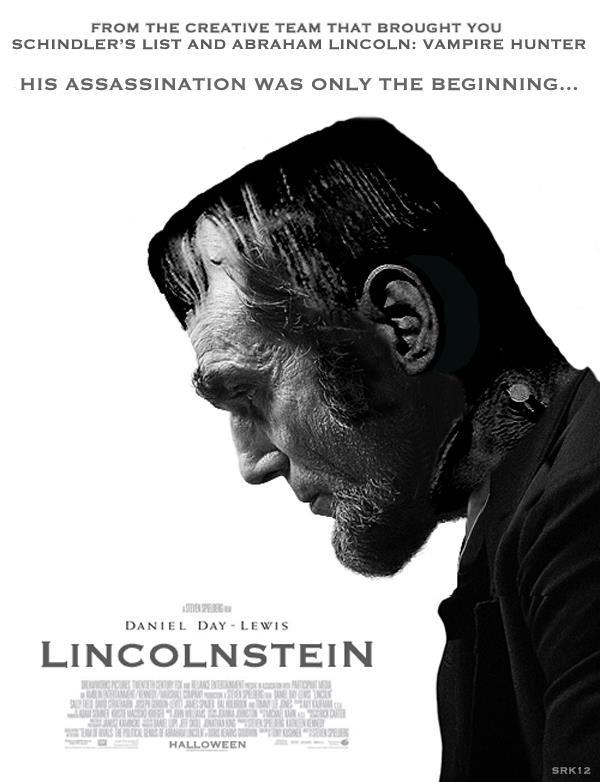
New Lincoln Movie

You’ve seen Lincoln kill vampires, you’ve seen Lincoln as history portrayed him, now, it is time for the REAL story…


3 Comments

Filed under Humor and Observations

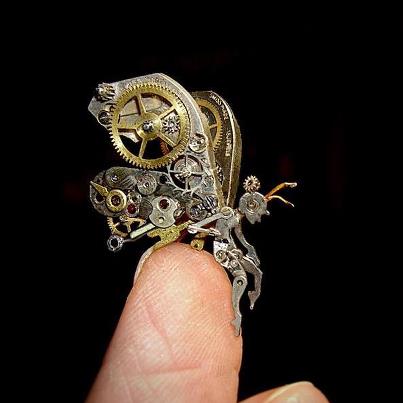
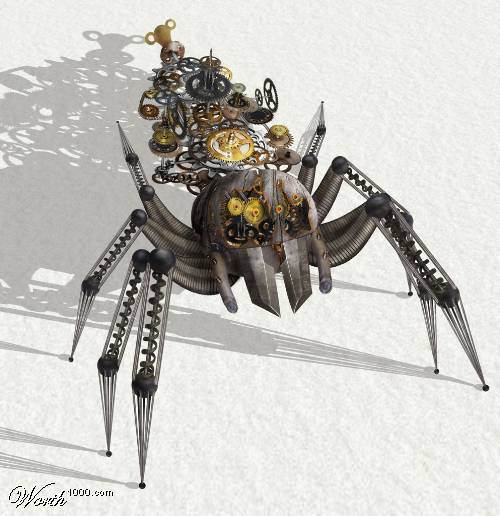
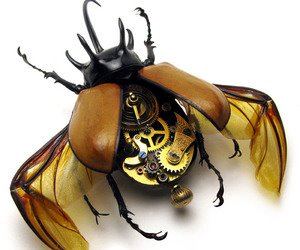
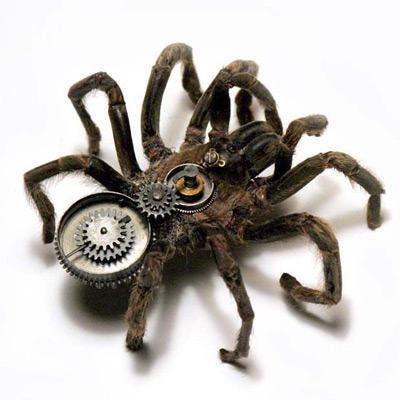
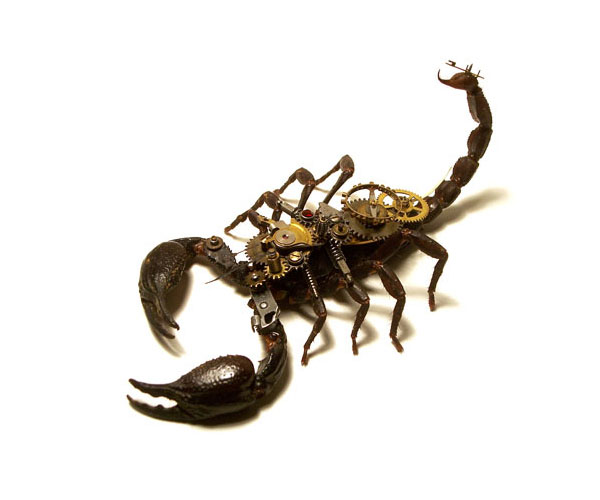
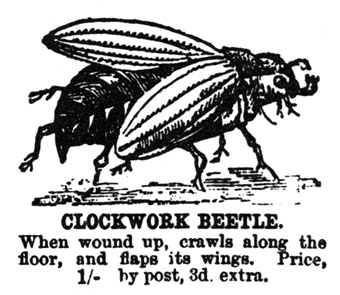
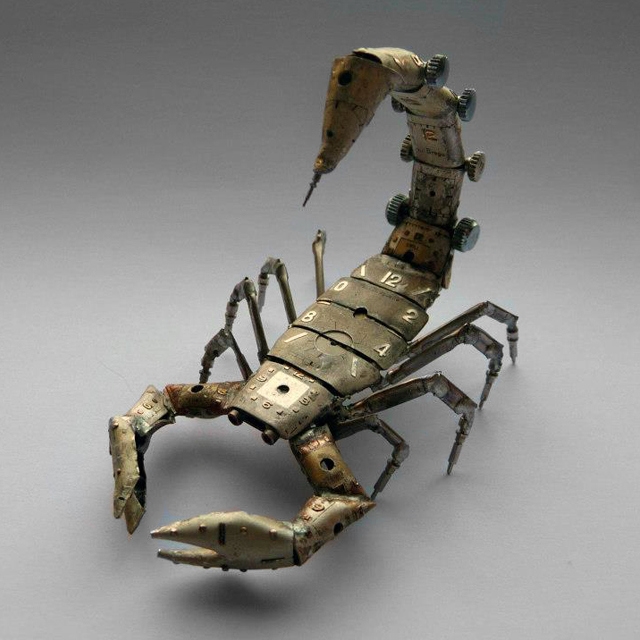
Steampunk/Clockwork Bugs! (Part One)

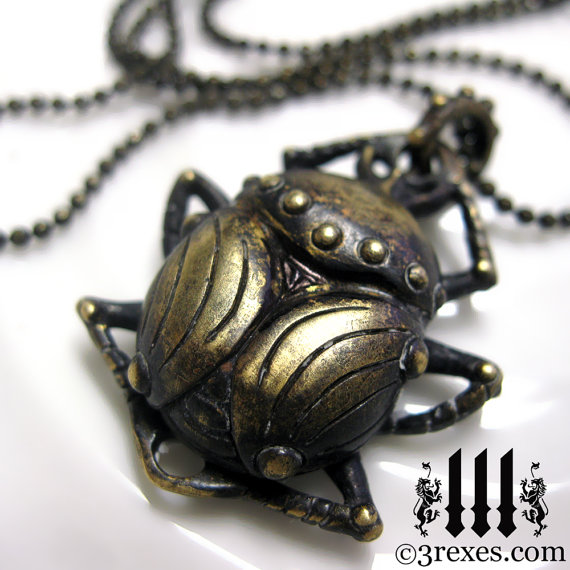
These are all Steampunk/Clockpunk/Clockwork Bugs.  I have too many for one post, so maybe next week I will post part two.  Until then, please enjoy these wonderfully crafted items from people at various places with much more talent than I have.  I must also put in a small plug, that clockwork bugs, much larger and deadlier than these, play an important role in The Travelers’ Club – Fire and Ash, on sale now on Kindle, Smashwords, local bookstores, and on this site, under STORE tab.  I hear the author is very creative…  🙂


2 Comments

Filed under Animals, Humor and Observations, Uncategorized, Writing

Geek Gifts for Christmas!

11 cheap gifts guaranteed to impress science geeks

Posted by  on Nov 20, 2011

Science Geeks will love these…

gallium prime thumb 550xauto 538431 11 cheap gifts guaranteed to impress science geeks

Science comes up with a lot of awesome stuff, and you don’t need a Ph.D, a secret lab, or government funding to get your hands on some of the coolest discoveries. We’ve got a list of 11 mostly affordable gifts that are guaranteed to blow your mind, whether or not you’re a science geek.


aerogel thumb 330x219 53240 11 cheap gifts guaranteed to impress science geeks

1. Aerogel

Also known as frozen smoke, Aerogel is the world’s lowest density solid, clocking in at 96% air. It’s basically just a gel made from silicon, except all the liquid has been taken out and replaced with gas instead. If you hold a small piece in your hand, it’s practically impossible to either see or feel, but if you poke it, it’s like styrofoam.

Aerogel isn’t just neat, it’s useful. It supports up to 4,000 times its own weight and can apparently withstand a direct blast from two pounds of dynamite. It’s also the best insulator in existence, which is why we don’t have Aerogel jackets: it works so well that people were complaining about overheating on Mt. Everest.

Go and Buy


ecosphere thumb 330x233 53243 11 cheap gifts guaranteed to impress science geeks

2. EcoSphere

Inside these sealed glass balls live shrimp, algae, and bacteria, all swimming around in filtered seawater. Put it somewhere with some light, and this little ecosystem will chug along happily for years, no feeding or cleaning necessary, totally oblivious to the fact that the rest of the world exists outside.

EcoSpheres came out of research looking at ways to develop self-contained ecosystems for long duration space travel. They’re like little microcosms for the entire world, man. But ask yourself: are we the shrimp, or the algae?

Go and Buy


marsrock thumb 330x219 53246 11 cheap gifts guaranteed to impress science geeks

3. Mars Rock

NASA has been trying to figure out how to get a sample of rock back from Mars for a while now. You can beat them to the punch and pick up a little piece of the red planet without having to travel a hundred million miles, by just taking advantage of all the rocks Mars sends our way.

Every once in a while, a meteorite smashes into Mars hard enough to eject some rocks out into orbit around the sun. And every once in a while, one of these rocks lands on Earth. It doesn’t happen often, but it does happen, and whoever finds the meteorite is allowed to cut it up into bits and sell it to people who want to have their very own piece of another planet.

Go and Buy – Click price > $70+


gomboc thumb 330x190 53249 11 cheap gifts guaranteed to impress science geeks

4. Gömböc

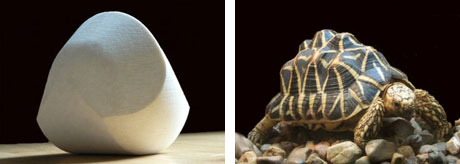
The Gömböc is a self-righting object, which means that no matter which way you put it down, it stands itself back up. It’s like a Weeble, except it doesn’t cheat by having a weight at the bottom, and it’s the only shape that can do this.

The existence of a shape with these properties was conjectured in 1995, but it took ten years for someone to figure out how to actually make one that worked. And then everyone was embarrassed when it turned out that turtles had evolved this same basic shape in their shells a long time ago, to make it easier for them to roll themselves back over if they get flipped.

Go and Buy – Click price > $150

violetlaser thumb 330x232 53252 11 cheap gifts guaranteed to impress science geeks

5. Violet Laser Pointer

It’s no longer geeky enough to have a red laser pointer, or a green laser pointer, or even a blue laser pointer. Keep moving up the spectrum until you get to violet, and you’ll find the new hotness at 405 nanometers.

So what’s next year’s new color going to be? It’s looking like orange, but they’re not quite what I’d call affordable yet. Something to look forward to for next year, especially if you’re going for your own personal laser rainbow. – Update,  they are affordable now!

Go and Buy

gallium thumb 330x247 53255 11 cheap gifts guaranteed to impress science geeks

6. Gallium

Gallium is a silvery metal with atomic number 31. It’s used in semiconductors and LEDs, but the cool thing about it is its melting point, which is only about 85 degrees Fahrenheit. If you hold a solid gallium crystal in your hand, your body heat will cause it to slowly melt into a silvery metallic puddle. Pour it into a dish, and it freezes back into a solid.

While you probably shouldn’t lick your fingers after playing with it, gallium isn’t toxic and won’t make you crazy like mercury does. And if you get tired of it, you can melt it onto glass and make yourself a mirror.

Go and Buy

miracleberry thumb 330x330 53258 11 cheap gifts guaranteed to impress science geeks  miracle berry

7. Miracle Berries

By themselves, Miracle berries don’t taste like much. The reason to eat them is that they contain a chemical called miraculin that binds to the sweet taste receptors on your tongue, changing their shape and making them respond to sour and acidic foods.

The upshot of this effect is that some things you eat taste spectacularly different. Straight Tabasco sauce tastes like donut glaze. Guinness tastes like a chocolate malt. Goat cheese tastes like cheesecake. After about an hour of craziness, your taste buds go back to normal, no harm done.

Go and Buy

dna thumb 330x247 53261 11 cheap gifts guaranteed to impress science geeks  DNA Genotyping

8. DNA Genotyping

There’s nothing more personal than someone’s own DNA. And there are ways to give the gift DNA that won’t get you children or arrested. With just a little bit of spit, you can get an genotype analysis that will reveal fun insights about longevity, intelligence, susceptibility to diseases, and even food preferences.

While the technology hasn’t reached the point where you can affordably get a completesequence of an entire genome, looking at specific markers is still good enough to suggest some things worth looking out for while spurring a lively nature versus nurture debate.

Go and Buy – Click price > $100

klein thumb 330x322 53264 11 cheap gifts guaranteed to impress science geeks  Klein Bottle

9. Klein Bottle

If you want to give a mathematician something to try to wrap their head around, a Klein bottle is a good place to start. A real Klein bottle is an object with no inside and no outside that can only exist in four dimensions. These glass models exist in three, which means that unlike the real thing, they can actually hold liquid.

The difference between the models and the real thing is that by adding an extra dimension, you can make it so that the neck of the bottle doesn’t actually intersect the side of the bottle. Take a couple aspirin and try to picture that in your head.

Go and Buy – Click price > $35

microbes thumb 330x277 53267 11 cheap gifts guaranteed to impress science geeks  Giant Microbes Toy Plushies

10. Giant Plush Microbes

They’re cute! They’re fuzzy! They’re potentially deadly! All of the microbes, bacteria, and viruses that you know and love (or maybe not) are available in huggable forms about a million times larger than real life. In the picture are gonorrhea, syphilis, mono, and herpes.

These giant plushes are the perfect way to make the holidays even more awkward, when you present your friends with a variety of adorable STDs. Microbiologists, at least, will appreciate that they’re more or less anatomically correct, too.

Go and Buy

ferrofluid thumb 330x190 53270 11 cheap gifts guaranteed to impress science geeks  Ferrofluid

11. Ferrofluid

Magnetic particles suspended in oil never looked so sexy. That’s all a ferrofluid is, and it looks pretty gross until you put it in close proximity to a magnet, at which point it grows spikes all over the place as the fluid flows out along magnetic force lines.

Ferrofluids are found in everything from speakers to hard drives, but it’s much more fun to play with when when you’ve got a puddle of it naked and out in the open.

Go and Buy – Click price > $40

2 Comments

Filed under Humor and Observations, Uncategorized

More Irony

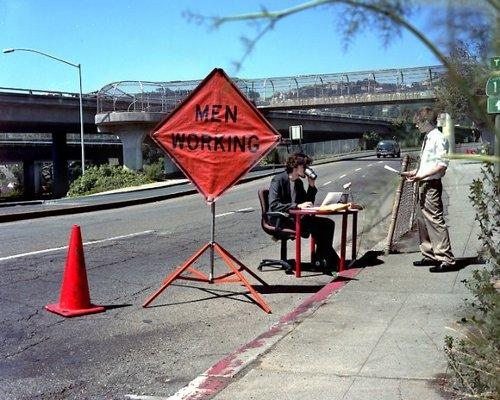
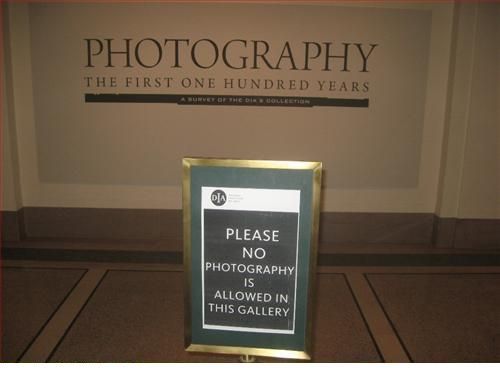
From time to time I post Ironic pictures.  You can find prior posts by typing in “irony” on the search box on my home page.  I hope you enjoy these as you try to shake off the effects of L-triptophan in your turkey, the shock of long periods of exposure to your family, and overeating while sitting stationary watching others exercise playing football…  (hint – that was irony too.)  My best example of irony ever is – A vegetarian being killed by a man-eating plant.   If you know a better example, please let me know.


6 Comments

Filed under Humor and Observations

Happy Thanksgiving All!

2 Comments

November 22, 2012 · 11:33 am

Dark Matter

This is republished from my Science Column in ConNotations Newszine, where I am a staff writer.  I also write book and movie reviews and other non-fiction for the magazine.  My science column is directed at convention fanboys and fangirls that were not self-punishing enough to get three science degrees like myself, but want to be able to understand complicated topics, like dark matter, string theory, teleportation, where the universe came from, astro-physics, the God Particle, and other issues.  My attempt with each short column is to explain a concept in layman’s terms.  This is on Dark Matter.  The photos were added for this web edition.

Is Space Empty or Full? 

by Michael Bradley

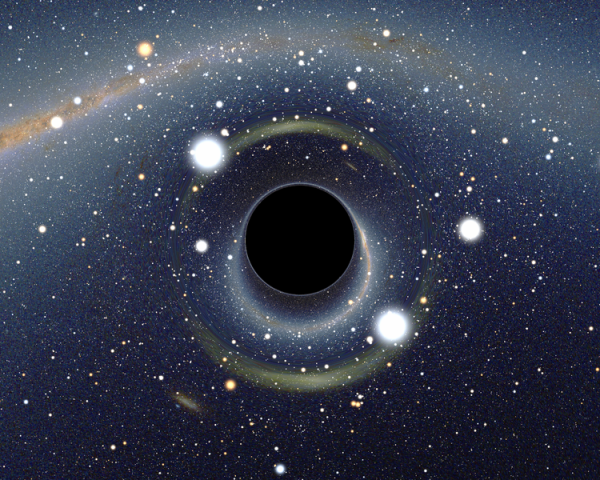
 Most have heard the term “dark matter” but what does it mean?  We look up at the night sky and we notice the stars, constellations, galaxies and heavenly bodies.  Unconsciously, we might also notice everything else – the black portion.  It is human nature to assume that the black portion represents nothingness, and emptiness broken up in its expanse only by those objects we can see.  For the known history of mankind, everyone would have accepted that as truth, until less than one hundred years ago.

As humans, we know and experience our reality through senses; smell, touch, sight, hearing, temperature, etc.  If we cannot sense something, it is often overlooked or missed by our minds.  In physics and astronomy the same is true.  We “see” the sky at night through two major lenses, one is the light emitted by heavenly bodies, and the second is the radiation and radio wave emissions from the sky.  We can observe the lights and the radiations and draw theories to understand them.

Based on the movement of the lights, we learned through observation that the planets rotate, that the Earth moves around the Sun, that we are in a galaxy called the Milky Way, that their are other galaxies, and many helpful facts.  The universe appears to be expanding, which also leads to the Big Bang Theory, calculations of time and so forth.

In the 1880s, Christian Doppler discovered the Doppler Effect, in which sound and light waves are compressed to different frequencies by the motion of mass.  For instance, a rushing locomotive sounds different as its mass moves toward and away from the listener.  This also creates the Blue/Red shift in light from celestial bodies.  As a galaxy spins, the section moving toward us turns bluer, while the section moving away turns redder on the light frequency spectrum.

Using the blue/red shift and physics, scientists were able to calculate the relative mass of galaxies and other objects which spin and cast off light.  Fritz Zwicky noticed in 1934 that the math did not add up, and came up with an explanation now known commonly as “dark matter.”  His theory is that either the majority of the mass of these objects does not give off light, or, the theory of gravitational pull is flawed in its calculations of mass.  To explain this missing mass, he theorized that there must be matter which neither reflects nor gives off light or radiation emissions measurable on Earth, but which has mass.  By only making calculations of spin based on visible matter, we are missing the dark matter.

If the dark matter theory is true, then 83% of the matter in the universe and 23% of the mass energy could be from dark matter.  It could be that our ability to perceive what space is composed of is much like a blind-folded man with ear muffs and a cold trying to describe his surroundings.  Or, consider a dark field and across from you are 1,000 people holding flashlights, but only 230 have them on.  So you think there are only 230 people.

Could there actually be so much out there that we can not see through light or through radiation?

Theorists have explored the possibilities for the last eighty years and have mainly created more theories than answers.  Some say the gravitational theory is wrong and that instead of trying to “fix” the math by the creation of a theoretical dark matter you should start there.  Some have broken up dark matter into deeper theoretical categories, such as Machos and Wimps.  You can’t make this stuff up.

Machos are Massive Astrophysical Compact Halo Objects more commonly referred to as brown dwarfs and black holes, or referred to as baryonic, or more normal matter, that happens to be dark.  Wimps are Weakly Interacting Massive Particles which would be non-baryonic in nature.  Wimps are thought to pass through normal matter though they have mass, without interacting with it.  There are also theories of the dark matter in which they break them into mixed dark matter, cold dark matter, warm dark matter and hot dark matter.  Who says physicists don’t have a sense of humor?

In any case, the next time you look up at the night sky, just realize that mathematically, either all we know about gravity is wrong, or you are seeing only a tiny portion of what is there.  It is 2012, and we often think we have it all figured out, and yet in the very night sky above our heads we understand and perceive very little.


5 Comments

Filed under Humor and Observations, Writing

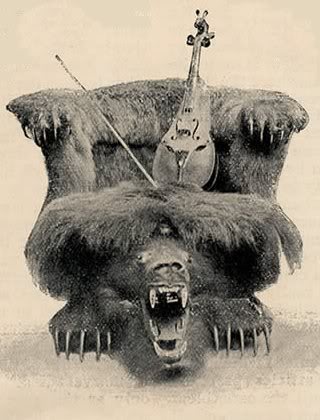
Presidential Grizzly Bear Chair

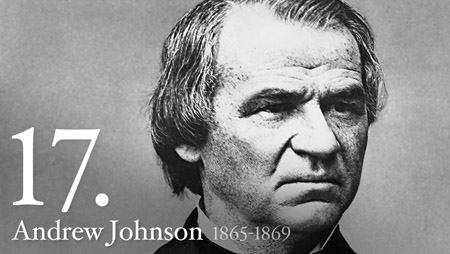
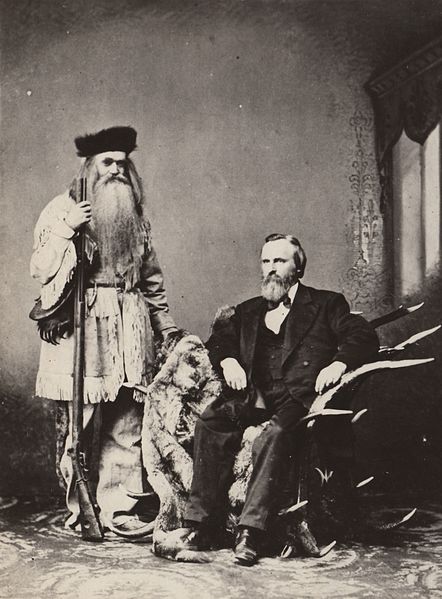
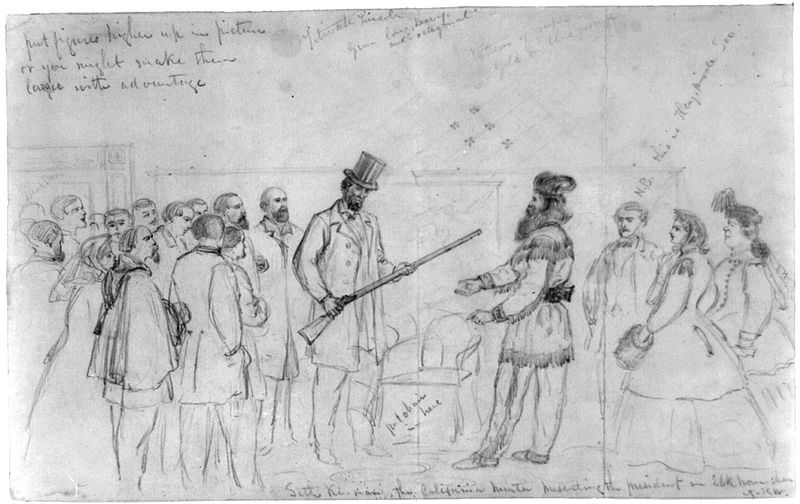
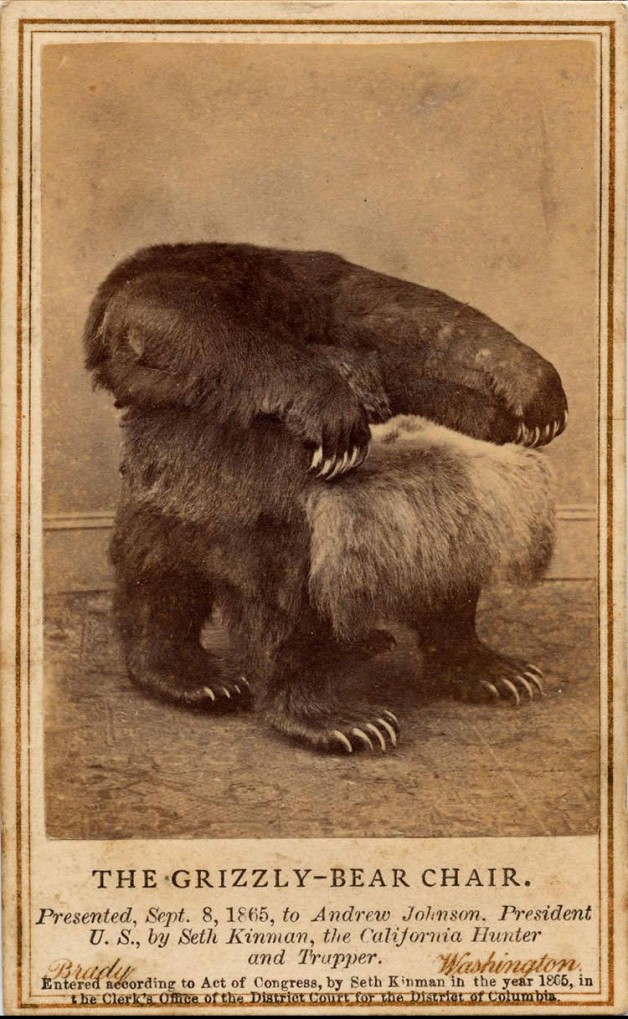
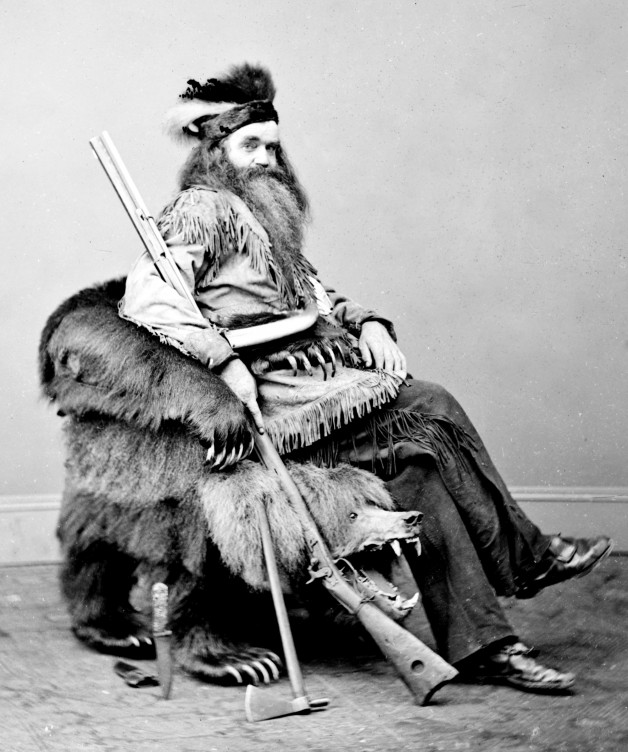
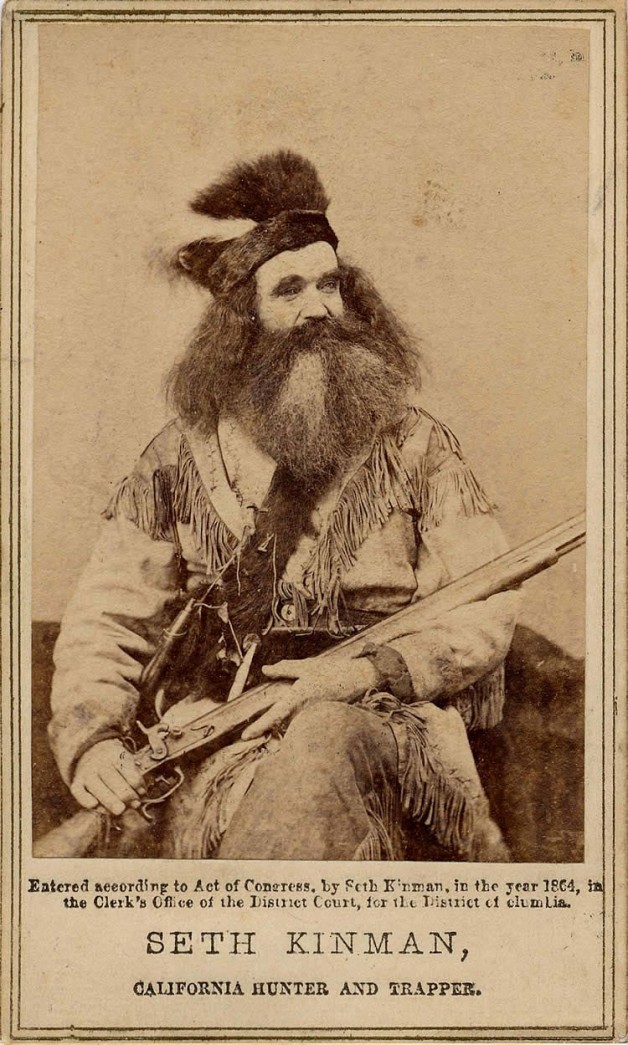
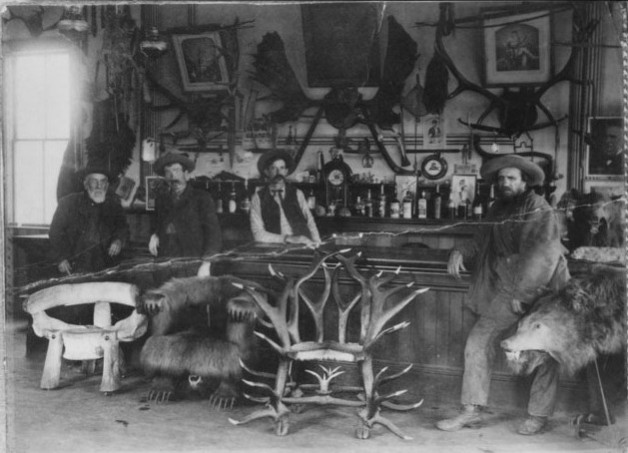
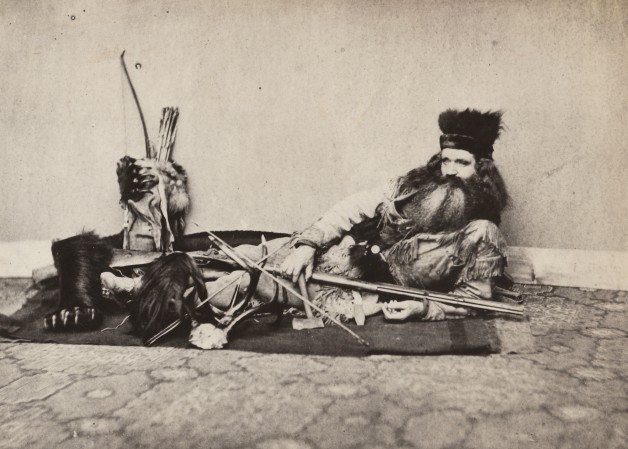
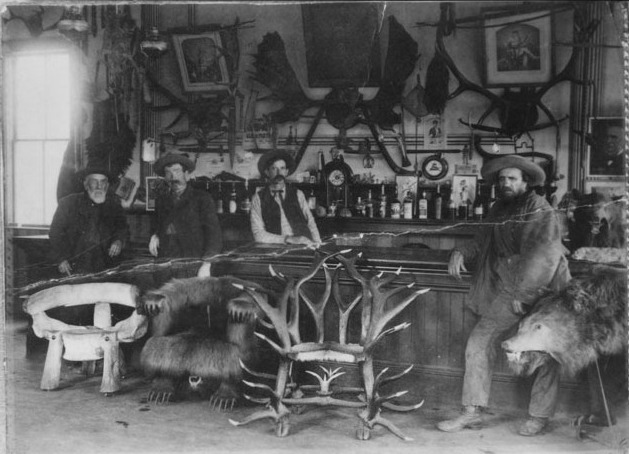
Everyone knows about the Oval Office, the pictures of past Presidents, the Kennedy Room, the Lincoln Room, but do you know about the Presidential Grizzly Bear Chair?  California hunter and trapper Seth Kinman killed two grizzly bears and made them into a chair.  It was presented by him through an act of Congress to President Andrew Johnson in 1865.

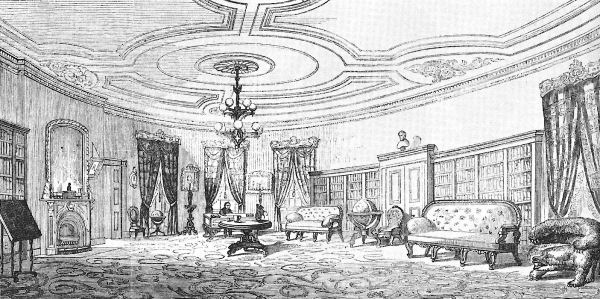
Made from two grizzly bears captured by Seth Kinman. The four legs and claws were those of a huge grizzly and the back and sides ornamented with immense claws. The seat was soft and exceedingly comfortable, but the great feature of the chair was that, by touching a cord, the head of the monster grizzly bear with jaws extended, would dart out in front from under the seat, snapping and gnashing its teeth as natural as life. This chair Seth presented to President Johnson, September 8, 1865.

Yes, the head would dart out from underneath… natural as life….

President Johnson put the chair in his library in the Yellow Oval Room.

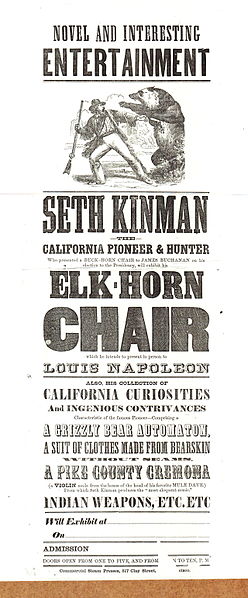
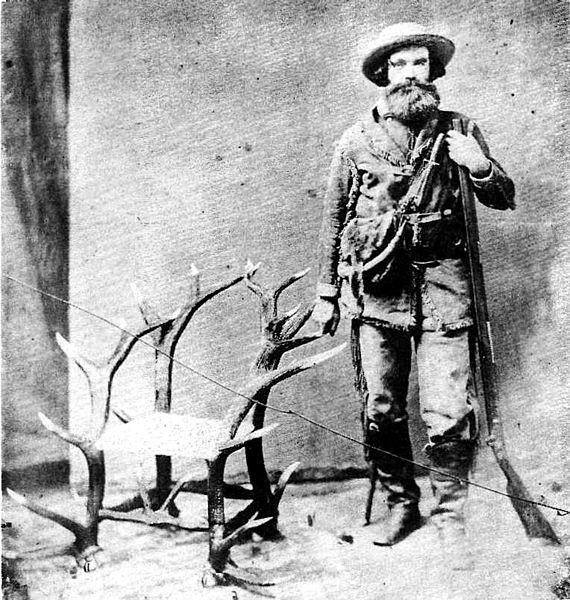
Seth Kinman (September 29, 1815 – February 24, 1888)[1] was an early settler of Humboldt CountyCalifornia, a hunter based in Fort Humboldt, a famous chair maker, and a nationally recognized entertainer. He stood over 6 ft (1.83 m) tall and was known for his hunting prowess and his brutality toward bears and Indians. Kinman claimed to have shot a total of over 800 grizzly bears, and, in a single month, over 50 elk.[2] He was also a hotel keeper, barkeeper, and a musician who performed for President Lincoln on a fiddle made from the skull of a mule.

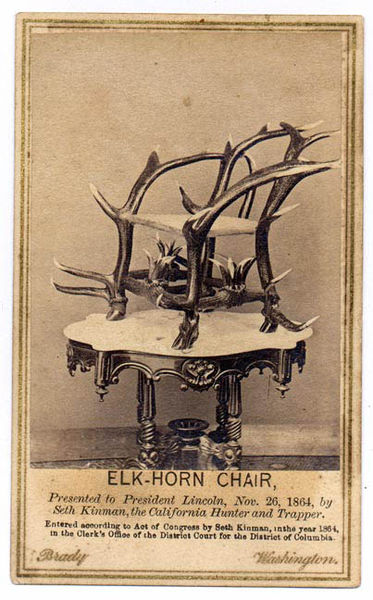
Known for his publicity seeking, Kinman appeared as a stereotypical mountain man dressed in buckskins on the U.S. east coast and selling cartes de visites of himself and his famous chairs. The chairs were made from elkhorns and grizzly bear skins and given to U.S. Presidents.[3][4] Presidents so honored include James BuchananAbraham LincolnAndrew Johnson, and Rutherford Hayes. He may have had a special relationship with President Lincoln, appearing in at least two of Lincoln’s funeral corteges, and claiming to have witnessed Lincoln’s assassination.

Kinman was allegedly in Ford’s Theater the night of the assassination and witnessed the murder. He escorted Lincoln’s body on its way to burial as far as Columbus, Ohio.[41] On April 26, 1865, the New York Times described Kinman in the funeral cortege in New York City: “Much attention was attracted to Mr. Kinman, who walked in a full hunting suit of buckskin and fur, rifle on shoulder.


2 Comments

Filed under Animals, Humor and Observations, Uncategorized