Monthly Archives: February 2013

Verizon Lists Data-Draining and Battery-Killing Apps by Name

igaOM

Verizon Names Data-Draining and Battery-Killing Apps

By  on February 11, 2013

Verizon Wireless may have shut down its own app store, but it’s not wiping its hands of app curation entirely. The carrier has started reviewing, rating, and recommendingAndroid and iPhone apps for its customers.

What’s interesting about Verizon’s approach is it isn’t making its recommendations based on how entertaining, useful, or fun a particular app is. Instead, a team of Verizon engineers is looking at each app’s impact on the phone’s battery life, its drain on a customer’s data plan, and how loosely it plays with security and customer privacy.

Basically, Verizon is compiling a series of regularly updated recommendation lists. The first is a list of 20 apps available either for Android or iOS that Verizon claims deliver a “best in class” experience on smartphones and tablets. As you might expect, Verizon isn’t being entirely objective in its choices, but it never claimed to be. One of the apps is even Verizon’s own AppLuvr software, which recommends other apps based on what’s already installed on smartphones.

The second list applies a much more visible methodology, rating the top 25 free and top 25 paid apps in Google (GOOG) Play based on three criteria: security, battery consumption, and data usage. The third set of reviews is essentially Verizon’s naughty list: 13 apps—all games—that will drain your battery or eat up your data plan at a rapid clip.

Verizon isn’t making any friends here among the game development shops. Enormously popular games, such as Halfbrick’s Fruit Ninja Free and OMGPOP’s Draw Something, got bad marks because of their battery drain. Other apps, such as Facebook (FB) Messenger and eBay (EBAY), scored relatively high but were penalized because of their high data consumption.

That may come as a surprise to many users, since Facebook and eBay wouldn’t appear to consume that much data, especially compared with streaming multimedia apps such as Pandora (P) and Netflix (NFLX), which received the highest possible Verizon ratings. But what Verizon is likely highlighting here is the persistence of those two apps’ connections. While Facebook might consume only a tiny fraction of the data in a single hour that, say, a Netflix video stream would require, the social networking app is always running in the background—transmitting a constant stream of signaling traffic over the network and whittling away at your data plan.

Alcatel-Lucent (ALU) recently analyzed the enormousimpact Facebook has on mobile networks through that signaling traffic. On Nov. 15, the social networking giant updated its iOS and Android apps, precipitating a 60 percent boost in Facebook signal load on mobile networks, even though the number of new Facebook mobile users increased only 4 percent in the same time frame. Alcatel-Lucent now estimates that Facebook is responsible for more than 15 percent of all mobile signaling traffic and accounts for more than 20 percent of all network air time.

Carriers have long implored developers to keep the constraints of mobile networks in mind and build more efficient apps. With these rankings Verizon could be upping that pressure, punishing developers who keep developing unnecessarily chatty software.

As you might expect, neither Facebook Messenger nor the main Facebook app made Verizon’s list of “must have apps” (though eBay did). Verizon, however, named Facebook’s much more network-efficient Instagram photo-sharing app in its top 20. I doubt Facebook cares either way.

Any time a carrier produces a must-have list, you should take it with a grain of salt, but I will give Verizon credit: It actually recommended Tango, an over-the-top voice, video, and messaging app that competes directly with Verizon’s core voice and SMS services.

Leave a comment

Filed under Humor and Observations

New Coal Process Eliminates 99% of Pollution

Coal: the cleanest energy source there is?

By 

How Green

Published February 20, 2013

FoxNews.com

  • Clean Coal.jpg

    At a research-scale combustion unit at Ohio State University, engineers are testing a clean coal technology that harnesses the energy of coal chemically, without burning it. Here, doctoral student Elena Chung (left) and master’s student Samuel Ayham (right) display chunks of coal along with pulverized coal (bottle, center) and the iron oxide beads (bottle, right) that enable the chemical reaction. (Jo McCulty / Ohio State University)

  • Clean Coal 2.jpg

    At Ohio Stateâs Clean Coal Research Laboratory, Liang-Shih Fan (left), professor of chemical and biomolecular engineering, examines a sub-pilot scale combustion unit with Dawei Wang (right), a research associate and team leader in the lab. (Jo McCulty / Ohio State University)

Researchers have discovered a stunning new process that takes the energy from coal without burning it — and removes virtually all of the pollution.

The clean coal technique was developed by scientists at The Ohio State University, with just $5 million in funding from the federal government, and took 15 years to achieve.

“We’ve been working on this for more than a decade,” Liang-Shih Fan, a chemical engineer and director of OSU’s Clean Coal Research Laboratory, told FoxNews.com, calling it a new energy conversion process. “We found a way to release the heat from coal without burning.”

The process removes 99 percent of the pollution from coal, which some scientists link to global warming. Coal-burning power plants produced about one-third of the nation’s carbon dioxide total in 2010, or about 2.3 billion metric tons, according to the Environmental Protection Agency (EPA).

‘We found a way to release the heat from coal without burning.’

– Liang-Shih Fan, a chemical engineer and director of OSU’s Clean Coal Research Laboratory 

Retrofitting them with the new process would be costly, but it would cut billions of tons of pollution.

“In the simplest sense, conventional combustion is a chemical reaction that consumes oxygen and produces heat,” Fan fold FoxNews.com. “Unfortunately, it also produces carbon dioxide, which is difficult to capture and bad for the environment.”

And simply put, the new process isn’t.

Heating, Not Burning, Coal
Fan discovered a way to heat coal, using iron-oxide pellets for an oxygen source and containing the reaction in a small, heated chamber from which pollutants cannot escape. The only waste product is therefore water and coal ash — no greenhouse gases. As an added benefit, the metal from the iron-oxide can be recycled.

“Oxidation” is the chemical combination of a substance with oxygen. Contrast this with old-fashioned, coal-fired plants, which use oxygen to burn the coal and generate heat. This in turn makes steam, which turns giant turbines and sends power down electric lines.

The main by-product of that old process — carbon dioxide, known chemically as CO2 — is released through smokestacks into the earth’s atmosphere.

Fan’s process, called “coal-direct chemical looping,” has been proven in a small scale lab at OSU. The next step is to take it to a larger test facility in Alabama, and Fan believes the technology can be commercialized and used to power an energy plant within five to 10 years, if all goes smoothly. The technology generated 25 kilowatts of thermal energy in current tests; the Alabama site will generate 250 kilowatts.

Can Coal Ever Be ‘Clean’?
Some environmentalists are skeptical of the technology, and of the idea of clean coal in general.

“Claiming that coal is clean because it could be clean — if a new technically unproven and economically dubious technology might be adopted — is like someone claiming that belladonna is not poisonous because there is a new unproven safe pill under development,” wrote Donald Brown at liberal think tank Climate Progress.

Yet the federal Department of Energy believes that the process can create 20 megawatts to 50 megawatts by 2020, said Jared Ciferno, the agency’s director of coal and power-production research and development, in a statement.

The government plans to continue to support the project, as well as the concept of “clean coal” in general.

Meanwhile, Fan is exploring the possibility of establishing a start-up company and licensing the process to utilities, and has the potential to patent 35 different parts of the process.

Other scientists and experts are enthused about the prospects for this technology.

Yan Feng with Argonne National Laboratory’s Environmental Science Division, Climate Research Section, called it “an advancement in chemical engineering. “It is very important that we act on CO2 capturing and sequestration as well as emission controls of other warming agents like tropospheric ozone and black carbon.”

Adds a spokesman for Kingsport, Tenn.-based Eastman Chemical Company, a global Fortune 250 chemical manufacturer that works in clean energy, “researchers continue to uncover innovative ways to use coal efficiently/sustainably.”

Concludes Dawei Wang, a research associate at OSU, the technology’s potential benefits even go beyond the environment and issues like sustainability.

“The plant could really promote our energy independence. Not only can we use America’s natural resources such as Ohio coal, but we can keep our air clean and spur the economy with jobs,” he said.

Read more: http://www.foxnews.com/science/2013/02/20/coal-cleanest-energy-source-there-is/#ixzz2LehOrgGr

Leave a comment

Filed under Humor and Observations

Human Ear Made by 3D Printer

3D-printed ear created in lab

By Tanya Lewis

Published February 21, 2013

LiveScience

  • 3d-printed-ear1

    Mechanical engineer Larry Bonassar holds a fabricated ear printed with a 3D printer in his lab at Cornell University’s Weill Hall. (Lindsay France/Cornell University Photography)

  • 3d-printed-ear2.jpg

    A 3D printer fabricating an ear. (Lindsay France/Cornell University Photography)

With 3D printing, it seems the things you can make are limited only by your imagination. The latest innovation: a 3D-printed artificial ear. 
SUMMARY

Ear looks and functions like a normal human ear

Created by squirting a gel made of living cow ear cells and collagen into an injection mold

Current replacement ears often made from a patient’s harvested rib — a difficult and painful process


The ear, which looks and functions like a normal human ear, was created by squirting living cells into an injection mold. Over the course of three months, each ear grew cartilage in the shape of its mold. These ersatz ears could replace the ears of children with congenital deformities, researchers report online today (Feb. 20) in the journal PLOS ONE.

“A bioengineered ear replacement like this would also help individuals who have lost part or all of their external ear in an accident or from cancer,” co-lead author Jason Spector, a plastic surgeon at Weill Cornell Medical College in New York City, said in a statement. If the ears prove safe and successful, it could be possible to implant one in a human in as few as three years, Spector said.

Children with a deformity called microtia have an intact inner ear but an external ear that fails to develop fully, causing hearing loss. The prevalence ranges from slightly fewer than one to as many as four babies per 10,000 births, depending on the country. [The 9 Most Bizarre Medical Conditions]

The artificial ears were made by producing a digital 3D image of a child’s intact ear and feeding that into a 3D printer to produce an ear-shaped mold. Then the scientists injected a gel made of living cow ear cells and collagen (a substance used to make gelatin) into the mold, and out popped an ear.

The whole process took less than two days: half a day to design the mold, a day to print it, half an hour to inject the gel, and 15 minutes to allow it to set.

Then the researchers implanted the fabricated ears on the backs of rats, where the ears grew for one to three months. Creepy as it sounds, it isn’t the first time scientists have grown ears on rodents, as a model for naturally growing ears.

In medicine, current replacement ears are made from a Styrofoam-like material or by an Eve-like genesis out of a patient’s harvested rib. The latter is difficult and painful, and rarely produces an ear that works well or looks natural.

The advantage of 3D-printed replacement ears is that they could be made-to-order, using molds from the patient’s normal ear (if they have one) or from one of a person of similar size. The researchers are now working on growing human ear cartilage cells in the lab, which would reduce the chances of tissue rejection.

Read more: http://www.foxnews.com/science/2013/02/21/3d-printed-ear-created-in-lab/?intcmp=features#ixzz2LbJH8CJ2

Leave a comment

Filed under Humor and Observations, Uncategorized

3D Pen – Draw 3D Art!

The world’s first 3D printing pen: Yours for just $75

The 3Doodler, 3D printing pen

Come September, if everything goes to plan, the world’s first 3D printing pen will go on sale for $75. The pen, called the 3Doodler, essentially allows you to lift your flat sketches off the paper — or, if you wish, to actually draw in three dimensions.

3Doodler is a Kickstarter project, and in under 24 hours it has obtained more than $500,000 in pledges — significantly more than its $30,000 target. As you can see in the video below, the inventors have already created an impressive prototype — and now it’s time to bring the 3Doodler to market. The target price is $75 for a September 2013 release. The inventors say they have already located a Chinese manufacturer who is capable of meeting these targets. The final device should 24mm (1in) thick and weigh less than 200g, with an external power brick that accepts 110-240V.

In essence, 3Doodler is a standard 3D printer, but your hand controls the print head instead of a bunch of computer-controlled motors. (See: What is 3D printing?) Inside the 3Doodler is a filament feeder (which accepts ABS or PLA plastic), a heating element, and an extruder — and that’s about it. The melted plastic comes out of the extruder and very quickly sets. As far as we can tell, the plastic oozes out of the extruder at a set rate — so depending on whether you want a thin (weak and flexible) or thick (strong and rigid) line, you move the 3Doodler quickly or slowly. For strength and flexibility, you just go back and forth over the same section, building up a web of plastic tendrils (like in the Eiffel Tower above).

Judging by the massive support for 3Doodler on Kickstarter, it’s safe to assume that people are really excited at the concept of a freehand 3D printer. It’s not hard to see why, though, if you were a child who dreamt of drawing sketches that literally jump off the paper. The actual reality of freehand 3D printing might be a little more complex than most users bargain for, but to that end the inventors have teamed up up with professional artists to provide 3Doodler backers with templates/stencils that you can simply fill in. The Kickstarter page also seems to lack any evidence that 3Doodler is capable of drawing straight lines, but hopefully it’s just a matter of using a ruler.

A collection of 3Doodler objects

Moving forward, this could be a very exciting stepping stone for inventors and hobbyists alike. While 3D printers have revolutionized rapid prototyping tool, the 3Doodler is even faster; it adds a whole new dimension (!) to back-of-the-napkin brainstorming. To begin with, I suspect it will be quite hard to create meaningful sketches with a 3Doodler, but in time — and with a whole range of usability tweaks and add-on accessories that I’m sure will follow — the 3D printing pen might become as ubiquitous as the 2D Bic ballpoint. (See: 3D printing: a replicator and teleporter in every home.)

1 Comment

Filed under Humor and Observations, Uncategorized

Woman Sought to Have Neanderthal Baby

Scientist seeks ‘adventurous woman’ to have Neanderthal baby

Published January 21, 2013

FoxNews.com

  • Homo Neanderthalensis

    Hyper-realistic busts of human ancestors — like this version of homo neandertal — give us a glimpse of what our ancient relatives may have looked like. (John Gurche)

  • An artist imagines the typical Neanderthal family.

    An artist imagines the typical Neanderthal family. (NASA/JPL-Caltech)

  • Neanderthal Tooth Fairy

    In this picture made available by Szczecin University’s Department of Archaelogy on Monday, Feb. 1, 2010 one of three Neanderthal teeth discovered in Poland is pictured . A team of Polish scientists say they have discovered three Neanderthal teeth in a cave in the southern part of the country. Mikolaj Urbanowski, an archaeologist and the lead researcher, said Monday that, although Neanderthal artifacts have been unearthed in Poland before, the teeth are the first remains of Neanderthals themselves discovered in the country. (AP)

EDITOR’S NOTE: The genetics professor quoted here, George Church, said after publication of this story that his quotes to the German magazine on which this article is based were distorted. An updated version of the story appears here.

Where’s Fred Flintstone when you need him?

A professor of genetics at Harvard’s Medical School believes he’s capable of bringing the long-extinct Neanderthal back to life — all he’s lacking is the right mother.

“I can create a Neanderthal baby, if I can find a willing woman,” George Church told German newspaper Spiegel Online. The DNA of the Neanderthal, a long extinct relative of man, has been more or less rebuilt, a process called genetic sequencing.

In 2005, 454 Life Sciences began a project with the Max Planck Institute to sequence the genetic code of a 30,000 year old Neanderthal woman. Now nearly complete, the sequence will let scientists look at the genetic blueprint of humankind’s nearest relative, understand its biology and maybe even create a living person.

And with that blueprint, it’s very possible to “resurrect” the Neanderthal, he argues — something Church has been pushing for years. Church did not respond to FoxNews.com requests to confirm the Spiegel Online story, but last year, he told Bloomberg he was keen on the idea.

“We have lots of Neanderthal parts around the lab. We are creating Neanderthal cells. Let’s say someone has a healthy, normal Neanderthal baby. Well, then, everyone will want to have a Neanderthal kid. Were they superstrong or supersmart? Who knows? But there’s one way to find out.”

Last year, researchers finished sequencing the genome of another extinct human relative, the denisovan — based solely off a piece of fingerbone and two molars.

Read more: http://www.foxnews.com/science/2013/01/21/scientist-seeks-adventurous-woman-to-have-neanderthal-baby/?intcmp=features#ixzz2LaOI7PjA

1 Comment

Filed under Humor and Observations

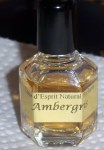
$68,000 Whale Vomit

You might not realize it, but solidified whale vomit, also known as “ambergris” which sounds better, is a very valuable element in making perfumes.  In fact, so valuable, that an island in Belize is named Ambergris Caye, all the way back to the old West Indies pirate days.  The wonderful town of Whale Vomit.  Even today when this rare element washes ashore, those lucky enough to find it, and who can recognize it, can be overnight much more wealthy.  The problem is, it is very rare, often looks like a variety of rocks, and most people don’t go near it when it smells bad.  Here is one such example of a lucky whale vomit gatherer…

BRITON FINDS ‘RARE WHALE VOMIT’ WORTH $68,000

THE DAILY DISH  PawNation

By AFP Jan 31st 2013

LONDON, (AFP) – A British man has been offered 50,000 euros for a strange-smelling rock his dog found on a beach, which is likely a rare form of whale vomit used in perfumes, the BBC reported Thursday.

Ken Wilman was walking his dog Madge in the coastal town of Morecambe in Northwest England when she began “poking at a rather large stone” with a waxy texture and yellowish color. At first he left it on the beach, but “something triggered in my mind”, Wilman said, prompting him to go back and retrieve the object, which he believes is a piece of ambergris, a substance found in the digestive systems of sperm whales.

Whales sometimes spew up ambergris, which floats on water and has been highly prized for centuries. It is used in perfume-making for the musky fragrance it acquires as it ages — but newer ambergris is foul-smelling.

“When I picked it up and smelled it I put it back down again and I thought ‘urgh’,” Wilman told the BBC. “It has a musky smell, but the more you smell it the nicer the smell becomes.”

He is waiting for tests to confirm his find is ambergris, nicknamed “floating gold”, but says he has been offered 50,000 euros (£43,000, $68,000) for it by a French dealer.

“It’s worth so much because of its particular properties,” Andrew Kitchener, principal curator of vertebrates at the National Museum of Scotland, told the broadcaster. “It’s a very important base for perfumes and it’s hard to find any artificial substitute for it.”

The substance gets a mention in the classic 1851 whaling novel Moby Dick, where author Herman Melville writes: “Who would think, then, that such fine ladies and gentlemen should regale themselves with an essence found in the inglorious bowels of a sick whale! Yet so it is.”

Unfortunately, digging dogs don’t always find prizes worth thousands of dollars. Most of the time they just make a mess. Canines dig for a variety of reasons such as boredom, high energy levels and hunting instincts. As an owner, to curb digging you can either redirect your dog’s energies to something else or remove the elements that encourage it to dig. Some dogs will continue to dig anyways, and may require training, fences or a digging pit. Go to our partner petMD to learn more.


Leave a comment

Filed under Humor and Observations, Uncategorized

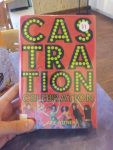
Still More Bizarre Book Covers

This has been a popular thread in the past.  If you wish to see more, type in “book covers” in the search on the home page.  I cannot attest for all of them as real books, as people are much better at photo-shopping nowadays.  However, the ones with a Kindle tag came right off the sales lists.  Enjoy:

4 Comments

Filed under Humor and Observations

Snow in Arizona!

I live in Phoenix, Arizona;  where the annual rainfall is barely 8 inches per year, and we have sunny skies over 300 days per year.  A few days ago I was in my convertible with the top down and it was a nice 78 degrees.  Don’t tell me its global warming lol.  But in a freakish weather system, the following has occurred:

2 Comments

Filed under Humor and Observations, Uncategorized

More Secret New York Locations

My earlier post on the hidden subway station in New York was very popular, so I decided to do another expanded version of secret locations for your interest.  I found nycgo.com and think you will like it:

  • New Yorkers love to think they know everything about their city—where to find the best street-meat cart, how to avoid paying full price at museums, what route to take to skip traffic down Broadway. But New York City can reveal new treasures to even its most grizzled veterans. Beyond the city where we work, eat, play and commute every day lies a hidden New York: mysterious, forgotten, abandoned or just overlooked. We’ve compiled a list of New York City’s coolest secret spots, ones you’re not likely to read about in any guidebooks. You’ll just have to get out there and discover them for yourself. Anna Balkrishna
    • Another underground masterpiece is even more secretive: The Underbelly Project is a clandestine “gallery” consisting of street art installed on the walls of an abandoned subway station, the whereabouts of which had been unknown to everyone but the artists and the attendees of the gallery’s one and only open night (which happened over the summer of 2010). Though rumors have circulated that the station is above the G train’s Broadway stop in Williamsburg, don’t try to see for yourself—not only is it dark and dangerous, but it is also illegal; there have been at least 20 arrests of trespassers trying to visit the space. Erin O’Hara 


  • whisperinggallery_v1_460x285.jpg
    Photo: Alex Lopez  

    Whispering Gallery in Grand Central Terminal
    Grand Central Terminal has many secrets (just for starters: Franklin Delano Roosevelt had his own underground passageway that led to the Waldorf=Astoria hotel), but the Whispering Gallery is its most romantic. This unmarked archway, located in front of the Oyster Bar & Restaurant, possesses a mystifying acoustic property: when two people stand at diagonal arches and whisper, they can hear each other’s voices “telegraphed” from across the way. According to rumor, jazz legend Charles Mingus liked to play under the arches. Today, though, the Whispering Gallery is more popular for murmured marriage proposals. Just don’t confess anything that you don’t want strangers to overhear! —AB


  • rockefellergarden_v1_460x285.jpg
    Photo: Timothy Vogel (via Flickr)  

    Rooftop Gardens at Rockefeller Center
    Some of the most beautiful gardens in New York are hidden—hundreds of feet above the ground. Rockefeller Center maintains five spectacular roof gardens originally designed by English landscaper Ralph Hancock between 1933 and 1936. The gardens have been closed since 1938, but three can be spied from the Top of the Rock observation deck. And there’s a chance you’ve seen at least one close up: the garden atop the British Empire Building appears in a scene from the 2002 filmSpider-Man—AB

    bowlingalleyfrick_v1_460x285.jpg

  • Photo: Michael Bodycomb  

    Bowling Alley at the Frick Collection
    The Frick Collection, a mansion on the Upper East Side formerly owned by 19th-century industrialist Henry Clay Frick, is an architectural beauty in its own right. But did you know that the building also contains an underground bowling alley? Commissioned by Frick in 1914, the antique alley is a real tycoon’s playground, with mahogany-paneled walls, immaculate pine-and-maple lanes and a custom-made set of balls that remain in working order. After Frick’s death in 1919, the bowling alley was abandoned (except briefly, when it served as a library storage space in the 1920s). The Frick Collection restored the alley to its former glory in 1997 but keeps it under tight lock and key. —AB

  • berlinwall_paleypark_v2_460x285.jpg
    Photo: Alex Lopez  

    Berlin Wall Remnants in Paley Park
    Nestled in a small Midtown plaza at 520 Madison Avenue is an unexpected piece of history. Five sections of the Berlin Wall, in total measuring 12 feet high and 20 feet long, have been on display here since 1990. The wall’s western-facing side is covered with dazzling work by German artists Thierry Noir and Kiddy Citny. The eastern side, meanwhile, remains a blank slab of concrete—a reminder of the oppressive political regime in the former East Germany. At first glance, this artifact appears to be just another public mural; it goes largely unnoticed by the office workers who sit in the park on their lunch break.—AB 

  • bowerycemetery_v1_460x285.jpg
    Photo: Alex Lopez 

    Cemetery Behind the Bowery Hotel
    Bowery Hotel guests who gaze through the lobby’s back window often admire the tranquil green lawn located behind the building. But few realize that they’re actually glimpsing a hidden cemetery. (Part of the confusion: the deceased are interred in underground marble vaults marked by plaques, not tombstones.) Founded in 1830, the New York Marble Cemetery, located in what is now the East Village, is the City’s oldest nondenominational public burial ground—and also one of the hardest to find. The cemetery gate is located at the end of a narrow alley leading from Second Avenue; it’s unlocked to visitors only for a few hours on the fourth Sunday of each month from April to October. —AB 

  • siboatgraveyard_v1_460x285.jpg
    Photo: Kaitlyn Tikkun (via Flickr)  

    Staten Island Boat Graveyard
    One of the spookiest places in town is the Staten Island Boat Graveyard. Located far from the urban bustle in Rossville, Staten Island, this swampy patch of the Arthur Kill Road waterway is the final resting place for dozens of rusting, decomposing and abandoned boats of all sizes. The rotting ship hulls, protruding from the watery depths, are oddly majestic and beautiful (but also kind of gross; we recommend wearing long pants, not shorts, and sturdy shoes if you go). The gravesite can be found via a makeshift path off Arthur Kill Road near Rossville Avenue, about 13 miles by bike or car from the ferry terminal. It’s a truly forgotten corner of the City. —AB

    atlantictunnel_v2_460x285.jpg

  • Photo: Malcolm Brown  

    Old Atlantic Avenue Subway Tunnel
    For more than a century, the lost Atlantic Avenue subway tunnel in Brooklyn was a thing of legend: The New York Times printed a story about tunnel-dwelling pirates in 1893, and sci-fi author H.P. Lovecraft portrayed it as a vampire den in a 1927 short story. The tunnel’s actual history is not so fanciful but still interesting: Cornelius Vanderbilt built it in 1844 to reroute Long Island Rail Road trains that were accidentally mowing down pedestrians. The tunnel was abandoned in 1861 and only rediscovered in 1980. (A steam engine is reputedly still buried somewhere inside.) At one point, New Yorkers and visitors could see the tunnel for themselves, but tours of the underground space are no longer available. —AB

    slavegalleries_staugustine_v1_460x285.jpg

  • Photo: Alex Lopez
    Saint Augustine’s Episcopal Church Slave Galleries

    Within the simple walls of Saint Augustine’s Episcopal Church on the Lower East Side lies an unlikely reminder of racial segregation in New York. Cramped staircases lead to two concealed rooms, located behind the balcony, where African-American worshippers could hear church services without being seen. The rooms were informally known as the “slave gallery,” even though slavery was outlawed in New York by the time they were built in 1828. Fugitive 19th-century politician Boss Tweed reportedly hid in the gallery to attend his mother’s funeral. Ignored and branded for decades as a shameful part of Saint Augustine’s past, the space was recently restored and opened to the public in 2009. —AB

    bbbombshelter_v1_460x285.jpg

  • Photo: John Marshall Mantel 

    Cold War Bomb Shelter in the Brooklyn Bridge
    In 2006, City inspectors stumbled upon a hidden chamber inside theBrooklyn Bridge, located just under the bridge’s Lower Manhattan entrance ramp. The room was stockpiled with decades-old military provisions for surviving a nuclear bomb attack: blankets, medicine, water containers and around 352,000 crackers. Supply boxes stamped with the dates 1957 and 1962 indicate that the bunker was used during the height of the Cold War, then later sealed up and forgotten. For security reasons, City officials have kept the exact location of the chamber a secret—most of the 150,000 pedestrians who cross the bridge each day have no idea that it even exists. —AB

    And that’s not the only secret space inside the belly of the bridge; located within its base, a series of vast rooms known as the Brooklyn Anchorage was used for music and theater performances, readings and art exhibitions for nearly 20 years. Each of the eight impressive rooms has brick walls and a 50-foot-high ceiling. The space was closed for business after 9/11 for security reasons and, unfortunately, will not be open again anytime soon. —EO

    columbiatunnels_v1_460x285.jpg

  • Photo: Mira John (via Flickr)  

    Tunnels Under Columbia
    Below Columbia University‘s Morningside Heights campus, a series of underground tunnels connects various school buildings. Tunnels below Buell Hall are just a few feet wide and are thought to date back to the insane asylum that once sat in its place, while the tunnels below Pupin Hall were a meeting place for scientists during the beginning stages of the Manhattan Project. While not entirely off-limits—students and faculty are technically permitted to use some of the tunnels to travel between buildings—security for the forbidden tunnels has increased in recent years in response to rogue tunnel explorers. Still, Columbia’s tunnels are everything a City secret aspires to be: dark, difficult to find and brimming with history. —EO

    pomanderwalk_v1_460x285.jpg

  • Photo: Sony Stark (via Flickr)  

    Pomander Walk
    Twenty-seven buildings resembling Tudor homes with colorful doors, shutters and timber frames grace this gated street that’s tucked away on the Upper West Side, nearly completely out of view to passersby. Originally conceived as a temporary property that was to be knocked down and replaced with a hotel, Pomander Walk—which is modeled after an old London street and the set of a stage play, both of the same name—earned landmark status in 1982. Surrounded by buildings that tower hundreds of feet above its rooftops, this pedestrian-only lane of residences is a peaceful respite from the people and cars that hustle and bustle past its wrought-iron gates every day, unaware of the sanctuary within. You can’t access the hidden haven unless you have a key or know someone who does, but the picturesque spot is still worth a peek through the gate. —EO

    nypl_v1_460x285.jpg

  • Photo: Curious Expeditions (via Flickr)  

    Pneumatic Tubes
    Pneumatic tubes are a lingering ghost of New York’s past. Once upon a time, they were used to shuttle mail (and, on one occasion in the late 19th century, a cat—don’t worry, it survived) around the City and often across the Brooklyn Bridge. Nowadays they’re scarce, but you can still see them in action if you know where to look. At the New York Public Library, slips of paper bearing book requests are still shot via tube seven floors down to the stacks, where the desired book is found and sent up on a Ferris wheel–type apparatus. Meanwhile, Roosevelt Island, a small residential isle between Manhattan and Queens in the East River, uses extra-large pneumatic tubes to transport all of its garbage directly from buildings to the transfer facility, where it’s automatically separated and compacted for pickup.  —EO


2 Comments

Filed under Humor and Observations, Uncategorized

More Cosplayer Pictures

More pictures of cosplayers.  Cosplay being those who dress in costumes for fun or lifestyle.

1 Comment

Filed under Humor and Observations