Here are a few movie reviews that I have completed for various magazines. My wife tells me I am too critical. Judge for yourself…
Warhorse – The Movie
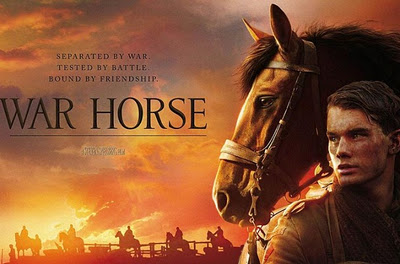
I had planned to go see the mindless action film Mission Impossible, 5, 10, 12 or whatever number we are now on when a friend suggested we see Warhorse instead. I am not a big fan of horse movies such as Black Beauty, Flicka, Horse Whisperer, National Velvet, and so forth so I only reluctantly agreed. However, not knowing much about the film heading in I was very pleasantly surprised and would definitely recommend it to others.
The warhorse is the center of a series of story vignettes that start with its birth before the first world war and bring you, through the travels of the horse, to meet with various people it impacts, all the way to the conclusion of the war. The warhorse itself serves like the red violin, or the traveling pants, of other similar films where an object, this time a horse, are the constant, while the scenes, times and characters change about it.
The direction, cinematography and time period perfection are what we have come to rely upon in any Steven Spielberg film and he is masterful in this one as well. The stories are intense and surprisingly non-judgmental, showing the ups and downs of humanity with few characters being entirely good or bad. The English and Germans on both sides of the trenches are shown equally for their brutality and petty squabbles as well as their compassion for others.
The acting is done by veterans without the distraction of major cinema stars, and is for the most part, very compelling to watch. The movie will leave you with a brief but panoramic view of the effects of world war one on those who lived in it. The one downside is that it has that the feel good undertone and slow pacing makes the ending too predictable. I found myself telling my friend the ending half way through the film. Nonetheless, I would give it 4 out of 5 stars as solid family viewing for age twelve and above.
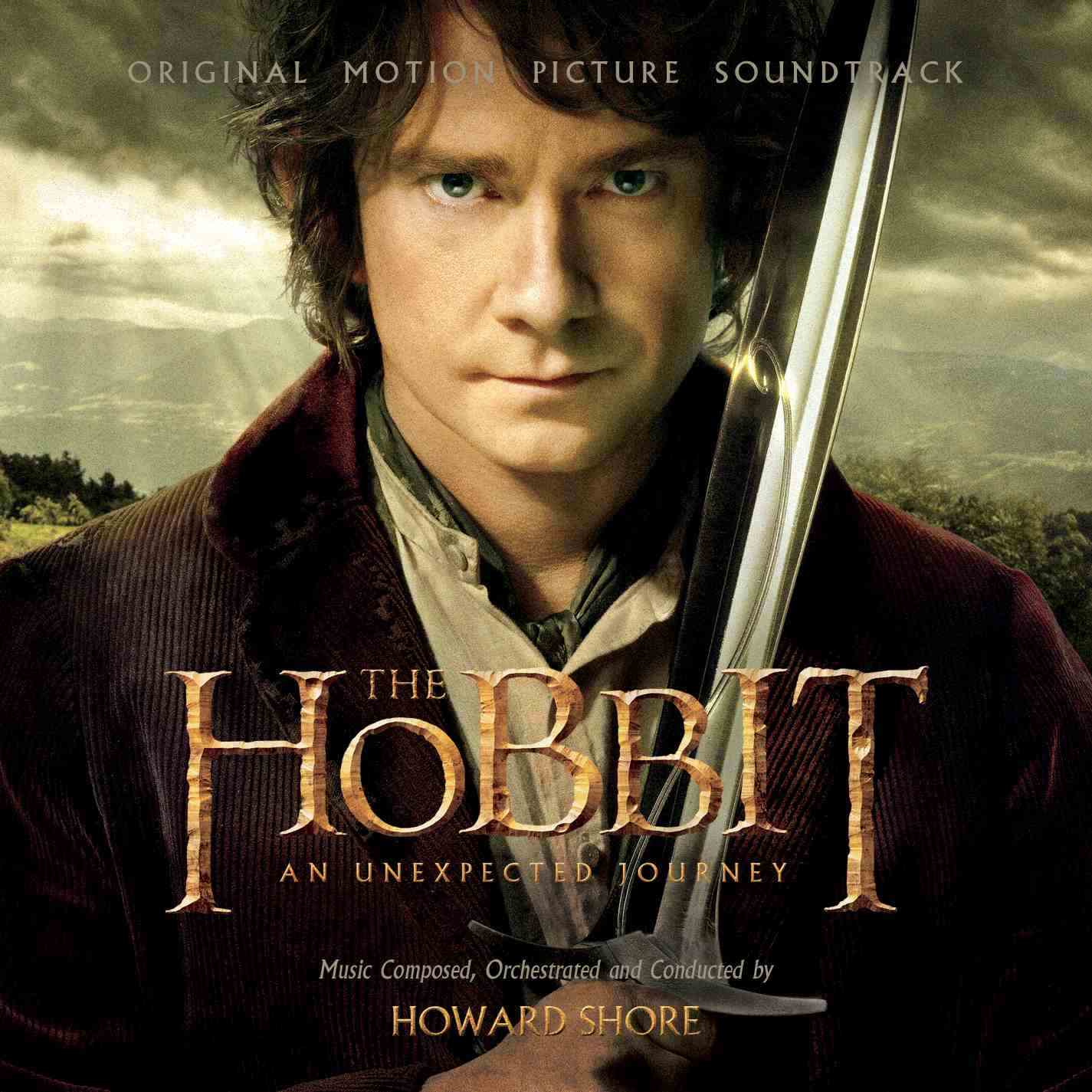
The Hobbit: An Unexpected Journey
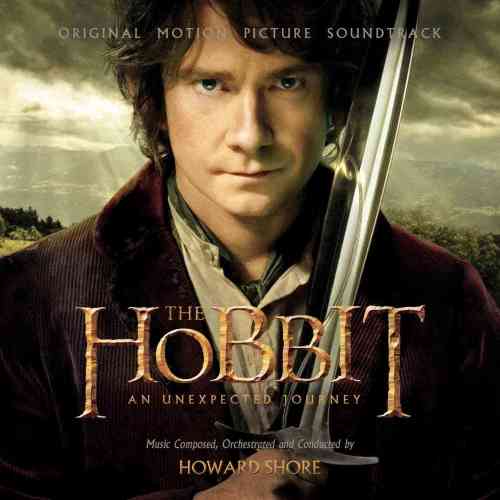
As with any canon of master fiction, any adaptation to film must be measured by two standards. First, that of a non-fanatical reader who happens to find their way into a theater seat, and second, that of the hardened fan looking for every detail. Such it is with The Hobbit: An Unexpected Journey. Along with Star Wars, Star Trek, and perhaps newer series such as Twilight, Harry Potter and Hunger Games, there is no greater fan base than that of JRR Tolkien who was a “must read” for two generations of English students.
The Hobbit started out according to legend while JRR Tolkien was giving a test to students and scribbling on a pad in boredom. He drew some lovely rolling hills and in the middle wrote the iconic words, “Once there lived a Hobbit who lived in a hole in the ground.” This idle musing led to the writing of The Hobbit, followed by the Lord of The Rings Trilogy, several short stories, and the later compilation of his notes by his son Christopher into a volume entitled The Silmarillion.
I read The Hobbit decades ago, and even as a child it took me only one sitting. It is a short book and more aptly a junior or Children’s story. It is a very quick, simple and enjoyable read, unlike the adult, complex story of The Lord of the Rings comprising three books. The Hobbit uses names like “the LonelyMountain”, “Bard the Archer”, LakeTown and other simplistic references. So imagine my surprise when I found that this one smaller volume was going to be made into not one, not two, but three full length films! For The Lord of The Rings, each film was roughly one complex book, and even so ran a bit long in places.
The three movies coming out now are The Hobbit: An Unexpected Journey, out now; the second will be The Hobbit: The Desolation of Smaug in December 2013; and finally, The Hobbit: There and Back Again scheduled for July 2014. Even the makers knew that the slim original volume could not stretch, so they made the decision to bring in back story only hinted at in The Hobbit, but laid out in sketchy aspects in The Silmarillion. Even so, the first movie in the series runs for 170 minutes. The average film is six fifteen minute reels, or 90 minutes. The first movie is in a sense, two movies shown at once. At this rate, the three movies will take the length of six movies to watch, and the first only takes you to Chapter Seven of the book.
With that background, if you are a movie watcher who cannot name the wizard in the film or the main character, do not go. If you are not a JRR Tolkien fan, the slow pacing, awkward graphics and lack of content will make your eyes bleed and you will beg for a restroom or popcorn break to end the monotony. It is, unfortunately, a very poorly filmed movie; shot in 45 frames per second which makes it all look fake. It is also a poorly written screenplay, bringing in details that are not needed to move the plot forward in any way.
If you are a crazed JRR Tolkien fan like I am, then you are willing to pay money and sit in a theater to watch scenes of Middle Earth, even if they are simply showing the grass grow, and locals walking about. If you are a fan, you will go whether you read this or not, and you will enjoy seeing Middle Earth. However, there are things you won’t like. First, it is a prequel, so you already know what is going to happen. Peter Jackson’s strength and weakness is his strict adherence to the canon. So you know there won’t be any surprises.
Second, as a prequel, you know how characters such as Gandalf, Elrond, Lady Galadriel and Saruman will be later, so seeing them earlier and younger, they don’t act like you want them to. These are the naive, weakling times for them. The fight scenes will also disappoint you, whether it is Azog, The Goblin King, or Thorin’s ridiculous use of a chunk of wood, even after he could re-equip with a real shield. Parts of the movie in the goblin lair make me think it was filmed to sell a later video game version. The battle of the Storm Giants is stupid, unexplained, and should have been left out. Tom Bombadil was left out of Lord of the Rings’ movies for the same reason – too strange.
The strengths are the wide vistas and beauty of Middle Earth, the acting of Martin Freeman as Bilbo and that of Richard Armitage as Thorin Oakenshield. Thankfully, only a brief scene with the whiny weakness of Elijah Wood as Frodo and none of the incessant crying of Sean Astin as Samwise Gamgee.
Even for an avid Tolkien fan, you will be ready for this movie to end. Another caution – although the original book was clearly child friendly, the movie is not. It has many battle scenes, intense monsters and violence. Leave the youngest ones at home or be prepared for some nightmares.
Les Miserables
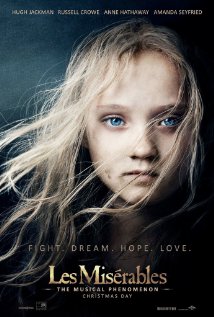
Les Miserables (pronounced “lay Miz-er-rob”) is French for “The Miserables.” It is set in the time period of upheaval in France where they threw off their monarchy in violence, reinstated it with violence, and repeated the process twice more. Blood ran in the streets, people starved and justice swung back and forth between sides. Victor Hugo wrote the novel Les Miserables in 1862 and it remains one of the longest novels ever written, topping the scales at 1,900 pages unabridged. The original novel comprises five volumes, each volume divided into several books, and subdivided into chapters, for a total of 48 books and 365 chapters. Legend has it that Hugo had himself locked in a room naked with nothing but pencil and paper so he could finish it.
In any case, critics at the time hated it, and the French government hated it so much that Hugo was banished to England for political crimes. Since then, it has been considered a near perfect piece of literature. It was remade into a musical screenplay and has had long runs both on and off Broadway. With such popularity, it was inevitable that it would be made into a movie version. The movie version is based on the musical play adaptation, so it is twice removed from the original book.
Starting in 1814 and ending around 1832 with the June Rebellion in France, Les Misérables is a mostly depressing look at the inhumanity of people, suffering, lost dreams, but also the triumph of the human spirit. It strikes me as strange to put such often depressing themes to music. Claude-Michel Schönberg composed the Tony Award winning score in 1980. Though I am not a music fan, it is impossible to walk out of the movie without hearing the music in your head. You even find yourself humming weeks later. As I write this the music is going in my head, reminiscent of “It’s a Small World” at Disneyland, it sticks with you.
I talked to many others who went to this film for their perspective. My lovely wife has seen Les Miz on Broadway and at the Gammage in Phoenix, but I had never gone. Looking to pick up wife points during the holidays I suggested we go to see the movie. I actually found the movie more entertaining than many of the “musical theater” aficionados. I believe the reason is that the story, cinematography, sound, costuming and acting are all superb.
Hugh Jackman steals the show as the main protagonist Jean Valjean, a former convict who stole bread and changed his identity upon release. A parole violator, he is hunted forever by the gendarme Javert played by Russell Crowe. Valjean dedicates himself to good, only to find of a tragic event at his own business. This leads to a long series of events that culminate in the end of his life. The cast is amazing, with strong performances from Jackman, Crowe, Anne Hathaway, Amanda Seyfried, Samantha Sparks, Eddie Redmayne, and Aaron Tveit.
There were a few parts that I disliked and took me out of the moment. Sasha Baron Cohen, of “Borat” fame, along with Helena Bonham Carter are put into the film as comic relief. True, watching abject misery and injustice might need to be broken up by comedy, but the two of them do a terrible job in my opinion, acting as they do in every movie they have been cast in the last ten years. Cohen did so-so in Hugo, but not here. The other major distraction for me is that everyone speaks with a British accent, some with Cockney dialect, yet the film is about France. Can no one speak normally, or even try a French accent? The accents were as bad as John Wayne playing Genghis Khan.
The part that did not bother me was the often poor singing ability of the cast. Hugh Jackman is no stranger to Broadway and sings quite well. Anne Hathaway is either an awesome singer or had help because her songs are spot on. Let’s be frank though; Russell Crowe is not a recording artist. It sounded like he was in pain trying to reach past three comfortable notes. My son and daughter are both former professional actors and singers (my daughter still performs professionally) and they were disturbed by the poor singing. For myself, I preferred the outstanding acting over singing if I had to make a choice.
Les Miserable is long and noticeably so at 157 minutes, a good hour longer than most films. It tells so much story that you are not bored, but you do start to wonder when it will end. I would recommend anyone who has not seen or read Les Miz to go see the movie. It is part of a well rounded education and it is certainly enjoyable. If you care about the music more, skip the film and go see the performance of the live play. There they pick singing first, acting second, and you will not cringe during certain songs.
R’Ha – The Movie of the Future
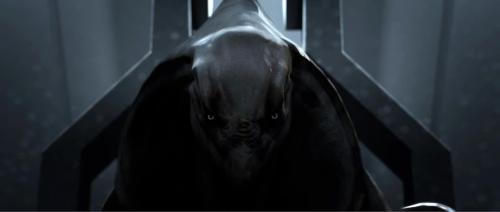
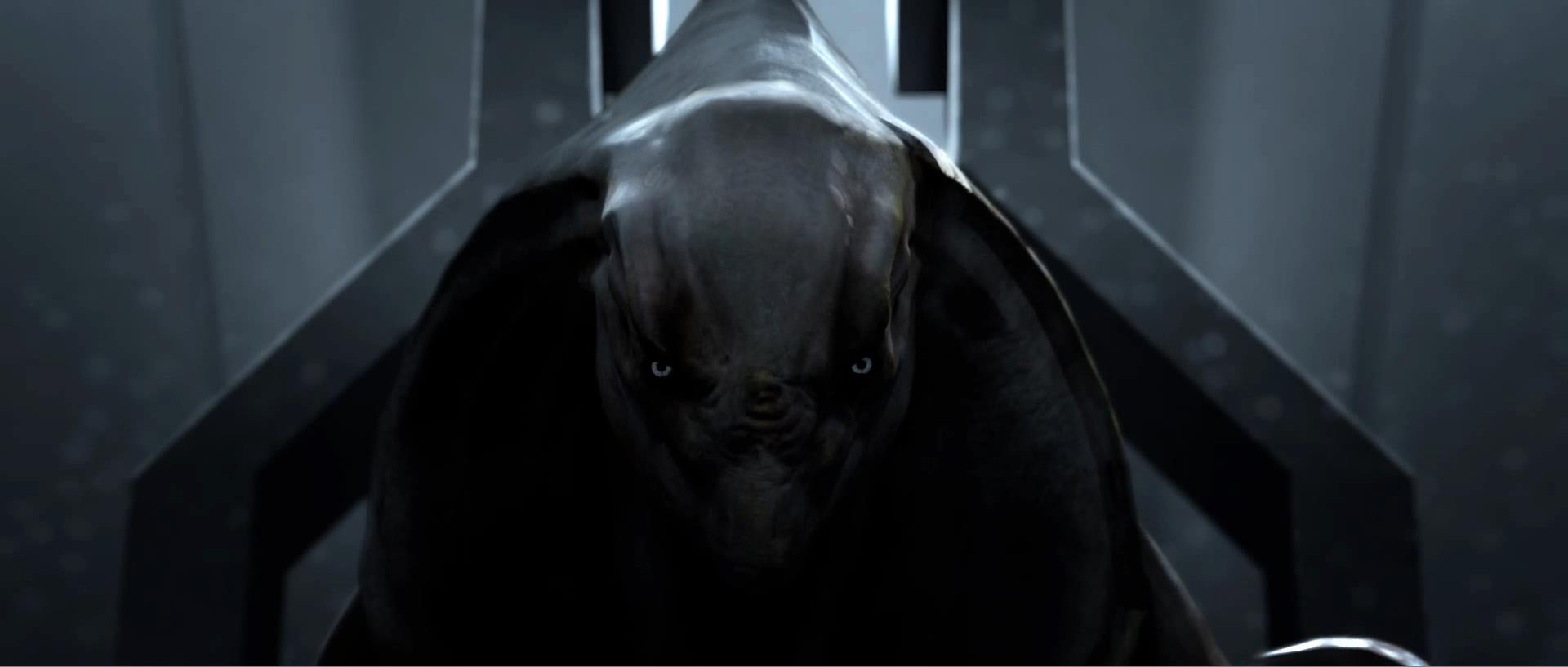
R’Ha is not at your theaters, so no need to go looking at the listings. It is part of the new breed of film making, the independently made, written and distributed film. It is currently receiving an average of 100,000 hits per day. The movie itself is just 6 minutes and 26 seconds long. The average movie is 90 minutes, so the film is more like the action sequence at the beginning of a James Bond film.
In that short amount of time, filmmaker Kaleb Lechowski sets a scene, develops characters and a story arc, and fits in a twist leaving you wanting to see more. The real shocker though is the seamless sound and video that makes some Hollywood films pale in comparison. It begs the question if an independent filmmaker can do this on a limited budget, how long before others are making full length films, outside of traditional theater distribution, and publishing them online? Music and books are already sold directly, why not movies as well?
You can watch R’ha at https://vimeo.com/57148705
It was written and directed by Kaleb Lechowski, sound by Hartmut Zeller, voice acting by Dave Masterson and work by Scott Glassgold of IAM Entertainment – Representation. Whether this is a precursor to a dramatic shift in the production and distribution of films, or just the latest fad, either way R’ha is worth the six and a half minutes. If nothing else, you will have a new conversation piece and be part of the “in the know” crowd.
Lincoln
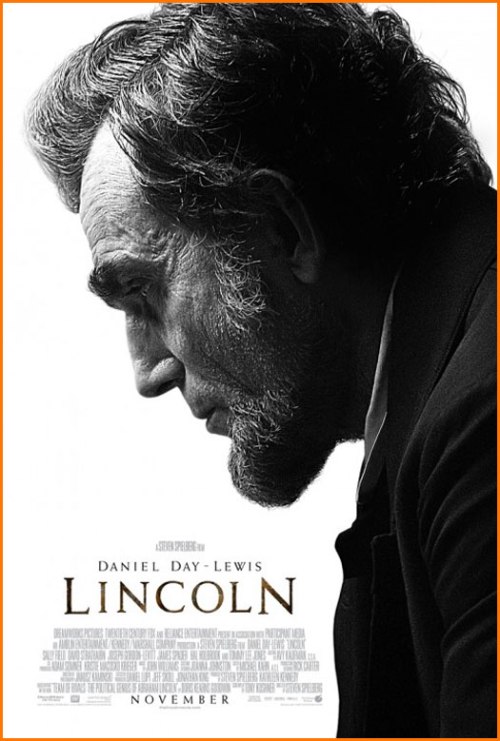
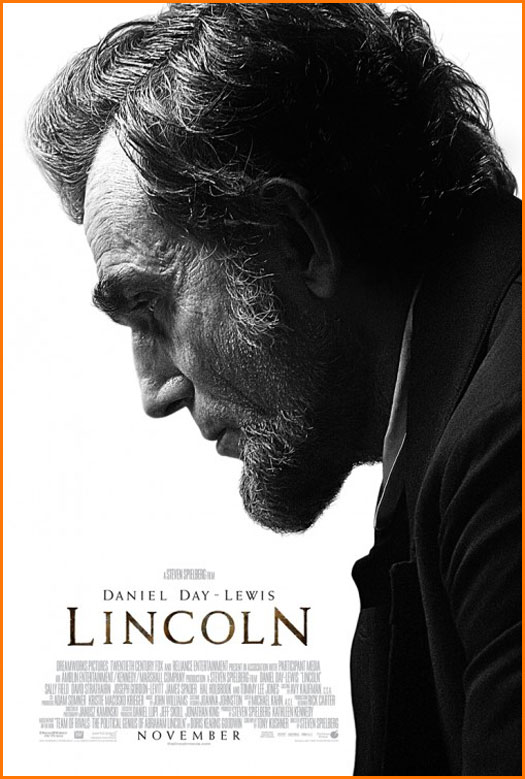
One of the most heralded films of 2012 was Lincoln. Lincoln has now received 12 Oscar nominations and is another hit by filmmaker Steven Spielberg. At 150 minutes, it is an hour longer than a regular film, a trend for blockbuster budget films in 2012. Lincoln is definitely superior in cinematography, costuming and production to most other films. There is no doubt that it was well made.
However, the biggest surprise in the movie is that it is misnamed. Abraham Lincoln is arguably among the top two people in all of American history, along with George Washington. His history is so rich and intriguing that I was looking forward into deep insights, character development, struggles and challenges. After all, in a 150 minute blockbuster film by Steven Spielberg, there would be time to examine subtle issues of character. Instead, the film dwells on roughly a three month period and focuses almost exclusively on passage of the 13th Amendment.
If the movie had been called 13th Amendment it would be perfect. Literally, the entire film is based on Lincoln’s effort to pass the amendment and others’ efforts to stop its passage. It gives more insight into political dueling than it does into Lincoln himself. Portraying Lincoln is Daniel Day-Lewis, one of the best actors in history. His work in My Left Foot won him the Oscar for Best Actor, and he was nominated again for The Last of the Mohicans. His un-likeable role in There Will Be Blood was also amazingly portrayed. At 6’2″ he pulls off the look and feel of President Lincoln and has the country Illinois accent and mannerisms down well.
Unfortunately, Daniel Day-Lewis creates such a compelling picture of Lincoln at only one stage of his life that a generation of movie goers will accept that is the way Lincoln was, and always was. There is no character arc in the film, only a snapshot. I really did not get any new perspective on Lincoln at all. I learned a great deal about passage of the 13th Amendment and the maneuvering that went on for its passage, but honestly I would not have gone to the movie knowing what it was about.
The surprisingly good performance was that of Tommy Lee Jones as Thaddeus Stevens. Tommy Lee Jones is a fine character actor, but it has been a long time since I have seen him step out of his usual roles so much. He is excellent. The rest of the cast simply come in and out of the scenes with Daniel Day-Lewis and Tommy Lee Jones. Sally Field portrays a savvy and politically-wise Mary Todd Lincoln. In reality, by that time in history, Mary Todd Lincoln was rarely lucid, heavily bi-polar, and spent most of her time in seclusion. It was remarked upon at the time, that when sitting beside her shot husband, they were thankful that she had five minutes of clarity, before she reverted back to hysteria. So Sally Field portrays a Mrs. Lincoln that never existed.
James Spader manages to stay relevant in his scenes, but barely so. Joseph Gordon-Levitt is totally miscast as Lincoln’s son Robert. So soon after being the heir apparent as an upcoming Batman or Robin, his current pop culture image makes it hard to suspend belief and accept him as Lincoln’s son.
This is unpopular to say about a Spielberg film, with two fine actors, and the subject matter being Lincoln and the abolishment of slavery – but I found the film to be boring, overly long, and lacking in insights. It was more like watching C-Span. The old musical film 1776 is an example of how passing legislation, in that case the Declaration of Independence, can be made exciting and lively. In Lincoln, other than the quiet moments where our President is telling a story to make a point, it is like watching politics. Politics, like sausage-making, do not make for good movies.
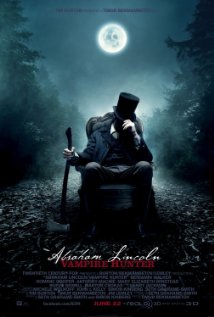
I will try not to have any spoilers here. It is very important to know that the movie and the book are almost completely different stories, with the exception of Abraham Lincoln killing vampires. As an author myself, my wife asked me how I would feel if someone made a movie about one of my books and changed everything like they did with his. I responded I would be more famous, richer and would have to get over it.
Strengths of the Book – The book has tons of interesting historical back story on Lincoln as a child, growing up, his struggles to make money, friends, girlfriend, business, law and politics. In the movie, almost all of this historical background with Lincoln is gone. The book also has written journal entries from Lincoln that leave you wondering if he really wrote them and they were incorporated, or if they are simply made up. The fight scenes are realistic. Abraham Lincoln is a strong woodsmen, but not superhuman. They have the vampires helping to win the First Battle of Bull Run, which matches the historical record of what happened at the battle.
Weaknesses of the Book – The first part is never revisited. In the movie they threw out that start and I have to wonder why the book publisher did not do the same. It is basically the same start as Call of Cthulhu and John Carter of Mars and so many other books which start with someone being handed a stack of old books and they start reading them.
Henry, the most important character, is not explained in the book, either where he comes from, why he works through human surrogates, or anything. It jumps around, skipping huge chunks of time. In the book, the vampires are about four times stronger than a man, but otherwise pretty easy to kill. The ending leaves the vampires running around, so Abraham Lincoln was really only partially successful. If you are looking for dramatic vampire abilities and fight scenes then the book will leave you feeling flat. It is more alternative historical fiction using vampires as the one change to history as we know it.
Strengths of the Movie – The movie has great production values. You get to see scenery from 1818 to 1865 which is very well done. The movie has a great steampunk feel to it, where the book is simply historical vampire fiction. The vampires are stronger and the fight scenes are much better as a result. They can go invisible, etc. I personally also think that the movie strikes a good balance between campy humor and taking it seriously. People who read the book might like less drama over ten hours. People seeing a movie want to see President Lincoln kicking vampire butt, which they accomplish well. The top strength of all – they drop the weak beginning, and actually explain a plausible back story for Henry. I also think the movie strikes a balance between campy and serious that keeps it fun.
Weaknesses of the Movie – It takes out one of Lincoln’s two friends and replaces him with a former boyhood slave friend. It makes the other friend seem unreliable. It adds a super villain vampire named Adam that is not existent in the book. There are a few scenes where Lincoln is wounded, that show wounds from earlier in the movie. The make up folks or editors got some of the scenes in the wrong order.
The movie is mostly special effects and almost no character development. In truth, you learn very little about Lincoln and the actor portraying him was better at looking like Lincoln than acting like him. He feels like Captain America before the transformation. They also make Abraham Lincoln and his new slave sidekick look supernatural in their abilities. Including, chopping down a tree over a foot thick with one blow. Training is one thing, super powers another.
Historically, the movie gets many things wrong, while the book does not. They add that vampires can only be killed with silver. They inaccurately include Harriet Tubman and the Underground Railroad. They show vampires over-running federal troops with artillery on the first day of Gettysburg. Only once, on the third day, did any Confederate troops overrun artillery, it was the famous Pickett’s charge, and then only for a few minutes before they were slaughtered. They show the WashingtonMonument under construction. In truth, construction of the monument began in 1848, but was halted from 1854 to 1877, after Lincoln’s death. I could go on, but I won’t, the historical errors are rampant.
Movie Comment – The character Henry, played by Dominic Cooper steals the whole show, relegating Lincoln’s wooden acted character to second fiddle. Henry is so well played the other performances suffer from, in my opinion, poor casting or acting.
Still, I recommend you both read the book and see the movie. After all, it’s Abraham Lincoln killing vampires, you got to see that right?

















































 Michael Bradley - Time Traveler