Monthly Archives: March 2013

Joss Whedon’s Top 10 Writing Tips

Joss Whedon’s Top 10 Writing Tips

reposted from:

Joss Whedon Top 10 Writing Tips

Film critic Catherine Bray interviewed Joss Whedon in 2006 for UK movie magazine Hotdog to find out his top ten screenwriting tips. Photo: Joss Whedon at San Diego Comic Con – courtesy of Gage Skidmore.

Joss Whedon is most famous for creating Buffy the Vampire Slayer, its spin-off Angel and the short-lived but much-loved Firefly series. But the writer and director has also worked unseen as a script doctor on movies ranging from Speed to Toy Story. Here, he shares his tips on the art of screenwriting.

1. FINISH IT
Actually finishing it is what I’m gonna put in as step one. You may laugh at this, but it’s true. I have so many friends who have written two-thirds of a screenplay, and then re-written it for about three years. Finishing a screenplay is first of all truly difficult, and secondly really liberating. Even if it’s not perfect, even if you know you’re gonna have to go back into it, type to the end. You have to have a little closure.

2. STRUCTURE
Structure means knowing where you’re going; making sure you don’t meander about. Some great films have been made by meandering people, like Terrence Malick and Robert Altman, but it’s not as well done today and I don’t recommend it. I’m a structure nut. I actually make charts. Where are the jokes? The thrills? The romance? Who knows what, and when? You need these things to happen at the right times, and that’s what you build your structure around: the way you want your audience to feel. Charts, graphs, coloured pens, anything that means you don’t go in blind is useful.

3. HAVE SOMETHING TO SAY
This really should be number one. Even if you’re writing a Die Hard rip-off, have something to say about Die Hard rip-offs. The number of movies that are not about what they purport to be about is staggering. It’s rare, especially in genres, to find a movie with an idea and not just, ‘This’ll lead to many fine set-pieces’. The Island evolves into a car-chase movie, and the moments of joy are when they have clone moments and you say, ‘What does it feel like to be those guys?’

4. EVERYBODY HAS A REASON TO LIVE
Everybody has a perspective. Everybody in your scene, including the thug flanking your bad guy, has a reason. They have their own voice, their own identity, their own history. If anyone speaks in such a way that they’re just setting up the next person’s lines, then you don’t get dialogue: you get soundbites. Not everybody has to be funny; not everybody has to be cute; not everybody has to be delightful, and not everybody has to speak, but if you don’t know who everybody is and why they’re there, why they’re feeling what they’re feeling and why they’re doing what they’re doing, then you’re in trouble.

5. CUT WHAT YOU LOVE
Here’s one trick that I learned early on. If something isn’t working, if you have a story that you’ve built and it’s blocked and you can’t figure it out, take your favourite scene, or your very best idea or set-piece, and cut it. It’s brutal, but sometimes inevitable. That thing may find its way back in, but cutting it is usually an enormously freeing exercise.

6. LISTEN
When I’ve been hired as a script doctor, it’s usually because someone else can’t get it through to the next level. It’s true that writers are replaced when executives don’t know what else to do, and that’s terrible, but the fact of the matter is that for most of the screenplays I’ve worked on, I’ve been needed, whether or not I’ve been allowed to do anything good. Often someone’s just got locked, they’ve ossified, they’re so stuck in their heads that they can’t see the people around them. It’s very important to know when to stick to your guns, but it’s also very important to listen to absolutely everybody. The stupidest person in the room might have the best idea.

7. TRACK THE AUDIENCE MOOD
You have one goal: to connect with your audience. Therefore, you must track what your audience is feeling at all times. One of the biggest problems I face when watching other people’s movies is I’ll say, ‘This part confuses me’, or whatever, and they’ll say, ‘What I’m intending to say is this’, and they’ll go on about their intentions. None of this has anything to do with my experience as an audience member. Think in terms of what audiences think. They go to the theatre, and they either notice that their butts are numb, or they don’t. If you’re doing your job right, they don’t. People think of studio test screenings as terrible, and that’s because a lot of studios are pretty stupid about it. They panic and re-shoot, or they go, ‘Gee, Brazil can’t have an unhappy ending,’ and that’s the horror story. But it can make a lot of sense.

8. WRITE LIKE A MOVIE
Write the movie as much as you can. If something is lush and extensive, you can describe it glowingly; if something isn’t that important, just get past it tersely. Let the read feel like the movie; it does a lot of the work for you, for the director, and for the executives who go, ‘What will this be like when we put it on its feet?’

9. DON’T LISTEN
Having given the advice about listening, I have to give the opposite advice, because ultimately the best work comes when somebody’s fucked the system; done the unexpected and let their own personal voice into the machine that is moviemaking. Choose your battles. You wouldn’t get Paul Thomas Anderson, or Wes Anderson, or any of these guys if all moviemaking was completely cookie-cutter. But the process drives you in that direction; it’s a homogenising process, and you have to fight that a bit. There was a point while we were making Firefly when I asked the network not to pick it up: they’d started talking about a different show.

10. DON’T SELL OUT
The first penny I ever earned, I saved. Then I made sure that I never had to take a job just because I needed to. I still needed jobs of course, but I was able to take ones that I loved. When I say that includes Waterworld, people scratch their heads, but it’s a wonderful idea for a movie. Anything can be good. Even Last Action Hero could’ve been good. There’s an idea somewhere in almost any movie: if you can find something that you love, then you can do it. If you can’t, it doesn’t matter how skilful you are: that’s called whoring.


Leave a comment

Filed under Writing

Rome – An Ancient Super City

Rome – Ancient Super City

Rome

2 Comments

Filed under Humor and Observations

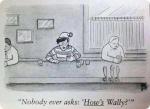
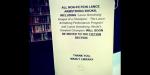
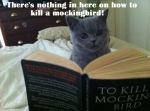
Book/Writing Humor

Humorous jokes about books and writing.  Hope you find at least a few entertaining.

1 Comment

Filed under Humor and Observations, Writing

Daisy Morris, 9, Discovers New Dinosaur And Has It Named After Her

Daisy Morris, 9, Discovers New Dinosaur And Has It Named After Her

Posted: 03/20/2013 6:18 pm EDT  |  Updated: 03/21/2013 11:48 am EDT

 
Daisy Morris Dinosaur
One little girl’s odd hobby has led to an extraordinary find for British paleontologists.

At the age of 9, Daisy Morris has discovered a new dinosaur species, which scientists have since named after her. The new creature has been dubbed Vectidraco daisymorrisae, the “Dragon from the Isle of Wight.”

Daisy was just 4 when she stumbled upon the fossilized remains of an unknown animal during a family walk on the beach in 2009. The family lives near the coast of England’s Isle of Wight — also known as the “dinosaur capital of Great Britain.”

“She has a very good eye for tiny little fossils,” her mother Sian Morris told BBC. Daisy apparently first began fossil hunting at age 3. “She found these tiny little black bones sticking out of the mud and decided to dig a bit further and scoop them all out,” her mother said.

Story continues after photo.
daisy morris dinosaur

Realizing that Daisy had possibly uncovered an ancient specimen, her family took the findings to Southampton University’s fossil expert Martin Simpson.

“When Daisy and her family brought the fossilized remains to me in April 2009, I knew I was looking at something very special,” Simpson told the Daily Mail.

Over the past several years, the bones Daisy discovered have been thoroughly analyzed by paleontologists. The findings were finally published this Monday. The fossilized remains belong to a previously unknown genus and species of a small flying reptile called the pterosaur.

The remains date back to the Lower Cretaceous period and may be up to 115 million years old.

Simpson told the Daily Mail that if it weren’t for Daisy, the fossils would “without doubt have been washed away and destroyed.”

The family has donated the fossils to the Natural History Museum while Daisy’s personal collection continues to grow. Sian Morris told the Daily Mail, “She’s fascinated and we’re very proud of her.”

1 Comment

Filed under Humor and Observations

Hundreds of family pets, protected species killed by little known federal agency

I was shocked when I read the story below.  This really needs to stop.

Hundreds of family pets, protected species killed by little known federal agency

By 

Published March 17, 2013

  • Maggie1.JPG

    This image, provided by the McCurtain family, of Gresham, Ore., shows “Maggie,” a 7-year-old border collie killed by a government trap in 2011.

  • Maggie6.jpg

    Maggie died when her neck was snapped by a body-gripping device known as a conibear trap, placed less than 50 feet from her family’s suburban Oregon home. (Denise McCurtain)

  • Maggie3.JPG

    The McCurtains claim multiple traps, like this one, were placed with no warning around a pond less than 50 feet from their Oregon backyard. (Denise McCurtain)

  • dogkilled3.JPG

    This photo, provided by Camilla Fox, of the group Project Coyote, shows a dog killed by a conibear trap in Southhampton, N.Y. Such traps are frequently used by Wildlife Services to kill raccoons, beavers and other wildlife. But dogs and other non-target animals often fall victim to the traps.

  • Dogkilled1.JPG

    This undated photo, provided by the group Project Coyote, shows another pet killed by a body-gripping conibear trap.

It was an August morning two years ago when Maggie, a spry, 7-year-old border collie, slipped through the backyard fence of her family’s suburban Oregon home. Minutes later, she was dead – her neck snapped by a body-gripping trap set by the U.S. government less than 50 feet from the home she shared with the four children who loved her.   
“It is an image that will never leave me,” Maggie’s owner, Denise McCurtain, of Gresham, Ore., said of her death. “She was still breathing as we tried to remove the trap. Her eyes were open and she was looking at me. All I could say was ‘I’m trying so hard. You didn’t do anything wrong.'”

Maggie’s death at a minimum was one of hundreds of accidental killings of pets over the last decade acknowledged by Wildlife Services, a little-known branch of the U.S. Department of Agriculture that is tasked with destroying animals seen as threats to people, agriculture and the environment. Critics, including a source within the USDA, told FoxNews.com that the government’s taxpayer-funded Predator Control program and its killing methods are random — and at times, illegal.

Over the years, Wildlife Services has killed thousands of non-target animals in several states – from pet dogs to protected species – caught in body-gripping conibear traps and leg hold snares, or poisoned by lethal M-44 devices that explode sodium cyanide capsules when triggered by a wild animal – or the snout of a curious family pet.

The McCurtains, like many other families, were never informed that such deadly devices were placed so close to their home in grass near the edge of a pond where their young son kicks his soccer ball and their daughter catches turtles.

The traps, set on communal property owned by the neighborhood association, were meant to kill an infestation of nutria, rat-like pests that pose no danger to people but can be harmful to the environment. The only warning sign was a small placard in the grass that identified the device as government property and cautioned against tampering with it. The neighborhood association told the McCurtains it never would have approved such traps had it known they were so deadly.

“It’s unconscionable that anybody with an ounce of common sense would set these traps in an area frequented by the public and their pets,” said Brooks Fahy, executive director of Predator Defense, a national watchdog group that advocates non-lethal predator control.

“It’s unconscionable that anybody with an ounce of common sense would set these traps in an area frequented by the public and their pets.”

– Brooks Fahy, executive director of Predator Defense 

The M-44’s intended targets are coyotes that kill or harass livestock primarily in the western states, where Wildlife Services is most active and critical to farmers protecting their livestock.

But, like Maggie, there often are unintended victims — like a puppy belonging to J.D. and Angel Walker of Santa Anna, Texas.

In February 2011, the couple’s 18-month-old pit bull was killed when it sniffed and pulled on a meat-scented M-44 placed about 900 feet from its home.

Kyle Traweek, the Wildlife Services employee who set the device, violated at least three M-44 restrictions set by the Environmental Protection Agency, according to Texas officials. In a June 6, 2012, letter reprimanding Traweek, the Texas Department of Agriculture said he broke EPA rules by placing the cyanide in an area where “exposure to the public and family and pets is probable.”

Click here to read the letter

Traweek is no longer employed by Wildlife Services, although his departure was not related to the incident in Texas, according to a spokeswoman with the Animal Plant and Health Inspection Service (APHIS), a division of the USDA that oversees the program.

It is difficult to verify the number of accidental killings of pets each year by Wildlife Services, in part because many go unrecorded, according to multiple sources.

A management source within the USDA claims Wildlife Services employees are told not to document the accidental killings of pets if it can be avoided.

“They are told to get rid of the leash and bury the dog,” said the source, who spoke to FoxNews.com on condition of anonymity.

The source also alleged that in some instances in Arizona, California and Minnesota, the killings of pets are intentional – often with the knowledge, approval and encouragement of upper level Wildlife Services management.

“There have been cases of them shooting and killing dogs,” the source said. “They’ll just claim it was feral, vicious or rabid. They think they can do anything they want.”

In court documents obtained by FoxNews.com, Christopher Brennan, a California-based Wildlife Services employee, told a Mendocino County Superior Court judge that he has shot hundreds of “free-ranging” dogs who he claimed were preying on livestock. During the Sept. 1, 2009, hearing – involving a restraining order between Brennan and a neighbor – the judge asked Brennan how many dogs he has killed as a government trapper over the last 10 years.

“Probably close to 400,” Brennan replied, according to the court transcript.

Carol Bannerman, an APHIS spokeswoman, confirmed Tuesday that Brennan is still employed as a “wildlife specialist” for the agency. Bannerman claimed Brennan works in an area where there is a large number of unleashed dogs that harass or kill livestock — and said there is a “significant population” of privately owned guard dogs, mostly pit bulls, that are allegedly left to roam freely so they can protect illegal marijuana crops.

“None of the feral and free-ranging dogs lethally removed in California last year were non-targets,” Bannerman said. “Some non-target dogs were trapped and released.”

In January, a Wildlife Services employee was arrested in Arizona and charged with felony animal cruelty after allegedly using a government trap to capture a neighbor’s dog he deemed problematic. The employee, identified as Russell Files, set up the leg-hold device during work hours to trap the animal, which was covered in blood from trying to chew its way out of the device when police arrived on the scene. An APHIS official would not comment on whether Files is still working for the government, citing an ongoing investigation.

Wildlife Services described the overall harm to pets and non-target wildlife as “rare.”

“Wildlife Services provides expert federal leadership to responsibly manage one of our nation’s most precious resources — our wildlife,” APHIS spokeswoman Tanya Espinosa said in a statement. “We seek to resolve conflict between people and wildlife in the safest and most humane ways possible, with the least negative consequences to wildlife overall.”

The program said that accidental killings account for less than one percent of wildlife removed for damage concerns – and claimed that number is even lower for pets.

Wildlife Services, which has been in place since 1895, touts its mission as critical, priding itself on protecting the country’s agriculture and natural resources from destructive wildlife – damage that can be costly for landowners and businesses.

According to a 2010 report by the USDA’s National Agricultural Statistics Service (NASS), U.S. farmers and ranchers spent $188 million during 2010 on non-lethal ways to protect their land and livestock. That number has declined from 2006, when NASS estimated annual investments in non-lethal methods to be at $199 million.

The USDA says that despite such investments, approximately 647,000 cattle, sheep and goat are killed by predators each year, resulting in an annual loss of more than $137 million. The lost animals do not include chickens and turkeys.

But Carson Barylak, federal policy adviser of the Animal Welfare Institute, is skeptical of the USDA’s statements. She said the danger posed by predatory animals is exaggerated.

“The very reports that Wildlife Services cite for these figures show that [attacks by wild predators have] a relatively small impact on the livestock industry. In the case of cattle, for instance, under a quarter of a percent of the nation’s stock was lost to predators in 2010 according to the program’s records.”

The exact number of pet animals and protected species killed over the years by the agency is one that will likely never be known.

A report by the Sacramento Bee, which investigated the program last year, claimed its employees have accidentally killed more than 50,000 non-target animals since 2000, including federally protected golden and bald eagles. The newspaper also reported that more than 1,100 dogs, including family pets, were destroyed by government traps or poison within those same years. Other known cases include serious injuries to pets that result in leg amputations, as well as harm to humans who come in contact with the cyanide.

Doug McKenna, a longtime criminal investigator for the U.S. Fish and Wildlife Service – a separate agency that falls under the Department of Interior – said he probed many killings of non-predatory and protected species by Wildlife Services over the years.

“The Bald Eagle is a scavenger bird, so of course if it flies down to investigate a carcass that is placed near a leg hold trap, it will get caught in it,” he said. If the trap is not checked in a timely manner, the eagle is left to die. Such deaths are a violation of federal law, like the Bald and Golden Eagle Protection Act, first passed in 1940.

McKenna said that in the case of M-44 cyanide devices, state governments must grant employees permission to place them as well as post warning signs for the public.

“Any access point into the property has to have signs that M-44’s are being used and it has to be in English and Spanish,” he said.

For pet owners, seeking legal recourse against the government is a daunting and tedious process – requiring individuals to file a tort claim that typically results in families losing more money even if they win.

SEND TIPS TO NEWSMANAGER@FOXNEWS.COM

“Most people do not pursue litigation when they realize the financial cost, the time involvement and the limit on recovery for damages being the actual value of their pet,” said Oregon-based attorney Daniel Stotter, who handles many of these cases.

“The bottom line is that the federal government has limited liability in all lawsuits involving tort claims, damage to property or persons. You can sue the federal government for certain things, like negligence, but you cannot seek punitive damages,” he said, adding that victims are responsible for covering their own legal fees.

“The government knows that when they injure or kill an animal, they’re more likely to not have financial repercussions,” he said.

For families like the McCurtains and Walkers, there is no price to be paid for the emotional toll of losing a pet.

“It is losing a member of the family,” Angel Walker said. “You can’t really get past it.”

Read more: http://www.foxnews.com/us/2013/03/13/hundreds-family-pets-endangered-species-killed-by-little-known-federal-agency/#ixzz2OiVYM37E

1 Comment

Filed under Animals, Humor and Observations

Get the Government out of Marriage and Most Everything Else Too!

Get the Government out of Marriage and Most Everything Else Too!

I was at dinner the other night and someone, knowing my penchant for history and religion, asked me about monogamy and why the Bible teaches only one man and one woman.  They were shocked when I said that many in the Bible had multiple spouses and concubines.  The New Testament, through Paul, encourages you to dedicate yourself to God and not take a mate, but to be married if you would be carried away by lust without a spouse.  Better to have someone to mate with than to try to be celibate if you are unable.  For most of human existence, marriage was ONLY a religious institution.  I have tried in vain so far to see where it crossed over into a governmental regulation.

Getting government involved in anything we don’t have to always results in a loss of liberty.  Marriage should remain a religious only ceremony.  If your religion prohibits same sex marriage, so be it.  If your religion, or lack thereof, allows it, so be it.  That is real freedom.  People like me that are right-wing Christian fundamentalists should avoid having the government get involved.  If they can force a system of beliefs on some, they will do it to us as well.  We need to let people live by their choices, that is why God gave us free will in the first place.  Neither side should fun to Big Government to limit freedoms of others.

If government wants to pay for birth control, they should not force Catholics to pay for it.  I personally disagree with Catholics, but I don’t want them to lose their freedoms.  If same sex couples want to get married by a willing person with the proper paperwork to marry them, so be it.  I don’t want them to lose their freedom either.  I don’t want the government to take away our guns, tell us who we can marry, how we can worship, who we can hire, what we can pay them, what light bulbs we can buy, how much our toilet can flush, when we can use a fireplace, or a million other invasive things they do now.

We are the frogs in the pot, with the temperature slowly rising and we do not jump out before we are cooked.  When will we stop fighting through government to limit others, and wake-up and fight together to limit government power?  We need to return to a government OF the people, BY the people, FOR the people.  I have faith in my fellow men and women that we can live our lives the way we wish without a nanny government deciding everything for us.

I am for freedom, personal liberty, and your ability to make your own choices, whether I agree with them or not.  I want the same in return.  Neither of us will get it if a nameless, faceless bureaucrat decides for us.


9 Comments

Filed under Humor and Observations, Uncategorized

Kate Upton Not Available Prom Night…poor guy

Kate Upton breaks geeky high schooler’s heart, won’t attend his prom

Published March 25, 2013

FoxNews.com

Jake Davidson still doesn’t have a date for his prom. At least not one named Kate Upton.

The Sports Illustrated swimsuit superstar said that while she was indeed flattered by Davidson’s YouTube prom request – a request that went viral and was viewed over 2 million times — she can’t make his May prom in Los Angeles.

“[I] just don’t know if I can make it work. But I really appreciated being asked — it made me feel really great!” she told People. “This video was creative and funny. It made me laugh.”

Davidson posted a YouTube video last Sunday asking Upton to be his prom date.

“I’m gonna be real with you here, I don’t have a girlfriend, and with prom season coming around, that could be problematic for some,” he explained. “But I’m me, I’m Optimus Prime, and I see the glass half full.”

He proved that by explaining why apparent opposites such as he and Upton attract: “You’re the ying to my yang, I’m Jewish, 5’9 on a really good day – and I can’t dance at all. You’re Christian, 5’10, and that Cat Daddy video should have won an Oscar for best short film – you could say this is destiny.”

“Kate we can ride around all night long, ’til 11, that’s my curfew,” he added.

Upton retweeted the video to her followers and initially gave Davidson hope via Twitter:

“You can call me Katie if you want! How could I turn down that video! I’ll check my schedule ;)”

Davidson couldn’t believe his luck.

“You truly are incredible,” he replied. “Just responding made my year, thanks so much! P.S. Hope your schedule is free!”

Unfortunately, as Davidson has now learned, a supermodel’s schedule is rarely that.

Read more: http://www.foxnews.com/entertainment/2013/03/25/kate-upton-breaks-geeky-high-schoolers-heart/?intcmp=features#ixzz2OcaUMN2J

Leave a comment

Filed under Humor and Observations

Top 10 Snipers in History

Top 10 Snipers in History

by , November 13, 2009
‘It was night and low visibility, but I saw a guy with an AK-47 lit up by the porch light in a doorway about 400 meters away. I watched him through the sights. He looked like just another Iraqi. I hit him low in the stomach and dropped him.’ – Specialist James Wilks, 25, from Fort Worth, Texas. Concealment is key to becoming a great sniper. Highly trained marksmen who can shoot accurately from incredible distances with specialized training in high-precision rifles. In addition, they are trained in camouflage, field craft, infiltration, reconnaissance and observation, making them perhaps the most feared military presence in a war. Below is my list of top ten snipers in history and some of the greatest shots ever fired.10
Thomas Plunkett
died in 1851

Riflemen

Was an Irish soldier in the British 95th Rifles. What makes him on of the greats is that he shot a very impressive French general, Auguste-Marie-François Colbert.

During the battle at Cacabelos during Monroes retreat in 1809, Plunkett, using a Baker Rifle, shot the French general at a range of about 600 meters. Giving the incredible inaccuracy of rifles in the early 19th century, this was either a very impressive feat, or one hell of a fluke. Well Plunkett not wanting his army buddies to think he was a bit lucky decided to take the shot again before returning to his line. So he reloaded his gun and took aim once again this time at the trumpet major who had come to the generals aid. When this shot also hit its intended target, proving that Plunkett is just one badass marksman, he looked back to his line to see the impressed faces of the others in the 95th Rifles.

Just for comparison the British soldiers were all armed with ‘Brown Bess muskets’ and trained to shoot into a body of men at 50 meters. Plunkett did 12 times that distance. Twice.9

Sgt Grace
4th Georgia Infantry

Sedgwick-General

The date was May 9th 1864, when Sgt Grace, a Confederate sniper, achieved what was considered to be an incredible shot at the time, and what is definitely the most ironic demise of a target in history. It was during the battle of Spotsylvania when Grace took aim with his British Whitworth Rifle. His target was General John Sedgwick (pictured above) and the distance was 1,000 yards. An extremely long distance for the time. During the beginning of the skirmish, the confederate sharpshooters were causing Sedgwick’s men to duck for cover. Sedgwick refused to duck and was quoted saying “What? Men dodging this way for single bullets? What will you do when they open fire along the whole line? I am ashamed of you. They couldn’t hit Elephants at this distance.” His men persisted in taking cover. He Repeated “They couldn’t hit elephants at this distance” Seconds Later Grace’s shot hits Sedgwick just under his left eye.

I swear you couldn’t write it. Sedgwick was the highest ranking Union casualty in the civil war and upon hearing his death Lt. Gen. Ulysses S. Grant repeatedly asked “Is he really dead”.

8

Charles ‘Chuck’ Mawhinney
1949-

8-Mawhinney-625X450

103 Confirmed Kills

Was an avid hunter as a kid and joined the Marines in 1967. He served in the U.S. Marine Corps during Vietnam and holds the record for number of confirmed kills for Marine snipers, exceeding that of legendary Marine sniper Carlos Hathcock. In just 16 months he killed 103 enemies and another 216 kills were listed as probable’s by the military, only because it was too risky at the time to search the bodies for documents. When he left the Marines he told no-one of his of his role during the conflict and only a few fellow Marines knew of his assignments. It was nearly 20 years before somebody wrote a book detailing his amazing skills as a sniper. Mawhinney came out of anonymity because of this and became a lecturer in sniper schools. He was once quoted saying “it was the ultimate hunting trip: a man hunting another man who was hunting me. Don’t talk to me about hunting lions or elephants; they don’t fight back with rifles and scopes. I just loved it. I ate it up.”

A routinely deadly shot from distances between 300 – 800 yards, Mawhinney had confirmed kills of over 1000 yards, making him one of the greatest snipers of the Vietnam war.

7

Rob Furlong

925928

A former corporal of the Canadian Forces, he holds the record for the longest confirmed sniper kill in history at 1.51 miles or 2,430 metres. That’s the length of about 26 football pitches.

This amazing feat occurred in 2002, when he was involved in Operation Anaconda. His Sniper Team consisted of 2 Corporals and 3 Master Corporals. When a three man Al-Qaeda weapons team moved into a mountainside position he took aim. Furlong was armed with a .50-caliber McMillan Brothers Tac-50 Rifle and loaded with A-MAX very low drag bullets. He fired and missed. His second shot hit the enemies knapsack on his back. He had already fired his third shot by the time the second hit, but now the enemy knew he was under attack. The airtime for each bullet was about 3 seconds due to the immense distance, enough time for an enemy to take cover. However the dumbfounded militant realised what was happening just in time to take the third shot in the chest.

6

Vasily Zaytsev
March 23, 1915 – December 15, 1991

6-Zaytsev-625X450

242 Confirmed Kills

Zaytsev is probably the best known Sniper in history thanks to the movie ‘Enemy At The Gates’. It is a great film and I wish I could say it was all true. However the truth only goes as far as the battle of Stalingrad. There was no Nazi Counter-Sniper Specialist in real life. Well not to the extent of the film. Here’s the truth. Zaytsev was born in Yeleninskoye and grew up in the Ural Mountains. His surname means ‘hare‘. Before Stalingrad, he served as a clerk in the Soviet Navy But after reading about the conflict in the city he volunteered for the front line. he served in the 1047th Rifle Regiment. Zaytsev ran a sniper school in the Metiz factory. The cadets he trained were called Zaichata, meaning ‘Leverets’ (Baby Hares). This was the start of the sniper movement in the 62nd army. It is estimated that the snipers he trained killed more than 3,000 enemy soldiers

Zaytsev himself made 242 confirmed kills between October 1942 and January 1943, but the real number is probably closer to 500. I know I said there was no counter-sniper, but there was Erwin Kónig. Was alleged to be a highly skilled Wehrmacht sniper. Zaytsev claimed in his memoirs that the duel took place over a period of three days in the ruins of Stalingrad. Details of what actually happened are sketchy, but by the end of the three day period Zaytsev had killed the sniper and claimed his scope to be his most prized trophy. For him to make this his most prized trophy means that this person he killed must have been almost as good as Zaytsev himself.

5
Lyudmila Pavlichenko
July 12, 1916 – October 10, 1974

Lyudmyla M Pavlichenko

309 Confirmed Kills

In June 1941, Pavlichenko was 24 and Nazi Germany were invading the Soviet Union. She was among the first volunteers and asked to join the infantry. she was assigned to the Red Armies 25th infantry Division. From there she became one of 2000 female snipers of the soviet.

Her first 2 kills were made near Belyayevka using a Mosin-Nagant bolt action rifle with a P.E. 4-power scope. The first action she saw was during the conflict in Odessa. She was there for 2 and a half months and notched 187 kills. When they were forced to relocate, she spent the next 8 months fighting in Sevastopol on the Crimean Peninsula. There she recorded 257 kills and for this feat she was cited by the Southern Army Council. Pavlichenkos’ total confirmed kills during WW2 was 309. 36 of those were enemy snipers.

4

Corporal Francis Pegahmagabow
March 9, 1891 – August 5, 1952

Francis Pegahmagabow

378 Confirmed kills
300+ Captures

Three times awarded the military medal and twice seriously wounded, he was an expert marksman and scout, credited with 378 German kills and capturing 300+ more. He was an Ojibwa warrior with the Canadians in battles like those at mount sorrel. As if killing nearly 400 Germans wasn’t enough, he was also awarded medals for running messages through very heavy enemy fire, for directing a crucial relief effort when his commanding officer was incapacitated and for running through enemy fire to get more ammo when his unit was running low.

Though a hero among his fellow soldier, he was virtually forgotten once he returned home to Canada. Regardless he was one of the most affective snipers of world war 1.

3

Adelbert F. Waldron
March 14, 1933 – October 18, 1995

Sniper2Bmpxi5

109 confirmed kills

He holds the record for the highest number of confirmed kills for any American sniper in history. However it is not just his impressive kill record that makes him one of the best, but also his incredible accuracy.

This excerpt from ‘Inside the Crosshairs: Snipers in Vietnam’ by Col. Michael Lee Lanning, describes just what I’m talking about:

“One afternoon he was riding along the Mekong River on a Tango boat when an enemy sniper on shore pecked away at the boat. While everyone else on board strained to find the antagonist, who was firing from the shoreline over 900 meters away, Sergeant Waldron took up his sniper rifle and picked off the Vietcong out of the top of a coconut tree with one shot (this from a moving platform). Such was the capability of our best sniper.” Nuff Said.

If there was a scale of difficulty for shots like these, it would be next to impossible to beat. well lets try to do that anyway.

Here’s ‘white feather’….

2

Carlos Norman Hathcock II
May 20, 1942 – February 23, 1999

1133204291 334274Af7C

Nicknamed ‘Lông Trung du Kich’ (‘White Feather Sniper’)

93 Confirmed kills

Hathcock has one of the most impressive mission records of any sniper in the Marine corps. Lets forget about the dozens of shooting championships he won, during the Vietnam war he amassed 93 confirmed kills. The Vietnam army put a $30,000 bounty on his life for killing so many of their men. Rewards put on U.S. snipers by the NVA (North Vietnamese Army) typically amounted to….say $8.

It was Hathcock who fired the most famous shot in sniper history. He fired a round, over a very long distance, which went through the scope of an enemy sniper, hit him in the eye, and killed him. Hathcock and Roland Burke his spotter were stalking the enemy sniper, (which had already killed several Marines) which they believed was sent to kill him specifically. When Hathcock saw a flash of light reflecting off the enemies scope he fired at it in a split second pulling off one of the most precise shots in history. Hathcock reasoned that the only way that this was possible, would have been if both snipers were aiming at each others scopes at the same time, and he fired first. However, although the distance was never confirmed, Hathcock knew that because of the flight time, it would have been easy for both snipers to kill each other. The white feather was synonymous with Hathcock (He kept one in his hat) and he removed it only once for a mission. Keep in mind that he volunteered for this mission, but he had to crawl over 1500 yards of enemy territory to shoot an NVA commanding general. Information wasn’t sent until he was on-route. (He volunteered for a mission he knew nothing about) It took 4 days and 3 nights without sleep of inch-by-inch crawling. One enemy soldier almost stepped on him as he laid camouflaged in a meadow. At another point he was nearly bitten by a viper, he didn’t flinch. He finally got into position and waited for the general. When he arrived Hathcock was ready. He fired one round and hit the general through the chest killing him. The soldiers started a search for the sniper and Hathcock had to crawl back to avoid detection. They never caught him. Nerves of steel.

1

Simo Häyhä
December 17, 1905 – April 1, 2002

Simo Hayha-S585X360-11707

Nicknamed ‘The White Death’

705 confirmed kills (505 with rifle, 200 with submachine gun)

Was a Finnish soldier who, using an iron sighted bolt action rifle, amassed the highest recorded confirmed kills as a sniper in any war…ever!!

Häyhä was born in the municipality of Rautjärvi near the present-day border of Finland and Russia, and started his military service in 1925. His duties as a sniper began during the ‘winter war’ (1939-1940) between Russia and Finland. During the conflict Häyhä endured freezing temperatures up to -40 degrees Celsius. In less than 100 days he was credited with 505 confirmed kills, 542 if including unconfirmed kills, however the unofficial frontline figures from the battlefield places the number of sniper kills at over 800. Besides his sniper kills he was also credited with 200 from a Suomi KP/31 Submachine gun, topping off his total confirmed kills at 705.

How Häyhä did all this was amazing. He was basically on his own all day, in the snow, shooting Russians, for 3 months straight. Of course when the Russians caught wind that a shit load of soldiers were being killed, they thought ‘well this is war, there’s bound to be casualties’. But when the generals were told that it was one man with a rifle they decided to take a bit of action. first they sent in a counter-sniper. When his body was returned they decided to send in a team of counter-snipers. When they didn’t come back at all they sent in a whole goddamn battalion. They took casualties and couldn’t find him. Eventually they ordered an artillery strike, but to no avail. You see Häyhä was clever, and this was his neck of the woods. He dressed completely in white camouflage. He used a smaller rifle to suit his smaller frame (being 5ft3) increasing his accuracy. he used an iron sight to present the smallest possible target (a scoped sight would require the sniper to raise his head for sighting). He compacted the snow in front of the barrel, so as not to disturb it when he shot thus revealing his position. He also kept snow in his mouth so his breath did not condense and reveal where his was. Eventually however his was shot in the jaw by a stray bullet during combat on March 6 1940. He was picked up by his own soldiers who said half his head was missing. He didn’t die however and regained consciousness on the 13th, the day peace was declared.

Once again total kills…. 505 sniper + 200 submachine = 705 total Confirmed Kills…all in less that 100 days.

2 Comments

Filed under Humor and Observations, Uncategorized

1,400 Year Old Monastery on Atlantic Island

Skellig Michael – Mysterious Monastery in the Atlantic

Saturday, March 26, 2011

Nine miles off the coast of County Kerry in the west of Ireland there are two small rocky islands peeking out of the Atlantic Ocean.  The larger of the two, Skellig Michael, is home to something quite extraordinary – a 1400 year old monastery which only a handful of people get to see each year.

As you approach the island there is little, seemingly, to notice.  Yet closer inspection reveals the tell tale criss-cross of manmade paths.   Who could possibly have wanted to live here – and when?

It is thought that the monastery of Skellig Michael was founded at some point in the seventh century and monastic life persisted there for over 600 years.  Why it was abandoned is lost in the sands of time but because of the sheer inaccessibility of the island what the monks left behind remained, through the centuries, remarkably intact.

The name of the island is taken from the Irish language and means Michael’s Rock.  It is some rock, too, rising to 230 meters at its summit.  Atop this the Gaelic Monastery has become well known globally but very few make the journey to visit the site – not many are allowed. This very fact has meant that because its remoteness necessarily discourages tourists that the monastery is, for its age, wonderfully preserved.

It is easy to imagine the early Irish Christian monks leading their extraordinarily spartan day to day existence here – to say that life would have been harsh for them is something of an understatement.  Their huts, in the shape of beehives and called clochans, indicate the bareness of life on the rock.  These monks would have shrugged off all of their earthly possessions before they came to live here. Although it is not by definition a hermitage it must surely have been a lonesome existence for the monks, despite the faith which initiated their decision to move there.

The monastery itself was terraced – a necessity because of the sheer sides of the rick.  Three flights of stairs (perhaps reflecting the Holy Trinity) lead up to Christ’s Valley which is the small depression between the peaks of Skellig Michael at 130 meters.  The visitor is not disappointed when greeted by the sight of six intact clochans.

Neither are they disappointed with the sight of the two oratories, graves and the monolithic cross which are to be discovered there.  There is more recent addition too – a church which was built as late as the thirteenth century.  The construction must have been a labor – the walls are almost two meters thick.

Although Skellig Michael was not intended as such there is a hermitage on the island, distinct from the monastery.   As if a rock in the Atlantic was not isolated enough this extreme form of retreat afforded those monks who wished to contemplate the divine in complete isolation the opportunity to do so.

Daily life and its demands also had to be taken in to account and there is a latrine on the island which is situated over an enormously yawning gap in the rock to ensure that waste matter was thoroughly disposed of.  There are also the remains of a garden which the monks would use to grow essential vegetables.

There is evidence that Skellig Michael suffered several Viking raids, though quite what the visitors from the north would have hoped to pillage is questionable.  However, these raids may have caused the monks to decamp to the mainland in the twelfth century even though the later chapel was built at around the same time. One can only attempt to imagine the dread that the isolated and virtually defenceless monks must have felt at the sight of an approaching Viking longship.

As a result of the deterioration of the monastery due to the tramp of tourists’ feet, the decision was taken to severely restrict the number of visitors to the island.  13 licenses are given to tour operators annually and each may only make a single trip to the rock.

It is thought that there were never more than a dozen or so monks on the island at any one time plus an abbot.  The mystery as to the abandonment of the rock is never likely to be satisfactorily solved but in many ways the monks did the rest of the world a favor.  It is unlikely that what we see now on the island would have remained intact if the island had continued to be populated.  Its very abandonment ensured its survival.

1 Comment

Filed under Humor and Observations

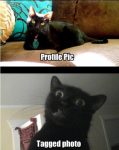
Random Humor

More random humor, just for fun.  Enjoy!

1 Comment

Filed under Humor and Observations