Monthly Archives: March 2013

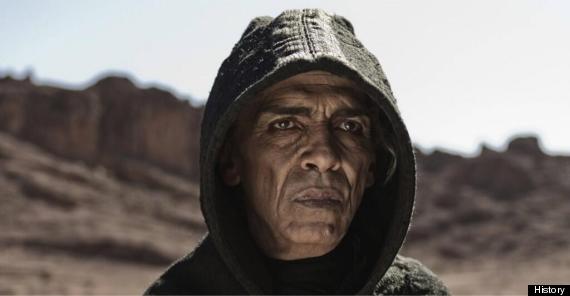
Did the History Channel Intentionally Make Satan Look Like Obama?

I don’t agree with this President, or any other President since Reagan on much of anything.  However, I would not portray them as Satan.  I hope this was not done intentionally.  I don’t see as much resemblance as people are trying to say there is though.  You decide.  Here is the picture, and one of many stories about it below.

SATAN-OBAMA-570


‘The Bible’ creators, History Channel deny show’s Satan resembles President Obama

Published March 18, 2013

FoxNews.com

  • bible obama devil split 660.jpg

    Some viewers said it looked like actor Mehdi Ouzaani (left) was made up to look like President Obama (right) for his role as Satan (center). (Cinemamarocain.net / History / Reuters)

The creators of the miniseries “The Bible” and the network that airs it are denying reports that the character Satan intentionally resembles President Barack Obama.

The couple behind the show, Mark Burnett and Roma Downey, dismissed what they called “foolish” reports that their show’s villain looked like the President.

“This is utter nonsense. The actor who played Satan, Mehdi Ouzaani, is a highly acclaimed Moroccan actor,” they said in a statement sent to FOX 411. “He has previously played parts in several Biblical epics– including Satanic characters long before Barack Obama was elected as our President.”

Downey added: “Both Mark and I have nothing but respect and love our President, who is a fellow Christian. False statements such as these are just designed as a foolish distraction to try and discredit the beauty of the story of The Bible.”

The History Channel set out to put an end to the rumors, saying the show aims to feature “a diverse cast of respected actors.”

“History channel has the highest respect for President Obama,” the network said in a statement. “It’s unfortunate that anyone made this false connection. History’s ‘The Bible’ is meant to enlighten people on its rich stories and deep history.”

After Sunday night’s episode, scores of viewers took to Twitter to note a resemblance between the show’s Satan character and President Barack Obama.

“That guy playing Satan in ‘the Bible’… does resemble the president,” one user wrote. “I would hope it wasn’t intentional, but who knows.”

Another quipped: “Did anyone else notice that Satan spoke like Nacho Libre and looked just like Obama? #thebible”

Read more: http://www.foxnews.com/entertainment/2013/03/18/bible-creators-history-channel-deny-show-satan-resembles-president-obama/?intcmp=features#ixzz2O1MtYthS

1 Comment

Filed under Humor and Observations

Historical Writing – Chronology of Events in Science, Mathematics, and Technology

Another important source I use for writing historical fiction is to know when various advances were made in science, mathematics and technology.  Good not to use radios before they were invented, or cotton looms before they existed.  Even things like light bulbs, electricity and television are harder than you think.  Pardon the small print, but these are useful links by topic.  Found it on StumbleUpon at the following link, not sure the original source document, probably http://www.3rd1000.com.

http://www.stumbleupon.com/su/2Ka4MI/:m-bt.SFj:WJjdm5D./www.3rd1000.com/chronology/chrono.htm/

The Chronology of Events in Science, Mathematics, and Technology


Chronology of Biology and Organic Chemistry
Chronology of Medicine and Medical Technology 
Chronology of General Technology
Chronology of Pure and Applied Mathematics
Chronology of Geology
Chronology of Geography, Meteorology, Paleontology, Science Philosophy and Publishing
Chronology of Agriculture and Food Technology
Chronology of Clothing and Textiles Technology
Chronology of Motor and Engine Technology
Chronology of Transportation Technology
Chronology of Underwater Technology
Chronology of Communication Technology
Chronology of Photography Technology
Chronology of Calculator and Computer Technology
Chronology of Time Measurement Technology
Chronology of Temperature and Pressure Measurement Technology
Chronology of Microscope Technology
Chronology of Low Temperature Technology
Chronology of Rocket and Missile Technology
Chronology of Materials Technology
Chronology of Lighting Technology
Chronology of Classical Mechanics
Chronology of Electromagnetism and Classical Optics 
Chronology of Thermodynamics, Statistical Mechanics, and Random Processes 
Chronology of States of Matter and Phase Transitions 
Chronology of Quantum Mechanics, Molecular, Atomic, Nuclear, and Particle Physics
Chronology of Particle Physics Technology
Chronology of Gravitational Physics and Relativity
Chronology of Black Hole Physics
Chronology of Cosmology
Chronology of Cosmic Microwave Background Astronomy
Chronology of Background Radiation Fields
Chronology of Galaxies, Clusters of Galaxies, and Large Scale Structures
Chronology of Interstellar and Intergalactic Medium
Chronology of White Dwarfs, Neutron Stars, and Supernovae
Chronology of Stellar Astronomy 
Chronology of Solar Astronomy
Chronology of Solar System Astronomy 
Chronology of Astronomical Maps, Catalogs, and Surveys 
Chronology of Telescopes, Observatories, and Observing Technology
Chronology of Artificial Satellites and Space Probes

2 Comments

Filed under Humor and Observations, Writing

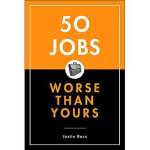
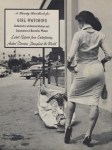
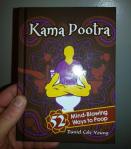
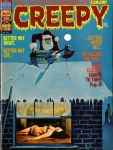
Even More Strange Book Covers

I have done this post a few times and people get a kick out of it, so here goes again.  To see earlier posts, type “strange book covers” into the search box on my home page.  Enjoy!

3 Comments

Filed under Humor and Observations, Writing

Four asteroids buzz Earth in single week

Four asteroids buzz Earth in single week

By Tariq Malik

Published March 11, 2013

Space.com

  • asteroid-2013-et-slooh-camera-1

    The 460-foot (140-meter) asteroid 2013 ET is seen through a Slooh Space Camera telescope in the Canary Islands on March 9, 2013, during its close approach to Earth. The asteroid was just within 600,000 miles of Earth, about 2.5 times the Earth- (Slooh Space Camera)

  • asteroid-2013-et-slooh-camera-2

    The 460-foot (140-meter) asteroid 2013 ET is seen through a Slooh Space Camera telescope in the Canary Islands on March 9, 2013, during its close approach to Earth. The asteroid was just within 600,000 miles of Earth, about 2.5 times the Earth (Slooh Space Camera)

In the last seven days, an asteroid the size of a city block and three smaller space rocks have zoomed safely by Earth, the latest demonstration that we live in a solar system that some scientists have dubbed a “cosmic shooting gallery.”
All four asteroid flybys occurred between March 4 and Sunday, March 10. The asteroids were also all discovered this month, some just days ago.

‘The scary part about this one is that it’s something we didn’t even know about.’

– Patrick Paolucci, president of the online Slooh Space Camera 

The biggest space rock encounter occurred Saturday, when the asteroid 2013 ET passed just inside 600,000 miles of Earth. That asteroid is about 460 feet long and approached within 2.5 times the distance between Earth and the moon.

The scary part about this one, of course, is that it’s something we didn’t even know about,” said Patrick Paolucci, president of the online Slooh Space Camera during a live webcast of 2013 ET’s flyby. The asteroid was first discovered on March 3 by the Catalina Sky Survey at the University of Arizona. [See a video of asteroid 2013 ET]

Also on Saturday, a smaller asteroid called 2013 EC20 (discovered on Thursday, March 7) came even closer to Earth, passing at a range of about 93,000 miles, less than half the distance to the moon. It was about 23 feet across.

Had asteroid 2013 ET actually hit the Earth, instead of zipping safely by, it could have destroyed a large city, Slooh Space Camera engineer Paul Cox said in the webcast. Cox controlled the remotely operated Slooh telescope in the Canary Islands, off the west coast of Africa, as the asteroid zoomed by Earth at a speed of 26,000 mph.

Recent asteroid events
The asteroid flybys came a few weeks after a 55-foot meteor exploded over Russia on Feb. 15 with the force of about 500 kilotons, injuring more than 1,200 people in the city of Chelyabinsk and causing extensive damage to city buildings. Later on Feb. 15, the larger asteroid 2012 DA14 passed within 17,200 miles or Earth —closer than many communications satellites.

The asteroid 2012 DA14 flyby, which was closely tracked by NASA and astronomers, prompted planetary scientists Bruce Betts of the Planetary Society to remind the public that Earth is in a “cosmic shooting gallery” where asteroids are concerned.

“This should be a wakeup call to governments,” Cox said. “We know that the solar system is a busy place. We’re not sitting here on our pale blue dot, on our own in nice safety.”

More space rock flybys
The two other space rocks to buzz Earth in the last week were asteroid 2013 EC and asteroid 2013 EN20, which zipped by the planet on March 4 and March 10, respectively.

The 39-foot long asteroid 2013 EC passed  Earth at about the same distance of the moon —about 238,000 miles. It was discovered on March 2, just two days before its closest approach. The Virtual Telescope Project, an online stargazing website in Italy run by astrophysicist Gianluca Masi, captured a video of the asteroid 2013 EC flyby.

Asteroid 2013 EN20 passed Earth today a range just beyond the moon’s orbit and is about 23 feet across. It was first discovered by astronomers on March 7.

NASA scientists and astronomers around the world routinely scan the sky for large asteroids that could pose an impact threat to Earth. While small asteroids sometimes zip by the planet unseen, about 100 tons of material – mostly grains of dust – fall harmlessly into Earth’s atmosphere each day, NASA scientists have said.

Sightings by amateur astronomers, who can also discover near-Earth asteroids and help refine their orbits with follow-up observations, can be vital in tracking newfound space rocks.

Cox said he used the Slooh telescope to send images of asteroid 2013 ET into the Minor Planet Center operated at the Smithsonian Astrophysics Observatory in Cambridge, Mass., for that purpose.

“Amateur astronomers can have a huge input into the field of astronomy,” Cox said.

Read more: http://www.foxnews.com/science/2013/03/11/four-asteroids-buzz-earth-in-single-week/?intcmp=trending#ixzz2Nqjtwv6e

Leave a comment

Filed under Humor and Observations

Government Wastes Money on Bizarre Projects

While running up record national debt, releasing over 2,200 convicted felon illegal aliens and cutting military and domestic programs due to “the sequester,”  the federal government continues to fund programs that are laughable.  My favorite frustration is the over half a million dollars spent to see how brine shrimp react to getting tired on a treadmill…  Appropriate that brine shrimp is abbreviated BS!   The US Senate just proposed its first budget in four years.  It repeals most of the $85 billion in cuts, increases the rate of spending by another $100 Billion, and raises taxes by over $1 Trillion!  More in the re-posted story below:

brine shrimp

Feds fund ecoATM, Robo-squirrel despite warnings about chronic disease research cuts

By 

Published March 16, 2013

FoxNews.com

The federal government is ready to pay people $45,900 to attend an annual snowmobile competition in Michigan for the next two years.

They’re also ready to shell out $516,000 for scientists to develop an ecoATM that will give out cash in exchange for old cell phones and other electronics. And why not drop another $349,862 for a study that looks at the effects of meditation and self-reflection for math, science and engineering majors?

These are just a few of the 164 grants the National Science Foundation approved two weeks ago. Yet around the same time, the administration was warning that the sequester would cut into critical research on chronic diseases.

While some of the less critical grant ideas were scrapped as the NSF looked for ways to scale back and prioritize, the number of allegedly frivolous grants still in play is not sitting well with Sen. Tom Coburn of Oklahoma.

The GOP senator has been on a campaign to call out what he sees as pockets of wasteful government spending. Since the sequestration took effect March 1, he’s sent 11 letters to various department heads highlighting places where they can fiscally trim down.

In a letter to NSF director Subra Suresh, Coburn suggested cutting the grants above along with nine others, including a $515,468 grant used, in part, to study how a shrimp running on a treadmill responds to alterations in oxygen and carbon dioxide levels.

“These may be interesting questions to ponder or explore, but just because each is currently being supported by NSF should not mean guaranteed future funding if new applications with greater merit or potential are submitted,” Coburn wrote in his March 12 letter. “I appreciate your agency’s commitment to continuing grants, but ensuring the most promising new research can be supported next year may require ending or reducing spending on lower priority grants now being funded. Robo-squirrel may have survived its encounters with the rattlesnake but it may have met its match in sequestration if we hope to provide support for more promising scientific projects.”

“Robo-squirrel” has long been criticized by Coburn as a big government boondoggle. Researchers at San Diego State University used funds from a $325,000 grant provided by the government-bankrolled NSF to invent a robotic squirrel used for researchers. Coburn has used robo-squirrel as an example multiple times as a government program that needs to be cut.

NSF spokeswoman Dana Topousis told FoxNews.com Friday that they receive 40,000 to 50,000 proposals a year. Of those, 10,000 to 11,000 get funded. Topousis says decisions are based on two criteria – “intellectual merit” and the “broader impacts”, which addresses the benefits of the proposed study to society.

She also says Coburn shouldn’t get caught up with the quirky names of the projects but try to see beyond it.  One of the most successful projects the NSF has had a hand in was one in 1996 called “BackRub,” a search engine research project by Stanford University students Larry Page and Sergey Brin.

“BackRub sounds ridiculous but if we didn’t take a chance on it things would be a lot different today,” she said.

In 1997, BackRub changed its name to Google.

Still, others argue that a few success stories don’t make it ok for the NSF to spend taxpayer money. Shortly before the sequester took effect, the administration warned that up to 12,000 scientists and students could be impacted by the cuts due to reduced NSF research grants. The administration also warned about cutbacks at the National Institutes of Health, which “would delay progress on the prevention of debilitating chronic conditions … and delay development of more effective treatments for common and rare diseases affecting millions of Americans.”

But Coburn, among those who say the administration is taking unnecessary measures to comply with the sequester, says there are plenty of other ways to save.

Another program Coburn calls out is “Snooki” — a robot bird that impersonates a female sage grouse to examine the importance of courtship tactics of males.

“Every dollar spent on projects such as these could have instead supported research to design a next-generation robotic limb to treat injured war heroes or a life-saving hurricane detection system,” Coburn writes in his letter.

Coburn said the number of new research grants could be reduced by as many as 1,000.

Through audits and investigations, the NSF Inspector General identified more than $309 million in questionable and poorly spent funds in just the second half of fiscal year 2012.

Read more: http://www.foxnews.com/politics/2013/03/16/funding-for-robo-squirrel-and-ecoatm-are-among-projects-gop-senator-wants-cut/#ixzz2NqeSgKwi

4 Comments

Filed under Humor and Observations, Uncategorized

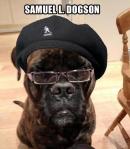
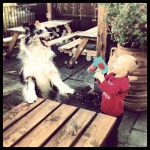
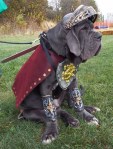
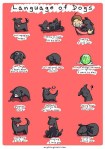
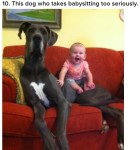
Cute Dogs for Your Monday Blues!

My weekly Monday post to cheer you up at the beginning of a work week with cute pictures of our furry friends.  To see more, type “cute dogs” into the search block on my home page.  Enjoy!

1 Comment

Filed under Animals

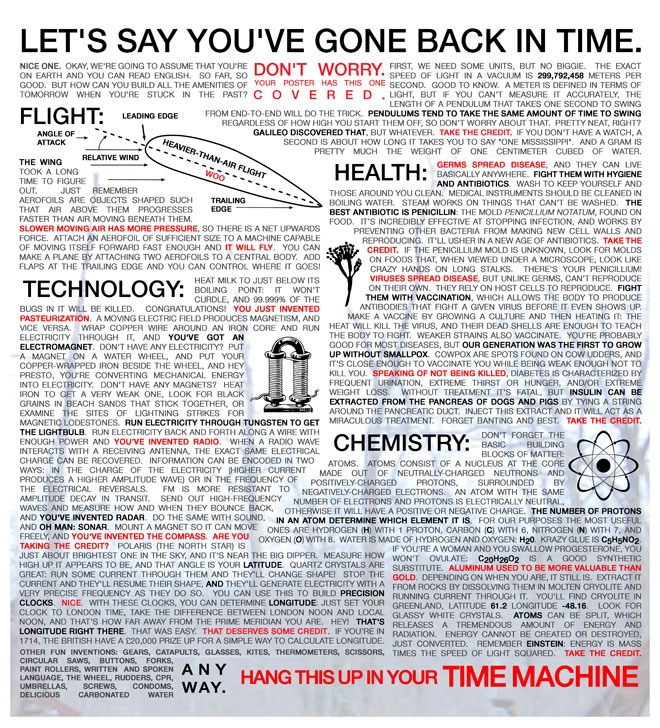
Time Traveler Cheat Sheet

timetravelcheatsheet

So, you go back in time.  You can only take so much with you.  There will be no wi-fi or charging stations.  So, you need to know a few things to help you survive in primitive times.  The above can be found on posters, even t-shirts, that you can take with you.  Sanitation, clean food and water, and developing basic medicines are kind of a priority.  Boil your water, pasteurize your milk, wash your hands regularly, try to live in the country, especially the northern climes if during the Black Plague.  Born on fleas, the port areas on the warm Mediterranean coastline lost as many as half of their population.  Inland northern Germany did not have any problems.  It was too cold for the fleas and too far away for ships to bring it.

What information and crib notes would you bring to the remote past?  What items would you bring that would fit in a backpack?  Spare eye glasses and repair kit for me for sure.  Would not be fun to be blind in the past.

A subscriber said this was developed by:  Ryan North of the wonderful webcomic ‘Dinosaur Comics’ (http://qwantz.com/).

3 Comments

Filed under Humor and Observations

Warning for Tonight: Guinness Beer NOT Vegetarian…

Guinness’ Fish Bladder Problem: Ingredient Used In Brewing Process Means It’s Not Quite Vegetarian

The Huffington Post  |  By Posted: 03/14/2013 5:52 pm EDT  |  Updated: 03/15/2013 5:16 pm EDT

 
Guinness Fish Bladder
As St. Patrick’s Day creeps closer, so does the promise of corned beef and cabbage, green beer and, of course, Guinness. But some vegetarian and vegan revelers might want to reconsider that thick, creamy Irish stout — it could contain trace amounts of fish bladders.

Smithsonian.com’s Food&Think blog published on Wednesday an in-depth explanation of isinglass, a form of collagen culled from a dried swim bladder, an internal fish organ that helps regulate buoyancy in water. It’s used in a process calledfining — when unwanted leftovers, like solid particles and degenerated yeast cells, are removed from the brewing process. These elements settle on their own to the bottom of a cask in a jelly-like clump, but isinglass quickens the process and makes them easier to remove.

The use of isinglass as a fining agent isn’t exactly new, and it’s not exactly news. While many beers and wines use gelatin instead of isinglass these days (those beverages aren’t vegan, either), Guinness still uses it in much the same way it has since the mid- to late-19th century. And publications and blogs have been taking noteof it for some time now.

Still, it remains largely unknown to the greater public, likely because Guinness doesn’t publicize it. Isinglass is not listed as an ingredient on Guinness’ website, nor is it listed on the bottle. (In the U.S., alcoholic beverages are not required to list ingredients on labels.)

The vegan beer, wine and spirits website Barnivore delved into the issue in 2011 and 2012, and published its email correspondence with Guinness on its website. In a correspondence dated November 2011, an email from Guinness stated that “Guinness Black Lager is not suitable for vegetarians.” A later email from February 2012 goes into more depth:

In answer to your query however, we do use isinglass, a by product of the fishing industry, for fining all Guinness brewed beers. Isinglass is used widely in the brewing industry although it is extensively refined before use. Its sole purpose is as a fining agent to help remove yeast from our beer, while we accept that some minor traces of isinglass may subsequently remain in the finished product.We are very happy with the technical performance of isinglass in removing yeast although we are conscious that its use may represent a barrier to consumption of our products to some. As part of our ongoing efforts to further improve the way we make our products, we are seeking alternatives to isinglass. To date, we have not found any alternative that is as effective and as environmentally friendly as isinglass for our product. 

A Guinness representative confirmed to The Huffington Post that isinglass is used to make Guinness during the brewing process, but declined to comment on the company’s reaction to vegetarians and vegans who don’t know about the details of the process.

Regulators in some nations, including Canada and the U.K., have pushed to make it a requirement for alcohol companies to list things like isinglass on their products’ bottles. It’s part of a broader effort in these countries to provide accurate information to people who have allergies, severe food intolerances and diet preferences.

Yet some experts think the issue is overblown, such as Beppi Crosariol of the Globe and Mail, who wrote in 2011 that “it’s a stretch to call such substances ingredients.” In writing about winemaking, he reasoned that isinglass and other fining agents are used to manufacture the product; they’re “not mixed like preservatives or flavourings,” she said.

Still, people whose diets prohibit the consumption of animal-based products — or people with severe allergies, for that matter — may not think that’s a valid reason not to disclose the use of fining agents.

Take for instance, the public’s response to news in early 2012 that Starbucks colored some strawberry-flavored drinks with cochineal extract, a bright red dye made from crushed cochineal beetles. Some vegans and vegetarians were outraged, and Starbucks promptly announced it would replace the dye with a tomato-based ingredient called lycopene.

Leave a comment

Filed under Humor and Observations, Uncategorized

Game of Thrones Cast and Cats That Look Like Them

The cast of ‘Game of Thrones’ and their cat doppelgangers (18 Photos)

MARCH 15, 2013

FOLLOW  ON TAPITURE

Yeah, this is happening. You’re gonna have to just deal with it.

via GQ.

1 Comment

Filed under Animals, Humor and Observations

Life in Victorian England

I write a lot about things in the Victorian time frame.  I am an avid researcher.  Even though I write Steampunk, which is old timey science fiction, I try to have 90% or more of my novel actual history and real people, so the sci-fi blends in nicely.  In my first novel, The Travelers’ Club and the Ghost Ship, some of the adventure occurs in Morocco.  I read a 512 page diary of a French party that traveled in Morocco in 1880, and a 240 page diary of Spanish travelers in Morocco the same year.  I used maybe one paragraph of information, but it gave me a feel for it.  I researched the leaders, the towns, the religions, the customs.  The pass given to my characters was the actual pass that the Sultan gave to foreign visitors, copied from a print in 1880, translated from Arabic for me by a free translator who speaks Arabic, Berber and English over the internet.  I used videos shot by tourists to show me the coastlines, old paintings and pictures.  I used Google Earth to view the ascent up Mount Toubkal, along with modern tour guide descriptions.  I looked up the weather, the position of the moon and other occurrences during the specific days and months they traveled.
Ghost Ship Cover Final Michael Special (2)

This is by way of explanation of this post.  This is one of the hundreds of sites I use to help understand and add color to the background of my Victorian stories.  Websites like this are incredibly helpful.  Enjoy!

Life in Victorian England

http://www.aboutbritain.com/articles/life-in-victorian-england.asp

The industrial revolution completely changed the lifestyle of Victorian Britain. Suddenly, the focus wasn’t on tilling the soil or land husbandry to make a living. Factories and commercial enterprise was the name of the game.

When Queen Victoria ascended the throne in 1837, Britain had already started its transformation into a world power. Agriculture was slowly being pushed aside for manufacturing jobs. By the end of the 1800’s, 80 percent of England’s population lived in cities.

Industrialization and Engineering

Steam-powered cotton factories enabled Victorian Britain to produce more than half the world’s supply of cotton. Coal-mining aroundNewcastle also expanded rapidly to meet demand.

Picnic scene

With the upsurge in railway construction, moving goods to shipping ports became easy, while ship-building itself went forward at a rapid pace.Bristol was home to “The Great Britain”, a massive steam ship built byIsambard Kingdom Brunel.

Lead by Brunel, engineering wonders were beginning to be common place during the Victorian period. Brunel’s Clifton Suspension Bridge still stands as a testament to his expertise.

The Brunel Railway Bridge between The West Country and Plymouth is still used to this day.

Manchester and Liverpool took full advantage of the industrial revolution. Along with other cities in Victorian times, they enjoyed being part of the “workshop of the world”.

Leisure Time

With industrialization, there was more leisure time to be enjoyed. When the railway line fromLondon to Brighton was established, going on holiday began to be a regular part of Victorian life.

Thanks to the Bank Holiday Act of 1871 and the ease of rail travel, seaside resorts such asBlackpool and Torquay began to enjoy great popularity.

There was time to read a novel during the Victorian period. Charles Dickens, Robert Lewis Stephenson, and H.G. Wells are just three of the authors who were popular.

Attending the theatre and appreciating the talents of Sarah Bernhard and Ellen Terry kept the evenings busy. Melodrama was in its hey-day while the music hall was always packed with people enjoying the variety of acts presented.

Medicine

Medical advances were tremendous during Victorian times. Boiling and scrubbing medical instruments before and after use was found to greatly increase a patient’s chance for survival. The identification of disease took a great leap forward.

Cholera was shown to be a product of sewage water. With the simple procedure of boiling drinking water and washing the hands, incidents of cholera dramatically drop.

Codeine and iodine made their appearance in Victorian life. Morphine helped to alleviate pain while the use of chloroform during childbirth was pioneered by Queen Victoria… and highly recommended.

Mourning the Dead

With style, great weeping, and yards of black material, the Victorian period made a fine-art out of death. Funerals were huge, many with professional mourners hired to walk in the procession.

At the moment of death, clocks would be stopped, curtains drawn over windows, and mirrors covered. Black apparel was quickly donned or if black cloth was not available, the household would quickly dye their clothes to a darker hue.

Row of terraced housesWidows from all social classes were expected to maintain mourning for a full year, and withdraw as much as possible from Victorian life. For women with no income, or small children to care for, remarriage was ‘allowed’ after this 12 month period.

As time went by, the stages of mourning gradually released their hold. Black material could be put aside for lilac or other soft shades. After approximately two years, wearing colour was no longer frowned upon.

Widowers would usually wear black for two years. However, it was their decision when to go back to work, and back into society.

Rural Life

Although much of Great Britain’s population did leave the countryside to reap the benefits of industrialization, village life did not come to an end.

Farming was still very much a part of life in Victorian Britain. With the advent of steam-power, farm machinery was easier to use and made for a faster work day. Small gardens would supplement the family’s food supply.

Some villages would specialize in an industry. Lace-making was popular. Craftsman (blacksmiths, tanners, carpenters) could always be found in a rural setting.

To maintain the huge country estates of the wealthy, local villagers would provide the servant power during the season. Some rural folk would live on the estate throughout the year, often in conditions which were cramped.

In their own homes, rural life in Victorian England was concerned with the basics – cooking meals, mending clothes, and seeing that children received the education which was mandatory by 1880.

Article by “Tudor Rose”

Leave a comment

Filed under Humor and Observations, Writing