Monthly Archives: April 2013

Complete Listing of World Wonders

This is re-posted from StumbleUpon, via wonderclub.com.

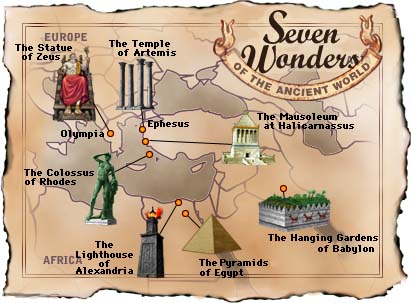
It is a very comprehensive and interesting list of the “Seven Wonders of the World.”  Oddly enough, there is not a single list.  The famed “Seven Wonders of the World” has changed over time.  This site has a pretty good listing of the various interpretations, with good links and maps.  Well done, wonderclub.com.  In any case, the list gets your creative juices flowing, which is always good for us fiction authors in particular.

sevenwondersmap

Complete Listing of World Wonders

The Seven Wonders of the Ancient World

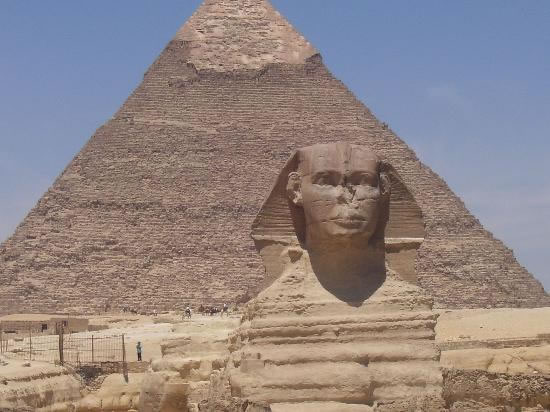
Seven-Wonders-World-giza-pyramids_jpg

The Seven Wonders of the Medieval Mind

The Seven Natural Wonders of the World

The Seven Underwater Wonders of the World

The Seven Wonders of the Modern World

The Seven Forgotten Natural Wonders of the World

The Seven Forgotten Modern Wonders of the World

The Seven Forgotten Wonders of the Medeival Mind

The Forgotten Wonders

Read our World Wonder FAQ by clicking here

 Maps of the World Wonders

1 Comment

Filed under Humor and Observations

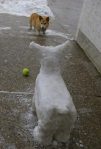
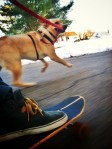
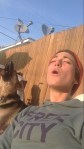
Cute Dogs for Your Monday Blues!

A bit late, not sure people would be blue after Easter weekend, so here you go:

1 Comment

Filed under Animals

101 Tips from Famous Authors

Words of Wisdom: 101 Tips from the World’s Most Famous Authors


re-posted from Collegeonline.com via StumbleUpon link.

If you’ve ever wanted to sit down with your favorite writer and ask advice, then you should take a look at these tips from some of the most famous authors in the world. These valuable bits of information provide guidance on strengthening your writing skills, becoming a better fiction writer or poet, learning to tap into your creativity, advice on education and school, and even a few suggestions on success and living a meaningful life. Of course, another excellent way of improving your writing is through traditional or online master’s degrees in creative writing.

General Writing Tips

Improve any type of writing you do with these solid tips from successful writers themselves.

  1. Ernest Hemingway. Use short sentences and short first paragraphs. These rules were two of four given to Hemingway in his early days as a reporter–and words he lived by.
  2. Mark Twain. Substitute “damn” every time you want to use the word “very.” Twain’s thought was that your editor would delete the “damn,” and leave the writing as it should be. The short version: eliminate using the word “very.”
  3. Oscar Wilde. Be unpredictable. Wilde suggested that “consistency is the last refuge of the unimaginative.”
  4. Anton Chekhov. Show, don’t tell. This advice comes out of most every writing class taught. Chekhov said it most clearly when he said, “Don’t tell me the moon is shining; show me the glint of light on broken glass.”
  5. EB White. Just write. The author of Charlotte’s Web, one of the most beloved of children’s books, said that “I admire anybody who has the guts to write anything at all.”
  6. Samuel Johnson. Keep your writing interesting. “The two most engaging powers of an author are to make new things familiar and familiar things new.”
  7. Ray Bradbury. Learn to take criticism well and discount empty praise, or as Bradbury put it, “to accept rejection and reject acceptance.”
  8. Toni Morrison. Remember that writing is always about communication. “Everything I’ve ever done, in the writing world, has been to expand articulation, rather than to close it.”
  9. George Orwell. Orwell offered twelve solid tips on creating strong writing, including an active voice rather than a passive one and eliminating longer words when shorter ones will work just as well.
  10. F. Scott Fitzgerald. “Cut out all those exclamation marks. An exclamation mark is like laughing at your own joke.”
  11. Anais Nin. “The role of a writer is not to say what we all can say, but what we are unable to say.”
  12. Truman Capote. Editing is as important as the writing. “I believe more in the scissors than I do in the pencil.”
  13. Maurice Sendak. Keep revising. “I never spent less than two years on the text of one of my picture books, even though each of them is approximately 380 words long. Only when the text is finished … do I begin the pictures.”

Tips for Beginning Writers

If you are thinking about a career in writing, whether you have a bachelor degree or a master’s degree, or are just starting to write seriously, then use these tips for great suggestions.

  1. Stephen King. “Read a lot and write a lot.” Reading and understanding different styles is integral to finding your own style.
  2. Margaret Mahy. Be persistent. This popular New Zealand author suggests that being persistent will pay off when facing adversity while writing or trying to get your writing published.
  3. John Grisham. Keep your day job. Grisham suggests finding your career outside of writing. Experience life, suffering, and love to be able to write effectively.
  4. John Steinbeck. “I’ve always tried out material on my dogs first.” Make sure that above all, you are happy with your work…and see if the dogs stay awake.
  5. Flannery O’Connor. Sometimes you need to stir the emotions to be heard. “I am not afraid that the book will be controversial, I’m afraid it will not be controversial.”
  6. Isaac Asimov. Use humor effectively.” Jokes of the proper kind, properly told, can do more to enlighten questions of politics, philosophy, and literature than any number of dull arguments.”
  7. Lillian Hellman. Trust your instincts. “If I had to give young writers advice, I would say don’t listen to writers talking about writing or themselves.”
  8. Doris Lessing. “I don’t know much about creative writing programs. But they’re not telling the truth if they don’t teach, one, that writing is hard work, and, two, that you have to give up a great deal of life, your personal life, to be a writer.”
  9. Jessamyn West. “Talent is helpful in writing, but guts are absolutely necessary.”
  10. William Faulkner. “A writer needs three things, experience, observation, and imagination, any two of which, at times any one of which, can supply the lack of the others.”
  11. Margaret Atwood. Don’t be afraid of failure. “A ratio of failures is built into the process of writing. The wastebasket has evolved for a reason.”
  12. Richard Bach. Never stop trying. “A professional writer is an amateur who didn’t quit.”
  13. Isabel Allende. Follow your passion, despite the obstacles. “I couldn’t write a novel sitting in a car but I could write short stories. The advantage to this is because with a short story you write fragments. In a couple of weeks you have a story and then you do some more. If you really want to do something you do it in the most awkward circumstances, of course.”

Fiction Tips

These tips are specifically for writing fiction, but many are good tips for writing in general. In addition, students can improve their overall writing skills through online degrees in writing.

  1. Kurt Vonnegut. Vonnegut offers eight rules of writing a short story, including tips such as “Every character should want something, even if it is only a glass of water” and “Every sentence must do one of two things–reveal character or advance the action.”
  2. Roald Dahl. From one of the most magical of storytellers: “And above all, watch with glittering eyes the whole world around you because the greatest secrets are always hidden in the most unlikely places. Those who don’t believe in magic will never find it.”
  3. Louis L’Amour. “A plot is nothing but a normal human situation that keeps arising again and again….normal human emotions–envy, ambition, rivalry, love, hate, greed, and so on.”
  4. John Irving. Know the story. Irving suggests knowing the basic outline of the entire story before you begin writing the first paragraph.
  5. Jack Kerouac. Although Kerouac set down 30 tips, the gist of most of them is to know yourself and write for yourself with abandonment.
  6. Scott Turow. Drawing from his experience as a trial lawyer, Turow discovered that what makes attorneys successful is what would make him successful as a writer: Tell a good story.
  7. Johann Wolfgang von Goethe. Write about what you know. “If a man writes a book, let him set down only what he knows. I have guesses enough of my own.”
  8. Leo Tolstoy. “Drama, instead of telling us the whole of a man’s life, must place him in such a situation, tie such a knot, that when it is untied, the whole man is visible.”
  9. Katherine Anne Porter. “If I didn’t know the ending of a story, I wouldn’t begin. I always write my last line, my last paragraph, my last page first.
  10. Robert Louis Stevenson. “The difficulty of literature is not to write, but to write what you mean.”
  11. W. Somerset Maugham. Make your own rules. “There are three rules for writing the novel. Unfortunately, no one knows what they are.”
  12. Vladimir Nabokov. The careful construction of details can make all the difference in your writing. “Caress the detail, the divine detail.”
  13. EL Doctorow. “Writing a novel is like driving a car at night. You can only see as far as your headlights, but you can make the whole trip that way.”

Poetry

Poets can find many helpful tips from writers who have come before them here. In addition, students can sharpen their overall poetry skills in online English literature programs.

  1. Robert Frost. Poetry offers many levels for readers. Capitalize on all you can. “A poem begins in delight and ends in wisdom.”
  2. Salman Rushdie. “A poet`s work is to name the unnamable, to point at frauds, to take sides, start arguments, shape the world, and stop it going to sleep.”
  3. WH Auden. Anticipate and recognize ideas. “All works of art are commissioned in the sense that no artist can create one by a simple act of will but must wait until what he believes to be a good idea for a work comes to him.”
  4. TS Eliot. Seek life experience. “Any poet, if he is to survive beyond his 25th year, must alter; he must seek new literary influences; he will have different emotions to express.”
  5. Henry David Thoreau. Understand the power of each word. “A written word is the choicest of relics. It is something at once more intimate with us and more universal than any other work of art.”
  6. Paul Valery. Keep revising. “A poem is never finished, only abandoned.”
  7. Percy Bysshe Shelley. Think about the obvious in new ways. “Poetry lifts the veil from the hidden beauty of the world, and makes familiar objects be as if they were not familiar.”
  8. Plato. Don’t just rely on the beauty of the words: make a statement. “Poetry comes nearer to vital truth than history.”
  9. Samuel Taylor Coleridge. Remember the importance of each word used in each poem. “I wish our clever young poets would remember my homely definitions of prose and poetry; that is, prose = words in their best order; –poetry = the best words in the best order.”
  10. Robert Graves. Write poetry because you want to, not because you expect to earn a living. “There’s no money in poetry, but then there’s no poetry in money either.”

Tips for Creativity

Whether you are facing writer’s block, just want to add a little more pizzazz to your work, or are writing something to complete your undergraduate degree or master’s degree program, use these tips to find more creativity.

  1. Annie Dillard. “Writing sentences is difficult whatever their subject. It is no less difficult to write sentences in a recipe than sentences in Moby Dick. So you might as well write Moby Dick.” No matter what, write.
  2. William Wordsworth. Write with passion. Wordsworth advocated, “Fill your paper with with the breathings of your heart.”
  3. Alice Walker. Walker recommends meditation for writing, as well as life. She credits meditation for helping her write her books.
  4. James Patterson. “I’m always pretending that I’m sitting across from somebody. I’m telling them a story, and I don’t want them to get up until it’s finished.”
  5. John Cheever. Looking inwards and learning from yourself provides great material for writing. “The need to write comes from the need to make sense of one’s life and discover one’s usefulness.”
  6. Agatha Christie. Let your mind go while keeping your hands busy. “The best time for planning a book is when you’re doing the dishes.”
  7. Francis Bacon. Always carry something to write on. “A man would do well to carry a pencil in his pocket and write down the thoughts of the moment. Those that come unsought are commonly the most valuable and should be secured, they seldom return.”
  8. Jack London. “You can’t wait for inspiration. You have to go after it with a club.” Sometimes you need to actively seek your sources of inspiration.
  9. Maya Angelou. Follow your instincts and do what you feel you must. “A bird doesn’t sing because it has an answer, it sings because it has a song.
  10. Virginia Woolf. “Arrange whatever pieces come your way.” Sometimes you have to recognize what you have and make the best of it.
  11. Charles Dickens. Play with your ideas, talk with them, and coax them into a fully-formed creation. “An idea, like a ghost, must be spoken to a little before it will explain itself.”

School and Education

Find out what famous writers have to say about school and getting an education, whether it be traditional oronline.

  1. Ralph Waldo Emerson. Recognize what students can give to teachers as well as what teachers can impart. “Of course you will insist on modesty in the children, and respect to their teachers, but if the boy stops you in your speech, cries out that you are wrong and sets you right, hug him!”
  2. Barbara Kingsolver. “Libraries are the one American institution you shouldn’t rip off.”
  3. Martin Luther King, Jr. Use education to build character. “The function of education is to teach one to think intensively and to think critically… Intelligence plus character–that is the goal of true education.”
  4. Robert M Hutchins. Keep in mind what school provides for the long run. “The object of education is to prepare the young to educate themselves throughout their lives.”
  5. Norman Cousins. “The purpose of education is to enable us to develop to the fullest that which is inside us.”
  6. Nelson Mandela. Use your knowledge to make a difference. “Education is the most powerful weapon which you can use to change the world.”
  7. John Dewey. “Education is a social process; education is growth; education is not a preparation for life but is life itself.
  8. BF Skinner. Appreciate knowledge and the rest will come. “We shouldn’t teach great books; we should teach a love of reading.”
  9. Aristippus. Use your education to cultivate what you already have. “Native ability without education is like a tree without fruit.”
  10. Robert Frost. Learn to separate emotion from knowledge. “Education is the ability to listen to almost anything without losing your temper or your self-confidence.”
  11. Charlotte Bronte. Embrace the opportunity to see beyond your known world. “Prejudices, it is well known, are most difficult to eradicate from the heart whose soil has never been loosened or fertilized by education; they grow there, firm as weeds among stones.”

Lifelong Learning

Learning should go far beyond college and even graduate school, and these writers agree. Find out what they suggest to keep the quest for knowledge alive.

  1. Aristotle. Learn to analyze what you are being told. “It is the mark of an educated mind to be able to entertain a thought without accepting it.”
  2. Robert Frost. Don’t ever stop learning. “Education is hanging around until you’ve caught on.”
  3. Albert Einstein. Don’t ever stop questioning. “The important thing is not to stop questioning.”
  4. WB Yeats. Discover what lights your fire. “Education is not the filling of a bucket, but the lighting of a fire.”
  5. CS Lewis. Learn by doing. “Experience: that most brutal of teachers. But you learn, my God do you learn.”
  6. Friedrich Nietzche. Learn the basics first. “He who would learn to fly one day must first learn to stand and walk and run and climb and dance, one cannot fly into flying.”
  7. Socrates. Learning is ultimately your own responsibility. “I cannot teach anybody anything, I can only make them think.”
  8. Aldous Huxley. Don’t become complacent. “A child-like man is not a man whose development has been arrested; on the contrary, he is a man who has given himself a chance of continuing to develop long after most adults have muffled themselves in the cocoon of middle-aged habit and convention.”
  9. Willa Cather. Embrace every opportunity to learn. “There are some things you learn best in calm, and some in storm.”
  10. Confucius. Education should be much more than memorizing facts. “Learning without thought is labor lost; thought without learning is perilous.”

Success

No matter what career you pursue after college, success is likely a goal. Discover what tips these authors have to share about achieving success in life.

  1. Isak Dinesen. “When you have a great and difficult task, something perhaps almost impossible, if you only work a little at a time, every day a little, suddenly the work will finish itself.”
  2. Margaret Atwood. Speak your mind and stand up for what you believe. “A voice is a human gift; it should be cherished and used, to utter fully human speech as possible. Powerlessness and silence go together.”
  3. Malcolm S. Forbes. “Failure is success if we learn from it.”
  4. Helen Keller. Find the joy in small accomplishments. “I long to accomplish a great and noble task, but it is my chief duty to accomplish small tasks as if they were great and noble.”
  5. Dr. Seuss. Be responsible for your own success. “You have brains in your head. You have feet in your shoes. You can steer yourself in any direction you choose. You’re on your own. And you know what you know. You are the guy who’ll decide where to go.”
  6. Kahlil Gibran. Stay the course, even when it feels like you aren’t making progress. “One may not reach the dawn save by the path of the night.”
  7. Ralph Waldo Emerson. Believe in yourself. “Whatever course you decide upon, there is always someone to tell you that you are wrong. There are always difficulties arising which tempt you to believe that your critics are right. To map out a course of action and follow it to an end requires courage.”
  8. Paul Coelho. “Be brave. Take risks. Nothing can substitute experience.”
  9. Tennessee Williams. Let success happen in its own time. “Success is blocked by concentrating on it and planning for it… Success is shy – it won’t come out while you’re watching.”

On Living

These last few tips all include good, solid advice on living life to your best potential.

  1. Alexander Pope. Don’t be afraid to make mistakes. Pope is the author of one of the most famous quotes on allowing yourself to make a mistake with his famous, “To err is human, to forgive divine.”
  2. Benjamin Franklin. “Either write something worth reading or do something worth writing.”
  3. JK Rowling. “If you want to see the true measure of a man, watch how he treats his inferiors, not his equals.”
  4. Barbara Kingsolver. “The truth needs so little rehearsal.”
  5. Maya Angelou. “I’ve learned that people will forget what you said, people will forget what you did, but people will never forget how you made them feel.”
  6. Umberto Eco. Sometimes things are just as they seem. “But now I have come to believe that the whole world is an enigma, a harmless enigma that is made terrible by our own mad attempt to interpret it as though it had an underlying truth.”
  7. John Ruskin. “There is no wealth but life.”
  8. George Bernard Shaw. Appreciate the good and the bad–it is all a part of life. “Life does not cease to be funny when people die any more than it ceases to be serious when people laugh.”
  9. Arthur Miller. “Maybe all one can do is hope to end up with the right regrets.”
  10. Charles M. Schulz. “Life is like a ten speed bicycle. Most of us have gears we never use.”
  11. John Burroughs. Realize what is important to you. “I still find each day too short for all the thoughts I want to think, all the walks I want to take, all the books I want to read, and all the friends I want to see.”

1 Comment

Filed under Writing

Top 100 April Fool’s Day Hoaxes In History

I found this post on StumbleUpon at:

http://www.stumbleupon.com/su/2DCzKM/:miDwrRe+:U$zH2.73/www.museumofhoaxes.com/hoax/aprilfool/

It lists ten pages of hoaxes, ten per page.  Since this is just a blog site, I only re-posted the first ten.  They are very cool and I suggest you check them all out at the link above if you like these samples.  I tried to reach the original site but was unable for some reason.  Either it is gone, or my Chrome was not working…  Enjoy!

The Museum of Hoaxes


Top 100 April Fool’s Day Hoaxes of All Time
As judged by notoriety, creativity, and number of people duped.

Note from the Curator: I created the first version of this list in the late 1990s. Back then, there was hardly any information collected about April Fool’s Day pranks, so I had to do a lot of research in newspaper archives to put this together. Luckily I was in grad school, so I had a lot of spare time on my hands ;-). Over the years I’ve tweaked the list, rearranging it slightly and adding new entries based on reader feedback and ongoing research, but my top choices have remained pretty much the same. This list is easily the most popular article I’ve ever posted on the Museum of Hoaxes. Extracts from it (some attributed, some not) can be found on hundreds of other websites. Plus, it’s inspired some spinoffs. A couple of years ago, someone created an iPhone app version of it (which I’ve never seen because I don’t have an iPhone), and the folks at the Drama Pod created a dramatized audio version of it in 2011. I hope you enjoy it — and if you know of any old hoaxes that I haven’t mentioned on the site, send me an email and let me know. ~Alex

On 1 April 1957, the respected BBC news show Panorama announced that thanks to a very mild winter and the virtual elimination of the dreaded spaghetti weevil, Swiss farmers were enjoying a bumper spaghetti crop. It accompanied this announcement with footage of Swiss peasants pulling strands of spaghetti down from trees. Huge numbers of viewers were taken in. Many called the BBC wanting to know how they could grow their own spaghetti tree. To this the BBC diplomatically replied, “place a sprig of spaghetti in a tin of tomato sauce and hope for the best.” More→

The April 1985 issue of Sports Illustrated contained a story about a new rookie pitcher who planned to play for the Mets. His name was Sidd Finch, and he could reportedly throw a baseball at 168 mph with pinpoint accuracy. This was 65 mph faster than the previous record. Surprisingly, Sidd Finch had never even played the game before. Instead, he had mastered the “art of the pitch” in a Tibetan monastery under the guidance of the “great poet-saint Lama Milaraspa.” Mets fans celebrated their teams’ amazing luck at having found such a gifted player, and they flooded Sports Illustrated with requests for more information. In reality this legendary player only existed in the imagination of the author of the article, George Plimpton, who left a clue in the sub-heading of the article: “He’s a pitcher, part yogi and part recluse. Impressively liberated from our opulent life-style, Sidd’s deciding about yoga —and his future in baseball.” The first letter of each of these words, taken together, spelled “H-a-p-p-y A-p-r-i-l F-o-o-l-s D-a-y — A-h F-i-b”. More→

In 1962 there was only one tv channel in Sweden, and it broadcast in black and white. But on 1 April 1962, the station’s technical expert, Kjell Stensson, appeared on the news to announce that, thanks to a new technology, viewers could convert their existing sets to display color reception. All they had to do was pull a nylon stocking over their tv screen. Stensson proceeded to demonstrate the process. Thousands of people were taken in. Regular color broadcasts only commenced in Sweden on April 1, 1970. More→


The Taco Bell Corporation took out a full-page ad that appeared in six major newspapers on 1 April 1996, announcing it had bought the Liberty Bell and was renaming it the Taco Liberty Bell. Hundreds of outraged citizens called the National Historic Park in Philadelphia where the bell was housed to express their anger. Their nerves were only calmed when Taco Bell revealed, a few hours later, that it was all a practical joke. The best line of the day came when White House press secretary Mike McCurry was asked about the sale. Thinking on his feet, he responded that the Lincoln Memorial had also been sold. It would now be known, he said, as the Ford Lincoln Mercury Memorial. More→


On 1 April 1977, the British newspaper The Guardian published a special seven-page supplement devoted to San Serriffe, a small republic said to consist of several semi-colon-shaped islands located in the Indian Ocean. A series of articles affectionately described the geography and culture of this obscure nation. Its two main islands were named Upper Caisse and Lower Caisse. Its capital was Bodoni, and its leader was General Pica. The Guardian‘s phones rang all day as readers sought more information about the idyllic holiday spot. Only a few noticed that everything about the island was named after printer’s terminology. The success of this hoax is widely credited with launching the enthusiasm for April Foolery that gripped the British tabloids in subsequent decades. More→

The 1 April 1992 broadcast of National Public Radio’s Talk of the Nation revealed that Richard Nixon, in a surprise move, was running for President again. His new campaign slogan was, “I didn’t do anything wrong, and I won’t do it again.” Accompanying this announcement were audio clips of Nixon delivering his candidacy speech. Listeners responded viscerally to the announcement, flooding the show with calls expressing shock and outrage. Only during the second half of the show did the host John Hockenberry reveal that the announcement was a practical joke. Nixon’s voice was impersonated by comedian Rich Little.

The April 1998 issue of the New Mexicans for Science and Reason newsletter contained an article claiming that the Alabama state legislature had voted to change the value of the mathematical constant pi from 3.14159 to the ‘Biblical value’ of 3.0. Soon the article made its way onto the internet, and then it rapidly spread around the world, forwarded by email. It only became apparent how far the article had spread when the Alabama legislature began receiving hundreds of calls from people protesting the legislation. The original article, which was intended as a parody of legislative attempts to circumscribe the teaching of evolution, was written by physicist Mark Boslough.


Burger King published a full page advertisement in the April 1st edition of USA Today announcing the introduction of a new item to their menu: a “Left-Handed Whopper” specially designed for the 32 million left-handed Americans. According to the advertisement, the new whopper included the same ingredients as the original Whopper (lettuce, tomato, hamburger patty, etc.), but all the condiments were rotated 180 degrees for the benefit of their left-handed customers. The following day Burger King issued a follow-up release revealing that although the Left-Handed Whopper was a hoax, thousands of customers had gone into restaurants to request the new sandwich. Simultaneously, according to the press release, “many others requested their own ‘right handed’ version.”

The April 1995 issue of Discover Magazine reported that the highly respected wildlife biologist Dr. Aprile Pazzo had found a new species in Antarctica: the hotheaded naked ice borer. These fascinating creatures had bony plates on their heads that, fed by numerous blood vessels, could become burning hot, allowing the animals to bore through ice at high speeds. They used this ability to hunt penguins, melting the ice beneath the penguins and causing them to sink downwards into the resulting slush where the hotheads consumed them. After much research, Dr. Pazzo theorized that the hotheads might have been responsible for the mysterious disappearance of noted Antarctic explorer Philippe Poisson in 1837. “To the ice borers, he would have looked like a penguin,” the article quoted her as saying.Discover received more mail in response to this article than they had received for any other article in their history.


During an interview on BBC Radio 2, on the morning of 1 April 1976, the British astronomer Patrick Moore announced that at 9:47 AM a once-in-a-lifetime astronomical event was going to occur that listeners could experience in their very own homes. The planet Pluto would pass behind Jupiter, temporarily causing a gravitational alignment that would counteract and lessen the Earth’s own gravity. Moore told his listeners that if they jumped in the air at the exact moment this planetary alignment occurred, they would experience a strange floating sensation. When 9:47 AM arrived, BBC2 began to receive hundreds of phone calls from listeners claiming to have felt the sensation. One woman even reported that she and her eleven friends had risen from their chairs and floated around the room. Moore’s announcement (which, of course, was a joke) was inspired by a pseudoscientific astronomical theory that had recently been promoted in a book called The Jupiter Effect, alleging that a rare alignment of the planets was going to cause massive earthquakes and the destruction of Los Angeles in 1982. More→

Leave a comment

Filed under Humor and Observations, Uncategorized