Category Archives: Animals

Slimy Japanese giant salamanders can bite off your finger

Slimy Japanese giant salamanders can bite off your finger

Published September 30, 2013

FoxNews.com


Nature’s Horror Show: 31 of the World’s Ugliest Creatures

From the terrifying coconut crab to the shocking giant isopod to the merely ugly (like Miss Ellie), nature’s creatures aren’t all beauties. Here are 31 animals you’ll wish you hadn’t seen.  

The Japanese giant salamander can grow up to 5 feet long, weigh 80 pounds and can easily bite off a large chunk of your finger in a split second. The slimy, mottled amphibians have remained virtually unchanged for millions of years.

Once hunted for food, the salamanders are protected as a national treasure in Japan and efforts are underway to breed the threatened species in captivity, according to National Geographic.

The salamanders are rarely seen, coming out only at night to lurk in cool streams around mountains and foothills.

“Knowing how giant salamanders go about breeding and what conditions are necessary for that to happen comes in useful when considering how best to protect them in the wild,” Tim Johnson, a Tokyo-based salamander enthusiast who has observed these creatures in the mountains told National Geographic. “The way rivers have been modified in recent decades has made it difficult, and sometimes impossible, for them to migrate upstream to breed.”

After many attempts to breed, a male named Daigoro and a female called Sachiko finally managed to conceive and 500 eggs were fertilized.

While their parents may find their newborns cute once they arrive, the rest of the world won’t. Japanese giant salamanders are included in our list of the world’s 31 ugliest creatures.

Click here to see the rest of nature’s horrors.

1 Comment

Filed under Animals, Humor and Observations

Egyptian dog mummy infested with bloodsucking parasites

Egyptian dog mummy infested with bloodsucking parasites

By Jeremy Hsu

Published September 24, 2013

LiveScience
  • mummy-dog-5

    Close-up of the post mortem vertebral dislocation located between the sixth and seventh cervical vertebrae of the mummified dog discovered at the excavation site of El Deir in Egypt. (CECILE CALLOU | UMR 7209 MNHN/CNRS)

A dog mummy has revealed the first archaeological evidence of bloodsucking parasites plaguing Fido’s ancestors in Egypt during the classical era of Roman rule.

The preserved parasites discovered in the mummified young dog’s right ear and coat include the common brown tick and louse fly tiny nuisances that may have carried diseases leading to the puppy’s early demise. French archaeologists found the infested dog mummy while studying hundreds of mummified dogs at the excavation site of El Deir in Egypt, during expeditions in 2010 and 2011.

“Although the presence of parasites, as well as ectoparasite-borne diseases, in ancient times was already suspected from the writings of the major Greek and Latin scholars, these facts were not archaeologically proven until now,” said Jean-Bernard Huchet, an archaeoentomologist at the National Museum of Natural History in Paris. [See Photos of Dog Mummy Infested with Parasites]

Mentions of dog pests appear in the writings of ancient Greeks and Romans such as Homer, Aristotle and Pliny the Elder, and a painting of a hyenalike animal in an ancient Egyptian tomb dated to the 15th century B.C. shows what is likely the oldest known depiction of ticks. But evidence of ticks, flies and other ectoparasites that infest the outside of the body has been scarce in the archaeological record until now. (The only other known archaeological evidence of ticks comes from fossilized human feces in Arizona.)

Counting the bloodsuckers
The infested dog mummy was discovered in one of many tombs surrounding a Roman fortress built in the late third century A.D. Most of the main tombs were built during a period dating from the fourth century B.C. to the fourth century A.D. a treasure trove for archaeologists, despite the condition of many of the mummies. The French team detailed its findings in the August online issue of the International Journal of Paleopathology.

‘Animals were considered as living incarnations of divine principles and, therefore, associated with deities.’

– Cecile Callou, an archaeozoologist at the National Museum of Natural History in Paris 

Huchet and his colleagues, led by Franoise Dunand and Roger Lichtenberg of the University of Strasbourg in France, found the remains of the parasite-ridden pup among more than 400 dog mummies.

“Among the hundreds of dog mummiesstudied, [many] of them were either skeletonized or still wrapped with bandages,” Huchet told LiveScience. “Moreover, most of the dog remains were seriously damaged by looters.”

The infested young pup stood out with 61 preserved brown dog ticks still clinging to its coat and nestled in its left ear. Such ticks have spread worldwide by feeding on domesticated dogs. They can also infect their hosts with a variety of potentially fatal diseases.

Archaeologists also discovered a single bloodsucking louse fly clinging firmly to the dog’s coat. But the team hypothesizes a tick-borne disease such as canine babesiosis a condition that destroys red blood cells likely caused the young dog’s premature death.

Origins of dog mummies
Hardened skin remains of maturing fly larvae suggested the dying or dead dog had attracted two species of carrion flies before Egyptian handlers mummified the corpse. [See Images of Egyptian Mummification Process]

Ancient Egyptians commonly mummified animals such as dogs, cats and long-legged wading birds called ibis. The dog mummies from the El Deir site almost certainly represented offerings to a jackal-headed Egyptian god such as Anubis or Wepwawet.

“Several reasons have led Egyptians to mummify animals: to eat in the afterlife, to be with pets, etc.,” said Cecile Callou, an archaeozoologist at the National Museum of Natural History in Paris. “But above all, animals were considered as living incarnations of divine principles and, therefore, associated with deities.”

But many questions remain about the mummified dogs of El Deir. Researchers still want to know where the dogs came from, whether they were domestic dogs, whether they had owners and how they died. Callou pointed out that the ancient Egyptians had cat farms where cats were bred to be sacrificed and mummified could the same have been true for dogs?

Digging deeper into history
The French archaeologists hope to find answers to a different set of questions by searching for more preserved ticks and flies among the mummified dogs of El Deir. Such archaeological evidence could show how diseases originated throughout history, provide clues about the geographical spread of parasites, and reveal more about the relationship between parasites and both human and animal evolution.

Specialized lab equipment could yield even more findings from the infested dog mummy and its companions. The French team conducted most of its work on-site at El Deir and completed the examination with highly magnified photos at the National Museum of Natural History in Paris but hopes to eventually get permission to take some mummified samples back to the lab.

“The main problem will be to get the authorization to export mummified samples from Egypt for DNA analysis, since this country does not allow any exportation of archaeological material even tiny samples such as skin fragments and hairs,” Huchet said.

1 Comment

Filed under Animals, Humor and Observations

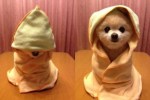
Cute Dogs for Your Monday Blues

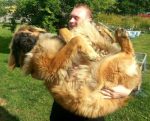
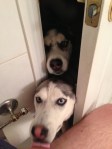
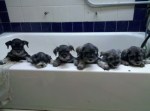
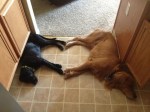
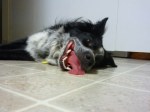
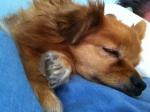
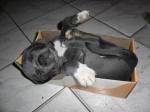
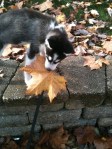
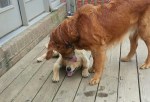
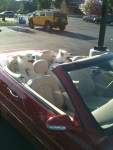
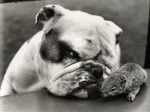
Cute dogs for your Monday blues.

2 Comments

Filed under Animals

Terrifying Lake Turns Birds Into Statues

Terrifying Lake Turns Birds Into Statues

by Jessie Fernandez, Your Daily Media

Lake Natron is an insidious ​trap for the birds of northern Tanzania: The terrifying lake turns to stone all birds that are foolish enough to immerse themselves or unlucky enough to fall into its deceptive water.

Volcanic ash from the nearby Great Rift Valley contaminated Lake Natron with sodium carbonate and baking soda to the point that only extremophile fish like the alkaline tilapia can survive there, while other animals that take a dip will soon thereafter feel their bodies begin to calcify and harden until they look as if they’ve had a run-in with the White Witch or Medusa.

Even trickier is that the combination of chemicals in the water makes the lake extremely reflective, which often confuses birds into diving into it.

If there are this many statues above the water, it must be an aquatic garden of statues at the lake’s creepy bottom.

The effects and dead scenery of Lake Natron are both fantastic and morbid, inspiring associations with certain Tim Burton movies and other Edward Gorey-esque imagery.


2 Comments

Filed under Animals, Humor and Observations

Beaver butts emit goo used in vanilla flavored foods

Beaver butts emit goo used in vanilla flavored foods

Published October 02, 2013

FoxNews.com
  • beavernatgeo.jpg

    Beavers are among the largest of the rodents. (JOEL SARTORE/NATIONAL GEOGRAPHIC)

Next time you pick up a vanilla candy, think twice. A chemical compound used in vanilla flavored foods and scents comes from the butt of a beaver.

Castoreum comes from a beaver’s castor sacs, located between the pelvis and base of the tail. Due to its proximity to the anal glands, the slimy brown substance is often mixed with gland secretions and urine.

“I lift up the animal’s tail,” Joanne Crawford, a wildlife ecologist at Southern Illinois University told National Geographic. “I’m like, ‘Get down there, and stick your nose near its bum.'”

“People think I’m nuts,” she added. “I tell them, ‘Oh, but it’s beavers; it smells really good.'”

Beavers use the brown slime, often compared to a thinner version of molasses, to mark their territory. The musky, vanilla scent is attributed to a beaver’s diet of bark and leaves.

Manufacture have been using castoreum as an additive in foods and perfumes for at least 80 years, according to a 2007 study in theInternational Journal of Toxicology.

But getting a beaver to emit castoreum is not easy. Foodies are willing to “milk” the animals in order to get their hands on the gooey substance.

“You can milk the anal glands so you can extract the fluid,” Crawford said. “You can squirt [castoreum] out. It’s pretty gross.”

Only 292-pounds per year is collected because the milking method is unpleasant for all parties involved.

And the worst part? The FDA-approved castoreum is not required to be listed as an ingredient on food items. Manufacturers may list “natural flavoring” instead.

Perhaps a bit too natural for us.

6 Comments

Filed under Animals, Humor and Observations

Cute Dogs for Your Monday Blues

More cute dog pictures to help you get through the start of the work week.  Enjoy!

1 Comment

Filed under Animals

Cute Dogs for Your Monday Blues

More cute dog pictures to help with your Monday Blues.

3 Comments

Filed under Animals

Cute Dogs for Your Monday Blues

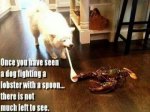
More cute dog pictures for your Monday Blues!  Enjoy!

1 Comment

Filed under Animals

10 Funny Things We Try to Tell Our Dogs

10 Funny Things We Try to Tell Our Dogs

 The following article was written by Jordan Kasteler.

Most of us talk to our dogs all the time, but our meaning sometimes gets lost in translation. For all the guardians who have ever had that head-in-your-hands moment when you wish you spoke perfect “canine,” the following are 10 things that we wish we could make our dogs understand:

1. “This is a tub full of soapy water, not acid.”

CC 3.0 | Tobyotter

2. “You see the same postal carrier every day. He is bringing us letters, not letter bombs.”

CC 3.0 | Dustin and Jenae

3. “Yes, your puppy-dog eyes are very sweet. No, you cannot have chocolate.”

CC 3.0 | sleepyneko

4. “The vacuum cleaner is my enemy, not yours.”

CC 3.0 | redjar

5. “I love to cuddle with you, too, but could we possibly do it with your butt facing the other direction?”

CC 3.0 | Daan!

6. “I’m sorry, but cat poop just isn’t on the menu.”

CC 3.0 | wolfsavard

7. “Yes, I see the dog in the other car. Yes, I still see the dog in the other car.”

CC 3.0 | Elizabeth_K

8. “You have been inside the bathroom before. It’s not a black hole—I promise I will come back out.”

CC 3.0 | nicolasnova

9. “Thanks! I was just thinking that these new dress pants would look better with drool on them.”

CC 3.0 | @bastique

10. “I know going for walks is exciting. Just as exciting as it was yesterday … and the day before that … and the day before that.”

CC 3.0 | Erik Daniel Drost

Try as we might to get through to our dogs, chances are that there are still going to be times when communication fails. But dogs understand more than we give them credit for. They can usually pick up more than 200 spoken human words without any instruction whatsoever. Case in point: Are there certain words that you sometimes have to spell in front of your dog, like “treat”? Or “walk”? Or your dog’s name?

Dogs do their best to get through to us, too, using language, facial expressions, and gestures. But we aren’t always as good as they are at understanding.

Perhaps if human beings were more fluent in our best friends’ language, we would understand that they don’t want to be chainedcrated, yanked, choked or zapped by prong or shock collars, or left cooped up in the house all day without a potty break.

Better yet, if human beings were more fluent in all animals’ languages, maybe then we wouldn’t be so quick to use and abuse them for our own gain.

3 Comments

Filed under Animals, Humor and Observations

Cute Dogs for Your Monday Blues

Nothing like cute dogs to cheer up your Monday workweek.

1 Comment

Filed under Animals