Category Archives: Animals

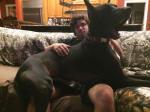
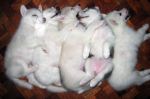
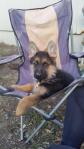
Cute Dogs for Your Monday Blues!

Cute dog pictures to cheer up the start of your week…

Leave a comment

Filed under Animals, Humor and Observations

Cute Dogs for Your Monday Blues

Dog pictures to cheer up your Monday…

Leave a comment

Filed under Animals, Humor and Observations

Why do zebras have stripes? It’s not for camouflage

ZebraStripes.jpg

 (REUTERS/Ricardo Moraes)

Zebras’ thick, black stripes may have evolved to help these iconic creatures stay cool in the midday African heat, a new study suggests.

Many African animals sport some stripes on their bodies, but none of these patterns contrast as starkly as the zebra’s. Researchers have long struggled to explain the purpose of the zebra’s unique black-and-white coat. Some have suggested that the stripes may help zebras camouflage themselves and escape from lions and other predators; avoid nasty bites from disease-carrying flies; or control body heat by generating small-scale breezes over the zebra’s body when light and dark stripes heat up at different rates.

Still, few scientists have tested these explanations, and many argue that the stripes serve a complex mix of purposes. [See images of plains zebras across southern Africa]

Now, researchers based at the University of California, Los Angeles (UCLA) have produced one of the most comprehensive zebra stripe studies yet by examining how 29 different environmental variables influence the stripe styles of plains zebras at 16 different sites from south to central Africa.

The scientists found that the definition of stripes along a zebra’s back most closely correlated with temperature and precipitation in a zebra’s environment, and did not correlate with the prevalence of lions or tsetse flies in the region. These findings suggest that torso stripes may do more to help zebras regulate their body temperature than to avoid predators and tsetse flies, the team reported Jan. 13 in the journal Royal Society Open Science.

“This wall we kept hitting up against was, ‘Well, why do zebra have to have stripes for predation? Other animals have predators, and they don’t have stripes,'” said study co-author Ren Larison, a researcher in the Department of Ecology and Evolutionary Biology at UCLA. “And other animals get bitten by flies, and they don’t have stripes, either.”

Other animals also need to regulate body temperature, or thermoregulate, Larison pointed out, but zebras may especially benefit from an extra cooling system because they digest food much less efficiently than other grazers in Africa. As such, zebras need to spend longer periods of time out in the heat of the midday sun, eating more food.

“Zebra have a need to keep foraging throughout the day, which keeps them out in the open more of the time than other animals,” Larison told Live Science. “An additional cooling mechanism could be very useful under these circumstances.”

The team found that the plains zebras with the most-defined torso stripes generally lived in the Northern, equatorial region of their range, whereas those with less-defined torso stripes were more common in the Southern, cooler regions of the range — a finding that supports the thermoregulation explanation.

Still, the researchers have not experimentally tested the theory that black and white stripes may generate small-scale breezes over a zebra’s body, and some researchers don’t think stripes can actually create this effect.

“I don’t think that you would want to have a lot of black hairs along the top of your back if you wanted to try to keep cool,” said Tim Caro, a professor of wildlife biology at the University of California, Davis, who studies zebra stripes but was not involved in the new study. “It’s kind of the last color that you would want.”

Caro said regions with warmer, wetter climates are particularly susceptible to several species of disease-carrying flies other than the tsetse fliesthat the team considered in their study, and that the relationship the researchers found may actually be a function of fly avoidance, not thermoregulation. Flies seem to struggle to recognize striped surfaces, but scientists have not quite figured out why this is, Caro told Live Science.

The study co-authors emphasized that their findings require follow-up research, and that a zebra’s stripes likely serve multiple purposes. For example, stripes on a zebra’s back may help thermoregulate, whereas stripes on the animal’s legs — where zebras are more likely to get bitten by flies — may help them avoid disease-carrying flies other than tsetses, Larison said.

“Really, the striping is kind of extraordinary, so you need something extraordinary to explain it,” Larison said.

The researchers plan to test their thermoregulation hypothesis, either by studying the behavior of air currents over zebra pelts, or by implanting wild zebras with temperature sensors, if they are granted permission to do so, Larison said.

Leave a comment

Filed under Animals

Cute Dogs for Your Monday Blues!

Dog pictures to cheer up the start of your work week…

Leave a comment

Filed under Animals, Humor and Observations

Cute Dogs for Your Monday Blues

Some cuddly critters to brighten the beginning of the work week…

1 Comment

Filed under Animals

Christmas Dog Edition for Your Monday Blues!

I know my post is late, but it is all Christmas dogs, so I hope it makes up for it…

Leave a comment

Filed under Animals

Two ‘pseudoscorpions’ discovered in Grand Canyon cave

tuberochernes-cohni

Two new species of cave-adapted, eyeless pseudoscorpions have been discovered in a cave on the northern rim of the Grand Canyon. Here, one of the species, Tuberochernes cohni. (Courtesy of J. Judson Wynne, Northern Arizona University)

This story was updated on Wednesday. Dec. 10 at 9:15 a.m. ET.

Two new species of so-called pseudoscorpions have been discovered in a cave on the northern rim of the Grand Canyon.

The elusive creatures, which have adapted to their lightless environment by losing their eyes, were discovered in Grand Canyon-Parashant National Monument, which abuts the better-known Grand Canyon National Park.

Unlike true scorpions, these scorpion imposters lack a tail with a venomous stinger. Instead, the arachnids use venom-packed stingers in their pincers to immobilize their prey, study author J. Judson Wynne, an assistant research professor in the Department of Biological Sciences at Northern Arizona University, in Flagstaff, wrote in an email.

The tiny cave where the team discovered the new species just 250 feet in length nevertheless supports the highest diversity of cave-adapted arthropods of any known cave in the Grand Canyon-Parashant National Monument, Wynne said. [Creepy Crawlies & Flying Wonders: Incredible Cave Creatures]

New species?

The researchers first discovered the two false scorpions during expeditions in a cave along the north rim of the Grand Canyon, between 2005 and 2007. But it took years before the team identified the species as unique.

“Contrary to popular belief, rarely are we in the field, collect an animal and then brandish our grubby field flasks of whiskey to toast a new species discovery,” Wynne told Live Science in an email.

To confirm the scorpion lookalikes were a new species, the team had to take them back to a taxonomic specialist, who analyzed all the details of the species and pored over all the existing data on similar species. In this case, the team found that one of the species had a thickened pair of legs and a mound on the pincer, while another had a much deeper pincer than other pseudoscorpionsqualifying each as a distinct species, study co-author Mark Harvey, senior curator at the Western Australian Museum in Perth, said in an email.

The creatures, dubbed Hesperochernes bradybaughii and Tuberochernes cohni, respectively, are about 0.12 inches long and feed on tiny invertebrates, including springtails, book lice, mites and possibly cricket nymphs. Many of their prey are just one-fourth the length of a grain of rice.

The two species are named after Jeff Bradybaugh, an advocate for cave research and the former superintendent of Grand Canyon-Parashant National Monument, and Theodore Cohn, an entomologist who identified a new genus of cave cricket and passed away in 2013.

The fact that two separate species of pseudoscorpion can live in the cave while competing for the same food source suggests the cave supports a robust food web. The cave is one of the largest roosts of crickets in northern Arizona, and the pseudoscorpion prey feed on the cricket “frass,” or poop, as well as the fungus that grows on the poop. The cave is also home to a bizarre, eyeless fungus beetle that feeds on the poop fungus.

At one time, the pseudoscorpions’ ancestors lived in the desert environment outside the cave, but they have since adapted to hunting in an environment devoid of light, losing their eyes and gaining an elongated bodies in the process.

Odd insects

In general, pseudoscorpions are odd creatures. Not only are their pincers good for immobilizing prey, they also help the insects hitchhike to new locales.

“They will grasp onto another animal such as birds, mammals and even other insects. They hold on and can be transported long distances,” Wynne said.

This allows the insects to travel farther than they ordinarily could, so they can mate and disperse genes farther than they could walking on their own eight legs. These journeys may also take the scorpions to better hunting grounds, although there’s no guarantee that the next spot is better than their previous one, Wynne said.

But the pseudoscorpions aren’t just freeloaders; they help their animal hosts by devouring parasites such as mites.

The new species were described in the November issue of the Journal of Arachnology.

Editor’s Note: This story was corrected to note that pseudoscorpions don’t have a tail and that the ancestors to the cave pseudoscorpions probably lived in a desert environment, not a sunny one.

1 Comment

Filed under Animals, Humor and Observations

Cute Dogs For Your Monday Blues!

Cute dogs pictures to cheer you up…

Leave a comment

Filed under Animals, Humor and Observations

Cute Dogs for Your Monday Blues!

Cute dog pictures to cheer you up for the start of the work week…

Leave a comment

Filed under Animals, Humor and Observations

Monterey researchers take first-ever known video of mysterious black seadevil

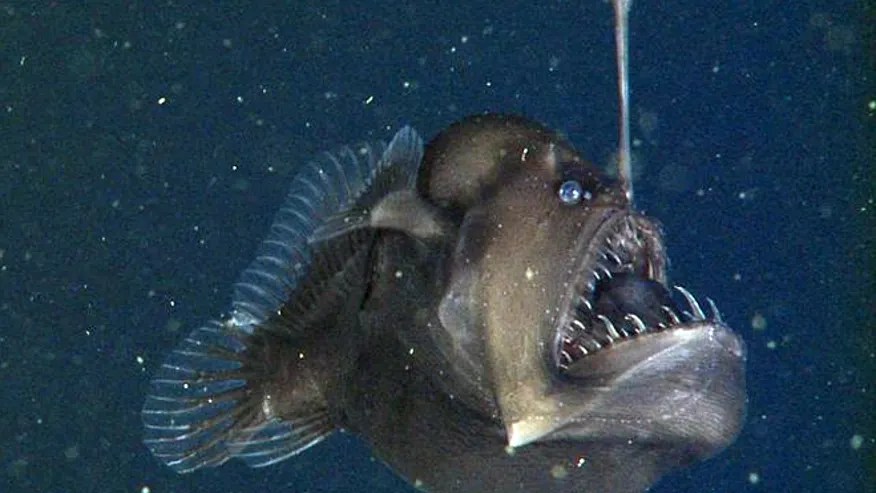
angler4.jpg

Research team captured first-ever video of a rarely-seen denizen of the deep called the black seadevil while conducting a dive in Monterey Bay, Calif. (Monterey Bay Aquarium Research Institute)

A research team conducting a dive in Monterey Bay off the coast of California have captured first-ever video of a rarely-seen denizen of the deep called the black seadevil.

The creature was spotted this week in the dark, deep waters 1,900 feet below the surface by researchers with the Monterey Bay Aquarium Research Institute.

“We’ve been diving out here in the Monterey Canyon regularly for 25 years, and we’ve seen three,” MBARI Senior Scientist Bruce Robinson told the San Jose Mercury News Friday.

Robinson said a luminescent “fishing pole” projecting from the anglerfish’s head is a glowing lure to attract prey.

Robinson told the paper they captured the fish to study, but don’t know how long it will survive.

MyFox Los Angeles posted the institute’s two-minute-long video on its website, while pointing out that although the black seadevil seems menacing as its swims towards the camera, it is only about 3.5 inches long.

Little is known about the fish. Male black seadevils have a much shorter life span than females and are much tinier in comparison. Their sole purpose is to attach themself to a female, living as a parasite.


“If they don’t find a female, they drown,” University of Washington professor and deep-sea anglerfish expert Ted Pietsche told the Mercury News. “They’re not even properly equipped to eat.”

Leave a comment

Filed under Animals, Humor and Observations