Forget earth, wind, water and fire – there are four new elements in town. The International Union of Pure and Applied Chemistry (IUPAC) has announced that recently discovered elements 113, 115, 117 and 118 will now be known as nihonium, moscovium, tennessine and oganesson, pending a public review.
The four elements, which complete the seventh row of the periodic table, were officially recognised in January this year following discoveries by teams in Japan, Russia and the US, which submitted names to governing body IUPAC.
Researchers at RIKEN in Wako, Japan proposed nihonium (symbol Nh) for their discovery, element 113, after Nihon, one of the Japanese words for “Japan”.
Moscovium (Mc) and tennessine (Ts), formally elements 115 and 117, were proposed by teams at the Joint Institute for Nuclear Research in Dubna, Russia, and Oak Ridge National Laboratory, Vanderbilt University and Lawrence Livermore National Laboratory (LLNL) in the US, after Moscow and Tennessee.
Finally, oganesson (Og) was proposed by the Dubna and LLNL teams after Yuri Oganessian, a Russian physicist who helped discover element 114 in 1999. It and element 116, now known as flerovium and livermorium, were the last to join the periodic table, back in 2011.
The new names will now undergo a five-month public review to allow for any potential objections, meaning they could officially join the periodic table by the end of this year. In the meantime, the hunt for heavier elements, and the first entry of the eighth row, continues.
While the U.S. Navy is busy with the development of a new bulletproof material called Spinel, Surmet Corporation is already commercially producing its own version called ALON®. Technically known as aluminum oxynitride, Star Trek fans may be more familiar with the term “transparent aluminum” first proposed by Scotty in the 1986 movie, Star Trek IV: The Voyage Home. While ALON isn’t quite what Scotty had in mind (it’s not truly a transparent metallic aluminum, but rather a transparent aluminum-based ceramic), it’s pretty darn close.
Developed by Raytheon, ALON begins as a powder, which is then molded and baked in very high heat. The heating process causes the powder to liquefy and cool quickly, leaving the molecules loosely arranged, as if still in liquid form. It is this crystalline structure that provides ALON its level of strength and scratch resistance comparable to rugged sapphire. Polishing the aluminum oxynitride strengthens the material and also makes it extremely clear.
Comparing Aluminum Armor to Traditional Bulletproof Glass
Traditional bulletproof glass is comprised of multiple layers: polycarbonate sandwiched between two layers of glass. Similarly, transparent aluminum armor is also composed of three layers: an outer layer of aluminum oxynitride, a middle layer of glass and a rear layer of polymer backing. However, the similarities stop there.
Aluminum armor can deflect the same rounds from small-caliber weapons as traditional bulletproof glass, but it will still be more clearly transparent even after being shot. Also, a .50-caliber armor-piercing bullet could sink nearly three inches into bulletproof glass before stopping. Aluminum armor can stop it in half the distance and yet is half the weight and thickness of traditional transparent armor.
In addition, transparent aluminum armor can be produced in virtually any shape and can also hold up to the elements much better than traditional bulletproof glass, which can be worn away by blowing desert sand or shrapnel.
Despite aluminum oxynitride’s ability to produce a superior transparent aluminum armor, this material has not been put into widespread use. The largest factor in this is cost. Transparent aluminum armor can be anywhere from three to five times as much to produce as traditional bulletproof glass. In theory, however, it would not need to be replaced as often, saving money in the long run. Further, there is no existing infrastructure to produce the material in large panes like the size of a front windshield of a vehicle. ALON is currently used for smaller applications, such as the lenses in battlefield cameras or the windows over the sensors in missiles.
Using cocaine once is enough to rewire the brain and cause addiction, according to new research.
A new study, conducted on mice, shows cocaine speedily rewires high-level brain circuits that support learning, memory and decision-making.
The research, from UC Berkeley and UCSF, sheds light on the frontal brain’s role in drug-seeking behavior and may be key to tackling addiction.
Researchers found that, after just one dose of cocaine, the rodents showed fast and robust growth of dendritic spines, which are tiny, twig like structures that connect neurons and form the nodes of the brain’s circuit wiring.
Assistant professor of psychology and neuroscience at UC Berkeley, Linda Wilbrecht, said their images provide clear evidence that cocaine induces rapid gains in new spines.
“The more spines the mice gain, the more they show they learned about the drug,” she said.
For mice “learning about the drug” can mean seeking it out to the exclusion of meeting other needs, which may explain how addiction in humans can override other considerations that are necessary for a balanced life.
“The downside is, you might be learning too well about drugs at the expense of other things,” Wilbrecht said.
Using a technology known as 2-photon laser scanning microscopy, researchers made images of nerve cell connections in the frontal cortices of live mice before and after the mice received their first dose of cocaine and, within just two hours, observed the formation of new dendritic spines.
“The number of new, robust spines gained correlated with how much the individual mice learned to prefer the context in which they received the drug,” Wilbrecht said.
The findings provide clues to behavioral and environmental factors in drug addiction.
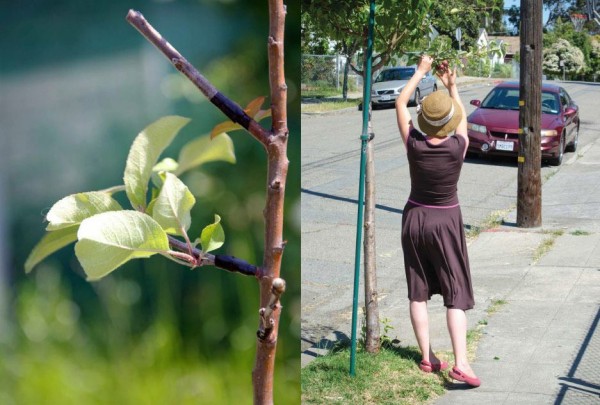
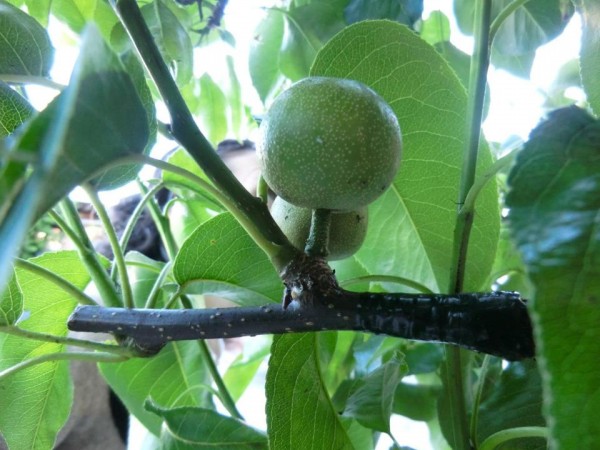
There is a group of fruit lovers in San Francisco that practice something known as “guerrilla grafting” – they graft fruit bearing branches onto fruitless, ornamental trees across the Bay Area city. Having access to free fruit sounds like a wonderful idea, considering the number of homeless people who can rarely afford a decent meal, but guerrilla grafting is actually illegal.
In many metropolitan areas, urban foresters make sure that flowering fruit trees don’t bear any fruit, in order to keep fallen fruit from making a mess on sidewalks and attracting vermin. Most public trees are fruitless, a fact that the Guerilla Grafters obviously don’t like. While authorities see urban fruit-bearing trees as a nuisance, these agricultural rebels see them as an opportunity to provide fresh, healthy produce for free to anyone who walks by.
According to their Facebook page, “Guerrilla Grafters is a grassroots group that sees a missed opportunity for cities to provide a peach or a pear to anyone strolling by. Their objective is to restore sterile city trees into fruit-bearers by grafting branches from fertile trees. The project may not resolve food scarcity, but it helps foster a habitat that sustains us.” Their mission, they say is to make delicious, nutritious fruit available to urban residents through these grafts.
As noble as their intentions may seem to most of us, guerrilla grafting is illegal and classified as vandalism by San Francisco’s Department of Public Works. It doesn’t matter who plants the tree, who grafts branches, or who maintains it, if it’s on a sidewalk, it’s publicly owned and messing with it is a crime. But as of 2012, the department did not plan to actively pursue grafters. “Unless someone is caught in the act, there’s not much we could do,” said spokesperson Gloria Chan, adding that it is hard to catch because the average person doesn’t know what an illegal graft looks like so it’s not likely to get reported.
However, some people seem to think guerrilla grafting is a very serious problem. “It gets very dangerous very quickly,” said Carla Short, an urban forester for the San Francisco Department of Public Works. “I mean the minute that fruit gets crushed on the sidewalk, it is slippery. We certainly don’t want people to get injured.”
But the law isn’t a deterrent for these urban gardeners, who seem quite focused on their mission. “People think of fruit trees as a kind of a nuisance,” said Tara Hui, member of the group since its inception five years ago. “The intention of doing guerrilla grafting is not so much for the sake of challenging authority, but to set an example – a working example – to counter the arguments. If we have a prototype, we can have a legitimate rational discussion on the issue.” Plus, every grafted tree has a steward, someone who promises to check up on it regularly, making sure it doesn’t cause any problems.
She added that many fruit lovers did try to follow “legal channels” at first – she wanted to plant a fruit tree in front of her house and was fully prepared to care for it herself. But her efforts were repeatedly thwarted by the department and by San Francisco nonprofit Friends of the Urban Forest. So she began connecting with other frustrated residents who wanted fruit trees and they started using social media to delve into underground channels.
The grafters like to think of their activities as ‘hybrid farming’ or ‘street theater’ and believe that their efforts don’t pose threats like slip hazards from fallen fruit or damage to the host trees. “With grafts, you only have a few branches that are fruit bearing, and it’s really very manageable,” said guerrilla grafter Miriam Goldberg. And they take full responsibility to make sure that ripe fruits are safely harvested. They’re also prepared to help with maintenance tasks like pruning, propping, and watering.
“The hope is that through this one small act (of grafting) we can reconnect with a shared space and reconnect with each other,” Hui said. “Ultimately, I think codes and regulations should respond to the reality of people’s lives. Just taking an evening stroll, and then you see a fruit and you reach over and now you’re nourished.”
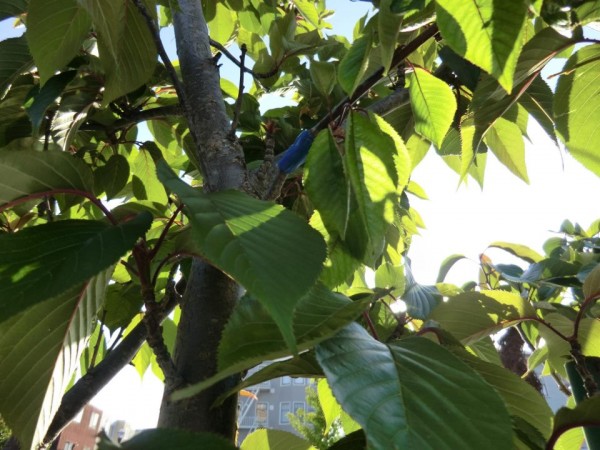
Guerrilla grafters have created a web app to provide grafting tips and help members find trees that might be good candidates to accept fruit-bearing branches. Through their Facebook page they track the progress of their cherry, plum, and pear grafts, and report upcoming events.
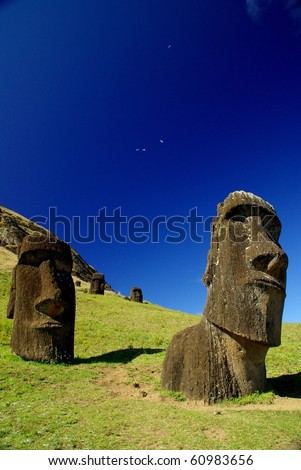
The mysterious Easter Island statues — hundreds of huge, ancient carved stone heads that guard the hilly Pacific island landscape — may actually have bodies, according to an email showing excavations at the site.
The email, which made the rounds in May 2012, contained photos of a startling excavation project at Easter Island. According to the email, archaeologists were in the process of unearthing the statues’ bodies, which were gradually buried by 500-plus years of erosion.
But are those surprising images, and the excavation project they depict, actually real? Are the famous Easter Island heads really full-bodied figures? [Image Gallery: Walking Easter Island Statues]
Turns out, so many people were seeking an answer that “we were swamped by over 3 million hits and our site crashed,” said Jo Anne Van Tilburg, director of the Easter Island Statue Project, which had indeed been excavating two of the statues’ buried bodies since 2010. Photos of the dig posted on the project website, and older photos taken of full-bodied Easter Island statues that were excavated in the 1950s, have been collected together in the chain email, driving that past surge of interest in the excavation project, and confusion about what’s real.
Back of one of the statues being excavated, showing petroglyphs.
Credit: Easter Island Statue Project
“The reason people think they are [only] heads is there are about 150 statues buried up to the shoulders on the slope of a volcano, and these are the most famous, most beautiful and most photographed of all the Easter Island statues,” Van Tilburg, who is also a fellow at the Cotsen Institute of Archaeology at the University of California, Los Angeles, told Life’s Little Mysteries. “This suggested to people who had not seen photos of [other unearthed statues on the island] that they are heads only.”
In fact, archaeologists have studied the statues on the island for about a century, and have been aware of the torsos beneath the statues’ heads since the earliest excavations in 1914. [The Most Monumental Monument Mistakes]
The statues, whose traditional name is “moai,” were carved from volcanic rock between A.D. 1100 and 1500 by ancient Polynesians. They range in size, with the tallest reaching 33 feet (10 meters). Although their significance is still somewhat of a mystery, the moai are thought to have been representations of the indigenous peoples’ ancestors. Tribespeople would probably have carved a new statue each time an important tribal figure passed away, Van Tilburg said.
The new excavation work intends to document for the first time the complex carvings found on the buried statues’ bodies, which have been protected from weathering by their burial. But the project will also help preserve the ancient monoliths, she said. “We have a team that accompanies us and they consolidate and protect the stone by applying chemicals and water repellant.”
Follow Natalie Wolchover on Twitter @nattyover. Follow Life’s Little Mysteries on Twitter @llmysteries, then join us on Facebook.
Archaeologists think construction on this ancient building started in the early second century B.C. and continued into the Hasmonean period. (Israeli Antiquities Authority)
Archaeologists have discovered the first ruins of a building from the Hasmonean period in Jerusalem, filling a gap in the ancient city’s history, the Israeli Antiquities Authority (IAA) announced.
The building’s remains were uncovered during an extensive dig at the Givati Parking Lot, located in Jerusalem’s oldest neighborhood, the City of David. Excavations over several years at the site have turned up some remarkable finds, including a building from the Second Temple period that may have belonged to Queen Helene, a trove of coins from the Byzantine period, and recently, a 1,700-year-old curse tablet in the ruins of a Roman mansion.
Despite extensive excavations in Jerusalem, IAA archaeologists Doron Ben Ami and Yana Tchekhanovets said there has been an absence of buildings from the Hasmonean period in the city’s archaeological record. Simon Maccabeus founded the Hasmonean dynasty in 140 B.C. This group ruled Judea until 37 B.C., when Herod the Great came into power. [In Photos: The Controversial ‘Tomb of Herod the Great’]
“Apart from several remains of the city’s fortifications that were discovered in different parts of Jerusalem, as well as pottery and other small finds, none of the Hasmonean city’s buildings have been uncovered so far, and this discovery bridges a certain gap in Jerusalem’s settlement sequence,” excavators Doron Ben Ami and Yana Tchekhanovets said in a statement. “The Hasmonean city, which is well-known to us from the historical descriptions that appear in the works of Josephus, has suddenly acquired tangible expression.”
Flavius Josephus recounted Jewish history and the Jewish revolt against the Romans in his first century A.D. books “The Jewish War” and “Antiquities of the Jews.” Some archaeologists have used his texts to guide their work and interpretations. For example, excavators who recently found cooking pots and a lamp in an underground chamber in Jerusalem think these objects could be material evidence of Josephus’ account of famine during the Roman siege of the city.
IAA officials said the Hasmonean building has only come to light in recent months, adding that the structure boasts quite impressive dimensions. It rises 13 feet (4 meters) and covers 688 square feet (64 square meters) with limestone walls more than 3 feet (1 m) thick.
Inside, the excavators found pottery and coins, the latter of which helped them determine the age of the building. IAA researchers think construction on the building began in the early second century B.C. and continued into the Hasmonean period, when the most significant changes were made inside the structure.
Dec. 4, 2013.: An escape staircase at the nuclear shelter from Cold War era is pictured at five star Jalta Hotel in downtown Prague, Czech Republic. (AP)
PRAGUE – One thing was for sure when foreigners stayed at a prestigious Prague hotel during the Cold War era — their telephone conversations were carefully monitored by secret police in a hidden underground bunker some 20 meters (66 feet) under the building.
The Jalta hotel at Wencaslas Square in the heart of the Czech capital was built in 1958. Its massive bunker with its reinforced concrete walls was meant to provide Communist Party members and military officials a shelter in the case of a nuclear attack.
But it was also used as a center for surveillance operations that targeted western visitors staying at one of the several international hotels in Prague at the time.
To mark its 55th anniversary, the 500 square meter (5,382 square feet) bunker has since been turned into a museum. It opened to the public last week.
Sandra Zouzalova, Jalta’s public relations manager, said Wednesday the hotel wanted to shine a light on the many secret activities of the Cold War era.
More On This…
5 magical Polar Express train rides in the US
10 of the world’s weirdest airports
Top all-inclusive Caribbean resorts
Jalta was one of many places used by foreign diplomats where the Communists gathered intelligence. West Germany’s business representation office in the 1970s was one of the prime targets, she said.
“They were eavesdropping on all of the hotel rooms,” Zouzalova said.
Inside the bunker is some of the original equipment, including a switchboard, a tape recorder and numerous wires that once led to the hotel’s 94 rooms.
Also on display is a floor plan that shows some rooms painted in red, green and yellow.
Zouzalova said the red rooms were given to high-value targets.
She said the operation didn’t cover just phone calls.
Listening devices were attached to lint brushes, and prostitutes were often used.
The shelter, which had walls that were two meters (6.6 feet) thick, had its own ventilation system and a huge water tank that would allow more than 150 people to survive for months.
The place was shrouded in secrecy until 1998, when Czech authorities gave up the space for use. That was nine years after the 1989 Velvet Revolution that ended Communist regime.
The bunker is open two days a week and guests can visit with advanced booking.














































































































































 Michael Bradley - Time Traveler