Category Archives: Humor and Observations

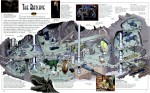
Map of Ancient Egypt

AncientEgyptMap

1 Comment

March 30, 2013 · 9:50 am

De-Extinction of Woolly Mammoth, others, Could Become Reality

‘De-Extinction’ Of Woolly Mammoth & Other Ancient Animals Could Become Reality, Scientists Say

Posted: 03/16/2013 1:03 am EDT  |  Updated: 03/25/2013 10:13 pm EDT

By: Megan Gannon, News Editor 

Published: 03/15/2013 05:22 PM EDT on LiveScience

Biologists briefly brought the extinct Pyrenean ibex back to life in 2003 by creating a clone from a frozen tissue sample harvested before the goat’s entire population vanished in 2000. The clone survived just seven minutes after birth, but it gave scientists hope that “de-extinction,” once a pipedream, could become a reality.

Ten years later, a group of researchers and conservationists gathered in Washington, D.C., today (March 15) for a forum called TEDxDeExtinction, hosted by the National Geographic Society, to talk about how to revive extinct animals, from the Tasmanian tiger and the saber-toothed tiger to the woolly mammoth and the North American passenger pigeon.

Though scientists don’t expect a real-life “Jurassic Park” will ever be on the horizon, a species that died a few tens of thousands of years ago could be resurrected as long as it has enough intact ancient DNA.

Some have their hopes set on the woolly mammoth, a relative of modern elephants that went extinct 3,000 to 10,000 years ago and left behind some extraordinarily well preserved carcasses in Siberian permafrost. Scientists in Russia and South Korea have embarked on an ambitious project to try to create a living specimen using the DNA-storing nucleus of a mammoth cell and an Asian elephant egg — a challenging prospect, as no one has ever been able to harvest eggs from an elephant. [Image Gallery: Bringing Extinct Animals Back to Life]

But DNA from extinct species doesn’t need to be preserved in Arctic conditions to be useful to scientists — researchers have been able to start putting together the genomes of extinct species from museum specimens that have been sitting on shelves for a century. If de-extinction research has done anything for science, it’s forced researchers to look at the quality of the DNA in dead animals, said science journalist Carl Zimmer, whose article on de-extinction featured on the cover of the April issue of National Geographic magazine.

“It’s not that good but you can come up with techniques to retrieve it,” Zimmer told LiveScience.

For instance, a team that includes Harvard genetics expert George Church is trying to bring back the passenger pigeon — a bird that once filled eastern North America’s skies. They have been able to piece together roughly 1 billion letters (Each of four nucleotides that make up DNA has a letter designation) in the bird’s genome based on DNA from a 100-year-old taxidermied museum specimen. They hope to incorporate those genes responsible for certain traits into the genome of a common rock pigeon to bring back the passenger pigeon, or at least create something that looks like it.

A few years ago, another group of researchers isolated DNA from a 100-year-old specimen of a young thylacine, also known as Tasmanian tiger. The pup had been preserved in alcohol at Museum Victoria in Melbourne. Its genetic material was inserted into mouse embryos, which proved functional in live mice. [Photos: The Creatures of Cryptozoology]

Should we?

Now that de-extinction looms as a possibility, it presents some thorny questions: Should we bring back these species? And what would we do with them?

Stuart Pimm of Duke University argued in an opinion piece in National Geographicthat these efforts would be a “colossal waste” if scientists don’t know where to put revived species that had been driven off the planet because their habitats became unsafe.

“A resurrected Pyrenean ibex will need a safe home,” Pimm wrote. “Those of us who attempt to reintroduce zoo-bred species that have gone extinct in the wild have one question at the top of our list: Where do we put them? Hunters ate this wild goat to extinction. Reintroduce a resurrected ibex to the area where it belongs and it will become the most expensive cabrito ever eaten.”

Pimm also worries that de-extinction could create a false impression that science can save endangered species, turning the focus away from conservation. But others argue that bringing back iconic, charismatic creatures could stir support for species preservation.

“Some people feel that watching scientists bring back the great auk and putting it back on a breeding colony would be very inspiring,” Zimmer told LiveScience. The great auk was the Northern Hemisphere’s version of the penguin. The large flightless birds went extinct in the mid-19th century.

Other species disappeared before scientists had a chance to study their remarkable biological abilities — like the gastric brooding frog, which vanished from Australia in the mid-1980s, likely due to timber harvesting and the chytrid fungus.

gastricbroodingfrogGastric brooding frogs come in two species: Rheobatrachus vitellinus and R. silus (pictured above and last seen in 1985). These frogs had a unique mode of reproduction: The female swallowed fertilized eggs, turned its stomach into a uterus and gave birth to froglets through the mouth. Timber harvesting and the chytrid fungus are the main suspects behind their extinction.

“This was not just any frog,” Mike Archer, a paleontologist at the University of New South Wales, said during his talk at TEDxDeExtinction, which was broadcast via livestream. These frogs had a unique mode of reproduction: The female swallowed fertilized eggs, turned its stomach into a uterus and gave birth to froglets through the mouth.

“No animal, let alone a frog, has been known to do this – change one organ in the body into another,” Archer said. He’s using cloning methods to put gastric brooding frog nuclei into eggs of living Australian marsh frogs. Archer announced today that his team has already created early-stage embryos of the extinct species forming hundreds of cells.

“I think we’re gonna have this frog hopping glad to be back in the world again,” he said.

Email Megan Gannon or follow her @meganigannon.

1 Comment

Filed under Animals, Humor and Observations

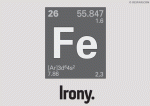
Irony

My favorite ironic phrase is still – A vegetarian is devoured by a man-eating plant.  Here is some more irony:

3 Comments

Filed under Humor and Observations, Uncategorized

Groundhog to be Prosecuted?

Groundhog Slay: Prosecutor seeks death penalty for Punxsutawney Phil

Published March 22, 2013

Has Punxsutawney Phil given his last forecast?A prosecutor in Ohio is reportedly seeking the death penalty for the famous rodent who emerged from his home in Gobbler’s Knob, Pa., on Feb. 2 and did not see his shadow, translating to an “early spring,” according to his handlers. But Michael Gmoser, prosecuting attorney in Butler County, said Thursday that Phil’s inaccurate forecast warrants capital punishment, the Pittsburgh Tribune-Review reports.

“Let’s face it, Punxsutawney Phil has let us down,” Gmoser said, tongue firmly in cheek, after filing the necessary court documents. “I awoke this morning to a snowstorm, low temperatures and howling wind.”

“Maybe it’s time for a Phyllis instead.”

– Butler County (Ohio) Prosecutor Michael Gmoser 

Spring began Wednesday, but local forecasts in the Pittsburgh area and throughout Pennsylvania show a good chance of snow this weekend and into next week.

“We in Butler County, like everyone in the nation, depend on Phil to give us a breath of spring in time,” Gmoser said. “You know, Phil lives his life behind bars as it is. This is the only penalty available. Maybe it’s time for a Phyllis instead.”

But Jeffrey Lundy, vice president of the Punxsutawney Ground Hog Club, said Gmoser will have a fight on his hands if he tries to arrest the famous groundhog.

“He’s going to have to go through 15 licensed hunters to get to Phil,” said Lundy, referring to members of the club’s inner circle.“We’ll find out how good of a prosecutor [Gmoser] is. If he doesn’t know how to speak groundhog-ese, he’ll never understand a word Phil says.”

Gmoser said a reprieve is possible.

“There may be some mitigating circumstances I may not know about,” he continued. “Phil may not know his rear from a hole in the ground. That might make a difference,” said Gmoser, who decided to file the court papers to break the tension at the end of a hard day in the office.

Lundy added: “There’s a lot of things to get serious about. Groundhog Day is not one of them.”

The famous groundhog narrowly escaped death in the 1993 film “Groundhog Day,” in which star Bill Murray, sentenced to relive the same day over and over until he became a better person, kidnapped Phil and drove off a cliff into a rock quarry with the terrified critter on his lap. However, the next day, Murray’s character, Phil Connors, awoke unscathed – as did Punxsutawney Phil.

Click for more from the Pittsburgh Tribune-Review.

Read more: http://www.foxnews.com/us/2013/03/22/ohio-prosecutor-reportedly-seeking-death-penalty-for-punxsutawney-phil/?intcmp=trending#ixzz2Ote3DOJr

Leave a comment

Filed under Animals, Humor and Observations

Amateur with metal detector finds 1,600-year-old royal ring

Amateur with metal detector finds 1,600-year-old royal ring

Published March 28, 2013

FoxNews.com

  • Escrick Ring 1.jpg

    The Escrick Ring, an intricately worked gold ring surrounding a brilliant blue sapphire discovered in 2009 by metal-detector enthusiast Michael Greenhorn, seen here with his discovery. (Kippa Matthews / York Museums Trust)

  • Escrick Ring.jpg

    A unique piece of jewelry called the Escrick Ring is only the second known use of a sapphire in jewellery found in the country, the first being a 5th century Roman example. It was found with a metal detector in 2009. (Kippa Matthews / York Museums Trust)

Did this intricate piece of sapphire, gold and glass belong to the King of France, some 1,600 years ago?
A group of archaeologist met at the Yorkshire Museum in England last week to discuss the Escrick Ring, an intricately worked gold ring surrounding a brilliant blue sapphire discovered in 2009 by an amateur metal-detector enthusiast.

‘Nothing like it has been found in this country.’

– Natalie McCaul, curator of archaeology at the Yorkshire Museum 

The ring, among the oldest pieces of sapphire jewelry ever found in the country, was thought to date from the 10th or 11th centuries — until the group took a closer look.

“Nothing like it has been found in this country,” said Natalie McCaul, curator of archaeology at the Yorkshire Museum. “This sapphire ring is even more special than we had previously thought.”

The panel’s conclusion: The Escrick Ring was made in Europe, possibly France, and would have belonged to a king or leader — not just a Bishop, as had been previously thought. It’s likely to date far earlier than previously thought as well: the 5th or 6th century, as much as 600 years earlier than archaeologists had believed.

“Hopefully this will lead us to finding out more about the ring and possibly even who might have owned it,” she said.

The ring was found by Michael Greenhorn, from York and District Metal Detecting Club, in 2009. The Yorkshire Museum raised over $50,000 to purchase it.

Attendees of the workshop, which the Yorkshire Museum said included more than 30 experts from across the country, decided that the sapphire in the ring was probably cut earlier, possibly during the Roman period, but the ring itself was specially made around the sapphire. By looking at the wear on the ring it is thought that it was worn for at least 50 years before it was lost.

The gold hoop that forms the ring also looks slightly different to the main part of the ring, with suggestions being made that it was turned into a ring later, possibly from a brooch or mount.

Further research, including an X-ray analysis and samples from the gold hoop, may help to pinpoint its origin.

Read more: http://www.foxnews.com/science/2013/03/28/amateur-with-metal-detector-finds-1600-year-old-royal-ring/#ixzz2Otd8nD7U

Leave a comment

Filed under Humor and Observations

Evil Bases

This is an occasional post of mine on places you can see yourself using as an Evil Base.  Evil bases need to be remote, defensible and either evil looking, or strange, or at the very least comfortable.  You need to be able to plot from them with peace of mind so your plans for world domination can be complete.  For earlier posts, type “evil bases” into the search box.  Enjoy!  Bwahahahaha!

2 Comments

Filed under Humor and Observations

Rome – An Ancient Super City

Rome – Ancient Super City

Rome

2 Comments

Filed under Humor and Observations

Book/Writing Humor

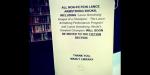
Humorous jokes about books and writing.  Hope you find at least a few entertaining.

1 Comment

Filed under Humor and Observations, Writing

Daisy Morris, 9, Discovers New Dinosaur And Has It Named After Her

Daisy Morris, 9, Discovers New Dinosaur And Has It Named After Her

Posted: 03/20/2013 6:18 pm EDT  |  Updated: 03/21/2013 11:48 am EDT

 
Daisy Morris Dinosaur
One little girl’s odd hobby has led to an extraordinary find for British paleontologists.

At the age of 9, Daisy Morris has discovered a new dinosaur species, which scientists have since named after her. The new creature has been dubbed Vectidraco daisymorrisae, the “Dragon from the Isle of Wight.”

Daisy was just 4 when she stumbled upon the fossilized remains of an unknown animal during a family walk on the beach in 2009. The family lives near the coast of England’s Isle of Wight — also known as the “dinosaur capital of Great Britain.”

“She has a very good eye for tiny little fossils,” her mother Sian Morris told BBC. Daisy apparently first began fossil hunting at age 3. “She found these tiny little black bones sticking out of the mud and decided to dig a bit further and scoop them all out,” her mother said.

Story continues after photo.
daisy morris dinosaur

Realizing that Daisy had possibly uncovered an ancient specimen, her family took the findings to Southampton University’s fossil expert Martin Simpson.

“When Daisy and her family brought the fossilized remains to me in April 2009, I knew I was looking at something very special,” Simpson told the Daily Mail.

Over the past several years, the bones Daisy discovered have been thoroughly analyzed by paleontologists. The findings were finally published this Monday. The fossilized remains belong to a previously unknown genus and species of a small flying reptile called the pterosaur.

The remains date back to the Lower Cretaceous period and may be up to 115 million years old.

Simpson told the Daily Mail that if it weren’t for Daisy, the fossils would “without doubt have been washed away and destroyed.”

The family has donated the fossils to the Natural History Museum while Daisy’s personal collection continues to grow. Sian Morris told the Daily Mail, “She’s fascinated and we’re very proud of her.”

1 Comment

Filed under Humor and Observations

Hundreds of family pets, protected species killed by little known federal agency

I was shocked when I read the story below.  This really needs to stop.

Hundreds of family pets, protected species killed by little known federal agency

By 

Published March 17, 2013

  • Maggie1.JPG

    This image, provided by the McCurtain family, of Gresham, Ore., shows “Maggie,” a 7-year-old border collie killed by a government trap in 2011.

  • Maggie6.jpg

    Maggie died when her neck was snapped by a body-gripping device known as a conibear trap, placed less than 50 feet from her family’s suburban Oregon home. (Denise McCurtain)

  • Maggie3.JPG

    The McCurtains claim multiple traps, like this one, were placed with no warning around a pond less than 50 feet from their Oregon backyard. (Denise McCurtain)

  • dogkilled3.JPG

    This photo, provided by Camilla Fox, of the group Project Coyote, shows a dog killed by a conibear trap in Southhampton, N.Y. Such traps are frequently used by Wildlife Services to kill raccoons, beavers and other wildlife. But dogs and other non-target animals often fall victim to the traps.

  • Dogkilled1.JPG

    This undated photo, provided by the group Project Coyote, shows another pet killed by a body-gripping conibear trap.

It was an August morning two years ago when Maggie, a spry, 7-year-old border collie, slipped through the backyard fence of her family’s suburban Oregon home. Minutes later, she was dead – her neck snapped by a body-gripping trap set by the U.S. government less than 50 feet from the home she shared with the four children who loved her.   
“It is an image that will never leave me,” Maggie’s owner, Denise McCurtain, of Gresham, Ore., said of her death. “She was still breathing as we tried to remove the trap. Her eyes were open and she was looking at me. All I could say was ‘I’m trying so hard. You didn’t do anything wrong.'”

Maggie’s death at a minimum was one of hundreds of accidental killings of pets over the last decade acknowledged by Wildlife Services, a little-known branch of the U.S. Department of Agriculture that is tasked with destroying animals seen as threats to people, agriculture and the environment. Critics, including a source within the USDA, told FoxNews.com that the government’s taxpayer-funded Predator Control program and its killing methods are random — and at times, illegal.

Over the years, Wildlife Services has killed thousands of non-target animals in several states – from pet dogs to protected species – caught in body-gripping conibear traps and leg hold snares, or poisoned by lethal M-44 devices that explode sodium cyanide capsules when triggered by a wild animal – or the snout of a curious family pet.

The McCurtains, like many other families, were never informed that such deadly devices were placed so close to their home in grass near the edge of a pond where their young son kicks his soccer ball and their daughter catches turtles.

The traps, set on communal property owned by the neighborhood association, were meant to kill an infestation of nutria, rat-like pests that pose no danger to people but can be harmful to the environment. The only warning sign was a small placard in the grass that identified the device as government property and cautioned against tampering with it. The neighborhood association told the McCurtains it never would have approved such traps had it known they were so deadly.

“It’s unconscionable that anybody with an ounce of common sense would set these traps in an area frequented by the public and their pets,” said Brooks Fahy, executive director of Predator Defense, a national watchdog group that advocates non-lethal predator control.

“It’s unconscionable that anybody with an ounce of common sense would set these traps in an area frequented by the public and their pets.”

– Brooks Fahy, executive director of Predator Defense 

The M-44’s intended targets are coyotes that kill or harass livestock primarily in the western states, where Wildlife Services is most active and critical to farmers protecting their livestock.

But, like Maggie, there often are unintended victims — like a puppy belonging to J.D. and Angel Walker of Santa Anna, Texas.

In February 2011, the couple’s 18-month-old pit bull was killed when it sniffed and pulled on a meat-scented M-44 placed about 900 feet from its home.

Kyle Traweek, the Wildlife Services employee who set the device, violated at least three M-44 restrictions set by the Environmental Protection Agency, according to Texas officials. In a June 6, 2012, letter reprimanding Traweek, the Texas Department of Agriculture said he broke EPA rules by placing the cyanide in an area where “exposure to the public and family and pets is probable.”

Click here to read the letter

Traweek is no longer employed by Wildlife Services, although his departure was not related to the incident in Texas, according to a spokeswoman with the Animal Plant and Health Inspection Service (APHIS), a division of the USDA that oversees the program.

It is difficult to verify the number of accidental killings of pets each year by Wildlife Services, in part because many go unrecorded, according to multiple sources.

A management source within the USDA claims Wildlife Services employees are told not to document the accidental killings of pets if it can be avoided.

“They are told to get rid of the leash and bury the dog,” said the source, who spoke to FoxNews.com on condition of anonymity.

The source also alleged that in some instances in Arizona, California and Minnesota, the killings of pets are intentional – often with the knowledge, approval and encouragement of upper level Wildlife Services management.

“There have been cases of them shooting and killing dogs,” the source said. “They’ll just claim it was feral, vicious or rabid. They think they can do anything they want.”

In court documents obtained by FoxNews.com, Christopher Brennan, a California-based Wildlife Services employee, told a Mendocino County Superior Court judge that he has shot hundreds of “free-ranging” dogs who he claimed were preying on livestock. During the Sept. 1, 2009, hearing – involving a restraining order between Brennan and a neighbor – the judge asked Brennan how many dogs he has killed as a government trapper over the last 10 years.

“Probably close to 400,” Brennan replied, according to the court transcript.

Carol Bannerman, an APHIS spokeswoman, confirmed Tuesday that Brennan is still employed as a “wildlife specialist” for the agency. Bannerman claimed Brennan works in an area where there is a large number of unleashed dogs that harass or kill livestock — and said there is a “significant population” of privately owned guard dogs, mostly pit bulls, that are allegedly left to roam freely so they can protect illegal marijuana crops.

“None of the feral and free-ranging dogs lethally removed in California last year were non-targets,” Bannerman said. “Some non-target dogs were trapped and released.”

In January, a Wildlife Services employee was arrested in Arizona and charged with felony animal cruelty after allegedly using a government trap to capture a neighbor’s dog he deemed problematic. The employee, identified as Russell Files, set up the leg-hold device during work hours to trap the animal, which was covered in blood from trying to chew its way out of the device when police arrived on the scene. An APHIS official would not comment on whether Files is still working for the government, citing an ongoing investigation.

Wildlife Services described the overall harm to pets and non-target wildlife as “rare.”

“Wildlife Services provides expert federal leadership to responsibly manage one of our nation’s most precious resources — our wildlife,” APHIS spokeswoman Tanya Espinosa said in a statement. “We seek to resolve conflict between people and wildlife in the safest and most humane ways possible, with the least negative consequences to wildlife overall.”

The program said that accidental killings account for less than one percent of wildlife removed for damage concerns – and claimed that number is even lower for pets.

Wildlife Services, which has been in place since 1895, touts its mission as critical, priding itself on protecting the country’s agriculture and natural resources from destructive wildlife – damage that can be costly for landowners and businesses.

According to a 2010 report by the USDA’s National Agricultural Statistics Service (NASS), U.S. farmers and ranchers spent $188 million during 2010 on non-lethal ways to protect their land and livestock. That number has declined from 2006, when NASS estimated annual investments in non-lethal methods to be at $199 million.

The USDA says that despite such investments, approximately 647,000 cattle, sheep and goat are killed by predators each year, resulting in an annual loss of more than $137 million. The lost animals do not include chickens and turkeys.

But Carson Barylak, federal policy adviser of the Animal Welfare Institute, is skeptical of the USDA’s statements. She said the danger posed by predatory animals is exaggerated.

“The very reports that Wildlife Services cite for these figures show that [attacks by wild predators have] a relatively small impact on the livestock industry. In the case of cattle, for instance, under a quarter of a percent of the nation’s stock was lost to predators in 2010 according to the program’s records.”

The exact number of pet animals and protected species killed over the years by the agency is one that will likely never be known.

A report by the Sacramento Bee, which investigated the program last year, claimed its employees have accidentally killed more than 50,000 non-target animals since 2000, including federally protected golden and bald eagles. The newspaper also reported that more than 1,100 dogs, including family pets, were destroyed by government traps or poison within those same years. Other known cases include serious injuries to pets that result in leg amputations, as well as harm to humans who come in contact with the cyanide.

Doug McKenna, a longtime criminal investigator for the U.S. Fish and Wildlife Service – a separate agency that falls under the Department of Interior – said he probed many killings of non-predatory and protected species by Wildlife Services over the years.

“The Bald Eagle is a scavenger bird, so of course if it flies down to investigate a carcass that is placed near a leg hold trap, it will get caught in it,” he said. If the trap is not checked in a timely manner, the eagle is left to die. Such deaths are a violation of federal law, like the Bald and Golden Eagle Protection Act, first passed in 1940.

McKenna said that in the case of M-44 cyanide devices, state governments must grant employees permission to place them as well as post warning signs for the public.

“Any access point into the property has to have signs that M-44’s are being used and it has to be in English and Spanish,” he said.

For pet owners, seeking legal recourse against the government is a daunting and tedious process – requiring individuals to file a tort claim that typically results in families losing more money even if they win.

SEND TIPS TO NEWSMANAGER@FOXNEWS.COM

“Most people do not pursue litigation when they realize the financial cost, the time involvement and the limit on recovery for damages being the actual value of their pet,” said Oregon-based attorney Daniel Stotter, who handles many of these cases.

“The bottom line is that the federal government has limited liability in all lawsuits involving tort claims, damage to property or persons. You can sue the federal government for certain things, like negligence, but you cannot seek punitive damages,” he said, adding that victims are responsible for covering their own legal fees.

“The government knows that when they injure or kill an animal, they’re more likely to not have financial repercussions,” he said.

For families like the McCurtains and Walkers, there is no price to be paid for the emotional toll of losing a pet.

“It is losing a member of the family,” Angel Walker said. “You can’t really get past it.”

Read more: http://www.foxnews.com/us/2013/03/13/hundreds-family-pets-endangered-species-killed-by-little-known-federal-agency/#ixzz2OiVYM37E

1 Comment

Filed under Animals, Humor and Observations