Category Archives: Humor and Observations

Christians most persecuted group in the world as vicious attacks grow

April 10, 2017 Women pass by the Coptic church that was bombed on Sunday in Tanta, Egypt. ISIS has recently increased their attacks on Egypt's Christian community.

April 10, 2017 Women pass by the Coptic church that was bombed on Sunday in Tanta, Egypt. ISIS has recently increased their attacks on Egypt’s Christian community.  (REUTERS/Mohamed Abd El Ghany )

The recent Palm Sunday bombings at two Egyptian churches that killed 44 worshippers and wounded more than 100 others are the latest in a spate of deadly attacks targeting the world’s Christians.

Nearly 90,000 of the faithful were killed for their beliefs in violent and gruesome attacks last year, according to a report by the Center for Studies on New Religions, making Christians the most persecuted group in the world. While some were killed as part of state-sanctioned persecution, as in places like North Korea, nearly one-third of the Christians who died in 2016 were executed at the hands of Islamic extremists like ISIS.

The study also found that as many as 600 million Christians were prevented from practicing their faith in 2016.

“There are many places on Earth where being a Christian is the most dangerous thing you can be,” Robert Nicholson of the Philos Project told Fox News in January.

Some of the more violent attacks on Christians include: terror groups in Nigeria taking out the eyes of Christians before butchering them; a mob of Muslim worshippers in Uganda — mad over conversion efforts — entering a church and beating parishioners and raping at least a dozen women; and the numerous bombings of Coptic churches in Egypt.

The violence against Christians has been on the rise over the past two years, with assailants growing more ferocious with each attack.

In October 2016, more than 40 Christians were killed in the village of GodoGodo, Nigeria, by Muslim Fulani Herdsman. The mostly Christian town was burned to the ground and crops and grazing land was destroyed by the herdsmen, who shot and slashed dozens of the fleeing villagers. In addition, more than 300 were left severely injured.

In the war-torn Central African Republic, more than a dozen Christian refugees were hacked by machete-wielding militia fighters, also in October 2016. Fighters from the republic’s largely Muslim Sleeka militia attacked refugees living in the village of Kaga Bandoro. More than 50 people were injured and another 13 were killed before U.N. peacekeepers from a nearby camp stopped the bloodshed.

In February 2015, a video was released by the Islamic State showing the mass beheading of 21 Egyptian Copts in Libya.

The tape showed the victims — who were migrant workers kidnapped in the city of Sirte — kneeling in orange jumpsuits on a beach along the southern Mediterranean coast before they were beheaded.

“Oh people, recently you’ve seen us on the hills of Al-Sham [Greater Syria] and on Dabiq’s Plain, chopping off the heads that had been carrying the cross delusion for a long time, filled with spite against Islam and Muslims, and today we… are sending another message,” said one of their captives in English before the decapitations.

While the video, experts say, was doctored to make ISIS soldiers appear larger than life, no one holds out hope the victims, mostly poor fishermen who had gone to Libya for work, are alive. The following day, after the clip went viral, Egyptian warplanes launched airstrikes on a port city near Tripoli, where the video appeared to have been filmed.

The Coptic Christian community has become what is seemingly a top target for ISIS. Worshippers on Egypt’s Sinai Peninsula and the northern part of the country have been under siege.

The Sinai Peninsula — where northeastern Egypt shares its borders with Gaza and Israel — has been the center of an ongoing conflict between Islamists and Egyptian forces for years, but in recent times the Islamic State and their local affiliates, known as the “Sinai Province,” have been attempting to drive the Coptic population out of the northern Mediterranean city of Al Arish.

While the Christian population of the city has had to flee from threats before, their plight has taken a dark turn in 2017. With a recent call from ISIS for the Copts on the peninsula to be killed, more than 100 families had to flee amid attacks – including the executions of their loved ones.

In the Palm Sunday attacks in Egypt, at least 44 people were killed and more than 100 were injured in the bombings — which ISIS claimed responsibility for.

The first blast occurred at St. George Church in the Nile Delta town of Tanta, where at least 27 people were killed and 78 others wounded, officials said.

Television footage showed the inside of the church, where a large number of people gathered around what appeared to be lifeless, bloody bodies covered with papers.

The second explosion – which Egypt’s Interior Ministry says was caused by a suicide bomber who tried to storm St. Mark’s Cathedral in the coastal city of Alexandria — left at least 17 dead, and 48 injured.

The attack came just after Pope Tawadros II — leader of the Coptic Orthodox Church of Alexandria — finished services. He reportedly was unhurt.

The blasts came at the start of Holy Week leading up to Easter, the most solemn time for Christians and just weeks before Pope Francis is due to visit Egypt. The attacks led Egyptian President Abdel-Fattah el-Sissi to call for a three-month long state of emergency.

Christians continue to live in fear of practicing their faith, and there are no signs the slaughter soon will be coming to an end.

Perry Chiaramonte is a reporter for FoxNews.com. Follow him on Twitter at @perrych

Leave a comment

Filed under Humor and Observations

Walking dead? Medieval villagers zombie-proofed their corpses

Here, knife-marks can been seen on the surfaces of two rib fragments. Cut-marks and chop-marks are the bones suggest the bodies had been mutilated after death.

Here, knife-marks can been seen on the surfaces of two rib fragments. Cut-marks and chop-marks are the bones suggest the bodies had been mutilated after death.  (Historic England)

Zombies are hardly a modern preoccupation. For centuries, people have been worried about corpses rising from their graves to torment the living. Now, archaeologists in England think they’ve found evidence of medieval methods to prevent the dead from walking.

The researchers revisited a pit of human remains that had been dug up at Wharram Percy, an abandoned village in North Yorkshire that dates back to nearly 1,000 years ago. The corpses had been burned and mutilated after death, and the archaeologists offered two possible explanations: either the condition of the corpses was due to cannibalism, or the bodies were dismembered to ensure they wouldn’t walk from their graves, according to the study published April 2 in the Journal of Archaeological Science: Reports.

Study leader Simon Mays, a human-skeletal biologist at Historic England, said the idea that the bones “are the remains of corpses burnt and dismembered to stop them walking from their graves seems to fit the evidence best.” [See Photos of the ‘Zombie’ Burial at Wharram Percy]

People at the time believed that reanimation could occur when individuals who had a strong life force committed evil deeds before death, or when individuals experienced a sudden or violent death, Mays and his colleagues wrote. To stop these corpses from haunting the living, English medieval texts suggest that bodies would be dug up and subjected to mutilation and burning.

When the jumbled bones were first excavated in the 1960s, they were originally interpreted as dating from earlier, perhaps Roman-era, burials that were inadvertently disturbed and reburied by villagers in the late Middle Ages. The bones were buried in unconsecrated ground, after all —near a house and not in the official cemetery.

However, radiocarbon dating showed that the bones were contemporary with the medieval town, and chemical analyses revealed that the bones came from people who were local to the region.

What happened to the corpses after death could rival scenes from a gory zombie movie.

The bones from Wharram Percy came from at least 10 people between the ages of 2 and 50, according to the new study. Burning patterns from experiments with cadavers suggest that the bodies were set ablaze when the bones still had flesh on them. (A fleshed corpse was thought to be more threatening than a bare skeleton.) The scientists also found cut marks consistent with dismemberment, and chop marks that suggest the skeletons were decapitated after death.

“If we are right, then this is the first good archaeological evidence we have for this practice,” Mays said in a statement , referring to the zombie-safety precautions. “It shows us a dark side of medieval beliefs and provides a graphic reminder of how different the medieval view of the world was from our own.”

Stephen Gordon , a scholar of medieval and early-modern supernatural belief, who was not involved in the study, said he found the interpretation plausible. [7 Strange Ways Humans Act Like Vampires]

“Although, of course, one cannot discount the possibility that cannibalism was indeed a cause, I do think the evidence veers toward a local belief in the dangerous dead,” Gordon told Live Science in an email.

Gordon noted that several examples of revenants, or reanimated corpses , come from 12th-century northern English sources, so archaeological evidence from Yorkshire from around 1100 to 1300 is certainly to be expected.

There are still some mysteries concerning the bones, the authors of the study noted, such as how the human remains ended up together in this particular pit, especially since they span the 11th to 13th centuries. It’s also unclear why, if the corpses were feared, they would be reburied in a domestic context.

What’s more, revenants, at least according to written English sources, were commonly associated with males, but skeletons from both sexes and children were found in the pit. Gordon, however, doesn’t think this should invalidate the walking-dead argument.

“The written evidence in English chronicles and saints’ lives, which focus on male revenants, represents just a small (and highly constructed) snapshot of the realities of everyday belief,” Gordon said in the email.

A bishop of the Holy Roman Empire, Burchard of Worms, writing around A.D. 1000, “alludes to the fact that children who died before baptism, or women who died in childbirth, were believed to walk after death and needed to be ‘transfixed,'” Gordon said. He pointed to another case, from the 14th-century Bohemian chronicler Neplach of Opatovice, in which a female walking corpse had to be cremated. “As such, it is possible that female corpses were indeed believed to walk after death in England.”

The bones from Wharram Percy might not represent the very first revenant burial found in Europe. In several so-called ” vampire burials ” in a 17th-century Polish cemetery, the corpses have sickles around their necks. One interpretation is that the blades were meant to keep the dead from rising.

Leave a comment

Filed under Humor and Observations

Man who lived 700 years ago gets brand-new face

(Credit: Dr. Chris Rynn, University of Dundee)

(Credit: Dr. Chris Rynn, University of Dundee)

Gizmodo calls his face “haunting,” but to UK researchers, seeing the mug of the man known as Context 958 is nothing short of astounding. His visage was revealed at the two-week-long Cambridge Science Festival this month, as were details about who he was: in short, a 13th-century working-class man who died in middle age, had apparently lived a life of indigence, and whose face was reconstructed by scientists based on his teeth and bones, per a Cambridge press release.

Context 958’s skeleton, analyzed as part of the university’s “After the Plague” project, was discovered along with about 400 others between 2010 and 2012 in a medieval-era graveyard underneath one of the college’s schools.

The bodies, which date from the 1200s to the 1400s, came from the Hospital of St. John the Evangelist, which used to exist across from the cemetery.

Context 958, who was found buried face-down in his burial spot, is believed to have been a few ticks older than 40 and boasted a “robust skeleton with a lot of wear and tear,” which means he likely had a physically challenging job, says Cambridge professor John Robb.

However, unlike others who lived in poverty, Context 958 appears to have chowed down on meat and fish, suggesting that he worked in a specialized niche that gave him access to this ample food supply.

What makes the discovery of his body and others in the same demographic notable, Robb says, is that it gives researchers a chance to study how the poor lived in England more than 700 years ago.

“The less money and property you had, the less likely anybody was to ever write down anything about you,” he notes. (This living man’s face was reconstructed using 3D printing.)

Leave a comment

Filed under Humor and Observations

Tanks a bullion! Man finds gold bars buried in military vehicle

A tank fanatic got a new model in a £30,000 [$37,000] trade-in — and found more than £2million of gold bullion hidden in the fuel tank.

Nick Mead, 55, discovered the five gold bars in the Russian T54/69 while restoring it to add to his collection of 150 military vehicles.

He and mechanic Todd Chamberlain were filming themselves prising open the diesel tank in case they found munitions and needed to show it to bomb disposal crews.

Instead, they pulled out the bars, weighing up to 12 pounds — 5kg — apiece.

Todd, 50, said a quick calculation suggested they were worth in excess of £2million [$2.5 million].

He added: “We didn’t know what to do. You can’t exactly take five gold bullion bars down to Cash Converters without questions being asked, so we called the police.”

Nick runs Tanks-a-Lot, giving petrol-heads the chance to drive any of his tanks on his farm in Helmdon, Northants.

Leave a comment

Filed under Humor and Observations

Here’s how ‘invisible armor’ could defeat bullets and blades

1490287074715

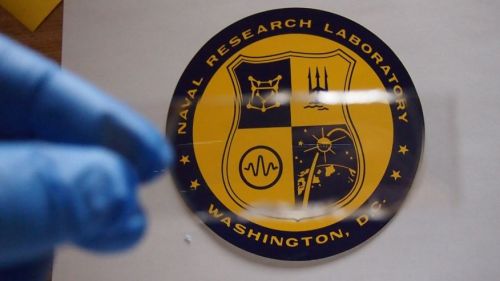
The NRL-developed transparent polymer armor consists of alternating layers of elastomeric polymer and a harder material substrate. Very small crystalline domains, which also provide rigidity, give the polymer its transparency. (U.S. Naval Research Laboratory)

The NRL-developed transparent polymer armor consists of alternating layers of elastomeric polymer and a harder material substrate. Very small crystalline domains, which also provide rigidity, give the polymer its transparency. (U.S. Naval Research Laboratory)

Ever wonder if there was such a thing as transparent armor? It sounds like something straight out of a comic book, but it’s something the Navy has actually created.

U.S. Naval Research Laboratory (NRL) scientists have created a remarkable transparent armor that is lightweight and still provides excellent protection.

Nearly as transparent as glass, the armor is essentially invisible protection from bullets. And if the armor surface is damaged, warfighters could fix it on the fly with something as simple as a hot plate and the armor will meld itself back together.

Think about how “bulletproof glass” (a misnomer since it is often only bullet resistant) works – you can see through it and it stops bullets.

Now what if you could do that for body armor and helmets? That’s the idea here.

This next-generation armor advance could also amp up transparent bulletproof walls to protect tourist attractions from the attacks we’ve seen in Paris and most recently, in London.

What’s the armor made of?

The transparent polymer armor gets its transparency from something known as tiny crystalline domains. The armor itself is made up of alternating layers of elastomeric polymer combined with a harder material substrate.

NRL scientists conducted tests using polymeric materials as a coating to try to enhance impact resistance.

By applying layers of the special materials to body armor and helmets, the result was better protection for warriors against bullets.

The armor also helped reduce the impact of blast waves caused by something like an IED explosion, which could potentially help prevent brain trauma.

When a bullet hits the armor

If you picture a windshield that has been struck by a rock kicked up while driving, the rock’s impact may cause damage that makes it difficult to see through the windshield.

One of the amazing things about this see-through armor is that when it’s struck by a projectile, such as a bullet, it still retains its lucid nature. There’s virtually no impact on visibility and the damage is limited only to the spot where the bullet connected with the armor.

Repair vs. replace 

The possibility exists that this futuristic body armor could be ironed back into shape after it sustained some hits, because of the material used to create it.

The material needs to be heated to around 100 degrees Celsius, which then causes it to become hot enough to melt the tiny crystallites. By heating the material, any impact from the bullet can be melded back together and returned to its normal state. Scientists believe that this sort of repair will not impact how the armor performs.

Easy, fast repairs can be a great advantage for warfighters operating in remote locations and it can save money by repairing rather than replacing.

Implications for protecting against global terror attacks

In a scenario like the recent London attack, lightweight body armor approaches like the aforementioned can be very useful to protect armed officers from bladed weapons, bullets and other threats while the reduced weight can improve their speed, agility and flexibility of response.

Like the Capitol building in the US, armed officers protect the building and those working in and visiting the building. Based on the information provided publicly thus far, the terrorist wielded a bladed weapon and attacked British officers. One officer was tragically killed.

Guns and explosive devices are not the only methods of attack used by Islamic extremist terrorists. In Europe, terrorist plots and attacks have increasingly involved bladed weapons on foot as well the weaponization of vehicles.

Islamic extremist groups such as al-Qaeda in the Arabian Peninsula (AQAP) and the Islamic State group have been actively promoting these sorts of attack methods.

Just last month in Paris, a terrorist tried to launch an attack with machetes at the popular tourist site of the Louvre museum. A French soldier stopped him before there were any casualties.

In 2013, two terrorists drove at British Army soldier Fusilier Lee Rigby, who was walking a street in England. The terrorists then exited the vehicle, attacked him with blades and murdered him by hacking him to death.

Invisible Walls?

Ultimately, advances like NRLs in transparent armor could play a vital role in amping up “invisible” walls could be used to stop both people and vehicles from storming sites and areas. By enhancing protection, it could help prevent attacks and casualties.

Paris recently announced they are building an eight-foot bulletproof glass wall around the Eiffel Tower. Why? Tourist sites are attractive targets for terrorists. The goal is to stop not just bullets but prevent vehicles loaded with bombs from gaining access.

Transparent armor-ed up walls mean tourists can still enjoy an uninterrupted view while benefiting from enhanced protection.

Advanced armor like this can also become a deterrent to future attacks.


Allison Barrie consults at the highest levels of defense, has travelled to more than 70 countries, is a lawyer with four postgraduate degrees and now the author of the new book “Future Weapons: Access Granted”  covering invisible tanks through to thought-controlled fighter jets. You can click here for more information on FOX Firepower columnist and host Allison Barrie and you can follow her on Twitter @allison_barrie.

Leave a comment

Filed under Humor and Observations

Scientists discover world’s most ancient fossils

Scientists have discovered tiny fossils that are thinner than a human hair and are an astounding 3.7 billion years old, making them the oldest known fossils on Earth, University College London announced on Wednesday. They could even be as old as 4.2 billion years.

The fossils were likely created by bacteria that lived near hydrothermal vents and consumed iron. Those ancient critters lived an incredible 3.8 to 4.3 billion years ago.

“Our discovery supports the idea that life emerged from hot, seafloor vents shortly after planet Earth formed,”  Matthew Dodd, a PhD student at the University College London and the first author of a new study about the fossils, said in a statement. “This speedy appearance of life on Earth fits with other evidence of recently discovered 3,700 million year old sedimentary mounds that were shaped by microorganisms.”

The scientists found the fossils in a part of Quebec, Canada, known for having ancient sedimentary rock. The little fossils are much older than their closest competitors.

“The microfossils we discovered are about 300 million years older than the previously thought oldest microfossils,” Dominic Papineau, a lecturer at University College London and the study’s lead researcher, said in a video announcing the find. “So there are within a few hundred million years from the accretion of the solar system.”

In the statement, Papineau described these tiny fossils— they’re less than a millimeter long— as “direct evidence of one of Earth’s oldest life forms.”

Planet Earth itself is believed to be 4.5 billion years old.

One of the most exciting ramifications of the find is that since it shows that life began on Earth so long ago, perhaps the same thing could have happened in other places in our solar system— like Mars.

“These discoveries demonstrate life developed on Earth at a time when Mars and Earth had liquid water at their surfaces, posing exciting questions for extra-terrestrial life,” Dodd said, in the statement. “Therefore, we expect to find evidence for past life on Mars 4,000 million years ago, or if not, Earth may have been a special exception.”

The discovery was reported in a study published online Wednesday in the journal Nature.

Leave a comment

Filed under Humor and Observations

Cosplay Pictures for Your Enjoyment!

Cosplayers and cosplay for your enjoyment!

Leave a comment

Filed under Humor and Observations

Rabbit hole leads to incredible 700-year-old Knights Templar cave complex

Four4Four Science: 700-year-old Knights Templar cave complex hidden beneath U.K. farmer's field; Jeff Bezos plans moon deliveries, mind-controlled robot, mold sells for $15,000
Hidden caves of the mysterious Knights Templar revealed

A rabbit hole in the UK conceals the entrance to an incredible cave complex linked to the mysterious Knights Templar.

New photos show the remarkable Caynton Caves network, which looks like something out of the movie “Indiana Jones and the Last Crusade.” The shadowy Knights Templar order is said to have used the caves.

The Sun reports that the caves are hidden beneath a farmer’s field in Shropshire. The site was visited by photographer Michael Scott after he saw a video of the caves online. “I traipsed over a field to find it, but if you didn’t know it was there you would just walk right past it,” Scott said.

Once inside, Scott encountered arches, walkways, and carved niches. He described the caves as cramped, noting that anyone nearing six-feet tall has to bend down inside the complex. “I had to crouch down and once I was in it was completely silent,” he said. “There were a few spiders in there but that was it.

Said to be 700 years old, the caves have been long been linked to the Knights Templar – a Catholic military order that played a key role during the Crusades. Named after Jerusalem’s Temple Mount, where the order was based, the order was founded in 1119 protect pilgrims visiting the Holy Land.

With the loss of the Holy Land, the Templars’ military influence waned, although they still held great economic sway in medieval Europe. In 1307 the French King Philip IV, who wanted to wipe out his debts to the order, launched a plot to bring the Knights Templar down. Many Templars were arrested on charges including heresy and dozens were later burned at the stake.

Pope Clement V disbanded the order in 1312.

The caves had been closed for a number of years before Scott’s visit. Black magic ceremonies reportedly forced the owners to seal up the entrance to the caves in 2012.

While some people believe the caves are 700 years old, others think that the complex was carved out by followers of the Templars in the 17th century.

1 Comment

Filed under Humor and Observations

Chinese researchers announce designer baby breakthrough

embryopic

Science has taken another step toward delivering the perfect newborn – or at least a bouncing baby free of certain genetic defects.

Chinese researchers used a genome editing technique called CRISPR to rid normal embryos of hereditary diseases that cause blood disorders and other ailments, according to New Scientist. Experts who reviewed the project told the publication that, even though it involved just six embryos, it carries promise.

“It is encouraging,” Robin Lovell-Badge, a human genome expert at the Francis Crick Institute in London, told New Scientist.

“It is encouraging.”

– Robin Lovell-Badge, Francis Crick Institute

 The acronym stands for “Clustered Regularly-Interspaced Short Palindromic Repeats,” and the technique is a method of disabling genes by introducing small mutations that disrupt the code of a DNA sequence. Prior to the Chinese experiment, studies involving the CRISPR technique have focused on its use in abnormal embryos that could never fully develop. For bioethics reasons, it was not previously used on healthy, or normal embryos.

The experiment successfully repaired just under 10 percent of genetic mutations, a rate too low to be practical, but high enough to be encouraging.

The Chinese team working at the Third Affiliated Hospital of Guangzhou Medical University first worked with abnormal embryos, with little success, according to the report. But when they tried to repair mutations in normal embryos from immature eggs donated by people undergoing IVF, they had a breakthrough.

The eggs presented less of a bioethical dilemma, as they are usually discarded by IVF clinics. But healthy children have been born from such eggs. The team fertilized each egg by injecting sperm from one of two men with a hereditary disease, then used the CRISPR technique on the single-cell embryos before they started dividing.

In one case, the technique zapped a mutation that causes favism, a condition in which consumption of fava beans causes destruction of red blood cells.

In another case, it fixed a mutation that causes the blood disease beta-thalassemia, a group of inherited blood disorders that affect about one in every 100,000 people.

Another expert told New Scientist the results were compelling.

“It does look more promising than previous papers,” Fredrik Lanner, of the Karolinska Institute in Sweden, told the publication.

The study could lead to wider experimentation with using CRISPR to edit the genomes of normal human embryos. But experts cautioned the technology is far from the point where it could be safely used for editing embryos.

Leave a comment

Filed under Humor and Observations

Cute Dogs for Your Monday Blues!

1 Comment

March 13, 2017 · 7:00 am