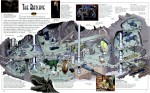
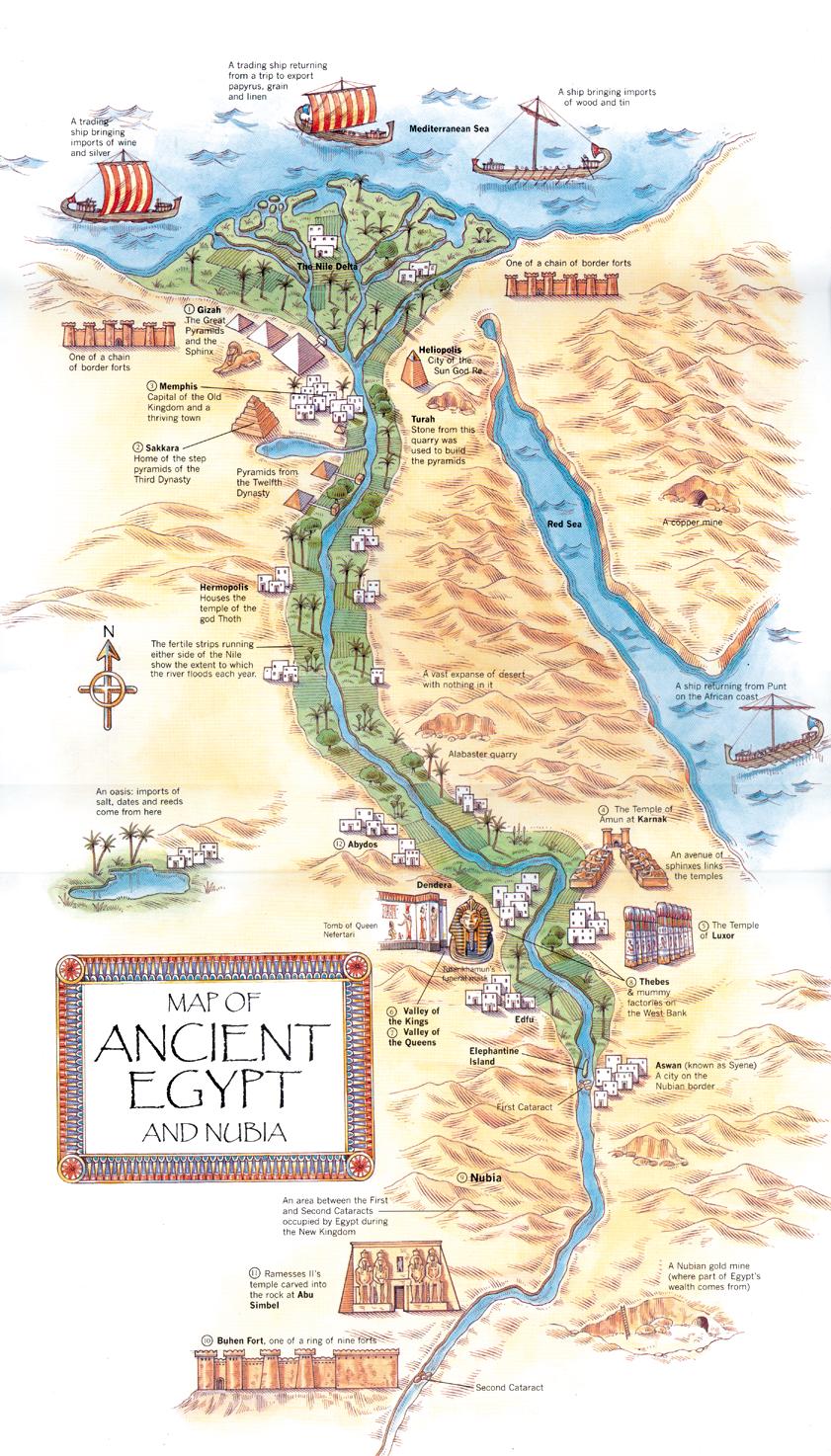
Map of Ancient Egypt

AncientEgyptMap

1 Comment

March 30, 2013 · 9:50 am

De-Extinction of Woolly Mammoth, others, Could Become Reality

‘De-Extinction’ Of Woolly Mammoth & Other Ancient Animals Could Become Reality, Scientists Say

Posted: 03/16/2013 1:03 am EDT  |  Updated: 03/25/2013 10:13 pm EDT

By: Megan Gannon, News Editor 

Published: 03/15/2013 05:22 PM EDT on LiveScience

Biologists briefly brought the extinct Pyrenean ibex back to life in 2003 by creating a clone from a frozen tissue sample harvested before the goat’s entire population vanished in 2000. The clone survived just seven minutes after birth, but it gave scientists hope that “de-extinction,” once a pipedream, could become a reality.

Ten years later, a group of researchers and conservationists gathered in Washington, D.C., today (March 15) for a forum called TEDxDeExtinction, hosted by the National Geographic Society, to talk about how to revive extinct animals, from the Tasmanian tiger and the saber-toothed tiger to the woolly mammoth and the North American passenger pigeon.

Though scientists don’t expect a real-life “Jurassic Park” will ever be on the horizon, a species that died a few tens of thousands of years ago could be resurrected as long as it has enough intact ancient DNA.

Some have their hopes set on the woolly mammoth, a relative of modern elephants that went extinct 3,000 to 10,000 years ago and left behind some extraordinarily well preserved carcasses in Siberian permafrost. Scientists in Russia and South Korea have embarked on an ambitious project to try to create a living specimen using the DNA-storing nucleus of a mammoth cell and an Asian elephant egg — a challenging prospect, as no one has ever been able to harvest eggs from an elephant. [Image Gallery: Bringing Extinct Animals Back to Life]

But DNA from extinct species doesn’t need to be preserved in Arctic conditions to be useful to scientists — researchers have been able to start putting together the genomes of extinct species from museum specimens that have been sitting on shelves for a century. If de-extinction research has done anything for science, it’s forced researchers to look at the quality of the DNA in dead animals, said science journalist Carl Zimmer, whose article on de-extinction featured on the cover of the April issue of National Geographic magazine.

“It’s not that good but you can come up with techniques to retrieve it,” Zimmer told LiveScience.

For instance, a team that includes Harvard genetics expert George Church is trying to bring back the passenger pigeon — a bird that once filled eastern North America’s skies. They have been able to piece together roughly 1 billion letters (Each of four nucleotides that make up DNA has a letter designation) in the bird’s genome based on DNA from a 100-year-old taxidermied museum specimen. They hope to incorporate those genes responsible for certain traits into the genome of a common rock pigeon to bring back the passenger pigeon, or at least create something that looks like it.

A few years ago, another group of researchers isolated DNA from a 100-year-old specimen of a young thylacine, also known as Tasmanian tiger. The pup had been preserved in alcohol at Museum Victoria in Melbourne. Its genetic material was inserted into mouse embryos, which proved functional in live mice. [Photos: The Creatures of Cryptozoology]

Should we?

Now that de-extinction looms as a possibility, it presents some thorny questions: Should we bring back these species? And what would we do with them?

Stuart Pimm of Duke University argued in an opinion piece in National Geographicthat these efforts would be a “colossal waste” if scientists don’t know where to put revived species that had been driven off the planet because their habitats became unsafe.

“A resurrected Pyrenean ibex will need a safe home,” Pimm wrote. “Those of us who attempt to reintroduce zoo-bred species that have gone extinct in the wild have one question at the top of our list: Where do we put them? Hunters ate this wild goat to extinction. Reintroduce a resurrected ibex to the area where it belongs and it will become the most expensive cabrito ever eaten.”

Pimm also worries that de-extinction could create a false impression that science can save endangered species, turning the focus away from conservation. But others argue that bringing back iconic, charismatic creatures could stir support for species preservation.

“Some people feel that watching scientists bring back the great auk and putting it back on a breeding colony would be very inspiring,” Zimmer told LiveScience. The great auk was the Northern Hemisphere’s version of the penguin. The large flightless birds went extinct in the mid-19th century.

Other species disappeared before scientists had a chance to study their remarkable biological abilities — like the gastric brooding frog, which vanished from Australia in the mid-1980s, likely due to timber harvesting and the chytrid fungus.

gastricbroodingfrogGastric brooding frogs come in two species: Rheobatrachus vitellinus and R. silus (pictured above and last seen in 1985). These frogs had a unique mode of reproduction: The female swallowed fertilized eggs, turned its stomach into a uterus and gave birth to froglets through the mouth. Timber harvesting and the chytrid fungus are the main suspects behind their extinction.

“This was not just any frog,” Mike Archer, a paleontologist at the University of New South Wales, said during his talk at TEDxDeExtinction, which was broadcast via livestream. These frogs had a unique mode of reproduction: The female swallowed fertilized eggs, turned its stomach into a uterus and gave birth to froglets through the mouth.

“No animal, let alone a frog, has been known to do this – change one organ in the body into another,” Archer said. He’s using cloning methods to put gastric brooding frog nuclei into eggs of living Australian marsh frogs. Archer announced today that his team has already created early-stage embryos of the extinct species forming hundreds of cells.

“I think we’re gonna have this frog hopping glad to be back in the world again,” he said.

Email Megan Gannon or follow her @meganigannon.

1 Comment

Filed under Animals, Humor and Observations

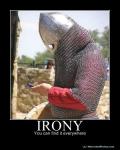
Irony

My favorite ironic phrase is still – A vegetarian is devoured by a man-eating plant.  Here is some more irony:

3 Comments

Filed under Humor and Observations, Uncategorized

Groundhog to be Prosecuted?

Groundhog Slay: Prosecutor seeks death penalty for Punxsutawney Phil

Published March 22, 2013

Has Punxsutawney Phil given his last forecast?A prosecutor in Ohio is reportedly seeking the death penalty for the famous rodent who emerged from his home in Gobbler’s Knob, Pa., on Feb. 2 and did not see his shadow, translating to an “early spring,” according to his handlers. But Michael Gmoser, prosecuting attorney in Butler County, said Thursday that Phil’s inaccurate forecast warrants capital punishment, the Pittsburgh Tribune-Review reports.

“Let’s face it, Punxsutawney Phil has let us down,” Gmoser said, tongue firmly in cheek, after filing the necessary court documents. “I awoke this morning to a snowstorm, low temperatures and howling wind.”

“Maybe it’s time for a Phyllis instead.”

– Butler County (Ohio) Prosecutor Michael Gmoser 

Spring began Wednesday, but local forecasts in the Pittsburgh area and throughout Pennsylvania show a good chance of snow this weekend and into next week.

“We in Butler County, like everyone in the nation, depend on Phil to give us a breath of spring in time,” Gmoser said. “You know, Phil lives his life behind bars as it is. This is the only penalty available. Maybe it’s time for a Phyllis instead.”

But Jeffrey Lundy, vice president of the Punxsutawney Ground Hog Club, said Gmoser will have a fight on his hands if he tries to arrest the famous groundhog.

“He’s going to have to go through 15 licensed hunters to get to Phil,” said Lundy, referring to members of the club’s inner circle.“We’ll find out how good of a prosecutor [Gmoser] is. If he doesn’t know how to speak groundhog-ese, he’ll never understand a word Phil says.”

Gmoser said a reprieve is possible.

“There may be some mitigating circumstances I may not know about,” he continued. “Phil may not know his rear from a hole in the ground. That might make a difference,” said Gmoser, who decided to file the court papers to break the tension at the end of a hard day in the office.

Lundy added: “There’s a lot of things to get serious about. Groundhog Day is not one of them.”

The famous groundhog narrowly escaped death in the 1993 film “Groundhog Day,” in which star Bill Murray, sentenced to relive the same day over and over until he became a better person, kidnapped Phil and drove off a cliff into a rock quarry with the terrified critter on his lap. However, the next day, Murray’s character, Phil Connors, awoke unscathed – as did Punxsutawney Phil.

Click for more from the Pittsburgh Tribune-Review.

Read more: http://www.foxnews.com/us/2013/03/22/ohio-prosecutor-reportedly-seeking-death-penalty-for-punxsutawney-phil/?intcmp=trending#ixzz2Ote3DOJr

Leave a comment

Filed under Animals, Humor and Observations

Amateur with metal detector finds 1,600-year-old royal ring

Amateur with metal detector finds 1,600-year-old royal ring

Published March 28, 2013

FoxNews.com

  • Escrick Ring 1.jpg

    The Escrick Ring, an intricately worked gold ring surrounding a brilliant blue sapphire discovered in 2009 by metal-detector enthusiast Michael Greenhorn, seen here with his discovery. (Kippa Matthews / York Museums Trust)

  • Escrick Ring.jpg

    A unique piece of jewelry called the Escrick Ring is only the second known use of a sapphire in jewellery found in the country, the first being a 5th century Roman example. It was found with a metal detector in 2009. (Kippa Matthews / York Museums Trust)

Did this intricate piece of sapphire, gold and glass belong to the King of France, some 1,600 years ago?
A group of archaeologist met at the Yorkshire Museum in England last week to discuss the Escrick Ring, an intricately worked gold ring surrounding a brilliant blue sapphire discovered in 2009 by an amateur metal-detector enthusiast.

‘Nothing like it has been found in this country.’

– Natalie McCaul, curator of archaeology at the Yorkshire Museum 

The ring, among the oldest pieces of sapphire jewelry ever found in the country, was thought to date from the 10th or 11th centuries — until the group took a closer look.

“Nothing like it has been found in this country,” said Natalie McCaul, curator of archaeology at the Yorkshire Museum. “This sapphire ring is even more special than we had previously thought.”

The panel’s conclusion: The Escrick Ring was made in Europe, possibly France, and would have belonged to a king or leader — not just a Bishop, as had been previously thought. It’s likely to date far earlier than previously thought as well: the 5th or 6th century, as much as 600 years earlier than archaeologists had believed.

“Hopefully this will lead us to finding out more about the ring and possibly even who might have owned it,” she said.

The ring was found by Michael Greenhorn, from York and District Metal Detecting Club, in 2009. The Yorkshire Museum raised over $50,000 to purchase it.

Attendees of the workshop, which the Yorkshire Museum said included more than 30 experts from across the country, decided that the sapphire in the ring was probably cut earlier, possibly during the Roman period, but the ring itself was specially made around the sapphire. By looking at the wear on the ring it is thought that it was worn for at least 50 years before it was lost.

The gold hoop that forms the ring also looks slightly different to the main part of the ring, with suggestions being made that it was turned into a ring later, possibly from a brooch or mount.

Further research, including an X-ray analysis and samples from the gold hoop, may help to pinpoint its origin.

Read more: http://www.foxnews.com/science/2013/03/28/amateur-with-metal-detector-finds-1600-year-old-royal-ring/#ixzz2Otd8nD7U

Leave a comment

Filed under Humor and Observations

Evil Bases

This is an occasional post of mine on places you can see yourself using as an Evil Base.  Evil bases need to be remote, defensible and either evil looking, or strange, or at the very least comfortable.  You need to be able to plot from them with peace of mind so your plans for world domination can be complete.  For earlier posts, type “evil bases” into the search box.  Enjoy!  Bwahahahaha!

2 Comments

Filed under Humor and Observations

Joss Whedon’s Top 10 Writing Tips

Joss Whedon’s Top 10 Writing Tips

reposted from:

Joss Whedon Top 10 Writing Tips

Film critic Catherine Bray interviewed Joss Whedon in 2006 for UK movie magazine Hotdog to find out his top ten screenwriting tips. Photo: Joss Whedon at San Diego Comic Con – courtesy of Gage Skidmore.

Joss Whedon is most famous for creating Buffy the Vampire Slayer, its spin-off Angel and the short-lived but much-loved Firefly series. But the writer and director has also worked unseen as a script doctor on movies ranging from Speed to Toy Story. Here, he shares his tips on the art of screenwriting.

1. FINISH IT
Actually finishing it is what I’m gonna put in as step one. You may laugh at this, but it’s true. I have so many friends who have written two-thirds of a screenplay, and then re-written it for about three years. Finishing a screenplay is first of all truly difficult, and secondly really liberating. Even if it’s not perfect, even if you know you’re gonna have to go back into it, type to the end. You have to have a little closure.

2. STRUCTURE
Structure means knowing where you’re going; making sure you don’t meander about. Some great films have been made by meandering people, like Terrence Malick and Robert Altman, but it’s not as well done today and I don’t recommend it. I’m a structure nut. I actually make charts. Where are the jokes? The thrills? The romance? Who knows what, and when? You need these things to happen at the right times, and that’s what you build your structure around: the way you want your audience to feel. Charts, graphs, coloured pens, anything that means you don’t go in blind is useful.

3. HAVE SOMETHING TO SAY
This really should be number one. Even if you’re writing a Die Hard rip-off, have something to say about Die Hard rip-offs. The number of movies that are not about what they purport to be about is staggering. It’s rare, especially in genres, to find a movie with an idea and not just, ‘This’ll lead to many fine set-pieces’. The Island evolves into a car-chase movie, and the moments of joy are when they have clone moments and you say, ‘What does it feel like to be those guys?’

4. EVERYBODY HAS A REASON TO LIVE
Everybody has a perspective. Everybody in your scene, including the thug flanking your bad guy, has a reason. They have their own voice, their own identity, their own history. If anyone speaks in such a way that they’re just setting up the next person’s lines, then you don’t get dialogue: you get soundbites. Not everybody has to be funny; not everybody has to be cute; not everybody has to be delightful, and not everybody has to speak, but if you don’t know who everybody is and why they’re there, why they’re feeling what they’re feeling and why they’re doing what they’re doing, then you’re in trouble.

5. CUT WHAT YOU LOVE
Here’s one trick that I learned early on. If something isn’t working, if you have a story that you’ve built and it’s blocked and you can’t figure it out, take your favourite scene, or your very best idea or set-piece, and cut it. It’s brutal, but sometimes inevitable. That thing may find its way back in, but cutting it is usually an enormously freeing exercise.

6. LISTEN
When I’ve been hired as a script doctor, it’s usually because someone else can’t get it through to the next level. It’s true that writers are replaced when executives don’t know what else to do, and that’s terrible, but the fact of the matter is that for most of the screenplays I’ve worked on, I’ve been needed, whether or not I’ve been allowed to do anything good. Often someone’s just got locked, they’ve ossified, they’re so stuck in their heads that they can’t see the people around them. It’s very important to know when to stick to your guns, but it’s also very important to listen to absolutely everybody. The stupidest person in the room might have the best idea.

7. TRACK THE AUDIENCE MOOD
You have one goal: to connect with your audience. Therefore, you must track what your audience is feeling at all times. One of the biggest problems I face when watching other people’s movies is I’ll say, ‘This part confuses me’, or whatever, and they’ll say, ‘What I’m intending to say is this’, and they’ll go on about their intentions. None of this has anything to do with my experience as an audience member. Think in terms of what audiences think. They go to the theatre, and they either notice that their butts are numb, or they don’t. If you’re doing your job right, they don’t. People think of studio test screenings as terrible, and that’s because a lot of studios are pretty stupid about it. They panic and re-shoot, or they go, ‘Gee, Brazil can’t have an unhappy ending,’ and that’s the horror story. But it can make a lot of sense.

8. WRITE LIKE A MOVIE
Write the movie as much as you can. If something is lush and extensive, you can describe it glowingly; if something isn’t that important, just get past it tersely. Let the read feel like the movie; it does a lot of the work for you, for the director, and for the executives who go, ‘What will this be like when we put it on its feet?’

9. DON’T LISTEN
Having given the advice about listening, I have to give the opposite advice, because ultimately the best work comes when somebody’s fucked the system; done the unexpected and let their own personal voice into the machine that is moviemaking. Choose your battles. You wouldn’t get Paul Thomas Anderson, or Wes Anderson, or any of these guys if all moviemaking was completely cookie-cutter. But the process drives you in that direction; it’s a homogenising process, and you have to fight that a bit. There was a point while we were making Firefly when I asked the network not to pick it up: they’d started talking about a different show.

10. DON’T SELL OUT
The first penny I ever earned, I saved. Then I made sure that I never had to take a job just because I needed to. I still needed jobs of course, but I was able to take ones that I loved. When I say that includes Waterworld, people scratch their heads, but it’s a wonderful idea for a movie. Anything can be good. Even Last Action Hero could’ve been good. There’s an idea somewhere in almost any movie: if you can find something that you love, then you can do it. If you can’t, it doesn’t matter how skilful you are: that’s called whoring.

Leave a comment

Filed under Writing

Rome – An Ancient Super City

Rome – Ancient Super City

Rome

2 Comments

Filed under Humor and Observations

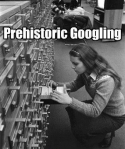
Book/Writing Humor

Humorous jokes about books and writing.  Hope you find at least a few entertaining.

1 Comment

Filed under Humor and Observations, Writing

Daisy Morris, 9, Discovers New Dinosaur And Has It Named After Her

Daisy Morris, 9, Discovers New Dinosaur And Has It Named After Her

Posted: 03/20/2013 6:18 pm EDT  |  Updated: 03/21/2013 11:48 am EDT

 
Daisy Morris Dinosaur
One little girl’s odd hobby has led to an extraordinary find for British paleontologists.

At the age of 9, Daisy Morris has discovered a new dinosaur species, which scientists have since named after her. The new creature has been dubbed Vectidraco daisymorrisae, the “Dragon from the Isle of Wight.”

Daisy was just 4 when she stumbled upon the fossilized remains of an unknown animal during a family walk on the beach in 2009. The family lives near the coast of England’s Isle of Wight — also known as the “dinosaur capital of Great Britain.”

“She has a very good eye for tiny little fossils,” her mother Sian Morris told BBC. Daisy apparently first began fossil hunting at age 3. “She found these tiny little black bones sticking out of the mud and decided to dig a bit further and scoop them all out,” her mother said.

Story continues after photo.
daisy morris dinosaur

Realizing that Daisy had possibly uncovered an ancient specimen, her family took the findings to Southampton University’s fossil expert Martin Simpson.

“When Daisy and her family brought the fossilized remains to me in April 2009, I knew I was looking at something very special,” Simpson told the Daily Mail.

Over the past several years, the bones Daisy discovered have been thoroughly analyzed by paleontologists. The findings were finally published this Monday. The fossilized remains belong to a previously unknown genus and species of a small flying reptile called the pterosaur.

The remains date back to the Lower Cretaceous period and may be up to 115 million years old.

Simpson told the Daily Mail that if it weren’t for Daisy, the fossils would “without doubt have been washed away and destroyed.”

The family has donated the fossils to the Natural History Museum while Daisy’s personal collection continues to grow. Sian Morris told the Daily Mail, “She’s fascinated and we’re very proud of her.”

1 Comment

Filed under Humor and Observations