Neil Armstrong Into the Heavens as a Man; Now as a Spirit

Neil Armstrong went into space, walked on the moon and did it all in 1960s in low bid rockets, a tiny capsule they had to fight to have a window in, and when people calculated trajectories with slide rules.  If you have ever seen the capsule at the Smithsonian, it is incredibly small for such a long trip.  The first man to walk on the moon can now be the first to talk to Galileo, Einstein and others in Heaven about his experience.  One day I hope to catch up with folks myself.  God Bless Neil Armstrong and the family he leaves behind for now.

The rest is reposted from AP

According to NBC News, Neil Armstrong, the first man on the moon, has died at age 82.

He died at 2:45 p.m. on Saturday, suffering complications following his recent cardiac bypass surgery.

On July 20, 1969, Armstrong and his partner Buzz Aldrin made history as the first people to ever walk on the moon. From the New York Times article applauding the achievement:

Two Americans, astronauts of Apollo 11, steered their fragile four-legged lunar module safely and smoothly to the historic landing yesterday at 4:17:40 P.M., Eastern daylight time.Neil A. Armstrong, the 38-year-old civilian commander, radioed to earth and the mission control room here:

“Houston, Tranquility Base here. The Eagle has landed.”


A photo of a smiling Armstrong was captured inside the Lunar Module after he completed his historic moonwalk.

On Saturday, Armstrong’s family confirmed his death, and released a statement:

“We are heartbroken to share the news that Neil Armstrong has passed away following complications resulting from cardiovascular procedures.Neil was our loving husband, father, grandfather, brother and friend.

Neil Armstrong was also a reluctant American hero who always believed he was just doing his job. He served his Nation proudly, as a navy fighter pilot, test pilot, and astronaut. He also found success back home in his native Ohio in business and academia, and became a community leader in Cincinnati.

He remained an advocate of aviation and exploration throughout his life and never lost his boyhood wonder of these pursuits.

As much as Neil cherished his privacy, he always appreciated the expressions of good will from people around the world and from all walks of life.

While we mourn the loss of a very good man, we also celebrate his remarkable life and hope that it serves as an example to young people around the world to work hard to make their dreams come true, to be willing to explore and push the limits, and to selflessly serve a cause greater than themselves.

For those who may ask what they can do to honor Neil, we have a simple request. Honor his example of service, accomplishment and modesty, and the next time you walk outside on a clear night and see the moon smiling down at you, think of Neil Armstrong and give him a wink.”


NASA tweeted a reaction to the news, offering its condolences.

In a statement, President Obama called Armstrong “among the greatest of American heroes – not just of his time, but of all time.”

Leave a comment

Filed under Humor and Observations, Uncategorized

What 10 Classic Books Were Almost Called

reposted from

Stacy Conradt

What 10 Classic Books Were Almost Called
by Stacy Conradt – October 10, 2010 – 8:44 PM
Remember when your high school summer reading list included Atticus, Fiesta, and The Last Man in Europe? You will once you see what these books were renamed before they hit bookshelves.

1. F. Scott Fitzgerald went through quite a few titles for his most well-known book before deciding on The Great Gatsby. If he hadn’t arrived at that title, high school kids would be pondering the themes of Trimalchio in West Egg; Among Ash-Heaps and Millionaires; On the Road to West Egg; Under the Red, White, and Blue; Gold-Hatted Gatsby; and The High-Bouncing Lover.

2. George Orwell’s publisher didn’t feel the title to Orwell’s novel The Last Man in Europe was terribly commercial and recommended using the other title he had been kicking around—1984.

3. Before it was Atlas Shrugged, it was The Strike, which is how Ayn Rand referred to her magnum opus for quite some time. In 1956, a year before the book was released, she decided the title gave away too much plot detail. Her husband suggested Atlas Shrugged and it stuck.

4. The title of Bram Stoker’s famous Gothic novel sounded more like a spoof before he landed onDracula—one of the names Stoker considered was The Dead Un-Dead.

5. Ernest Hemingway’s original title for The Sun Also Rises was used for foreign-language editions—Fiesta. He changed the American English version to The Sun Also Rises at the behest of his publisher.

6. It’s because of Frank Sinatra that we use the phrase “Catch-22” today. Well, sort of. Author Joseph Heller tried out Catch-11, but because the original Ocean’s Eleven movie was newly in theaters, it was scrapped to avoid confusion. He also wanted Catch-18, but, again, a recent publication made him switch titles to avoid confusion: Leon Uris’ Mila 18. The number 22 was finally chosen because it was 11 doubled.

7. To Kill a Mockingbird was simply Atticus before Harper Lee decided the title focused too narrowly on one character.

8. An apt precursor to the Pride and Prejudice title Jane Austen finally decided on: First Impressions.

9. Mary, Mary, quite contrary, how does your garden grow? Secretly, apparently. Mistress Mary, taken from the classic nursery rhyme, was the working title for Frances Hodgson Burnett’s The Secret Garden.

10. Originally called Ulysses in Dublin, James Joyce’s Dubliners featured characters that would later appear in his epic Ulysses a few years later.

Read the full text here:http://www.mentalfloss.com/blogs/archives/70037#ixzz24X1hBib0
–brought to you by mental_floss!

Leave a comment

Filed under Humor and Observations, Writing

Biggest Scientific Breakthroughs of 2011

reposted from I09 by BY ROBERT T. GONZALEZ

DEC 28, 2011 4:20 PM

Biggest Scientific Breakthroughs of 2011

From law-violating subatomic particles to entirely new, earth-like worlds, 2011 was an incredible year for scientific discovery. In the past 12 months, scientific breakthroughs in fields ranging from archaeology to structural biochemistry have allowed humanity to rewrite history, and enabled us to open to brand new chapters in our development as a species.

Here are some of our favorites.


Biggest Scientific Breakthroughs of 2011

The world’s lowest density material

With a density of less than one milligram per cubic centimeter (that’s about 1000 times less dense than water), this surprisingly squishy material is so light-weight, it can rest on the seed heads of a dandelion, and is lighter than even the lowest-density aerogels. The secret — to both its negligible weight and its resiliency — is the material’s lattice-like structural organization, one that the researchers who created it liken to that of the Eiffel Tower.

Biggest Scientific Breakthroughs of 2011

“Feeling” objects with a brain implant

It could be the first step towards truly immersive virtual reality, one where you can actually feel the computer-generated world around you. An international team of neuroengineers has developed a brain-machine interface that’s bi-directional — that means you could soon use a brain implant not only to control a virtual hand, but to receive feedback that tricks your brain into “feeling” the texture of a virtual object.

Already demonstrated successfully in primates, the interface could soon allow humans to use next-generation prosthetic limbs (or even robotic exoskeletons) to actually feel objects in the real world.

Biggest Scientific Breakthroughs of 2011

Astronomers get their first good look at giant asteroid Vesta

In July of 2011, NASA’s Dawn spacecraftentered the orbit of Vesta — the second largest body in our solar system’s main asteroid belt. Just a few days later, Dawn spiraled down into orbit. Upon reaching an altitude of approximately 1700 miles, the spacecraft began snapping pictures of the protoplanet’s surface, revealing geophysical oddities like the triplet of craters on Vesta’s northern hemisphere — nicknamed “Snowman” — featured here. Dawn recently maneuvered into its closest orbit (at an altitude averaging just 130 miles). It will continue orbiting Vesta until July of 2012, when it will set a course for Ceres, the largest of the main belt asteroids.

Biggest Scientific Breakthroughs of 2011

NASA’s Kepler Mission changes how we see ourselves in the Universe

2011 was a fantastic year for NASA’s Kepler Mission, which is charged with discovering Earth-like planets in the so-called “habitable zone” of stars in the Milky Way. Kepler scientists announced the discovery of the firstcircumbinary planet (i.e. a planet with two suns, just like Tatooine); located the first two known Earth-sized exoplanets; quadrupled the number of worlds known to exist beyond our solar system; and spied Kepler-22b — the most Earth-like planet we’ve encountered yet. And here’s the really exciting bit: Kepler is just getting warmed up.

Biggest Scientific Breakthroughs of 2011

Heartbeat-powered nanogenerators could soon replace batteries

In a few years, you may never have to recharge your phone again — provided part of you keeps moving. Back in March,scientists announced the world’s first viable “nanogenerator” — a tiny computer chip that gets its power from body movements like snapping fingers or – eventually – your heartbeat.

The researchers can already use the technology to power a liquid crystal display and an LED, and claim that their technology could replace batteries for small devices like MP3 players and mobile phones within a few years.

 Neuroscientists reconstruct the movies in your mind

Back in September, UC Berkeley neuroscientists demonstrated their ability to use advanced brain-imaging techniques toturn activity in the visual cortex of the human brain into digital images. So far, the researchers are only able to reconstruct neural equivalents of things people have already seen — but they’re confident that other applications — like tapping into the mind of a coma patient, or watching a video recording of your own dreams — are well within reach.

Biggest Scientific Breakthroughs of 2011

100,000-year-old art kit found in South Africa

Researchers investigating Blombos Cave in Cape Town, South Africa uncovered the oldest known evidence of painting by early humans. Archaeologists discovered two “kits,” for mixing and forming ocher — a reddish pigment believed to be used as a dye. The find pushes back the date by which humans were practicing complex art approximately 40,000 years, all the way back to 100,000 years ago.

Biggest Scientific Breakthroughs of 2011

Online gamers solve a decade-old HIV puzzle in three weeks

Foldit is a computer game that presents players with the spatial challenge of determining the three-dimensional structures of proteins, the molecules comprising the workforce that runs your entire body. In diseases like HIV, proteins known as retroviral proteases play a key role in a virus’s ability to overwhelm the immune system and proliferate throughout the body.

For years, scientists have been working to identify what these retroviral proteases look like, in order to develop drugs that target these enzymes and stymie the progression of deadly viral diseases like AIDS. It was a scientific puzzle that managed to confound top-tier research scientists for over a decade… but Foldit gamers were able to pull it off in just three weeks.

“The ingenuity of game players,” said biochemist Firas Khatib, “is a formidable force that, if properly directed, can be used to solve a wide range of scientific problems.”

Biggest Scientific Breakthroughs of 2011

Ancient settlement upends our perception of human evolution

Tools discovered during an excavation in the United Arab Emirates were found to date back at least 100,000 years, indicating thatour ancestors may have left Africa as early as 125,000 years ago. Genetic evidence has long suggested that modern humans did not leave Africa until about 60,000 years ago, but these tools appear to be the work of our ancestors and not other hominids like Neanderthals. That being said, our understanding of how and when humans really evolved continues to take shape…

Biggest Scientific Breakthroughs of 2011

Confirmed: Neanderthal DNA survives in Modern Humans

Some of the first hard genetic evidence that early Homo sapiens got busy with Homo neandertalensis actually came in 2010, but it was experimental findings published in July of 2011 that really drove the point home. But don’t worry — there’s still plenty of research to be done on everything from the details of human/neanderthal culture, to the enduring significance of Neanderthal genes in the modern human genome, to the mysterious humanoids, Denisovans.

Biggest Scientific Breakthroughs of 2011

IBM unveils brain-like “neurosynaptic” chips

Back in February, IBM’s Watson made history by trouncing Jeopardy champs Ken Jennings and Brad Rutter in an intimidating display of computer overlord-dom. But to compare Watson’s computing power to the complexity of a brain would still constitute a pretty epic oversimplification of what it means to “think” like a human, as the way each one processes information could not be more different.

Watson is impressive, to be sure, but in August, IBM researchers brought out the big guns: a revolutionary new chip design that, for the first time, actually mimics the functioning of a human brain.

Biggest Scientific Breakthroughs of 2011

NASA launches the most advanced Martian rover in history

Currently in transit to the Red Planet, NASA’s Mars Science Laboratory — aka theCuriosity rover — was launched on November 26th. The rover is scheduled to touch down on Mars inside the mysterious Gale crater in August of 2012. Once it’s made landfall, Curiosity will make use of one of the most advanced scientific payloads we’ve ever put in space to assess whether Mars ever was, or is still today, an environment able to support life — a mission that could redefine the way we think about life in our solar system and beyond.

A device that lets you see through walls

Radar systems that can see through walls (aka “wall-through” radar systems) aren’t unheard of, it’s just that most of them are burdened by limitations (like a prohibitively low frame rate, or a short range of operation) — that make their use in real world settings pretty impractical. But that could soon change in a big way. The team of MIT researchers featured in this video has developed a device that can provide its operators with real-time video of what’s going on behind an eight-inch-thick concrete wall — and it can do it from up to 60 feet away.

Biggest Scientific Breakthroughs of 2011

Electronics and biometric sensors that you wear like a temporary tattoo

Engineers John Rogers and Todd Coleman say that their epidermal electronic system (EES) — a skin-mountable, electronic circuit that stretches, flexes, and twists with the motion of your body — represents a huge step towards eroding the distinction between hard, chip-based machines and soft, biological humans.

Biggest Scientific Breakthroughs of 2011

Culling senescent cells postpones age-related disease in mice

In the latest effort to make mice immortal, researchers revealed that flushing out so-called senescent (aka old and defunct) cells from the bodies of mice genetically modified to die of heart disease extended the health span of the mice significantly. If you can imagine taking a pill that could stave off the effects of age related disease, then you can appreciate why science and industry alike have demonstrated considerable interest in these and other age-related findings. [Photo by Jan M. Van Deursen Via NYT]

Biggest Scientific Breakthroughs of 2011

Scientists engineer highly virulent strains of bird flu

Two independent teams of researchers recently engineered highly virulent strains of H5N1, more commonly known as the avian flu virus. On one hand, the researchers’ work is absolutely vital, because it allows us to get a head start, so to speak, on understanding viruses that could one day pose a serious risk to public health. On the other hand, there are many who fear that findings from such research could be used to malevolent ends were they to wind up in the wrong hands. Included in the latter camp is the federal government, which went to unprecedented ends to make sure that the experimental methods behind creating the strains never made it to the pages of either Nature orScience.

Regardless of your position, the development of these strains raises important questions about the nature of dual-use research, transparency, and censorship.

Biggest Scientific Breakthroughs of 2011

The hunt for the Higgs boson nears its conclusion

It’s been a long, long time coming, but earlier this month, representatives from the Large Hadron Collider’s two largest experiments — ATLAS and CMS —announced that both research teams had independently uncovered signals that point to the appearance of the Higgs boson — the long-sought sub-atomic particle thought to endow all other particles with mass. “Given the outstanding performance of the LHC this year, we will not need to wait long for enough data and can look forward to resolving this puzzle in 2012,” explained ATLAS’s Fabiola Gianotti. If the puzzle is resolved with the discovery of the Higgs, it will represent one of the greatest unifying discoveries in the history of physics.

Biggest Scientific Breakthroughs of 2011

Faster-than-light Neutrinos

By now, the neutrinos that were supposedly caught breaking the cosmic speed limit in Gran Sasso, Italy need no introduction. Scientists the world over continue to offer up critiques on the OPERA collaborative’s puzzling results, especially in light of the team’s most recent findings — acquired froma second, fine-tuned version of the original experiment — which reveal that their FTL observations still stand.

Of course, the most rigorous, telling, and important tests will come in the form of cross-checks performed by independent research teams, the results of which will not be available until next year at the earliest. And while many scientists aren’t holding their breath, the confirmation of FTL neutrinos could very well signal one of the biggest scientific paradigm shifts in history.


Leave a comment

Filed under Humor and Observations

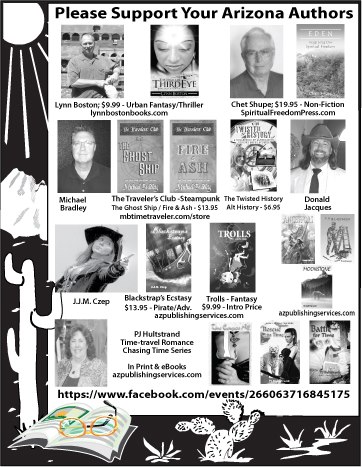
Author Tour

Going on a signing tour with fellow authors.  It has my third book on there as well, have to finish the final edits in time…

Leave a comment

Filed under Writing

Batteries and Electricity Used in 250 BC

We like to think that electricity was discovered along with various uses in the late 18th century, then came to prominence with Edison (DC Power) and Tesla (AC Power) in the late nineteenth century.  However, scholars have recently discerned the function of pot like structures dating back to 250 BC in ancient Mesopotamia.  They are batteries.  Functioning essentially like car batteries.  This is just one of many reasons I believe in lost civilizations in pre-history with advanced technology.

The following is reposted from Smith College Museum of Ancient Inventions


Battery, Baghdad, 250 BCE

by Dennielle Downs,’00 and Ava Meyerhoff, ’99

The Baghdad Battery is believed to be about 2000 years old (from the Parthian period, roughly 250 BCE to CE 250). The jar was found in Khujut Rabu just outside Baghdad and is composed of a clay jar with a stopper made of asphalt. Sticking through the asphalt is an iron rod surrounded by a copper cylinder. When filled with vinegar – orany other electrolytic solution – the jar produces about 1.1 volts.

There is no written record as to the exact function of the jar, but the best guess is that it was a type of battery. Scientists believe the batteries (if that is their correct function) were used to electroplate items such as putting a layer of one metal (gold) onto the surface of another (silver), a method still practiced in Iraq today.

1 Comment

Filed under Humor and Observations, Uncategorized

My Next Book Out Soon

The second book of the Travelers’ Club series is scheduled to come out in early September.  It is in the final editing process now.  Here is the bookcover:

2 Comments

Filed under Writing

Just Sad


My wife tells me these are all Alanis Morrisette lyrics, so maybe this is a made up picture.


Leave a comment

Filed under Humor and Observations

Want to Track the Presidential Election?

There are several sites you can go to that keep maps of how states are leaning either to Obama or Romney, based on the latest polls for those states.  These charts keep track of solid, leaning and toss up states.  Here is one such link:

http://www.realclearpolitics.com/epolls/2012/president/2012_elections_electoral_college_map.html

This one is done by Realclearpolitics.  I don’t really know if they lean right or left but the map seems to match most of the others on the other sites.  I do see adds for Obama on the right bar, and Huffington Post at the bottom, so if it leans it must be to the left.  If you want another map, just Google “political map 2012 Presidential election.”  If you click on a state, it will show you the trend in the state polling.  You can also see the overall trend or margin for all states on a blue line.  You can even make your own guesses on states and make your own map to guess the outcome.

It adds a bit of fun and knowledge into the campaign to be able to intelligently speak to your friends about why Ohio is a linch-pin state and how Wisconsin polling may be affected by the Ryan selection, etc.

Have fun and enjoy, and remember, try to listen to each other, not just blast out your opinion.  Let’s disagree agreeably.

By the way, one thing that bothers me and I don’t know if the rest of you remember this, but Blue was the Republican color when I was growing up and every Republican including George W. Bush had Blue campaign signs.  Democrats had RED signs.  But then someone on TV, decided to reverse the colors, so now red states are Republican and blue states are Democrat and it still annoys me.  It would be like saying from now on boy babies wear pink and girl babies blue.  Maybe it’s just me, but stop changing the colors.

Leave a comment

Filed under Humor and Observations, Uncategorized

Cute Dogs for Your Monday Blues

Here are my Monday dog pics for this week:


1 Comment

Filed under Animals

Time to Do Edits on My Third Book – Sigh

There are two things that a novelist hates the most.  First, the editing process.  Second, and the worst, is a negative review of your book, which I have not faced yet, thank God.  Since the first of May, I have had my hip and part of my leg replaced due to an adverse drug reaction, then rehab, physical therapy, and so forth.  After that, I developed an infection and fluid in my lungs which has left me breathless for over five weeks because they can’t give me what they used to, because it caused the bone death.  All of this has set me back from my original planned release date of The Travelers’ Club – Flame and Ash (Book 2 of 5 in the Travelers’ Club series).  It is written, and has been for awhile, but now I face the editing…sigh.

The book as it stands is about 430 pages long in 6″ x 9″ trade paperback format.  I have four sets of edits, which means basically rewriting the around 1,700 pages.  I pay a professional editor, Jacob Shaver to provide edits.  I find from him, that like some coffee is decaffeinated, apparently my writing is de-hyphenated.  I have to add around 100 missing hyphens.  Along with that, he speaks four languages and corrects my poor French and Spanish.  (I get the conjugations and gender messed up as I speak only English and German).  He points out my use of collective language that I need to squelch, those times I leave out setting during action or dialogue, and many other things.  He is nice enough to put little exclamation marks on the parts that are good, which keeps me going through all the mark-ups.

The second editor is my wife.  She owns half of everything, including being a 50% partner in my S-Corporation through which my book sales flow.  She was once my “silent partner” but now that I am semi-retired and a full time novelist, she is a very vocal partner.  She tells me all my spelling mistakes and areas where characters are “out of character.”

The third editor(s) is my weekly fellow authors at the Central Phoenix Writer’s Workshop.  I must credit them with teaching me 90% of what I know about writing.  I thought I knew writing until my first piece was critiqued.  I’ve learned a lot.  About half of  my chapters have been reviewed by this august body of boon companions.  They give me not only writer hints, but also reader hints.  The most helpful to me is if there is any scene where they do not know what is happening.  I write in a visual style, and I don’t want the reader to ever be confused or skip over parts.

The fourth editor is the toughest – me.  I can’t help but go back while making the first three edits and find myself adding and altering.  Perhaps the first three edits are symbiotic in my creative portion of my mind and form new ways to express the story.  Or, maybe you can always change things in your book, every time you edit it.  My first book, I was a rookie, and had my editors and edits finish in three days.  As a result, the first edition had errors.  I put out a second edition with a better cover after going back and re-editing it again.  This time, as with the second book which was an anthology with lots of help, I will be thorough in the edits.

My health improved, events and book signings scheduled, there is nothing for it but to slog through and get it done.  My fourth book is due out in December, the fifth next Spring, and this baby needs to be put to bed.

Leave a comment

Filed under Writing