Tag Archives: ancient history

‘Gate to Hell’ found in Turkey

I will preface this story by pointing out that there have been many “gates to Hell” around the world, usually volcanoes, crevices or deadly gas areas which were attributed to supernatural causes.  Here is just one of them, in the story below:

‘Gate to Hell’ found in Turkey

By Rossella Lorenzi

Published April 01, 2013

Discovery News

  • gate to hell digital reconstruction.jpg

    A digital illustration shows the ancient Plutonium, celebrated as the portal to the underworld in Greco-Roman mythology. (Francesco D’Andria)

A “gate to hell” has emerged from ruins in southwestern Turkey, Italian archaeologists have announced.

Known as Pluto’s Gate — Ploutonion in Greek, Plutonium in Latin — the cave was celebrated as the portal to the underworld in Greco-Roman mythology and tradition.

Historic sources located the site in the ancient Phrygian city of Hierapolis, now called Pamukkale, and described the opening as filled with lethal mephitic vapors.

‘Any animal that passes inside meets instant death.’

– Greek geographer Strabo (64/63 BC — about 24 AD) 

“This space is full of a vapor so misty and dense that one can scarcely see the ground. Any animal that passes inside meets instant death,” the Greek geographer Strabo (64/63 BC — about 24 AD) wrote.

“I threw in sparrows and they immediately breathed their last and fell,” he added.

Announced this month at a conference on Italian archaeology in Istanbul, Turkey, the finding was made by a team led by Francesco D’Andria, professor of classic archaeology at the University of Salento.

D’Andria has conducted extensive archaeological research at the World Heritage Site of Hierapolis. Two years ago he claimed to discover there the tomb of Saint Philip, one of the 12 apostles of Jesus Christ.

Founded around 190 B.C. by Eumenes II, King of Pergamum (197 B.C.-159 B.C.), Hierapolis was given over to Rome in 133 B.C.

The Hellenistic city grew into a flourishing Roman city, with temples, a theater and popular sacred hot springs, believed to have healing properties.

“We found the Plutonium by reconstructing the route of a thermal spring. Indeed, Pamukkale’ springs, which produce the famous white travertine terraces originate from this cave,” D’Andria told Discovery News.

Featuring a vast array of abandoned broken ruins, possibly the result of earthquakes, the site revealed more ruins once it was excavated. The archaeologists found Ionic semi columns and, on top of them, an inscription with a dedication to the deities of the underworld — Pluto and Kore.

D’Andria also found the remains of a temple, a pool and a series of steps placed above the cave — all matching the descriptions of the site in ancient sources.

“People could watch the sacred rites from these steps, but they could not get to the area near the opening. Only the priests could stand in front of the portal,” D’Andria said.

According to the archaeologist, there was a sort of touristic organization at the site. Small birds were given to pilgrims to test the deadly effects of the cave, while hallucinated priests sacrificed bulls to Pluto.

The ceremony included leading the animals into the cave, and dragging them out dead.

“We could see the cave’s lethal properties during the excavation. Several birds died as they tried to get close to the warm opening, instantly killed by the carbon dioxide fumes,” D’Andria said.

Only the eunuchs of Cybele, an ancient fertility goddess, were able to enter the hell gate without any apparent damage.

“They hold their breath as much as they can,” Strabo wrote, adding that their immunity could have been due to their “menomation,” “divine providence” or “certain physical powers that are antidotes against the vapor.”

According to D’Andria, the site was a famous destination for rites of incubation. Pilgrims took the waters in the pool near the temple, slept not too far from the cave and received visions and prophecies, in a sort of oracle of Delphi effect. Indeed, the fumes coming from the depths of Hierapoli’s phreatic groundwater produced hallucinations.

“This is an exceptional discovery as it confirms and clarifies the information we have from the ancient literary and historic sources,” Alister Filippini, a researcher in Roman history at the Universities of Palermo, Italy, and Cologne, Germany, told Discovery News.

Fully functional until the 4th century AD, and occasionally visited during the following two centuries, the site represented “an important pilgrimage destination for the last pagan intellectuals of the Late Antiquity,” Filippini said.

During the 6th century AD, the Plutonium was obliterated by the Christians. Earthquakes may have then completed the destruction.

D’Andria and his team are now working on the digital reconstruction of the site.

Read more: http://www.foxnews.com/science/2013/04/01/gate-to-hell-found-in-turkey/?intcmp=features#ixzz2RG3tsjYg

Leave a comment

Filed under Humor and Observations

Mystery swirls around life found in Antarctic lake

Mystery swirls around life found in Antarctic lake

Published March 11, 2013

FoxNews.com

  • lake vostok cross section.jpg

    An artist’s cross-section of Lake Vostok, the largest known subglacial lake in Antarctica. Liquid water is thought to take thousands of years to pass through the lake, which is the size of North America’s Lake Ontario. (Nicolle Rager-Fuller / NSF)

  • Lake Vostok

    NASA photo of Lake Vostok in Antarctica.

  • vostok-station-120202-02

    Russia’s Vostok Station, in a photograph taken during the 2000 to 2001 field season. (Josh Landis, National Science Foundation.)

  • Russian team reaches Lake Vostok.jpg

    Feb. 6, 2012: Russian researchers at the Vostok station in Antarctica pose for a picture after reaching subglacial lake Vostok. Scientists hold the sign reading “05.02.12, Vostok station, boreshaft 5gr, lake at depth 3769.3 meters.” (AP Photo/Arctic and Antarctic Research Institute Press Service)

MOSCOW –  A Russian scientist over the weekend dismissed the claims of his colleagues that water pulled from a lake buried for millions of years beneath Antarctica contained a strange new form of microbial life.
But on Monday, those colleagues insisted that the bacterium they have discovered doesn’t fall into any known categories.

The tiny creature in question came from a sample of water pulled by a team of Russian scientists from lake Vostok in February, 2012, after more than two decades of drilling, a major achievement hailed by scientists around the world. Vostok likes buried beneath Antarctica and hasn’t been exposed to air or light in millions of years. One goal of the dig was to see whether some strange creatures lurked in that darkness.

‘We can’t say that a previously-unknown bacteria was found.’

– Eukaryote genetics laboratory head Vladimir Korolyov 

Such a life form could lead to insights as to what forms life might take on other planets, as well as adding to our knowledge of the varied shapes organisms take here on Earth. On Thursday, Sergei Bulat, a researcher at the Laboratory of Eukaryote Genetics at the St. Petersburg Nuclear Physics Institute, claimed victory.

“After excluding all known contaminants … we discovered bacterial DNA that does not match any known species listed in global databanks. We call it unidentified and ‘unclassified’ life,” Bulat said, according to a story on Russian news wire Ria Novosti.

But on Saturday, Eukaryote genetics laboratory head Vladimir Korolyov told the Interfax news agency that they did not find any life forms — just contaminants that remained from the drilling process.

“We found certain specimen, although not many, but all of them belonged to contaminants (microorganisms from the bore-hole kerosene, human bodies or the lab). There was one strain of bacteria which we did not find in drilling liquid, but the bacteria could in principal use kerosene as an energy source,” Korolyov said.

“That is why we can’t say that a previously-unknown bacteria was found,” he added.

Still, Bulat and his colleague Valery Lukin insisted to the Associated Press that the bacterium has no relation to any of the existing types, though extensive research of the microbe that was sealed under the ice for millions of years will be necessary to prove the find and determine the bacterium’s characteristics.

Bulat and Lukin said that the small size of the initial sample and its heavy contamination made it difficult to conduct more extensive research. They voiced hope that the new samples of clean frozen water that are to arrive in St. Petersburg this spring will make it possible to “confirm the find and, perhaps, discover new previously unknown forms of microbial life.”

“Deepwater devices designed at our institute will be used next year for taking pure water with pure samplers,” they said.

A U.S. team that recently touched the surface of Lake Whillans, a shallower sub-glacial body of water west of the South Pole, also found microbes. The scientists are yet to determine what forms of bacteria they found.

Read more: http://www.foxnews.com/science/2013/03/11/russia-microbe-water-samples-antarctic-lake-vostok/#ixzz2REr9yo4V

1 Comment

Filed under Humor and Observations

10,000 objects from Roman London Found

Archaeologists find 10,000 objects from Roman London

Discoveries include writing tablets, thousands of pieces of pottery and a large collection of phallus-shaped luck charms.

Roman artifacts

A fragment of a ceramic beaker unearthed at the London construction site. Photograph: Dominic Lipinski/PA

Scores of archaeologists working in a waterlogged trench through the wettest summer and coldest winter in living memory have recovered more than 10,000 objects from Roman London, including writing tablets, amber, a well with ritual deposits of pewter, coins and cow skulls, thousands of pieces of pottery, a unique piece of padded and stitched leather – and the largest collection of lucky charms in the shape of phalluses ever found on a single site.

Sophie Jackson, of Museum of London Archaeology, said: “The waterlogged conditions left by the Walbrook stream have given us layer upon layer of Roman timber buildings, fences and yards, all beautifully preserved and containing amazing personal items, clothes and even documents – all of which will transform our understanding of the people of Roman London.”

The horrible working conditions, in a sodden trench up to 7 metres deep along the buried river, resulted in startling preservation of timber – including massive foundations for buildings, fencing still standing to shoulder height, and remains of a complex Roman drainage system, as well as the largest collection of leather from any London Roman site, bone and even a straw basket, which would all have crumbled into dust centuries ago on a drier site.

The most puzzling object is an elaborately worked piece of leather, padded and stitched with an image of a gladiator fighting mythical creatures. The archaeologists believe it may have come from a chariot, but are only guessing since nothing like it has ever been found.

Other finds include an amber charm in the shape of a gladiator’s helmet, which may have been a good luck charm for an actual gladiator; a horse harness ornament combining two lucky symbols, a fist and a phallus, plus clappers to make a jingling sound as the horse moved; and a set of fine-quality pewter bowls and cups, which were deliberately thrown into a deep well.

The site at Queen Victoria Street was at the heart of the Roman city of London. It is now being redeveloped as a new headquarters for Bloomberg designed by Lord Foster, but after the second world war, when Victorian buildings were cleared for an office block, it became internationally famous when a buried Temple of Mithras was found.Crowds queued around the block to see the remains, which were preserved after a public outcry led to questions in parliament over the threat of their destruction. The temple was reconstructed on top of a car park, but as part of the present project is being moved back to its original site, where it and many of the finds will eventually be on display to the public.

Up to 60 archaeologists from Museum of London Archaeology worked on the site, digging by hand through 3,500 tonnes of soil. The site, which includes the longest surviving stretch of the Walbrook, covers the entire period of Roman London, from very soon after the invasion to the 5th century.

• This article was amended on 10 April 2013. The original said the archaeological site was at Great Queen Street. That has been corrected to Queen Victoria Street. The original also misspelled Walbrook as Wallbrook.

Leave a comment

Filed under Humor and Observations

Medieval Knight Found in Parking Lot


Medieval Knight Found Under Parking Lot In Scotland; Mysterious Remains Thrill Archeologists

The Huffington Post  |  By Posted: 03/14/2013 9:57 am EDT  |  Updated: 03/14/2013 9:57 am EDT

Medieval Knight Found Parking Lot

Archaeologists this week announced the discovery of an unidentified medieval knight’s skeleton buried along with several other bodies under a Scottish parking lot.

The knight — or possibly nobleman — was uncovered during construction work, according to The Scotsman. Also found was an intricately carved sandstone slab, several other human burial plots and a variety of artifacts researchers believe are from the 13th-century Blackfriars Monastery.

(Story continues below.)

medieval knight found parking lot

Councillor Richard Lewis, a member of the City of Edinburgh Council, said the archeological treasure trove has “the potential to be one of the most significant and exciting archaeological discoveries in the city for many years, providing us with yet more clues as to what life was like in Medieval Edinburgh,” according to a statementreleased by the Edinburgh Center for Carbon Innovation (ECCI).

“We hope to find out more about the person buried in the tomb once we remove the headstone and get to the remains underneath but our archaeologists have already dated the gravestone to the thirteenth century,” Lewis added.

The team leading the excavation is part of Headland Archeology, which noted with glee that many of its researchers may have once walked over the bones while studying nearby at the former University of Edinburgh’s archaeology department. A statement released by the group says members are “looking forward to post excavation analyses that will tell us more about the individual buried there.”

Ross Murray, a project officer for Headland, told The Huffington Post in an email that the team has already divined some clues about the knight’s background.

“The knight would have been buried in the graveyard associated with the monastery meaning he had money or was important in the society of time,” Murray told HuffPost. “The more important you were the closer you got placed to the church. He was also pretty tall for the time being around 6ft or so.”

Echoing Councillor Lewis, Murray went on to say that the contents of the grave site and monastery will be “fantastic” additions to Scottish art history.

“We have now taken the body back to our labs and will have an osteo-archaeologist examine the body to try and establish their sex, age, if they had any diseases or even how they died,” Murray said. “The medieval was a pretty brutal time so a violent death wouldn’t be uncommon. We would also get radiocarbon dates from the bones to get a more accurate date for the burial and have an expert in medieval sculpture looks at the carved grave slab.”

After the excavation is complete, the former parking lot will house the rainwater-harvesting tank of the University of Edinburgh’s new ECCI building.

This impressive Edinburgh find comes on the heels of scientists’ confirmation this February that bones found under an English city council parking lot do indeed belong to King Richard III. Researchers from the University of Leicester used DNA analysis to identify the 15th-century monarch, who died in battle during the War of the Roses.

Leave a comment

Filed under Humor and Observations

Most Ancient Port, Hieroglyphic Papyri Found

Most Ancient Port, Hieroglyphic Papyri Found

APR 12, 2013 02:00 PM ET // BY ROSSELLA LORENZI
 
Most Ancient Port Found in Egypt
PIERRE TALLE

An ancient Egyptian harbor has emerged on the Red Sea coast, dating back about 4,500 years.

“Evidence unearthed at the site shows that it predates by more than 1,000 years any other port structure known in the world,” Pierre Tallet, Egyptologist at the University of Paris-Sorbonne and director of the archaeological mission, told Discovery News.

PIERRE TALLET

Built at the time of the fourth dynasty of King Cheops, the owner of the Great Pyramid in the Giza Plateau, the port was discovered at Wadi el-Jarf, nearly 110 miles south the coastal city of Suez by a team of Franco-Egyptian archaeologists.

Egyptologist Sir John Garner Wilkinson
PD-ART/WIKIMEDIA COMMON

The site was first explored in 1823 by British pioneer Egyptologist Sir John Garner Wilkinson, who found a system of galleries cut into the bedrock a few miles from the coast. He believed them to be catacombs.

“The place was then described by French pilots working on the Suez Gulf during the 1950s, but no one realized that it concealed the remains of an ancient pharaonic harbor,” Tallet said.

.
PIERRE TALLET

Tallet has been excavating the area since 2011 with archaeologist Gregory Marouard, of the University of Chicago’s Oriental Institute, topographer Damien Laisney of the French National Center for Scientific Research, and doctoral students Aurore Ciavatti and Serena Esposito from the Sorbonne University. The team first focused on the most visible part of the site: the galleries described by Wilkinson.

The excavation revealed 30 of these galleries, measuring on average 65 feet long, 10 feet wide and 7 feet high.

PIERRE TALLET

Used to store dismantled boats after the expeditions that were regularly led to transfer copper and stones from Sinai to the Nile valley, the galleries featured an elaborate closure system which made use of large and heavy limestone blocks inscribed with the name of Cheops (about 2650 BC).

An ancient Egyptian harbor has emerged on the Red Sea coast, dating back about 4,500 years.

“Evidence unearthed at the site shows that it predates by more than 1,000 years any other port structure known in the world,” Pierre Tallet, Egyptologist at the University of Paris-Sorbonne and director of the archaeological mission, told Discovery News.

Built at the time of the fourth dynasty of King Cheops, the owner of the Great Pyramid in the Giza Plateau, the port was discovered at Wadi el-Jarf, nearly 110 miles south the coastal city of Suez by a team of Franco-Egyptian archaeologists.
PD-ART/WIKIMEDIA COMMON
 
PIERRE TALLET

Inside the galleries Tallet and his team found several fragments of boats, ropes and pottery dating to the early fourth dynasty. Three galleries contained a stock of storage jars, which probably served as water containers for boats.

PIERRE TALLET

Underwater exploration at the foot of the jetty revealed 25 pharaonic anchors — and pottery similar to that uncovered in the galleries — all dating  from the fourth dynasty.

PIERRE TALLET

About 200 meters from the sea side, the archaeologists also found the remains of an Old Kingdom building where 99 pharaonic anchors had been stored (visible at the center of the photo).

“Some of them were inscribed with hieroglyphic signs, probably with the names of the boats,” Tallet said.

PIERRE TALLET

Most interestingly, the storage galleries also contained hundreds of papyrus fragments.

Among them, 10 were very well preserved.

“They are the oldest papyri ever found,” Tallet said

Many of the papyri describe how the central administration, under the reign of Cheops, sent food — mainly bread and beer — to the workers involved in the Egyptian expeditions departing from the port.

PIERRE TALLET

But one papyrus is much more intriguing: it’s the diary of Merrer, an Old Kingdom official involved in the building of the Great Pyramid of Cheops.

From four different sheets and many fragments, the researchers were able to follow his daily activity for more that three months.

“He mainly reported about his many trips to the Turah limestone quarry to fetch block for the building of the pyramid,” Tallet said.

“Although we will not learn anything new about the construction of Cheops monument, this diary provides for the first time an insight on this matter,” Tallet said.

Leave a comment

Filed under Humor and Observations

Treasure-filled warrior’s grave found in Russia

Treasure-filled warrior’s grave found in Russia

By Owen Jarus

Published February 21, 2013

LiveScience

  • ancient-treasures-8

    The burial of the warrior was richly adorned and contained more than a dozen gold artifacts. This fibula-brooch, despite being only 2.3 by 1.9 inches in size, contains intricate decorations leading towardthe center where a rock crystal bead is (Photo courtesy Valentina Mordvintseva)

  • ancient-treasures-13.jpg

    This iron axe is one of many weapons found with the burial of the warrior. (Valentina Mordvintseva)

  • warrior-burial-diagram.jpg

    The grave of a male warrior who was laid to rest some 2,200 years ago in what is now the mountains of the Caucasus in Russia, shown here in a diagram of the warrior’s skeleton and numerous artifacts. (Valentina Mordvintseva)

Hidden in a necropolis situated high in the mountains of the Caucasus in Russia, researchers have discovered the grave of a male warrior laid to rest with gold jewelry, iron chain mail and numerous weapons, including a 36-inch iron sword set between his legs.
That is just one amazing find among a wealth of ancient treasures dating back more than 2,000 years that scientists have uncovered there.

Among their finds are two bronze helmets, discovered on the surface of the necropolis. One helmet (found in fragments and restored) has relief carvings of curled sheep horns while the other has ridges, zigzags and other odd shapes.

Although looters had been through the necropolis before, the warrior’s grave appears to have been untouched. The tip of the sword he was buried with points toward his pelvis, and researchers found “a round gold plaque with a polychrome inlay” near the tip, they write in a paper published in the most recent edition of the journal Ancient Civilizations from Scythia to Siberia. [See Images of the Warrior Burial and Artifacts]

The remains of three horses, a cow and the skull of a wild boar were also found buried near the warrior.

“These animals were particularly valuable among barbarian peoples of the ancient world. It was [a] sign of [the] great importance of the buried person, which was shown by his relatives and his tribe,” wrote team member Valentina Mordvintseva, a researcher at the Ukrainian National Academy of Sciences Institute of Archaeology, in an email to LiveScience. The animal bones and pottery remains suggest that a funeral feast was held in his honor.

Without written records it is difficult to say exactly who the warrior was, but rather than ruling a city or town, “he was rather a chief of a people,” Mordvintseva said.

The necropolis is located near the town of Mezmay. Grave robbers discovered the site in 2004 and rescue excavations began in 2005.

Who used the necropolis?
Based on the artifacts, researchers believe the warrior’s burial dates back around 2,200 years, to a time when Greek culture was popular in west Asia, while the necropolis itself appears to have been in use between the third century B.C. and the beginning of the second century A.D.

Researchers were careful to note that the artifacts cannot be linked to a specific archaeological culture. Mordvintseva points out that “this region is very big, and not sufficiently excavated,” particularly in the area where the necropolis is located. “[I]t is situated high in mountains. Perhaps the population of this area [had] trade routes/passes with Caucasian countries — Georgia, Armenia etc.,” Mordvintseva writes in the email.

While the people who used the necropolis were clearly influenced by Greek culture, they maintained their own way of life, said Mordvintseva. “Their material culture shows that they were rather very proud of themselves and kept their culture for centuries.”

Gold treasures
This way of life includes a fondness for gold-working. The warrior’s burial included more than a dozen artifacts made of the material. Perhaps the most spectacular find was a gold fibula-brooch with a rock crystal at its center. Although the brooch was only 2.3 by 1.9 inches, it had several layers of intricately carved decorations leading toward the mount.

“Inside the mount a rock-crystal bead has been placed with a channel drilled through it from both ends,” the researchers write.

The team was surprised to find that two of the warrior’s swords (including the one pointing toward his pelvis) had gold decorations meant to be attached. In one case a short 19-inch-long iron sword had a gold plate, with inlayed agate, that was meant to adorn its sheath. Until now, scholars had never seen this type of golden sword decorations in this part of the ancient world, the researchers write. The “actual fact that these articles were used to decorate weapons sets them apart in a category all of their own, which has so far not been recorded anywhere else …”

Read more: http://www.foxnews.com/science/2013/02/21/treasure-filled-warrior-grave-found-in-russia/?intcmp=related#ixzz2Qg0OO2BM

Leave a comment

Filed under Humor and Observations

Ancient Complex Found Near Birthplace of Abraham

Ancient Complex Discovered Near Biblical Birthplace Of Abraham In Southern Iraq

The Huffington Post  |  By Posted: 04/04/2013 2:10 pm EDT  |  Updated: 04/06/2013 1:01 pm EDT

A huge complex uncovered near what some believe to be the Biblical birthplace of Abraham is exciting researchers who for years were unable to investigate the region.

The site was discovered by a team of British archeologists working at Tell Khaiber in southern Iraq, near the ancient city of Ur, according to the Associated Press.

Stuart Campbell, a professor of Near Eastern Archaeology at Manchester University and head of its Department of Archeology, told the AP that the site is unusual because it’s so large. (It’s about the size of a football field.)

“This is a breathtaking find and we feel privileged to be the first to work at this important site,” Campbell said, according to Phys.org. “The surrounding countryside, now arid and desolate, was the birthplace of cities and of civilization about 5,000 years ago and home to the Sumerians and the later Babylonians.”

Discovery of the site was first made via satellite, according to Phys.org, followed by a geographical survey and trial excavations. Campbell said the site is provisionally dated to 2,000 B.C.

In an email to The Huffington Post, Campbell said researchers will use modern technology to help better understand that time period.

“Because of the gap in archaeological work in this region, any new knowledge is important to archaeologists in this area – and this find has the potential to really move forward our understanding of the first city-states,” Campbell wrote.

National Geographic notes that Ur probably originated “sometime in the fifth millennium B.C.” and was discovered in the 1920s and 1930s after an expedition. Once a commercial hub, Ur is also believed by many Biblical scholars to be the birthplace of Abraham.

Abraham, a descendant of Noah, is often described as the “spiritual father of Jews, Christians, and Muslims,” Slate notes. The Old Testament includes references to Abraham’s family members and a place called Ur of the Chaldeans. Some scholars have pointed to this as evidence that Ur was once Abraham’s home.

Campbell notes that there are alternative theories to Abraham’s birthplace, although Ur is commonly identified as the site. The archeologist added that his team is still excavating the complex.

The fact that Campbell’s team was able to work at the site at all is good news for researchers. For decades, culturally rich sites like Ur lay untouched due to unrest. Some sites were looted, and others were damaged by war, according to USA Today.


Stuart Campbell / AP


Leave a comment

Filed under Humor and Observations

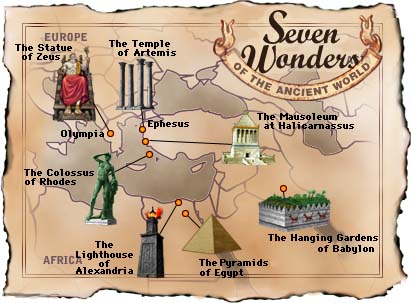
Complete Listing of World Wonders

This is re-posted from StumbleUpon, via wonderclub.com.

It is a very comprehensive and interesting list of the “Seven Wonders of the World.”  Oddly enough, there is not a single list.  The famed “Seven Wonders of the World” has changed over time.  This site has a pretty good listing of the various interpretations, with good links and maps.  Well done, wonderclub.com.  In any case, the list gets your creative juices flowing, which is always good for us fiction authors in particular.

sevenwondersmap

Complete Listing of World Wonders

The Seven Wonders of the Ancient World

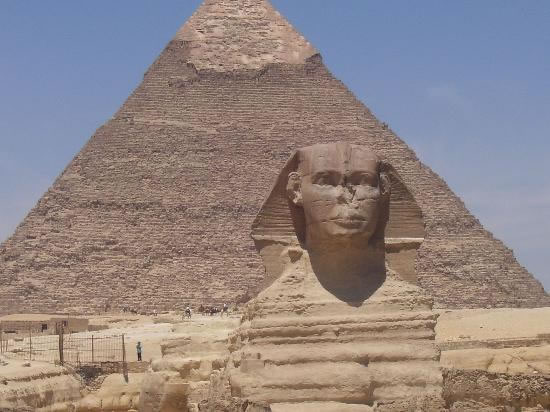
Seven-Wonders-World-giza-pyramids_jpg

The Seven Wonders of the Medieval Mind

The Seven Natural Wonders of the World

The Seven Underwater Wonders of the World

The Seven Wonders of the Modern World

The Seven Forgotten Natural Wonders of the World

The Seven Forgotten Modern Wonders of the World

The Seven Forgotten Wonders of the Medeival Mind

The Forgotten Wonders

Read our World Wonder FAQ by clicking here

 Maps of the World Wonders

1 Comment

Filed under Humor and Observations

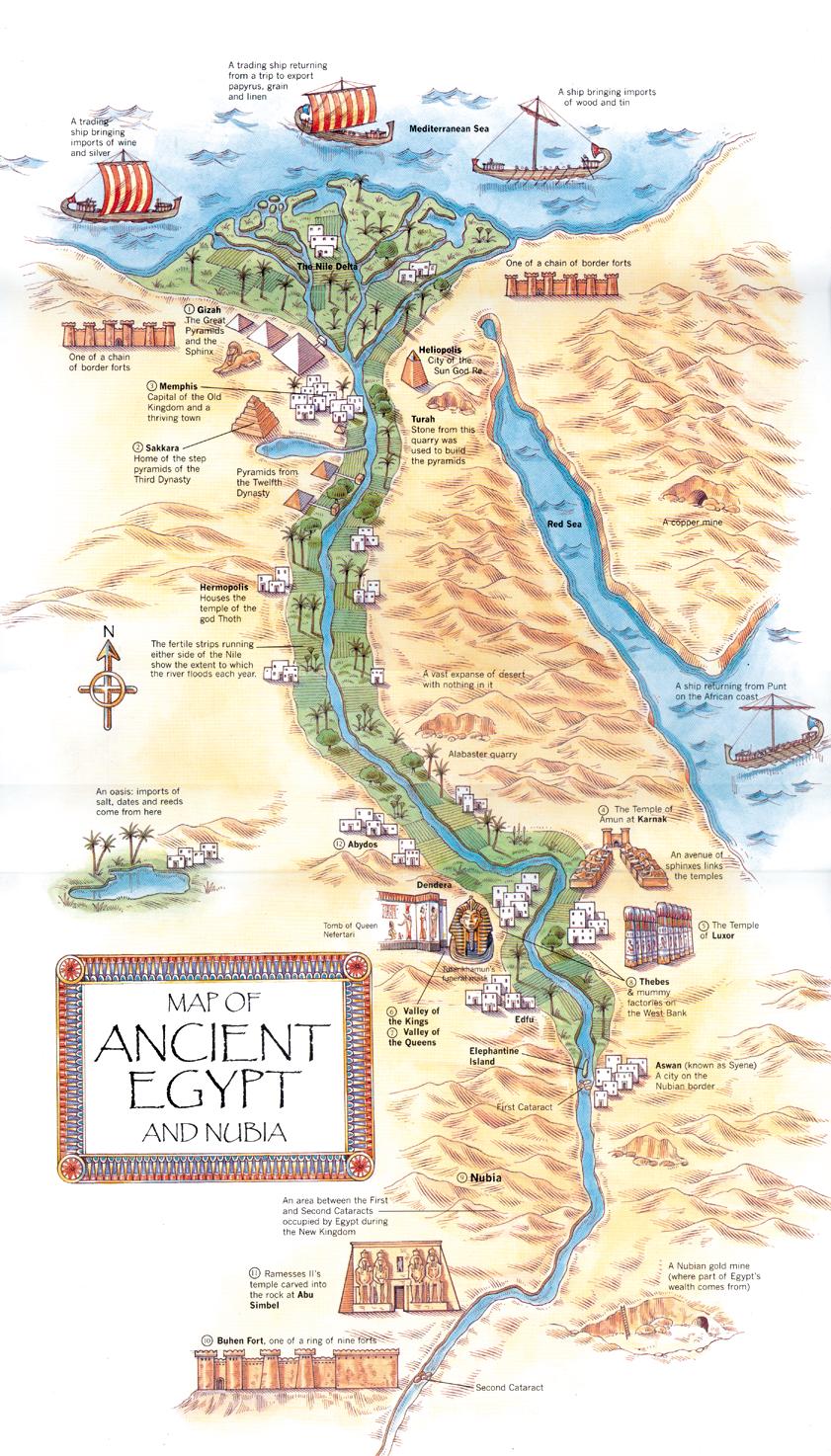
Map of Ancient Egypt

AncientEgyptMap

1 Comment

March 30, 2013 · 9:50 am

Rome – An Ancient Super City

Rome – Ancient Super City

Rome

2 Comments

Filed under Humor and Observations