Tag Archives: economics

Future Results Not Guaranteed

If you have heard that phrase along with an add or prospectus, it is good to remember.  Here is one of the things I learned in undergrad Economics long ago…

untitled

A man receives a letter providing “free” advice on an investment.  He reads it and throws it away, but notices it was correct later.  He receives another letter with more free advice.  He ignores it, but it turns out true as well.  The third letter comes, he invests, it pays off.  The fourth, the fifth, all the same.  The sixth letter arrives while the man is getting rich off this seemingly Nostradamus like advice on finances.  It says, the first five were free.  To continue, please pay me $5,000 per letter.  This goes on for some time, and the man is very happy.

Eventually, a few letters are wrong, and after awhile, the man stops paying for them.

**********

I decide to make some money.  I write 10,000 letters to strangers.  Half recommend to do something, half the opposite.  I send out 5,000 letters to those I was correct with and repeat the process.  Then 2,500, then 1,250, then 625 finally 312.  Those 312 people then pay me $5,000 for my brilliant advice, after all, I have never been wrong.  I continue until at last, I have been wrong enough they stop paying.  I retire rich.

*********

The shrewdest advisors on Wall Street might just be the ones out of the first 10,000 that were randomly right.  You don’t hear about the failures, only the successes.  In that way, past experience really is NOT a guarantee of future results.  Strange when you think it through, but it is VERY true.


Leave a comment

Filed under Humor and Observations

Price versus Value

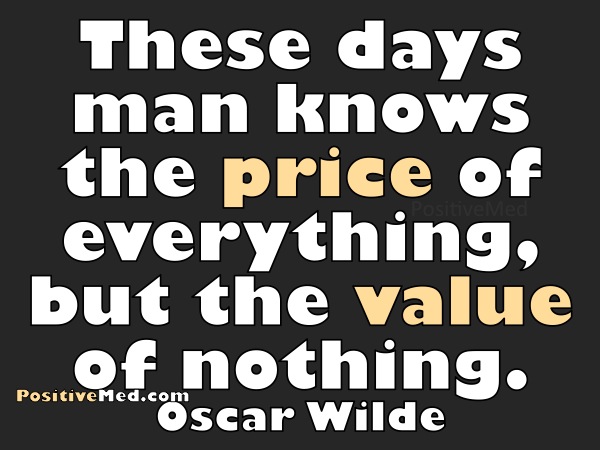
I must first confess that although my nerd/geek credentials are solid, I hold a Master’s Degree in Managerial Economics.  Oddly, your fields of study and your career warp your thinking.  When I was managing 7-11 stores I thought in terms of inventory, rack spacing, sales turn and shrinkage (product shrinkage not the kind you are snickering about).  When I received my electronic engineering degree and worked on avionics systems, it was voltage, current, flow, resistance, capacitance and reaction.  When I received my degree in Computer Science, it was all input, processing, output, feedback.  With economics it was all about maximizing your utils by matching marginal costs with marginal demand.  These studies have to a degree hard-wired my brain.

Price-vs-Value-Adelante-Live

Culture has the same effect on us all.  The constant stream of advertising and consumerism has created a sense of price but has neglected value.  I used to try to explain to my wife the difference between price and value when I was managing portfolios.  For instance, price of a stock can go down because of factors in the overall market and rumors.  The value of the stock may be higher.  People can take their capital away from a sector or the whole market due to unrelated circumstances.  If a company still has great sales, products, or even assets, it is worth more than its price.  Once I owned stock in a company with stock valuation less than the auction price of its plants, land and equipment.  Basically, if the company never made another dime, it could have liquidated and been worth more than its price.  Other times companies look like they have great prices – for instance penny stocks – but are not worth it.  A company in the red and going under is worth a negative amount and a penny per share is too much.

price-and-value

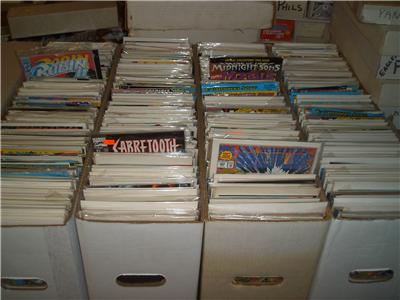
So it is with my life.  I used to chase the almighty dollar and a big part of me still wants that.  I learned that my wife, kids, friends, dogs and pursuit of writing are higher in value.  Still, there is that constant cultural nagging for me to jump back in and make the big bucks.  I was thinking about this as I dusted off the top of one of my comic book boxes.  It is a long skinny white box made specifically for storing them.  I have some really nice X-Men, Wolverine, Cable, Superman and other comics in there from twenty years ago.  I put them all with backing, special plastic slips and rigid upright dividers.  I plan to reread them and I realized how anal and OCB I am about it.  I am not willing to get any stain or crease in them.  My kids, adults now, probably have horrible memories about having to read the comics on a flat clean surface and turn the pages just so in order not to crease them.

comic books

The funny thing is that I have no intention of ever selling them and I never bought any collectibles as an “investment.”  Even so, I am compulsive about keeping them in mint condition.  I value my collections of books, comic books, postage stamps, figurines and sports cards completely with their emotional and sentimental value, but still society has implanted this thought that I must preserve them so their price will be high.  Strange.

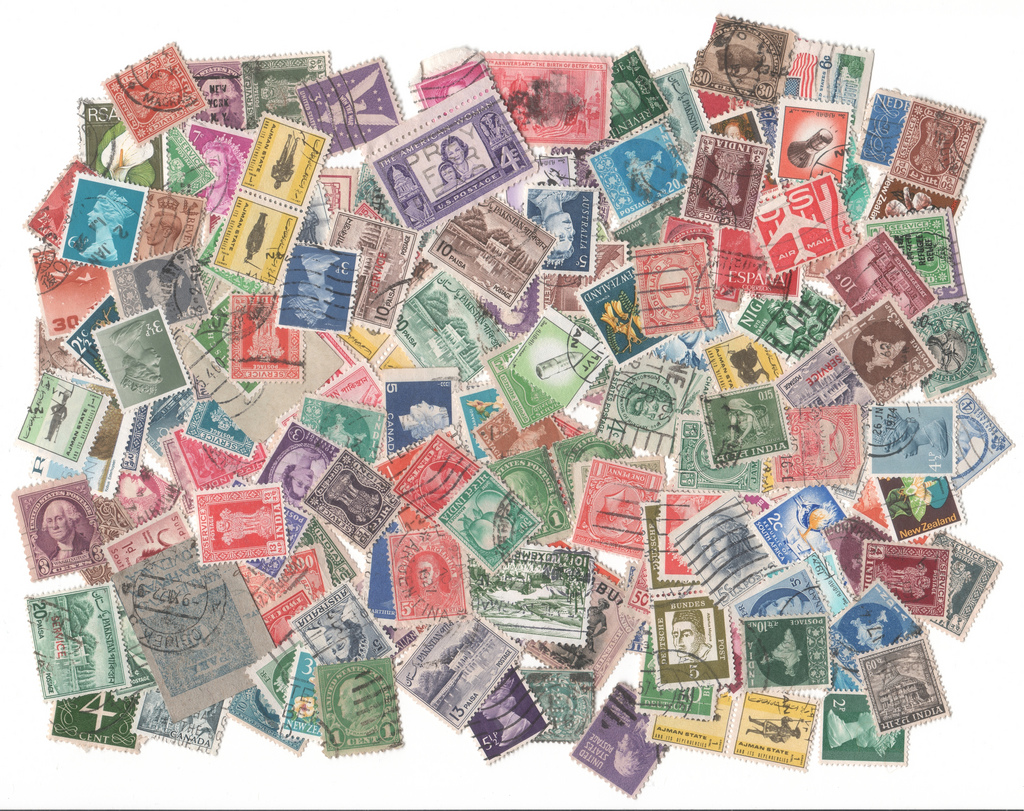
My older relatives were upset when I was just a child because my Grandfather gave me his extensive stamp collection.  Think early American stamps – like all of them – in this collection.  His own sons wanted them bad.  Why did he give them to me, just a little kid?  In his words, “I know Michael will never sell them.”  It’s true.  I’m over 50 now and still have every stamp.  I’ll never get rid of them.  My goal is to find someone who loves them as much as me and pass them on.

stamp collection

Thinking about these things in detail is how I remind myself to focus on value, not price.  To focus on a good life, not a financially wealthy one.  It surprises me how hard it is to walk away from a life that was literally killing me with stress and producing no legacy.  I was leaving footprints on the beach only to be washed away by the next wave.  I know this has been a rambling post, but I hope it will help to inspire and remind you as well to pursue the things that are important to you and resist the mindset created by consumerism.

3 Comments

Filed under Humor and Observations

Bitcoins Becoming Popular During European Financial Crisis

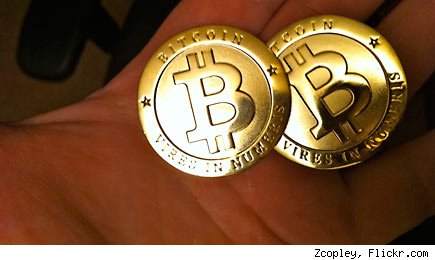
What are bitcoins you might ask?  They are basically fake monopoly money taken as real tender.  They are growing in popularity, but first, some basic economics:


Economics 101 Primer – It works like this, currency is backed by the government that issues it.  It used to be backed by gold and silver.  In fact, early currency was simply gold, silver or bronze stamped with the King’s face.  Then it turned to paper.  When it was backed by gold and silver, you could take the paper version to the bank and get actual metal.  This stabilized its value.  However, there is more economic activity than there is gold and silver in the world, so people switched to paper that is no longer backed by anything, other than faith that when you use it, you can buy stuff.

If there are 100 things to buy and 100 dollars, each costs around $1.  If you print more money, say $200, but the economy does not grow, things cost $2 a piece and your dollar is worth only half as much.  This is called inflation, which is bad for everyone.

If things keep growing in production (GDP growth) and money does not grow, you get deflation and it is difficult to do business.  In that case, the now 200 items chasing $100 would only be able to get 50 cents each.  The producers lose half their value.

So, a government is supposed to try to stabilize currency by having its supply go up and down as economic growth goes up and down, so their currency remains stable and so do prices.  When governments run high deficits, borrow money, and print money for their own purpose rather than matching growth, bad things happen, like runs on banks and lack of faith that the currency ‘means” anything.  That is one of the reason real gold prices have skyrocketed in the US.

Back to Bitcoins – People in Europe are losing faith in the British Pound Stirling and the Euro.  So, someone created the Bitcoin, a currency on the Internet which is NOT issued by any government.  It is simply issued in exchange for real money like euros, dollars and pounds, and then used as currency.  The fact that it is NOT backed by a government also means it is not increased to pay for government purchases.  People are so desperate that they are taking their Euros out of ATMs so fast that several governments are limiting withdrawals now.  Italy closed its banks for a week.  So, as they can, people in Italy, Greece and other places are turning in their euros for bitcoins.  So far, the bitcoins have more faith and value than regular money, gaining in value by 1700% against regular currency since 2009.  They cannot be used everywhere, but increasingly producers like restaurants and stores are taking them.

Can a privately held company through the internet successfully launch and maintain its own currency for the world better than governments?  I would have told you no ten years ago, but lots has changed.  In video games, there is an exchange rate now for fake game gold or credits to real cash.  There are millionaires who have sold imaginary retail space to people in Second Life.  Now, not in a video game, but in real life, we have fake money worth more than real money.  Amazing.

Here is a piece of a story from AOL Daily Finance, posted by Ross Kenneth Urken:

Is Bitcoin a Panacea For the Euro’s Woes?

Quite simply, Bitcoins are an encrypted digital currency that can be freely exchanged between people or between consumers and merchants. Businesses like Bitcoin because it allows them to avoid paying credit card fees of up to 3% on transactions. Consumers get to dodge the costs normally associated with currency exchanges. It’s only available for use in a handful of physical locations in cities around the world (it’s mostly used via Internet), but a major use for it has been for conversions — you can buy Bitcoins and then exchange them for another currency at no charge.

Bitcoin is in some senses a financial island removed from the vicissitudes and consequences of a traditional banking system. It’s neither controlled by central banks nor governments, and thus not vulnerable to larger-scale shifts like changing interest rates or the rampant inflation of countries in decline.

But Bitcoin’s isolation from geopolitical turmoil has been its true selling point for those in Europe.


6 Comments

Filed under Humor and Observations, Uncategorized