Tag Archives: egypt

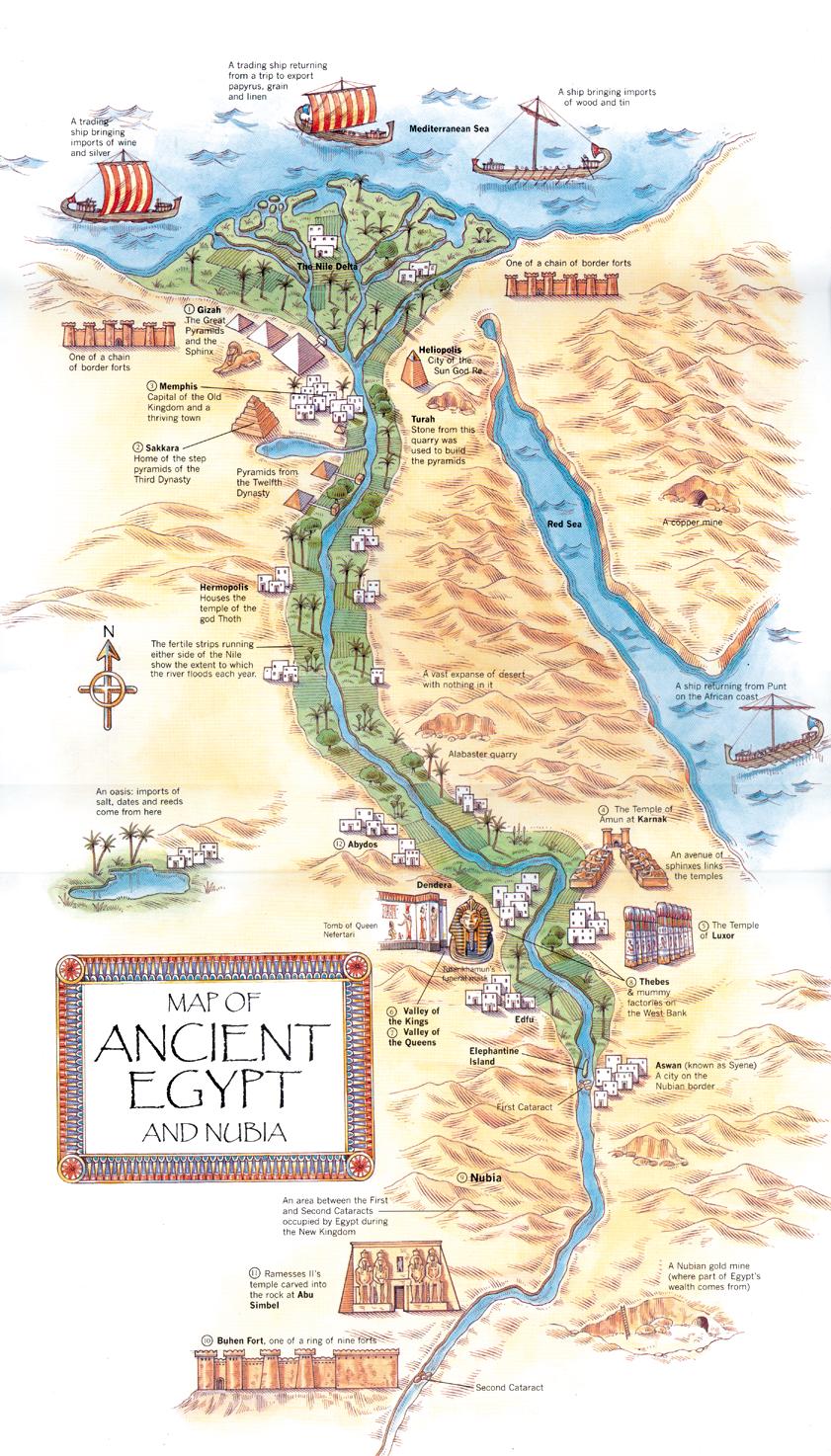
Map of Ancient Egypt

AncientEgyptMap

1 Comment

March 30, 2013 · 9:50 am

Mummies Show Clogged Arteries 4,000 years ago.

Even 4,000 year-old mummies had clogged arteries, study reveals

Published March 11, 2013

Associated Press

  • MummyHeartDisease.JPG

    March 10, 2013: A a group of cardiologists lead by Saint Luke’s Mid America Heart Institute in Kansas City, USA, show the mummy Hatiay (New Kingdom, 18th Dynasty, 1550 to 1295 BCE) as it is returned to its display back in the Antiquities Museaum in Cairo after it underwent a CT scanning. (AP)

  • Egypt Mummies Heart Disease 1.jpg

    March 10, 2013: The sarcophagus of the mummy Hatiay (New Kingdom, 18th Dynasty, 1550 to 1295 BCE) is closed after the mummy underwent a CT scanning, in Cairo, Egypt. (AP Photo/Dr. Michael Miyamoto)

  • Egypt Mummies Heart Disease 2.jpg

    March 10, 2013: Egyptologists prepare the mummy Hatiay (New Kingdom, 18th Dynasty, 1550 to 1295 BCE) for CT scanning in Cairo, Egypt, which later demonstrated evidence of extensive vascular disease. (AP Photo/Dr. Michael Miyamoto)

  • Egypt Mummies Heart Disease.jpg

    March 10, 2013: The mummy Hatiay (New Kingdom, 18th Dynasty, 1550 to 1295 BCE) gets a CT scan in Cairo, Egypt, where it was found to have evidence of extensive vascular disease. (AP Photo/Dr. Michael Miyamoto)

Even without modern-day temptations like fast food or cigarettes, people had clogged arteries some 4,000 years ago, according to the biggest-ever hunt for the condition in mummies.

Researchers say that suggests heart disease may be more a natural part of human aging rather than being directly tied to contemporary risk factors like smoking, eating fatty foods and not exercising.

‘Heart disease has been stalking mankind for over 4,000 years.’

– Dr. Randall Thompson, a cardiologist at Saint Luke’s Mid America Heart Institute in Kansas City 

CT scans of 137 mummies showed evidence of atherosclerosis, or hardened arteries, in one third of those examined, including those from ancient people believed to have healthy lifestyles. Atherosclerosis causes heart attacks and strokes. More than half of the mummies were from Egypt while the rest were from Peru, southwest America and the Aleutian islands in Alaska. The mummies were from about 3800 B.C. to 1900 A.D.

“Heart disease has been stalking mankind for over 4,000 years all over the globe,” said Dr. Randall Thompson, a cardiologist at Saint Luke’s Mid America Heart Institute in Kansas City and the paper’s lead author.

The mummies with clogged arteries were older at the time of their death, around 43 versus 32 for those without the condition. In most cases, scientists couldn’t say whether the heart disease killed them.

The study results were announced Sunday at a meeting of the American College of Cardiology in San Francisco and simultaneously published online in the journal Lancet.

Thompson said he was surprised to see hardened arteries even in people like the ancient Aleutians who were presumed to have a healthy lifestyle as hunter-gatherers.

“I think it’s fair to say people should feel less guilty about getting heart disease in modern times,” he said. “We may have oversold the idea that a healthy lifestyle can completely eliminate your risk.”

Thompson said there could be unknown factors that contributed to the mummies’ narrowed arteries. He said the Ancestral Puebloans who lived in underground caves in modern-day Colorado and Utah, used fire for heat and cooking, producing a lot of smoke.

“They were breathing in a lot of smoke and that could have had the same effect as cigarettes,” he said.

Previous studies have found evidence of heart disease in Egyptian mummies, but the Lancet paper is the largest survey so far and the first to include mummies elsewhere in the world.

Dr. Frank Ruehli of the University of Zurich, who runs the Swiss Mummy Project, said it was clear atherosclerosis was notably present in antiquity and agreed there might be a genetic predisposition to the disease.

“Humans seem to have a particular vulnerability (to heart disease) and it will be interesting to see what genes are involved,” he said. Ruehli was not connected to the study. “This is a piece in the puzzle that may tell us something important about the evolution of disease.”

Other experts warned against reading too much into the mummy data.

Dr. Mike Knapton, associate medical director at the British Heart Foundation, said calcified arteries could also be caused by other ailments including endocrine disorders and that it was impossible to tell from the CT scans if the types of calcium deposits in the mummies were the kind that would have sparked a heart attack or stroke.

“It’s a fascinating study but I’m not sure we can say atherosclerosis is an inevitable part of aging,” he said, citing the numerous studies that have showed strong links between lifestyle factors and heart disease.

Researcher Thompson advised people to live as healthy a lifestyle as possible, noting that the risk of heart disease could be reduced with good eating habits, not smoking and exercising. “We don’t have to end up like the mummies,” he said.

Read more: http://www.foxnews.com/science/2013/03/11/study-reveals-even-4000-year-old-mummies-had-clogged-arteries/?intcmp=related#ixzz2NNFOasby

1 Comment

Filed under Humor and Observations

Ancient Shoes Found In Egypt

Lost and found: Ancient shoes turn up in Egypt temple

By Owen Jarus

Published February 28, 2013

LiveScience

  • 4-Egypt-shoe-discovery

    The unwrapped shoe bundle showing the two pairs of children’s shoes and the adult isolate. (© 2005 Franco M. Giani – Milano – Italy)

More than 2,000 years ago, at a time when Egypt was ruled by a dynasty of kings of Greek descent, someone, perhaps a group of people, hid away some of the most valuable possessions they had — their shoes.

Seven shoes were deposited in a jar in an Egyptian temple in Luxor, three pairs and a single one. Two pairs were originally worn by children and were only about 7 inches long. Using palm fiber string, the child shoes were tied together within the single shoe (it was larger and meant for an adult) and put in the jar. Another pair of shoes, more than 9 inches long that had been worn by a limping adult, was also inserted in the jar.

The shoe-filled jar, along with two other jars, had been “deliberately placed in a small space between two mudbrick walls,” writes archaeologist Angelo Sesana in a report published in the journal Memnonia.

Whoever deposited the shoes never returned to collect them, and they were forgotten, until now. [See Photos of the Ancient Egyptian Shoes]

‘The shoes were in pristine condition and still supple upon discovery.’

– André Veldmeijer, an expert in ancient Egyptian footwear 

In 2004, an Italian archaeological expedition team, led by Sesana, rediscovered the shoes. The archaeologists gave André Veldmeijer, an expert in ancient Egyptian footwear, access to photographs that show the finds.

“The find is extraordinary as the shoes were in pristine condition and still supple upon discovery,” writes Veldmeijer in the most recent edition of the Journal of the American Research Center in Egypt. Unfortunately after being unearthed the shoes became brittle and “extremely fragile,” he added.

Pricey shoes
Veldmeijer’s analysis suggests the shoes may have been foreign-made and were “relatively expensive.” Sandals were the more common footwear in Egypt and that the style and quality of these seven shoes was such that “everybody would look at you,” and “it would give you much more status because you had these expensive pair of shoes,” said Veldmeijer, assistant director for Egyptology of the Netherlands-Flemish Institute in Cairo.

The date of the shoes is based on the jar they were found in and the other two jars, as well as the stratigraphy, or layering of sediments, of the area. It may be possible in the future to carbon date the shoes to confirm their age.

Why they were left in the temple in antiquity and not retrieved is a mystery. “There’s no reason to store them without having the intention of getting them back at some point,” Veldmeijer said in an interview with LiveScience, adding that there could have been some kind of unrest that forced the owners of the shoes to deposit them and flee hastily. The temple itself predates the shoes by more than 1,000 years and was originally built for pharaoh Amenhotep II (1424-1398 B.C.).

Design discoveries
Veldmeijer made a number of shoe design discoveries. He found that the people who wore the seven shoes would have tied them using what researchers call “tailed toggles.” Leather strips at the top of the shoes would form knots that would be passed through openings to close the shoes. After they were closed a long strip of leather would have hung down, decoratively, at either side. The shoes are made out of leather, which is likely bovine.

Most surprising was that the isolated shoe had what shoemakers call a “rand,” a device that until now was thought to have been first used in medieval Europe. A rand is a folded leather strip that would go between the sole of the shoe and the upper part, reinforcing the stitching as the “the upper is very prone to tear apart at the stitch holes,” he explained. The device would’ve been useful in muddy weather when shoes are under pressure, as it makes the seam much more resistant to water.

In the dry (and generally not muddy) climate of ancient Egypt, he said that it’s a surprising innovation and seems to indicate the seven shoes were constructed somewhere abroad.

Health discoveries
The shoes also provided insight into the health of the people wearing them. In the case of the isolated shoe, he found a “semi-circular protruding area” that could be a sign of a condition called Hallux Valgus, more popularly known as a bunion. [The 9 Most Bizarre Medical Conditions]

“In this condition, the big toe starts to deviate inward towards the other toes,” Veldmeijer writes in the journal article. “Although hereditary, it can also develop as a result of close fitting shoes, although other scholars dispute this ….”

Another curious find came from the pair of adult shoes. He found that the left shoe had more patches and evidence of repair than the shoe on the right. “The shoe was exposed to unequal pressure,” he said, showing that the person who wore it “walked with a limp, otherwise the wear would have been far more equal.”

Still, despite their medical problems, and the wear and tear on the shoes, the people who wore them were careful to keep up with repairs, Veldmeijer said. They did not throw them away like modern-day Westerners tend to do with old running shoes.

“These shoes were highly prized commodities.”

Veldmeijer hopes to have the opportunity to examine the shoes, now under the care of the Ministry of State for Antiquities, firsthand.

Read more: http://www.foxnews.com/science/2013/02/28/lost-and-found-ancient-shoes-turn-up-in-egypt-temple/?intcmp=obinsite#ixzz2NIf3IGOv

1 Comment

Filed under Humor and Observations

Brain Remover Found – No Not Jersey Shore…

A brain remover was found.  No, not Jersey Shore, or Baby Boo-Boo, this one is from ancient Egypt, and made of wood, not poorly cast fake reality shows.

Mummy Brain: Gray Matter-Removal Tool Found In Ancient Egyptian Skull

Posted: 12/15/2012 12:36 am EST

Femaleegyptianmummy
By: Owen Jarus, LiveScience Contributor

Published: 12/14/2012 11:04 AM EST on LiveScience

A brain-removal tool used by ancient Egyptian embalmers has been discovered lodged in the skull of a female mummy that dates back around 2,400 years.

Removal of the brain was an Egyptian mummification procedure that became popular around 3,500 years ago and remained in use in later periods.

Identifying the ancient tools embalmers used for brain removal is difficult, and researchers note this is only the second time that such a tool has been reported within a mummy’s skull.

The discovery

Located between the left parietal bone and the back of the skull, which had been filled with resin, the object was discovered in 2008 through a series of CT scans. Researchers then inserted an endoscope (a thin tube often used for noninvasive medical procedures) into the mummy to get a closer look and ultimately detach it from resin to which it had gotten stuck.  [See Photos of Mummy & Brain-Removal Tool]


ancientbrainremoval4
The object, which measures 3 inches (8 cm) in length, was cut off from resin that it had gotten stuck to (hence the jagged edge). Made of a species Monocotyledon plant, it would have been used to remove the mummy’s brain.

“We cut it with a clamp through the endoscope and then removed it from the skull,” said lead researcher Dr. Mislav Čavka, of the University Hospital Dubrava in Zagreb Croatia, in an interview with LiveScience.

They found themselves peering at an object more than 3 inches (8 centimeters) long that would have been used for liquefying and removing the brain. “It almost definitely would have been used in excerebration [brain removal] of the mummy,” Čavka said.

The instrument would have been inserted through a hole punched into the ethmoid bone near the nose. “Some parts [of the brain] would be wrapped around this stick and pulled out, and the other parts would be liquefied,” Čavka said.

The Egyptian mummy could then be put on its abdomen and the liquid drained through the nose hole. “It is an error that [the] embalmers left this stick in the skull,” said Čavka, adding the tool may have broken apart during the procedure.

This embalming accident, unfortunate for the ancient mummy, has provided researchers with a very rare artifact. Čavka’s team point out in a paper they published recently in the journal RSNA RadioGraphics the only other brain-removal stick found inside a mummy’s skull dates back 2,200 years.

ancientbrainremoval2
When the object was first discovered researchers were not sure what it was. So they inserted an endoscope (a thin tube used for non-invasive medical procedures) into the mummy to get a closer look.

“Probably in museums in Egypt there are many other evidences, but they were not found inside the skull,” making it tricky to identify such artifacts as brain-removal tools, said Čavka.

The mummy is currently in the Archaeological Museum in Zagreb Croatia and is that of a woman who died around the age of 40. Brought to Croatia in the 19th century without a coffin, it’s not known where she was found in Egypt. Radiocarbon dating and CT scans of the mummy determined its date to be around 2,400 years. Her cause of death is unknown.

New insights

The stick is quite brittle and the team could not do as thorough of an analysis as they’d hoped. Looking at it under a microscope, botanical experts determined the tool is made from plants in the group Monocotyledon, which includes forms of palm and bamboo.

brain removal tool
CT scans of a 2,400-year-old female mummy revealed a tubular object embedded in its skull between the brain’s left parietal bone and the resin filled back of the skull. It would turn out to be a tool used for the removal of the brain.

The most curious find came when the researchers compared their discovery with an ancient account of brain removal made by the Greek writer Herodotus in the fifth century B.C. A visitor to Egypt, he had this to say about how Egyptian brain removal worked (as translated by A. D. Godley, Cambridge, Harvard University Press, 1920, through Perseus Digital Library):

“Having agreed on a price, the bearers go away, and the workmen, left alone in their place, embalm the body. If they do this in the most perfect way, they first draw out part of the brain through the nostrils with an iron hook, and inject certain drugs into the rest.”

The recent discovery suggests an organic stick, not an “iron hook,” was used in at least some of these procedures, possibly for economic reasons. Researchers note that the tool found in the skull of the other mummy, dating from 2,200 years ago, was also made of an organic material.

“It is known that mummification was widely practiced throughout ancient Egyptian civilization, but it was a time-consuming and costly practice. Thus, not every­one could afford to perform the same mummifi­cation procedure,” write the researchers in their journal article.

Follow LiveScience on Twitter @livescience. We’re also on Facebook & Google+.

Leave a comment

Filed under Humor and Observations

Two Sides To Educating Islamic Women

I have two articles reposted below.  One is about an Egyptian girl, age 19, named Aisha Mustafa who has, in theory, created a revolutionary theory of how to provide fuel free propulsion systems for space craft.  Egypt is in danger of becoming another theocracy with Sha’ria law, in which women are forbidden to learn, or even leave the house without a male family member’s permission and accompaniment.  The other story is about Malala Yousufzai, a Pakistani girl age 15 who was shot in the head, point blank range, by the Taliban for reading and for speaking out in  opposition to Sha’ria law against her being educated.   Malala is in Britain being cared for and is doing as best as can be expected considering she was shot in the head. British Islamists have issued a “Fatwa,” or holy decree, to have her shot and killed whenever possible for disrespecting Islam.

How many great scientists, philosophers, leaders, doctors…how many great achievements will be missed for mankind as long as we have so many women not allowed to participate in education?  Perhaps I will die of cancer or heart disease before my time because a girl like Malala cannot go to school.  This is a tale of two girls, one in Egypt, one in Pakistan.  Both Muslim.

Egyptian girl, Aisha Mustafa, invents new space propulsion system

Read more: http://digitaljournal.com/article/325785#ixzz2DftSHeMk

JohnThomas

By JohnThomas Didymus

May 31, 2012 in Technology
Sohag – A physics student from Egypt’s Sohag University, Aisha Mustafa, 19, has patented a new type of propulsion system based on quantum theory that she says could propel space probes and artificial satellites without using any fuel.

According Gizmodo, Aisha’s new system exploits the quirky laws of quantum physics which state that in spite of appearances, space really is not vacuum but that it is a seething cauldron of fundamental particle interactions involving creation and destruction of “virtual particles.”

Mustafa believes it is possible to use vacuum energy fields to create propulsion and build spacecraft propulsion systems that need little or no fuel to travel in space. According to Fast Company, Mustafa is betting on exploiting quantum effects involved in dynamic Casimir effect and the Casimiri-Polder force. She uses two silicon metallic plates in a vacuum, “like capacitors placed a few micrometers apart.” The plates interact with the virtual photons in the quantum field and generate a net force that is either an attraction or a repulsion depending on their arrangement.

According to OnIslam.net, the invention is similar to a hypothetical concept of jet propulsion termed “Differential Sail,” proposed by NASA’s Marc G. Millis.

Fast Company reports that Aisha’s university was so impressed with her new invention that it assisted her with a patent application. OnIslam.net reports that Mustafa’s supervisor, Dr. Ahmed Fikry, who heads the physics department in Sohag University, said “I expect this invention to be highly beneficial in several fields and areas of industries.”

The President of Sohag University, Dr. Nabil Nour Eldin Abdellah, said the university facilitates “science clubs” for creative students. He said: “Once we knew about her (Mustafa’s) invention, we encouraged her and provided her with the budget needed through the Science Club for innovative students in the university. This is the case with any other creative student.”

According to OnIslam.net, with the retirement of NASA’s space shuttle program, the field of space vehicles propulsion is expanding and and growing in importance with ongoing search for new methods of space travel that are faster, safer, cheaper and easier. A rich variety of new ideas in propulsive systems are being proposed some of which are beyond current technological capabilities to implement.

Gizmodo reports that Mustafa intends to further study and develop the design so that it may be tested out.

In a popular Egyptian morning program “Sabah El kheir Ya Masr”(Good Morning Egypt), Mustafa expressed her appreciation to her faculty and university staff for providing materials, resources and support. She, however, lamented that there is no funding for a department of space science in her university and in Egyptian universities in general. She said this prevents development and research in the field of space technology. She said: “Departments of astronomy and physics are only available. Although they are related to space sciences but unfortunately they aren’t into the specific field of my invention and they can’t practically test or implement it.”

Read more: http://digitaljournal.com/article/325785#ixzz2DfqCwrwS


Pakistani girl shot by Taliban “doing well”

A portrait of 14-year-old Pakistani girl, Malala Yousufzai, is displayed during a candlelight vigil by a women's group in Hong Kong October 19, 2012. Yousufzai, who was shot in the head by Taliban gunmen, is 'not out of the woods' but is doing well and has been able to stand for the first time with some help, doctors at the British hospital treating her said on Friday. Yousufzai was flown from Pakistan to Birmingham to receive treatment after the attack earlier this month, which drew widespread international condemnation. REUTERS-Bobby Yip
Malala Yousufzai, a 14-year-old schoolgirl, who was wounded in a gun attack, is seen in Swat Valley, northwest Pakistan, in this undated file photo. REUTERS-Hazart Ali Bacha-Files
A protester carries a portrait of 14-year-old Pakistani girl, Malala Yousufzai, during a candlelight vigil by a women's group in Hong Kong October 19, 2012. Yousufzai, who was shot in the head by Taliban gunmen, is 'not out of the woods' but is doing well and has been able to stand for the first time with some help, doctors at the British hospital treating her said on Friday. Yousufzai was flown from Pakistan to Birmingham to receive treatment after the attack earlier this month, which drew widespread international condemnation. REUTERS-Bobby Yip

LONDON | Fri Oct 19, 2012 10:08am EDT

(Reuters) – A Pakistani girl shot in the head by Taliban gunmen is “not out of the woods” but is doing well and has been able to stand for the first time, doctors at the British hospital treating her said on Friday.

Malala Yousufzai, who was shot for vocally opposing the Taliban, was flown from Pakistan to Birmingham to receive treatment after the attack earlier this month, which drew widespread international condemnation.

She has become a symbol of resistance to the Islamist group’s effort to deny women education and other rights.

Dave Rosser, medical director of the Queen Elizabeth Hospital in Birmingham, said she was now able to write and appeared to have memory recall despite her brain injuries.

“It’s clear that she’s not out of the woods yet,” Rosser told reporters, saying she had sustained a “very, very grave injury”. But he said she was “doing very well”.

“In fact she was standing with some help for the first time this morning. She’s communicating very freely, writing,” he said.

Rosser said, however, that the teenager was not able to speak because she had undergone a tracheotomy so she could breathe through a tube in her neck, an operation that was performed because her airways had been swollen by the bullet.

Yousufzai was shot as she left school in Swat, northwest of Islamabad. The Taliban said they attacked her because she spoke out against the group and praised U.S. President Barack Obama.

The alleged organizer of the shooting was captured during a 2009 military offensive against the Taliban, but released after three months, two senior officials told Reuters.

In a detailed statement about Yousufzai’s injuries, Rosser said she had suffered fractures to the base of her skull and to the bone behind her left ear. Her left jawbone is also injured at its joint.

“POINT BLANK RANGE”

“Malala was shot at point blank range,” with the bullet hitting her left brow, Rosser said. But instead of penetrating skull it travelled underneath the skin, the whole length of the side of her head and into her neck.

Shock waves from the shot shattered the thinnest bone of her skull and fragments were driven into her brain.

Rosser said there was certainly physical damage to the brain but it was too early to tell whether that would affect any brain functions.

“She seems to be able to understand, she has some memory,” he said. “She’s able to stand, she’s got motor control … (but) whether there are any subtle intellectual or memory deficits down the line, it’s too early to say.”

The hospital unit is expert in dealing with complex trauma cases and has treated hundreds of soldiers wounded in Afghanistan. It has the world’s largest single-floor critical care unit for patients with gunshot wounds, burns, spinal damage and major head injuries.

Rosser said Yousufzai’s treatment is likely to include reconstructive surgery to replace the damaged skull bone.

That surgery is unlikely to be able to be carried until for several weeks or even months, he said, since she is also fighting an infection that needs to be cured first.

“She’s going to need a couple of weeks to rehabilitate, to make sure the infection is cleared up,” he said.

(Reporting by Alessandra Rizzo and Kate Kelland; Editing by Robin Pomeroy)

Leave a comment

Filed under Humor and Observations, Uncategorized

Pictures of Egypt 1860 – 1880

reposted from:

http://www.retronaut.com/2012/11/the-levant-by-felix-bonfils/

1860s-1880s:

The Middle East by Félix Bonfils
Chris Wild
Arabians

Arabians
Barber shaving boy's head

Barber shaving boy’s head
Beirut

Beirut
Cairo

Cairo
Cairo

Cairo
Cairo

Cairo
Cairo

Cairo
Constantinople

Constantinople
Damascus

Damascus
Entrance to the Great Pyramid

Entrance to the Great Pyramid
Gates of the Holy Sepulchre

Gates of the Holy Sepulchre
Giza

Giza
Giza

Giza
Jerusalem

Jerusalem
Jerusalem

Jerusalem
Jerusalem

Jerusalem
Karnak

Karnak
Mummies for sale

Mummies for sale
Palmyra

Palmyra
Petra

Petra
Pyramids

Pyramids
Road to Bethlehem

Road to Bethlehem
Sakkara, Egypt

Sakkara, Egypt
Sphinx

Sphinx
Syria

Syria
Temple of the Sun

Temple of the Sun
The Great Pyramid

The Great Pyramid
The Sphinx

The Sphinx
Tomb of El-Kefr

Tomb of El-Kefr
Tombs of the Judges

Tombs of the Judges
Western Wall

Western Wall
‘Félix Bonfils (1831-1885) was a French photographer and writer who was active in the Middle East. Four years after his arrival he reported 15,000 prints of Egypt, Palestine, Syria, and Greece, and 9,000 stereoscopic-views

– Wikipedia

1 Comment

Filed under Humor and Observations