Tag Archives: funny story

Railroad track history – humorous but true

Why Some Things Are, the Way They Are
6

 The U.S. Standard railroad gauge (distance between the rails) is 4 feet, 8.5 inches. That’s an exceedingly odd number. Why was that gauge used? Because that’s the way they built them in England, and English expatriates designed the U.S. Railroads.

Why did the English build them like that?

Because the first rail lines were built by the same people who built the pre-railroad tramways, and that’s the gauge they used.

Why did ‘they’ use that gauge then?

Because the people who built the tramways used the same jigs and tools that they had used for building wagons, which used that wheel spacing.
2

Why did the wagons have that particular Odd wheel spacing?

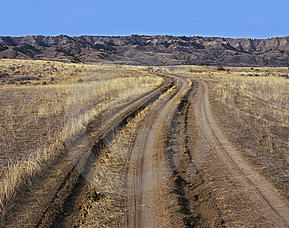
Well, if they tried to use any other spacing, the wagon wheels would break on some of the old, long distance roads in England, because that’s the spacing of the wheel ruts.

So, who built those old rutted roads?
3

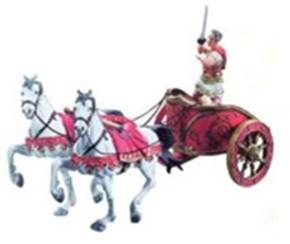
Imperial Rome built the first long distance roads in Europe (including England) for their legions. Those roads have been used ever since.

And the ruts in the roads?

Roman war chariots formed the initial ruts, which everyone else had to match for fear of destroying their wagon wheels.

Since the chariots were made for Imperial Rome, they were all alike in the matter of wheel spacing. Therefore, the United States standard railroad gauge of 4 feet, 8.5 inches is derived from the original specifications for an Imperial Roman war chariot. In other words, bureaucracies live forever.

So the next time you are handed a specification, procedure, or process, and wonder, ‘What horse’s ass came up with this?’ , you may be exactly right.

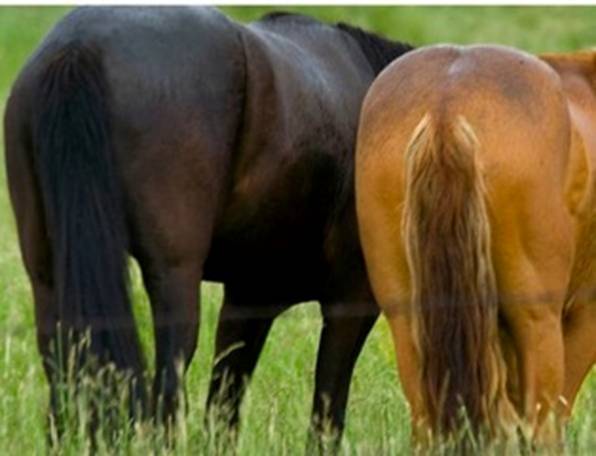
Imperial Roman army chariots were made just wide enough to accommodate the rear ends of two war horses.
4
Now, the twist to the story:

When you see a Space Shuttle sitting on its launch pad, you will notice that there are two big booster rockets attached to the sides of the main fuel tank. These are solid rocket boosters, or SRBs. The SRBs are made by Thiokol at their factory in Utah.

5

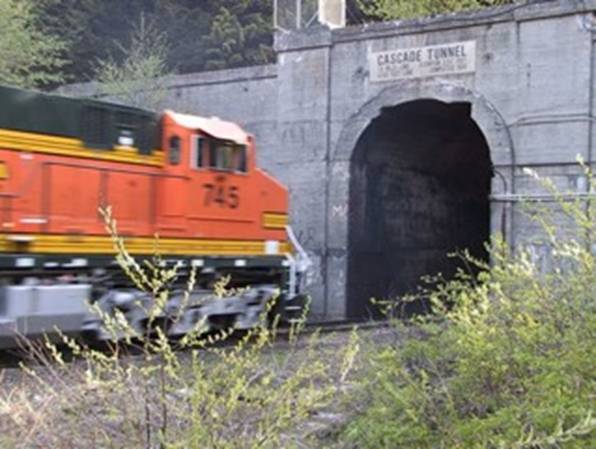
The engineers who designed the SRBs would have preferred to make them a bit larger, but the SRBs had to be shipped by train from the factory to the launch site. The railroad line from the factory happens to run through a tunnel in the mountains, and the SRBs had to fit through that tunnel. The tunnel is slightly wider than the railroad track, and the railroad track, as you now know, is about as wide as two horses’ behinds.

6
So, a major Space Shuttle design feature of what is arguably the world’s most advanced transportation system was determined over two thousand years ago by the width of a horse’s ass.

And you thought being a horse’s ass wasn’t important!
Now you know, horses’ asses control almost everything…explains a whole lot of stuff, doesn’t it?
 

1 Comment

Filed under Humor and Observations

$68,000 Whale Vomit

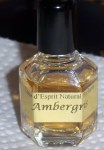
You might not realize it, but solidified whale vomit, also known as “ambergris” which sounds better, is a very valuable element in making perfumes.  In fact, so valuable, that an island in Belize is named Ambergris Caye, all the way back to the old West Indies pirate days.  The wonderful town of Whale Vomit.  Even today when this rare element washes ashore, those lucky enough to find it, and who can recognize it, can be overnight much more wealthy.  The problem is, it is very rare, often looks like a variety of rocks, and most people don’t go near it when it smells bad.  Here is one such example of a lucky whale vomit gatherer…

BRITON FINDS ‘RARE WHALE VOMIT’ WORTH $68,000

THE DAILY DISH  PawNation

By AFP Jan 31st 2013

LONDON, (AFP) – A British man has been offered 50,000 euros for a strange-smelling rock his dog found on a beach, which is likely a rare form of whale vomit used in perfumes, the BBC reported Thursday.

Ken Wilman was walking his dog Madge in the coastal town of Morecambe in Northwest England when she began “poking at a rather large stone” with a waxy texture and yellowish color. At first he left it on the beach, but “something triggered in my mind”, Wilman said, prompting him to go back and retrieve the object, which he believes is a piece of ambergris, a substance found in the digestive systems of sperm whales.

Whales sometimes spew up ambergris, which floats on water and has been highly prized for centuries. It is used in perfume-making for the musky fragrance it acquires as it ages — but newer ambergris is foul-smelling.

“When I picked it up and smelled it I put it back down again and I thought ‘urgh’,” Wilman told the BBC. “It has a musky smell, but the more you smell it the nicer the smell becomes.”

He is waiting for tests to confirm his find is ambergris, nicknamed “floating gold”, but says he has been offered 50,000 euros (£43,000, $68,000) for it by a French dealer.

“It’s worth so much because of its particular properties,” Andrew Kitchener, principal curator of vertebrates at the National Museum of Scotland, told the broadcaster. “It’s a very important base for perfumes and it’s hard to find any artificial substitute for it.”

The substance gets a mention in the classic 1851 whaling novel Moby Dick, where author Herman Melville writes: “Who would think, then, that such fine ladies and gentlemen should regale themselves with an essence found in the inglorious bowels of a sick whale! Yet so it is.”

Unfortunately, digging dogs don’t always find prizes worth thousands of dollars. Most of the time they just make a mess. Canines dig for a variety of reasons such as boredom, high energy levels and hunting instincts. As an owner, to curb digging you can either redirect your dog’s energies to something else or remove the elements that encourage it to dig. Some dogs will continue to dig anyways, and may require training, fences or a digging pit. Go to our partner petMD to learn more.


Leave a comment

Filed under Humor and Observations, Uncategorized