Tag Archives: futurism

9 Military Technologies That Will Soon Change Warfare

slideshow image

U.S. Navy photo

The technological revolution in modern warfare isn’t just about airborne drones silently scouting the battlefield from 30,000 feet. We’ve already looked at some developments in the works, but more technologies are on the way from the Pentagon’s Defense Advanced Research Projects Agency (DARPA), working with defense contractors and other private companies. Though some of these blueprints look like they’re right out of a futuristic summer blockbuster movie, most are just a few years away from deployment. Some have the potential to save combat soldiers’ lives. They all will change the face of war. Take a look:

A “Flying Humvee”

slideshow image

DARPA Illustration

This rugged transporter would take off like a helicopter and fly like a cargo plane. When they land, some versions under study by Lockheed Martin, United Technologies and Textron would even be able to drive off like, well, a Humvee. The concept vehicle, dubbed the ARES, would be similar to a small version of a V-22 Osprey transport, which already provides the Army and Marines with a huge operational advantage in difficult terrains. One of its most promising capabilities: quickly moving soldiers and gear over minefields and past roadside booby traps without having to call in a bomb squad first. The military wants the air-to-land vehicle to be extremely rugged, utilitarian in design, easy to operate and simple to fix.

Silent-Running Motorcycles

slideshow image

Image courtesy BRD Motorcycles

Imagine off-road dirt bike engines that make no sound. They would be powered by tough, powerful battery packs, allowing warriors to sneak up quickly on an unsuspecting enemy.Such designs are in the works at Logos Technologies and electric bike maker BRD. The electric two-wheelers would have just a small reserve of gasoline in case of an electric failure, plus a secondary fuel source, if needed, to escape danger.

Lasers on the High Seas

slideshow image

Laser Weapon system (LaWS) aboard the USS Ponce.
U.S. Navy photo by John F. Williams.

Easier to turn, aim and fire than today’s heavy shipboard antiaircraft weaponry, laser guns will give sailors a more precise bead on the enemy. So precise, in fact, that naval vessels will be able to zap and disable an approaching enemy boat’s engine, allowing sailors to capture and interrogate their combatants rather than killing or wounding them. This technology will be especially useful in close-to-shore patrols, where ships are more vulnerable to attacks from small boats. Several companies are involved in building the so-called Laser Weapons System, including Raytheon and San Diego-based defense contractor Kratos. It will be tested soon aboard the USS Ponce, one of the workhorses of the U.S. Atlantic Fleet.

Doctors Inside Bodies

slideshow image

DARPA/Northwestern University photo

Early research is promising for development of medical “nanobots” that could be introduced into a soldier’s bloodstream or tissues, capable of releasing treatments for everything from a sore throat to malaria or maybe even the effects of chemical or biological weapons The nanobots, part of an area of research called In Vivo Nanoplatforms, would work at the molecular level, hitching rides on a natural protein in the body. One day they might save the lives of soldiers where combat medicine or medevac services are lacking, and they could eventually find their way into civilian applications, too.

The Mach 7 Navy Gun

slideshow image

Office of Naval Research photo

Using electromagnetic energy instead of gunpowder or other combustible fuel, this rail gun fires 23-pound shells a distance of 100 miles or more at seven times the speed of sound — Mach 7. The Navy expects to conduct seaside trials in 2016, after more limited testing in defense labs. A rail gun projectile will cost as little as $25,000 — far less than the current cost of an attack missile, $500,000 to $1.5 million. And one warship could hold hundreds of projectiles. Multiple rail gun shells could also be fired in sequence to blow apart incoming missiles.

Water Drones

slideshow image

U.S. Navy photo

Unmanned seacraft, ranging in size from a Jet Ski up to a small yacht, will be joining the Naval arsenal in the coming years. Operated remotely, they’ll be used to patrol coastlines or perform mine sweeps. Some vessels could be equipped with weapons. This all may sound like a simpler proposition than airborne drones; not so. Unmanned surface boats have to negotiate currents, riptides, debris, other boats and even cope with the occasional rogue wave. Plus the elaborate electronic components need to stand up to corrosive saltwater conditions.

Satellite “Slingshots”

slideshow image

The Air Force and Boeing are working on a device that can launch satellites from airborne vehicles more quickly and cheaply than via a conventional rocket launch. The way it works now, small spy and defense-related satellites often piggyback on larger spacebound payloads blasting off from the ground. This complicated process can cost tens, even hundreds of millions of dollars. Instead, a special high-altitude jet would be used to vault satellites into orbit, using a small rocket attached to the wing or underbelly of the jet. Cost estimates then drop to around $1 million per launch. As satellites get smaller and more powerful, this type of launch will gain popularity with the military, which wants the option to deploy satellites quickly and anywhere.

War Room on a Table Screen

slideshow image

DARPA image

A portable device will allow commanders to visualize the battlefield using holography and interactive maps — no 3-D glasses needed. The Urban Photonic Sandtable Display condenses the giant war room screen that’s become a movie cliché to the size of a dinner table. Zebra Imaging of Austin, Texas, is a leader in the development field and has been working on 3-D military maps of varying sophistication for several years. Possibilities for commercial applications are many, including uses for engineering and architecture.

Google Glass-like Eyegear for Soldiers

slideshow image

DARPA image

Troops one day will receive vital, real-time cues about their location, surrounding terrain, danger zones and much more with “augmented reality” holographic glasses. Called ULTRA-Vis, the transparent eye screen covers one eye and provides visual pop-ups keyed to a wearer’s exact location, plus directional signs and alerts to enemy locations. Yes, it’s like Google Glass, but featuring a mini war room map with sensors and live data. Applied Research Associates in Arlington, Virginia, and Britain’s BAE Systems are developing the eyewear with DARPA. As the technology is refined, future applications could easily be found for police, firefighters and even commercial pilots.

Read more at http://www.kiplinger.com/slideshow/business/T057-S010-9-military-technologies-that-will-change-warfare/index.html#fvCV3Hcpbcdz3PLR.99

2 Comments

Filed under Humor and Observations

Floating farms in the sky: Singapore concept design shows possible future of sustainable farming

Posted Tue at 5:22pmTue 30 Sep 2014, 5:22pm

In a post-apocalyptic future, where sea levels have swallowed the ground, food will be grown in great towers floating on the sea.

It sounds like something from science fiction, but a Spanish architectural firm is bringing the concept closer to reality.

In a pilot project for the shores of Singapore, Barcelona-based firm JAPA has designed a network of looping towers floating on the shoreline to house crops for the increasingly land-poor nation.

“What we propose is not just a single tower but it’s like a network of towers that will produce agriculture via hydroponics,” said Javier Ponce, head architect and founder of Forward Thinking Architecture, the ideas lab for JAPA.

“All the crops will be produced inside the vertical structures that will be placed or located next to the cities and more dense areas.

“They will [then] distribute the crops, reducing the food mileage, avoiding CO2 and other factors.”

The farms are stacked in towers that sit like looped ribbon and float upright on the coastlines of major cities. They are designed to stand 150 metres tall, but the prototypes will begin much smaller.

“We used the sun as a design driver. The loop shape enables the vertical structure to receive more sunlight without having significant shadows,” Mr Ponce said.

The towers have a number of sensors that will monitor the crops remotely. They will operate on self-managing protocols, with consumption data collected from the cities telling the towers what to grow and in what amount.

“We aim to use a metabolic layer on top of the physical structure like a protocol,” Mr Ponce said.

“The aim is that these vertical structures have this protocol that is based on real-time data of the city consumption, so this will help us to know the amount of food and type of food [required], avoiding a lot of food waste.”

Singapore floating farm design explainer graphic

Design could be the answer for densely populated countries

Singapore has the third highest population density in the world, with 7,700 people per square kilometre.

Lacking space for agriculture, Singapore is forced to import 90 per cent of its food.

This concept could be the answer to food security concerns for small, densely populated nations that stand to lose more farmable land to rising sea levels, climate change and population growth.

“We believe these types of initiatives can be applied closer to the existing and new emerging urban centres in order to help mitigate the future food issue,” Mr Ponce said.

This can transform a city’s nearby territories into more stimulating environments, capable of self-producing quality food

Javier Ponce, Forward Thinking Architecture

“This can transform a city’s nearby territories into more stimulating environments, capable of self-producing quality food in order to avoid massive imports from abroad.”

Mr Ponce said the design could have wide applications for other land-poor and small island nations.

“We believe it’s interesting to explore because you don’t have land and you have premium prices and water is scarce. We believe it is quite an interesting concept to explore but it will depend on each country,” he said.

The Singapore pilot project has not yet begun and already Mr Ponce said he has received interest from international agriculture organisations.

“We have been approached by some agricultural societies and some private clients as well but it will take further study and quite a bit of time to study this in order to give a real opinion based on testing,” he said.

“We would love to work with technology companies and governments in order to see if this can work in the future.”

Mr Ponce said the plans had been submitted to the Singaporean government, and the project would begin once they had been approved.

1 Comment

Filed under Humor and Observations

Musk: SpaceX could land humans on Mars in 10 to 12 years

Musk: SpaceX could land humans on Mars in 10 to 12 years

SpaceX founder Elon Musk thinks his private spaceflight company will have the capability to land humans on Mars within 12 years, assuming the availability of funding for the historic mission. Also, once SpaceX starts making steps toward this goal, the company could be floated on the stock market to boost investment for the red planet adventure.

Musk, who also founded the electric car manufacturer Tesla, has always made his interplanetary intentions known, but this recent announcement is a reminder about how far the company has come and how far it is looking into the future.

 During the CNBC interview, Musk said: “I’m hopeful that the first people could be taken to Mars in 10 to 12 years, I think it’s certainly possible for that to occur. But the thing that matters long term is to have a self-sustaining city on Mars, to make life multiplanetary.”

Musk also highlighted NASA’s role in SpaceX’s success, pointing out that without the US space agency’s pioneering work that SpaceX wouldn’t be where it is today. NASA provided funding to help develop SpaceX’s Falcon rocket series and Dragon space capsule, eventually awarding the company a $1.6 billion contract to help resupply the International Space Station.

SpaceX is now competing for the next round of NASA contracts that will be awarded to a private US spaceflight company for commercial crew launches to the space station. Musk unveiled the crewed version of the Dragon capsule — dubbed the Dragon “V2″ (version 2) — at the company’s headquarters in Hawthorn, Calif., last month.

The Dragon V2 will be considered in a 3-way competition to acquire NASA contracts to fly astronauts to the space station (and beyond), ending the US dependence on the Russian Soyuz launch vehicle to get astronauts into space after the Space Shuttle fleet was retired in 2011. Aerospace giant Boeing and spaceflight company Sierra Nevada also have potential “space taxis” in the running, but NASA cannot fund them all.

Should SpaceX not win the commercial crew contract, however, Musk is still confident that his ultimate Mars dream can be fulfilled.

“It’s possible that we may not win the commercial crew contract. … We’ll do our best to continue on our own, with our own money,” he said. “We would not be where we are today without the help of NASA.”

SpaceX is hoping to see the maiden flight of the powerful Falcon Heavy rocket within the next year, a booster that could launch heavy components for a Mars mission into space.

A potential route to funding a Mars mission could come if SpaceX went public and floated on the stock market. But with investors comes pressure for the company to be constantly growing and being profitable, momentum that can be difficult to maintain over a multi-year effort toward the one Mars goal.

“We need to get where things a steady and predictable,” Musk said. “Maybe we’re close to developing the Mars vehicle, or ideally we’ve flown it a few times, then I think going public would make more sense.”

While commenting on Tesla’s pioneering work into driving down the cost of electric cars, Musk joked that a mission to Mars may be an easier task than driving down the cost of electric car batteries to less than $5000. He was, however, optimistic that Tesla could start producing a “compelling” mass-market electric car within the next 3 years.

1 Comment

Filed under Humor and Observations

Scientists Try 3-D Printer To Build Human Heart

Scientists Try 3-D Printer To Build Human Heart

 | by  DYLAN LOVAN

Posted: 04/10/2014 8:52 am EDT Updated: 04/10/2014 12:59 pm EDT 

In this March 6, 2014 photo, a 3-D printer was used to construct these tiny two-ventricle cylinders at the University of Louisville, in Louisville, Ky. Researchers are working on a project to build a human heart using a 3-D printer and human cells. (AP Photo/Dylan Lovan) | ASSOCIATED PRESS
untitled (5)

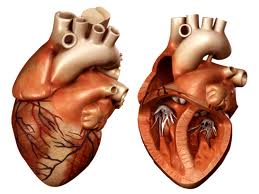
 LOUISVILLE, Ky. (AP) — It may sound far-fetched, but scientists are attempting to build a human heart with a 3-D printer.

Ultimately, the goal is to create a new heart for a patient with their own cells that could be transplanted. It is an ambitious project to first, make a heart and then get it to work in a patient, and it could be years — perhaps decades — before a 3-D printed heart would ever be put in a person.

The technology, though, is not all that futuristic: Researchers have already used 3-D printers to make splints, valves and even a human ear.

So far, the University of Louisville team has printed human heart valves and small veins with cells, and they can construct some other parts with other methods, said Stuart Williams, a cell biologist leading the project. They have also successfully tested the tiny blood vessels in mice and other small animals, he said.

Williams believes they can print parts and assemble an entire heart in three to five years.

The finished product would be called the “bioficial heart” — a blend of natural and artificial.

The biggest challenge is to get the cells to work together as they do in a normal heart, said Williams, who heads the project at the Cardiovascular Innovation Institute, a partnership between the university and Jewish Hospital in Louisville.

AOL AdAn organ built from a patient’s cells could solve the rejection problem some patients have with donor organs or an artificial heart, and it could eliminate the need for anti-rejection drugs, Williams said.

If everything goes according to plan, Williams said the heart might be tested in humans in less than a decade. The first patients would most likely be those with failing hearts who are not candidates for artificial hearts, including children whose chests are too small to for an artificial heart.

Hospitals in Louisville have a history of artificial heart achievements. The second successful U.S. surgery of an artificial heart, the Jarvik 7, was implanted in Louisville in the mid-1980s. Doctors from the University of Louisville implanted the first self-contained artificial heart, the AbioCor, in 2001. That patient, Robert L. Tools, lived for 151 days with the titanium and plastic pump.

Williams said the heart he envisions would be built from cells taken from the patient’s fat.

But plenty of difficulties remain, including understanding how to keep manufactured tissue alive after it is printed.

“With complex organs such as the kidney and heart, a major challenge is being able to provide the structure with enough oxygen to survive until it can integrate with the body,” said Dr. Anthony Atala, whose team at Wake Forest University is using 3-D printers to attempt to make a human kidney.

The 3-D printing approach is not the only strategy researchers are investigating to build a heart out of a patient’s own cells. Elsewhere, scientists are exploring the idea of putting the cells into a mold. In experiments, scientists have made rodent hearts that beat in the laboratory. Some simple body parts made using this method have already been implanted in people, including bladders and windpipes.

The 3-D printer works in much the same way an inkjet printer does, with a needle that squirts material in a predetermined pattern.

The cells would be purified in a machine, and then printing would begin in sections, using a computer model to build the heart layer by layer. Williams’ printer uses a mixture of a gel and living cells to gradually build the shape. Eventually, the cells would grow together to form the tissue.

The technology has already helped in other areas of medicine, including creating sure-fitting prosthetics and a splint that was printed to keep a sick child’s airway open. Doctors at Cornell University used a 3-D printer last year to create an ear with living cells.

“We’re experiencing an exponential explosion with the technology,” said Michael Golway, president of Louisville-based Advanced Solutions Inc., which built a printer being used by Williams’ team.

___

Follow on Lovan on Twitter: @dylanlovan

Leave a comment

Filed under Humor and Observations

10 Incredible Cutting-Edge Technologies In Development

10 Incredible Cutting-Edge Technologies In Development

Mike Floorwalker August 29, 2013

Don’t give up on flying cars or hoverboards just yet! As technology marches relentlessly on, everything goes into development sooner or later—as demonstrated by the existence of these things, which we’ll almost certainly see within our lifetimes.

10 Artificial Gills

Freediving - Guillaume Nery Prepares for World Record Attempt

Inventors have long sought an underwater breathing apparatus that doesn’t store oxygen, but extracts it from the water the way gills do. Israeli inventor Alon Bodner has come close.

The device, aptly named LikeAFish, works by using a centrifuge to lower the pressure of water within an airtight chamber. Since only a little oxygen is contained in water, the device must move about 190 liters (50 gallons) per minute in order for the average person to breathe comfortably. Despite this, the only real barrier to implementation is size and weight, but it’s close enough that the device has been under consideration for military use for several years now.

Such a system would obviously allow for longer “bottom time” without the need for refilling oxygen and would decrease the amount of nitrogen the diver is exposed to. According to Bodner’s website, the company spent 2012 “quietly designing a prototype to be installed on board a naval submarine,” so they may be very close to solving the size and weight issues of previous prototypes.

9 Agricultural Robots

Robot Farm

Agricultural robotics are, somewhat surprisingly, still in their infancy. While unemployment seems to be leveling off, there is still talk of a possible general labor shortage in the near future—particularly in agriculture. Many companies worldwide are attempting to bring various types of robot farmhands to market, but in robotics (where government and academic projects still lead the way) it tends to take longer than in some other, more commercial industries for such projects to obtain funding, produce a product, and prove its viability.

But the technology is coming along, and it’s easy to imagine it implemented on a wide-scale basis before too long. One Boston company that was able to raise nearly $8 billion in private funds in 2011 has developed a robot that it claims could perform 40 percent of the manual labor currently performed on farms. A Japanese research company has developed a robot that performs stereo imaging of strawberries to determine their ripeness before picking them, and MIT has a cherry tomato garden that is managed by a small crew of robots equipped with vision sensors. Of course, the main advantage to robot farm workers is the fact that they can work around the clock and never get tired.

8 Sunscreen Pills

Sunburn

An effective sunscreen that can be administered orally has been sought after for some time now. One doctor claims that a fern extract, containing the compound polypodium leucotomos, can act as such. He cites a human study showing less sun damage to the skin of those who were administered the active ingredient (though he did have to admit that there were only 12 people involved).

Also promising is a study at King’s College in London, which has determined a method by which coral protects itself from UV rays through its relationship with a symbiotic algae that lives within it. The algae produces a chemical compound which is converted by the coral into its own UV-blocking sunscreen, benefiting not only the coral and the algae but also the fish that feed on the coral. This transference has led scientists to believe that if the compound can be isolated, it could potentially be modified into a human oral sunscreen that would protect both the skin and the eyes. Said Dr. Paul Long, head of the three-year project, “There would have to be a lot of toxicology tests done first but I imagine a sunscreen tablet might be developed in five years or so. Nothing like it exists at the moment.”

7 Paper-Thin, Flexible Computers and Phones

Flexible computer pic WEB

In early 2013, consumer electronics shows debuted a prototype by European firm Plastic Logic of a product called the Papertab. That would be a portmanteau of “paper” and “tablet” and it is pretty much what it sounds like: a fully functional, touch screen tablet computer that is not only as thin as a sheet of paper, but as flexible as one too, and possesses the same reflective qualities. The company envisions such machines being ubiquitous within five to 10 years, as they could be inexpensive and interactive. A consumer could have several lying around, multi-tasking with different media all in service of one project.

A joint project between two American and Canadian universities has been creatively dubbed the Paperphone. Queens University director Dr. Roel Vertegaal has largely the same vision of the project. “This is the future,” he says. “Everything is going to look and feel like this within five years.” The machine is the size of a regular smartphone, with a 9.4-centimeter (3.7 in) display, but again, paper-thin and flexible. Users can give the phone commands by using “bend gestures.” It consumes no power when not in use and is considerably harder to damage than an ordinary phone.

6 Tooth Regeneration

TEETH

Regeneration of body parts in humans seems permanently consigned to the realm of science fiction, even though many species of animals are able to completely regrow lost parts. It’s long been known that alligators are able to regrow lost teeth, for example, but it was assumed to be a cyclical process, like snakes shedding their skin periodically. Scientists have recently discovered that this is not the case: An alligator’s tooth will grow back automatically to replace a lost one. This is quite significant because the structure of alligators’ teeth is pretty similar to ours.

The problem has been that the inner areas of teeth contain living tissue known as “pulp” that doesn’t grow back. But the solution may have been found in stem cells: Scientists in multiple countries are trying to figure out how to get them to produce the correct tissues and structure for the given situation on demand. A University of Utah study in November 2012 confirmed that this could be done in a lab.  Perfection of this technology could result in the potential end of tooth decay, gum disease, fillings, and root canals.

5 Holographic TV

3d-holographic-projection-car

While Ultra High Definition TV is on the way, there are really only so many pixels you can cram into a flat display—most existing models are 214-centimeter (84 in) monsters for that very reason. But the next generation of TVs, if you can call them that, won’t have screens so much as they’ll have a viewing area. As seen above, it could be a desktop display, or it could be an entire room—but holographic displays are definitely in the works.

Researchers at MIT, who are apparently good at the cutting-edge technology thing (hence the “T”), have created a chip that can support a holographic display of 50 gigapixels per second—enough to simulate real world objects, as reported in the journal Nature. Such amazing technology will have to wait to come to marketplace, though, until costs can be driven down—right? Well, says Michael Bove, head of MIT’s Object-Based Media group: “The technology itself is one that’s easy and inexpensive and, as far as we are aware and Nature is aware, has never been applied to displays before.” He foresees holographic displays on the market within 10 years—at the same cost as today’s regular, flat TVs. Another company, Provision, has built an inexpensive projector that displays a 45-centimeter (18 in) image. As of this writing, they’re working on ramping that up to a two-meter (six-foot) image, displayed by a unit the size of a toaster.

4 Real-Time Google Earth

Eye

At RAL Space in Oxford, scientists are building two video cameras quite unlike any other. Meter-long tubes packed with electronics and mirrors, these cameras are to be mounted to the outside of the International Space Station. But their purpose isn’t to capture images of space—they’ll be pointed toward the Earth. And while the resolution won’t be great (roughly a meter per pixel) it will be a real-time, streaming, live video of the entire planet.

Meanwhile, some Georgia Tech researchers are taking a slightly different approach toward the same ends. They take footage from the many live video feeds around the world and use it to layer complex animations on top of Google Earth, sometimes piecing together multiple camera angles to extrapolate the desired information. While currently focusing on people and cars, they’d like to add animals and weather conditions soon.

3 Wireless Electricity

ZAP ZAP ZAP

The notion of wireless electric power has been around far longer than one might think: Nikola Tesla might have perfected the technology a century ago if he had not been poor, unlucky, and kind of crazy. Many today are unaware that, even though it has obviously yet to be deployed en masse, wireless power transfer actually exists.

Wireless device charging has been around for some time, and continues to improve. Companies like Witricity are at work developing electric “hubs” that can power your entire house. Their prototype is called “Prodigy” and is based on research done by physicist Marin Soljacic of MIT. It works by exploiting the fact that certain frequencies of electromagnetic waves facilitate ease of energy transfer, and two objects resonating with such a frequency can easily transfer electricity between them, even at some distance and even if the objects are metal. When perfected (which many see coming within the next decade), it could bring about an end to batteries as we know them.

2 Ultra–High Speed Tube Trains

;adfjlga;gf

Magnetic levitation, or Maglev, trains have been in development for quite some time. In Japan, a recent successful test run means that plans are underway to connect the whole country by 2045 with trains capable of reaching over 480 kph (300 mph). They accomplish this by removing the wheels—and thereby, contact and friction—from the equation. Maglev trains levitate above the track, suspended by an electromagnetic field. And while the Japanese model is impressive, one company in the small Colorado town of Longmont is upping the ante by eliminating another barrier to shattering speeds: namely, wind resistance.

To be fair, eliminating this factor doesn’t so much up the ante as it blows up the entire house containing the card table. Daryl Oster of ET3 says that his company’s concept, called the Evacuated Tube Transport, is the future of transportation, and it very well may be. Its track is contained within a sealed, pressurized vacuum tube, making the capsules conceivably capable of speeds up 6,500 kph (4,000 mph), all while subjecting the passenger to G-forces comparable to that of a leisurely ride on the highway and transporting them across the entire US in less than an hour. ET3 has built prototype capsules and, as of this writing, are searching for an appropriate stretch to build the first tube.

1 Sustainable Fusion Reactor

Fusion Reactor

Nuclear fission (the process by which nuclear power plants produce energy) is much easier to control than nuclear fusion (the process by which the sun burns, and nuclear weapons work). Small nuclear fusion reactors have been built, but a large-scale, sustainable fusion reactor has yet to be attempted—until now. A consortium of seven member bodies (the US, EU, Russia, China, Japan, South Korea, and India) has chosen a location in France to build the world’s first. And while even its champions concede it could be decades before it’s dispensing energy, nuclear fusion is cleaner and yields three to four times more power than fission.

The project is called ITER, for International Thermonuclear Experimental Reactor, and it is the second-largest cooperative international scientific endeavor (ranking behind only the Space Station). It will use a donut-shaped magnetic field to contain gases that will reach temperatures comparable to those at the core of the sun, in excess of 150 million degrees C (270 million F), and will produce 10 times more power than it consumes.

        Mike FloorwalkerMike Floorwalker’s actual name is Jason, and he lives in the Boulder, Colorado area with his wife Stacey. He enjoys loud rock music, cooking and making lists.


Leave a comment

Filed under Humor and Observations

US Navy ready to deploy laser system this summer; rail guns aren’t far behind

US Navy ready to deploy laser system this summer; rail guns aren’t far behind

Published February 17, 2014

Associated Press
  • Navy Laser Defense Testing illo

    The Maritime Laser Demonstration program will create a laser gun capable of targeting moving boats, unmanned aircraft, and even incoming missiles. (Northrop Grumman)

  • Navy Technology laser gun.jpg

    July 30, 2012: A laser weapon sits temporarily installed aboard the guided-missile destroyer USS Dewey in San Diego. The Navy plans to deploy its first laser on a ship in 2014, and intends to test an electromagnetic rail gun prototype aboard a vessel within the following two years. (AP Photo/U.S. Navy, John F. Williams)

  • Navy Laser Weapon

    The Directed Energy and Electric Weapon Systems Program Office of Naval Sea Systems Command fired a laser in 2010 and successfully tracked, engaged, and destroyed an unmanned aerial vehicle in an over-the-water combat representative scenario. (U.S. Navy)

  • Navy Laser Defense Testing photo

    The Navy set fire to a bobbing and weaving boat with a laser gun mounted to a cruiser in 2011 — a first-of-its-kind test that moved the prototype closer to reality. (ONR)

BATH, Maine –  Some of the Navy’s futuristic weapons sound like something out of “Star Wars,” with lasers designed to shoot down aerial drones and electric guns that fire projectiles at hypersonic speeds.

That future is now.

The Navy plans to deploy its first laser on a ship later this year, and it intends to test an electromagnetic rail gun prototype aboard a vessel within two years.

For the Navy, it’s not so much about the whiz-bang technology as it is about the economics of such armaments. Both costs pennies on the dollar compared with missiles and smart bombs, and the weapons can be fired continuously, unlike missiles and bombs, which eventually run out.

‘It fundamentally changes the way we fight.’

– Capt. Mike Ziv, program manager for directed energy and electric weapon systems

“It fundamentally changes the way we fight,” said Capt. Mike Ziv, program manager for directed energy and electric weapon systems for the Naval Sea Systems Command.

The Navy’s laser technology has evolved to the point that a prototype to be deployed aboard the USS Ponce this summer can be operated by a single sailor, he said.

The solid-state Laser Weapon System is designed to target what the Navy describes as “asymmetrical threats.” Those include aerial drones, speed boats and swarm boats, all potential threats to warships in the Persian Gulf, where the Ponce, a floating staging base, is set to be deployed.

Rail guns, which have been tested on land in Virginia, fire a projectile at six or seven times the speed of sound — enough velocity to cause severe damage. The Navy sees them as replacing or supplementing old-school guns, firing lethal projectiles from long distances.

But both systems have shortcomings.

Timeline

The military has spent years developing a variety of “directed energy” weapons. Here’s a look back at some key milestones:

Aug. 15, 2013: Boeing said blasts from its Thin Disk Laser surpassed 30 kilowatts, 30 percent beyond DOD standards — enough to do some serious damage.

Jan. 29, 2013: Following successful tests of 150-kilowatt lasers, the Pentagon announced plans for both the U.S. Air Force and U.S. Navy to carry out tests by 2014.

April 8, 2011: In a key test, a gun on a speeding cruiser successfully blasted a robotic boat bobbing in Pacific waters.

Feb. 18, 2011: A test blast from a “free-electron laser” set a new power record — a sustained 500 kilovolts of electricity.

June 3, 2010: Naval Sea Systems command successfully tracked, engaged, and destroyed several unmanned aircraft with a giant laser.

Lasers tend to loser their effectiveness if it’s raining, if it’s dusty, or if there’s turbulence in the atmosphere, and the rail gun requires vast amount of electricity to launch the projectile, said Loren Thompson, defense analyst at the Lexington Institute.

“The Navy says it’s found ways to deal with use of lasers in bad weather, but there’s little doubt that the range of the weapon would be reduced by clouds, dust or precipitation,” he said.

Producing enough energy for a rail gun is another problem.

The Navy’s new destroyer, the Zumwalt, under construction at Bath Iron Works in Maine, is the only ship with enough electric power to run a rail gun. The stealthy ship’s gas turbine-powered generators can produce up to 78 megawatts of power. That’s enough electricity for a medium-size city — and more than enough for a rail gun.

Technology from the three ships in that DDG-1000 series will likely trickle down into future warships, said Capt. James Downey, the program manager.

Engineers are also working on a battery system to store enough energy to allow a rail gun to be operated on warships currently in the fleet.

Both weapon systems are prized because they serve to “get ahead of the cost curve,” Ziv said.

In other words, they’re cheap.

Each interceptor missile aboard a U.S. Navy warship costs at least $1 million apiece, making it cost-prohibitive to defend a ship in some hostile environments in which an enemy is using aircraft, drones, artillery, cruise missiles and artillery, Thompson said.

With a laser operating on about 30 kilowatts of electricity — and possibly three times that in the future — the cost amounts to a few dollars per shot, Thompson said.

The “Star Wars” analogy isn’t a bad one.

Just like in the movies, the Navy’s laser directs a beam of energy that can burn through a target or fry sensitive electronics. Unlike the movie, the laser beam is invisible to the human eye.

The targeting system locks onto the target, sending a beam of searing heat. “You see the effect on what you are targeting but you don’t see the actual beam,” Ziv said.

Other nations are developing their own lasers, but the Navy is more advanced at this point.

Most folks are stunned to learn the technology is ready for deployment, Ziv said.

“It’s fair to say that there are other countries working on this technology. That’s safe to say. But I would also say that a lot of what makes this successful came from the way in which we consolidated all of the complexity into something that can be operated by (a single sailor),” he said.

Leave a comment

Filed under Humor and Observations

MIT students develop wearable cooling device that could make air conditioning obsolete

MIT students develop wearable cooling device that could make air conditioning obsolete

By Drew Prindle

Published November 03, 2013

Digital Trends
  • wristify-mit
    MIT

We come across quite a lot of cool technology, but it’s not every day that we find something that can literally cool you down.

Developed by four engineering students at MIT, Wristify is a prototype wearable device that leverages the physical phenomenon known as the Peltier effect to reduce your body temperature.

The Peltier effect, named for French physicist Jean Charles Athanase Peltier who discovered it in 1834, describes the phenomenon of heating or cooling caused by an electric current flowing across the junction of two different conductors. As the current moves from one conductor to another, the transfer of energy causes one side to heat up and the other to cool down.

Wristify is basically a series of these junctions (called a Peltier cooler) powered by a small battery and attached to a wrist strap. When placed against the skin, the device makes you feel cooler by reducing the temperature of your wrist a few fractions of a degree per second for a couple seconds at a time. Over the course of a few minutes, this process will cause you to perceive a whole-body cooling of a couple degrees Celsius.

The team developing the device is still tinkering with it to figure out the optimal cooling cycle, but at this point in time they say the most effective method is to cool your wrist by 0.4 degrees Celsius (0.7F) per second for five seconds, and then turn off for 10 seconds.

The chief benefit of this device is that it offers a more personalized approach to temperature control, one that’s vastly more efficient than current heating and cooling methods. It takes millions of watts to raise or lower the temperature of an entire building, but Wristify can run on a small lithium battery. If everybody had one of these things on their wrist instead of relying on air conditioning or heaters all the time, the potential energy savings could be massive.

Of course, it’s still just a prototype, but the idea recently won the $10,000 top prize in MIT’s annual Making And Designing Materials Engineering Competition, and the team plans to put all that cheddar toward further development of the device.

Leave a comment

Filed under Humor and Observations

Tongue-controlled wheelchairs

Tongue-controlled wheelchairs prove effective for quadriplegic patients

By Loren Grush

Published November 27, 2013

FoxNews.com
  • Tongue Drive System 1.jpg

    Jason DiSanto receives a tongue implant to test the Tongue Drive System. (GARY MEEK)

  • Tongue Drive System 2.jpg

    Jason DiSanto tests out the Tongue Drive System (GARY MEEK)

  • Jason DiSanto.jpg

    Jason DiSanto poses with the sip-and-puff-system (GARY MEEK)

For patients who no longer have the use of their limbs and torso, life must be navigated through a powered wheelchair – which users often control by blowing into a plastic straw to execute basic functions.

But now, a novel technology may soon allow patients with quadriplegia to better control their wheelchairs by utilizing a surprising new body part: the tongue.

Called the Tongue Drive System, the method involves implanting a magnetic stud into patients’ tongues, allowing them to use the muscle as a joystick for their wheelchairs. Sensors in the stud relay the tongue’s position to a headset placed on the patient’s head, which communicates one of six basic functions for the wheelchair to perform.

The system allows users to not only control their wheelchair, but also surf a computer, use a cellphone, turn on a television and much more.

“One of the main advantages of the tongue is that it is directly connected to the brain through cranial nerves, as opposed to the rest of the body,” Maysam Ghovanloo, an associate professor in the school of electrical and computer engineering at Georgia State Institute of Technology and the creator of the system, told FoxNews.com. “Everything from the neck down is controlled through the spinal cord, so if the spinal cord is damaged, everything below that level becomes paralyzed… But even people with the highest level of spinal cord injury, they maintain their tongue motion.”

Currently, the conventional method used by quadriplegic patients for wheelchair control is the sip-and-puff system.  Through a plastic tube mounted on the wheelchair, users either sip or puff air to dictate what they want the chair to do.  However, the sip-and-puff system can only execute four basic commands, and many patients feel it can be cumbersome and awkward.

“The problem with the sip-and-puff system – even though it’s low cost and easy to use – it’s very slow.  It works like a Morse code; you have to enter these commands in a series,” Ghovanloo said.  “…It’s also mounted on the wheelchair, so when a patient is transferred from wheelchair to wheelchair or from wheelchair to bed, it needs to be transferred with them, or they need another one set up there.

To showcase the benefits of the Tongue Drive System, Ghovanloo has teamed up with scientists from the Shepherd Center in Atlanta and the Rehabilitation Center Institute in Chicago, in order to test the technology on quadriplegic patients at the rehabilitation center.  In earlier clinical trials, the researchers tested a removable version of the magnetic stud, which was attached to the tongue through an adhesive.  However, the adhesive was only temporary and had to be reapplied every one to two hours.

But in the most recent trial, published Nov. 27 in the journal Science Translational Medicine, researchers experimented with a more permanent option, by implanting the magnetic stud through a piercing in the tongue.

“It was the first time a tongue piercing had been performed as a medical procedure,” Joy Bruce, manager of Shepherd Center’s Spinal Cord Injury Lab and co-author of the study, told FoxNews.com.  “A lot of extra care was given to the procedure, but what we discovered is that the tongue piercing risks for this population is the same for the general population.”

Jason DiSanto was the first of 11 quadrapleigic patients to get his tongue pierced in order to test the new technology.  DiSanto has worked at the Shepherd Center since 2009, after a diving accident left him paralyzed from the neck down. He said that he is excited about Ghovanloo’s system, as his current system can be difficult to manage.

“My biggest thing is that the current system I’m using is quite limited in functionality, and also it takes a while to get used to the commands, so there’s a big learning curve,” DiSanto told FoxNews.com.  “Whereas the Tongue Drive System does not have such a huge learning curve; it’s quite intuitive. It’s also more functional than my current system.”

The research team had the subjects perform a set of tasks in a controlled hospital environment, including driving a wheelchair through a course, moving a cursor on a computer screen, operating a cellphone and more.  A control group of able-bodied study participants also had the tongue stud implanted and were required to perform the tests as well.

The experiments were repeated over five weeks for the control group and over six weeks for the quadriplegic group.  For the first time, the researchers showed that the patients with quadriplegia could maneuver their chairs much more easily and much faster with the Tongue Drive System than with the sip-and-puff system.

“As a matter of fact, [the patients] were a little upset that they could not use the system after the end of the trial,” Ghovanloo said. “…I know at least two of them have still kept their tongue ring… so they can receive the device as soon as it’s available.  We did a questionnaire at the end of the trail, and their responses were almost unanimously positive.”

While the Tongue Drive System still requires regulatory approval, Ghovanloo has created a startup company called Bionic Sciences in order to move the technology forward.  He has also teamed up with DiSanto, who has worked as an electrical engineer for 17 years, to develop a more internal tongue control system – one that replaces the outside headgear with a sensor-filled retainer that can fit inside the mouth.

DiSanto said he is excited for the future of this technology, hoping that one day he can utilize it outside of the hospital and incorporate it into his daily routine.

“Having one system that can perform multiple functions will be a huge boost of confidence,” DiSanto said. “It will help us feel more like ourselves before we were injured.”

Leave a comment

Filed under Humor and Observations

Human Regenerator That Controls Aging

German Company Develops Human Regenerator That Controls Aging
Anti-Aging Human Regenerator Pod

Scientists have struggled for a very long time to get a hold of this thing we all go through which is aging. Medicine and hygiene have added about 20-30 years to the average lifespan since a couple hundred years ago, but we want more life it seems. While some scientists focus on the human building blocks (our DNA) others are focusing on healing our body. A German company recently announced a new product called Human Regenerator that can control aging.

The company, System 4 Technologies Gmbh recently showcased their “pod” at the World Luxury Expo held at the Abu Dhabi’s Emirate palace. This Human Generator looks like something out of a science fiction movie, and its purpose is somewhat like it too. By utilizing a unique technology by the name of Quantum Cell Code, humans are apparently able to control aging. However, don’t be fooled, you can’t stop aging altogether, but it is said that the apparatus can rejuvenate the cells in your body and at least slow it down.

So what is this thing and how does it accomplish this almost holy grail-like miracle? Well, I will try to explain it to the extent that I understand it myself. The developers have used silicon and aluminum deposits which supposedly help create the anti-aging effect. The Human Regenerator imitates the body’s natural frequencies through quantum cell technology and longitudinal waves. Don’t ask me how but that’s as much as I understand.

Don’t expect this gadget to be cheap either. Unfortunately, it’s not for everyone. The basic modelwill have a price tag of $557,000 and only 50 units will be created. The one used at the Abu Dhabi expo was a promotional unit that had been pimped out with 6880 carats worth of diamonds, which sets the price tag for this particular unit at around $10 million. I guess if you want everlasting youth you will have to bust out the big wallet. Eternal youth is apparently not for the less fortunate ones, but we already knew this from the silver screen, didn’t we? – More information at Human Regenerator.

System 4 Technologies’ Human Regenerator

Anti-Aging Human Regenerator

Anti-Aging Human Regenerator

Author: Richard Darell

Richard Darell is the founder and CEO of Bit Rebels, a multifaceted online news outlet that reports daily on the latest developments in technology, social media, design and everything geek. Today this media entity welcomes more than 2.5 million unique visitors per month and is considered the go to place for people in constant motion. As an Internet entrepreneur, he is dedicated to constantly trying to develop new ways to bring content faster and closer to the end user in a more streamlined way. His excitement for statistics has allowed him to further develop systems that continuously produce accurate and fast-paced analytics to better optimize the approach by which Bit Rebels presents news and content. His graphic design background has proven to be an important tool when designing new systems and features for Bit Rebels since the development of solid and stable code depends entirely on their structure and implemented procedures. Richard currently resides in Stockholm, Sweden and directs the Bit Rebels offices in both Stockholm and Atlanta. You can reach Richard at richard@bitrebels.com

3 Comments

Filed under Humor and Observations

‘Biohacker’ implants chip in arm

If you are under 20 I am pretty sure you will see full on Trans-humans in your old age, in fact, you might become one.  The world has come along ways with prosthetic devices, biofeedback, joint replacements, transplants, blue tooths, hearing aids, and brain controlled robotics.  The synthesis of what we know as machine and human will not be the androids we have viewed in science fiction movies.  Instead, it will be humans ‘upgrading’ themselves both before and after birth.  Genetic tampering will produce a new type of human while flaws can be corrected in vitro or post partem.  

Currently, roughly 50% of Americans will die of heart failure.  Why keep your current heart if you could get a cybernetic alternative that you never have to worry will skip a beat?  Why not have two hearts if we can make them small so you have a back-up?  Early pioneers in this ‘trans-human’ change have already started.  The following story may be disturbing, but I find it more predictive than anything else. – Michael Bradley

‘Biohacker’ implants chip in arm

By Marc Lallanilla

Published November 04, 2013

LiveScience
  • biohackerchip.jpg

    Biohacker Tim Cannon had a battery-powered electronic device installed in his arm. (MOTHERBOARDTV/YOUTUBE)

Kids, don’t try this at home: A self-described “biohacker” had a big electronic chip almost as large as a deck of cards inserted beneath the skin of his arm. Without a doctor’s help. And without anesthetics.

Tim Cannon is a software developer from Pittsburgh and one of the developers at Grindhouse Wetware, a firm dedicated to “augmenting humanity using safe, affordable, open source technology,” according to the group’s website. As they explain it, “Computers are hardware. Apps are software. Humans are wetware.”

The device Cannon had inserted into his arm is a Circadia 1.0, a battery-powered implant that can record data from Cannon’s body and transmit it to his Android mobile device. Because no board-certified surgeon would perform the operation, Cannon turned to a DIY team that included a piercing and tattoo specialist who used ice to quell the pain of the procedure. [Super-Intelligent Machines: 7 Robotic Futures]

Now that the device is inserted and functioning, Cannon is one step closer to achieving a childhood dream. “Ever since I was a kid, I’ve been telling people that I want to be a robot,” Cannon told The Verge. “These days, that doesn’t seem so impossible anymore.”

The Circadia chip isn’t particularly advanced: All it does is record Cannon’s body temperature and transmit it to his cellphone over a Bluetooth connection. While this isn’t a huge improvement over an ordinary thermometer how analog! it does represent one small step forward in what will undoubtedly be a continuing march toward greater integration of electronics and biology.

Cannon is hardly the first individual to have technology implanted into his or her body just ask former vice president Dick Cheney (who had a battery-powered artificial heart implanted), or any dog with a microchip.

Some are referring to biohacking as the next wave in evolution. “I think that’s the trend, and where we’re heading,” according to futurist and sci-fi author James Rollins.

“There’s a whole ‘transhuman’ movement, which is the merging of biology and machine,” Rollins told LiveScience in an earlier interview. “Google Glass is one small step, and now there’s a Japanese scientist who’s developed the contact lens equivalent of Google Glass. And those are two things you put right on, if not in, your body. So I think we’re already moving that way, and quite rapidly.”

Cannon sees future refinements as being able to do more than just passively transmit information. “I think that our environment should listen more accurately and more intuitively to what’s happening in our body,” Cannon told Motherboard. “So if, for example, I’ve had a stressful day, the Circadia will communicate that to my house and will prepare a nice relaxing atmosphere for when I get home: dim the lights, [draw] a hot bath.”

Leave a comment

Filed under Humor and Observations