


Filed under Humor and Observations
By Tanya Lewis
Published October 25, 2013

The Carta Marina, made in 1516, relied on detailed knowledge from nautical charts and books. (COURTESY OF THE LIBRARY OF CONGRESS AND THE JAY I KISLAK FOUNDATION.)
NEW YORK – Not much is known about how Renaissance cartographer Martin Waldseemller created his 1516 “Carta marina” world map, possibly the most up-to-date conception of the world at the time.
But scholar Chet Van Duzer offered a rare peek into Waldseemller’s process Tuesday night (Oct. 22) during a talk here at the New York Public Library.
“A careful analysis of his sources allows us to go inside his workshop in Saint-Di [in France] and essentially watch him at work as he made the Carta marina,” Van Duzer, who is based at the Library of Congress, said in his talk. [See Photos of the Mysterious Carta Marina Map]
Van Duzer and his colleague John Hessler recently published a book on Waldseemller’s works entitled “Seeing the World Anew: The Radical Vision of Martin Waldseemller’s 1507 & 1516 World Maps,” (Levenger Press, 2012).
Waldseemller is best known for his 1507 world map, the first to call the New World “America.” The cartographer began his career, Van Duzer said, by basing his maps on those of the Alexandrine geographer Claudius Ptolemy from the second century A.D. These maps were based on geographic descriptions in books, rather than direct maritime knowledge.
But in making the Carta marina, printed just nine years later, Waldseemller abandoned his older sources in favor of contemporary nautical charts, maps of maritime regions and coastlines that seafaring explorers of the time would have used.
“When he came to create his new monumental world map, the Carta marina, Waldseemller made a choice between these two competing cartographic systems, the Ptolemaic tradition and the nautical chart tradition,” Van Duzer said “and he based his map on nautical charts.”
Waldseemller based the Carta marina‘s coastlines on a nautical chart made by Nicolo de Caverio of Genoa in about 1503. The two maps have similar coastal place names and layouts. For example, the shapes of Greenland, the eastern coast of South America and Africa are nearly identical.
One major difference is that the Carta marina omits a large part of northeast Asia and Japan probably because these regions were relatively unknown to European explorers, Van Duzer said.
Unlike the Caverio map, Waldseemller’s map is crowded with descriptive texts and illustrations of royal rulers.
The Carta marina depicts King Manuel of Portugal riding a sea monster near the southern tip of Africa, symbolizing Portugal’s control of the sea route between Africa and India. The image was most likely inspired by an image of Neptune riding a sea monster in Italian printmaker Jacopo de Barbaris print of Venice, Van Duzer said.
The map also includes an image of Noah’s Ark resting in the mountains of Armenia, probably based on similar images in other nautical charts of the time, Van Duzer said.
The Carta marina depicts India as a land of animalistic people and barbarism. For instance, there’s an image of “suttee,” the Hindu practice of a widow burning herself to death on the funeral pyre of her husband. Other less well-known areas, such as America, contain images of cannibalism.
Despite these seemingly outdated images, the Carta marina still represents a leap forward in cartography, because Waldseemller relied on much more updated sources than he did for his earlier 1507 map. In addition to nautical charts, Van Duzer’s analysis reveals, the Renaissance cartographer relied on books written by recent explorers.
“The Carta marina is Waldseemllers most original creation,” Van Duzer said. “He began his cartographic career by redrawing Ptolemy, but ended it by creating something entirely new, a mosaic image of the world with each stone of his own careful choosing.”
Filed under Humor and Observations
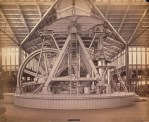
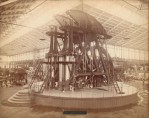
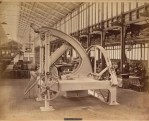
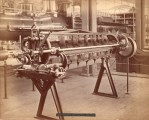
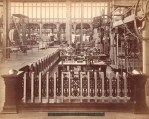
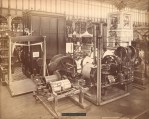
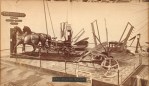
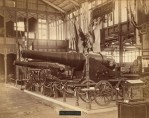
The Centennial in 1876 included the showcase of modern machinery in Philadelphia. Remember, there were no machines to speak of just 50 years earlier. Manpower, supplemented by horse power, was all there had been. The Age of Steam brought about the Industrial Revolution, created larger cities, factories and changed everything we know. The Civil War had ended just 12 years earlier and the Indian Wars were still going on. Every picture you see of a machine was made without machining tools, computers or even the ability to improve on earlier designs. The cross country railroad was being built but rails still suffered from a lack of standard gauge tracks. Electricity and oil had yet to prove themselves as the energy of the future and were just beginning to be explored.
1876: The Machinery Hall at the Centennial Exhibition Philadelphia
“During the Centennial year of 1876, Philadelphia was host to a celebration of 100 years of American cultural and industrial progress. Officially known as the “International Exhibition of Arts, Manufactures and Products of the Soil and Mine,” the Centennial Exhibition, the first major World’s Fair to be held in the United States, opened on May 10th.”
Click a photo to enlarge, then you can arrow left or right to see the rest in full screen.




















Filed under Humor and Observations

Filed under Humor and Observations
c. 1864:
Toselli Locomotive Coffee Maker


Filed under Humor and Observations
The exercise equipment in 1890 in some ways is similar to those today. They seem to have used more flywheels rather than weights or bands for resistance. Also, they wore pretty formal clothing for a work-out. Still, I wonder how our equipment will be viewed over 120 years from now.
1890s:
Zanders medico-mechanical gymnastics equipment


Equipment today.
Filed under Humor and Observations

A gold coin and three items inlaid with gold that adorned jewelry. (Assaf Peretz/Israel Antiquities Authority)

A cluster of Samaritan lamps found at the site. (Pavel Shargo/Institute of Archaeology, Tel Aviv University)

Bronze rings that were uncovered in the excavation. (Assaf Peretz/Israel Antiquities Authority)
The excavation site is located on the outskirts of the ancient Israeli city of Arsuf, just north of Tel Aviv. This is not the first discovery made at the site; archaeologists previously uncovered a large winepress and a miniature model of a Byzantine church from 500 A.D.
However, Professors Oren Tal and Moshe Ajami say their latest find is the most fascinating so far.
“The most intriguing find in the area is a number of Byzantine refuse pits,” Tal of Tel Aviv University and Ajami of the Israel Antiquities Authority (IAA) said in a statement. “One of them is especially large (more than 30 meters in diameter) and contained fragments of pottery vessels, fragments of glass vessels, industrial glass waste and animal bones.”
What stood out to Tal and Ajami was the large number of “usable artifacts” found in the refuse pit. This discovery “raises questions,” they said.
“This is very fascinating,” Tal told the Jerusalem Post. “You don’t expect [intact lamps] to be found in dumps and refuse, because they need to be used and they need to be sold. Our understanding is that there is some sort of probable cultic aspect of intentionally discarding usable and intact vessels among the Samaritan community that inhabited Apollonia in the late Byzantine period.”
A noteworthy find includes an octagonal ring with excerpts of versus from the Samaritan Pentateuch, a version of the Old Testament, engraved on both sides. One reads “Adonai is his name,” and the other side reads, “One God, and so on.”
“Approximately a dozen Samaritan rings have been published so far in scientific literature, and this ring constitutes an important addition given the assemblage in which it was discovered,” the archaeologists explained. The ring may indicate that the community was more religious than previously thought.
The excavation also helped shed light on who was living in the Arsuf area during the fifth and sixth centuries.
“We didn’t know that in this site we had so many Samaritan people in this period,” Tal told the Jerusalem Post. “It’s a huge community.”
Filed under Humor and Observations

British archaeologists have uncovered the remains of stone foundations in a pattern which suggests that there may have been a series of medieval buildings on a modern construction site. The mystery lies in exactly what the buildings were once used for. (Wessex Archaeology)

These medieval decorated floor tiles suggest that these were substantial buildings of high status. (Wessex Archaeology)

Somerset locals visit the site on July 13th to learn more about the mysterious medieval structure at Longforth Farm on Archaeology Day; hosted by Bloor Homes. (Rob Perrett/Wessex Archaeology)
The ancient site has been stripped of its materials except for the foundation — and there is no record of it ever existing.
Got chills? So do the archaeologists who discovered it.
“This is a significant find and therefore very exciting, particularly as there are no documentary records that such a site ever existed here,” said Wessex Archaeology’s senior buildings archaeologist Bob Davis, who participated in the excavation.
Excavators from the company arrived on April 8 at the site in Longforth Farm in Wellington, Somerset, a small agricultural county in southwest England. They planned to perform an archaeological dig prior to the construction of a housing development by Bloor Homes, as required by the Somerset Country Council.
PHOTOS: Ancient Maya Cave Exploration
They had no way of knowing their routine excavation would reveal a hidden series of buildings dating to the 12th through 14th century.
“Such things are as rare as hen’s teeth.”
– Bob Davis of Wessex Archaeology
“This sort of thing turning up — a large medieval building of such high status without any surviving historical records — it’s exceptionally mysterious and strange,” senior historic environment officer for the Somerset Country Council Steve Membery told ThisIsCornwall.co.uk.
“It looks as if it’s a previously unrecorded, undocumented, high-status, ecclesiastical manor house,” Davis told the British paper. “Such things are as rare as hen’s teeth.”
All that remains from what appears to have been an impressive, affluent mansion is the stone foundation and a few leftover artifacts. It is expected that antiquities thieves would steal valuables from the site, but archaeologists are literally picking at scraps to find out what happened to the doors, windows, stones and other materials that are to be found in a large manor.
They were able to uncover stunningly glazed ceramic roof tiles and carefully decorated floor tiles, however, suggesting the buildings were of high status, perhaps used for religious services.
But much like the American colony of Roanoke, N.C., whomever used the buildings left no trace or record of their existence; they appear to have simply vanished.
“We do not yet know who owned or used the buildings,” community and education officer for Wessex Archaeology Laura Joyner told FoxNews.com. “They appear to form a distinct complex of buildings.”
The most recent discovery has helped shed some light on the use for some of the structures.
According to Wessex Archaeology, the two tiles pictured below confirm the existence of private chambers and a possible chapel at the Longforth Farm site.

The tile on the left includes a checkered agent or shield motif, which possibly relates to the family name of St. Barbe, a medieval aristocratic British family. Centuries later, Ursula St. Barbe, the daughter of Henry St. Barbe from Somerset with the same last name, was a lady in the court of Queen Elizabeth I of England in the late 1500s.
RELATED: Ancient Graffiti Found in Rome’s Colosseum
The second tile, similar to one found at Glastonbury Abbey, is a depiction of a helmeted King Richard I (1189-1199) on horseback, charging his enemy. The tile “would originally have had an opposing tile showing Saladin, Sultan of Egypt, also in a symbolic combat pose,” according to Wessex Archaeology. “These two great adversaries were involved in the Third Crusade (1189–1192) and are often depicted together on this type of floor tile.”
Based on the artifacts, the owners of the buildings were wealthy and powerful. So what happened to those medieval VIPs?
The approximately 1,400 locals who flocked to the site when it opened to the public want to know as well.
“Hopefully, this fills in a missing bit of the jigsaw of medieval Somerset,” Davis added.
“Excavation is ongoing, but will come to an end next week,” Joyner confirmed to FoxNews.com. Wessex archaeologists hope to have more answers soon.
Filed under Humor and Observations
By Megan Gannon
Published July 24, 2013

A stained glass window at Cardiff Castle depicts King Richard III and Queen Anne Neville. (University of Leicester)

An intact stone coffin found in the ruins of Grey Friars, the monastery where Richard III was buried. (University of Leicester)

Feb. 4 2013: Remains found underneath a parking lot last September at the Grey Friars excavation in Leicester, which have been declared “beyond reasonable doubt” to be the long lost remains of England’s King Richard III, missing for 500 years. (AP Photo/ University of Leicester)
Excavators suspect the tomb billed as the only intact stone coffin found in Leicester may contain the skeleton of a medieval knight or one of the high-status friars thought to have been buried at the church.
Richard III, the last king of the House of York, ruled England from 1483 to 1485, when was killed in battle during the War of Roses, an English civil war. He received a hasty burial at the Grey Friars monastery in Leicester as his defeater, Henry Tudor, ascended to the throne. Grey Friars was destroyed in the 16th century during the Protestant Reformation, and its ruins became somewhat lost to history. [Photos: The Discovery of Richard III]
‘This is the first time we have found a fully intact stone coffin during all our excavations.’
– Mathew Morris, of the University of Leicester Archaeological Services
A dig beneath a parking lot in Leicester last summer revealed the remains of Grey Friars and a battle-ravaged skeleton later confirmed to be that of Richard III. Excavators also found a handful of other graves, including this coffin, which the researchers think was put in the ground more than 100 years before Richard’s burial.
This month, the team from the University of Leicester started a fresh excavation at the site. Now in their final week of digging, the researchers plan to open the coffin in the days ahead.
They think it might contain the remains of the knight Sir William de Moton of Peckleton, who died between 1356 and 1362, or one of two heads of the Grey Friars order in England, Peter Swynsfeld or William of Nottingham.
“Stone coffins are unusual in Leicester and this is the first time we have found a fully intact stone coffin during all our excavations of medieval sites in the city,” site director Mathew Morris, of the University of Leicester Archaeological Services (ULAS), said in a statement. “I am excited that it appears to be intact.”
Morris and his team intend to measure and take photos of the coffin before they lift the lid, which they say they will do out of view of the media.
Meanwhile, Richard’s remains are set to be reinterred next year. Last week, the Leicester Cathedral announced its $1.5 million ($1 million U.S.) plans to rebury the king in a new raised tomb at the church.
Filed under Humor and Observations

Lawrence LeBlond for redOrbit.com – Your Universe Online
First mentioned in two dialogues (Timaeus and Critias) by Plato in 360 BC, the legendary island of Atlantis has long been sought by historians, archaeologists, and explorers alike. Said to have originally existed between South America and Africa, this sunken island has been searched for in no less than dozens of locations worldwide, from Bimini to the Black Sea.
In a new twist, a team of scientists from Brazil and Japan say they have discovered their version of Atlantis, or at least an ancient piece of granite that was part of a continent that disappeared nearly a hundred million years ago when Africa and South America separated.
Brazilian “Atlantis,” as they are calling it, may actually have been part of the ancient supercontinent Pangaea. Pangaea formed about 300 million years ago during the late Paleozoic and early Mesozoic eras. It existed for more than 100 million years before beginning to break apart to form the continents as we see them today.
The researchers discovered the granite artifact more than 8,000 feet deep in a region known as the Rio Grande Elevation, about 900 miles of the coast of Rio de Janeiro, Brazil. The team said the granite is a natural formation that normally forms on dry land, which would offer evidence that the region was once above sea level.
The discovery was announced by the Geology Service of Brazil (CPRM) as a sign of a lost continent.
“This could be Brazil´s Atlantis,” said CPRM geology director Roberto Ventura Santos. “We are almost certain, but we need to strengthen this hypothesis.”
“It is unusual because it is granite rock,” he added. “And you don’t find granite on the seabed.”
The initial granite formation was discovered last year during seabed dredging by geologists. Just last month Japan offered undersea observations with its manned mini-sub Shinkai 6500 and reportedly found more granite formations.
Hiroshi Kitazato, the Japanese researcher who led the work for the Japan Agency for Marine-Earth Science and Technology (JAMSTEC), said in an interview with The Telegraph that the region was of interest to researchers.
“This is the region that has been least explored worldwide,” he told the paper´s Donna Bowater. “So, we believe it is very important to research it. Previously, the Shinkai carried out “‹“‹expeditions closer to Japan, the Indian and the Pacific Ocean.”
The current theory on the granite formations is that the area was once a large island or more likely part of the continental crust, in part because the materials uncovered are much different than the surrounding seabed. However, the researchers said further testing and analysis will be needed to make a solid confirmation. The scientists plan to drill for more samples later this year after they can gather geological and biological data from the samples they collected so far.
Although Santos has called the finding a piece of the “Brazilian Atlantis,” he explained that the remark is “more in terms of symbolism“¦ Obviously, we don´t expect to find a lost city in the middle of the Atlantic.”
“But if it is the case that we find a continent in the middle of the ocean, it will be a very big discovery that could have various implications in relation to the extension of the continental shelf,” he told The Telegraph.
The research has been carried out by the Brazilian Geological Service, the Oceanographic Institute of the University of Sao Paulo and the Japan Agency for Marine-Earth Science and Technology, which operated the Shinkai 6500 research sub.
Filed under Humor and Observations
 Michael Bradley - Time Traveler