Tag Archives: innovation

Science Just Invented a Simple, Painless Way to Get Superhuman Vision

Leave a comment

Filed under Humor and Observations

Ten photos of 3D printed bridges, buildings and other supersized structures

By , June 22, 2015, 6:20 AM PST // @nickjheath

If you thought 3D printers were only good for building tiny plastic toys then you’re mostly right, especially when it comes to desktop models.

However, there are people using the technology to realize grander designs, to create bridges and even buildings. Here are 10 projects promising to make 3D printing bigger and better.

bridge1

Bridges

A Dutch start-up, MX3D, plans to use robotic arms to weld layer upon layer of molten steel together into a steel bridge across a canal in Amsterdam. MX3D hopes to begin work on building the bridge, using the process seen in an artist’s impression above, in September.

Image: MX3D

3dbuilding

​Buildings

This five-storey building was built using a 150-meter long 3D printer, using “ink” made from recycled construction waste. When it was built earlier this year, the structure in Suzhou Industrial Park, Shanghai, China, was claimed to be the “world’s tallest 3D-printed building”.

Image: WinSun Decoration Design Engineering

moonbase

​Moonbases

This concept for a 3D-printed lunar base was devised by the European Space Agency with architects Foster+Partners. Their vision is for two robot 3D printers to mix lunar soil with other materials and layer it over an inflatable dome to form a protective shell over a moonbase, which could house four people.

Image: ESA

strati

Cars

The Strati is an electric car with a 3D printed body and chassis made of just 40 parts, compared to more than 20,000 in a typical vehicle. The vehicle is built from a single block of ABS plastic reinforced with carbon fiber and takes 44 hours to print. Manufacturer, Arizona-based Local Motors, says the car, due for release in 2016, will have a top speed of 50mph and range of about 62 miles.

Image: Local Motors

berkeley-bloom

Pavilions

This nine-feet high pavillion measures 12 by 12 feet across and is made up of 840 3D-printed bricks. The structure was made by researchers at UC Berkeley, who developed a new type of iron oxide-free Portland cement polymer formulation, which allowed for faster and lower cost construction than alternate materials for 3D-printing structures.

Image: UC Berkeley

room

Rooms

Even though it’s described as a house, this is at best a 3D-printed room, and a rather cosy one at that. The pod, created by students in the US and England, packs a toilet, kitchenette, and furniture into a compact structure. It took 60 hours for the voxeljet VX4000 printer to make and cost about €60,000.

Image: voxeljet

plane

Planes

This plane is full of 3D printed parts. This Airbus A350 XWB plane has more than 1,000 flight components made using high-end additive manufacturing 3D printers. The A350 XWB is Airbus’ extra wide body plane that seats about 315 passengers and has a range of 7,750 nautical miles. The parts were made out of ULTEM 9085 resin using an FDM 3D Production Systems machine.

Image: Airbus

rocket

Rockets

Satellite company Rocket Lab says its Rutherford rocket engine is the first of its type to use 3D printing for its primary components. All its parts – the regeneratively cooled thrust chamber, the injector, the pumps and the main propellant valves – can be printed from titanium alloys within about three days using a 3D printing technique called electron beam melting. Traditionally manufacturing the parts would take months, according to Rocket Lab.

Image: Rocket Lab

sculpture

Sizable sculptures

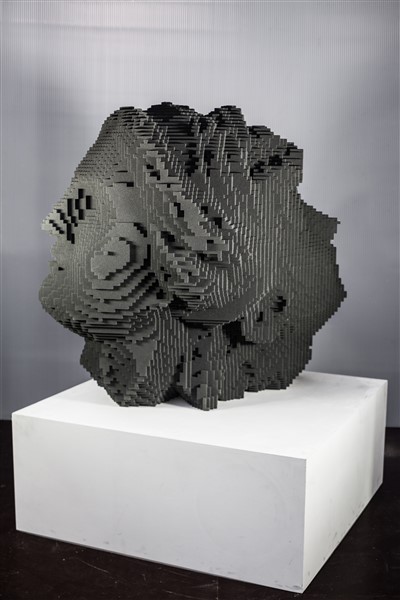
Resembling a Minecraft creation made real, this 3D-printed head by artist Miguel Chevalier depicts the Roman God Janus, who legend claimed could gaze into the past and the future at the same time. Printed in 40 hours as a single block using a voxeljet VX4000 printer, it weighs 120kg and measures 1000 x 1000 x 820 mm.

Image: voxeljet

minibuilder

Building bots

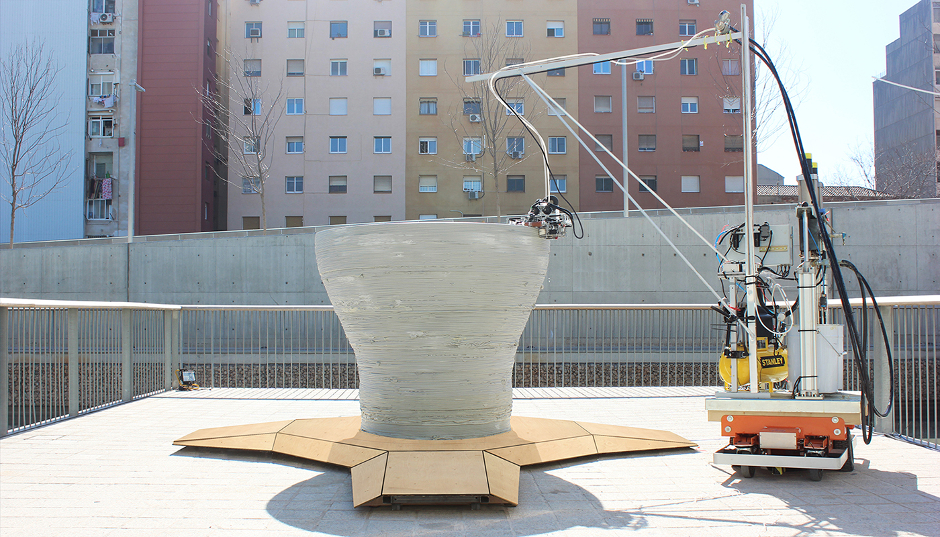
The Institute for Advanced Architecture of Catalonia claim their Minibuilder robots can construct large structures of many different proportions. The bots use robotic arms, rollers and vacuum suction cups to build layer by layer, as seen above.

Image: Institute for Advanced Architecture

About Nick Heath

Nick Heath is chief reporter for TechRepublic UK. He writes about the technology that IT-decision makers need to know about, and the latest happenings in the European tech scene.


1 Comment

Filed under Humor and Observations

Navy tests flying/undersea drone

FlyingWANDA.jpg

 (Naval Research Laboratory)

The U.S. Navy is working on a submarine-fighting drone that can operate both in the air and underwater.

The Flimmer (Flying Swimmer) is the brainchild of the Naval Research Laboratory. The drone, it says, can reach operational areas more quickly by flying over the surface of the water.

After successfully examining the performance of a “Test Sub” that combined a traditional submarine shape with a traditional aircraft shape, scientists  applied their findings to a flying version of the  NRL’s WANDA (Wrasse-inspired Agile Near-shore Deformable-fin Automaton ) drone.

According to the NRL’s Spectra magazine,  “Flying WANDA” has four fins and a wing, with the two aft fins mounted on the tips of the wing. Test flights confirmed Flying WANDA’s stability and control, and scientists have started testing the most effective “landing mode,” or splashdown, to protect the fin mechanisms.

“Experimentation with the Flying WANDA configuration continues,” wrote Dan Edwards of the NRL’s Electronic Warfare Division, who is leading the Flimmer project. “Future flights will explore the performance envelope using the fins as active control surfaces in the air and will continue the landing work.”

1 Comment

Filed under Humor and Observations

New life: Scientists create first semi-synthetic organism with ‘alien’ DNA

SCIENCE EDITOR

The researchers believe the breakthrough is the first step towards creating new microbial life-forms with novel industrial or medical properties resulting from a potentially massive expansion of genetic information.

The semi-synthetic microbe, a genetically modified E. coli bacterium, has been endowed with an extra artificial piece of DNA with an expanded genetic alphabet – instead of the usual four “letters” of the alphabet its DNA molecule has six.

The natural genetic code of all living things is based on a sequence of four bases – G, C, T, A – which form two sets of bonded pairs, G to C and T to A, that link the two strands of the DNA double helix.

The DNA of the new semi-synthetic microbe, however, has a pair of extra base pairs, denoted by X and Y, which pair up together like the other base pairs and are fully integrated into the rest of the DNA’s genetic code.

The scientists said that the semi-synthetic E. coli bacterium replicates normally and is able to pass on the new genetic information to subsequent generations. However, it was not able to use the new encoded information to produce any novel proteins – the synthetic DNA was added as an extra circular strand that did not take part in the bacterium’s normal metabolic functions.

The study, published in the journal Nature, is the first time that scientists have managed to produce a genetically modified microbe that is able to function and replicate with a different genetic code to the one that is thought to have existed ever since life first started to evolve on Earth more than 3.5 billion years ago.

“Life on earth in all its diversity is encoded by only two pairs of DNA bases, A-T and C-G, and what we’ve made is an organism that stably contains those two plus a third, unnatural pair of bases,” said Professor Floyd Romesberg of the Scripps Research Institute in La Jolla, California.

“This shows that other solutions to storing information are possible and, of course, takes us closer to an expanded-DNA biology that will have many exciting applications, from new medicines to new kinds of nanotechnology,” Professor Romesberg said.

Expanding the genetic code with an extra base pair raises the prospect of building new kinds of proteins from a much wider range of amino acids than the 20 or so that exist in nature. A new code based on six base pairs could in theory deal with more than 200 amino acids, the scientists said.

“In principle, we could encode new proteins made from new, unnatural amino acids, which would give us greater power than ever to tailor protein therapeutics and diagnostics and laboratory reagents to have desired functions,” Professor Romesberg said.

“Other applications, such as nanomaterials, are also possible,” he added.

The researchers emphasised that there is little danger of the new life-forms living outside the confines of the laboratory, as they are not able to replicate with their synthetic DNA strand unless they are continuously fed the X and Y bases – synthetic chemicals called “d5SICS” and “dNaM”, that do not exist in nature.

The bacteria also need a special protein to transport the new bases around the cell of the microbe. The transporter protein comes from algae and if it, or the X and Y bases, are lacking, the microbial cells revert back to the natural genetic code, said Denis Malyshev of the Scripps Institute.

“Our new bases can only get into the cell if we turn on the “base transporter” protein. Without this transporter or when the new bases are not provided, the cell will revert back to A, T, G, C and the d5SICS and the dNaM will disappear from the genome,” Dr Malyshev said.

Leave a comment

Filed under Humor and Observations

Soar through the air in this futuristic ‘invisible’ plane

  • Flying over any city has never been so cool.  Technicon Design Studio France

  • rteterte463463.jpg

    An exterior of the high- tech plane.Technicon Design Studio France

  • etertrete43463ppp.jpg

    Sunny skies all around.Technicon Design Studio France

  • tertert64pppp6.jpg

    The exterior cameras project images on the screens inside the cabin.Technicon Design Studio France

Who doesn’t a love a great view when soaring at 35,000 feet?

A new private plane design brings world class views to every passenger—without any windows.

Technicon Design’s Paris based team designed the jet to display to 360-degree views that are simulated on internal screens from external cameras that capture the surrounding environment in real time, according to the Daily Mail.

The images displayed in the interior cabin—including the walls and even the ceiling—give passengers the feeling of flying through the air in an invisible vessel.

For business minded clientele, the screens can also be used for video conferences. Or if you’re in the mood for a some entertainment, kick back and relax with a state of the art in flight movie. For claustrophobic passengers, the screens can also be used to project relaxing landscapes like a tropical beach.

Technicon Design created the design for a National Business Aviation Association and has since won an award at the International Yacht & Aviation Awards in the exterior design category.

“I challenged the team to break out of conventional thinking with regards to a business jet exterior and interior,” Gareth Davies, design director at Technicon Design’s studio near Paris, told the Daily Mail.

“We quickly settled on the controversial yet interesting idea of removing the windows from the cabin and using existing or very near future technology to display the exterior environment on flexible screens.”

A transparent plane might be a nightmare for some fearful travelers but if the design takes off, it will definitely one of the coolest ways to travel.

Take a look at the plane in action.

1 Comment

Filed under Humor and Observations

Thought-controlled planes are in our future

Thought-controlled planes are in our future

Why pilot a plane with your hands and feet when you can do it with your brain? Thought-controlled flight could be arriving soon, according to the EU-funded “BrainFlight” project.

A team of scientists from the Institute for Flight System Dynamics and the Berlin Institute of Technology says it has translated brain impulses into control commands, enabling pilots in a plane simulator to achieve a range of remarkably precise maneuvers without touching the controls or pedals.

Wearing a cap with lots of cables attached, pilots in the simulator were able to land a plane simply by looking at the screen and moving the control stick with their thoughts, correcting the plane’s position repeatedly until it landed.

To achieve the breakthrough, the researchers connected electroencephalography (EEG) electrodes to a cap to measure the pilot’s brain waves. An algorithm created by Berlin Institute of Technology scientists enabled a program to decipher the brain waves and convert them into commands fed into the plane’s control system.

Once it’s perfected, brain-controlled flight could reduce pilot workload and increase safety. Freeing up pilots’ hands would give them freedom of movement to manage other manual tasks in the cockpit.

The German team conducted its experiment using seven test subjects with a range of flight experience, including one who had no experience whatsoever.

The team reported that all seven, flying the plane only with their thoughts, managed to achieve accuracy that would meet some flying license requirements. Astonishingly, even the participants with little or no prior training succeeded in landing the planes.

One participant was able to follow eight out of 10 target headings with only an incredibly small 10-degree deviation. Another was able to land within only a few meters of the runway’s center line.

Some even managed their approach in poor visibility conditions.

Imagine what trained military pilots might be able to do with this technology.

In 2010, British researchers revealed that fighter pilots, despite being more sensitive to irrelevant and distracting information, have significantly greater accuracy on cognitive tasks. When scientists looked at MRI scans, they found that pilots have a white matter microstructure in the right hemisphere of their brains that is different from non-pilots’.

The German team’s achievement isn’t the first of its kind.

Last year, a team from the University of Minnesota announced that it had flown a model helicopter through an obstacle course using thought alone. As in the German system, electrodes were attached to the pilot’s scalp, and his brain waves were used to guide the aircraft.

Creating a mental image altered brain activity in the motor cortex, which was recorded by the electrodes. A computer program deciphered the signals and translated the pilot’s intent.

To move the helicopter in a particular direction, a user imagined clenching his or her hands. To go left, for example, the pilot pictured clenching the left hand. To go up, he clenched both hands.

Ultimately, the developers of the mind-controlled helicopter hope to adapt their technology to direct artificial limbs and other medical devices.

In another example, in 2010, a team at the University of Illinois at Urbana-Champaign announced it had flown an unmanned aircraft at a fixed altitude with the ability to adjust headings in response to the pilot’s thoughts.

What’s next?
The TU München scientists are now researching how control systems and flight dynamics must be altered to accommodate brain control.

For example, pilots flying with their hands feel resistance in steering. But this sort of feedback doesn’t happen in brain-controlled flying.

The next step is to find ways to provide this sort of critical feedback without physical contact.

Leave a comment

Filed under Humor and Observations

How does a $50 3D-printed hand match up to $42G prosthetic?

How does a $50 3D-printed hand match up to $42G prosthetic?

Published April 23, 2014·
FoxNews.com

Jose Delgado, Jr., 53, was born without most of his left hand and has been using prosthetic devices for decades. His current device, a myoelectric prosthesis, is valued at around $42,000.

Due to the high cost of prosthetics, groups like e-NABLE, comprised of a global community of volunteers, have been formed with the goal of providing free 3D-printed devices and parts for people in need.

Jeremy Simon, an e-NABLE volunteer and founder of 3D Universe, had an idea: make a 3D-printed mechanical hand using $50 worth of materials and see how it compares to the $42,000 prosthetic. The results were shocking.

“Certainly we’re not making an apples to apples comparison — these are entirely different kinds of devices — but the comparison I was trying to draw with Jose was strictly in terms of day-to-day functionality what’s more useful,” Simon told FoxNews.com. “It turned out [the 3D-printed] one was.”

Delgado Jr., who tested the device, told Simon the grip of the 3D-printed hand made it more functional in many cases than the more expensive prosthetic.

“It’s useful for carrying boxes,” Delgado Jr. said. “These are more grip and won’t let go of much.”

Simon found the design for the 3D-printed via e-NABLE.

“We’re talking about 3D designers, university professors, occupational therapists, medical professionals, all sorts of people are in this community and they all give completely freely of their time and efforts,” Simon said.

Simon hopes the 3D printing movement will continue to grow, and hopes philanthropic efforts like those of e-NABLE will thrive.

“As long as there’s still people willing to do this kind of work, the technology is going to continue to get more accessible and more affordable,” Simon said.

Leave a comment

Filed under Humor and Observations

Pocket Sized Printer Moves Across Page

Pocket-Sized Wonder-Printer Would Work Its Own Way Across a Page

O

Pocket-Sized Wonder-Printer Would Work Its Own Way Across a Page

With what has to be one of the most ambitious Kickstarter projects to come along in a while, the folks behind this Mini Mobile Robotic Printer want to revolutionize the mobile office. Because of instead of carrying a page-wide device that has to pull paper through it, this little marvel will instead print directly on a piece of paper while it rolls around on top of it.

The printer’s arrow-shaped design makes it easy to properly position on a page—you just need to make sure it starts in the upper left-hand corner of a piece of paper. It works on any sized piece of paper, but with a standard letter-sized sheet the current prototype can fill a page in just under a minute.

Pocket-Sized Wonder-Printer Would Work Its Own Way Across a PageSExpand

Its built-in ink cartridge is promised to churn though around 1,000 pages before needing to be replaced, but that’s assuming every page you print isn’t solid black. And at the moment the print quality is a less-than-amazing 96×192 dpi, but it’s claimed that that will be improved if and when the Mini Mobile Robotic Printer becomes a reality.

Its creators are currently trying to raise $400,000 on Kickstarter to make it a reality, but there are certainly some very steep roadblocks to making it reliable and accurate enough to be worth carrying around. You can reserve one for yourself with a donation of $180, but you’ll have to be patient since delivery isn’t expected until early January 2015 at best.

Admittedly, it’s a little hard to get excited over a printer, especially one that seems so implausible. But if this thing ever does see the light of day, it will certainly be a must-have addition to any road warrior’s kit. And if you only find yourself in need of a printer a few times a week, it has the potential to replace that giant gray box on your desk. [Kickstarter via Pocket-lint]

2 Comments

Filed under Humor and Observations

Special ops chief McRaven expects ‘Iron Man’ suit by 2018

Special ops chief McRaven expects ‘Iron Man’ suit by 2018

Sgt. 1st Class Matthew Oliver suits up in a futuristic combat uniform with a Tactical Assault Light Operator Suit-like look at the 2012 Chicago Auto Show.
U.S. Army
By                                                                                                                                                                                                                 Jon Harper

Stars and Stripes
  • Share
Published: February 11, 2014

Image_40614531.jpg

The Defense Advanced Research Projects Agency is working on the Warrior Web Project, which has many of the attributes of the Army’s Tactical Assault Light Operator Suit concept.
U.S. Army photo

WASHINGTON — Adm. William McRaven, the commander of U.S. Special Operations Command, expects special operators to be wearing Tactical Assault Light Operator Suits by 2018, he told attendees of a National Defense Industrial Association symposium Tuesday.

The TALOS, dubbed the ‘Iron Man’ suit, is the brainchild of McRaven. It is designed to enhance the survivability of personnel in the line of fire, and to enhance their physical capabilities.

“Several years ago during a hostage rescue operation in Afghanistan, a SOF (special operations forces) warrior was killed going through the door. Afterwards, one of the young officers asked me a question I couldn’t answer. He said, ‘after all these years in combat, why don’t we have a way to protect our operators going through the door?’ With all the advance in modern technology, I know we can do better. Consequently, at SOCOM we have established a program called … TALOS,” McRaven said.

TALOS is a collaborative effort involving 56 corporations, 16 government agencies, 13 universities, and 10 national laboratories.

“This unique collaboration effort is the future of how we should do business,” McRaven said.

Three unpowered prototype suits are being assembled and are scheduled to be delivered to SOCOM in June. The prototypes will inform the development of a deployable combat suit that should be ready by August 2018, McRaven said.

“That suit, if done correctly, will yield a revolutionary improvement in survivability and capability for special operators,” he said. “If we do TALOS right, it will be a huge comparative advantage over our enemies and give the warriors the protection they need in a very demanding environment.”

McRaven said that going forward, a greater portion of SOCOM funds should go to technology development and acquisitions at the expense of operations and training funds.

“Because of the nature of the fight over the last dozen-plus years, the [Operations and Maintenance] money has provided us the readiness, the training money. We had more of that, we focused more on that … but we got a little bit out of balance in terms of our long-term procurement [and] our long-term [Research and Development],” he said. “We’ve got to put this back into balance in terms of the share of the pie … We’ve got to be prepared to prepare for the future.”

Pivoting to personnel topics, McRaven said preserving the strength and health of the force is SOCOM’s highest priority, noting that a special emphasis will be placed on education and family programs, as well as decreasing the length of deployments and increasing the dwell time for special operators between overseas deployments.

McRaven said that by August, six-month deployments should be standard for tactical units. He wants the dwell time to decrease to a 1:2 ration, meaning when a special operator returns home from a deployment, he or she won’t have to deploy again for 12 months.

In terms of the future in Afghanistan, McRaven said the drawdown in SOF this year will be commensurate with the drawdown of U.S. and NATO conventional forces.

“No matter the size of our presence there next year, our future [military-to-military] engagements with the Afghans will remain vital in the region,” he said.

McRaven said the main focus of SOF going forward will be on training, advising and assisting the Afghan security forces.

When asked if any consideration was being given to training Afghan forces in other countries if the Afghan government doesn’t sign the Bilateral Security Agreement that would allow U.S. forces to stay beyond the end of this year, McRaven demurred.

McRaven said the drawdown in Afghanistan will enable SOCOM to send more special operators to other theaters, including Africa.

“We’ll be able to redistribute that force to support the geographic combatant commanders better; AFRICOM is no exception,” he said.

McRaven said that he wants to recruit people from communities that historically have been underrepresented in the SOF community.

“I don’t care what your gender is, what your orientation is, what your ethnic background is, if you meet the [SOF] standard, we welcome everybody. In today’s environment, frankly I am looking for more and more minorities,” he said. “In Africa, I would like to have some native Africans that are part of the U.S. military come and be part of the program. In Latin America, in Asia, where I can orient folks, I want to be able to do that.”

McRaven also wants to increase the number of women in SOF.

“We saw the great work that the women did for us in Afghanistan and Iraq,” he said. “I think we need to grow that number because I think we need more women as we begin to engage again in a lot of — in a lot of areas around the world” where it is considered inappropriate for men to interact freely with women … “You don’t want to eliminate our engagement with well over 50 percent of the population. That would be a bad approach tactically and strategically.”

Despite the budget challenges that the Defense Department faces, McRaven suggested that SOCOM will have enough money to do all the things it wants to do in the years ahead.

“We’ve spent the last, kind of, six or eight months making an argument to the Joint Staff and OSD on why we need to maintain a certain level of SOF support, and I think that argument resonates,” he said.

SOCOM accounts for 1.7 percent of the Defense Department budget.

McRaven said he goes to Capitol Hill about once a month to meet with lawmakers and promote SOCOM programs. He said his staffers are there every week.

“We’ve had great support from the Hill,” he said.

harper.jon@stripes.com Twitter: @JHarperStripes

Leave a comment

Filed under Humor and Observations

Western Digital unveils 6TB, helium-filled hard drive

Western Digital unveils 6TB, helium-filled hard drive

Published November 04, 2013

FoxNews.com
  • Western Digital USC7K1000.jpg

    A stack of platters and the read / write arms that pull data off of them in an ordinary hard drive. New helium-filled models from Western Digital pack in more platters yet draw less power. (WESTERN DIGITAL)

  • Air HDD vs HeliumHDD.jpeg
    WESTERN DIGITAL
  • Air HDD vs Helium HDD.jpeg

    New helium-filled hard disk drives from Western Digital pack in more platters yet draw less power. (WESTERN DIGITAL)

Western Digital had a problem: ordinary air.

Modern hard drives store data on five metal platters that spin at up to 15,000 revolutions per minute, so fast in fact that drag from the tiny amount of air they whistle through is a problem. But at one-seventh the density of air, helium provides far less resistance for those spinning disks, letting the company pack in more disks that require less power and therefore cost less to operate.

The company on Monday unveiled a 6 terabyte hard disk called the Ultrastar He6 that packs seven platters of data filled goodness into the space usually filled by five. The company says these helium-filled hard disks are the future.

“Our mainstream helium platform will serve as the future building block for new products and technologies moving forward. This is a huge feat, and we are gratified by the support of our customers in the development of this platform,” said Brendan Collins, vice president of product marketing, for the company.

Netflix appears to agree.

“We serve billions of hours of streaming video per quarter to over 40 million subscribers,” said David Fullagar, director of content delivery architecture at Netflix. “The high storage density and lower power usage of the Ultrastar He6 hard drives allow us to continue with that goal, and create a great customer experience.”

The new drive consumes 23 percent less power when idle, and it runs quieter. (It weighs less too, of course — fully 50 grams less, the company said.) The drives are hermetically sealed to keep the helium in, something the company said was an engineering challenge.

1 Comment

Filed under Humor and Observations