Tag Archives: prosthetics

Scientists create creepy lifelike faces with real human skin for robots

Future of robotics could include living skin for humanoid machines

By Kurt Knutsson, CyberGuy Report Fox News

Researchers from the University of Tokyo have developed a groundbreaking method to cover robotic surfaces with genuine, living skin tissue. The idea of robots with skin isn’t just about creating a more lifelike appearance. This innovation opens up a world of possibilities, from more realistic prosthetics to robots that can seamlessly blend into human spaces. 

As we delve into the details of this research, we’ll uncover how these scientists are bridging the gap between artificial and biological systems, potentially revolutionizing fields ranging from health care to human-robot interaction.
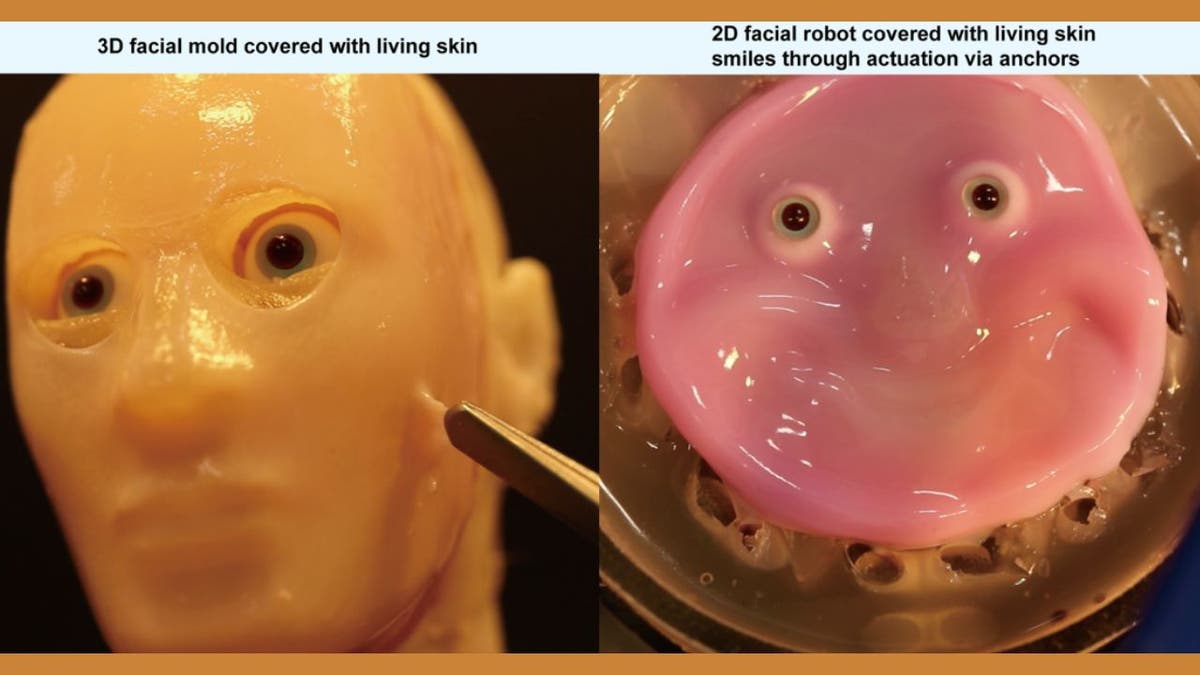
Scientists create creepy lifelike faces with real human skin for robots

Engineered skin tissue (Shoji Takeuchi’s research group at the University of Tokyo) (Kurt “CyberGuy” Knutsson)

What’s the big deal?

We’re talking about robots that not only look human-like but also have skin that can heal, sweat and even tan. This isn’t just about aesthetics; it’s about creating robots that can interact more naturally with humans and their environment.
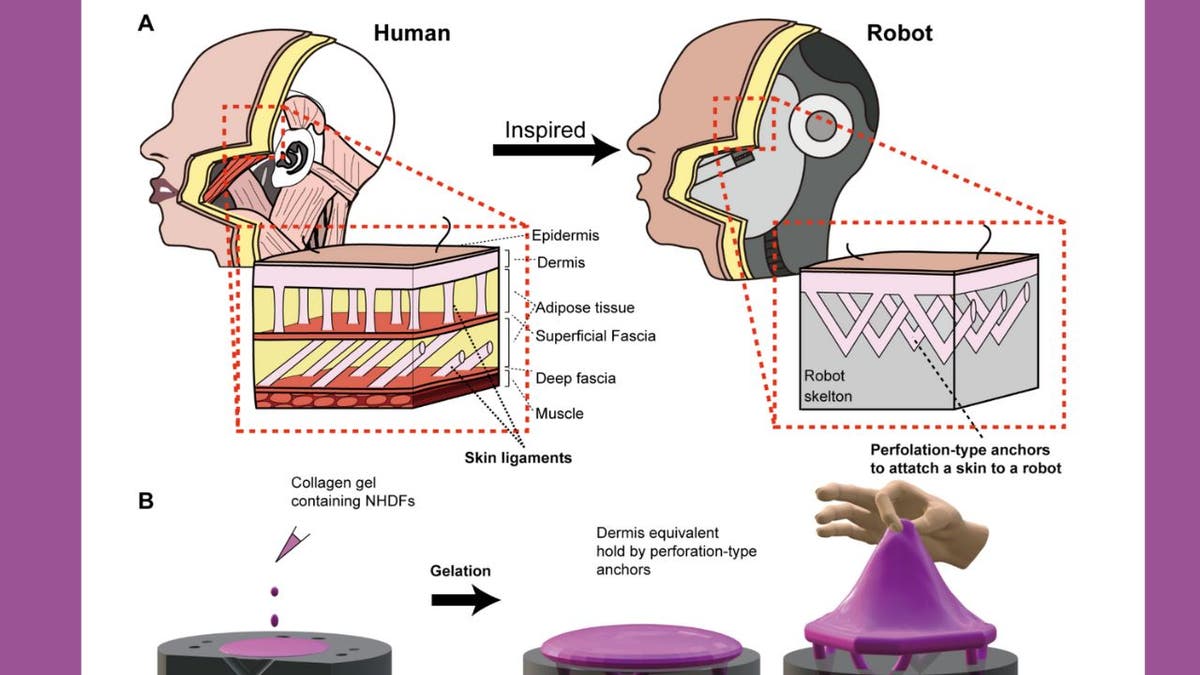
Scientists create creepy lifelike faces with real human skin for robots

Illustration of the tissue-fixation method (Shoji Takeuchi’s research group at the University of Tokyo) (Kurt “CyberGuy” Knutsson)

How does it work?

The secret lies in something called “perforation-type anchors.” These clever little structures are inspired by the way our own skin attaches to the tissues underneath. Essentially, they allow living tissue to grow into and around the robot’s surface, creating a secure bond.

The researchers used a combination of human dermal fibroblasts and human epidermal keratinocytes to create this living skin. They cultured these cells in a carefully prepared mixture of collagen and growth media, allowing the tissue to mature and form a structure similar to human skin.
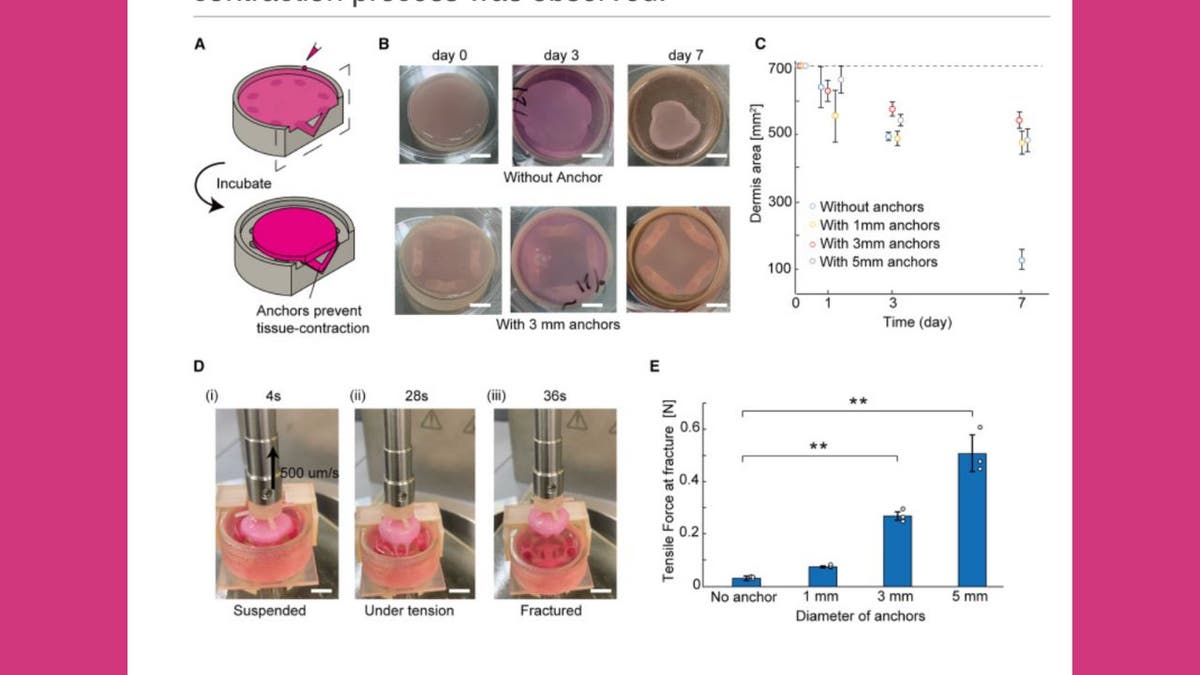
Scientists create creepy lifelike faces with real human skin for robots

Evaluation of the perforation-type anchors to hold tissue (Shoji Takeuchi’s research group at the University of Tokyo) (Kurt “CyberGuy” Knutsson)

The minds behind the innovation

This groundbreaking research was conducted at the Biohybrid Systems Laboratory at the University of Tokyo, led by Professor Shoji Takeuchi. The team’s work is pushing the boundaries of what’s possible in robotics and bioengineering.
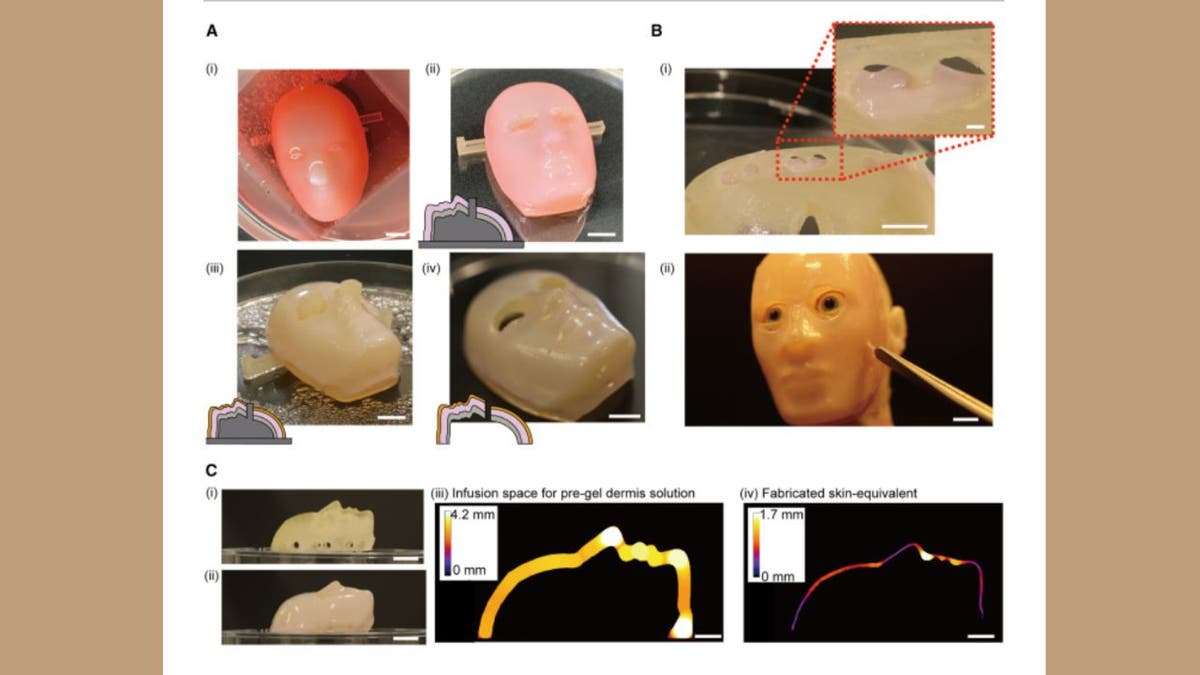
Scientists create creepy lifelike faces with real human skin for robots

Demonstration of the perforation-type anchors to cover the facial device (Shoji Takeuchi’s research group at the University of Tokyo) (Kurt “CyberGuy” Knutsson)

Building a face that can smile

One of the coolest demonstrations of this technology is a robotic face covered with living tissue that can actually smile. The researchers created a system where the skin-covered surface can be moved to mimic facial expressions.

To achieve this, they designed a robotic face with multiple parts, including a base with perforation-type anchors for both a silicone layer and the dermis equivalent. This silicone layer mimics subcutaneous tissue, contributing to a more realistic smiling expression.
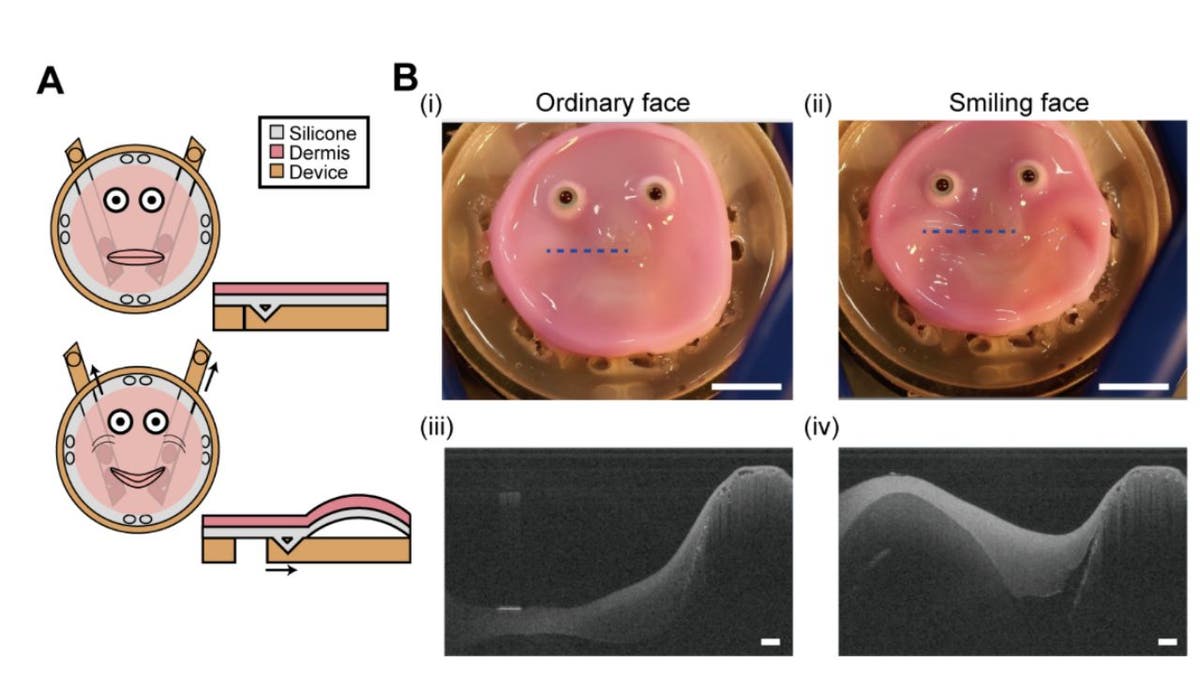
Scientists create creepy lifelike faces with real human skin for robots

The smiling robotic face (Shoji Takeuchi’s research group at the University of Tokyo) (Kurt “CyberGuy” Knutsson)

Challenges and solutions

Getting living tissue to stick to a robot isn’t as easy as it sounds. The team had to overcome issues like making sure the tissue could grow into the anchor points properly. They even used plasma treatment to make the surface more “tissue-friendly.”

The researchers also had to consider the size and arrangement of the anchors. Through finite element method simulations, they found that larger anchors provided more tensile strength, but there was a trade-off with the area they occupied.
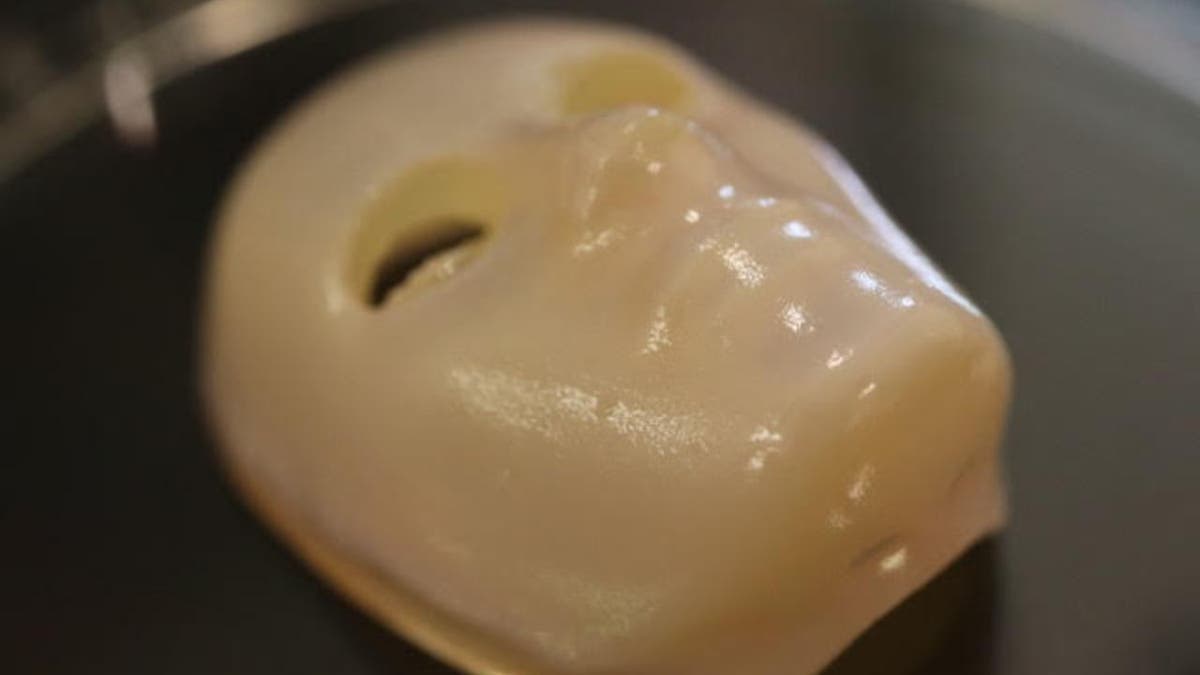
Scientists create creepy lifelike faces with real human skin for robots

Engineered skin tissue (Shoji Takeuchi’s research group at the University of Tokyo) (Kurt “CyberGuy” Knutsson)

Why this matters

This technology could be a game-changer for fields like prosthetics and humanoid robotics. Imagine prosthetic limbs that look and feel just like real skin or robots that can interact with humans in more natural ways.

The ability to create skin that can move and express emotions opens up new possibilities for human-robot interaction. It could lead to more empathetic and relatable robotic assistants in various fields, from health care to customer service.
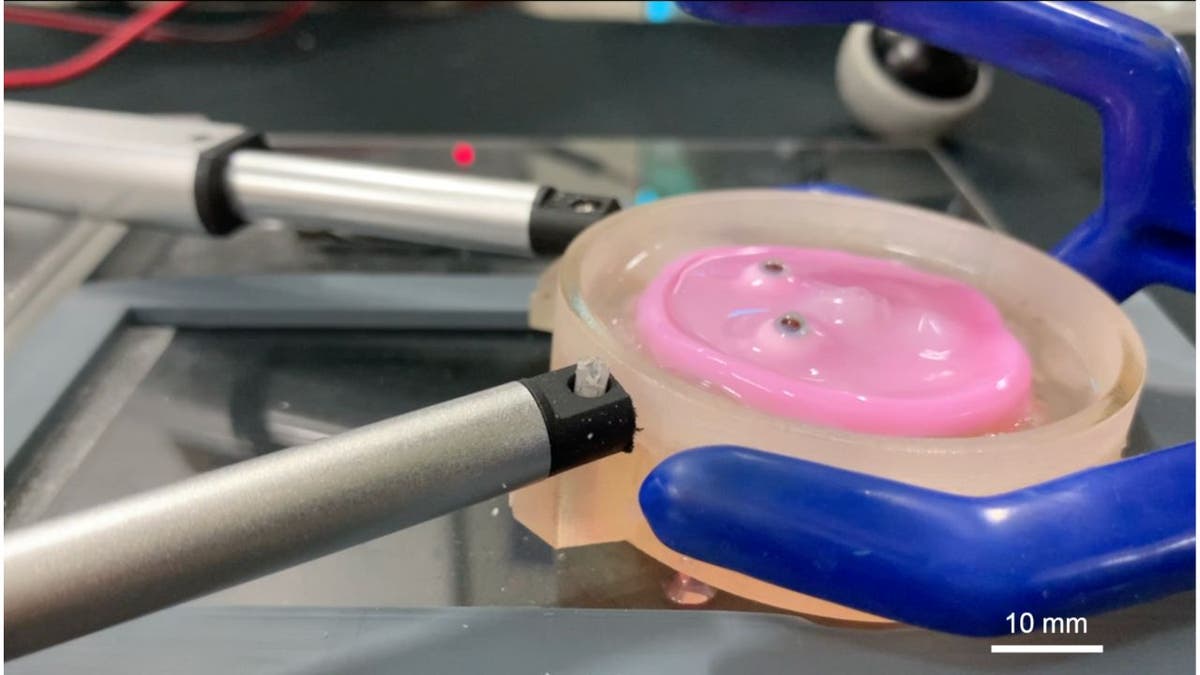
Scientists create creepy lifelike faces with real human skin for robots

The smiling robotic face (Shoji Takeuchi’s research group at the University of Tokyo) (Kurt “CyberGuy” Knutsson)

While we’re still a long way from seeing robots with fully functional living skin walking among us, this research from the University of Tokyo opens up exciting possibilities. It’s a step towards creating robots that blur the line between machines and living organisms.

As we continue to advance in this field, we’ll need to grapple with the technical challenges and ethical implications of creating increasingly lifelike machines. Future research might focus on improving the durability of living skin, enhancing its ability to heal or even incorporating sensory capabilities. One thing’s for sure: The future of robotics is looking more human than ever.

Leave a comment

Filed under Uncategorized

How does a $50 3D-printed hand match up to $42G prosthetic?

How does a $50 3D-printed hand match up to $42G prosthetic?

Published April 23, 2014·
FoxNews.com

Jose Delgado, Jr., 53, was born without most of his left hand and has been using prosthetic devices for decades. His current device, a myoelectric prosthesis, is valued at around $42,000.

Due to the high cost of prosthetics, groups like e-NABLE, comprised of a global community of volunteers, have been formed with the goal of providing free 3D-printed devices and parts for people in need.

Jeremy Simon, an e-NABLE volunteer and founder of 3D Universe, had an idea: make a 3D-printed mechanical hand using $50 worth of materials and see how it compares to the $42,000 prosthetic. The results were shocking.

“Certainly we’re not making an apples to apples comparison — these are entirely different kinds of devices — but the comparison I was trying to draw with Jose was strictly in terms of day-to-day functionality what’s more useful,” Simon told FoxNews.com. “It turned out [the 3D-printed] one was.”

Delgado Jr., who tested the device, told Simon the grip of the 3D-printed hand made it more functional in many cases than the more expensive prosthetic.

“It’s useful for carrying boxes,” Delgado Jr. said. “These are more grip and won’t let go of much.”

Simon found the design for the 3D-printed via e-NABLE.

“We’re talking about 3D designers, university professors, occupational therapists, medical professionals, all sorts of people are in this community and they all give completely freely of their time and efforts,” Simon said.

Simon hopes the 3D printing movement will continue to grow, and hopes philanthropic efforts like those of e-NABLE will thrive.

“As long as there’s still people willing to do this kind of work, the technology is going to continue to get more accessible and more affordable,” Simon said.

Leave a comment

Filed under Humor and Observations

Human Ear Made by 3D Printer

3D-printed ear created in lab

By Tanya Lewis

Published February 21, 2013

LiveScience

  • 3d-printed-ear1

    Mechanical engineer Larry Bonassar holds a fabricated ear printed with a 3D printer in his lab at Cornell University’s Weill Hall. (Lindsay France/Cornell University Photography)

  • 3d-printed-ear2.jpg

    A 3D printer fabricating an ear. (Lindsay France/Cornell University Photography)

With 3D printing, it seems the things you can make are limited only by your imagination. The latest innovation: a 3D-printed artificial ear. 
SUMMARY

Ear looks and functions like a normal human ear

Created by squirting a gel made of living cow ear cells and collagen into an injection mold

Current replacement ears often made from a patient’s harvested rib — a difficult and painful process


The ear, which looks and functions like a normal human ear, was created by squirting living cells into an injection mold. Over the course of three months, each ear grew cartilage in the shape of its mold. These ersatz ears could replace the ears of children with congenital deformities, researchers report online today (Feb. 20) in the journal PLOS ONE.

“A bioengineered ear replacement like this would also help individuals who have lost part or all of their external ear in an accident or from cancer,” co-lead author Jason Spector, a plastic surgeon at Weill Cornell Medical College in New York City, said in a statement. If the ears prove safe and successful, it could be possible to implant one in a human in as few as three years, Spector said.

Children with a deformity called microtia have an intact inner ear but an external ear that fails to develop fully, causing hearing loss. The prevalence ranges from slightly fewer than one to as many as four babies per 10,000 births, depending on the country. [The 9 Most Bizarre Medical Conditions]

The artificial ears were made by producing a digital 3D image of a child’s intact ear and feeding that into a 3D printer to produce an ear-shaped mold. Then the scientists injected a gel made of living cow ear cells and collagen (a substance used to make gelatin) into the mold, and out popped an ear.

The whole process took less than two days: half a day to design the mold, a day to print it, half an hour to inject the gel, and 15 minutes to allow it to set.

Then the researchers implanted the fabricated ears on the backs of rats, where the ears grew for one to three months. Creepy as it sounds, it isn’t the first time scientists have grown ears on rodents, as a model for naturally growing ears.

In medicine, current replacement ears are made from a Styrofoam-like material or by an Eve-like genesis out of a patient’s harvested rib. The latter is difficult and painful, and rarely produces an ear that works well or looks natural.

The advantage of 3D-printed replacement ears is that they could be made-to-order, using molds from the patient’s normal ear (if they have one) or from one of a person of similar size. The researchers are now working on growing human ear cartilage cells in the lab, which would reduce the chances of tissue rejection.

Read more: http://www.foxnews.com/science/2013/02/21/3d-printed-ear-created-in-lab/?intcmp=features#ixzz2LbJH8CJ2

Leave a comment

Filed under Humor and Observations, Uncategorized