Tag Archives: space

Water Found on Mars!

H2 oh my: NASA’s Curiosity rover finds water in Mars dirt

By Mike Wall

Published September 26, 2013

  • curiosity-mosaic-sol-85

    SA’s Mars rover Curiosity is a mosaic of photos taken by the rover’s Mars Hand Lends Imager taken on Sol 85, the rover’s 85th Martian day, as Curiosity was sampling rocks at a stop dubbed Rocknest in Gale Crater. Image released Sept. 26, 2013.(NASA/JPL-CALTECH/MALIN SPACE SCIENCE SYSTEMS)

  • curiosity-rocknest-closeup

    At left, a closeup view of the Mars rock target Rocknest taken by the Curiosity rover showing its sandy surface and shadows that were disrupted by the rover’s front left wheel. At right, a view of Mars samples from Curiosity’s third dirt scoop (SCIENCE/AAAS)

  • curiosity-chemin-science-result

    This image depicts the science result from the Mars rover Curiosity’s CheMin instrument, showing an X-ray diffraction of the rover’s fifth scoop of Martian dirt. The black semi-circle at the bottom is the shadow of the beam stop. Image released(SCIENCE/AAAS)

Future Mars explorers may be able to get all the water they need out of the red dirt beneath their boots, a new study suggests.

NASA’s Mars rover Curiosity has found that surface soil on the Red Planet contains about 2 percent water by weight. That means astronaut pioneers could extract roughly 2 pints of water out of every cubic foot of Martian dirt they dig up, said study lead author Laurie Leshin, of Rensselaer Polytechnic Institute in Troy, N.Y.

“For me, that was a big ‘wow’ moment,” Leshin told SPACE.com. “I was really happy when we saw that there’s easily accessible water here in the dirt beneath your feet. And it’s probably true anywhere you go on Mars.” [The Search for Water on Mars (Photos)]

The new study is one of five papers published in the journal ScienceThursday that report what researchers have learned about Martian surface materials from the work Curiosity did during its first 100 days on the Red Planet.

Soaking up atmospheric water
C
uriosity touched down inside Mars’ huge Gale Crater in August 2012, kicking off a planned two-year surface mission to determine if the Red Planet could ever have supported microbial life. It achieved that goal in March, when it found that a spot near its landing site called Yellowknife Bay was indeed habitable billions of years ago.

‘The dirt is acting like a bit of a sponge and absorbing water from the atmosphere.’

– Laurie Leshin, of Rensselaer Polytechnic Institute 

But Curiosity did quite a bit of science work before getting to Yellowknife Bay. Leshin and her colleagues looked at the results of Curiosity’s first extensive Mars soil analyses, which the 1-ton rover performed on dirt that it scooped up at a sandy site called Rocknest in November 2012.

Using its Sample Analysis at Mars instrument, or SAM, Curiosity heated this dirt to a temperature of 1,535 degrees Fahrenheit, and then identified the gases that boiled off. SAM saw significant amounts of carbon dioxide, oxygen and sulfur compounds — and lots of water on Mars.

SAM also determined that the soil water is rich in deuterium, a “heavy” isotope of hydrogen that contains one neutron and one proton (as opposed to “normal” hydrogen atoms, which have no neutrons). The water in Mars’ thin air sports a similar deuterium ratio, Leshin said.

“That tells us that the dirt is acting like a bit of a sponge and absorbing water from the atmosphere,” she said.

Some bad news for manned exploration
SAM detected some organic compounds in the Rocknest sample as well — carbon-containing chemicals that are the building blocks of life here on Earth. But as mission scientists reported late last year, these are simple, chlorinated organics that likely have nothing to do with Martian life. [The Hunt for Martian Life: A Photo Timeline]

Instead, Leshin said, they were probably produced when organics that hitched a ride from Earth reacted with chlorine atoms released by a toxic chemical in the sample called perchlorate.

Perchlorate is known to exist in Martian dirt; NASA’s Phoenix lander spotted it near the planet’s north pole in 2008. Curiosity has now found evidence of it near the equator, suggesting that the chemical is common across the planet. (Indeed, observations by a variety of robotic Mars explorers indicate that Red Planet dirt is likely similar from place to place, distributed in a global layer across the surface, Leshin said.)

The presence of perchlorate is a challenge that architects of futuremanned Mars missions will have to overcome, Leshin said.

“Perchlorate is not good for people. We have to figure out, if humans are going to come into contact with the soil, how to deal with that,” she said.

“That’s the reason we send robotic explorers before we send humans — to try to really understand both the opportunities and the good stuff, and the challenges we need to work through,” Leshin added.

A wealth of discoveries
The four other papers published in Science today report exciting results as well.

For example, Curiosity’s laser-firing ChemCam instrument found a strong hydrogen signal in fine-grained Martian soils along the rover’s route, reinforcing the SAM data and further suggesting that water is common in dirt across the planet (since such fine soils are globally distributed).

Another study reveals more intriguing details about a rock Curiosity studied in October 2012. This stone — which scientists dubbed “Jake Matijevic” in honor of a mission team member who died two weeks after the rover touched down — is a type of volcanic rock never before seen on Mars.

However, rocks similar to Jake Matijevic are commonly observed here on Earth, especially on oceanic islands and in rifts where the planet’s crust is thinning out.

“Of all the Martian rocks, this one is the most Earth-like. It’s kind of amazing,” said Curiosity lead scientist John Grotzinger, a geologist at the California Institute of Technology in Pasadena. “What it indicates is that the planet is more evolved than we thought it was, more differentiated.”

The five new studies showcase the diversity and scientific value ofGale Crater, Grotzinger said. They also highlight how well Curiosity’s 10 science instruments have worked together, returning huge amounts of data that will keep the mission team busy for years to come.

“The amount of information that comes out of this rover just blows me away, all the time,” Grotzinger told SPACE.com. “We’re getting better at using Curiosity, and she just keeps telling us more and more. One year into the mission, we still feel like we’re drinking from a fire hose.”

The road to Mount Sharp
The pace of discovery could pick up even more. This past July, Curiosity left the Yellowknife Bay area and headed for Mount Sharp, which rises 3.4 miles into the Martian sky from Gale Crater’s center.

Mount Sharp has been Curiosity’s main destination since before the rover’s November 2011 launch. Mission scientists want the rover to climb up through the mountain’s foothills, reading the terrain’s many layers along the way.

“As we go through the rock layers, we’re basically looking at the history of ancient environments and how they may be changing,” Grotzinger said. “So what we’ll really be able to do for the first time is get a relative chronology of some substantial part of Martian history, which should be pretty cool.”

Curiosity has covered about 20 percent of the planned 5.3-mile trek to Mount Sharp. The rover, which is doing science work as it goes, may reach the base of the mountain around the middle of next year, Grotzinger said.

Leave a comment

Filed under Humor and Observations

Space-time loops may explain black holes

Space-time loops may explain black holes

Black holes can't fully be described by general relativity, but physicists hope to understand the inner workings of these strange objects by applying a theory called loop quantum gravity.

Black holes can’t fully be described by general relativity, but physicists hope to understand the inner workings of these strange objects by applying a theory called loop quantum gravity. / FELIPE ESQUIVEL REED

Physics cannot describe what happens inside a black hole. There, current theories break down, and general relativity collides with quantum mechanics, creating what’s called a singularity, or a point at which the equations spit out infinities.

But some advanced physics theories are trying to bridge the gap between general relativity and quantum mechanics, tounderstand what’s truly going on inside the densest objects in the universe. Recently, scientists applied a theory called loop quantum gravity to the case of black holes, and found that inside these objects, space and time may be extremely curved, but that gravity there is not infinite, as general relativity predicts.

This was the first time scientists have applied the full loop quantum gravity theory to black holes, and the results were encouraging, researchers said.

“What they have done is a major step, because they have been able to provide a much more complete description of what really happens near the black hole singularity using loop quantum gravity,” said Abhay Ashtekar, a physicist who studies loop quantum gravity at Pennsylvania State University, who was not involved in the new research.”We still don’t have a clear picture of the details of what happens. So it is opening a new door that other people will follow.” [Images: Black Holes of the Universe]

A black hole is created when a huge star runs out of fuel for nuclear fusion and collapses under its own gravity. The star’s outer layers are expelled, and its core falls in on itself, with the pull of gravity becoming ever stronger, until what’s left is the core’s mass condensed into an extremely small area. According to general relativity, this area is a single point of space-time, and the density there is infinitely large — a singularity.

But most scientists think singularities don’t really exist, that they’re just a sign that equations have broken down and fail to adequately describe reality. Loop quantum gravity appears to be an improvement on general relativity in describing black holes because it doesn’t produce a singularity.

The idea is based on the notion of “quantization,” which breaks an entity up into discrete pieces.Whilequantum mechanics says atoms exist in quantized, discrete states, loop quantum gravity posits that space-time itself is made of quantized, discrete bits, in the form of tiny, one-dimensional loops.

“The loop means the fundamental excitations of space-time themselves are one-dimensional in nature,” said Jorge Pullin, a physicist at Louisiana State University, who co-authored the new study with Rodolfo Gambini of the University of the Republic in Montevideo, Uruguay. “The fundamental building block is a loop, or network of loops. For a visual image, think of a mesh fabric.”

This way of portraying space-time changes fundamental physics, especially in extreme settingssuch as black holes or the Big Bang — which is thought to have birthed the universe. The Big Bang, like black holes, is indescribable under general relativity, understood only as a singularity.

“The subject really took off in 2005 when it was realized loop quantum gravity can naturally resolve the Big Bang singularity and that quantum space-time is much larger than what Einstein envisioned,” Ashtekar told SPACE.com.

Pullin and Gambini said their work is just a preliminary step, far from a full description of the true complexity of black holes.

“This model we’ve done is extremely simple,” Pullin said. Under their simplified model,”the black hole exists forever and doesn’t evolve. As a consequence I cannot tell you exactly what nature is going to do inside a black hole. It could be that the singularity gets replaced by a region that gets highly curved, but not infinitely curved. Or it could be that it just doesn’t make sense — you get a region which doesn’t behave like classical space-time. It would interact with particles in different ways than we normally think.”

Now that they’ve achieved this step, the researchers hope to advance their work by making the black holes in their model more dynamic and changeable.

“The black holes we studied were in empty space — there was no matter in them. They were pure space-time,” Pullin said.”We’re trying to add matter, because then it addsdynamics. We’re in the middle of that now.”

The study was published May 23 in the journal Physical Review Letters.

Leave a comment

Filed under Humor and Observations

Mysterious ‘Lorimer’ Waves From Another Galaxy Baffle Astronomers

Radio Bursts: Mysterious ‘Lorimer’ Waves From Another Galaxy Baffle Astronomers

The Huffington Post Canada  |  By  Posted: 07/08/2013 12:20 pm EDT  |  Updated: 07/08/2013 8:09 pm EDT

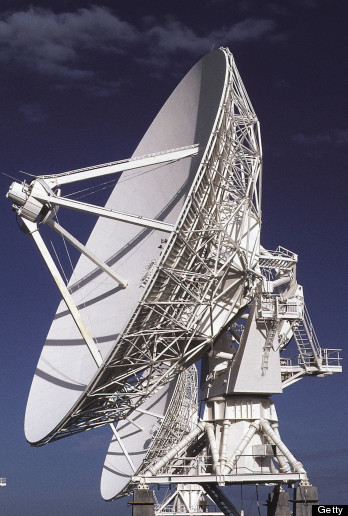
lorimer burst radio scope

It came from a galaxy far, far away.

A single, sudden burst of radio waves. And then it was gone.

The so-called ‘Lorimer’ burst was spotted in 2007 — and has been baffling scientists ever since.

“This is something that’s completely unprecedented,” Duncan Lorimer, the West Virginia University astrophysicist who made the discovery told Space at the time.

Today, the ‘burst’ is not alone. Indeed, four more identical flares have been observed,according to Popular Mechanics.

“You have to look at the sky for a very long time to find these,” British astrophysicist Dan Thornton, who observed the fresh, fleeting bursts, told the magazine. “The reason that we’re detecting them now is we’ve simply looked long enough.”

Thornton and his University of Manchester team published their findings in Science magazine, noting “the bursts’ properties indicate that they are of celestial rather than terrestrial origin.”

lorimer waves

The cause of the flares, which appear for only scant milliseconds, remains unknown. But researchers suggest an “explosive event” may be involved, as the bursts appear to be one-time events.

While the exact origins of the radio waves are also difficult to pinpoint in the vast expanse that is space, scientists are certain that the signals traveled a staggering distance.

Thornton suggests they took half the universe’s lifespan to get here. And, as Science News reports, they disappeared almost instantly upon arrival.

What may yet linger, however, is the wealth of data these flickering heralds bring.

Scientists say the bursts may shine light on the vast, previously unknown tracts of space that separate the galaxies.

“Staggeringly, we estimate there could be one of these flashes going off every ten seconds somewhere in the sky,” research team member Simon Johnston said in Global Times.

“With the ability to detect these very fast sources we are opening up a whole new area of astrophysics.”

Leave a comment

Filed under Humor and Observations

NASA Tests 3D Printed Rocket Engine Injector

NASA Successfully Tests First 3-D Printed Rocket Engine Injector

Another step toward the day when 3-D printers spit out entire spacecraft.
By Shaunacy FerroPosted 07.12.2013 at 1:00 pm3 Comments

Rocket Engine Injector NASA Glenn Research Center

We’ve seen 3-D printed aircraft and drone parts, and even plans for a printable private jet. Now NASA has demonstrated another 3-D printing first: The agency has just finished successful tests of a 3-D printed rocket engine injector at the Glenn Research Center in Cleveland, Ohio, marking one of the first steps in using additive manufacturing for space travel.

In conjunction with rocket manufacturer Aerojet Rocketdyne, NASA built the liquid-oxygen and gaseous-hydrogen rocket injector assembly using laser melting manufacturing. This sci-fi-sounding technique involves melting metallic powders down with high-powered laser beams, then fusing them into shape. Previous manufacturing methods for these type of injectors required more than a year. Being able to 3-D print the parts reduces the time frame to four months, at a 70 percent price reduction.


Installation In The Rocket Combustion Laboratory

Installation In The Rocket Combustion Laboratory:  NASA Glenn Research Center 

Eventually, 3-D printing is likely become a staple of the aerospace industry, as Davin Coburn describes in our July issue.

NASA has already expressed interest in putting 3-D printers in space, so astronauts could have easier access to spare parts and, most importantly, pizza.

Michael Gazarik, the associate administrator for space technology at NASA, even suggested entire spacecraft could one day be made with 3-D printing, calling it “game-changing for new mission opportunities.”

2 Comments

Filed under Humor and Observations

Sir Arthur C. Clarke going to outer space

Sir Arthur C. Clarke finally going to outer space on Sunjammer solar sail spacecraft

By Gene J. Koprowski

Published June 20, 2013

FoxNews.com
  • Sunjammer solar sail 2.jpg

    A giant solar sail is unfurled in this artist’s conception of the Sunjammer, with planet Earth retreating in the background. (Space Services Holdings, Inc.)

  • Sunjammer solar sail 4.jpg

    The Sunjammer’s solar sail, with a handful of researchers beneath it for context. (Space Services Holdings, Inc.)

  • Sunjammer solar sail 1.jpg

    A giant solar sail is unfurled in this artist’s conception of the Sunjammer, with planet Earth retreating in the background. (Space Services Holdings, Inc.)

  • Sunjammer solar sail 3.jpg

    The moon and the Earth are reflected in the giant reflective mirror of a solar sail. (Space Services Holdings, Inc.)

Famed science fiction writer Sir Arthur C. Clarke is finally headed for space — five years after his death.

Though the author of “2001: A Space Odyssey” died in 2008 in Sri Lanka, scientists from NASA today announced plans to send his DNA into orbit around the sun in 2014 aboard the Sunjammer, an astonishing solar-powered spacecraft.

Called the Sunjammer Cosmic Archive (SCA), the flying time capsule is a first in the history of space travel, carrying digital files of human DNA including Clarke’s aboard the sun-powered space ship.

‘Clarke certainly imagined himself going to space someday, and that day is finally arriving.’

– Stephen Eisele, vice president of Space Services, Inc. 

The DNA is to be contained in a “BioFile.” Other so-called MindFiles, including images, music, voice recordings, and the like, provided by people all around the globe, will also be included in the cosmic archive for future generations — or perhaps other civilizations — to see.

“Clarke certainly imagined himself going to space someday, and that day is finally arriving,” said Stephen Eisele, vice president of Space Services, Inc., a NASA contractor on the project. The name Sunjammer comes from the writings of Clarke, but the goal is all-encompassing.

The Sunjammer Cosmic Archive enables all of us to go to outer space,” he said.

The archive is one part of an amazing new NASA mission based on a vision outlined by astronomer Johannes Kepler, in a letter to Galileo in 1610: deployment of a technology that harnesses the light of the sun to propel spaceships.

”Provide ships or sails adapted to the heavenly breezes, and there will be some who will brave even that void,” Kepler wrote to Galileo.

In interviews during the days before the Thursday announcement, developers outlined for FoxNews.com the overall scope of the Sunjammer project, which NASA’s mission manager Ron Unger, at the Marshall Space Flight Center, described as a “game changing technology” that could alter mankind’s approach to space travel.

Simply put, the technology is a “solar sail” that gathers light from the sun and turns it into a propulsion source for a spacecraft, Unger said. It seems like something out of Clarke’s sci-fi writings, which is one reason that his DNA, which he left to science upon his death, is the payload for the mission, Eisele said.

This NASA-funded technology demonstration is designed to highlight the efficacy of solar sails for space propulsion applications; it’s now being built by Sunjammer team leader L’Garde, Inc., based in Tustin, Calif.

According to Nathan Barnes, president of L’Garde, the ship will launch in the fall of 2014 on a 1.9-million mile voyage to the sun from Cape Canaveral, Fla.

The diminutive spacecraft — it’s literally the size of a standard kitchen dishwasher — will be carried as a secondary spacecraft aboard a Falcon rocket 932,000 miles from Earth, where it will be released into space.

For NASA, Sunjammer will demonstrate deployment and navigation of the solar sail technology at nearly a million miles from Earth. Solar sails, sometimes called light sails or photon sails, are a form of spacecraft propulsion using the radiation pressure of a combination of light and high-speed gasses ejected from the Sun to push large, ultra-thin mirrors to high speeds.

These spacecraft offer NASA the possibility of low-cost operations with lengthy operating lifetimes. They have few moving parts and use no propellant, and they can potentially be used many times for delivery of different payloads.

“Sunjammer will morph — much like a butterfly – into a Space Shuttle-sized ship capable of maneuvering solely by riding the photonic pressure of the Sun,” Barnes tells FoxNews.com.  “Such propellant-less space travel has been the subject of human dreams since at least the time of Galileo, and holds great promise.

Here’s the physics of how it works, in a simplified form: Solar radiation creates a pressure on the sail due to reflection and a small fraction that is absorbed, and this absorbed energy heats the sail, which re-radiates that energy from the front and rear surfaces.

The first formal design of a solar sail was conducted in the 1970s, at the height of Sir Clarke’s fame as a sci-fi writer and futurist, at the Jet Propulsion Laboratory in California. A conference on solar sails was held just last month in the U.K., and researchers from NASA, a number of leading British universities, and L’Garde were present, discussing the potential of the Clarke-ian technology.

But now the technology is finally moving toward deployment on a major mission as a result of President Obama’s reorganization of NASA during his first term, and the agency’s search for technologies that can rapidly be commercialized, Eisele  told FoxNews.com.

In addition to the payload including the DNA of Sir Clarke,  scientific experiments will be conducted, once this craft is in space to demonstrate the use of solar sails in monitoring space weather, for example, which could provide early warnings of potentially dangerous solar storms.

To be sure, Clarke would have approved of that additional mission as well, Eisele told FoxNews.com.

Read more: http://www.foxnews.com/science/2013/06/20/sir-arthur-c-clarke-going-to-space-sunjammer/?intcmp=features#ixzz2WvQLrleN

1 Comment

Filed under Humor and Observations

Comet Pan-STARRS at its brightest this weekend!

By Miriam Kramer

Published March 08, 2013

Space.com

  • comet-panstarrs-march-2013

    The progression of comet Pan-STARRS across the night sky in March 2013 is shown in this NASA graphic. (SCIENCE@NASA)

  • comet-pan-starrs-sky-map

    The path of Comet C/2011 L4 (Pan-STARRS) over the next month. (STARRY NIGHT SOFTWARE)

  • comet-pan-starrs-close-up-gingin-observatory

    Close-up of comet C/2011 L4 PANSTARRS as seen from Mount Dale, Western Australia. (ASTRONOMY EDUCATION SERVICES/GINGIN OBSERVATORY)

A comet that just made its way into the Northern Hemisphere evening sky should be at its brightest this weekend, but it may be tricky for stargazers to see.

On Sunday (March 10), the Comet Pan-STARRS is expected to make its closest approach to the sun, potentially making the comet shine even more brilliantly when it appears at twilight low in the western sky, weather permitting. But stargazers will need a bit of preparation (not to mention a clear sky) to see the comet.

“There is a catch to viewing Comet Pan-STARRS,” Amy Mainzer, the principal investigator of NASA’s near-Earth object hunting NEOWISE mission at the Jet Propulsion Laboratory in Pasadena, Calif., said in a statement Thursday (March 7). “This one is not that bright and is going to be low on the western horizon, so you’ll need a relatively unobstructed view to the southwest at twilight and, of course, some good comet-watching weather.”

On Sunday, Comet Pan-STARRS will pass about 28 million miles from the sun during its close approach. The comet made its closest pass with the Earth on Tuesday (March 5) when it flew by at about 102 million miles from the planet. [How to see the comet]

“It will appear in the west at sunset, from around the 8th to the 13th of March 2013, and will be visible to the naked eye up to the end of the month: Comet Pan-STARRS C/2011 L4 will traverse Cetus, Pisces, Pegasus and Andromeda,” Paris Observatory officials wrote in a statement Thursday, as the comet entered the Northern Hemisphere’s evening sky after months of being visible from the Southern Hemisphere.

Comet Pan-STARRS, which has the official designation C/2011 L4 (PANSTARRS), was discovered in June 2011 by astronomers using the Panoramic Survey Telescope and Rapid Response System (or PANSTARRS) telescope in Hawaii. The comet made its way into the inner solar system from the Oort cloud — a group of icy bodies orbiting the sun in a region that extends from just beyond the orbit of Neptune out to a distance of 93 trillion miles.

While Pan-STARRS may start dimming after Sunday, that doesn’t mean that comet observers should put away their binoculars yet. On March 12 and 13, the comet will appear close to the moon, possibly even silhouetting it according to SPACE.com stargazing columnist Geoff Gaherty, an astronomer with the Starry Night Education night sky software company.

There are even comet sighting opportunities in April.

On April 3, the comet should be in the same part of the sky as the Andromeda Galaxy. Although the comet won’t still be visible with the naked eye, stargazers with telescopes could still get a nice view of the comet and galaxy, Gaherty explained.

Pan-STARRS has already put on a show for stargazers in the Southern Hemisphere. It is one of several comets in the night sky expected to dazzle observers this year. Last month, amateur astronomers managed to photograph Pan-STARRS and another celestial wanderer — Comet Lemmon — at the same time to document rare photos of two comets together in the night sky.

Later this year, another comet from the Oort Cloud could be the brightest comet to pass by the Earth in a generation. Comet ISON is expected to outshine every comet in recent memory when it makes its closest swing by the sun late November.

Read more:http://www.foxnews.com/science/2013/03/08/naked-eye-comet-pan-starrs-at-its-brightest-this-weekend/?intcmp=trending#ixzz2NNIZrGk1

Leave a comment

Filed under Humor and Observations, Uncategorized

New Meteorite Found In Antartica

Huge Meteorite Found In Antarctica, Largest Discovered There In 25 Years 

The Huffington Post  |  By Posted: 03/01/2013 1:00 pm EST

Meteorite Found Antarctica
An unusually large meteorite has been discovered by an international team of researchers in Antarctica.

The team, searching an area known as the Nansen Ice Field, discovered the 40-pound space rock in late January, according to OurAmazingPlanet.

Scientists from Université Libre de Bruxelles (ULB), Vrije Universiteit Brussel (VUB), Japan’s National Institute of Polar Research (NIPR) and Tokyo University were part of the expedition that discovered the extraterrestrial chunk, the largest such meteorite found in the region in close to a quarter century. The team was based out of the Princess Elisabeth Antarctica research station.

“This meteorite was a very unexpected find for us, not only due to its weight, but because we don’t normally find such large meteorites in Antarctica,” Vinciane Debaille, a geologist who led the Belgian arm of the research team, said in a written statement on Feb. 28. “This is the biggest meteorite found in East Antarctica for 25 years, so it’s a very special discovery for us, only made possible by the existence and location of Princess Elisabeth Antarctica.”

Known collectively as SAMBA, the international team had been searching the ice field since mid-December, according to the group’s website. The team’s current project is to collect large meteorites and study them. Eventually, the meteorites will be publicly displayed.

The SAMBA website describes the goal of such research:

Understanding how our planet works necessitates studying its interior. Direct geological records only document the crustal or uppermost fraction of our planet while the deeper parts remain totally outside of our reach. Meteorites coming from the asteroid belt between Mars and Jupiter have recorded information on how other planets formed and evolved through time; from undifferentiated primitive asteroids to differentiated small planets, showing the development of a crust, a mantle, and a metallic core just like those of the Earth.

Debaille’s Feb. 28 statement also explained the group’s work. “We study meteorites in order to better understand how the solar system formed, how it evolved, how the Earth became such a unique planet in our solar system,” said Debaille.

OurAmazingPlanet notes that United States scientists also ventured “out on the polar ice to collect meteorites this season,” but they were searching on the opposite end of Antarctica from the SAMBA outfit.

While meteors generally burn up in the atmosphere, in mid-February a huge meteor exploded over central Russia, showering the area in debris and creating a shock wave that injured hundreds.

Leave a comment

Filed under Humor and Observations

Israel’s Moon Program

SpaceIL: Israel’s race to the moon  ‘If you will it, it is no dream’

BY TOM TUGEND

February 19, 2013

Follow JewishJournal.com on 

The challenge is to become the first team to successfully launch, fly and land an unmanned spacecraft on the Moon. Photo courtesy SpaceIL

The challenge is to become the first team to successfully launch, fly and land an unmanned spacecraft on the Moon. Photo courtesy SpaceIL

One day in 2015, a small Israeli spacecraft will land on and reconnoiter the moon, joining the United States and former Soviet Union in the world’s most exclusive extraterrestrial club.

That vision is not fantasy or chauvinistic braggadocio, but the sober prediction of Israel’s most experienced engineers and space scientists.

According to the leaders of the SpaceIL (for Israel) project, the unmanned micro-spaceship will pack more instrumentation into a smaller and lighter capsule than ever achieved before.

During a visit to Los Angeles in mid-February, Yariv Bash, founder and CEO of SpaceIL, and Ronna Rubinstein, the chief of staff, outlined the genesis, scope and anticipated impact of the moon mission.

In late 2010, Bash heard about the Google Lunar X competition, which offered awards up to $30 million for the first team to land a robotic craft on the moon that would perform several complex missions. For one, the craft had to move 500 meters (1,640 feet) from its landing site to explore the moon’s surface – or send out a search vehicle to do so – and beam high-definition videos back to earth.

Bash, an electronics and computer engineer, said that SpaceIL will traverse the distance in one spectacular jump. SpaceIL, by the way, is only an interim name and when the time comes will be replaced with an official designation.

Initial names suggested by the project staff include Golda, for the former Israeli prime minister, Ramon, for Israeli astronaut Ilan Ramon, who perished in the Columbia shuttle disaster, and Hatikvah, Hebrew for “hope” and the title of the Israeli national anthem.

As soon as Bash absorbed the details of the Google competition, he posted one sentence on Facebook, asking, “Who is coming with me to the moon?” Among the first respondents was Rubinstein, a lawyer who now oversees the project’s organization, marketing and fundraising.

The total estimated cost for the project will be $30 million, of which $20 million has been raised so far, primarily from industry and private contributors. The Israeli government has allotted funds for 10 percent of the total cost, the maximum a government can put up under the contest rules.

Shimon

Israeli President Shimon Peres visits SpaceIL. Photo courtesy SpaceIL

According to Israeli statistics, the government money will be well spent, since for every $1 invested in Israel’s 10 satellites and other high-tech research, $7 are returned in civilian and commercial applications.

The prize for the winning entry is $20 million, with another $10 million available in bonus prizes for accomplishing different aspects of the mission.

But it’s not the prize money that is driving the 11 full-time staff members and some 300 professionals who are volunteering their services evenings and weekends, after finishing their regular day jobs. In any case, any money won will go to schools to enhance math and technology programs.

“What counts for us is the impact the moon landing will have on Israelis and Jews around the world, to show what Israel is and what it can do,” Bash said.

Most important is to instill both pride and scientific curiosity in Israeli youngsters, Bash added. Together with the Weizmann Institute of Science, the project has launched a nationwide program of high school visits, which so far has involved 27,000 students.

Plans also call for lectures and exhibits in Diaspora communities, and Bash and Rubinstein will address a plenary session at the AIPAC Policy Conference in Washington, DC during the first week of March.

Other key partners in the project are Israel Aerospace Industries, Tel Aviv University, Technion, Israeli Space Agency, Ramon Foundation and private companies like Rafael and Bezeq.

The Israeli spacecraft, whatever its final name, will compete against 24 other entries, of which 11 will be launched by various U.S. teams. Other competitors will come mainly from Europe and some from South American countries, but none from China, or, for that matter, Iran.

Early favorites are entries from the United States, Israel and Spain, Bash said.

Israel’s main strength, he noted, “lies in its nano-miniaturized technology, and SpaceIL will be the smallest craft ever sent into space.”

At liftoff, it will weigh 120 kilograms (264 pounds), but on landing, after burning off its fuel, it will weigh less than 40 kilograms (88 pounds). To get into orbit, SpaceIL will piggyback onto a commercial rocket, either American or Russian, at a cost of between $3 million to $5 million.

To Israelis watching the moon landing from 239,000 miles away, “it will be the most exciting reality show of all,” Bash hopes.

The impact on Israelis, especially young people, would be similar to that created in 1969 by astronaut Neil Armstrong as he descended from the Apollo spacecraft to the moon’s surface, proclaiming, “That’s one step for man, one giant leap for mankind.”

Israeli supporters of SpaceIL already have their own inspirational motto, taken from Theodor Herzl’s words as he prophesized the future creation of a Jewish state.

“Im Tirzu Ein Zo Agada” – “If you will it, it is no dream.”

For additional information, visit www.spaceil.com.

Tracker Pixel for Entry


Leave a comment

Filed under Humor and Observations

There’s more water on Jupiter’s moon Europa than there is on Earth


Excerts from the Article posted on  May 24, 2012  1:30 PM  by Robert T. Gonzalez:

“Remember that image from a few weeks back that showed Earth with all its water gathered up in a sphere beside it? Well here’s that image again, only this time, it also features Jupiter’s moon Europa, along with all of itswater. Notice anything interesting?

Based on data acquired by NASA’s Galileo satellite, astronomers think the global oceans sloshing around beneath Europa’s icy exterior are likely 2—3 times more voluminous than the oceans here on Earth. Not 2—3 times more proportionally, 2—3 times more in total volume.

Yeah. That “little” moon is packing quite the supply of H2O — and with it, scientists think, a significant chance of harboring life.”

It is pretty amazing to me that within in our own solar system there is a moon with so much water on it.  Some have speculated about drilling through the ice and searching for life underneath the frozen surface.  Others about mining it for water.  What would happen if we found a moon with that much oil on it?  Would we have huge oil barges and worry about space spills?

Also, if you look at the globe sans all its water, doesn’t it remind you of the new M&M commercials with the brown M&M they think is naked because it has no shell?  The Earth is meant to be the Big Blue Marble, not the dusty grey ball…


1 Comment

Filed under Humor and Observations, Uncategorized

The Current Realities of Space Travel

Would you go boldly where no one had gone before knowing you would return weak, arthritic and blind?  The disadvantages of space travel have not been well publicized while the herocism, blast offs and cobalt ball views of Earth are shown over and over.  The unfortunate truth is that time in space and zero gravity is increasingly known to cause severe health issues.  This is not to say they won’t be able to come up with new ways to counteract these problems, but for now, think about them before plopping down the millions to take a trip to the moon.

Blindness – The most recent released report from The University of Texas Medical School in Houston is based on scanning the eyes and brains of 27 astronauts who had spent an average of 108 days in space, either on space shuttle missions or aboard the International Space Station.  They found that those who spent more than a month in space were more likely to suffer from intracranial hypertension — a potentially serious condition that occurs when pressure builds within the skull.

The symptoms included excess cerebral-spinal fluid around the optic nerve in 33 percent of the astronauts studied, while a fifth showed a flattening of the back of the eyeball, which affects the ability to focus, research published in the Journal of Radiology showed.

The scans also showed that 15 percent of the astronauts had a bulging optic nerve and 11 percent experienced changes to the pituitary gland, which is located between the optic nerves and secretes and stores hormones that regulate a variety of important body functions.

Read more: http://www.foxnews.com/scitech/2012/03/13/space-travel-may-damage-eyesight-brain-study-shows/?intcmp=features#ixzz1qYgbPmT0

So, with extended time in space, you will go blind and likely suffer other brain and neurological issues.  This is in addition to the well known loss of bone density and muscles in weightless conditions and the much less known difficulty in performing sex with a partner in a weightless environment.

Bone loss – Spaceflight osteopenia refers to the characteristic bone loss that occurs during spaceflight. Astronauts lose an average of more than 1% bone mass per month spent in space. There is concern that during long duration flights, excessive bone loss and the associated increase in serum calcium ion levels will interfere with execution of mission tasks and result in irreversible skeletal damage.  This was found as early as the Gemini flight.

Muscle loss – Dr. Per Tesch, associate professor in the Department of Physiology and Pharmacology at the Karolinska Institute in Stockholm, Sweden said results from a study conducted on muscle atrophy in space over a 17-day period showed a constant drop in muscle mass at the rate of 2 percent loss per week.  Results indicated that women are generally more susceptible to muscle loss in space than men, though both genders are substantially affected.

Sex and Birth – ‘Giving birth in zero gravity is going to be hell because gravity helps you,’ said biologist Athena Andreadis of the University of Massachussetts, ‘You rely on the weight of the baby. Sex is very difficult in zero gravity, because you have no traction and you keep bumping against the walls.’

Other researchers speculated that living in zero gravity could harm children or prevent conception. What is known is that even months spent in environments such as the International Space Station can be incredibly damaging for the human body. Long periods away from Earth’s gravity result in damage not only to muscles, but to our skeletons.

Read more: http://www.dailymail.co.uk/sciencetech/article-2044749/Sex-space-The-survival-human-race-depend-it.html#ixzz1qYibMGwl

So, do you still want to be an early space pioneer knowing you will end up a blind monk on crutches?  Something to think about.

2 Comments

Filed under Humor and Observations