Tag Archives: stumbleupon

60 of the world’s happiest facts

This is a sample, for all 60, click on the link below.

Reposted from StumbleUpon at this link:

http://www.stumbleupon.com/su/4mOad8/:84$b-b@e:SHiVWd0@/inktank.fi/60-of-the-worlds-happiest-facts/

60 of the world’s happiest facts

Posted on 20/01/2013

1. A group of flamingos is called a flamboyance.

2. If you fake laugh long enough you’ll start to really laugh, really, really hard.

3. The book cover to the prize winning short story collection,Spellbound, was chosen because author, Joel Willans, bought his wife’s engagement ring with poker winnings.

4. The Beatles used the word “love” 613 times throughout their career.

5. The chances of you (as opposed to someone else) being born is about 1 in 40 million.

6. Every year, millions of trees grow thanks to squirrels forgetting where they buried their nuts.

7. On the day of his assassination, Martin Luther King Jr. had a pillow-fight in his motel room.

8. The nitrogen in our DNA, the calcium in our teeth, the iron in our blood, the carbon in our apple pies were made in the interiors of collapsing stars. We’re all made of star dust.

9. Cancer death rates are down 20% in past 20 years.

10. The miles travelled by the Apollo 11 crew to the moon were greater than every single exploration mission to the New World combined.

11. Penguins only have one mate their entire life and “propose” by giving their mate a pebble.

12. There’s an animal called a Dik Dik. And it’s the cutest antelope you’ll ever see.

13. Despite high infant mortality rates and lower life expectancies, not one of your direct ancestors died childless.

14. Cuddling releases Oxytocin which helps speed healing and recovery from physical wounds.

15. Otters hold hands when sleeping so they don’t drift away from each other.

16. Apollo 17 astronaut Gene Cernan, the last man to walk on the Moon, wrote his daughter initials there. They’ll last at least 50,000 years.

17. There’s a type of jellyfish that lives forever.

18. Wayne Allwine (the voice of Mickey Mouse) and Russi Taylor (the voice of Minnie Mouse) were married in real life.

19. We now have less crime, a lower death rate and longer life expectancy than at any other time in human history.

2 Comments

Filed under Humor and Observations

Climbing the Self Improvement Hierarchy

A picture with goats, or as it calls them, gotes.  From StumbleUpon via viruscomix.com

You will probably have to click on it to see it all.

gotes

Leave a comment

Filed under Humor and Observations

Complete Listing of World Wonders

This is re-posted from StumbleUpon, via wonderclub.com.

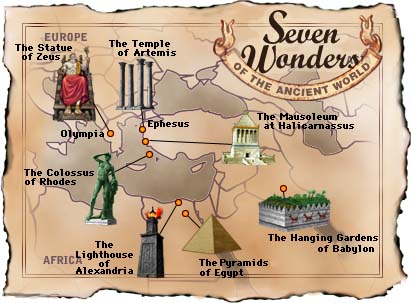
It is a very comprehensive and interesting list of the “Seven Wonders of the World.”  Oddly enough, there is not a single list.  The famed “Seven Wonders of the World” has changed over time.  This site has a pretty good listing of the various interpretations, with good links and maps.  Well done, wonderclub.com.  In any case, the list gets your creative juices flowing, which is always good for us fiction authors in particular.

sevenwondersmap

Complete Listing of World Wonders

The Seven Wonders of the Ancient World

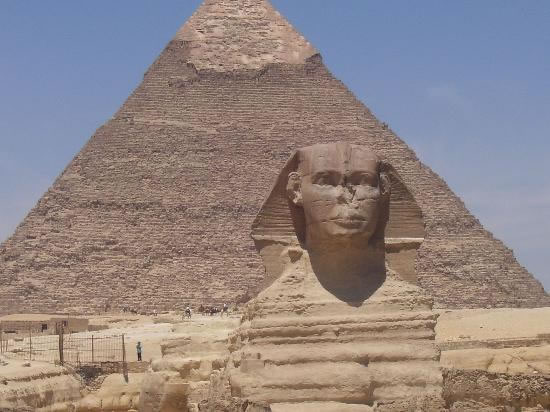
Seven-Wonders-World-giza-pyramids_jpg

The Seven Wonders of the Medieval Mind

The Seven Natural Wonders of the World

The Seven Underwater Wonders of the World

The Seven Wonders of the Modern World

The Seven Forgotten Natural Wonders of the World

The Seven Forgotten Modern Wonders of the World

The Seven Forgotten Wonders of the Medeival Mind

The Forgotten Wonders

Read our World Wonder FAQ by clicking here

 Maps of the World Wonders

1 Comment

Filed under Humor and Observations

101 Tips from Famous Authors

Words of Wisdom: 101 Tips from the World’s Most Famous Authors


re-posted from Collegeonline.com via StumbleUpon link.

If you’ve ever wanted to sit down with your favorite writer and ask advice, then you should take a look at these tips from some of the most famous authors in the world. These valuable bits of information provide guidance on strengthening your writing skills, becoming a better fiction writer or poet, learning to tap into your creativity, advice on education and school, and even a few suggestions on success and living a meaningful life. Of course, another excellent way of improving your writing is through traditional or online master’s degrees in creative writing.

General Writing Tips

Improve any type of writing you do with these solid tips from successful writers themselves.

  1. Ernest Hemingway. Use short sentences and short first paragraphs. These rules were two of four given to Hemingway in his early days as a reporter–and words he lived by.
  2. Mark Twain. Substitute “damn” every time you want to use the word “very.” Twain’s thought was that your editor would delete the “damn,” and leave the writing as it should be. The short version: eliminate using the word “very.”
  3. Oscar Wilde. Be unpredictable. Wilde suggested that “consistency is the last refuge of the unimaginative.”
  4. Anton Chekhov. Show, don’t tell. This advice comes out of most every writing class taught. Chekhov said it most clearly when he said, “Don’t tell me the moon is shining; show me the glint of light on broken glass.”
  5. EB White. Just write. The author of Charlotte’s Web, one of the most beloved of children’s books, said that “I admire anybody who has the guts to write anything at all.”
  6. Samuel Johnson. Keep your writing interesting. “The two most engaging powers of an author are to make new things familiar and familiar things new.”
  7. Ray Bradbury. Learn to take criticism well and discount empty praise, or as Bradbury put it, “to accept rejection and reject acceptance.”
  8. Toni Morrison. Remember that writing is always about communication. “Everything I’ve ever done, in the writing world, has been to expand articulation, rather than to close it.”
  9. George Orwell. Orwell offered twelve solid tips on creating strong writing, including an active voice rather than a passive one and eliminating longer words when shorter ones will work just as well.
  10. F. Scott Fitzgerald. “Cut out all those exclamation marks. An exclamation mark is like laughing at your own joke.”
  11. Anais Nin. “The role of a writer is not to say what we all can say, but what we are unable to say.”
  12. Truman Capote. Editing is as important as the writing. “I believe more in the scissors than I do in the pencil.”
  13. Maurice Sendak. Keep revising. “I never spent less than two years on the text of one of my picture books, even though each of them is approximately 380 words long. Only when the text is finished … do I begin the pictures.”

Tips for Beginning Writers

If you are thinking about a career in writing, whether you have a bachelor degree or a master’s degree, or are just starting to write seriously, then use these tips for great suggestions.

  1. Stephen King. “Read a lot and write a lot.” Reading and understanding different styles is integral to finding your own style.
  2. Margaret Mahy. Be persistent. This popular New Zealand author suggests that being persistent will pay off when facing adversity while writing or trying to get your writing published.
  3. John Grisham. Keep your day job. Grisham suggests finding your career outside of writing. Experience life, suffering, and love to be able to write effectively.
  4. John Steinbeck. “I’ve always tried out material on my dogs first.” Make sure that above all, you are happy with your work…and see if the dogs stay awake.
  5. Flannery O’Connor. Sometimes you need to stir the emotions to be heard. “I am not afraid that the book will be controversial, I’m afraid it will not be controversial.”
  6. Isaac Asimov. Use humor effectively.” Jokes of the proper kind, properly told, can do more to enlighten questions of politics, philosophy, and literature than any number of dull arguments.”
  7. Lillian Hellman. Trust your instincts. “If I had to give young writers advice, I would say don’t listen to writers talking about writing or themselves.”
  8. Doris Lessing. “I don’t know much about creative writing programs. But they’re not telling the truth if they don’t teach, one, that writing is hard work, and, two, that you have to give up a great deal of life, your personal life, to be a writer.”
  9. Jessamyn West. “Talent is helpful in writing, but guts are absolutely necessary.”
  10. William Faulkner. “A writer needs three things, experience, observation, and imagination, any two of which, at times any one of which, can supply the lack of the others.”
  11. Margaret Atwood. Don’t be afraid of failure. “A ratio of failures is built into the process of writing. The wastebasket has evolved for a reason.”
  12. Richard Bach. Never stop trying. “A professional writer is an amateur who didn’t quit.”
  13. Isabel Allende. Follow your passion, despite the obstacles. “I couldn’t write a novel sitting in a car but I could write short stories. The advantage to this is because with a short story you write fragments. In a couple of weeks you have a story and then you do some more. If you really want to do something you do it in the most awkward circumstances, of course.”

Fiction Tips

These tips are specifically for writing fiction, but many are good tips for writing in general. In addition, students can improve their overall writing skills through online degrees in writing.

  1. Kurt Vonnegut. Vonnegut offers eight rules of writing a short story, including tips such as “Every character should want something, even if it is only a glass of water” and “Every sentence must do one of two things–reveal character or advance the action.”
  2. Roald Dahl. From one of the most magical of storytellers: “And above all, watch with glittering eyes the whole world around you because the greatest secrets are always hidden in the most unlikely places. Those who don’t believe in magic will never find it.”
  3. Louis L’Amour. “A plot is nothing but a normal human situation that keeps arising again and again….normal human emotions–envy, ambition, rivalry, love, hate, greed, and so on.”
  4. John Irving. Know the story. Irving suggests knowing the basic outline of the entire story before you begin writing the first paragraph.
  5. Jack Kerouac. Although Kerouac set down 30 tips, the gist of most of them is to know yourself and write for yourself with abandonment.
  6. Scott Turow. Drawing from his experience as a trial lawyer, Turow discovered that what makes attorneys successful is what would make him successful as a writer: Tell a good story.
  7. Johann Wolfgang von Goethe. Write about what you know. “If a man writes a book, let him set down only what he knows. I have guesses enough of my own.”
  8. Leo Tolstoy. “Drama, instead of telling us the whole of a man’s life, must place him in such a situation, tie such a knot, that when it is untied, the whole man is visible.”
  9. Katherine Anne Porter. “If I didn’t know the ending of a story, I wouldn’t begin. I always write my last line, my last paragraph, my last page first.
  10. Robert Louis Stevenson. “The difficulty of literature is not to write, but to write what you mean.”
  11. W. Somerset Maugham. Make your own rules. “There are three rules for writing the novel. Unfortunately, no one knows what they are.”
  12. Vladimir Nabokov. The careful construction of details can make all the difference in your writing. “Caress the detail, the divine detail.”
  13. EL Doctorow. “Writing a novel is like driving a car at night. You can only see as far as your headlights, but you can make the whole trip that way.”

Poetry

Poets can find many helpful tips from writers who have come before them here. In addition, students can sharpen their overall poetry skills in online English literature programs.

  1. Robert Frost. Poetry offers many levels for readers. Capitalize on all you can. “A poem begins in delight and ends in wisdom.”
  2. Salman Rushdie. “A poet`s work is to name the unnamable, to point at frauds, to take sides, start arguments, shape the world, and stop it going to sleep.”
  3. WH Auden. Anticipate and recognize ideas. “All works of art are commissioned in the sense that no artist can create one by a simple act of will but must wait until what he believes to be a good idea for a work comes to him.”
  4. TS Eliot. Seek life experience. “Any poet, if he is to survive beyond his 25th year, must alter; he must seek new literary influences; he will have different emotions to express.”
  5. Henry David Thoreau. Understand the power of each word. “A written word is the choicest of relics. It is something at once more intimate with us and more universal than any other work of art.”
  6. Paul Valery. Keep revising. “A poem is never finished, only abandoned.”
  7. Percy Bysshe Shelley. Think about the obvious in new ways. “Poetry lifts the veil from the hidden beauty of the world, and makes familiar objects be as if they were not familiar.”
  8. Plato. Don’t just rely on the beauty of the words: make a statement. “Poetry comes nearer to vital truth than history.”
  9. Samuel Taylor Coleridge. Remember the importance of each word used in each poem. “I wish our clever young poets would remember my homely definitions of prose and poetry; that is, prose = words in their best order; –poetry = the best words in the best order.”
  10. Robert Graves. Write poetry because you want to, not because you expect to earn a living. “There’s no money in poetry, but then there’s no poetry in money either.”

Tips for Creativity

Whether you are facing writer’s block, just want to add a little more pizzazz to your work, or are writing something to complete your undergraduate degree or master’s degree program, use these tips to find more creativity.

  1. Annie Dillard. “Writing sentences is difficult whatever their subject. It is no less difficult to write sentences in a recipe than sentences in Moby Dick. So you might as well write Moby Dick.” No matter what, write.
  2. William Wordsworth. Write with passion. Wordsworth advocated, “Fill your paper with with the breathings of your heart.”
  3. Alice Walker. Walker recommends meditation for writing, as well as life. She credits meditation for helping her write her books.
  4. James Patterson. “I’m always pretending that I’m sitting across from somebody. I’m telling them a story, and I don’t want them to get up until it’s finished.”
  5. John Cheever. Looking inwards and learning from yourself provides great material for writing. “The need to write comes from the need to make sense of one’s life and discover one’s usefulness.”
  6. Agatha Christie. Let your mind go while keeping your hands busy. “The best time for planning a book is when you’re doing the dishes.”
  7. Francis Bacon. Always carry something to write on. “A man would do well to carry a pencil in his pocket and write down the thoughts of the moment. Those that come unsought are commonly the most valuable and should be secured, they seldom return.”
  8. Jack London. “You can’t wait for inspiration. You have to go after it with a club.” Sometimes you need to actively seek your sources of inspiration.
  9. Maya Angelou. Follow your instincts and do what you feel you must. “A bird doesn’t sing because it has an answer, it sings because it has a song.
  10. Virginia Woolf. “Arrange whatever pieces come your way.” Sometimes you have to recognize what you have and make the best of it.
  11. Charles Dickens. Play with your ideas, talk with them, and coax them into a fully-formed creation. “An idea, like a ghost, must be spoken to a little before it will explain itself.”

School and Education

Find out what famous writers have to say about school and getting an education, whether it be traditional oronline.

  1. Ralph Waldo Emerson. Recognize what students can give to teachers as well as what teachers can impart. “Of course you will insist on modesty in the children, and respect to their teachers, but if the boy stops you in your speech, cries out that you are wrong and sets you right, hug him!”
  2. Barbara Kingsolver. “Libraries are the one American institution you shouldn’t rip off.”
  3. Martin Luther King, Jr. Use education to build character. “The function of education is to teach one to think intensively and to think critically… Intelligence plus character–that is the goal of true education.”
  4. Robert M Hutchins. Keep in mind what school provides for the long run. “The object of education is to prepare the young to educate themselves throughout their lives.”
  5. Norman Cousins. “The purpose of education is to enable us to develop to the fullest that which is inside us.”
  6. Nelson Mandela. Use your knowledge to make a difference. “Education is the most powerful weapon which you can use to change the world.”
  7. John Dewey. “Education is a social process; education is growth; education is not a preparation for life but is life itself.
  8. BF Skinner. Appreciate knowledge and the rest will come. “We shouldn’t teach great books; we should teach a love of reading.”
  9. Aristippus. Use your education to cultivate what you already have. “Native ability without education is like a tree without fruit.”
  10. Robert Frost. Learn to separate emotion from knowledge. “Education is the ability to listen to almost anything without losing your temper or your self-confidence.”
  11. Charlotte Bronte. Embrace the opportunity to see beyond your known world. “Prejudices, it is well known, are most difficult to eradicate from the heart whose soil has never been loosened or fertilized by education; they grow there, firm as weeds among stones.”

Lifelong Learning

Learning should go far beyond college and even graduate school, and these writers agree. Find out what they suggest to keep the quest for knowledge alive.

  1. Aristotle. Learn to analyze what you are being told. “It is the mark of an educated mind to be able to entertain a thought without accepting it.”
  2. Robert Frost. Don’t ever stop learning. “Education is hanging around until you’ve caught on.”
  3. Albert Einstein. Don’t ever stop questioning. “The important thing is not to stop questioning.”
  4. WB Yeats. Discover what lights your fire. “Education is not the filling of a bucket, but the lighting of a fire.”
  5. CS Lewis. Learn by doing. “Experience: that most brutal of teachers. But you learn, my God do you learn.”
  6. Friedrich Nietzche. Learn the basics first. “He who would learn to fly one day must first learn to stand and walk and run and climb and dance, one cannot fly into flying.”
  7. Socrates. Learning is ultimately your own responsibility. “I cannot teach anybody anything, I can only make them think.”
  8. Aldous Huxley. Don’t become complacent. “A child-like man is not a man whose development has been arrested; on the contrary, he is a man who has given himself a chance of continuing to develop long after most adults have muffled themselves in the cocoon of middle-aged habit and convention.”
  9. Willa Cather. Embrace every opportunity to learn. “There are some things you learn best in calm, and some in storm.”
  10. Confucius. Education should be much more than memorizing facts. “Learning without thought is labor lost; thought without learning is perilous.”

Success

No matter what career you pursue after college, success is likely a goal. Discover what tips these authors have to share about achieving success in life.

  1. Isak Dinesen. “When you have a great and difficult task, something perhaps almost impossible, if you only work a little at a time, every day a little, suddenly the work will finish itself.”
  2. Margaret Atwood. Speak your mind and stand up for what you believe. “A voice is a human gift; it should be cherished and used, to utter fully human speech as possible. Powerlessness and silence go together.”
  3. Malcolm S. Forbes. “Failure is success if we learn from it.”
  4. Helen Keller. Find the joy in small accomplishments. “I long to accomplish a great and noble task, but it is my chief duty to accomplish small tasks as if they were great and noble.”
  5. Dr. Seuss. Be responsible for your own success. “You have brains in your head. You have feet in your shoes. You can steer yourself in any direction you choose. You’re on your own. And you know what you know. You are the guy who’ll decide where to go.”
  6. Kahlil Gibran. Stay the course, even when it feels like you aren’t making progress. “One may not reach the dawn save by the path of the night.”
  7. Ralph Waldo Emerson. Believe in yourself. “Whatever course you decide upon, there is always someone to tell you that you are wrong. There are always difficulties arising which tempt you to believe that your critics are right. To map out a course of action and follow it to an end requires courage.”
  8. Paul Coelho. “Be brave. Take risks. Nothing can substitute experience.”
  9. Tennessee Williams. Let success happen in its own time. “Success is blocked by concentrating on it and planning for it… Success is shy – it won’t come out while you’re watching.”

On Living

These last few tips all include good, solid advice on living life to your best potential.

  1. Alexander Pope. Don’t be afraid to make mistakes. Pope is the author of one of the most famous quotes on allowing yourself to make a mistake with his famous, “To err is human, to forgive divine.”
  2. Benjamin Franklin. “Either write something worth reading or do something worth writing.”
  3. JK Rowling. “If you want to see the true measure of a man, watch how he treats his inferiors, not his equals.”
  4. Barbara Kingsolver. “The truth needs so little rehearsal.”
  5. Maya Angelou. “I’ve learned that people will forget what you said, people will forget what you did, but people will never forget how you made them feel.”
  6. Umberto Eco. Sometimes things are just as they seem. “But now I have come to believe that the whole world is an enigma, a harmless enigma that is made terrible by our own mad attempt to interpret it as though it had an underlying truth.”
  7. John Ruskin. “There is no wealth but life.”
  8. George Bernard Shaw. Appreciate the good and the bad–it is all a part of life. “Life does not cease to be funny when people die any more than it ceases to be serious when people laugh.”
  9. Arthur Miller. “Maybe all one can do is hope to end up with the right regrets.”
  10. Charles M. Schulz. “Life is like a ten speed bicycle. Most of us have gears we never use.”
  11. John Burroughs. Realize what is important to you. “I still find each day too short for all the thoughts I want to think, all the walks I want to take, all the books I want to read, and all the friends I want to see.”

1 Comment

Filed under Writing

Joss Whedon’s Top 10 Writing Tips

Joss Whedon’s Top 10 Writing Tips

reposted from:

Joss Whedon Top 10 Writing Tips

Film critic Catherine Bray interviewed Joss Whedon in 2006 for UK movie magazine Hotdog to find out his top ten screenwriting tips. Photo: Joss Whedon at San Diego Comic Con – courtesy of Gage Skidmore.

Joss Whedon is most famous for creating Buffy the Vampire Slayer, its spin-off Angel and the short-lived but much-loved Firefly series. But the writer and director has also worked unseen as a script doctor on movies ranging from Speed to Toy Story. Here, he shares his tips on the art of screenwriting.

1. FINISH IT
Actually finishing it is what I’m gonna put in as step one. You may laugh at this, but it’s true. I have so many friends who have written two-thirds of a screenplay, and then re-written it for about three years. Finishing a screenplay is first of all truly difficult, and secondly really liberating. Even if it’s not perfect, even if you know you’re gonna have to go back into it, type to the end. You have to have a little closure.

2. STRUCTURE
Structure means knowing where you’re going; making sure you don’t meander about. Some great films have been made by meandering people, like Terrence Malick and Robert Altman, but it’s not as well done today and I don’t recommend it. I’m a structure nut. I actually make charts. Where are the jokes? The thrills? The romance? Who knows what, and when? You need these things to happen at the right times, and that’s what you build your structure around: the way you want your audience to feel. Charts, graphs, coloured pens, anything that means you don’t go in blind is useful.

3. HAVE SOMETHING TO SAY
This really should be number one. Even if you’re writing a Die Hard rip-off, have something to say about Die Hard rip-offs. The number of movies that are not about what they purport to be about is staggering. It’s rare, especially in genres, to find a movie with an idea and not just, ‘This’ll lead to many fine set-pieces’. The Island evolves into a car-chase movie, and the moments of joy are when they have clone moments and you say, ‘What does it feel like to be those guys?’

4. EVERYBODY HAS A REASON TO LIVE
Everybody has a perspective. Everybody in your scene, including the thug flanking your bad guy, has a reason. They have their own voice, their own identity, their own history. If anyone speaks in such a way that they’re just setting up the next person’s lines, then you don’t get dialogue: you get soundbites. Not everybody has to be funny; not everybody has to be cute; not everybody has to be delightful, and not everybody has to speak, but if you don’t know who everybody is and why they’re there, why they’re feeling what they’re feeling and why they’re doing what they’re doing, then you’re in trouble.

5. CUT WHAT YOU LOVE
Here’s one trick that I learned early on. If something isn’t working, if you have a story that you’ve built and it’s blocked and you can’t figure it out, take your favourite scene, or your very best idea or set-piece, and cut it. It’s brutal, but sometimes inevitable. That thing may find its way back in, but cutting it is usually an enormously freeing exercise.

6. LISTEN
When I’ve been hired as a script doctor, it’s usually because someone else can’t get it through to the next level. It’s true that writers are replaced when executives don’t know what else to do, and that’s terrible, but the fact of the matter is that for most of the screenplays I’ve worked on, I’ve been needed, whether or not I’ve been allowed to do anything good. Often someone’s just got locked, they’ve ossified, they’re so stuck in their heads that they can’t see the people around them. It’s very important to know when to stick to your guns, but it’s also very important to listen to absolutely everybody. The stupidest person in the room might have the best idea.

7. TRACK THE AUDIENCE MOOD
You have one goal: to connect with your audience. Therefore, you must track what your audience is feeling at all times. One of the biggest problems I face when watching other people’s movies is I’ll say, ‘This part confuses me’, or whatever, and they’ll say, ‘What I’m intending to say is this’, and they’ll go on about their intentions. None of this has anything to do with my experience as an audience member. Think in terms of what audiences think. They go to the theatre, and they either notice that their butts are numb, or they don’t. If you’re doing your job right, they don’t. People think of studio test screenings as terrible, and that’s because a lot of studios are pretty stupid about it. They panic and re-shoot, or they go, ‘Gee, Brazil can’t have an unhappy ending,’ and that’s the horror story. But it can make a lot of sense.

8. WRITE LIKE A MOVIE
Write the movie as much as you can. If something is lush and extensive, you can describe it glowingly; if something isn’t that important, just get past it tersely. Let the read feel like the movie; it does a lot of the work for you, for the director, and for the executives who go, ‘What will this be like when we put it on its feet?’

9. DON’T LISTEN
Having given the advice about listening, I have to give the opposite advice, because ultimately the best work comes when somebody’s fucked the system; done the unexpected and let their own personal voice into the machine that is moviemaking. Choose your battles. You wouldn’t get Paul Thomas Anderson, or Wes Anderson, or any of these guys if all moviemaking was completely cookie-cutter. But the process drives you in that direction; it’s a homogenising process, and you have to fight that a bit. There was a point while we were making Firefly when I asked the network not to pick it up: they’d started talking about a different show.

10. DON’T SELL OUT
The first penny I ever earned, I saved. Then I made sure that I never had to take a job just because I needed to. I still needed jobs of course, but I was able to take ones that I loved. When I say that includes Waterworld, people scratch their heads, but it’s a wonderful idea for a movie. Anything can be good. Even Last Action Hero could’ve been good. There’s an idea somewhere in almost any movie: if you can find something that you love, then you can do it. If you can’t, it doesn’t matter how skilful you are: that’s called whoring.

Leave a comment

Filed under Writing

77 Science Fiction/Fantasy Movies in 2013

This is an amazing round-up of science fiction and fantasy movies expected out this calendar year.  Thanks to the people of I09 and StumbleUpon from which I came across this.  Enjoy, and be sure to visit both sites, they rock.  reposted.

O9 2013 PREVIEW

JAN 3, 2013 1:32 PM

77 Science Fiction and Fantasy Movies to Watch Out For in 2013

This year, legends walk the silver screen. From Captain Kirk to Superman, our greatest heroes are back, and facing their darkest hours. But 2013’s movies also include some brand new indies from Neill Blomkamp and Shane Carruth, plus a whole lot of fantasy insanity.

Here’s our complete guide to 77 science fiction and fantasy movies coming in 2013.

Note: Items with a * aren’t included in the 77-movie count, since they’re arguably not science fiction or fantasy. We’re just mentioning them because they’re comic-book adaptations, or we suspect they’ll get pretty fantastical.


JANUARY

All Superheroes Must Die (Jan. 4)
This is a indy superhero movie from Jason Trost, director of The FP (last year’s dystopian Dance Dance Revolution comedy) in which a group of superheroes lose their powers and are put through a series of brutal challenges. (Now available on VOD/iTunes/Amazon, in select theaters Friday.)
Outlook: It looks way less silly than The FP, and the trailers actually look tense and dark. And it has Lucas Till (X-Men: First Class) and James Remar (Dexter) in it. Could be fun.

77 Science Fiction and Fantasy Movies to Watch Out For in 2013

Storage 24 (Jan. 11)
Doctor Who‘s Noel Clarke stars in this thriller where a military cargo plane crashes in London, releasing its deadly cargo on the city — and a group of people are trapped in a storage facility with a horrific creature.
Outlook: The movie’s Rotten Tomatoes pageis a bloodbath. By all accounts, it really really sucks.

A Haunted House (Jan. 11)
Marlon Wayans stars in this horror spoof, in which a family moves into a house full of spirits and the wife gets possessed by one of them.
Outlook: Honestly, it’s Marlon Wayans making fun of really easy targets. But the trailer does contain the line, “I kicked you in your ghost balls.”

Mama (Jan. 18)
Guillermo del Toro produced this film, based on a creepy short, about two little orphan girls who survive in the wild for five years before being rescued and sent to live with their uncle and aunt (Nikolaj Coster-Waldau and Jessica Chastain) — but is their dead mother still watching over them?
Outlook: The trailer and original short film are creepy as heck. Del Toro calls this film “claustrophobic,” and it might actually be better than last year’s Don’t Be Afraid of the Dark, which he also produced.

Hansel and Gretel: Witch Hunters (Jan. 25)
Basically, Hansel (Jeremy Renner) and Gretel (Gemma Arterton) are all grown up, and now they’re hunting witches, including one played by Famke Janssen.
Outlook: It was pushed from last summer to January — usually a bad sign — but the trailers look like cheesy fun, especially the crazy anachronistic gatling guns and other weapons. Could be this year’s Season of the Witch. John Dies at the End (Jan. 25)
The long-awaited movie adaptation of David Wong’s cult novel about a drug called Soy Sauce that either kills you or lets you see paranormal weirdness — including the Lovecraftian horrors invading our world. Trailer here.
Outlook: Early reviews suggest it’s a highly entertaining yet frustrating ride in which director Don Coscarelli (Bubba Ho Tep) takes a lot of liberties with the book source material.


FEBRUARY

Warm Bodies (Feb. 1)
The adaptation of Isaac Marion’s novel about a zombie (Nicholas Hoult) who falls in love with one of the last remaining humans, and their love might have the power to transform the post-apocalyptic world.
Outlook: The trailers actually look freaking hilarious, and it’s from the director of 50/50, Jonathan Levine. The Haunting in Connecticut 2: Ghosts of Georgia (Feb. 1)
A sequel to The Haunting in Connecticut, except that it’s set in Georgia and it’s not a sequel. A family moves into a historic house in Georgia, only to find out they’re not the only thing living there.
Outlook: Ti West (The Innkeepers) was supposed to direct this film but dropped out just before filming started. On the other hand, it has Katee Sackhoff in it, and the trailer actually looks creepy.

The Sorcerer and the White Snake (Feb. 8)
A big-budget adaptation of the ancient Chinese fable about a female snake demon who falls in love with a mortal — and Jet Li plays the sorcerer who tries to slay her.
Outlook: Early reviews suggest the visuals are amazing, but the story is kind of weak.

Side Effects* (Feb. 8)
Stephen Soderbergh’s last ever film is about a woman (Rooney Mara) who takes a “revolutionary” new drug called Ablixa to cope with her husband (Channing Tatum) coming home from prison. And there are insane side effects.
Outlook: Looks pretty great. We’re including it here because the revolutionary new drug looks as though it could be pretty science-fictional.

77 Science Fiction and Fantasy Movies to Watch Out For in 2013

Beautiful Creatures (February 13)
One of the year’s many attempts to create a new Twilight, this film adapts the bestselling YA series about a young witch named Lena who becomes an outcast in a small town, and the boy who loves her anyway.
Outlook: It looks cheesy as all get-out, but the notion of using a supernatural teen drama to deal with bullying and peer pressure has a lot of potential. Plus Emma Thompson is in it.

Escape From Planet Earth (Feb. 14)
An intrepid alien astronaut (Brendan Fraser) answers a distress call from Earth — but it’s a trap, and he’s caught in Area 51, and it’s up to his nerdy brother Gary (Rob Corddry) to save him.
Outlook: The voice cast includes William Shatner, Jane Lynch and James Gandolfini. Could be this year’s Planet 51.

Dark Skies (Feb. 22)
Not based on the TV series. This is actually a low-budget horror film starring Kerri Russell, about a suburban family that’s terrorized by aliens. Trailer here.
Outlook: From the director of Priest and Legion. It only started production back in August 2012.


MARCH

Jack the Giant Slayer (March 1)
A fairytale movie from X-Men maestro Bryan Singer, starring Nicholas Hoult as a farmhand who unwittingly opens a doorway to a land of giants, starting a war as the giants try to retake our world.
Outlook: Delayed from summer 2012. Sort of looks like Clash of the Titans, only taking itself more seriously. The Last Exorcism Part 2 (March 1)
The girl who was possibly possessed in the first movie is back, and she’s trying to move on with her life, except for that whole demonic possession thing.
Outlook: The director and writers of the original film aren’t back, and we’re not sure how you can do a sequel without undercutting the superb first movie.

Oz the Great and Powerful (March 8)
Sam Raimi’s long-awaited Wizard of Oz prequel, in which Oz (James Franco) goes to Oz in a balloon and meets all the witches and flying monkeys.
Outlook: The trailers look absolutely gorgeous, in an Avatar/Alice in Wonderlandway, although the story appears to be a standard “vain selfish rogue learns to be a hero” thing. The Croods (March 22)
An animated film about a caveman whose leadership is threatened by a genius who invents things like fire and other wacky gadgets. Oh, and there’s a half-tiger, half-parrot called a “Macarnivore.”
Outlook: This film has been in development for years. At one point the script was co-written by John Cleese. The cast includes Ryan Reynolds, Nic Cage, Emma Stone, Catherine Keener and Cloris Leachman(!). Early reviews say it’s pretty great.

G.I. Joe: Retaliation (March 29)
Another movie delayed from summer, this sequel picks up where the first movie left off — with the President of the United States replaced by an evil imposter.
Outlook: Director Jon M. Chu wowed us with Legion of Extraordinary Dancers. Rumor has it, this movie’s being recut to give Channing Tatum a bigger role, but it’s not clear if Tatum actually came back for re-shoots or if they’re just using every scrap of Tatum footage they could grab off the cutting-room floor.

The Host (March 29)
In Stephenie Meyer’s other big book adaptation, an alien invasion of Earth has already succeeded, with emotionless parasites controlling almost all humans. Except one girl who gets implanted can’t stop loving her boyfriend, and this could change everything. Trailer here.
Outlook: It’s adapted and directed by Andrew Niccol (Gattaca), whose work is always at least thought-provoking. 


APRIL

Upstream Color (April 5)
Primer’s Shane Carruth returns at last, with a strange and confusing movie about a man and a woman who are entangled in “the life cycle of an ageless organism.”
Outlook: Huge, high hopes for this one, based on the lush weird trailers and Carruth’s mind-bending first movie.

Evil Dead (April 12)
Sam Raimi’s famous horror series is back, with an all-new cast. Jane Levy plays a woman struggling to remain sober, who goes to a cabin with her friends and finds the Book of the Dead. You know what happens next.
Outlook: By all accounts, this new film is as gruesome and messed-up as the original, and new director Fede Alvarez seems to have captured Raimi’s insane spark. Fingers crossed. Scary Movie 5 (April 12)
This time, they’re spoofing Black Swan.
Outlook: Really, the title is all you need to know. Oh, you want to know more? Charlie Sheen and Lindsay Lohan play themselves.

Oblivion (April 19/April 12 in IMAX)
Tron Legacy‘s Joseph Kosinski sets out to prove he can launch a brand new franchise, with this story in which humanity has abandoned Earth, except that Tom Cruise comes down to service some drones… and discovers he’s not alone.
Outlook: The trailers look pretty intense and full of eye-candy. A lot depends on the film’s big twist, probably. The Lords of Salem (April 26)
Rob Zombie wrote and directed this horror film in which a radio station DJ gets a mysterious record from the Lords and plays it — only to find that the Lords aren’t a band, they’re the original Lords of Salem, and they’re back for blood.
Outlook: Probably depends if you’re a Rob Zombie fan.


MAY

Iron Man 3 (May 3)
Now that Tony Stark’s helped save the world in The Avengers, this film is going to set about tearing him down again, with the Mandarin and Aldrich Killian destroying Tony’s entire world.
Outlook: Director Shane Black made magic with Robert Downey Jr. in Kiss Kiss Bang Bang, and writer Drew Pearce brought new life to superheroes with his TV show No Heroics. So fingers crossed! Kiss of the Damned (May 3)
John Cassavetes’ daughter Xan Cassavetes makes her directorial debut with this tribute to 1960s and 1970s Italian vampire movies, starring Heroes’ Milo Ventimiglia.
Outlook: Early reviews suggest this is a “hipster” take on vampire lore that doesn’t really hold up.

About Time (May 10)
A feel-good romance about a man who can travel backwards in time, and decides to use his powers to get a girlfriend.
Outlook: Writer-director Richard Curtis wowed us with his Doctor Who episode about Van Gogh, not to mention his work on Blackadder and Four Weddings and a Funeral.

Star Trek Into Darkness (May 17)
The rebooted versions of Kirk and Spock are back — and they’re facing a mysterious villain (Benedict Cumberbatch) who’s wreaking massive destruction on Starfleet. Can Kirk grow up in time to save the Enterprise?
Outlook: This film’s production was delayed a year, reportedly just because they were trying to get the script right. Let’s hope that attention to the story pays off. Epic (May 24)
An animated fairytale movie based on the based on the William Joyce book The Leaf Men and the Brave Good Bugs. Featuring the voices of Amanda Seyfried and Josh Hutcherson.
Outlook: The first trailer looked pretty lush and beautiful. Director Chris Wedge, who did the first Ice Age, describes it as an adventure on the scale of Star Wars.

The Purge (May 31)
Ethan Hawke and Lena Headey star in this weird movie set in a dystopian future, where overcrowding has forced the United States to institute a 12-hour period every year, during which nothing is a crime. Even murder. One family hides out in their gated community.
Outlook: Even as contrived dystopias go, this one sounds especially contrived. But possibly fun and insane.


JUNE

After Earth (June 7)
Will Smith and his son Jaden star in this movie where humanity has abandoned the Earth after a war with aliens — but a father and son crashland on the ruined Earth, and the father is injured, forcing the son to search for help.
Outlook: M. Night Shyamalan directed and co-wrote this film, but probably didn’t have his usual level of creative control. The visuals certainly look great. This is the End aka The End of the World (June 14)
Seth Rogen adapts his short film Jay and Seth Vs. The Apocalypse. Rogen, Jay Baruchel, James Franco and a bunch of other celebrities play themselves, at a Hollywood party where the end of the world suddenly happens. Here’s the trailer.
Outlook: Remember how Bill Murray played himself randomly in Zombieland? This whole movie is like that. Let’s hope it stays funny.

Man of Steel (June 14)
A retelling of Superman’s origin, in which the Man of Steel grapples with the idea that humanity would hate and fear him if they knew his secret. Here’s the trailer.
Outlook: Christopher Nolan produced this film, and seems pretty jazzed about it. Probably depends how much you want to see an angsty Superman. Monsters University (June 21)
The prequel to Monsters Inc. sees the young Sully and Mike in college, becoming friends and dealing with an evil monster fraternity.
Outlook: Did we really need a prequel toMonsters Inc.? Maybe not. But as long as it’s not another Cars 2, we’re happy.

World War Z (June 21)
Max Brooks’ acclaimed novel about the zombie apocalypse gets a huge adaptation, starring Brad Pitt as a UN employee who must travel the world trying to save it from the deadly pandemic. Trailer here.
Outlook: After this film was completed, they went back for massive reshoots and rewrites, with a whole new ending added by Damon Lindelof. On the other hand, it’s possibly the most zombies on screen ever. Kick-Ass 2: Balls to the Wall (June 28)
The gonzo superhero film gets a sequel, as Kick-Ass and Hit-Girl try to cope with high school and the Red Mist plots revenge.
Outlook: Let’s hope it can channel half the awesome craziness of the first film. A good sign: Jim Carrey is playing a character named Colonel Stars and Stripes.

White House Down* (June 28)
Terrorists take over the White House, and only Channing Tatum can save the president (Jamie Foxx).
Outlook: Only mentioning this because it’s directed by Roland Emmerich and I wouldn’t be surprised if the terrorists have crazy science fiction weapons or something.


JULY

Despicable Me 2 (July 3)
Steve Carrell’s reformed supervillain is back — and this time, someone is capturing his cute twinkie-like minions. Featuring Al Pacino as Gru’s new nemesis.
Outlook: The original directors are back, which is a good sign.

The Lone Ranger (July 3)
Johnny Depp plays Tonto in this completely insane supernatural Western about a “spirit walker” who dies and comes back to bring justice to a small town near the railroad.Here’s the trailer.
Outlook: Depp and director Gore Verbinski have a pretty decent track record together, but everything about this looks horrifying. Depp decided Tonto should have a bird on his head. 

Pacific Rim (July 12)
Massive, horrendous monsters attack the world — forcing the human race to build equally massive mecha to fight back, by punching them.
Outlook: Director Guillermo del Toro promises the most amazing monsters and astounding robots we’ve ever seen, and the first trailer certainly looks like it delivers. 77 Science Fiction and Fantasy Movies to Watch Out For in 2013

R.I.P.D. (July 19)
Ryan Reynolds and Jeff Bridges star in this adaptation of the comic book about a dead cop who sticks around to police the supernatural — but he can never see his still-living wife again.
Outlook: It sounds like it has the potential to be the next Ghostbusters, and Jeff Bridges as a ghost mentor is basically the best idea ever.

The Conjuring (July 19)
A family encounters spirits living in their New England farmhouse.
Outlook: From director James Wan (Insidious) — so it’s probably pretty scary.

77 Science Fiction and Fantasy Movies to Watch Out For in 2013

The Wolverine (July 26)
A second Wolverine movie, this time based on the character’s most popular storyline in which he goes to Japan and learns the way of the Samurai.
Outlook: We were more excited when it was going to be directed by Darren Aronofsky, but it still has a lot of potential to be fun. Hopefully better than the last Wolverine movie, anyway.

Smurfs 2 (July 31)
The evil wizard Gargamel is still stuck in New York, so he does some magic to bring back the Smurfs — and also create evil albino Smurfs, who try to trick Smurfette into being naughty.
Outlook: If you liked the first Smurf movie and the idea of albino Smurf peer pressure doesn’t bother you, then you might like this one, too.


AUGUST

300: Rise of an Empire* (August 2)
A prequel to 300, charting the rise of King Xerxes, the ruler who got his ass kicked by the Spartans.
Outlook: A first-time director came on board to try and recreate Zack Snyder’s amazing slow-mo fighting and visuals. Including this because it’s based on a comic book.

RED 2* (August 2)
The sequel to the surprisingly quite entertaining film about retired spies who are being hunted down. This time, they have to stop a terrorist with a portable nuclear device.
Outlook: Another one we’re mentioning since it’s based on comic-book source material.

Elysium (August 9)
District 9‘s Neill Blomkamp returns with another highly political science fiction film about a world where the rich live on a lush space station and poor people (like Matt Damon) struggle on Earth to get healthcare and basic necessities.
Outlook: Based on Blomkamp’s first film and everything he’s said about this one, we have high hopes. Percy Jackson: Sea of Monsters (Aug. 16)
Percy Jackson (Logan Lerman) is back, and this time he and his friends are searching for the mystical Golden Fleece.
Outlook: Nathan Fillion is playing the god Hermes, opposite Sean Bean as Zeus. Also Anthony Head plays the centaur Chiron this time. We’re in.

The Mortal Instruments: City of Bones(Aug. 23)
Another would-be Twilight, this adaptation of Cassandra Clare’s novel features a young girl named Clary (Lily Collins) who discovers that she has a supernatural destiny after a demon attacks her mother. Here’s the trailer.
Outlook: Looks like an immense guilty pleasure. Insidious Chapter 2 (August 30)
Director James Wan is back to show us what happened after the WTF ending of the first movie about a boy who’s possessed by demons.
Outlook: Not sure how you can pick up after that ending, but at least all the original cast are back, including Barbara Hershey.

Satanic (August 30)
A “Rosemary’s Baby-influenced” film about a girl (Ashley Green) who must defend her dorm from a mysterious attacker when she and her friends are staying there over Spring Break.
Outlook: From the director of Donkey Punch and the writer of Vanishing on 7th Street. It only started production in late 2012.


SEPTEMBER

77 Science Fiction and Fantasy Movies to Watch Out For in 2013

Riddick (September 6)
He’s back! Vin Diesel’s amazingly antiheroic space adventurer returns, and this time he’s being stalked by bounty hunters. One of whom is Katee Sackhoff.
Outlook: Diesel and writer/director David Twohy promise this is a return to Pitch Blackform, after the over-the-top Chronicles of Riddick.

I, Frankenstein (September 13)
Aaron Eckhart plays Frankenstein’s monster, who finds himself caught up in an endless war between two immortal monster clans.
Outlook: Could be fun. Director Stuart Beattie did a pretty decent job with Tomorrow When the War Began.

Cloudy With a Chance of Meatballs 2 (Sept. 27)
The sequel to the acclaimed animated film, formerly called Revenge of the Leftovers. Flint has moved on after the foodstorm from the first movie — until he finds out his machine is still active and is creating food monsters.
Outlook: The original writers and directors aren’t back, and it’s not based on the second book in the series.

The Tomb (September 27)
Arnold Schwarzenegger and Sylvester Stallone star in this action-thriller about a structural engineer who is falsely accused of a crime and has to break out of the ultimate high-tech prison… which he designed.
Outlook: We’re a sucker for “ultimate high-tech prison” stories. 


OCTOBER

Sin City: A Dame to Kill For* (Oct. 4)
The long-awaited sequel to Frank Miller and Robert Rodriguez’s zany neo-noir film about the town with no mercy, where all the women wear lingerie.
Outlook: Including this because it’s based on a comic, and is likely to be so over the top that it strays into fantasy territory.

Haunt (October 11)
Two teenagers fall in love and explore an old house, only to discover a terrifying alternate dimension inside, in this horror film.
Outlook: From the producers of Paranormal Activity and District 9.

The Devil’s Rapture (October 11)
Formerly known as The Occult, this is a film about a small town that lives with a Satanic prophecy — and after six girls are born on the same night, they seem to be fulfilling it. Fast forward 18 years, and the girls all start dying. Serial killer, or Satan?
Outlook: Featuring Rufus Sewell, who often does creepy well, plus Colm Meaney.

Carrie (October 18)
Delayed from March, this is the remake of the classic Stephen King tale, about a girl who has a really bad prom night. Trailer is here.
Outlook: Director Kimberly Peirce (Boys Don’t Cry) and star Chloë Grace Moretz seem like the perfect choices for this project — plus Julianne Moore plays the mom. 

Seventh Son (October 18)
Jeff Bridges is an old witch-hunter, as he takes on a young apprentice and prepares to do battle with a witch played by Julianne Moore. Who basically owns this weekend.
Outlook: We can’t say no to Jeff Bridges and Julianne Moore as witch-hunter and witch. The World’s End (October 25)
The other zany apocalyptic comedy, this one features Simon Pegg and Nick Frost as two friends who go on a pub crawl and confront the end of days. Along with Martin Freeman.
Outlook: It’s the long-awaited third film in the “Cornetto Trilogy” by Pegg, Frost and director Edgar Wright, after Shaun of the Dead and Hot Fuzz.

Paranormal Activity 5 (Oct. 25)
Something paranormal is happening, and some cameras are going to capture it, but not very well.
Outlook: Someone is still going to see these movies, so they’re going to keep making them every year.


NOVEMBER

Ender’s Game (Nov. 1)
“Ender” Wiggin is a child prodigy who gets recruited to a very special program — but it’s even more special than he realized, in the adaptation of Orson Scott Card’s acclaimed novel.
Outlook: Everyone involved with this film seems to be obsessed with doing justice to the book, and the level of attention to detail is pretty astounding. Plus Harrison Ford is playing Col. Graff. Mr. Peabody & Sherman (Nov. 1)
The classic cartoon about a super-smart dog, his human son, and their time machine is coming to the big screen — and the Child Protective Services may have decided that a dog is not a fit parent, after all.
Outlook: We saw a huge chunk of this film recently, and it won us over, big time.

Thor: The Dark World (Nov. 8)
The second Marvel film this year, coming offAvengers, sees Thor facing some Dark Elves, led by Christopher Eccleston.
Outlook: Directed by Game of Thronesveteran Alan Taylor, who’s apparently bringing some of that realism to Asgard. 

The Hunger Games: Catching Fire (Nov. 22)
Katniss has won the Hunger Games, so this second movie is probably just going to be her sipping tea and learning to golf. Or possibly, getting sent back for a new, deadlier all-star games. We’ll see.
Outlook: Original director Gary Ross bailed off the project, so he’s been replaced by I Am Legend‘s Francis Lawrence. Let’s hope Lawrence can do justice to, arguably, the least satisfying book in the trilogy. Frozen (November 27)
Disney’s retelling of Hans Christian Andersen’s fairy tale “The Snow Queen,” about a young girl who must travel to find the Snow Queen and save her land from perpetual winter.
Outlook: Early glimpses look gorgeous, and it features the voice of Kristen Bell.


DECEMBER

The Hobbit: The Desolation of Smaug(Dec. 13)
Bilbo Baggins is back again, and this time he’s facing a dragon — played by Benedict Cumberbatch!
Outlook: If the decision to turn The Hobbitinto a trilogy rather than a duology results in excessive bloat, this is probably the film where you’re going to see it most. Walking With Dinosaurs (December 20)
The BBC makes a lavish, 3D version of their acclaimed TV series, about a dinosaur family who must go on a perilous journey.
Outlook: Early buzz suggests that this is going to look astonishing — but turning a documentary series into a narrative film could be a tricky undertaking.

Saving Mr. Banks* (December 20)
A drama about author P.L. Travers going to London as Disney is adapting her novel Mary Poppins to the big screen.
Outlook: Including this since it’s a fictional account of the making of a classic fantasy movie. Tom Hanks plays Walt Disney!

47 Ronin (December 25)
Another long-delayed film, this one is a retelling of the Japanese story, with Keanu Reeves fighting supernatural forces.
Outlook: This has been pushed back again and again, amidst rumors of creative disputes and editing-suite battles, until finally being buried on Christmas, the date where genre films go to die.


UNDATED

These are films we’re pretty sure are coming in 2013, but no release date yet.

Gravity
Alfonso Cuaron (Children of Men) directs this lavish film about an astronaut (Sandra Bullock) who’s stranded in space and trying to return to the International Space Station.
Outlook: Early buzz suggests it’s beautiful, but maybe a bit boring. On the other hand, we’re dying for a good realistic space movie.

Frankenstein’s Army
At the end of World War II, Russian soldiers stumble on a secret Nazi lab, where the Nazis have been using Frankenstein’s techniques to create new supersoldiers. A Dutch movie, which should be hitting our screens sometime this year.
Outlook: Nazi Frankenstein monsters? Sounds promising.

The Prototype
A military robot escapes from an FBI storage facility and goes on a rampage. A small, low-budget film from the makers of the low-budget soldier movie Act of Valor.
Outlook: The trailer and pitch video look pretty cool, and this movie was made for a surprisingly high $40 million. 

77 Science Fiction and Fantasy Movies to Watch Out For in 2013

Byzantium
Neil Jordan returns to vampires for the first time since Interview with a Vampire for this story of two vampires (Gemma Arterton and Saoirse Ronan) who pose as mother and daughter.
Outlook: Early buzz suggests it’s Jordan’s best work in years, and could be a sleeper hit.

77 Science Fiction and Fantasy Movies to Watch Out For in 2013

Under the Skin
Scarlett Johansson plays an alien, disguised as a beautiful woman, who travels around Scotland preying on humans with her “voracious sexuality.”
Outlook: At the very least, it sounds entertaining.

Haunter
Instead of getting to direct Neuromancer, Vincenzo Natali took on this ghost movie, starring Abigail Breslin as a teenager who died in 1986 but is unable to leave her family’s house, and reaches out to save a living girl from the same fate.
Outlook: It’s a neat reversal of the usual ghost-movie tropes, and we’re curious to see how Natali will make the tired haunted-house stuff fresh again.

Snow Piercer
Chris Evans stars in Bong Joon-ho’s adaptation of the French comic book set on a frozen Earth, where everybody lives on trains that are highly class-segregated. Probably coming in the summer, since the Weinstein Company reportedly sees this as a big tentpole movie.
Outlook: The comic is really weird and beautiful, and our first glimpse of this film was amazing. Plus we loved Bong’s The Host. 7500
Another long-delayed film, this one is about an airplane that gets haunted by a ghost. StarringTrue Blood‘s Ryan Kwanten.
Outlook: This film has been in the can for a long time, so it’s not looking good.

In Your Eyes
Joss Whedon wrote the screenplay for this tiny-budget romance about a man and a woman (Michael Stahl-David and Zoe Kazan) who are linked in ways that they can’t possibly realize.
Outlook: When Whedon steps back to do a small indie project, it’s usually even better than his other stuff. Fingers crossed!

77 Science Fiction and Fantasy Movies to Watch Out For in 2013

Odd Thomas
The big-screen adaptation of Dean Koontz’s bestselling book series, starring Anton Yelchin. It’s been in the can for a while, and is almost certainly coming this year.
Outlook: Koontz says this is the only movie adaptation of his work that he’s ever been happy with.

Left Behind
They’re rebooting the classic rapture series — and Nic Cage is starring! By all accounts, it’ll be out in the fourth quarter of 2013 sometime.
Outlook: Nic Cage starring in a movie about the Rapture. That either fills you with glee, or it doesn’t.

Dorothy of Oz
Another movie that’s been done for a while, featuring Glee‘s Lea Michele as Dorothy.
Outlook: The first trailer looked like a terrible 1990s video game cutscene.

Sources: Studio press releases, plus IMDBBox Office MojoFilm-ReleasesFirst ShowingThe Numbers and Movie Insider

2 Comments

Filed under Uncategorized

Greek gods – Family Tree

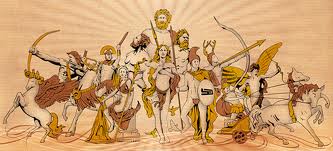
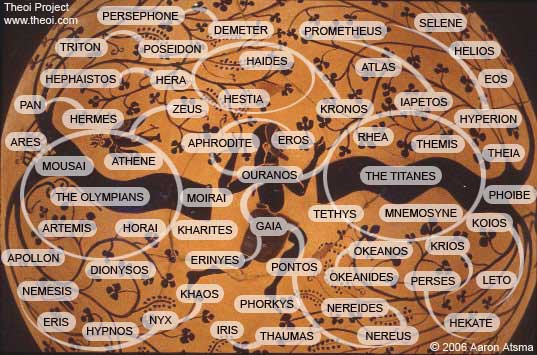
I don’t normally repost charts from Wikipedia and StumbleUpon, but when I do, they are the most interesting charts in the world!  (catch the modern commercial tie-in?)  It looks way better on the link, so go there.  I am somewhat of a mythos expert, and I learned a lot from it.  In fact, it looked so bad here, I deleted the chart.  But I added the two pictures for your enjoyment and enlightenment.

Family tree of the Greek gods

From Wikipedia, the free encyclopedia


http://www.stumbleupon.com/su/4vhXZj/:16-BvAiSA:Y@wdK+54/en.wikipedia.org/w/index.php?title=Family_tree_of_the_Greek_gods&mobileaction=toggle_view_desktop/


2 Comments

Filed under Humor and Observations

Interesting Historical Phrases

I do not know if all of these are true or not, but they are certainly interesting little tidbits I found while stumbling about on stumbleupon.com


Reposted from Daveweinbaum.com off Stumbleupon

Interesting facts..

Historical tidbits you didn’t know you needed to know!

In George Washington’s days, there were no cameras.
One’s image was either sculpted or painted.  Some paintings of
George Washington showed him standing behind a desk with
one arm behind his back while others showed both legs and
both arms.  Prices charged by painters were not based on how
many people were to be painted, but by how many limbs were
to be painted.  Arms and legs are “limbs,”
therefore painting them would cost the buyer more.  Hence the
_expression, “Okay, but it’ll cost you an arm and a leg.”

**************************************************************
As incredible as it sounds, men and women took baths only
twice a year (May and October)!  Women kept their hair
covered, while men shaved their heads (because of lice and
bugs) and wore wigs.  Wealthy men could afford good wigs mad
e from wool.  They couldn’t wash the wigs, so to clean them
they would carve out a loaf of bread, put the wig in the shell,
and bake it for 30 minutes The heat would make the wig big
and fluffy, hence the term “big wig.”
Today we often use the term “here comes the Big Wig”
because someone appears to be or is powerful and wealthy.

**************************************************************
In the late 1700s, many houses consisted of a large room with
only one chair.  Commonly, a long wide board folded down from
the wall, and was used for dining.  The “head of the household”
always sat in the chair while everyone else ate sitting on the
floor Occasionally a guest, who was usually a man, would be
invited to sit in this chair during a meal.  To sit i n the chair
meant you were important and in charge.  They called the one
sitting in the chair the “chair man.” Today in business, we use
the expression or title “Chairman” or “Chairman of the Board.”

**************************************************************
Personal hygiene left much room for improvement.  As a result,
many women and men had developed acne scars by
adulthood.  The women would spread bee’s wax over their
facial skin to smooth out their complexions.  When they were
speaking to each other, if a woman began to stare at another
woman’s face she was told, “mind your own bee’s wax.” Should
the woman smile, the wax would crack, hence the term “crack a
smile” In addition, when they sat too close to the fire, the wax
would melt .  .  .  therefore, the expression “losing face.”

**************************************************************
Ladies wore corsets, which would lace up in the front.
A proper and dignified woman, as in “straight laced”.  .  .  wore
a tightly tied lace.

**************************************************************
Common entertainment included playing cards.  However, there
was a tax levied when purchasing playing cards but only
applicable to the “Ace of Spades.” To avoid paying the tax,
people would purchase 51 cards instead.
Yet, since most games require 52 cards, these people were
thought to be stupid or dumb because they weren’t “playing
with a full deck.”

**************************************************************
Early politicians required feedback f rom the public to
determine what the people considered important.  Since there
were no telephones, TV’s or radios, the politicians sent their
assistants to local taverns, pubs, and bars.  They were told to
“go sip some ale”
and listen to people’s conversations and political concerns.
Many assistants were dispatched at different times.  “You go
sip here” and “You go sip there.” The two words “go sip” were
eventually combined when referring to the local opinion and,
thus we have the term “gossip.”

**************************************************************
At local taverns, pubs, and bars, people drank from pint and
quart-sized containers.  A bar maid’s job was to keep an eye on
the customers and keep the drinks coming.  She had to pay
close attention and remember who was drinking in “pints” and
who was drinking in “quarts,” hence the term “minding your “P’s
and Q’s ”

**************************************************************
One more: bet you didn’t know this!
In the heyday of sailing ships, all war ships and many freighters
carried iron cannons.  Those cannons fired round iron cannon
balls.  It was necessary to keep a good supply near the cannon.
However, how to prevent them from rolling about the deck?
The best storage method devised was a square-based pyramid
with one ball on top, resting on four resting on nine, which
rested on sixteen.  Thus, a supply of 30 cannon balls could be
stacked in a small area right next to the cannon.  There was
only one problem…how to prevent the bottom layer from sliding
or rolling from under the othe rs.  The solution was a metal
plate called a “Monkey” with 16 round indentations.
However, if this plate were made of iron, the iron balls would
quickly rust to it.  The solution to the rusting problem was to
make “Brass Monkeys.” Few landlubbers realize that brass
contracts much more and much faster than iron when chilled.
Consequently, when the temperature dropped too far, the
brass indentations would shrink so much that the iron
cannonballs would come right off the monkey.  Thus, it was
quite literally, “Cold enough to freeze the balls off a brass
monkey.” (All this time, you thought that was an improper
expression, didn’t you.)


Leave a comment

Filed under Humor and Observations

Predictions of Future Technology

I found this chart on StumbleUpon and thought it was pretty cool and thought provoking.  Hopefully, you will as well.

http://www.stumbleupon.com/su/2FWuDt


Leave a comment

Filed under Humor and Observations