Tag Archives: writing

My Interview with Ruth Jacobs – In the Booth with Ruth

I am pleased to say that Ruth Jacobs of Hertfordshire, England, “In the Booth with Ruth” has posted her interview with me.  Below is the link and the text.  Please check out her blog at ruthjacobs.co.uk and also her store.  She has novels for sale and also petitions for various human rights causes.  Thanks Ruth!

http://ruthjacobs.co.uk/2013/06/16/michael-bradley-interview/

IN THE BOOTH WITH RUTH – MICHAEL BRADLEY

Michael Bradley

What’s your writing background? When did you begin writing and what inspired you? 

I was an abused child and escaped from reality by reading. I started reading encyclopedia at age four. I have read at least a book a week since I was twelve, and probably close to 5,000 at this point. I have always wanted to be a writer, but adults discouraged me and I went into various fields. Finally, at age forty-seven, I retired on my savings and started writing full time on April 1, 2011. 

How often do you write? And how do you manage to fit in writing among other commitments? 

I write every day and can pace up to a chapter per day. I write full time for the most part, but also do some consulting, public appearances, and teaching. I am a bit of a word processor. I have so many ideas and stories fully written in my head, that the actual act of writing feels like dictation from my own internal voice. 

In which genre do you most enjoy writing? 

I like writing the same genres I love to read. Fiction, historical fiction, steampunk, and fantasy. I write what I refer to as “pulp fiction” in that it is story and character rich, enjoyable, easy to read, and takes the reader away from the normal world. I do not try to write deep literary fiction with nuanced meanings you have to dwell on for days to understand. 

What draws you to write in that genre? 

I am a strong believer in writing what you enjoy reading. I feel you are a bit of a charlatan if you try to write something because it is popular or marketable. Ideas and writing come easily if you would want to read your own novels and stories if someone else had written them. I tell my readers honestly, that had I not written the stories, I would love to read them. 

Tell me about your current project(s)? 

I work on several things at once. For novels, my next is Blood Bank, a unique post-apocalyptic vampire novel, that is more about what it means to be human than about vampires. It is due out late summer 2013. After that, the third in the Travelers’ Club steampunk series will come out, The Travelers’ Club and The Lost City, late Fall 2013. I am working on next year’s Twistedanthology series, and on The Second Civil War, a political thriller set in 2024. Both I hope to release in early 2014. 

What are your writing plans for the future? 

My goal is to continue to release two or three books per year and a dozen short stories. My career goal is to have thousands of readers who enjoy my writing and look forward to the next story. Financially, I plan to break even, but I would trade profits for readers any day. I have stories bursting to get out and on to paper, and I just want others to read and enjoy them. 

Where can people find out more about you? 

My blog site at www.mbtimetraveler.com is a very eclectic selection of posts that interest me. Usually, I update the blog two or three times daily. Some are pictures, some are reposts of stories, some are original writing of mine. If you follow my blog, you will certainly gain insight into the unusual mix of interests floating around inside my head.

Twitter: @mbtimetraveler

My books can be found on Amazon: Twisted NightmaresThe Travelers’ Club and The Ghost ShipThe Travelers’ Club – Fire and Ash, and Twisted History. I also write movie reviews, book reviews, true science and other columns for multiple magazines, and I have had around forty short stories published in various publications.

Leave a comment

Filed under Humor and Observations, Writing

New Science Fiction Serial Story – Part One

I decided to a serial sci-fi story for The WOD Magazine.  I will post episodes here.  Let me know what you think.  Now… for the world premier… Episode One of The Drifter


The Drifter

A Sci-Fi Serial Story

By Michael Bradley

Part One

With a shocking blare of white light and an intake of breath Tony burst into reality.  Looking around, he was strapped down on a bed in a sanitized room, like a hospital.  A man in a lab coat turned and looked down at him.

“Awake now are you?”

“Where am I?  Why am I here?”  Tony sputtered.

“You took quite a shock; we are making sure you are well.  This is the PeaceCenter.  We are healing you.”  The man tapped away on his hand held device.

Tony moved his neck about taking in the scene.  “What shock?”

“Well when we pulled you from the pod you said you were time traveling.”  The man shook a bit with restrained laughter.

“Pod?”

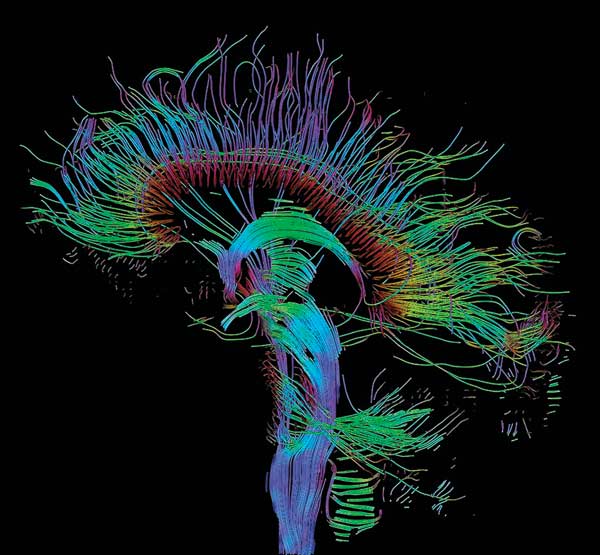
The stranger squinted and flashed a pen light device in Tony’s eyes.  “Yes, the retrieval pod.  You were found wandering about talking nonsense.  I’m afraid your brain is not what it should be.  After some tests we can fix you up.”

“Fix me up? I don’t want you tampering with my brain.”  Tony struggled against his restraints, to no avail.

brain

“You don’t want to be at peace?  To take your place as a productive citizen of society?”  The man made a dismissive ‘tsk-tsk’ sound.

“I don’t want to be at peace like some robot, I want to be me.  What is wrong with you Doctor?”

“Doctor?  What an antiquated term.  I am a Peacekeeper.  We can’t have you railing against society, causing chaos and violence now can we?  Why would anyone choose violence, conflict and rebellion over peaceful coexistence?  Don’t worry, whoever you are, we will fix your brain patterns so you fit in nicely.”

The man left the room.  Alone, Tony struggled to get free.  His arms and legs were held firmly in place by some kind of plastic straps.  He looked around, frantic.

“I have to get out of this place!”  Tony yelled, sweating beading on his forehead.

“Don’t I know it Tony!”  Came an answering voice next to him.

Tony looked over from his seat in the cockpit at the pilot.  A well-dressed older man was holding the yoke and adjusting the thrusters.

Tony’s mind reeled and he felt sick.

“Where are we?”

“Down there is New York.  As soon as we get our vector from station we head up north to my place in Maine like we talked about Tony.”  The older man looked over at Tony.  His forehead furrowed, “What is it Tony?  You didn’t already take it did you?”

Tony had no idea what was going on.  He mumbled, “No, of course not.”  He looked out the side of the private jet cockpit down at the city.  New York gleamed of silver plastisteel and transparent glassrock.  “It looks so peaceful from up here.”

“It should Tony, not a crime, not even a punch thrown or an insult uttered since you developed The Protocol forty years ago.”  The man listened on his com.  “Clearance, we have a north vector.  Let’s go relax and get some home-cooked lobster.  World Headquarters can wait for a few days.  You’ve earned a rest, and even though I’m just a figurehead as Earth President, I could use a few days to be myself too.”

Tony tried to process it all.  Who am I?  Where am I?  When am I?

brain time travel

“Mr. Perez?”

Anthony Perez, Tony to his friends, turned to his lab manager.  “Yes, Monica?”

“I’m sorry Boss, it’s just that you seemed to phase there for a minute.  The pill will do that.  I don’t know how long you will be with me.  You have to remember you have the bomb inside you.  You have to remember who and when you are and what you have to do.”

“Monica?  Bomb?”  Tony was trying to hold on, to stay in one place, one time.

“Boss, I warned you not to do this.  Stay with me Mr. Perez.  Stay with me just a few minutes.  Focus on your index finger like you told me to remind you.”

Tony started to look at his finger in curiosity.  Bright light flashed, he felt a tug at his mind.  Crap, where am I going now?

1 Comment

Filed under Writing

Some Novel Writing Tips

Here are some tips I have learned in my own novel writing.  I hope they help you as well:

1)  Each Chapter should have a specific purpose.  If you have ten things going on in a chapter, the reader has no idea what is important and what is not.  Focus your narrative on important things.  Use more descriptors for items that matter, fewer for areas the narrative just passes through never to return.  Get one part of your character or story arc done in each chapter.  If you have a movie you have to fit into 90 minutes you cut the scenes that are nice but not necessary.  A novel fits into roughly 40 chapters at 2,500 words each.  If you weave 3 major story lines and/or characters, you have just 12 to 14 chapters for each one.  Introduce, development, twists, double backs, near finale, the final climax, the anti-climax, all have to get done in that time.  A novel seems long, but  you only have so many “scenes” to tell your story, don’t waste any.

writing 1

2) Start your chapter with a reminder, end it with a tease.  Many people read like I do – they finish a chapter and go to sleep.  The next time they pick up the book might be awhile.  Just like TV series will show you scenes of what happened the last episode, then end with teasers for the next week, you need to do that in your chapters.  Start the chapter with a sentence or two reminding them where you left it the chapter before.  Don’t make them read a few pages to remember.  At the end you don’t have to leave some obvious hook like the old TV serials where the hero appears to be blown up, only to see that he magically escaped.  However, give the reader some reason to want to pick up your book again.  Your story should have enough interesting questions and story arcs to keep the reader wanting to know what happens next.  A chapter that ends flat might mean even more time before they read the next one.

3)  Don’t include all that cool narrative unless it is necessary to the story.  This is the hardest for me because I do so much research on my novels.  So, you are writing about a World War 1 story and you have so many things you want to talk about with trench warfare, the home front, cool historical factoids you want to share…  The problem is, your book is not a historical reference, but a fiction.  The story is the characters, not the setting.  You should strip out any narrative that does not surround the characters and their slice of it.  You might want to break into elegant narrative about the past four hundred years of history of the spot your character sets his foot, but the character, and the reader, only care about it if it influences the story.   So much I want to tell about the setting, about history, about cool things, but it does not help the story.  It hurts to leave it all out, knowing I will never revisit that spot in that point of history in other stories.  Still, you have to leave it out.

writing 2

4)  There is nothing cooler than having readers know your characters.  Going to book clubs, signings and events where people have read my stories and comment on them is a rush.  It surprises me that these readers know my characters as well as I do.  They know what they would do under different circumstances, their weaknesses, their strengths, what they look like, their aspirations.  I always wonder what I evoke in a reader with my prose.  When they tell you exactly what you wanted to convey, it is awesome.  The magic of the written word is transmitting a fictional character from your mind to theirs in simple words.  To do this, your characters needs to be complicated and real.  Try to avoid having anyone in your story that you don’t have a full character build-up behind them.  Gather characters in your daily life from friends, enemies, barristas, store clerks, fellow elevator passengers, anyone you meet.

5)  Don’t describe anything with a common view and over-describe new concepts.  If you say, “they walk into a sports bar.”  Every reader has an image that comes up.  It does not matter if their sports bar is the one you have in mind, it only matters that they see a sports bar in their mind.  I no longer describe the lay-out, the tables, or virtually anything.  They already have a mental picture and further description is distracting.  However, I have an airship in The Travelers’ Club – Fire and Ash that features prominently in several chapters.  In test reading groups, no one knew what it looked like, how big it was, or the layout.  Despite the fact that I had described it.  They simply had no pre-set mental image for the insides of an imaginary private airship yacht.  I had to add an entire chapter with one of the characters taking another on a tour of their ship as it was being readied for flight.  It turned into a fun chapter for me and solved the problem.  So, as an author, ask yourself – Does the reader have a mental image of the item or setting?  If yes, don’t describe it.  If no, over describe it.

kindle fa

6)  Focus on the core of your novel.  Is your character dealing with internal issues, like over-coming cowardice, finding love, a life of rejection, scars of abuse?  Are they dealing with action issues, like running from hitmen, the police, fighting in a war, putting out fires?  If the story is internal and emotional,  focus your writing on the internal dialogue and personal challenges.  Don’t dilute an emotional story with a lot of useless setting and spatial descriptions.  The action that the reader will care about is the emotional journey.  If you have a physical action story, build the narrative around that.  Is the character hurt, tired, hungry, thirsty, desperate for shelter?  Build on the action, don’t just describe it quickly.  Let the reader dwell on the excitement and the challenge of the physical environment.  I think we writers sometimes try to make all parts of our story detailed and lose track of what the reader is focused on.  Try to avoid red herrings to the reader that lead them away from the crux of the story and the main conflicts facing the characters.

Those are just a few of the things I have personally learned to include in my writing.  We are all different, so maybe they will help you and maybe they won’t.  At the very least, hopefully they will give you some additional ideas on how to approach writing your next story.


9 Comments

Filed under Writing

First Death by Bunny Story is Up

I tried my own prompt.  The result is on a new Page called Flash Stories.  If you go HOME, and click on that page at the top, you can read it.  633 words.  Please send your stories as well and I will post them.  Please keep it to PG13, no gratuitous sex or overly explicit profanity.  I will post prompts from time to time if you like and I get participation.  Enjoy!

death by bunny


1 Comment

Filed under Humor and Observations, Writing

Asthma is Not Funny

Ok, a brief rant…  I am so tired of movies and television shows portraying people with asthma as nerds that get nervous and use an inhaler.  When they decide to become more normal, they throw away their inhaler.  You have probably already brought up that vision from the inundation of images to that effect.  One such scene is in the film Hitch, where the lovable accountant Alfred uses his inhaler when he is scared to take action.  He throws it away and mounts the steps to kiss his girl in passion, no longer having asthma.

The truth is, asthma is a very serious condition which kills.  If a child appears ‘nerdy’ in school as a result, it is because they have to avoid activities that trigger an attack and might kill them.  Using an inhaler more than two puffs twice a day can cause heart attack or stroke.  Anyone constantly using an inhaler in a movie or television show is doing so improperly.  They need to go to their primary care physician or pulmonologist to get their asthma under control.  Movies teach asthma is a mental weakness, psycho-somatic and mis-portray the use of inhalers.  Over use of an inhaler, or throwing one away you need to have can be fatal.

Krissy Taylor, model and sister of model Niki Taylor, died at 17 years of age from asthma.  Not a nerd, not a hypochondriac, a real person with a real disease.

Krissy Taylor, model and sister of model Niki Taylor, died at 17 years of age from asthma. Not a nerd, not a hypochondriac, a real person with a real disease.

Please writers, stop!  If you want to add dimension to a character by giving them a medical condition, get it right.  It is as cliche and as wrong as the ugly girl who just needs to remove her glasses, get a make-over and now she is popular.  It’s poor writing at best, and harmful to asthma sufferers’ psyche and health at worst.

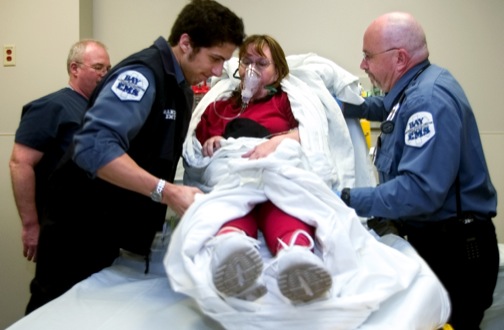
I have asthma and have to use an inhaler from time to time when I cannot breathe.  If you have ever tried to breathe, and every time you take in air you wheeze and don’t get enough oxygen, it is not funny at all.  Here is the real face of an asthma attack:

EMS for a day asthma attack 2

5 Comments

Filed under Humor and Observations, Writing

Excitement and Frustration

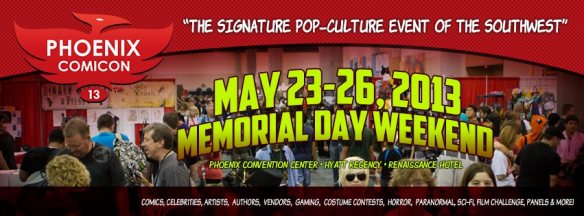
So, I am going to be at booth #1629 at Phoenix Comic Con 2013 from Thursday May 23rd through Sunday May 26th!  That is the really exciting part.  I will be selling signed copies of Twisted History, The Travelers’ Club and the Ghost Ship, The Travelers’ Club – Fire and Ash, and the newly released Twisted Nightmares.

My wife will be selling vintage jewelry, Gatsby like hair decorations and pop culture creations at the same booth with me, from her Susanne’s Passions craft store.  I am really looking forward to this awesome event, both as a vendor, and as an attendee.  My friend and fellow author, Chris Wilke, and his family will be helping out at the booth some as well.

pcc logo

So why the mixed feelings?  Why the frustration?

It is because the “powers that be” at Phoenix Comic Con refuse to consider me for any panels.  I will not name the person, but I write articles for the same publication as this person.  Despite the fact that I have appeared at numerous conventions and appeared on local panels at LepreCon, DarkCon, and the Wild Wild West Con, the folks at PCC won’t return my calls or emails.  They even refused to talk to me in person.

Why?  Because I am Indie-published.  Despite the fact that PCC has panels each year on how to Indie publish, their guy in charge of writers only invites those published through traditional publishers.  In fact, the panels on Indie publishing have all authors who are traditionally published.  The exception of course is Michael Stackpole, a great guy who has been a mentor in my journey, who had many books traditionally published and now Indie publishes.

indie

It is a shame that even at a cutting edge cultural event, the old social morays still stay in place, that some how an Indie published author is a “vanity press” author.  Some of their guests in prior years I have actually outsold as an Indie, and one of them had a book deal but did not even have a book out yet.  I know we each have our own path.  I even feel petty and small for being irritated by this.  However, I have real experiences to share with authors who go to events like PCC to see a panel on “Indie publishing.”  I have been on dozens of panels on the topic, been written up in local newspapers and media, and appeared at many writer conferences to give seminars on the topic.

I am very happy for the authors who are appearing, including a great person I worked with years ago named Amy Nichols who has her first book published, an awesome Children’s book.  Also there will be Jenn Czep, who is a wonderful person with a story in Twisted Nightmares.  Michael Stackpole, Timothy Zahn, Terry Brooks and Cherie Priest are all great people too.  Sam Sykes and Gini Koch I know and enjoy as well from meeting them and being on panels together.  I don’t even care that much not to be selected – it is not even being considered because I am an Indie that is frustrating.

I don’t usually rant.  I am a very upbeat guy in general.  For some reason this just annoys the heck out of me.

2 Comments

Filed under Humor and Observations, Writing

Another Historical Writing Source

From time to time I post some of the sources I use for my historical fiction.  I write a lot about the Victorian Era, roughly 1830 to 1900, and probably spend twice as much time researching a story as writing it.  To give the real feel of an environment, you have to put in pieces from all over to give a sense of reality.  One source that is very good is on popular songs of various time periods.  Link found here:

http://www.stumbleupon.com/su/2aOUaQ/:z!0VJYk!:XhM+EubB/www.contemplator.com/america/

music

Almost any time is incomplete without the music of the era.  However, knowing what was popular in Cincinnati in 1854 is not something you know off the top of your head.  After using a nice reference site like this, you can look at songs, lyrics and other information.  Then you have to reconcile any use with other data.  For instance, if you want to use “I’ll take you home Kathleen,” you should find out when it was written, by whom, how was it performed?  Where was it distributed?  Was it orchestral, sheet music, able to be played on violin or harmonica? Was it high-brow, low-brow or pop?  After that research, often you have to turn to another song, and another, just to get the right time, place, setting and folks who are listening.

That one song may just represent a sentence in the set-up to a place where action occurs in the story.  It is the little details like that I am most proud of in my stories.  Many won’t know that I spent hours researching the song to get it right, but I do.  You can’t always get the answer you need, but when you can, I think you owe it to the reader to do so.

Robert-Petway-240x300

Here is an example of the section I have used for 1880 America:

Early 1800s to the Civil War


Civil War

Post Civil War

1 Comment

Filed under Writing

Check out My Guest Blog On BryanHayden.net

Bryan Hayden posted a guest blog of mine on “Is Writing Creative?”.  I have sent him a number of columns for use over the next several months.  If you have not tried guest blogging yet, I suggest you give it a go.  It is a great way to cross-pollinate and support your fellow bloggers.

Here is the link:

http://brianhayden.net/guest-post-by-michael-bradley-writing-is-it-creative/

Enjoy!


Leave a comment

Filed under Writing

Oblivion – Movie Review

Oblivion

Movie Review

by Michael Bradley

Oblivion is the latest Tom Cruise science fiction movie.  I have never really cared for Tom Cruise or his acting, and special effects tend to be overdone in his movies, so that was my expectation entering the dark expanse of the theater.  I was in for a refreshing surprise.  Yes, there is Tom Cruise strutting, shirt off, close ups of his face as in all his films, and there are special effects full of eye candy, but there is also a fascinating sci-fi story as well.  This makes Oblivion definitely worth seeing.

The role of Jack Harper is portrayed by Tom Cruise, who gets nearly all the screen time as well.  Andrea Riseborough, an English actor portrays Victoria and does an outstanding job.  Olga Kurylenko, the Ukraine born woman who played the Bond Girl in Quantum of Solace, plays Julia.  Morgan Freeman, as always, plays himself, but the character is named Beech.  They are the only four with significant airtime.

oblivion_ver3

The story starts out with flashbacks and narration by Jack Harper that let you as an audience know that aliens called Scavengers, or Scavs, for short, attacked the planet.  Earth won but was destroyed, so the people went off to Titan, but they have to harvest the seas for energy.  Jack and Victoria are left behind to fix the patrol drones and keep the harvesters safe from the remaining Scavs who are bent on causing them troubles.

I hate the fact that movie trailers reveal too much.  I have to confess that the first couple of “twists” in the story I had already guessed from the trailers.  It is impossible not to see them in this mass media world we live in where they spend almost as much marketing as they do filming.  Still, the movie takes several turns and some were not expected at all.  The movie moves along at a good pace, revealing things one at a time, not making you wait to long, but having you reassess what is going on along the way.

A few caught me unawares, which is what I really enjoy.  Oblivion is not a movie that you will talk about for weeks.  It has no deeper meaning to it.  However, it is a refreshing bit of eye candy, action film, that is not mindless, but actually tells an interesting tale as it goes and you use your mind a bit to keep up.  I would like to comment on a few things that did not work as well, but I won’t.  They would require spoilers, and I won’t duplicate a movie trailer by giving too much away.

oblivion_ver5

4 Comments

Filed under Humor and Observations, Writing

House MD vs. Sherlock Holmes

I was re-watching episodes of the Jeremy Brett series as Sherlock Holmes, which is my favorite of all of them.  It most accurately portrays the genius, eccentricity and arrogance of Sherlock Holmes while also showing the caring, considerate and loyal Dr. Watson, who often as not is embarrassed by his friends manners, but sticks with him.  It then hit me an amazing similarity between this Sherlock Holmes, and that of House, the wildly successful television series that just ended.  I don’t know why I never saw the parallels before.  I will explain my observations and deductions below.

jeremy logo

house log

Sherlock Holmes falls into bouts of melancholy and angry temper when life is boring and there is no mystery worthy of his great mind to solve.  In these periods, his friend Dr. Watson comes and tries to help him, even sharing rooms with him.  Dr. Watson is most concerned when Sherlock turns to drugs, in the form of a seven percent solution of cocaine.  Sherlock rationalizes this use as making him a better thinker, even though he knows it is wrong.

Dr. Gregory House falls into bouts of melancholy and angry temper when life is boring and there is no medical mystery worthy of his great mind to solve.  In these periods, his friend, Dr. Wilson, comes and tries to help him, even living with him on many occasions.  Dr. Wilson is most concerned when House turns to drugs, in the form of Vicodin.  House rationalizes this as making him a better thinker, even though he knows it is wrong.

Hugh-Laurie

jeremy-brett-sherlock-holmes

Both House and Holmes use canes as props.  House needs his more for his bad leg, but uses it for all sorts of gestures and gibes.  Holmes carries it for fashion, but uses it the same as House.  House and Dr. Wilson enjoy laughing with each other over the effect of House’s machinations on others, and occasionally grouse over the dirty tricks they play on each other for amusement.  Holmes and Dr. Watson also smile at each other as Holmes pulls off machinations on others, and to a lesser extent, also tease and pull tricks on each other that are not always appreciated.  House hates people in general.  Holmes, dislikes almost all women.  Dr. Wilson likes all people.  Dr. Watson likes all women.

edward-hardwicke

robertseanleonard

Dr. Watson enjoys going on adventures with Holmes, though he often is disturbed by his rude behavior and focus solely on the mystery, not the people.  Holmes frequently keeps him the dark, wakes him up at all hours, but also often gets the solution to a mystery by talking it through with Watson.  Dr. Wilson likes going on adventures with House, but is disturbed by his rude behavior, his focus solely on the mystery and not the people.  House wakes him up in the middle of the night, keeps him in the dark, but often gets that moment of clarity by bouncing things off of him.

Holmes likes smart police detectives that he can show up once they do the preliminary work for him.  House likes smart doctors that he can show up once they do the preliminary work for him.  Dr. Watson retired from the Army due to a wound and suffered poor health.  Dr. Wilson develops cancer and suffers poor health.  Holmes and Watson enjoy a cigar and fine liquor together.  House and Wilson enjoy a fine cigar and liquor together.

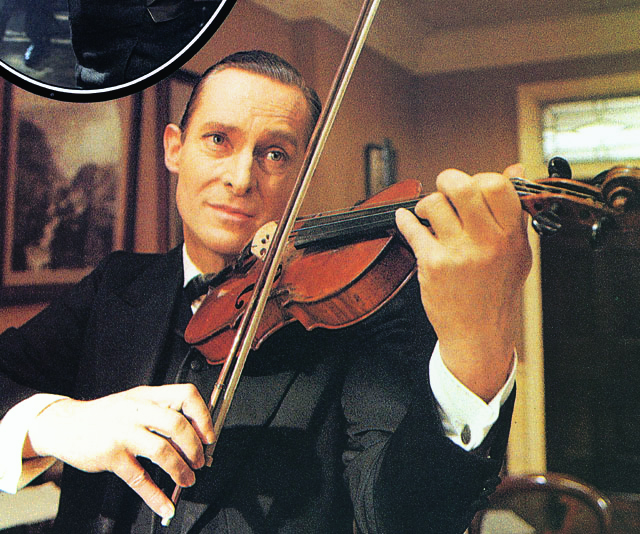
Holmes lives at 221B Baker Street.  House lives at apartment 221B.  Holmes plays a violin when thinking about life, House plays the piano.

house-on piano

Jeremy-Brett-violin


I could actually go on and on with the parallels.  Now that I see it, I can’t help but wonder if the original pitch for the show was, “Ok, we take Sherlock Holmes and put him in a hospital and all the mysteries are medical, not criminal.”

What do you think?

7 Comments

Filed under Humor and Observations, Writing