Monthly Archives: January 2014

Why Did Knights Joust Snails and Lose So Often?

The knight fighting a snail in combat is a surprisingly common artistic motif of the Middle Ages.  Why?  Some few of you may not be aware of this particular historical curiosity enough to have already formed an opinion, so I have reposted the following article:

26 September 2013

Knight v Snail

Recently a group of us went into our manuscripts store to have a look at some medieval genealogical rolls.  We were examining Royal MS 14 B V, an English roll from the last part of the 13th century which contains quite a lot of marginalia, when one of our post-medieval colleagues noticed a painting of a knight engaging in combat with a snail.

Royal_ms_14_b_v_f003r_detail Knight v Snail  (from a genealogical roll of the kings of England, England, 4th quarter of the 13th century, Royal MS 14 B V, membrane 3)

This struck him as odd, which struck the medievalists in the group as odd; surely everyone has seen this sort of thing before, right?  As anyone who is familiar with 13th and 14th century illuminated manuscripts can attest, images of armed knights fighting snails are common, especially in marginalia.  But the ubiquity of these depictions doesn’t make them any less strange, and we had a long discussion about what such pictures might mean.

Add_ms_49622_f193v_detail Knight v Snail II:  Battle in the Margins (from the Gorleston Psalter, England (Suffolk), 1310-1324, Add MS 49622, f. 193v.  For more on the gorgeous Gorleston marginalia, please see our posts here and here)

There has been much scholarly debate about the significance of these depictions of snail combat.  As early as 1850, the magnificently-named bibliophile the Comte de Bastard theorised that a particular marginal image of a snail was intended to represent the Resurrection, since he discovered it in two manuscripts close to miniatures of the Raising of Lazarus.  In her famous survey of the subject, Lilian Randall proposed that the snail was a symbol of the Lombards, a group vilified in the early middle ages for treasonous behaviour, the sin of usury, and ‘non-chivalrous comportment in general.’  This interpretation accounts for why the snail is so frequently seen antagonising a knight in armour, but does not explain why the knight is often depicted on the losing end of this battle, or why this particular image became so popular in the margins of non-historical texts such as Psalters or Books of Hours.

Yates Thompson MS 19 f. 65r C1319-01b Knight v Snail III: Extreme Jousting (from Brunetto Latini’s Li Livres dou Tresor, France (Picardy), c. 1315-1325, Yates Thompson MS 19, f. 65r)

Other scholars have variously described the ‘knight v snail’ motif as a representation of the struggles of the poor against an oppressive aristocracy, a straightforward statement of the snail’s troublesome reputation as a garden pest, a commentary on social climbers, or even as a saucy symbol of female sexuality.  It is possible that these images could have meant all these things and more at one time or another; it is important to remember, as Michael Camille, who devoted a number of pages to this subject, once wrote: ‘marginal imagery lacks the iconographic stability of a religious narrative or icon’.   This motif was part of a rich visual tradition that we can understand only imperfectly today – not that this will stop us from trying!

Royal_ms_2_b_vii_f148r_detail Knight v Snail IV:  The Snails Attack (from the Queen Mary Psalter, England, 1310-1320, Royal MS 2 B VII, f. 148r)

Some more of our favourite British Library images are below, and please let us know what you think.  You can leave a comment below, or we can always be reached on Twitter at @BLMedieval.

Royal_ms_10_e_iv_f107r_detail Knight v Snail V:  Revenge of the Snail (from the Smithfield Decretals, southern France (probably Toulouse), with marginal scenes added in England (London), c. 1300-c. 1340, Royal MS 10 E IV, f. 107r)

Add_ms_49622_f162v_detail Knight v Snail VI:  The Gastropod Conqueror (from the Gorleston Psalter, England (Suffolk), 1310-1324, Add MS 49622, f. 162v)

Harley MS 6563 ff. 62v-63r Knight v Snail VII: A Pretty Comprehensive Defeat (from a fragmentary Book of Hours, England (London), c. 1320-c. 1330, Harley MS 6563, ff. 62v-63r)

Add_ms_49622_f210v_detail Knight v Snail VIII:  Switcheroo!  It’s a Monkey This Time (from the Gorleston Psalter, England (Suffolk), 1310-1324, Add MS 49622, f. 210v)

Harley_ms_4379_f023v_detail Knight v Snail IX:  Just for Fun:  A Rabbit, Monkeys, and a Snail Jousting (from the Harley Froissart, Netherlands (Bruges), c. 1470-1472, Harley MS 4379, f. 23v)

Further Reading

Lilian Randall, ‘The Snail in Gothic Marginal Warfare’ Speculum 37, no. 6 (June 1962), pp. 358-367.

Michael Camille, Image on the Edge (Reaktion Books: London, 1992), pp. 31-36.

Carl Prydum, What’s So Funny about Knights and Snails?, http://www.gotmedieval.com/2009/07/whats-so-funny-about-knights-and-snails.html

– Sarah J Biggs

Posted by Sarah J Biggs at 12:01 AM

– See more at: http://britishlibrary.typepad.co.uk/digitisedmanuscripts/2013/09/knight-v-snail.html#sthash.DN7CkKhT.dpuf

Leave a comment

Filed under Animals, Humor and Observations

American Holocaust

In World War 2 some 50-80 million people died.  The Holocaust, the actual planned extermination of people by the Nazis resulted in 12-14 million deaths, about half Jewish, the others slavs, political opponents, communists, performers and anyone else considered an enemy of Aryan rule.

In the United States at the height of slavery, Slave owners held captive around 4,000,000 black people as slaves.  During the Civil War, 620,000 men died in battle, or roughly the same amount as every other American war combined, including WW1, WW2 and Viet Nam.  A full 2% of the American population, or 1 in 50 died in the conflict.

I am sure you know about World War 2, the Holocaust and the Civil War fought to free 4 million slaves.  But what about the ongoing American Holocaust?  Since Roe vs. Wade in 1973, over 56 million abortions have occurred in the United States.  Black children are aborted at four to five times the rate of other children.  Though only 17% of the population, they represent half the abortions.

In the United States, roughly 9,000 murder victims are identified each year.  Half of them are black victims.  93% of the perpetrators are also black.  Why are these numbers not a clarion call for change?

We have lost around 28 million potential black American citizens in the last 50 years to abortion.  Seven times the number of slaves prior to emancipation, and twice the total number of dead in the holocaust, four times the numbers of Jews slain in the holocaust.

In murders, we lost another 250,000 young black people, many at the hands of their own fellows.

It’s time we stop race baiting over comments made on blogs or by politicians or by sports figures and look at the horror of our own American Holocaust.  Whether you are pro-life or pro-choice, I plead with you to consider the socio-economic impacts of a country that eliminates the same number of its citizens as the entire world lost in WW2.  And, like WW2, the victims are the poor and the minorities.

Something has to be done.  We have lost two generations of young black Americans that could have done so much for this country.  Help support adoption, birth control, strong families, counseling, domestic abuse prevention and our churches in needy communities.  If we have to, start small.  Adopt one child.  Pay for one family to choose life and adoption over abortion.  Help one family have housing and food.

Will history sweep under the rug one of the greatest atrocities in cost of life?  Is this magnitude of impact what any pro-choice advocate wants?  Let’s work together to stand up.  We need the next generation.  ALL of the next generation, not just the wealthy, not just the white, but everyone.

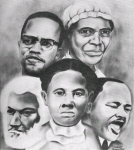
How many black leaders and heroes like the following have we missed out on their lives due to our holocaust?


1 Comment

Filed under Humor and Observations

Come See Me This Weekend at Amazing Arizona Con This Weekend!

untitled (4)


I will be at Booth #319 signing copies of my four latest books while my wife, owner of Susannes Passions will be selling her hand made one-of-a-kind pop culture jewelry and baubles.  Walking Dead stars will be on hand, awesome cosplayers and great friends.  Don’t miss the fun!  See you there!

The Amazing Arizona Comic Con Returns to Phoenix for 2014!
January 24-26, 2014
Phoenix Convention Center
100 N. Third St.
Phoenix, AZ 85004

untitled (6)

untitled (5)

Leave a comment

Filed under Humor and Observations

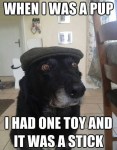
Cute Dogs – Dog Shaming for Your Monday Blues

Cute dog pictures for Monday.  Another episode of dog shaming…


Leave a comment

Filed under Animals, Humor and Observations

How to be well-read in no time: 40 short novels

Reposted from List Muse via:

http://www.stumbleupon.com/su/20ua1V/:LYdzCnJQ:Tj!F3ob4/www.listmuse.com/how-well-read-short-novels.php/

How to be well-read in no time: 40 short novels

How to be well-read in no time: 40 short novels is a list of books that provides a varied glimpse of the written style of many of the great authors. A concise selection, the titles can be worked through over a very short period, or, alternatively, they can be sandwiched between larger classics in an even more ambitious reading program. For further reading suggestions see our Top 100 Novels of All Time.


Slaughterhouse-Five

1. Slaughterhouse-Five

By Kurt Vonnegut

Slaughterhouse-Five, an American classic, is one of the world’s great antiwar books. Centering on the infamous firebombing of Dresden, Billy Pilgrim’s odyssey through time reflects the mythic journey of our own fractured lives as we search for meaning in what we fear most. More »

To the Lighthouse

2. To the Lighthouse

By Virginia Woolf

Widely acclaimed since its first publication in 1927, Virginia Woolf’s ‘To the  Lighthouse’ is a novel whose overt simplicity of plot hides a complex mix  of autobiographical detail, searching social questions and deep philosophical  enigmas.  The author’s innovative use of  nonlinear plot, stream- … More »

The Metamorphosis

3. The Metamorphosis

By Franz Kafka

It is one of the most memorable first lines in all of literature: “When Gregor Samsa woke one morning from uneasy dreams, he found himself transformed into some kind of monstrous vermin.” So begins Kafka’s famous short story, The Metamorphosis. Kafka considered publishing it with two of the … More »

Animal Farm

4. Animal Farm

By George Orwell

This is a classic tale of humanity awash in totalitarianism. A farm is taken over by its overworked, mistreated animals. With flaming idealism and stirring slogans, they set out to create a paradise of progress, justice, and equality. First published during the epoch of Stalinist Russia, today … More »

Of Mice And Men

5. Of Mice And Men

By John Steinbeck

Of Mice and Men is a novel written by Nobel Prize-winning author John Steinbeck. Published in 1937, it tells the tragic story of George Milton and Lennie Small, two displaced migrant ranch workers, who move from place to place in search of new job opportunities during the Great … More »

The Old Man and the Sea

6. The Old Man and the Sea

By Ernest Hemingway

The last novel Ernest Hemingway saw published, The Old Man and the Sea has proved itself to be one of the enduring works of American fiction. It is the story of an old Cuban fisherman and his supreme ordeal: a relentless, agonizing battle with a giant marlin far … More »

Waiting for the Barbarians

7. Waiting for the Barbarians

By J. M. Coetzee

A modern classic, this early novel by Nobel Laureate J. M. Coetzee centers on the crisis of conscience and morality of the Magistrate-a loyal servant of the Empire working in a tiny frontier town, doing his best to ignore an inevitable war with the “barbarians.” More »

A Christmas Carol

8. A Christmas Carol

By Charles Dickens

This new selection of Dickens’s Christmas writings confirms his lasting influence upon our idea of the Christmas spirit: that Christmas is a time for celebration, charity, and memory. In addition to the beloved A Christmas Carol, this volume includes such festive works as … More »

Things Fall Apart

9. Things Fall Apart

By Chinua Achebe

Things Fall Apart tells two intertwining stories, both centering on Okonkwo, a “strong man” of an Ibo village in Nigeria. The first, a powerful fable of the immemorial conflict between the individual and society, traces Okonkwo’s fall from grace with the tribal world. The second, as modern as … More »

The Stranger

10. The Stranger

By Albert Camus

(Book Jacket Status: Jacketed)Albert Camus’s spare, laconic masterpiece about a Frenchman who murders an Arab in Algeria is famous for having diagnosed, with a clarity almost scientific, that condition of reckless alienation and spiritual exhaustion that characterized so much of twentieth-century life. Possessing both the force of a … More »

As I Lay Dying

11. As I Lay Dying

By William Faulkner

Long been recognized not only as one of William Faulkner’s greatest works, but also as the most accessible of his major novels. This Norton Critical Edition is based on the 1985 corrected text and is accompanied by detailed explanatory annotations.  “Backgrounds and Contexts” is divided … More »

Invisible Cities

12. Invisible Cities

By Italo Calvino

Imaginary conversations between Marco Polo and his host, the Chinese ruler Kublai Khan, conjure up cities of magical times. “Of all tasks, describing the contents of a book is the most difficult and in the case of a marvelous invention like Invisible Cities, perfectly irrelevant” (Gore Vidal). Translated … More »

Heart of Darkness

13. Heart of Darkness

By Joseph Conrad

Dark allegory describes the narrator’s journey up the Congo River and his meeting with, and fascination by, Mr. Kurtz, a mysterious personage who dominates the unruly inhabitants of the region. Masterly blend of adventure, character development, psychological penetration. Considered by many Conrad’s finest, most enigmatic story. More »

The Quiet American

14. The Quiet American

By Graham Greene

“I never knew a man who had better motives for all the trouble he caused,” Graham Greene’s narrator Fowler remarks of Alden Pyle, the eponymous “Quiet American” of what is perhaps the most controversial novel of his career. Pyle is the brash young idealist sent out by Washington … More »

The Death of Ivan Ilyich

15. The Death of Ivan Ilyich

By Leo Tolstoy

Tolstoy’s most famous novella is an intense and moving examination of death and the possibilities of redemption, here in a powerful translation by the award-winning Richard Pevear and Larissa Volokhonsky.Ivan Ilyich is a middle-aged man who has spent his life focused on his career as a bureaucrat and … More »

The Time Machine

16. The Time Machine

By H. G. Wells

When a Victorian scientist propels himself into the year a.d. 802,701, he is initially delighted to find that suffering has been replaced by beauty, contentment, and peace. Entranced at first by the Eloi, an elfin species descended from man, he soon realizes that these beautiful people are simply … More »

Darkness at Noon

17. Darkness at Noon

By Arthur Koestler

Originally published in 1941, Arthur Koestler’s modern masterpiece, Darkness At Noon, is a powerful and haunting portrait of a Communist revolutionary caught in the vicious fray of the Moscow show trials of the late 1930s.   During Stalin’s purges, Nicholas Rubashov, an aging revolutionary, is imprisoned and … More »

The Great Gatsby

18. The Great Gatsby

By F. Scott Fitzgerald

The Great Gatsby, F. Scott Fitzgerald’s third book, stands as the supreme achievement of his career. This exemplary novel of the Jazz Age has been acclaimed by generations of readers. The story of the fabulously wealthy Jay Gatsby and his love for the beautiful Daisy Buchanan, of lavish … More »

Notes from the Underground

19. Notes from the Underground

By Fyodor Dostoevsky

In 1864, just prior to the years in which he wrote his greatest novels—Crime and Punishment, The Idiot, The Possessed and The Brothers Karamazov—Fyodor Dostoyevsky (1821-1881) penned the darkly fascinating Notes from the Underground. Its nameless hero is a profoundly alienated individual in whose brooding self-analysis there is … More »

The Picture of Dorian Gray

20. The Picture of Dorian Gray

By Oscar Wilde

Since its first publication in 1890, Oscar Wilde’s only  novel, The Picture of Dorian Gray, has remained the  subject of critical controversy.  Acclaimed by some as  an instructive moral tale, it has been denounced by  others for its implicit immorality. After having his … More »

The Red Badge of Courage

21. The Red Badge of Courage

By Stephen Crane

ENDURING LITERATURE ILLUMINATED BY PRACTICAL SCHOLARSHIP  The story of a young soldier’s quest for manhood during the American Civil War.  EACH ENRICHED CLASSIC EDITION INCLUDES:  • A concise introduction that gives readers important background information  • A chronology of the author’s life and work … More »

The Catcher in the Rye

22. The Catcher in the Rye

By J. D. Salinger

Anyone who has read J.D. Salinger’s New Yorker stories–particularly A Perfect Day for Bananafish, Uncle Wiggily in Connecticut, The Laughing Man, and For Esme With Love and Squalor–will not be surprised by the fact that his first novel is full of children. The hero-narrator of The Catcher in … More »

Fathers and Sons

23. Fathers and Sons

By Ivan Turgenev

When a young graduate returns home he is accompanied,  much to his father and uncle’s discomfort, by a strange  friend “who doesn’t acknowledge any authorities, who  doesn’t accept a single principle on faith.”  Turgenev’s  masterpiece of generational conflict shocked Russian  society when … More »

Siddhartha

24. Siddhartha

By Herman Hesse

This classic novel of self-discovery has inspired generations of seekers. With parallels to the enlightenment of the Buddha, Hesse’s Siddhartha is the story of a young Brahmin’s quest for the ultimate reality. His quest takes him from the extremes of indulgent sensuality to the rigors of ascetism and … More »

Strange Case of Dr Jekyll and Mr Hyde

25. Strange Case of Dr Jekyll and Mr Hyde

By Robert Louis Stevenson

Robert Louis Stevenson’s short novel, Dr. Jekyll and  Mr. Hyde, first published in 1886, became an instant classic, a Gothic horror originating in a feverish nightmare whose hallucinatory setting in the back streets of London gripped a nation mesmerized by crime and violence.  Its revelatory ending … More »

The Turn of the Screw

26. The Turn of the Screw

By Henry James

This Modern Library Paperback Classics edition brings together one of literature’s most famous ghost stories and one of Henry James’s most unusual novellas. In The Turn of the Screw, a governess is haunted by ghosts from her young charges past; Virginia Woolf said of this masterpiece of psychological … More »

Alice's Adventures in Wonderland

27. Alice’s Adventures in Wonderland

By Lewis Carroll

Since childhood, Kusama has been afflicted with a condition that makes her see spots, which means she sees the world in a surreal, almost hallucinogenic way that sits very well with the ‘Wonderland of Alice’. She is fascinated by childhood and the way adults have the ability, at … More »

Adventures of Huckleberry Finn

28. Adventures of Huckleberry Finn

By Mark Twain

Climb aboard the raft with Huck and Jim and drift away from the “sivilized” life and into a world of adventure, excitement, danger, and self-discovery. Huck’s shrewd and humorous narrative is complemented by lyrical descriptions of the Mississippi valley and a sparkling cast of memorable characters. More »

The Sorrows of Young Werther

29. The Sorrows of Young Werther

By Johann Wolfgang von Goethe

One of the world’s first best-sellers, this tragic masterpiece attained an instant and lasting success upon its 1774 publication. A sensitive exploration of the mind of a young artist, the tale addresses age-old questions — the meaning of love, of death, and the possibility of redemption — in … More »

The Prime of Miss Jean Brodie

30. The Prime of Miss Jean Brodie

By Muriel Spark

At the staid Marcia Blaine School for Girls, in Edinburgh, Scotland, teacher extraordinaire Miss Jean Brodie is unmistakably, and outspokenly, in her prime. She is passionate in the application of her unorthodox teaching methods, in her attraction to the married art master, Teddy Lloyd, in her affair with … More »

Candide

31. Candide

By Voltaire

Candide is the most famous of Voltaire’s “philosophical tales,” in which he combined witty improbabilities with  the sanest of good sense. First published in 1759, it  was an instant bestseller and has come to be regarded as  one of the key texts of the Enlightenment. … More »

Lord of the Flies

32. Lord of the Flies

By William Golding

The classic novel by William GoldingWith a new Introduction by Stephen King”To me Lord of the Flies has always represented what novels are  for, what makes them indispensable.” -Stephen KingGolding’s classic, startling, and perennially bestselling portrait of  human nature remains as provocative today as when it … More »

Silas Marner

33. Silas Marner

By George Eliot

Falsely accused, cut off from his past, Silas the weaver is reduced to a spider-like existence, endlessly weaving his web and hoarding his gold. Meanwhile, Godfrey Cass, son of the squire, contracts a secret marriage. While the village celebrates Christmas and New Year, two apparently inexplicable events occur. … More »

The Immoralist

34. The Immoralist

By Andre Gide

‘To know how to free oneself is nothing; the arduous thing is to know what to do with one’s freedom’ – Andre Gide. Michel had been a blindfold scholar until, newly married, he contracted tuberculosis. His will to recover brings self-discovery and the growing desire to rebel against … More »

Therese Raquin

35. Therese Raquin

By Emile Zola

In a dingy apartment on the Passage du Pont-Neuf in Paris, Thérèse Raquin is trapped in a loveless marriage to her sickly cousin, Camille. The numbing tedium of her life is suddenly shattered when she embarks on a turbulent affair with her husband’s earthy friend Laurent, but their … More »

Cain

36. Cain 

By Jose Saramago

“Suitably disturbing—and a pleasure to read.” — The ScotsmanIn this, his last novel, José Saramago daringly reimagines the characters and narratives of the Old Testament, recalling his provocative The Gospel According to Jesus Christ. His tale runs from the Garden of Eden, when God realizes he has forgotten … More »

Jamilia

37. Jamilia

By Chinghiz Aitmatov

“The most beautiful love story in the world.”—Louis AragonThe Second World War is raging, and Jamilia’s husband is off fighting at the front. Accompanied by Daniyar, a sullen newcomer who was wounded on the battlefield, Jamilia spends her days hauling sacks of grain from the threshing floor to … More »

Live and Remember

38. Live and Remember

By Valentin Rasputin

First published in Russian in 1974, Live and Remember was immediately hailed by Soviet critics as a superb if atypical example of war literature and a moving depiction of the degradation and ultimate damnation of a frontline deserter. The novel tells the story of a Siberian peasant who … More »

Death in Venice

39. Death in Venice

By Thomas Mann

Thomas Mann is widely acknowledged as the greatest German novelist of this century. His 1912 novella Death in Venice is the most frequently read example of Mann’s early work. Clayton Koelb’s masterful translation improves upon its predecessors in two ways: it renders Mann into American (not British) English, … More »

Into the Wild

40. Into the Wild

By Jon Krakauer

In April 1992 a young man from a well-to-do family hitchhiked to Alaska and walked alone into the wilderness north of Mt. McKinley. His name was Christopher Johnson McCandless. He had given $25,000 in savings to charity, abandoned his car and most of his possessions, burned all the … More »


Leave a comment

Filed under Humor and Observations, Writing

Phoenix Winter Storm 2013

Rough day in Phoenix, Arizona.  Eighty degrees and sunny.  That’s about 40 degrees for you Celsius folks.  Here is a picture of the aftermath of our severe winter storms…

Gettin rough out there....

1 Comment

Filed under Humor and Observations

Incredible Photorealistic Drawings

These Incredible, Photorealistic Drawings Will Make You Wonder How a Human Hand Could Create Images So Lifelike

By | Dec 17, 2013 |


Karla Mialynne art supplies

Despite our modern technologically savvy ways, sometimes the best art is made through the simplest mediums. Take artist Hikaru Cho, for example, who paints imaginative scenes directly onto human bodies. Refusing to use Photoshop, Cho challenges herself to create realistic scenes with her bare hands. Hers is a work-intensive process that produces a realistic interplay between the real and the illustrated, and onlookers are immediately impressed by her work. If Cho merely printed computer-generated doodles onto paper and taped them to her subjects’ bodies, her work would not look as believable and would not leave so large an impression in her followers’ memories.

Karla Mialynne is another meticulous artist who enjoys using old school mediums. Most often using only pencils, pens, watercolors and inks Mialynne creates photorealistic illustrations of random objects, animals and even people. It would be hard not to mistake Mialynne’s illustrations for photographs if she didn’t document each drawing beside the tools she used to create it.

This celebration of simplicity and love for painstaking work have earned Mialynne a place in our list of favorite artists. You can find some of Mialynne’s illustrations below, and visit her Tumblr for a behind-the-scenes look at her creative process.

Karla Mialynne bird

Karla Mialynne owl

Karla Mialynne woman with feathers in her hair

Karla Mialynne rihanna

Karla Mialynne Starbucks cup

Karla Mialynne toilet paper roll

Karla Mialynne chameleon

Karla Mialynne dog in indian hat

1 Comment

Filed under Humor and Observations, Uncategorized

Ancient nursery of bizarre spoon-billed sharks discovered

Ancient nursery of bizarre spoon-billed sharks discovered

By Tia Ghose

Published January 10, 2014

LiveScience
  • bandringa-painting

    An artist’s rendering of Bandringa, a 310 million-year-old shark originally found in fossil deposits from Mazon Creek, Illinois. (Painting by John Megahan, University of Michigan.)

Stunningly preserved baby sharks with bizarre, long snouts as well as egg cases from the same species may be the oldest convincing evidence of an ancient shark nursery.

The fossils date to about 310 million years ago.

In unpublished work on egg casings found in Germany, paleontologists have inferred the presence of another ancient shark nursery that is 330 million years old, but “this is the first time we have eggs and fossilized hatchlings in the same place, proving it’s a shark nursery,” said study co-author Lauren Sallan, a paleontologist at the University of Michigan, Ann Arbor.

‘It has these giant, needle-like spines on the top of its head and cheeks.’

– study co-author Lauren Sallan

The new research, detailed Tuesday in the Journal of Vertebrate Paleontology, also revealed that even back then, the sharks, known as Bandringas, migrated to spawn. [8 Weird Facts About Sharks]

The study also revealed new details about the oddball creature’s anatomy, including a long snout studded with electrical receptors and spines on its head and cheeks.

Known entity The Bandringa fossils were discovered in a coal mine in Mazon Creek, Ill., in 1969. The primitive sharks which had long, spoon-shaped snouts started out as babies measuring just 4 to 6 inches (10 to 15 centimeters) long and eventually grew to be about 10 feet long.

Over time, researchers discovered many other fossils that looked somewhat different from the Mazon Creek specimens, and concluded they were two separate species of Bandringa.

But Sallan and co-author Michael Coates, a biologist at the University of Chicago, went back to museum collections to take a second look at 24 of these fossils. They found that all of the shark fossils were the same species, but the marine samples had preserved the bone, whereas the freshwater samples had preserved soft tissue and cartilage, making them look somewhat different.

Migratory behavior The eggs and hatchlings were found only in the Mazon Creek site, whereas fossils of teenage sharks were found upstream in a river in Ohio, and full-grown sharks were found in Pennsylvania.

The new information suggests the sharks spent different phases of their lives in distinct locations, Sallan said.

About 300 million years ago, much of the area that makes up the present-day midwestern United States was covered by a vast inland sea. The sharks probably laid their eggs along the shoreline of that sea, in present-day Illinois, and when the hatchlings matured, they made their way through a network of rivers to a giant freshwater basin farther east, she said.

New anatomy Some of the specimens’ scaly skin was preserved, as was pigment from the iris of the eye, Sallan said.

By combining the detail found in both the soft tissue and the bone, the team was also able to learn new details about the strange creature’s anatomy.

“It has these giant, needle-like spines on the top of its head and cheeks,” probably to defend against other predators living above it, Sallan told LiveScience.

The new study also revealed that the Bandringas’ snouts were studded with tiny receptors. The bottom-feeders used these receptors to sense the electrical activity of prey in the murky shoreline waters, and then used their vacuum-like mouths to suction up those prey, the studied showed.

Not proven yet Except for examples such as mating insects frozen in time, it’s very difficult to infer the behavior of long-dead species.

But the careful work provides “convincing evidence to support the hypothesis that these rocks preserve a shark nursery from 300 million years ago,” Mark Purnell, a paleobiologist at the University of Leicester in England, who was not involved in the study, wrote in an email.

But not everyone is fully convinced that the findings are evidence of nurseries and shark migration.

“The arguments are cogently presented, but they should be treated cautiously,” said John Maisey, a paleontologist at the American Museum of Natural History in New York who was not involved in the study.

For instance, sharks of all ages may have lived in all of these environments, but certain environments may simply have preserved the soft tissue of baby animals better, whereas others could have made whole-body preservation of adults more likely, Maisey said.

Leave a comment

Filed under Humor and Observations

‘Lost’ remains of martyred queen unearthed

‘Lost’ remains of martyred queen unearthed

By Tia Ghose

Published January 13, 2014

LiveScience
  • queen-ketevan

    New DNA analysis of a bone fragment found in an Indian Church suggest that the relic belongs to Queen Ketevan, who was martyred in the 1600s. (Wikimedia Commons)

The remains of a woman kept in an Indian church likely belong to an ancient queen executed about 400 years ago, a new DNA analysis suggests.

The DNA analysis suggests the remains are those of Queen Ketevan, an ancient Georgian queen who was executed for refusing to become a member of a powerful Persian ruler’s harem. The findings are detailed in the January issue of the journal Mitochondrion.

Tumultuous life Ketevan was the Queen of Kakheti, a kingdom in Georgia, in the 1600s. After her husband the king was killed, the Persian Ruler, Shah Abbas I, besieged the kingdom.

“Shah Abbas I led an army to conquer the Georgian kingdom and took Queen Ketevan as prisoner,” said study co-author Niraj Rai, a researcher at the Center for Cellular and Molecular Biology in Hyderabad, India.

‘[It’s] the first genetic evidence for the sample being a relic of Saint Queen Ketevan.’

– Niraj Rai, a researcher at the Center for Cellular and Molecular Biology in Hyderabad, India

Queen Ketevan languished in Shiraz, Iran, for about a decade. But in 1624, Shah Abbas asked the queen to convert to Islam from Christianity and join his harem. She refused, and he had her tortured, then executed on Sept. 22, 1624. Ketevan the Martyr was canonized as a saint by the Georgian Orthodox Church shortly after. [Saintly? The 10 Most Controversial Miracles]

Missing relics Before her death, Queen Ketevan had befriended two Augustinian friars who became devoted to her. Legend had it that, in 1627, the two friars secretly dug up her remains and smuggled them out of the country. An ancient Portuguese document suggested her bones were held in a black sarcophagus kept in the window of the St. Augustinian Convent in Goa, India.

But the centuries had not been kind to the church: Part of the convent had collapsed and many valuables had been sold off in the intervening centuries. Early attempts to find her remains failed.

But starting in 2004, Rai and colleagues excavated an area they believed contained the remains and found a broken arm bone and two other bone fragments, as well as pieces of black boxes.

Rare lineage To find out if the bones belonged to the martyred queen, the researchers extracted mitochondrial DNA, or DNA found only in the cytoplasm of an egg that is passed on through the maternal line.

The arm bone once belonged to a female with a genetic lineage, or haplogroup, known as U1b, the analysis showed. In a survey of 22,000 people from the Indian subcontinent, the researchers found none with U1b lineage. By contrast, the lineage was fairly common in a sample of 30 people from Georgia.

The other two bones showed evidence they were part of genetic lineages common in India, which supported documents suggesting the queen’s relics were stored in a room with the bones of two local friars.

“The complete absence of haplogroup U1b in the Indian subcontinent and its presence in high-to-moderate frequency in the Georgia and adjoining regions, provide the first genetic evidence for the [arm bone] sample being a relic of Saint Queen Ketevan of Georgia,” Rai told LiveScience.

The study is well done and honest, Jean-Jacques Cassiman, a geneticist at the University of Leuven in Belgium who was not involved in the study, wrote in an email.

“It is a bone presumed to be of the queen and will remain so until its DNA can be compared to that of preferably living relatives and if not available dead relatives,” Cassiman said, referring to nuclear DNA that is in all the body’s cells.

But until that point, the conclusion is based on statistics. Those statistics strengthen the idea that the bone belongs to St. Ketevan, but aren’t strong enough to positively identify the remnant, Cassiman said.

Leave a comment

Filed under Humor and Observations

Cute Dogs for Your Monday Blues

More cute dogs to get you through the start of the week.

Leave a comment

Filed under Animals