
This is an occasional variant on cute dogs for Monday. Today, dog shaming photos. I have posted these about eight times and these are the last of them I have right now. So, if you have some dog shaming photos, please feel free to send them to my email. Enjoy!
Category Archives: Animals





Cute Dogs for Your Monday Blues
Furry critters to cheer you up.
-
- Dedication
-
- Batman dog
-
- Helpful dog
-

- Out for a stroll in the garden
-

- Friends
-

- Downward looking dog on top of yoga pose
-

- Lonely
-
- Biker dog
-
- Bacon, bacon, bacon…
-
- Happy
-

- Hangin out
-

- Fun time
-

- Don’t go…

-
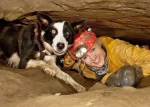
- Spelunking
-
- Hiding
-
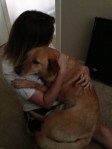
- Snuggle time
-
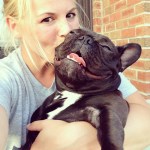
- Happy dog
-

- Fetching three balls at once
-
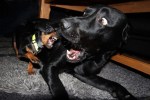
- Play fighting
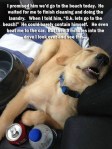
-
- I got a stick
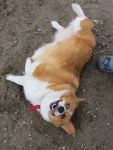
-
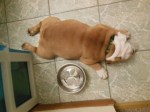
- Tired from all that eating
-

- Nothing more fun than an arm full of puppies
-

- Except maybe a papasan chair full of puppies
-

- Wedding day
-

- Easter slippers
-
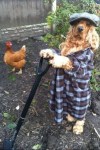
- Gardening
-
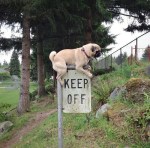
- Rebel
-
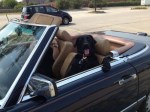
- Chauffeur
-

- Salesman dog
-
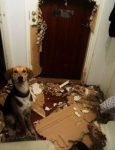
- I thought you weren’t coming back and panicked
6,000-year-old wooly mammoth parts found in Iowa backyard
6,000-year-old wooly mammoth parts found in Iowa backyard
A 10-inch tooth, a vertebrae, and a whole collection of ribs all thought to belong to wooly mammoths were found on the property of an anonymous citizen from Mahaska County, IA. The remnants of two adult wooly mammoths and one juvenile have already been unearthed, with more discoveries still being made after almost a year’s worth of digging. The age of the artifacts are estimated at between 14,000 and 16,000 years old.
Laura Decook, a member on the Mahaska County Conservation Board, is thrilled to work on the dig. “It’s fascinating to see that ancient history in Iowa is right below our feet,” she says. “It tells us a lot about what earth was like right here 16,000 years ago.” Thanks to the bones, scientists now believe that around 16,000 years ago, the climate of the rural Iowa town was similar to that of southern Canada today, and that Mahaska County was populated by fir and spruce trees. It is believed that the mammoths may have lived nearby because of a ‘plunge pool,’ a deep pool of water that exists under a waterfall. In 2010, flooding brought the bones back up.
While the ancient findings are priceless, they belong completely to the anonymous landowner, who has allowed conservationists to work on his property. He says that ultimately the bones should be kept in Mahaska County to be used educationally.

Filed under Animals, Humor and Observations
Earthworm Regeneration
Ever wonder how earthworms regrow or survive dissection? It is one of those weird/bizarre things in nature which fascinate me. Here is a pretty comprehensive story detailing all you would ever want to know about the topic, including worms that only reproduce through this self-mutilation, akin to a masochistic mitosis.
Making heads or tails out of severed earthworms
The red wiggler, or compost worm, might regenerate a new head or a new tail, depending on where it suffers amputation.

Loss of any of the first 8segments might result in a complete regeneration of the head.
The worm might grow a new head if cut behind the 13th segment, but it can’t replace sexual organs.
A separation between segments 20 and 21might yield a new tail for the head and a new head for the tail — a possible two worms.
The first 23 segments are roughly the limit for partial head regeneration by the cut-off tail. A loss of more than that might result in tail segments at both ends — and a dead end for the worm.
A cut-off head might regenerate a partial tail if separation occurs in front of the 55th segment. Behind the 55th, full tail regeneration is possible.
Eisenia fetida
Source: The Biological Bulletin
Every gardener has had the gruesome experience of plunging a spade into the ground, only to find that he has sliced anearthworm in half.
Will it die? Regenerate the lost part? Become two earthworms?
The answer depends on a variety of factors, including the type of earthworm and the location and tidiness of the amputation.
Scientists studying earthworms get mixed results even when using anesthesia and a scalpel, so sloppy surgery from a rusty trowel won’t do much for a worm’s chances for regeneration. However, worms can rebound from sacrificing some of their hundred-plus segments to a hoe or to a hungry robin or mole.
Regeneration of heads and tails commonly occurs when an injury activates stem cells that differentiate into replacement parts. Another transformation occurs when tissue suddenly finds itself closer to the front or back of a regenerating worm. Through a process of cellular reorganization, the tissue conforms to its new role in the worm.
The rules of regeneration
• Most earthworms can lose several segments from their head and grow them back. With the red wiggler, a worm often used in composting, the more head segments lost, the less likely they will be fully regenerated. The marsh-loving blackworm, however, always generates eight replacement head segments no matter where the worm has been bisected.
• The ability to generate a new tail is almost universal among segmented worms.
• An amputation between head and tail can sometimes result in two worms, with the front section growing a new tail and the severed tail growing a new head.
• Sometimes a severed tail generates new tail segments instead of a head. Like the rest of the worm, the twin-tailed creature absorbs oxygen from the soil and can stay alive for a while, but it’s unable to feed itself and will eventually perish.
• Severed red wiggler tails especially “have trouble mounting productive head regeneration and thus die of starvation and brainlessness, if you will,” says Mark Zoran, who studies nervous system regeneration at Texas A&M.
• A severed head made up of fewer than 20 segments can heal, but the animal tends to develop a dysfunctional lower digestive tract. Would it die of constipation? “I guess it is possible,” Zoran says, “but I doubt that little head fragment would be doing much eating while in such a state of disrepair.”
• If sexual organs are lost in an amputation,night crawlers can regenerate them, but red wigglers can’t.
The self-amputators
Temperature shifts can cause blackworms to develop a fissure between the head and tail, roughly at the 48th of its 150 segments. Each fragment develops a new head or tail, with each part forming a full set of gonads.
A not-too-distant relative of earthworms is the white worm, a tiny translucent worm that some people grow to feed to their aquarium fish.
One species of white worm relies exclusively on fragmentation to reproduce. It spontaneously fragments into five to 10 pieces, each of which grows a new head and tail. Sometimes, a fragment will grow heads at both ends, resulting in what scientists call a bipolar worm.
Filed under Animals, Humor and Observations
Cute Dogs for Your Monday Blues
Here they are, a bit later than usual, sorry.
-
- Awww
-
- Brothers
-
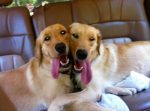
- Friends
-

- Selfie
-
- Dog trained by a guy
-
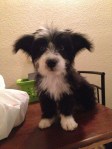
- Scruffy ears
-

- Doggie Heaven
-

- The Blues Brothers
-
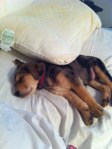
- Not moving
-
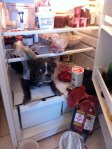
- Its cool in here and there’s food.
-

- Drying off after the spa
-
- Aww
-

- Nap time
-

- Chillin’
-

- Swim Party
-

- Someone got into the trash Mom!
-
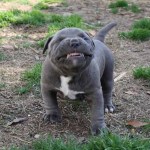
- Fierce creature
-
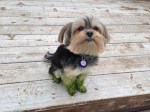
- Walking in the winter grass seed spray
-
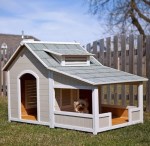
- Hanging out on his porch
-
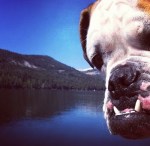
- Orc teeth
-
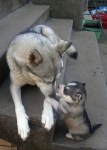
- Hey Momma
-
- Hiding
-

- Beach time
-
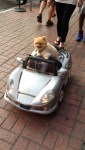
- Rich dog
-

- Ready to go out in the sun
-

- Wake up and play with me
-
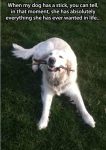
- I got the stick!
-

- Easy there young fella, not the ears
-

- Winnning
-

- Uncomfortable, but too tired to care
-

- Sleepy
-
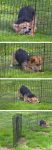
- Must, escape…
-

- Fetching
-

- Aww
-
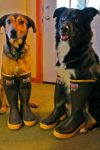
- Dogs in Boots?
-

- No sir, you may not approach my master.
Filed under Animals, Humor and Observations
Cute Dogs for Your Monday Blues
More pictures of cute dogs for your Monday blues. Enjoy!
-

- Cup of Joe, if the dog’s name is Joe…
-

- Smart Dog
-

- Dapper dog
-

- High Paw
-

- Nature dog
-

- Cleaning the baby
-

- I love fetch!
-

- Yoga dog doing downward looking dog and upward looking dog
-

- Dog consoling goat
-

- Awww
-

- Ready for play time
-

- A kid’s best friend
-

- What are you doing up there?
-

- Huh?
-

- Dog umbrella
-

- The population is ballooning

-

- Couch hoggers
-

- Hat dog
-

- Dog disem “bark” ation
-

- Birthday dog
-

- Too cool for school dog
-

- Taking the dog for a drag
-

- Best Friends
-

- Awww
-

- Carry ons
-

- Water bottle dog
-

- Blue/Brown
-

- Baby sitters
-

- Three balls at once

-

- Cool spot
-

- Guilty dog
-

- Turtle wants to join the pack
-

- Supervising dinner time for the pups
-

- NOooo, not bath time…
Filed under Animals
Humor – Why the Mantis Shrimp is Awesome
This is a link to an infographic on the mantis shrimp. It is too large for me to repost it all here. However, I suggest you check it out, it had me laughing. It is kind of weird and twisted like me. Basically, the mantis shrimp sees all sorts of colors we can’t, is really stunning, but also a tough critter.
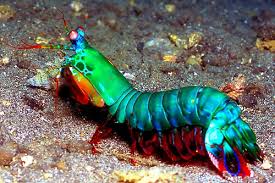
If you want a good laugh, go here:
http://www.stumbleupon.com/su/30rUph/slowrobot.com/i/45237/
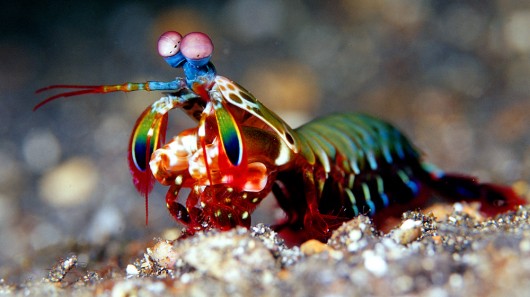
I found this on Stumbleupon.com, the original site is slowrobot.com
Filed under Animals, Humor and Observations
Cute Dogs for your Monday Blues
Your Monday dose of doggy cuteness:
-
- Rub my belly…
-

- Dog and a kid, the perfect combination
-
- Not happy about the outfit
-
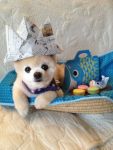
- Pirate captain
-

- This cushion is just right now.
-

- Wine spectator
-
- Happy dog
-

- Dog olympics
-
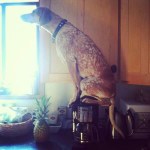
- Lookout
-

- Slickers
-

- Bad to the bone
-
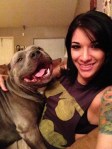
- Happy Pit
-

- Dapper Dog
-

- Lap dog
-

- Space invader
-
- Grill
-

- Late night surfing
-
- Lawn dog
-

- Beach day
-

- Goofy
-

- Bear dog
-

- Stuck in the blinds, please help
-
- Puppy meets grown up dog
-

- Champion
-

- Look I made your chair fluffier!
-
- Jumping in the sunlight
-

- Dog shame
-

- This dog thought people were gathered to watch it race. Everyone cheered for it.
-

- Sad doggy
Filed under Animals, Humor and Observations
Cute Dogs For Your Monday Blues
More cute dogs to perk up your Monday! Enjoy!
-
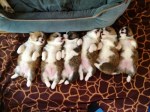
- Awww. So many bellies to rub.
-

- Surfer Dogs
-
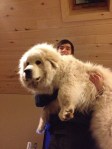
- Big Fella
-

- Peek-a-boo
-
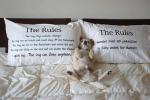
- Comfy
-
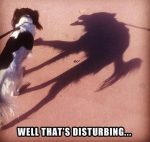
- Every dog is a fierce wolf on the inside
-
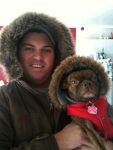
- Ready for winter
-
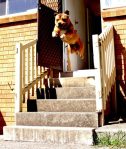
- Run like they left the door open!
-
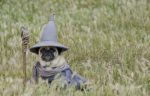
- Pugnalf the Grey
-
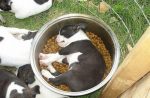
- Sleepy dog protecting his food bowl
-
- I hope that is photo shopped…
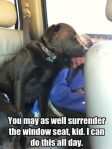
-

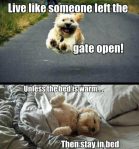
- Lol

-
- Aww
-

- The Blues Brothers
-
- Resistance
-
- Happy Puppy
-
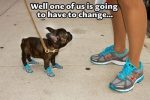
- That awkward moment you both have the same shoes
-
- Roly Poly Puppies
-

- All kids need a dog
-
- Little guy
-
- Throw me something to fetch?
-
- Nap time
-
- Stuck
-
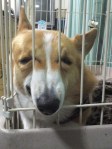
- It looked big enough when I started
-

- Easter friends
-

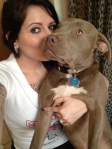
- Don’t photo bomb me bro
-

- Chillin
-
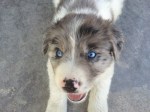
- Blue Eyes
Filed under Animals

 Michael Bradley - Time Traveler