
Cosplayers and their cosplay to enjoy!
Category Archives: Humor and Observations



























































Some Neanderthals Were Vegetarian — And They Likely Kissed Our Human Ancestors
March 8, 20177:11 PM ET

A new study of the dental plaques of three Neanderthals reveals surprising facts about their lives, including what they ate, the diseases that ailed them and how they self-medicated (and smooched). (Above) An illustration of Neanderthals in Spain shows them preparing to eat plants and mushrooms.
Courtesy of Abel Grau/Comunicación CSIC
Now, it’s no surprise that Neanderthals didn’t brush their teeth. Nor did they go to the dentist.
That means bits of food and the microbes in their mouths just stayed stuck to their teeth. While not so good for dental hygiene, these dental plaques are a great resource for scientists interested in understanding more about Neanderthal diet and lifestyle.
Luckily for researchers, there is an abundance of Neanderthal teeth in the fossil record. “We have complete jaws with teeth, we have upper jaws with skulls with teeth intact, isolated teeth,” says Keith Dobney, an archaeologist at the University of Liverpool.
He and his colleagues have been studying Neanderthal dental plaques — or rather, the hardened version of plaque, tartar, or what scientists call dental calculus. They scraped off some of the calculus and analyzed the DNA that was preserved in it for clues to what the Neanderthals ate.
They looked at plaques from the teeth of three Neanderthals living in Europe about 50,000 years ago. One individual was from a cave in Spy, Belgium, and the other two were from El Sidrón cave in Spain.

The Spy Cave site in Belgium from which several Neanderthal skeletons were excavated in 1886. Only one skeleton was used in this study.
Courtesy of Royal Belgian Institute of Nature Sciences
The researchers also found evidence of mushrooms, but this was certainly a meat lover. This isn’t that surprising to scientists who study Neanderthal diets. After all, the butchered bones of woolly rhinos, mammoths, horses and reindeer had been found in the Spy cave and other sites, suggesting a meat-heavy diet.
There had also been other indirect sources of evidence of carnivory, like high levels of a certain nitrogen isotopes, which suggested meat- and/or mushroom-heavy diets.
“Most Neanderthals that had been analyzed [before] were really heavy meat eaters,” says Laura Weyrich, at the Australian Center for Ancient DNA at the University of Adelaide, Australia, and the lead author on the new study. She says those previous studies had suggested that “Neanderthals were as carnivorous as polar bears.”
And this is where the new study offered a big surprise. According to the DNA in dental plaques, the Neanderthals in Spain ate no meat at all.
“We find things like pine nuts, moss, tree barks and even mushrooms as well,” says Weyrich. “It is very indicative of a vegetarian diet, probably the true Paleo diet.” (Not all of the region’s Neanderthals were necessarily vegetarians: The El Sidrón cave also contained grisly evidence of cannibalism.)
She says the difference in diets reflects the fact that the two groups lived in two very different environments.

Northern Europe, including Belgium, had wide open spaces with grasslands and many mammals. “It would have been very grassy, and kind of mountainous,” says Weyrich. “You can imagine a big woolly rhino wandering through the grass there.” Perhaps tracked by hungry Neanderthals looking for dinner.
But farther south in Spain, the Neanderthals lived in dense forests. “It’s hard to imagine a big woolly rhino trying to wedge themselves between the trees,” says Weyrich. And so, she says the Neanderthals there feasted on all kinds of plants and mushrooms. “They’re very opportunistic, trying to find anything that’s edible in their environment.”
“Perhaps we shouldn’t be surprised that Neanderthals are adapting to local conditions and varying their diets,” says Chris Stringer at the Natural History Museum in London. He studies human origins, but wasn’t involved in the new study.
For example, Neanderthals living on the coast of Gibraltar “were collecting molluscs and baking them,” he says. “They were butchering at least one seal. There [was] dolphin material at the site. That may have been stranded dolphin that they scavenged.”

The complete jaw of a Neanderthal individual found in Spy, Belgium. Small and thin tartar deposits provided the researchers with enough DNA sequences to study.
Courtesy of Royal Belgian Institute of Nature Sciences
Stringer says it was the Neanderthals’ adaptability that allowed them to thrive for tens of thousands of years across Europe and Asia.
“They were very evolved humans,” he says. “They lived over a range of very different environments. They lived in different climatic conditions.”
But Stringer cautions that the new study’s findings probably don’t reflect everything about the diets of these Neanderthals. “Not everything that you eat has an equal chance of getting incorporated into the calculus,” he says. “And not everything has a chance of being preserved long term.”
Perhaps more surprising than the clues about diets is what the DNA revealed about other aspects of Neanderthal life. The scientists uncovered the identities of more than 200 different species of microbes that lived in the mouths of these Neanderthals. It also gave clues to some diseases that might have ailed them.
One of the individuals in Spain seems to have had a painful tooth abscess and was suffering from a stomach bug. “We saw that he also had Microsporidia, which is a gastrointestinal pathogen,” says Weyrich.
That means he probably had diarrhea and was throwing up. “He was a sick individual,” says Weyrich. “He was a young adolescent male. He was mostly with … females. So we like to think of him as this sick boy that the females were dragging along with them.”
But what’s more remarkable, she says, is that DNA in his dental plaque suggests he was self-medicating by eating the bark of poplar trees. “And poplar bark contains salicylic acid, one of the natural sources of what we call aspirin,” she says.
Even more surprising was that they also found evidence of Penicillium in his plaque. That’s the mold that makes the antibiotic penicillin. “It’s pretty phenomenal that these guys were so in tune with their environment and to know what was going on and how to treat things,” says Weyrich.

A dental calculus deposit is visible on the rear molar (right). The teeth belong to the sick boy in the Spanish cave. He was eating poplar, a source of aspirin, and vegetation with mold, including the fungus Penicillium, which is the source of the antibiotic penicillin.
Courtesy of Paleoanthropology Group MNCN-CSIC
But the surprises didn’t end there. Weyrich and her colleagues also identified the DNA of a microbe that causes gum disease in humans today. “We were able to track back that this particular microorganism was actually obtained from humans, likely about 120,000 years ago.” Weyrich and her colleagues don’t believe the microbe caused disease in Neanderthals, but they think it tells a fascinating story about how the two species — our ancestors and Neanderthals — interacted.
Genetics has shown that the two interbred and swapped genes. “A lot of these breeding interactions had been thought to be rough interactions, something that wouldn’t be sensual or enjoyable,” says Weyrich. But if they were swapping microbes in their mouths, that suggests a different story: “It suggests that there’s kissing — or at least food sharing — going on between these two groups. So we really think that those interactions were probably more friendly, and much more intimate, than what anyone ever imagined before.”
Weyrich and her colleagues think that in the years to come, we will learn a lot more about Neanderthals and other human ancestors, just by studying the ancient DNA trapped in their dental plaques.
“It’s a very exciting paper,” says Jean-Jacques Hublin at the Max Planck Institute for Evolutionary Anthropology, who was not involved in the new study. “It opens a new window into the past, a new way to investigate [the] life and behavior of Neanderthals.”
Filed under Humor and Observations
Tyson Foods CEO: The Future of Food Might Be Meatless
Tyson Foods’ new CEO is on a mission to change people’s perception of the iconic brand-which has faced chicken abuse and price-fixing charges. Hayes says he is now pushing the 80-year-old meat processor towards sustainability, plant-based …
“If you take a look at the FAO (Food and Agriculture Organization) stats, protein consumption is growing around the world—and it continues to grow. It’s not just hot in the U.S.; it’s hot everywhere, people want protein, so whether it’s animal-based protein or plant-based protein, they have an appetite for it. Plant-based protein is growing almost, at this point, a little faster than animal-based, so I think the migration may continue in that direction,” Tom Hayes, CEO of Tyson Foods Inc. (TSN) told FOX Business.
Today, the U.S. food giant, which got its start during The Great Depression, already owns a 5% stake in a plant-based protein start-up called Beyond Meat. The company also launched a venture capital fund worth $150 million to invest in startups that develop meat substitutes.

Hayes, who was named Tyson Foods president last June and took over as CEO after Donnie Smith stepped down in December, has already vowed to ditch the controversial use of antibiotics in a majority of the company’s poultry.

“We just got to the point last year where the consumer is demanding [the elimination of antibiotics in the food chain] and wants transparency. They want to have trust in the brands they buy …. [so] let’s push ourselves to go all the way,” Hayes told FOX Business.
Tyson made news earlier this week when a strain of bird flu was detected at one of its Tennessee contracted chicken farms.
“We’re addressing a form of avian influenza on a single contract chicken farm in Tennessee. It’s a bird health issue and not a food safety or human health concern. We’re responding aggressively, and are working with state and federal officials to contain the virus by euthanizing chickens located on the farm,” Tyson Foods Inc. told FOX Business in a statement.
Tyson has also faced charges of chicken abuse and price fixing.
Hayes, who originally spoke to FOX Business prior to the news Monday of the bird flu case in Tennessee, at the time acknowledged challenges in running a company the size of Tyson.
“We do a lot. We have 114,000 people and we have 100 plants and we have 11,000 family farms that we work with, so there is a lot that can go wrong. But we do things really well and we have team members who are really focused on making good food, and are actually doing things for the world,” he said.
Hayes said the company today is committed to helping to create a more sustainable food system, which involves cleaning up its factory farms and investing in more plant-based proteins.
“It’s important for us to continue to make progress. We don’t get everything right all the time, we know that. But the idea of how do we continue to try to get better … and we have done a lot of research for our poultry business to really understand what a closed loop farm of the future looks like,” he said.
To that end, he said the company is looking into a vertical farming approach that uses 60 percent less land and provides a healthier environment for the birds.
“It’s a lower stress environment because there’s not interaction with humans … it’s been greatly reduced. And we have barns that collect the rain water in roofs that can be used for grain, irrigation and a lot of things that are pushing our thinking,” he said.
Hayes said the company has created a new corporate logo to separate its top office from its shelf brand, which he says is just the beginning.
“Our new purpose as a company is to continue to raise expectations for the good big food can do. Big food is often seen as potentially bad, and in order for us to feed … 9 billion [people] we have to get in the game and say how do we come up with solutions and innovations,” said Hayes.
Filed under Animals, Humor and Observations
Fossil of ‘monster’ worm with snapping jaws discovered
Published February 22, 2017

(Luke Parry)
A giant worm with “terrifying” jaws has caught researchers’ eyes, who say the huge extinct marine worm is a new species known to science. What’s more, it’s been named after the bass player from a death metal band called Cannibal Corpse.
The scientists discovered the fossilized remains of the worm not in the wild, but in a museum. The worm fossil and others had actually been in Canada’s Royal Ontario Museum since 1994, after a researcher took samples from a remote site in Ontario only reachable by helicopter. Based on the fossil, they think the worm was over three feet long and had jaws over a quarter of an inch in size. (Usually, the jaws of these kinds of worm are much tinier.)
“Gigantism in animals is an alluring and ecologically important trait, usually associated with advantages and competitive dominance,” the lead author of a new study on the worm, Mats Eriksson of Lund University, said in a statement. “It is, however, a poorly understood phenomenon among marine worms and has never before been demonstrated in a fossil species.”
Over 400 million years old, the giant fossilized creature was known as a bristle worm. The University of Bristol compares this ancient worm to modern-day Bobbit worms, which ambush and eat fish or cephalopods like squids.
The scientists gave the new worm species an interesting name: Websteroprion armstrongi. The second part of that name is in honor of Derek K Armstrong, a member of the Ontario Geological Survey who took the helicopter ride to collect the samples in the first place.
The first part is more interesting. That’s in honor of a musician named Alex Webster, a bass player for Cannibal Corpse, a death metal band. According to the statement on the discovery, this is because Webster was a “giant” on the bass, just like the worm itself was giant.
Filed under Humor and Observations
Keys to life? Scientists explain how newly-discovered exoplanets could be habitable
About 40 light years from Earth, there is an intriguing system with a dim red star and seven alien worlds rapidly orbiting it.
And what makes the find so exciting is that three of those planets are in the “Goldilocks zone” of the star: the just-right place where liquid water could exist on a planet’s rocky surface.
The announcement of the discovery around the star called TRAPPIST-1, made yesterday by NASA, is a reminder of the ultimate question: is there life in the universe besides what we know of on Earth?
And could any of these TRAPPIST-1 planets— especially the three in the habitable zone— have the right ingredients for it to develop?
“The news is wonderful, and has been since last year, when the first three planets in this system were discovered,” Dimitar Sasselov, a professor of astronomy at Harvard University, and a researcher who focuses on studying the origins of life in his lab, told Fox News. “This just confirms what we started theorizing already in the past two years: [which] is that our galaxy, our universe, is just full of places which could sustain life, and where life could emerge.”
Part of the reason the news is wonderful is that the system lends itself to being studied by astronomers in the next couple years— and not way down the line— Sasselov said. The three planets in the habitable zone of this star are promising because their rocky surfaces could support liquid water, which is essential for life as we know it.
Plus, if the planets are indeed rocky, they could contain the six right elements in the right concentration for life, Sasselov said: stuff like carbon, oxygen, and nitrogen.
David Kipping, an expert on exoplanets and an assistant professor of astronomy at Columbia University, said that his first reaction to the discovery was to be “extremely excited.”
The star that the seven planets are orbiting is a very common one called a red dwarf— it’s small, dim, and cool compared to our own sun, but it could also burn for a very, very long time: somewhere on the order of a trillion years, or even longer, Kipping said.
“When we look for potentially life-bearing planets, there’s really one thing we’re looking for, and that’s liquid surface water,” Kipping told Fox News. Of course, in order to have surface water, the planet needs to have a rocky surface, and he said that the planets seem likely to have that. Another point in their favor? There are three planets in the system that would be at the right temperature for liquid water to exist.
“That doesn’t prove they’re definitely capable of supporting of life,” he said. After all, one or two of the three planets could be like Venus in our solar system, which has nasty conditions. But still, three planets is better than two or one, odds-wise. “With three bites at the cherry, you have to be optimistic that there’s a good shot one of them has the potential to be Earth-like.”
He added: “As far as we know right now, I’d say there are no show-stoppers to stop life from living on these worlds.”
There are a couple factors to consider, though. Astronomers will have to study the star further (it could have emitted a lot of radiation when it was young, for example), as well as the masses of the planets and the shape of their orbits (to see how elliptical they are) to figure out how conducive they could be for life. The next step, Kipping said, will be to look for biosignatures on the planets using a telescope. (The James Webb Space Telescope, launching in 2018, will be an important resource for astronomers.)
Lisa Kaltenegger, as associate professor of astronomy, and the director of the Carl Sagan Institute at Cornell University, said that one aspect to consider with this “small red sun” is that the levels of ultraviolet light could be high, although life could perhaps shelter in a hypothetical ocean.
“I think finding many planets, multiple possible habitats, around one star is great news for the search for life,” she said, pointing out that the news made her feel motivated. “Because that just means we’re getting more places to look. And it’s just a numbers game— we already have a lot of stars with planets, now if we have a couple of planets per star, the odds are ever in our favor, hopefully.”
Follow Rob Verger on Twitter: @robverger
Filed under Humor and Observations
A farmer’s story of moles could have led to lost city

(Stuart Wilson)
Stuart Wilson says people thought he was crazy when he gambled $39,000—his life savings—on a 4.6-acre field in Wales. Having heard a farmer’s story about moles digging up bits of pottery on the land, the amateur archaeologist tells the Guardian he had a hunch that something important lay beneath, and when the parcel went on the market in 2004, he bought it.
Now, it looks like his bet is paying off: He believes his land is sitting atop the lost city of Trellech—Wales’ largest city in the 13th century, reports the BBC—and the Guardian reports his theory is starting to gain traction.
Wilson, a former toll collector who got his undergrad degree in archaeology, estimates the project has cost more than $200,000, funded in part through donations (you can be an archaeologist for a day for $61).
With help from some 1,000 volunteers, Wilson says he has so far discovered eight buildings, and he intends to spend 2017 working on the remains of what he believes is a manor house surrounded by a moat.
In 2006, he told Archaeology.org that excavating the field “will probably take about 50 years, so basically the rest of my life.” As for the history of the site, it was founded by the de Clare family in the 1200s as a hub that produced iron weapons and armor, and its population exploded.
Per Wilson, in just 25 years it grew to 10,000 people—a quarter of London’s size, though Wilson points out it took London 250 years to amass its 40,000 people.
The BBC reports the de Clares’ settlement is thought to have been destroyed in 1296. (Read about the seven biggest archaeology finds of 2016.)
This article originally appeared on Newser: Man Follows Hunch, Says He Has Uncovered Lost City
Filed under Humor and Observations
Cosplay Pictures for Your Enjoyment!
Cosplayers and their cosplay for your fun…

























































Filed under Humor and Observations
Bronze sword, gold-decorated spearhead unearthed at Scottish construction site

Lifting the Bronze Age sword (© GUARD Archaeology Ltd).
Archaeologists in Scotland have unearthed a hoard of stunning prehistoric artifacts, including a bronze sword and rare gold-decorated spearhead.
The trove was found prior to the construction of two soccer fields in Carnoustie by experts from GUARD Archaeology, working on behalf of the local government. A spokesman for GUARD Archaeology told Fox News that excavations at the site have just finished.
The artifacts, which date to around 1,000 B.C. to 800 BC, have delighted archaeologists. “It is very unusual to recover such artefacts in a modern archaeological excavation, which can reveal so much about the context of its burial,”said GUARD Archaeology Project Officer Alan Hunter, who directed the excavation, in a statement.
The excavation site contains a host of archaeological features, including 12 circular houses that probably date the Bronze Age, as well as two halls likely dating to the Neolithic period, one of which is the largest of its type ever found in Scotland, estimated to be 6,000 years old. Clusters of large pits were also discovered, one of which contained the haul of metalwork.

The Carnoustie Bronze Age spearhead (© GUARD Archaeology Ltd).
In addition to the bronze spearhead and sword, archaeologists also found a lead and tin pommel from the end of a sword’s hilt, a bronze scabbard mount and chape (the metal point of a scabbard), and a bronze pin.
Archaeologists say that the spearhead’s gold ornament is particularly noteworthy, with the precious metal likely used to enhance the weapon’s visual impact.
The Carnoustie excavation also unearthed rare organic remains, such as a wooden scabbard that encased the sword blade, fur skin around the spearhead and textile around the pin and scabbard.

The Carnoustie Bronze Age sword (© GUARD Archaeology Ltd).
‘Organic evidence like Bronze Age wooden scabbards rarely survive on dryland sites so this just underlines how extraordinary these finds are,’ said GUARD Project Officer, Beth Spence, in the statement.
Because the remains discovered at Carnoustie are so fragile, archaeologists removed the entire pit and its surrounding subsoil and transported it to GUARD Archaeology’s lab, where it was CT scanned and X-rayed by the School of Veterinary Medicine at Glasgow University. Scan and X-ray data helped experts remove the artifacts from the block of soil. The bronze sword, pin, and scabbard fittings were unearthed near the spearhead.
This is just the latest fascinating archaeological discovery in Scotland. Experts, for example, have spent the last few years piecing together the history of a long-lost early medieval kingdom in southern Scotland.
Follow James Rogers on Twitter @jamesjrogers
Filed under Humor and Observations
Biologists find weird cave life that may be 50,000 years old
Published February 17, 2017
-

FILE – In this July 3, 2008, file photo, New Mexico Tech professor Penny Boston crawls through the Mud Turtle Passage on the way to the Snowy River formation during an expedition in Fort Stanton Cave, N.M. Boston, who discovered extreme life in New Mexico caves in 2008, presented new findings on Friday, Feb. 17, 2017 of microbes trapped in crystals in Mexico that could be 50,000 years old. (AP Photo/Susan Montoya Bryan) (The Associated Press)
BOSTON – In a Mexican cave system so beautiful and hot that it is called both Fairyland and hell, scientists have discovered life trapped in crystals that could be 50,000 years old.
The bizarre and ancient microbes were found dormant in caves in Naica, Mexico, and were able to exist by living on minerals such as iron and manganese, said Penelope Boston, head of NASA’s Astrobiology Institute.
“It’s super life,” said Boston, who presented the discovery Friday at the American Association for the Advancement of Science conference in Boston.
If confirmed, the find is yet another example of how microbes can survive in extremely punishing conditions on Earth.
Though it was presented at a science conference and was the result of nine years of work, the findings haven’t yet been published in a scientific journal and haven’t been peer reviewed. Boston planned more genetic tests for the microbes she revived both in the lab and on site.
The life forms — 40 different strains of microbes and even some viruses — are so weird that their nearest relatives are still 10 percent different genetically. That makes their closest relative still pretty far away, about as far away as humans are from mushrooms, Boston said.
The Naica caves — an abandoned lead and zinc mine — are half a mile (800 meters) deep. Before drilling occurred by a mine company, the mines had been completely cut off from the outside world. Some were as vast as cathedrals with crystals lining the iron walls. They were also so hot that scientists had to don cheap versions of space suits — to prevent contamination with outside life — and had ice packs all over their bodies.
Boston said the team could only work about 20 minutes at a time before ducking to a “cool” room that was about 100 degrees (38 Celsius).
NASA wouldn’t allow Boston to share her work for outside review before Friday’s announcement so scientists couldn’t say much. But University of South Florida biologist Norine Noonan, who wasn’t part of the study but was on a panel where Boston presented her work, said it made sense.
“Why are we surprised?” Noonan said. “As a biologist I would say life on Earth is extremely tough and extremely versatile.”
This isn’t the oldest extreme life. Several years ago, a different group of scientists published studies about microbes that may be half a million years old and still alive. Those were trapped in ice and salt, which isn’t quite the same as rock or crystal, Boston said.
The age of the Naica microbes was determined by outside experts who looked at where the microbes were located in the crystals and how fast those crystals grow.
It’s not the only weird life Boston is examining. She is also studying microbes commonly found in caves in the United States, Ukraine and elsewhere that eat copper sulfate and seem to be close to indestructible.
“It’s simply another illustration of just how completely tough Earth life is,” Boston said.
Filed under Humor and Observations
Dogs And Monkeys Judge You On How You Treat Others

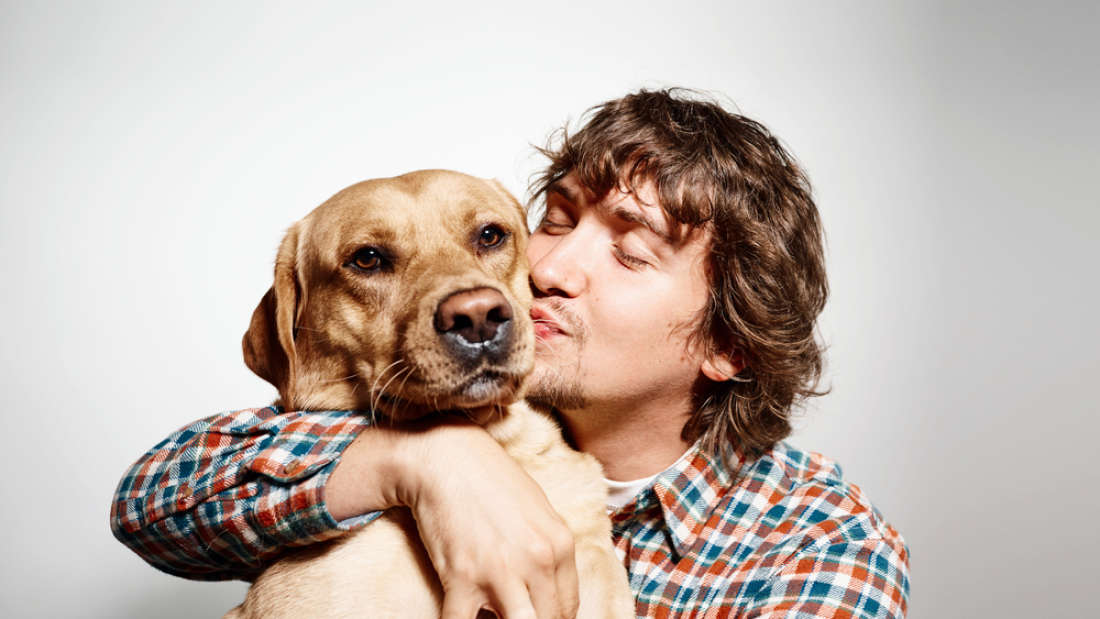
Not long ago, we reported on a study that suggested babies as young as 6 months old have an innate sense of morality. Now, another study has looked into whether that applies to animals, such as dogs and monkeys. It turns out yes, both judge humans on how they treat other people, and both prefer us when we are nice, helpful, and fair.
Both animals displayed a preference for helpfulness in humans, and though the monkeys appeared to show a preference for fairer people, your dog is definitely still judging you.
The researchers from Kyoto University, Japan, suggest in their paper published in Neuroscience & Biobehavioral Reviews that these types of judgment of behaviors could help us understand the origins of human morality.
The team carried out a series of experiments where humans acted out various behavioral scenarios and made the animals watch, to test how the animals reacted to human interactions. In one of the scenarios, an actor struggled to open a can and asked for help from a second person, who either helped or refused. Sometimes a third person passively watched, but did not get involved.
Afterward, the researchers got all three actors to offer treats to the animals who had been watching, and they reported that after all the experimental scenarios, all of the animals showed a clear disinclination to accept a treat from the person who refused to help, compared to those who were helpful and even the passive players.
According to lead author James Anderson, the tests showed that both monkeys and dogs make social judgments in a similar way to human children, primitive instinctive evaluations that may be the root to understanding our own sense of morality.
“If somebody is behaving antisocially, they probably end up with some sort of emotional reaction to it,” he told New Scientist. “In humans, there may be this basic sensitivity towards antisocial behavior in others. Then through growing up, inculturation and teaching, it develops into a full-blown sense of morality.”
Filed under Animals, Humor and Observations
 Michael Bradley - Time Traveler