Category Archives: Uncategorized

Great American Smokeout

Source: Great American Smokeout

Leave a comment

Filed under Uncategorized

Cute Dogs for Your Monday Blues

Cute dogs to start off your week with a smile…

Leave a comment

Filed under Uncategorized

What’s Happening To The Flowers At Fukushima?

July 23, 2015 | by Janet Fang

photo credit: raneko/Flickr CC BY 2.0.

It’s been over four years since an earthquake and subsequent tsunami struck the Fukushima Daiichi nuclear power plant, releasing radiation out into the environment. Asrobot-led investigations and cleanup efforts grind on, research teams from around the world have been studying the impacts of the contamination on wildlife, both in the short term and for years to come.

In 2014, we learned that the lifespans and population sizes of certain bird and butterfly species have dropped. Some also showed signs of abnormal growths and growth rates: atypical feathers on barn swallows, for example, and smaller forewings on pale grass blue butterflies. Meanwhile, irradiated monkeys exhibited low red and white blood cell counts. However, for each of these sorts of conclusions, there’s also news of animals adapting. Some bird species living in the exclusion zone around Chernobyl, for instance, aren’t just coping – they appear to be benefiting.

And what about plants? A genetic analysis of rice seedlings exposed to radiation near Fukushima revealed changes to DNA repair mechanisms and the induction of genes involved in cell death. Near Chernobyl, dead trees and fallen leaves aren’t decaying (even decades later) because radiation inhibited the microbial decomposers.

Then there’s this. Back in May, Twitter user @san_kaido from Nasushiobara posted this striking photo:

According to International Business Times, the tweet reads: “The right one grew up, split into 2 stems to have 2 flowers connected each other, having 4 stems of flower tied belt-like. The left one has 4 stems grew up to be tied to each other and it had the ring-shaped flower. The atmospheric dose is 0.5 μSv/h at 1m above the ground.”

They might look like deformed victims of a nuclear disaster, but these daisies are likely the result of a rare, but natural condition called fasciation, or crested growth. This can happen when the parts of a growing embryo fuse abnormally, resulting in a flattened-looking stem. And oftentimes, flowers and leaves will develop unusual shapes and show up at odd angles to that stem. As gardeners will tell you, fasciated plants are not exclusive to disaster sites. The causes of this condition range from infections and severe pruning to hormonal imbalances and (run-of-the-mill) genetic mutations.

Leave a comment

Filed under Uncategorized

Physicists Discover New Massless Particle; Could Revolutionize Electronics & Quantum Computing

Hasan massless particle

Physics may have just taken a new leap forward, as three independent groups of physicists have found strong evidence for massless particles called “Weyl fermions,” which exist as quasiparticles – collective excitations of electrons. Ultimately, this discovery is over 80 years in the making, dating back to Paul Dirac.

In 1928, Dirac came up with an equation that described the spin of fermions (fermions are the building blocks that make up all matter). Within his equation, he discovered that, in relation to particles that have charge and mass, there should be a another particle and antiparticle—what we know as the electron and (its antiparticle) the positron.

Yet, there are more than one ways to skin a cat.

Other solutions to this equation hinted at more exotic kinds of particles. Enter Hermann Weyl, a German mathematician who, in 1929, come up with a solution that involved massless particles. These became known as “Weyl fermions.” And, for a number of years, physicists believed that neutrinos (subatomic particles that are produced by the decay of radioactive elements) were actually Weyl particles. Yet, further studies, which were published in 1998, indicated that neutrinos do, in fact, have mass, which means that they cannot be the aforementioned Weyl particles.

But now, we have evidence that Weyl fermions actually exist.

Unlocking the Find

The research comes thanks to Zahid Hasan over at Princeton University, who uncovered these particles in the semimetal tanatalum arsenide (which is referred to as TaAs). Hasan and his team suggested that  TaAs should contain Weyl fermions and (here is the important bit) it should have what is known as a “Fermi arc.” And in 2014, the team found evidence of such an arc.

Artist's rendition via ChutterStock

But that’s not all, another team, led by Hongming Weng at the Chinese Academy of Sciences, found similar evidence in an independent study that used the same methods. And Marin Soljačić and colleagues (hailing from MIT and the Univeristy of China) have seen evidence of Weyl fermions in a different material, specifically, a “double-gyroid” photonic crystal.

In this latter case, the team fired microwaves at the crystal and measured microwave transmission through it, varying the frequency of the microwaves throughout the experiment. Through this process, the team could map the structure of the crystal, allowing them to determine which microwave frequencies can travel through the crystal and which cannot. In the end, this revealed the presence of “Weyl points” in the structure, which is strong evidence for Weyl fermion states existing within the photonic crystal.

The Future of Physics

The significance of this find, quite literally, cannot be overstated. Hasan is clear to point this out, noting in the press release that, “The physics of the Weyl fermion are so strange, there could be many things that arise from this particle that we’re just not capable of imagining now.”

He goes on to note more specific applications: “It’s like they have their own GPS and steer themselves without scattering. They will move and move only in one direction since they are either right-handed or left-handed and never come to an end because they just tunnel through. These are very fast electrons that behave like unidirectional light beams and can be used for new types of quantum computing.” Soljačić, the head of the second study, adds that, “The discovery of Weyl points is not only the smoking gun to a scientific mystery, it paves the way to absolutely new photonic phenomena and applications.”

Ultimately, it is believed Weyl fermions could be very useful, in that, because they are massless, they can conduct electric charge much faster than normal electrons. Admittedly, this same feature is exhibited by electrons in graphene. Yet, graphene is a 2D material, Weyl fermions are thought to exist in more practical 3D materials.

1 Comment

Filed under Uncategorized

How Tea Parties Got Their Start—and How to Hold One Like a Victorian

IMAGE CREDIT:
GETTY IMAGES
This summer marks 150 years since Alice in Wonderland was first published. As most English speakers over the age of 10 are aware, the book contains the most beloved tea party scene in literary history—so why not use its anniversary as an excuse to hold a Victorian-style tea party of your own?

First, impress your guests with some history. The modern European tea party began about 20 years before the publication of Alice in Wonderland, at which point it was still extremely fashionable. Although there are scattered references to fashionable ladies drinking a cup of tea mid-afternoon in the 17th century, most sources trace the tradition back to the 1840s and Anna Maria Russell, the Duchess of Bedford, a lifelong friend of Queen Victoria’s. In the Duchess’s day, most British people ate two main meals: a huge breakfast served early, and an 8 p.m. dinner (there was a light, informal luncheon in between). The Duchess complained of getting a “sinkful feeling” during the long, snackless gap in between, and started taking a pot of tea and some light treats in her boudoir around 4 p.m.

Tea consumption in Europe had increased dramatically in the early 19th century, especially after Europeans learned the secrets of tea cultivation and began establishing their own plantations, instead of relying on China. The idea of an afternoon tea-based snackfest caught on after Anna began inviting friends to meet her for a cuppa (as Brits now call it) and “a walk in the fields.” Other high society hostesses imitated her party idea, creating intimate afternoon events that usually involved elegant rooms, fine china, hot tea, small sandwiches, and plenty of gossip. The custom really caught on when Queen Victoria attended some of these gatherings, adding her royal imprimatur.

The middle classes followed suit, discovering that tea parties were a relatively economical way to host a gathering. There were garden teas, tennis teas, croquet teas, and more. Eventually, the custom of taking a mid-afternoon tea break became standard across British society, although it diverged into two traditions: “afternoon tea,” for the leisured classes (tea and light snacks) and “high tea” or “meat tea,” a heartier workingman’s dinner that would be served when laborers arrived home after work.

If you’d like to hold a Victorian-style tea party, consider following some of the guidelines for various kinds of teas dispensed in 1893’s Etiquette of Good Society by Lady Gertrude Elizabeth Campbell or Etiquette: What to Do, and How to Do It, written by Lady Constance Eleanora C. Howard in 1885. Both are freely available on Google Books in case you need more information about which spoon to use with your clotted cream.

LADY GERTRUDE ELIZABETH CAMPBELL’S TEA TIPS

Campbell says: “a tea, of whatever kind, may be made one of the most agreeable of meals; for tea always seems to produce sociability, cheerfulness, and vivacity.”

She offers the following guidelines for a country-based high tea, perhaps after some archery or lawn tennis in summer, or music, card games, or charades in winter: 

  • Cover the table with a white tablecloth and line the center with flowers or, if it’s summer, with fruit. “Nothing looks more tempting than bowls of old china filled with ripe red strawberries, and jugs of rich cream by their side,” Campbell notes.
  • Adorn the table with glass dishes of preserved fruit and jams, and cakes of various kinds (Campbell suggests plum, rice and sponge cakes), as well as hot muffins, crumpets, toast, and little tea cakes. More substantial fare, such as cold salmon, pigeon, veal and ham pie, should go on the sideboards. If it’s a “hungry tea,” Campbell says, you may add roast beef and lamb “for the gentlemen.”
  • Place the tea tray at one end of the table, and a tray with coffee at the other.
  • Servants should be experienced, since they’ll have plenty of work to do passing around cups of tea, cream, and sugar, and keeping an eye out for empties. There should be one servant for carving up the meats, one to change the plates, another to hand out the bread and butter, plus several more to spare just in case.
  • However, after the fruit has been passed out, the servants should leave the room so that the guests can enjoy themselves without fear of being overheard. (Again, gossip is pretty much the point of a tea party.)
  • The meal may be followed by dancing on the lawn or in the drawing room, with music, charades, or some other kind of parlor entertainment. If there’s no entertainment, guests repair to reception rooms to chat.
  • Furniture arrangement in the reception rooms is key: groups of tables and chairs should be placed so that the guests can form little groups that make the room look full, but not too crowded. “A room stiffly arranged will destroy all the wish for conversation and mirth, and also the power of producing it as well,” Lady Campbell notes.
  • The absolute worst idea, she says, is to let the guests form themselves into one big circle. This leads to an “immediate depression,” since “few people have the sang froid to talk, much less freely and well, when everyone can hear their remarks.” The hostess must keep an eye out to prevent this catastrophe. If she does not, “a gloom pervades, hilarity ceases, only an occasional remark is ventured upon, and the party is converted into a Quaker’s meeting.”

Campbell shares these tips for a light afternoon tea, also known as a “small tea,” usually served around 5 p.m., where things are less formal:

  • Invitations are sent out indicating that the lady of the house will be “at home” on such and such an afternoon (no reply from the guest is needed).
  • Guests are ushered into the hostess’s drawing room. Tea equipment—usually a specially designed set—should be placed near the lady of the house, who pours the tea herself.
  • Cups and saucers should be small and dainty, as should spoons, sugar basin, tongs and cream jug. Plates of cakes and bread and butter should be brought into the room.
  • Gentlemen should offer their services handling the cake and pouring the tea, but should not be too anxious to do so, since “people do not assemble at these 5 o’clock teas to eat and drink.”
  • Larger afternoon teas, however, will require servants to pour and pass out the tea, but at “little teas,” servants should be excluded if possible.
  • Tea may be followed by whist, music, or a dance on the carpet, which “finds favor with young people.”
  • You should “on no account stay later than seven o’clock.”

LADY CONSTANCE ELEANORA C. HOWARD’S TEA TIPS

  • At a country tea, you might add a patterned tablecloth, perhaps one covered in poppies or cornflowers. Adding meat is a welcome touch for those who have come from far away, as is adding a tray with sherry, brandy, or seltzer for those who prefer it to tea. Always include salt, since some people sprinkle it on their bread and butter.
  • Knives should only be used for cutting the cake, and not by each person, unless toast, butter, jam, etc. is being served. Hot water can be sent up in an urn, kettle, or jug, but using a silver jug isn’t a good plan, since the water gets cold quickly. Teaspoons, however, should be silver, while china or colored Venetian glass dishes are best for butter and jam.
  • Hostesses pour the tea themselves, asking each guest if they take sugar, cream, or milk, and then handing the cups to the gentlemen, who in turn hand them to the ladies, who are clustered around the room in little groups. Gentlemen also pass out the cakes, muffins, etc.
  • Howard notes that plates must always be used at a 5 o’clock tea, and that to place cake or scone in a saucer or on the table would be “very vulgar.”
  • Serviettes (also known as napkins) should never be used.
  • The butler and footman can arrange the room and set the table, but then should leave the room, since servants don’t usually wait on guests at teas. Instead “they wait upon each other, who is far less formal and much more agreeable.”

Howard offers the following advice for a formal 5 o’clock tea in London, noting “ladies like it extremely; gentlemen, as a rule, detest it most cordially.”

  • Invitations are given verbally, or on an ordinary visiting card. A request for RSVPs may be added on the right corner, although they aren’t usually (if they are present, an immediate reply is required). If there will be entertainment, that should be noted. Note that “5 o’clock tea” is not the right term for an invitation—the hostess merely says she is “at home.” The host’s name is never added to the invitation, only the hostess’s.
  • Two weeks’ notice is usual for more formal teas, although invitations can be sent out only a week in advance for smaller ones.
  • Formal teas—or “ceremonious teas”—can include from 50 to 200 guests, at which point it’s customary to produce some light entertainment alongside the tea-sipping. “The music should be as good as possible,” notes Howard, “though not important enough to actually be a concert.”
  • The “semi-ceremonious tea” numbers 40 to 100 people, and requires less formal entertainment, perhaps recitations or “good amateur talent, vocal or instrumental.”
  • At even less formal teas, of 10 to 25 people, general chatting or tête-à-têtes can take the place of entertainment or instruction.
  • Never station a servant at the door to announce guests; they should walk right in, since they know the hostess is at home.
  • Never use red cloth at any party unless royalty is present.
  • Tea and coffee should be in silver urns, and the buffet prettily decorated with flowers that are in season, as well as fancy biscuits, brown and white bread and butter cut very thin, and cakes (plum, seed, pound, and sponge). Sherry, champagne, claret, lemonade, ices, fruit, potted game, sandwiches, and (in the summer) bowls heaped with strawberries and whipped cream should be placed on the center table.
  • More formal teas should be served in the dining room, smaller teas in a boudoir or anteroom.
  • It is polite to greet your hostess before taking any tea, coffee, or sweets. The hostess should stand just inside the doorway of the room at a more formal tea, and at a small tea, she receives guests inside the room, advancing a few steps to greet each arrival.
  • Unless a hostess is lame or very old, etiquette requires that she should move about the room among her guests to make sure they have someone to talk to and have enough tea at all times. Her daughter or daughters should help her. Guests, too, can move around the room—there is no need to stay in one spot unless the conversation is “very absorbing.”
  • Formal, general introductions are not needed, although the hostess may introduce two people if she thinks that one, or both, would value her doing so.
  • Punctuality is not necessary at 5 o’clock tea, and guests should feel free to come when they like and leave when it pleases them.
  • Ladies may ask for a second cup of tea if they are thirsty, but it would “look peculiar” if they ask for chocolate, milk, soda, cider, or some other beverage not usually served at a tea.
  • Ladies intending to eat ices, cake, bread, etc. should take off their gloves, but gloves can stay on if one is only drinking tea or coffee without eating.
  • Conversation should be in a low tone so as not to disturb those who are doing their best to amuse the guests, and guests should at least try to look as if they are listening to the performances.
  • Never tip the servants.

Leave a comment

Filed under Uncategorized

The Theory Of Parallel Universes Is Not Just Maths – It Is Science That Can Be Tested

September 3, 2015 | by Eugene Lim

photo credit: Scientists are searching for collisions between different ‘universe bubbles’ in the cosmic microwave background. Geralt

The existence of parallel universes may seem like something cooked up by science fiction writers, with little relevance to modern theoretical physics. But the idea that we live in a “multiverse” made up of an infinite number of parallel universes has long been considered a scientific possibility – although it is still a matter of vigorous debate among physicists. The race is now on to find a way to test the theory, including searching the sky for signs of collisions with other universes.

It is important to keep in mind that the multiverse view is not actually a theory, it is rather a consequence of our current understanding of theoretical physics. This distinction is crucial. We have not waved our hands and said: “Let there be a multiverse”. Instead the idea that the universe is perhaps one of infinitely many is derived from current theories like quantum mechanics and string theory.

The Many-Worlds Interpretation

You may have heard the thought experiment of Schrödinger’s cat, a spooky animal who lives in a closed box. The act of opening the box allows us to follow one of the possible future histories of our cat, including one in which it is both dead and alive. The reason this seems so impossible is simply because our human intuition is not familiar with it.

But it is entirely possible according to the strange rules of quantum mechanics. The reason that this can happen is that the space of possibilities in quantum mechanics is huge. Mathematically, a quantum mechanical state is a sum (or superposition) of all possible states. In the case of the Schrödinger’s cat, the cat is the superposition of “dead” and “alive” states.

But how do we interpret this to make any practical sense at all? One popular way is to think of all these possibilities as book-keeping devices so that the only “objectively true” cat state is the one we observe. However, one can just as well choose to accept that all these possibilities are true, and that they exist in different universes of a multiverse.

Miaaaaultiverse Robert Couse-Baker/Flickr, CC BY-SA

The String Landscape

String theory is one of our most, if not the most promising avenue to be able to unify quantum mechanics and gravity. This is notoriously hard because gravitational force is so difficult to describe on small scales like those of atoms and subatomic particles – which is the science of quantum mechanics. But string theory, which states that all fundamental particles are made up of one-dimensional strings, can describe all known forces of nature at once: gravity, electromagnetism and the nuclear forces.

However, for string theory to work mathematically, it requires at least ten physical dimensions. Since we can only observe four dimensions: height, width, depth (all spatial) and time (temporal), the extra dimensions of string theory must therefore be hidden somehow if it is to be correct. To be able to use the theory to explain the physical phenomena we see, these extra dimensions have to be “compactified” by being curled up in such a way that they are too small to be seen. Perhaps for each point in our large four dimensions, there exists six extra indistinguishable directions?

A problem, or some would say, a feature, of string theory is that there are many ways of doing this compactification –10500 possibilities is one number usually touted about. Each of these compactifications will result in a universe with different physical laws – such as different masses of electrons and different constants of gravity. However there are also vigorous objections to the methodology of compactification, so the issue is not quite settled.

But given this, the obvious question is: which of these landscape of possibilities do we live in? String theory itself does not provide a mechanism to predict that, which makes it useless as we can’t test it. But fortunately, an idea from our study of early universe cosmology has turned this bug into a feature.

The Early Universe

During the very early universe, before the Big Bang, the universe underwent a period of accelerated expansion called inflation. Inflation was invoked originally to explain why the current observational universe is almost uniform in temperature. However, the theory also predicted a spectrum of temperature fluctuations around this equilibrium which was later confirmed by several spacecraft such as Cosmic Background Explorer, Wilkinson Microwave Anisotropy Probe and the PLANCK spacecraft.

While the exact details of the theory are still being hotly debated, inflation is widely accepted by physicists. However, a consequence of this theory is that there must be other parts of the universe that are still accelerating. However, due to the quantum fluctuations of space-time, some parts of the universe never actually reach the end state of inflation. This means that the universe is, at least according to our current understanding, eternally inflating. Some parts can therefore end up becoming other universes, which could become other universes etc. This mechanism generates a infinite number of universes.

By combining this scenario with string theory, there is a possibility that each of these universes possesses a different compactification of the extra dimensions and hence has different physical laws.

The cosmic microwave background. Scoured for gravitational waves and signs of collisions with other universes.NASA / WMAP Science Team/wikimedia

Testing The Theory

The universes predicted by string theory and inflation live in the same physical space (unlike the many universes of quantum mechanics which live in a mathematical space), they can overlap or collide. Indeed, they inevitably must collide, leaving possible signatures in the cosmic sky which we can try to search for.

The exact details of the signatures depends intimately on the models – ranging from cold or hot spots in the cosmic microwave background to anomalous voids in the distribution of galaxies. Nevertheless, since collisions with other universes must occur in a particular direction, a general expectation is that any signatures will break the uniformity of our observable universe.

These signatures are actively being pursued by scientists. Some are looking for it directly through imprints in the cosmic microwave background, the afterglow of the Big Bang. However, no such signatures are yet to be seen. Others are looking for indirect support such as gravitational waves, which are ripples in space-time as massive objects pass through. Such waves could directly prove the existence of inflation, which ultimately strengthens the support for the multiverse theory.

Whether we will ever be able to prove their existence is hard to predict. But given the massive implications of such a finding it should definitely be worth the search.

Eugene Lim is Lecturer in theoretical particle physics & cosmology at King’s College London

This article was originally published on The Conversation. Read the original article.

Leave a comment

Filed under Uncategorized

16 Historical Things You Learned In School (That Are Terribly Wrong)

Not everything that is “common knowledge” is true. Here are a few commonly held beliefs that are simply not true.

1) Napoleon was short.

1) Napoleon was short.

If you ask anyone what he or she knows about Napoleon, it is a sure bet that his height (or lack thereof) will be mentioned. In fact, he was so upset by being short; he developed a chip on his shoulder that resulted in his conquering most of Europe. While this makes for great personal drama, it isn’t true. Napoleon was actually around 5′ 7″ tall, which was taller than the average of 5′ 5″ at the time. So where does this myth come from? Well, you can thank the English, the staunchest opponent of Napoleonic France. You see, Napoleon was 5′ 2″ in French measurement, which differed from the Imperial measurements that the English used. So when the English heard that Napoleon was 5’2″, they just kind of ran with the propaganda aspect. It also didn’t help that the French had a nickname for their beloved leader as “le petit caporal” or The Little Corporal.

2) Christopher Columbus discovered America

2) Christopher Columbus discovered America

Christopher Columbus is so well remembered in America that he still has his own national holiday (Columbus Day on October 12th), along with numerous universities and cities that bear his name. What you might not know is that nearly 500 years before Columbus made his way to the “New World,” Norse explorers discovered and set up a colony there. Around 1000 CE, Norse explorers venturing from their bases in Greenland and Iceland discovered a rich new world full of plenty. After a few years, they returned, named the land “Vinland” (literally Vineland), and settled in for the long haul. Unfortunately (or fortunately), they didn’t last long, and Norse settlements were thought to be a myth until the 1960s when evidence of a Norse settlement was discovered.

3) Great Wall of China is visible from the moon

3) Great Wall of China is visible from the moon

The Great Wall of China certainly is a marvel of humanity. It stretches over 5,500 miles including hilly and mountainous terrain. The myth of the Great Wall is that it is visible from the moon. This “fact” dates back to a “Ripley’s Believe It or Not” (don’t believe it) cartoon in 1932. The cartoon stated that the Great Wall was “the mightiest work of man, the only one that would be visible to the human eye from the moon.” However, the Great Wall is not visible from the moon (how would someone in 1932 know this anyway?) and is barely visible from much closer in outer space. The idea behind this historical myth is really cool, but unfortunately no manmade objects are visible to the naked eye from the moon. There is just lots of cloudy white, blue, greens and yellows.

4) People in the middle ages had a low life expectancy

4) People in the middle ages had a low life expectancy

This one has a grain of truth to it. Life expectancy was certainly shorter during the middle ages, largely due to roughly 1/3 of children dying at a young age combined with a high rate of women who died during childbirth. However, if you survived into adulthood and weren’t killed during a war, you could expect to live well into your 40s, 50s and 60s.

5) Vikings had horns on their helmets

5) Vikings had horns on their helmets

Almost no images are as ingrained as the bloodthirsty Viking raider with his axe and horned helmet terrorizing an English seaside village. This romanticized image of the Viking actually comes from the 19th century when composer Richard Wagner used Vikings in horned helmets as central characters in his opera “Der Ring des Nibelungen.” The image became synonymous, and a myth was born. In reality, having horns on your helmet is a terrible idea since it is something for an opponent to use against you in combat.

6) Slaves built the pyramids

6) Slaves built the pyramids

This is a story that has been popularized in Hollywood films and Sunday school classrooms all over the country. The only problem is that it simply is not true. The pyramids were not built by slaves, but rather paid laborers, who most likely worked in three-month shifts (it probably took 30 years to build the Great Pyramid). That isn’t to say that the laborers didn’t work hard. Skeletons of laborers buried near the pyramids show extensive signs of hard labor, but they certainly had things better than unpaid and underfed slaves. This myth is thought to have its roots with the ancient Greek historian Herodotus who claimed slaves made the pyramids. The only problem with using Herodotus as a reliable source (other than he wrote some really bizarre things) was that he wrote about the pyramids more than 2,000 years after they were built. Which is roughly around the length of time between when Herodotus lived and when you are reading this now.

7) France is prone to surrendering

7) France is prone to surrendering

France’s military in recent years has become the butt of many a ‘Murica style joke (truly “Freedom Fries” was an iconic moment in our country’s history). However, while France did capitulate infamously in World War II to Nazi Germany, France’s martial history is quite impressive. Throughout its history, France has been one of the premiere military powers in Europe. In fact, under Napoleon, France repeatedly defeated much larger armies. France also has a long-standing reputation for insane personal bravery and honorable conduct. So if you had to tangle with any country throughout history, France would be a good one to avoid.

8) How to pronounce old English phrases like

8) How to pronounce old English phrases like “Ye Olde Shoppe”

A phrase such as “Ye Olde Shoppe” is sure to make an appearance when anything “old timey British” is needed. There are a couple of problems with this phrase.
Firstly, “Ye Olde” would probably have never been written in old English, instead it would have been written “Ye Auld,” since “Auld” was one of the most common spellings in English for “old” until the fairly recent times. Secondly, most people are pronouncing “Ye Olde Shoppe” wrong. It isn’t “Yee Old-ee Shopp-ee.” It would actually have been pronounced “The Old Shop,” since “e” is silent and “Ye” is simply the archaic way of writing “the.”

9)

9) “The British are coming!”

Most colonials, including Paul Revere, considered themselves British citizens during the time of the Revolutionary War, so it wouldn’t make any sense if Paul Revere went around yelling, “the British are coming.” Instead, he most likely informed other colonials that the British “regulars” (a designation for British soldiers), were on the move.

10) Classical Roman and Greek Marble statues were white

10) Classical Roman and Greek Marble statues were white

Everyone who has been to a major art museum or looked at an art history book has seen fantastic white marble statues that the ancient Greek and Roman cultures made. In reality, the statues were full of vibrant colors and over the years, the paint covering them simply has worn off. In fact, the famous Roman bust of Caligula (everyone’s favorite insane Roman despot) originally looked a lot like King Joffrey from Game of Thrones…hmm…

11) Betsy Ross designed and sewed the first American flag

11) Betsy Ross designed and sewed the first American flag

We all know the story about how Betsy Ross is the embodiment of womanly patriotic vigor. She sewed the very first flag of the United States, right? Wrong.
The story began circulating in 1870, nearly one hundred years after Ross supposedly created the flag. Her last living grandson put the story forward, and it was quickly accepted as a historical truth. The exact truth will probably never be known, but it is known that Betsy Ross did sew flags for the Revolutionary cause and was the niece of an influential officer in the Continental Army. So the story is remotely possible, but not likely.

12) Van Gogh cut off his own ear

12) Van Gogh cut off his own ear

The myth about Van Gogh is that he was a tortured painter who cut off his ear in a fit of madness after an argument with fellow painter Paul Gauguin. The rest of the story is weirder, as it states Van Gogh then presented the severed ear to a prostitute who, understandably, did not accept body parts as a form of legal tender. After passing out and almost bleeding to death, Van Gogh was found and put into a hospital until he recovered. What actually happened is not really known, but one theory puts forth that Van Gogh lost his ear to Gauguin in a duel, and Van Gogh made the crazy self-mutilation bit up (but might still have tried to buy some nookie with the ear) to protect Gauguin, with whom he had a massive man-crush on.

13) Ferdinand Magellen circumnavigated the world

13) Ferdinand Magellen circumnavigated the world

“First man to circumnavigate the world” is a common question for an elementary geography test, and in school you probably got it wrong. Why? ‘Cause Ferdinand Magellan, the famed Portuguese explorer, was killed in the Philippines (after sticking his nose into other people’s business) during the expedition to circumnavigate the world. The true answer to this question is “Juan Sebastian Elcano,” the man who eventually succeeded Magellan in command of the expedition.

14) George Washington's teeth were made out of wood

14) George Washington’s teeth were made out of wood

A popular misconception is that George Washington had wooden teeth. In actuality, Washington had teeth that were made out of a number of different things. This included gold, ivory, lead, donkey teeth, human teeth and donkey teeth

15) Iron maiden

15) Iron maiden

You may have heard of iron maidens and maybe you’ve even seen one, but the truth is that they weren’t used to torture. In fact they weren’t even invented in during the Medieval period, they were created in the 18th century to attract museum goers.

16) Albert Einstein didn't fail his math class.

16) Albert Einstein didn’t fail his math class.

Albert Einstein failing math was just a false statement in an issue of “Ripley’s Believe It or Not.” The statement was made while Einstein was still alive and he even saw the issue in question. Einstein not only did not fail math, but he overwhelmingly excelled in it, mastering classes such as differential and integral calculus.

1 Comment

Filed under Uncategorized

Cosplay Pictures for the Labor Day Weekend

Cosplayers and cosplay for your enjoyment!

3 Comments

Filed under Uncategorized

The Scorpion, Glasses and Osteonecrosis…

So this happened…

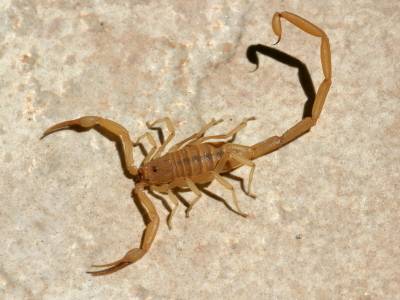
Laying on the couch with my doggies, watching TV, trying to chill out…  Off the ceiling or the back of the couch a bark scorpion falls onto my glasses – which I am wearing…

Things look bigger when they are seen through your eye from a quarter inch away, and a scorpion, waving its tail in anger is no different.  Now I’m generally not one to panic unless it involves a spider; however; imminent sting by bark scorpion on the eyeball apparently is now added to the list.

In panic I swatted away the scorpion, along with my glasses.  I have 20/600 vision, so things 20 feet away appear 600 feet away.  Basically, without my glasses all I see are colors.  A much more impressionist view of the world than even Monet when he was going blind in his later years.

arizona_bark_scorpion

So, I tried to feel around for my glasses blindly, hoping I did not put my hand on the scorpion.  I found my glasses as I fell over the coffee table, making the fake portion of my leg and hip bend backwards against the real part of my bone.  (I have osteonecrosis from asthma meds, so I’m an android now, a topic for later…).  This hurt.  By hurt, I mean pain on a scale of 10 of 10, yelling out screaming, can’t put any weight on my left leg.

Crawling now in pain, desperately looking for the scorpion now that I’m re-equipped with glasses for vision, I can’t find it.  20 to 30 minutes, still can’t find it after moving everything in my living room.  I have removed all clothing except my underwear and combed my hair several times and looked in the mirror to make sure it is not still crawling on me.  Finally, I decided to crawl myself, up to a chair and sit down.

5 minutes later, I see a scorpion.  I’m not really sure if it’s the same one, but I hope it is.  In my haste to swat it off my eyeball, I failed to remark any distinguishing features.  I stagger across the floor, yelling in pain, grab the flyswatter, reach the offending arachnid and swat it as hard as I can.  It’s on carpet of course, and I hit it so hard, if flies away to God knows where.  I repeat my early search and hair combing.  Nothing.

I decided to go to bed at some point, not knowing for sure.  I woke up unable to walk.  Percocet here we come – prescription of course.  It took several to stand even with my cane.  I planned on skipping work, but events kept me from it.  Letting the dogs out, I look around and see a dead scorpion on its back on a dog toy.  I pick up the toy, dust the carcass into the trash and hope it’s all been the same scorpion.

percocet-page-top

Thank God for modern pain killers. Seriously, Percocet, Oxycontin, Morphine and Dilaudid make bone death bearable.

My day at work was painful.  Sadly, an understatement.  Midway through I began to wonder if I had just aggravated my bones or actually broke something.  Driving home I forced myself to concentrate on the road, not the pain, which was harder than I thought it would be.

The good news is my leg is finally feeling better and there were no more visitations by the little sting tail demons tonight.

Leave a comment

Filed under Uncategorized

Fascinating floating city shaped like a manta ray would be 100% self-sustaining

by , 08/02/15

City of Mériens, Jacques Rougerie, manta ray floating city, floating city, oceanic research, seaorbiter, ocean research, university city, city shaped like manta ray

French architect Jacques Rougerie has envisioned a giant floating city which bears a striking resemblance to a manta ray. He discusses his love for the ocean in an interview, where he calls himself a “mérien,” a term he coined which translates to “one belonging to the sea.” His dream is for likeminded individuals to populate his City of Mériens, to conduct research on the surrounding ocean.

City of Mériens, Jacques Rougerie, manta ray floating city, floating city, oceanic research, seaorbiter, ocean research, university city, city shaped like manta ray

Rougerie is no stranger to aquatic design. His SeaOrbiter vessel is currently in production, and is planned to make visits to the City of Mériens via its large inner lagoon. The 3,000 foot by 1,600 foot structure can house 7,000 researchers, professors, and students and will be equipped with laboratories, classrooms, living quarters, and space for leisure activities and sports.

Related: The SeaOrbiter futuristic marine research vessel just reached its crowdfunding goal, set to begin construction

The city would be completely self-sustaining, as well, running on marine energy and producing no waste whatsoever. If the idea of a structure dedicated to understanding and caring for the oceanic environment isn’t enough, the fact that it is designed to have low to no impact on said environment is even more exciting.

City of Mériens, Jacques Rougerie, manta ray floating city, floating city, oceanic research, seaorbiter, ocean research, university city, city shaped like manta ray

Rougerie describes his love for the sea in an interview with the radio station French Inter: “I feel very, very good underwater. I feel different. Another type of imagination is awakened in me as soon as I am underwater.” It is his hope others who share this awe and reverence will continue to study and protect Earth’s precious seas.

+ Jacques Rougerie

Via The Creators Project

Images via Jacques Rougerie

Leave a comment

Filed under Uncategorized