“Wicked” Stepmothers misunderstood

Guest Post from azpowergirl.wordpress.com

It always amazes me how our society paints the picture of a new woman in the life of a father. Tales of abusive women and their cruelty towards their husbands precious babies. I say NO! Let us analyze this.

Cinderella: The story of a wonderful woman with two daughters. Marries the man she loves and accepts his child as her own. Unfortunately, her love passes away leaving her a single mother in a time where women struggle financially as job opportunities for them are scarce. Yes, she KEPT his child. YES she fed and clothed her new daughter. And what did she get in return? Cinderella was a nasty, unappreciative brat. She refused to do chores and constantly complained. When she would finally, hesitantly, do any work around the house, she would make up stories and lie. Guess what little girl, the mice and birds aren’t helping you and we all know it. After being grounded for this type of behavior, what does she do? She sneaks out of the house to go see some boy. Then she leave a very expensive shoe out who knows where! Then when this boy comes trolling around the house, Miss Cinderella is grounded to her room only to sneak out again! Then she runs away from home.

Snow White: This is the story of a vain little girl. Her dad marries a queen. A QUEEN! This is a fantastic scenario for any struggling single father. His daughter can be set for life. Unfortunately for him life didn’t last as long as he anticipated. Now the Queen must decide what do with his child. Like any good woman, she keeps Snow White. A life of royalty and luxury with nothing in return. All she asks is that Snow White behave in a manner befitting the crown. This child never has to lift a finger or do a chore. She appreciates nothing. Running away to shack up with men, partying constantly, and orgies with peasants  are not becoming of the royal step-daughter. It’s an embarrassment to the entire kingdom. What is the Queen to do? She can’t exactly send out the guards. The entire kingdom would be a laughing stock. I don’t blame her at all for sneaking some melatonin and chamomile into the apple. She needed that unruly brat to take a nap. But then of course another boy sneaks into her bed. Now Miss Snow White goes around saying that the stepmother who loved and cared for her was just jealous of her beauty.

All of this behavior is bad enough, but to go around telling everyone stories like they are  victims is just despicable. These loving women care for the children of the men they love.  Now they are slandered throughout their villages and history. No appreciation at all.  These children could have been shipped off to the orphanage but for their loving stepmothers.

I’m sure that someone will bring up Hansel and Grettle. Let’s look at that case. History proves that Grimm Fairy tales changed this story. The reality is that it was their biological mother who sent them off into the woods to die, not a stepmother.

Let us recognize the misunderstood roll of the stepmother. These women take in children who are not their own. They do their best to love and care for these children despite being lied to, abused, and slandered.

At the end of the day the step-child could have been shipped off, but wasn’t.

1 Comment

Filed under Humor and Observations

Mummy mystery: Multiple tombs hidden in Egypt’s Valley of Kings

Multiple tombs await discovery in Egypt's Valley of the Kings, say researchers working on the most extensive exploration project in the valley since the 1920s. Their conclusion is based on excavations and ground-penetrating radar.

Multiple tombs await discovery in Egypt’s Valley of the Kings, say researchers working on the most extensive exploration project in the valley since the 1920s. Their conclusion is based on excavations and ground-penetrating radar.  (Photo by Przemyslaw Idzkiewicz, CC Attribution Share-Alike 2.5 Generic)

Multiple tombs lay hidden in Egypt’s Valley of the Kings, where royalty were buried more than 3,000 years ago, awaiting discovery, say researchers working on the most extensive exploration of the area in nearly a century.

The hidden treasure may include several small tombs, with the possibility of a big-time tomb holding a royal individual, the archaeologists say.

Egyptian archaeologists excavated the valley, where royalty were buried during the New Kingdom (1550 – 1070 B.C.), between 2007 and 2010 and worked with the Glen Dash Foundation for Archaeological Research to conduct ground- penetrating radar studies. [See Photos of Egypt’s Valley of the Kings]

The team has already made a number of discoveries in the valley, including a flood control system that the ancient Egyptians created but, mysteriously, failed to maintain. The system was falling apart by the time of King Tutankhamun, which damaged many tombs but appears to have helped protect the famous boy-king’s treasures from robbers by sealing his tomb.

The team collected a huge amount of data that will take a long time to analyze properly, wrote Afifi Ghonim, who was the field director of the project, in an email to LiveScience. “The corpus was so extensive it will take years, maybe decades, to fully study and report on,” wrote Ghonim, an archaeologist with the Ministry of State for Antiquities in Egypt who is now chief inspector of Giza.

The project is part of “the most extensive exploration in the Valley of the Kings since Howard Carter’s time,” he said, referring to the Egyptologist whose team discovered King Tut’s tomb in 1922.

The search for undiscovered tombs
“The consensus is that there are probably several smaller tombs like the recently found KV 63 and 64 yet to be found. But there is still the possibility of finding a royal tomb,” wrote Ghonim in the email. “The queens of the late Eighteenth Dynasty are missing, as are some pharaohs of the New Kingdom, such as Ramesses VIII.”

That sentiment was echoed by the famous, and at times controversial, Egyptologist Zahi Hawass at a lecture in Toronto this past summer. Hawass was the leader of the Valley of the Kings team.

“The tomb of Thutmose II, not found yet, the tomb of Ramesses VIII is not found yet, all the queens of dynasty 18 [1550 – 1292 B.C.] were buried in the valley and their tombs not found yet,” said Hawass, former minister for antiquities, during the lecture. “This could be another era for archaeology,” he added in an interview.

Ghonim said that it is hard to say how many tombs remain undiscovered but it is “more than just a couple.”

Locating tombs in the Valley of the Kings is difficult to do even with ground-penetrating radar, a non-destructive technique in which scientists bounce high-frequency radio waves off the ground and measure the reflected signals to find buried structures. [10 Modern Tools for Indiana Jones]

Radar instruments and related computing power have vastly improved in the last couple of decades, scientists say. Even so, it “is difficult to avoid false positives in a place like the Valley of the Kings. There (are) many faults and natural features that can look like walls and tombs. Our work did help refine the technology for use here and it does have a place.”

In one instance, radar work carried out by a previous team suggested that tombs dating from the Amarna period (the period within the New Kingdom in which Tutankhamun lived) could be found in a certain area of the main valley. The team excavated the spot but didn’t find any tombs.

When the undiscovered tombs those that do exist are unearthed, they may not hold their original occupants. For instance, KV 64, a small tomb discovered in 2011by a University of Basel team, was found to hold a female singer named Nehmes Bastet who lived around 2,800 years ago. She apparently re-used a tomb that was created for an earlier, unknown, occupant.

Still, Ghonim said they could indeed find a tomb whose original occupants are buried within. “It is not impossible however for one or more to be intact,” he said. And if they do find such pharaohs, they may also find their brains, as work by Hawass and Dr. Sahar Saleem of Cairo Universitysuggests the Egyptians didn’t remove the brains of their dead pharaohs in the mummification process.

An ancient flood control system
While the prospect of new tombs is tantalizing, they are but one of many things the researchers looked for in the valley. Last spring, the researchers gave a taste of what was to come at the Current Research in Egyptology conference at the University of Cambridge.

We “made a number of finds, which we believe will change our understanding of how the ancient Egyptians managed and utilized the site,” Ghonim wrote in the email.

The researchers discovered, for instance, the ancient Egyptians created a flood control system in the valley that, for a time, prevented the tombs from being damaged by water and debris.

They detected a deep channel that would have run through the valley about 32 feet (10 meters) below the modern-day surface. As part of their anti-flood measures the Egyptians would have emptied this channel of debris and built side channels that diverted water into it, allowing water and debris to pass through the valley without causing damage. [Images: Beautiful Sarcophagus of an Egypt Pharaoh]

Strangely enough, the ancient Egyptians “for some reason after building it, they let it fall into disrepair rather quickly. By (the) time Tutankhamun was buried, flooding events had become a problem again,” Ghonim said.

“That was bad for most tombs, but good for Tutankhamun since, at least according to one theory, flooding events effectively sealed the tomb and made it inaccessible to later tomb robbers.”

Today flood control is still a problem in the Valley of the Kings, and scientists are looking at ways to protect the tombs.

“There have been many studies recommending what to do, but the need to keep the valley open and the costs involved remain a problem. There’s also the need to develop a consensus on such an important thing,” Ghonim said.

More discoveries and challenges
Many more finds will be detailed in scientific publications in the future, including the excavation of huts used by the workers who built the tombs and the documentation of graffiti left throughout the valley’s history.

One important challenge that Egyptian antiquities in general face is the need to bring tourists back to Egypt. In June, at a lecture at Toronto’s Royal Ontario Museum, Hawass explained such tourist money not only helps Egypt’s economy but also provides much needed funds for excavation and conservation.

The flow of tourists has been disrupted at times since the 2011 revolution as the political turmoil has kept many foreign visitors away. The lecture by Hawass was given a few weeks before the ouster of Egyptian president Mohamed Morsi.

Leave a comment

Filed under Uncategorized

Four new element names to be added to the periodic table

Personal silhouetted against big display of periodic table
Just when you thought you’d got it right

Chamussy/SIPA/Rex/Shutterstock

Forget earth, wind, water and fire – there are four new elements in town. The International Union of Pure and Applied Chemistry (IUPAC) has announced that recently discovered elements 113, 115, 117 and 118 will now be known as nihonium, moscovium, tennessine and oganesson, pending a public review.

The four elements, which complete the seventh row of the periodic table, were officially recognised in January this year following discoveries by teams in Japan, Russia and the US, which submitted names to governing body IUPAC.

Researchers at RIKEN in Wako, Japan proposed nihonium (symbol Nh) for their discovery, element 113, after Nihon, one of the Japanese words for “Japan”.

Moscovium (Mc) and tennessine (Ts), formally elements 115 and 117, were proposed by teams at the Joint Institute for Nuclear Research in Dubna, Russia, and Oak Ridge National Laboratory, Vanderbilt University and Lawrence Livermore National Laboratory (LLNL) in the US, after Moscow and Tennessee.

Finally, oganesson (Og) was proposed by the Dubna and LLNL teams after Yuri Oganessian, a Russian physicist who helped discover element 114 in 1999. It and element 116, now known as flerovium and livermorium, were the last to join the periodic table, back in 2011.

The IUPAC limits choices for elements names to mythological characters, minerals, places, properties of the element, or scientists – ruling out public calls to name an element after heavy-metal band Motörhead frontman Lemmy, who died earlier this year.

The new names will now undergo a five-month public review to allow for any potential objections, meaning they could officially join the periodic table by the end of this year. In the meantime, the hunt for heavier elements, and the first entry of the eighth row, continues.


Leave a comment

Filed under Humor and Observations

Star Trek’s Transparent Aluminum a Reality Now

BULLETPROOF BARRIER SECURITY TIPS & NEWS

OPTICALLY CLEAR ALUMINUM PROVIDES BULLETPROOF PROTECTION

Share on Twitter+1Share on FacebookShare on LinkedInShare via emailShare

aluminum-oxynitrideWhile the U.S. Navy is busy with the development of a new bulletproof material called Spinel, Surmet Corporation is already commercially producing its own version called ALON®. Technically known as aluminum oxynitride, Star Trek fans may be more familiar with the term “transparent aluminum” first proposed by Scotty in the 1986 movie, Star Trek IV: The Voyage Home. While ALON isn’t quite what Scotty had in mind (it’s not truly a transparent metallic aluminum, but rather a transparent aluminum-based ceramic), it’s pretty darn close.

Developed by Raytheon, ALON begins as a powder, which is then molded and baked in very high heat. The heating process causes the powder to liquefy and cool quickly, leaving the molecules loosely arranged, as if still in liquid form. It is this crystalline structure that provides ALON its level of strength and scratch resistance comparable to rugged sapphire. Polishing the aluminum oxynitride strengthens the material and also makes it extremely clear.

Comparing Aluminum Armor to Traditional Bulletproof Glass

Traditional bulletproof glass is comprised of multiple layers: polycarbonate sandwiched between two layers of glass. Similarly, transparent aluminum armor is also composed of three layers: an outer layer of aluminum oxynitride, a middle layer of glass and a rear layer of polymer backing. However, the similarities stop there.

Aluminum armor can deflect the same rounds from small-caliber weapons as traditional bulletproof glass, but it will still be more clearly transparent even after being shot. Also, a .50-caliber armor-piercing bullet could sink nearly three inches into bulletproof glass before stopping. Aluminum armor can stop it in half the distance and yet is half the weight and thickness of traditional transparent armor.

In addition, transparent aluminum armor can be produced in virtually any shape and can also hold up to the elements much better than traditional bulletproof glass, which can be worn away by blowing desert sand or shrapnel.

Despite aluminum oxynitride’s ability to produce a superior transparent aluminum armor, this material has not been put into widespread use. The largest factor in this is cost. Transparent aluminum armor can be anywhere from three to five times as much to produce as traditional bulletproof glass. In theory, however, it would not need to be replaced as often, saving money in the long run. Further, there is no existing infrastructure to produce the material in large panes like the size of a front windshield of a vehicle. ALON is currently used for smaller applications, such as the lenses in battlefield cameras or the windows over the sensors in missiles.

Leave a comment

Filed under Humor and Observations

Cocaine rewires brain after single use, study says

Using cocaine once is enough to rewire the brain and cause addiction, according to new research.

A new study, conducted on mice, shows cocaine speedily rewires high-level brain circuits that support learning, memory and decision-making.

The research, from UC Berkeley and UCSF, sheds light on the frontal brain’s role in drug-seeking behavior and may be key to tackling addiction.

Researchers found that, after just one dose of cocaine, the rodents showed fast and robust growth of dendritic spines, which are tiny, twig like structures that connect neurons and form the nodes of the brain’s circuit wiring.

Assistant professor of psychology and neuroscience at UC Berkeley, Linda Wilbrecht, said their images provide clear evidence that cocaine induces rapid gains in new spines.

“The more spines the mice gain, the more they show they learned about the drug,” she said.

For mice “learning about the drug” can mean seeking it out to the exclusion of meeting other needs, which may explain how addiction in humans can override other considerations that are necessary for a balanced life.

“The downside is, you might be learning too well about drugs at the expense of other things,” Wilbrecht said.

Using a technology known as 2-photon laser scanning microscopy, researchers made images of nerve cell connections in the frontal cortices of live mice before and after the mice received their first dose of cocaine and, within just two hours, observed the formation of new dendritic spines.

“The number of new, robust spines gained correlated with how much the individual mice learned to prefer the context in which they received the drug,” Wilbrecht said.

The findings provide clues to behavioral and environmental factors in drug addiction.

Leave a comment

Filed under Humor and Observations

Cosplay Pictures for Saturday

Cosplayers and their cosplay to enjoy!

Leave a comment

Filed under Humor and Observations

The Guerrilla Grafting Movement – Secretly Grafting Fruit-Bearing Branches onto Ornamental City Trees

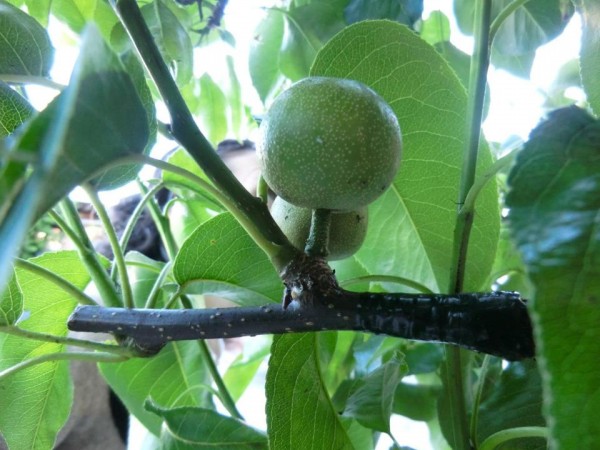
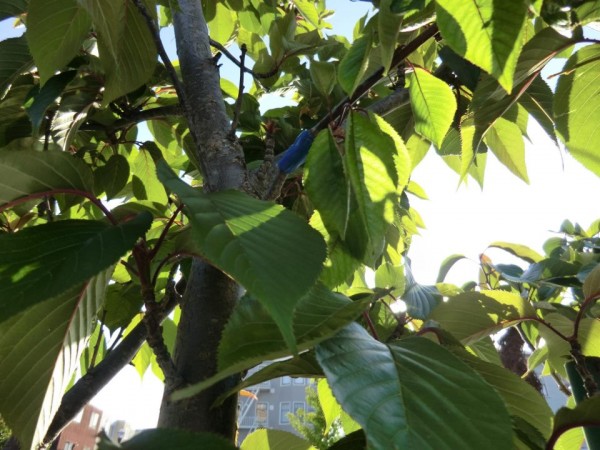
 There is a group of fruit lovers in San Francisco that practice something known as “guerrilla grafting” –  they graft fruit bearing branches onto fruitless, ornamental trees across the Bay Area city. Having access to free fruit sounds like a wonderful idea, considering the number of homeless people who can rarely afford a decent meal, but guerrilla grafting is actually illegal.

In many metropolitan areas, urban foresters make sure that flowering fruit trees don’t bear any fruit, in order to keep fallen fruit from making a mess on sidewalks and attracting vermin. Most public trees are fruitless, a fact that the Guerilla Grafters obviously don’t like. While authorities see urban fruit-bearing trees as a nuisance, these agricultural rebels see them as an opportunity to provide fresh, healthy produce for free to anyone who walks by.

According to their Facebook page, “Guerrilla Grafters is a grassroots group that sees a missed opportunity for cities to provide a peach or a pear to anyone strolling by. Their objective is to restore sterile city trees into fruit-bearers by grafting branches from fertile trees. The project may not resolve food scarcity, but it helps foster a habitat that sustains us.” Their mission, they say is to make delicious, nutritious fruit available to urban residents through these grafts.

grafting-1


As noble as their intentions may seem to most of us, guerrilla grafting is illegal and classified as vandalism by San Francisco’s Department of Public Works. It doesn’t matter who plants the tree, who grafts branches, or who maintains it, if it’s on a sidewalk, it’s publicly owned and messing with it is a crime. But as of 2012, the department did not plan to actively pursue grafters. “Unless someone is caught in the act, there’s not much we could do,” said spokesperson Gloria Chan, adding that it is hard to catch because the average person doesn’t know what an illegal graft looks like so it’s not likely to get reported.

However, some people seem to think guerrilla grafting is a very serious problem. “It gets very dangerous very quickly,” said Carla Short, an urban forester for the San Francisco Department of Public Works. “I mean the minute that fruit gets crushed on the sidewalk, it is slippery. We certainly don’t want people to get injured.”

graft-2

But the law isn’t a deterrent for these urban gardeners, who seem quite focused on their mission. “People think of fruit trees as a kind of a nuisance,” said Tara Hui, member of the group since its inception five years ago. “The intention of doing guerrilla grafting is not so much for the sake of challenging authority, but to set an example – a working example – to counter the arguments. If we have a prototype, we can have a legitimate rational discussion on the issue.” Plus, every grafted tree has a steward, someone who promises to check up on it regularly, making sure it doesn’t cause any problems.

She added that many fruit lovers did try to follow “legal channels” at first – she wanted to plant a fruit tree in front of her house and was fully prepared to care for it herself. But her efforts were repeatedly thwarted by the department and by San Francisco nonprofit Friends of the Urban Forest. So she began connecting with other frustrated residents who wanted fruit trees and they started using social media to delve into underground channels.

graft-3

The grafters like to think of their activities as ‘hybrid farming’ or ‘street theater’ and believe that their efforts don’t pose threats like slip hazards from fallen fruit or damage to the host trees. “With grafts, you only have a few branches that are fruit bearing, and it’s really very manageable,” said guerrilla grafter Miriam Goldberg. And they take full responsibility to make sure that ripe fruits are safely harvested. They’re also prepared to help with maintenance tasks like pruning, propping, and watering.

“The hope is that through this one small act (of grafting) we can reconnect with a shared space and reconnect with each other,” Hui said. “Ultimately, I think codes and regulations should respond to the reality of people’s lives. Just taking an evening stroll, and then you see a fruit and you reach over and now you’re nourished.”

Guerrilla grafters have created a web app to provide grafting tips and help members find trees that might be good candidates to accept fruit-bearing branches. Through their Facebook page they track the progress of their cherry, plum, and pear grafts, and report upcoming events.

Photos: Guerrilla Grafters/Facebook

Sources: NPR, SF Gate, Fastcoexist

Leave a comment

Filed under Humor and Observations

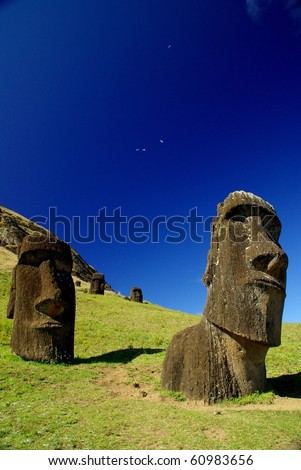
Do the Easter Island Heads Really Have Bodies?

Do the Easter Island Heads Really Have Bodies?

Easter Island “heads” on the slope of Rano Raraku volcano.

Credit: Image via Shutterstock

The mysterious Easter Island statues — hundreds of huge, ancient carved stone heads that guard the hilly Pacific island landscape — may actually have bodies, according to an email showing excavations at the site.

The email, which made the rounds in May 2012, contained photos of a startling excavation project at Easter Island. According to the email, archaeologists were in the process of unearthing the statues’ bodies, which were gradually buried by 500-plus years of erosion.

But are those surprising images, and the excavation project they depict, actually real? Are the famous Easter Island heads really full-bodied figures? [Image Gallery: Walking Easter Island Statues]

Turns out, so many people were seeking an answer that “we were swamped by over 3 million hits and our site crashed,” said Jo Anne Van Tilburg, director of the Easter Island Statue Project, which had indeed been excavating two of the statues’ buried bodies since 2010. Photos of the dig posted on the project website, and older photos taken of full-bodied Easter Island statues that were excavated in the 1950s, have been collected together in the chain email, driving that past surge of interest in the excavation project, and confusion about what’s real.
Back of one of the statues being excavated, showing petroglyphs.

Credit: Easter Island Statue Project

“The reason people think they are [only] heads is there are about 150 statues buried up to the shoulders on the slope of a volcano, and these are the most famous, most beautiful and most photographed of all the Easter Island statues,” Van Tilburg, who is also a fellow at the Cotsen Institute of Archaeology at the University of California, Los Angeles, told Life’s Little Mysteries. “This suggested to people who had not seen photos of [other unearthed statues on the island] that they are heads only.”

In fact, archaeologists have studied the statues on the island for about a century, and have been aware of the torsos beneath the statues’ heads since the earliest excavations in 1914. [The Most Monumental Monument Mistakes]

The statues, whose traditional name is “moai,” were carved from volcanic rock between A.D. 1100 and 1500 by ancient Polynesians. They range in size, with the tallest reaching 33 feet (10 meters).  Although their significance is still somewhat of a mystery, the moai are thought to have been representations of the indigenous peoples’ ancestors. Tribespeople would probably have carved a new statue each time an important tribal figure passed away, Van Tilburg said.

The new excavation work intends to document for the first time the complex carvings found on the buried statues’ bodies, which have been protected from weathering by their burial. But the project will also help preserve the ancient monoliths, she said. “We have a team that accompanies us and they consolidate and protect the stone by applying chemicals and water repellant.”

Follow Natalie Wolchover on Twitter @nattyover. Follow Life’s Little Mysteries on Twitter @llmysteries, then join us on Facebook.

1 Comment

Filed under Humor and Observations

Cosplay Pictures for the Weekend

Cosplayers and their cosplay to enjoy!

Leave a comment

Filed under Humor and Observations

Random Humor for Hump Day

Home with the cold that is going around, might as well have some laughs to share with others…

Leave a comment

Filed under Uncategorized