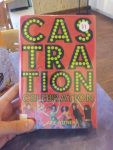
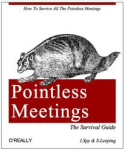
Still More Bizarre Book Covers

This has been a popular thread in the past.  If you wish to see more, type in “book covers” in the search on the home page.  I cannot attest for all of them as real books, as people are much better at photo-shopping nowadays.  However, the ones with a Kindle tag came right off the sales lists.  Enjoy:

4 Comments

Filed under Humor and Observations

Snow in Arizona!

I live in Phoenix, Arizona;  where the annual rainfall is barely 8 inches per year, and we have sunny skies over 300 days per year.  A few days ago I was in my convertible with the top down and it was a nice 78 degrees.  Don’t tell me its global warming lol.  But in a freakish weather system, the following has occurred:

2 Comments

Filed under Humor and Observations, Uncategorized

More Secret New York Locations

My earlier post on the hidden subway station in New York was very popular, so I decided to do another expanded version of secret locations for your interest.  I found nycgo.com and think you will like it:

  • New Yorkers love to think they know everything about their city—where to find the best street-meat cart, how to avoid paying full price at museums, what route to take to skip traffic down Broadway. But New York City can reveal new treasures to even its most grizzled veterans. Beyond the city where we work, eat, play and commute every day lies a hidden New York: mysterious, forgotten, abandoned or just overlooked. We’ve compiled a list of New York City’s coolest secret spots, ones you’re not likely to read about in any guidebooks. You’ll just have to get out there and discover them for yourself. Anna Balkrishna
    • Another underground masterpiece is even more secretive: The Underbelly Project is a clandestine “gallery” consisting of street art installed on the walls of an abandoned subway station, the whereabouts of which had been unknown to everyone but the artists and the attendees of the gallery’s one and only open night (which happened over the summer of 2010). Though rumors have circulated that the station is above the G train’s Broadway stop in Williamsburg, don’t try to see for yourself—not only is it dark and dangerous, but it is also illegal; there have been at least 20 arrests of trespassers trying to visit the space. Erin O’Hara 


  • whisperinggallery_v1_460x285.jpg
    Photo: Alex Lopez  

    Whispering Gallery in Grand Central Terminal
    Grand Central Terminal has many secrets (just for starters: Franklin Delano Roosevelt had his own underground passageway that led to the Waldorf=Astoria hotel), but the Whispering Gallery is its most romantic. This unmarked archway, located in front of the Oyster Bar & Restaurant, possesses a mystifying acoustic property: when two people stand at diagonal arches and whisper, they can hear each other’s voices “telegraphed” from across the way. According to rumor, jazz legend Charles Mingus liked to play under the arches. Today, though, the Whispering Gallery is more popular for murmured marriage proposals. Just don’t confess anything that you don’t want strangers to overhear! —AB

     

  • rockefellergarden_v1_460x285.jpg
    Photo: Timothy Vogel (via Flickr)  

    Rooftop Gardens at Rockefeller Center
    Some of the most beautiful gardens in New York are hidden—hundreds of feet above the ground. Rockefeller Center maintains five spectacular roof gardens originally designed by English landscaper Ralph Hancock between 1933 and 1936. The gardens have been closed since 1938, but three can be spied from the Top of the Rock observation deck. And there’s a chance you’ve seen at least one close up: the garden atop the British Empire Building appears in a scene from the 2002 filmSpider-Man—AB

    bowlingalleyfrick_v1_460x285.jpg

  • Photo: Michael Bodycomb  

    Bowling Alley at the Frick Collection
    The Frick Collection, a mansion on the Upper East Side formerly owned by 19th-century industrialist Henry Clay Frick, is an architectural beauty in its own right. But did you know that the building also contains an underground bowling alley? Commissioned by Frick in 1914, the antique alley is a real tycoon’s playground, with mahogany-paneled walls, immaculate pine-and-maple lanes and a custom-made set of balls that remain in working order. After Frick’s death in 1919, the bowling alley was abandoned (except briefly, when it served as a library storage space in the 1920s). The Frick Collection restored the alley to its former glory in 1997 but keeps it under tight lock and key. —AB

  • berlinwall_paleypark_v2_460x285.jpg
    Photo: Alex Lopez  

    Berlin Wall Remnants in Paley Park
    Nestled in a small Midtown plaza at 520 Madison Avenue is an unexpected piece of history. Five sections of the Berlin Wall, in total measuring 12 feet high and 20 feet long, have been on display here since 1990. The wall’s western-facing side is covered with dazzling work by German artists Thierry Noir and Kiddy Citny. The eastern side, meanwhile, remains a blank slab of concrete—a reminder of the oppressive political regime in the former East Germany. At first glance, this artifact appears to be just another public mural; it goes largely unnoticed by the office workers who sit in the park on their lunch break.—AB 

  • bowerycemetery_v1_460x285.jpg
    Photo: Alex Lopez 

    Cemetery Behind the Bowery Hotel
    Bowery Hotel guests who gaze through the lobby’s back window often admire the tranquil green lawn located behind the building. But few realize that they’re actually glimpsing a hidden cemetery. (Part of the confusion: the deceased are interred in underground marble vaults marked by plaques, not tombstones.) Founded in 1830, the New York Marble Cemetery, located in what is now the East Village, is the City’s oldest nondenominational public burial ground—and also one of the hardest to find. The cemetery gate is located at the end of a narrow alley leading from Second Avenue; it’s unlocked to visitors only for a few hours on the fourth Sunday of each month from April to October. —AB 

  • siboatgraveyard_v1_460x285.jpg
    Photo: Kaitlyn Tikkun (via Flickr)  

    Staten Island Boat Graveyard
    One of the spookiest places in town is the Staten Island Boat Graveyard. Located far from the urban bustle in Rossville, Staten Island, this swampy patch of the Arthur Kill Road waterway is the final resting place for dozens of rusting, decomposing and abandoned boats of all sizes. The rotting ship hulls, protruding from the watery depths, are oddly majestic and beautiful (but also kind of gross; we recommend wearing long pants, not shorts, and sturdy shoes if you go). The gravesite can be found via a makeshift path off Arthur Kill Road near Rossville Avenue, about 13 miles by bike or car from the ferry terminal. It’s a truly forgotten corner of the City. —AB

    atlantictunnel_v2_460x285.jpg

  • Photo: Malcolm Brown  

    Old Atlantic Avenue Subway Tunnel
    For more than a century, the lost Atlantic Avenue subway tunnel in Brooklyn was a thing of legend: The New York Times printed a story about tunnel-dwelling pirates in 1893, and sci-fi author H.P. Lovecraft portrayed it as a vampire den in a 1927 short story. The tunnel’s actual history is not so fanciful but still interesting: Cornelius Vanderbilt built it in 1844 to reroute Long Island Rail Road trains that were accidentally mowing down pedestrians. The tunnel was abandoned in 1861 and only rediscovered in 1980. (A steam engine is reputedly still buried somewhere inside.) At one point, New Yorkers and visitors could see the tunnel for themselves, but tours of the underground space are no longer available. —AB

    slavegalleries_staugustine_v1_460x285.jpg

  • Photo: Alex Lopez
    Saint Augustine’s Episcopal Church Slave Galleries

    Within the simple walls of Saint Augustine’s Episcopal Church on the Lower East Side lies an unlikely reminder of racial segregation in New York. Cramped staircases lead to two concealed rooms, located behind the balcony, where African-American worshippers could hear church services without being seen. The rooms were informally known as the “slave gallery,” even though slavery was outlawed in New York by the time they were built in 1828. Fugitive 19th-century politician Boss Tweed reportedly hid in the gallery to attend his mother’s funeral. Ignored and branded for decades as a shameful part of Saint Augustine’s past, the space was recently restored and opened to the public in 2009. —AB

    bbbombshelter_v1_460x285.jpg

  • Photo: John Marshall Mantel 

    Cold War Bomb Shelter in the Brooklyn Bridge
    In 2006, City inspectors stumbled upon a hidden chamber inside theBrooklyn Bridge, located just under the bridge’s Lower Manhattan entrance ramp. The room was stockpiled with decades-old military provisions for surviving a nuclear bomb attack: blankets, medicine, water containers and around 352,000 crackers. Supply boxes stamped with the dates 1957 and 1962 indicate that the bunker was used during the height of the Cold War, then later sealed up and forgotten. For security reasons, City officials have kept the exact location of the chamber a secret—most of the 150,000 pedestrians who cross the bridge each day have no idea that it even exists. —AB

    And that’s not the only secret space inside the belly of the bridge; located within its base, a series of vast rooms known as the Brooklyn Anchorage was used for music and theater performances, readings and art exhibitions for nearly 20 years. Each of the eight impressive rooms has brick walls and a 50-foot-high ceiling. The space was closed for business after 9/11 for security reasons and, unfortunately, will not be open again anytime soon. —EO

    columbiatunnels_v1_460x285.jpg

  • Photo: Mira John (via Flickr)  

    Tunnels Under Columbia
    Below Columbia University‘s Morningside Heights campus, a series of underground tunnels connects various school buildings. Tunnels below Buell Hall are just a few feet wide and are thought to date back to the insane asylum that once sat in its place, while the tunnels below Pupin Hall were a meeting place for scientists during the beginning stages of the Manhattan Project. While not entirely off-limits—students and faculty are technically permitted to use some of the tunnels to travel between buildings—security for the forbidden tunnels has increased in recent years in response to rogue tunnel explorers. Still, Columbia’s tunnels are everything a City secret aspires to be: dark, difficult to find and brimming with history. —EO

    pomanderwalk_v1_460x285.jpg

  • Photo: Sony Stark (via Flickr)  

    Pomander Walk
    Twenty-seven buildings resembling Tudor homes with colorful doors, shutters and timber frames grace this gated street that’s tucked away on the Upper West Side, nearly completely out of view to passersby. Originally conceived as a temporary property that was to be knocked down and replaced with a hotel, Pomander Walk—which is modeled after an old London street and the set of a stage play, both of the same name—earned landmark status in 1982. Surrounded by buildings that tower hundreds of feet above its rooftops, this pedestrian-only lane of residences is a peaceful respite from the people and cars that hustle and bustle past its wrought-iron gates every day, unaware of the sanctuary within. You can’t access the hidden haven unless you have a key or know someone who does, but the picturesque spot is still worth a peek through the gate. —EO

    nypl_v1_460x285.jpg

  • Photo: Curious Expeditions (via Flickr)  

    Pneumatic Tubes
    Pneumatic tubes are a lingering ghost of New York’s past. Once upon a time, they were used to shuttle mail (and, on one occasion in the late 19th century, a cat—don’t worry, it survived) around the City and often across the Brooklyn Bridge. Nowadays they’re scarce, but you can still see them in action if you know where to look. At the New York Public Library, slips of paper bearing book requests are still shot via tube seven floors down to the stacks, where the desired book is found and sent up on a Ferris wheel–type apparatus. Meanwhile, Roosevelt Island, a small residential isle between Manhattan and Queens in the East River, uses extra-large pneumatic tubes to transport all of its garbage directly from buildings to the transfer facility, where it’s automatically separated and compacted for pickup.  —EO


2 Comments

Filed under Humor and Observations, Uncategorized

More Cosplayer Pictures

More pictures of cosplayers.  Cosplay being those who dress in costumes for fun or lifestyle.

1 Comment

Filed under Humor and Observations

TOP 10 COUNTRIES THAT DISAPPEARED IN THE 20TH CENTURY

TOP 10 COUNTRIES THAT DISAPPEARED IN THE 20TH CENTURY

New nations seem to pop up with alarming regularity. At the start of the 20th century, there were only a few dozen independent sovereign states on the planet; today, there are nearly 200! Once a nation is established, they tend to stick around for awhile, so a nation disappearing is quite uncommon. It’s only occurred a handful of times in the last century. But when they do, they completely vanish off the face of the globe: government, flag, and all. Here then, in no particular order, are the top ten countries that had their moment in the sun but are, alas, no more.

10. EAST GERMANY, 1949-1990

east-germans-build-the-wall

Created from the Soviet controlled sector of Germany after the Second World War, East Germany was probably best known for its Wall and its tendency to shoot people who attempted to cross over it. Now, it’s one (over-reactionary) thing to shoot foreigners who are trying to enter your country illegally, but these were its own people!

Basically little more than a Soviet satellite state, the collapse of the notorious Wall and, with it, the demise of the old Soviet Union brought an end to this failed experiment in Communism, and it was integrated back into the rest of Germany in 1990. Because East Germany was so far behind the rest of Germany economically, however, its reintegration with the west almost bankrupted Germany. Today, however, things are swimming along nicely, thank you.

9. CZECHOSLOVAKIA, 1918-1992

hand-painted-map-of-czechoslovakia-570x392

Forged from the remnants of the old Austro-Hungarian Empire, during its brief existence it was one of the few bright spots in Europe, managing to maintain one of the continent’s few working democracies prior to the Second World War. Betrayed by England and France in 1938 at Munich, by March of 1939 it had been completely occupied by Germany, and vanished off the map. Later it was occupied by the Soviets, who turned it into another vassal state of the old Soviet Union until that nation’s collapse in 1991. At that time, it finally reestablished itself as a vibrant democracy.

That should have been the end of the story, and probably would have been, had not the ethnic Slavs in the eastern half of the country demanded their own independent state, breaking Czechoslovakia in two in 1992. Today, it exists as the Czech Republic in the west, and the nation of Slovakia in the east, making Czechoslovakia no more. Though considering that the Czech Republic maintains one of the more vibrant economies in Europe, the far-less-well-off Slovakia maybe should have reconsidered.

8. YUGOSLAVIA, 1918-1992

yugoslavia-570x595

Like Czechoslovakia, Yugoslavia was a by-product of the breakup of the old Austro-Hungarian Empire in the aftermath of WWI. Basically made up of parts of Hungary and the original state of Serbia, it unfortunately did not follow Czechoslovakia’s more enlightened example. Instead, it maintained a somewhat-autocratic monarchy until the Nazis invaded the country in 1941, after which it became a German possession. With the collapse of the Nazis in 1945, Yugoslavia somehow managed to avoid Soviet occupation but not Communism, coming under the socialist dictatorship of Marshal Josip Tito, the leader of the partisan Army during WWII. It remained a nonaligned authoritarian socialist republic until 1992, when internal tensions and rival nationalism resulted in civil war. The country then split into six smaller nations (Slovenia, Croatia, Bosnia, Serbia, Macedonia, and Montenegro,) making it a textbookexample of what happens when cultural, ethnic, and religious assimilation fails.

7. AUSTRO-HUNGARY, 1867-1918

austro-hungary-crest

While all of the countries that found themselves on the losing side after the First World War suffered economically, and geographically to some degree, none lost more than the once-powerful Austro-Hungarian Empire, which found itself carved up like a Thanksgiving Day turkey in a homeless shelter. Out of the dissolution of the once-massive empire came the modern countries of Austria, Hungary, Czechoslovakia, and Yugoslavia, with parts of it going to Italy, Poland, and Romania.

So why did it break apart when its neighbor, Germany did not? Because it lacked a common identity and language, and was instead home to various ethnic and religious groups, most of whom had little to do with each other…to put it mildly. In effect, it suffered a large-scale version of what Yugoslavia suffered, when it saw itself similarly torn apart by nationalistic fervor. The difference was that Austro-Hungary was carved up by the victors in WWI, whereas Yugoslavia’s dissolution was internal and spontaneous.

6. TIBET, 1913-1951

 tibet_location

While the land known as Tibet has been around for over a thousand years, it wasn’t until 1913 that it managed become an independent country. Under the peaceful tutelage of a chain of Dalai Lamas, it finally ran afoul of Communist China in 1951 and was occupied by Mao’s forces, thus ending its brief foray as a sovereign nation. China occupied an increasingly-tense Tibet throughout the ’50s until the country finally rebelled in 1959, which resulted in China’s annexation of the region and the dissolution of the Tibetan government. This finished the nation for good and turned it into a “region,” rather than a country. Today it remains a big tourist attraction for the Chinese government, though it still has issues with Beijing, by insisting it be granted its independence once again.

5. SOUTH VIETNAM, 1955-1975

vietnam-map

Created from the forceful expulsion of the French from Indo-China in 1954, someone decided it would be a good idea to split Vietnam in two, roughly at the 17th parallel, leaving a Communist north and a pseudo-democratic south. As with Korea before, it didn’t work any better in Vietnam, resulting in intermittent warfare between the two halves that ultimately dragged the United States into a conflict (again with the Korea comparisons,) that was to result in one of the most draining and costly wars in American history. Finally hounded out of the country by dissent at home, America left South Vietnam to fend for itself in 1973, which it did for only two more years, before the Soviet-backed North finally rolled over the country, bringing an end to South Vietnam and renaming Saigon—its capitol—Ho Chi Minh City. It’s been a socialist utopia ever since.

4. UNITED ARAB REPUBLIC, 1958-1971

uar-flag-570x367

In yet another ill-fated attempt to bring unity to the Arab world, Egypt’s fiery socialist president, Gamel Abdel Nasser, thought it would be a splendid idea to unite with his distant neighbor, Syria, in an alliance that would effectively surround their sworn enemy, Israel, and make them a regional superpower. Thus was created the short-lived U.A.R., an experiment that was doomed to failure almost from the start. Being several hundred miles apart made creating a central government almost impossible, while Syria and Egypt never could quite agree on what constituted national priorities.

The problem might have been rectified had Syria and Egypt managed to link their halves together by destroying Israel, but that nasty Six Days War came along in 1967, dashing their plans for a common border, and handing both halves of the U.A.R. a defeat of biblical proportions. After that the merger’s days were numbered, and finally came to an anti-climactic end with the death of Nasser in 1970. Without the charismatic Egyptian President around to hold the fragile alliance together, the U.A.R. quickly dissolved, restoring the nations of Egypt and Syria once again.

3. OTTOMAN EMPIRE, 1299-1922

the-growth-of-the-ottoman-empire-570x484

One of the great empires in history, the Ottoman Empire finally came to an end in November of 1922, after a pretty respectable run of over six hundred years. Once extending from Morocco to the Persian Gulf, and from Sudan to as far north as Hungary, its demise was a slow process of dissolution over many centuries until, by the dawn of the 20th century, it was but a shadow of its former self.

But even then, it was still the main power broker in the Middle East and North Africa, and might still be that way today had it not chosen to ally itself with the losing side in World War I. It saw itself dismantled in the aftermath, with the biggest chunk of it (Egypt, Sudan, and Palestine) going to England. By 1922 it had outlived its usefulness, and finally died when the Turks won their war of independence in 1922 and abolished the Sultanate, creating the modern-day nation of Turkey in the process. Still, you’ve got to give it credit for making such an impressive run before giving up the ghost.

2. SIKKIM, 8TH CENTURY CE-1975

map-sikkim-517x600

What? You’ve never heard of the place? What rock have you been hiding under? Seriously, it’s not likely you would have heard of tiny, land-locked Sikkim, nestled securely in the Himalayan Mountains between India and Tibet…er, China. About the size of a hot dog stand, it was basically one of those little-known, and largely forgotten, little monarchies that managed to hold on into the twentieth century before it finally realized it had no particularly good reason for being independent, and decided to merge with modern India in 1975.

Its coolest claim to fame? Though just a little bigger than Rhode Island, it has no fewer than eleven official languages, which must play havoc with traffic signs—assuming, that is, that they have any roads.

1. UNION OF SOVIET SOCIALIST REPUBLIC (SOVIET UNION), 1922-1991

ussr-map-570x396

What would the 20th century have been without the good ‘ol USSR to stir things up? One of the truly scary counties on the planet until its anticlimactic collapse in 1991, for seven decades it stood as the bulwark of Marxist Stalinism, with all the misfortune that brought with it. It was created in the chaotic aftermath of the breakup of Imperial Russia after WWI, and both survived and thrived despite inept economic policies and brutal leadership. The USSR actually managed to beat the Nazis when no one thought that Hitlercould be stopped, enslaved eastern Europe for over forty years, instigated the Korean War in 1950, and very nearly got into a shooting war with the United States over Cuba in 1962, making its tenor on the world stage nothing if not eventful.

Finally coming apart in the aftermath of the fall of the Berlin wall in 1989, and the subsequent collapse of Communism in eastern Europe, it broke into no fewer than fifteen sovereign countries, creating the largest new block of countries since the breakup of the Austro-Hungarian Empire in 1918. What followed was the pseudo-democratic Republic of Russia, though it still retains much of the autocratic air it has always been famous for.

Leave a comment

Filed under Humor and Observations

New Pyramids Discovered on Google Earth

Lost Egyptian pyramids found … by Google?
Images from Google Earth reveal what appear to be two long-lost pyramid complexes.
Mon, Aug 13 2012 at 11:43 AM
 
Google Earth pyramids
Have two new Egyptian pyramids been located thousands of years after they were last seen by human eyes? That may be the case, as images from Google Earth appear to show two long-lost pyramid complexes in Upper Egypt near the city of Abu Sidhum,Discovery News reports.
The images were identified by satellite archaeology researcher Angela Micol, who posted her observations on her website, Google Earth Anomalies.
Google Earth is a 3D virtual globe and mapping program that combines satellite imagery and aerial photography. First created by a company funded by the Central Intelligence Agency, the program was acquired by Google in 2004.
Egypt’s best-known pyramids, including the fabled Great Pyramid, are located at Giza, not far from the capital city of Cairo, but 115 others are known to be scattered throughout the country. That number keeps growing. Most recently, the so-called “headless pyramid” was rediscovered in 2008. The 4,000-year-old structure had been documented by archaeologist Karl Richard Lepsius in 1842 but it was lost when desert sands covered it back up for more than a century and a half.
The two new sites are located about 90 miles from each other and Micol has verified with Egyptologists that they are not among the 118 known pyramids. “The images speak for themselves. It’s very obvious what the sites may contain but field research is needed to verify they are, in fact, pyramids and evidence should be gathered to determine their origins,” Micol said in a press release on her site.
The first of the two sites contains what Micol characterizes as “a distinct, four-sided, truncated, pyramidal shape that is approximately 140 feet in width.” The site also contains three small mounds aligned in a diagonal manner similar to the pyramids at Giza.
The second site, shown in the photo above, contains four mounds, the two largest of which are each 250 feet in width. The smaller mounds are each approximately 100 feet wide.
Micol has not revealed the exact locations of the two sites, saying they must first be identified and protected by Egyptian officials.
The researcher has been using satellite images for 10 years to identify previously unknown sites. She recently released an image she identified as a possible underwater city located near the coast of the Yucatan peninsula.
Micol says she is forming a nonprofit organization to promote satellite archaeology and remote sensing and is raising money to fund a documentary about the some of the sites she has unearthed using Google Earth.
Photo above: Google Earth

Leave a comment

Filed under Humor and Observations

Blood of King Louis XVI Authenticated

Blood of guillotined King Louis XVI is ‘authentic’
Now that it has confirmed the blood came from Louis XVI, researchers are planning to reconstruct the entire genome of the deposed French monarch.

Tia Ghose, LiveScience

Wed, Jan 02 2013 at 2:56 PM

A gourd emblazoned with heroes of the French Revolution contained the blood of Louis XVI. (Photo: Davide Pettener)

More than 200 years ago, France’s King Louis XVI was killed (along with his wife, Marie Antoinette) via guillotine, and legend has it someone used a handkerchief to soak up the king’s blood, then stored the handkerchief in a gourd.
Now scientists have confirmed that a squash emblazoned with figures from the French Revolution indeed contains the dried blood of the executed king.
Scientists matched DNA from the blood with DNA from a detached and mummified head believed to be from a direct ancestor of King Louis XVI, the 16th-century French king Henry IV. The new analysis, which was published Dec. 30 in the journal Forensic Science International, confirmed the identity of both French royals.
“We have these two kings scattered in pieces in different places in Europe,” said study co-author Carles Lalueza-Fox, a paleogenomics researcher at Pompeu Fabra University in Spain. The new analysis confirms that the two men “are separated by seven generations and they are paternally related.” [See Photos of the Embalmed Head & Gourd]
French King Henry IV's embalmed head
Two French kings
King Henry IV was born in 1553 and became king in 1589 after a crazed monk killed his predecessor, Henry III. To ascend to the throne, Henry, a Protestant, converted to Catholicism and laid siege to Paris. Through his fair and peaceful reign, he earned a reputation as “Good King Henry.”
But in 1610, a fanatical Catholic assassinated him, and his body was embalmed and laid to rest in northern Paris. There it stayed until the French Revolution, when looters desecrated the graves of bygone monarchs. At this point, someone must have cut off King Henry’s head.
The head (at right) was held privately until 2010, when researchers used a facial reconstruction to argue that it once belonged to Good King Henry. But DNA taken from tissues in the head was too contaminated to analyze for any definitive conclusion.
Meanwhile, a wealthy Italian family possessed the gourd that allegedly contained the blood of the unpopular King Louis XVI. (The handkerchief presumably had disintegrated.)
Louis XVI was born in 1754 and died in 1793, when the rising tide of revolution swept him and Marie Antoinette from power and eventually to the guillotine. At his execution, legend had it that witnesses dipped their handkerchiefs in the monarch’s blood, Lalueza-Fox told LiveScience. Text on the gourd recounts the gruesome story: “On January 21, Maximilien Bourdaloue dipped his handkerchief in the blood of Louis XVI after his decapitation.” [10 Historically Significant Political Protests]
Blood relatives
Last year Lalueza-Fox analyzed the genetic material in the blood and found it came from a blue-eyed European male. But without any comparison DNA, he couldn’t definitively say it was the blood of the last French king.
Last year, however, the forensic scientist who originally studied the embalmed headsent DNA from inside it to the research team. The new DNA was not as badly damaged, and Lalueza-Fox and his colleagues were able to get parts of the Y, or male sex, chromosome, which is often used to identify male lineages.
By comparing the Y chromosome in both samples, the team concluded that the two men were 250 times more likely to be genetically related than unrelated. Both samples had genetic variants characteristic of the Bourbon region of France, and those variants are very rare in Europe today.
Given the history behind the samples, the new findings confirm that both the dried blood belongs to King Louis XVI. It also verifies that the embalmed head once belonged to King Henry IV.
Now that it has confirmed the blood came from Louis XVI, the team is planning to reconstruct the entire genome of the deposed French monarch.
“This could be the first historical genome ever to be retrieved,” Lalueza-Fox said.
Photo: Philippe Charlier
Follow LiveScience on Twitter @livescience. We’re also on Facebook & Google+

Leave a comment

Filed under Humor and Observations

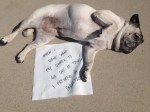
Monday Dog Pics – Dog Shaming

Sorry this is late, President’s Day threw me off…sigh.  Here are some Dog Shaming pictures for your Monday fun:

Leave a comment

Filed under Animals, Humor and Observations

Top 10 single-malt scotch whiskies

Ok, my favorite adult beverage is single malt scotch.  Scotch basically takes like blended whisky without the sweetness.  Single malts from different regions have very distinct tastes.  People are usually off put by scotch because they try cheap scotch.  Cheap scotch tastes like battery acid.  I would not recommend any scotch below the quality of Dewers or Glenlivet.  Below that they taste bad.

scotch-2

Scotch has soared in price because when it was laid down to age, there was much less demand.  If you are buying 12 year old scotch, they had to guess demand 12 years or more ago.  Scotch consumption is through the roof, so you have more people chasing a limited supply.  Recently, single batch bourbon has experienced the same fate.  Makers’ Mark (another of my favorites which I stocked up on) has not changed its recipe ever.  However, restaurants are running out.  So they recently changed it to 82 proof (41% alcohol) from its standard 100 proof (50%) alcohol.  By diluting it, they hope to increase production by at least 8% and they “say” it won’t change the trademark taste…  We will see.

mm

So we come to top scotches…  I found this list online and I have had the fortune to be able to taste all but two.  In fact, I have bottles of Balvenie 12 Year Old Double Barrel, Glenkinchie, Macallan and Glenmorangie in my cabinet right now.  I will tell you hands down my favorite single malt scotches – ever!

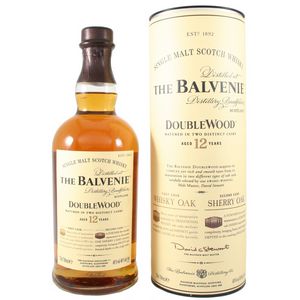
1.  The Balvenie 12 Year Old Double Barrel is the very best I have ever tasted.  So smooth, rich and flavorful that when I let people sample it, they give me that look like Santa Claus brought them their favorite toy.  In fact, most cannot believe it is scotch, because it is so good.  When I first started buying this you could get it for $40, now if you can find it, expect to pay upwards of $80.

balvenie_doublewood_300

2.  Johnny Walker Blue – This very limited batch Johnny Walker retails at around $500 now.  Ok, it is not single malt, it is actually a blend based on an original recipe.  It is aged 18 to 25 years old before bottling.  It is by far the smoothest and lightest on the tongue of scotches, with a rich after taste and scent.  When my daughter was married I paid for her honeymoon trips to Catalina Island and for a cruise of the Caribbean.  I asked her to pick me up a bottle at the duty free shops, and she did.  It was about $150 per bottle then.

jw

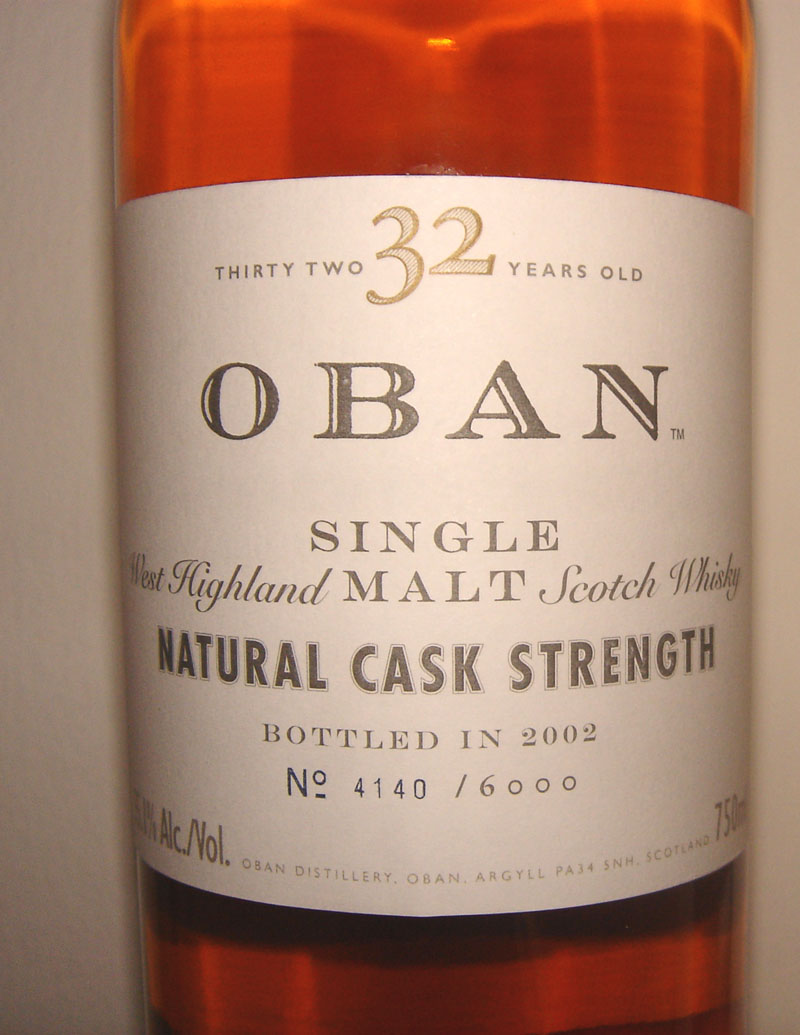
3. Oban 32 Year – Oban is not for everyone.  Oban has a strong smoky flavor.  It is almost bourbony with its charcoal after hints, but distinctly scotch accents.  It starts, settles and finishes with three standing ovations of taste.  If you can get it, it now runs over $500 per bottle.  The 14 year is good, but just not the same.  Unfortunately, I ran out of my Oban and can no longer justify buying it at that price.  When I bought the last one it was just over $200.

oban


Top 10 single-malt scotch whiskies

Published February 14, 2013

Gayot

  • scotchwhiskies660gayot.jpg
    Gayot

Scotch drinkers like to keep things simple. Sure, you can make a fantastic Scotch cocktail, but most Scotch drinkers want to enjoy the smoky flavor unadorned except perhaps for ice, water or a splash of soda. Instead of trying to find the best mixers, Scotch drinkers are trying to find the top distilleries in Scottish towns from the Highlands to the Lowlands that produce the best Single Malt Scotch. Whether we call it Top 10 Scotch or Top 10 Scotches or Top 10 Scotch Whiskeys or Top 10 Scotch Whiskies, rest assured that our list includes whiskies from the Scottish Isles that are hard to pronounce, but these are all names worth knowing. Enjoy our selection of Top 10 Single Malt Scotch Whiskies.

Springbank 10 Year Old 100 Proof
Campbeltown
Price: $55

We start our list with an easy-to-pronounce whisky. Scotch connoisseurs are familiar with Campbeltown, Scotland, as the home of Springbank Distillery. The brand’s ten-year-old cask-strength Single Malt is a lightly peated, shining example of their craftsmanship which features a unique two-and-a half-times distillation process. On the nose it offers a complex bouquet with an array of aromas including a touch of honey, some fresh cucumber and a hint of brininess, finishing with smoke and peat along with some underbrush mixed with a sherried maltiness. Although it begins its life in Bourbon barrels, it finishes out in Sherry barrels, lending to its richness. The complexity of its bouquet compels you to anticipate a Single Malt of distinction, and it certainly delivers. The 100 proof is needed to support and balance this intense Scotch. The mouthfeel is full, luscious and a tad sweet with a lingering, long finish of smoke, peaty lemon zest and fall leaves.

Royal Lochnagar 12 Year Old
The Highlands
Price: $70

It’s easy to slap the word “royal” into a product name, but this legendary Highland Single Malt really does have a royal connection. A favorite of both Queen Victoria and Prince Albert, this hard-to-find Scotch has long been held in high esteem in Britain, particularly for its classic flavor. Upfront you get earth, freshly cut grass, vibrant spice, a hint of sandalwood and hay. It finishes with light touches of fruit, juicy cereal barley, leather, brown sugar and a coffee maltiness. It makes for a perfect sipper to start off your evening, even if you’re engaged in non-royal activities, like playing Texas Hold ‘Me.
The Balvenie DoubleWood 12 Year Old
Speyside
Price: $50

The Balvenie is one of the great distilleries of Speyside, Scotland. Founded in 1892, it is one of the pioneers of introducing various wood finishes to its malts. Their aptly named DoubleWood is a twelve-year-old Single Malt that spends most of its life in second-fill Bourbon casks prior to being transferred to first-fill Oloroso Sherry casks. There are three levels of flavor in this Single Malt. The original Balvenie imparts heather, honey and clean barley flavors. The Bourbon barrel adds vanilla, a sort of cookie-like taste, as well as marshmallow, caramel and toast. The Oloroso Sherry barrel’s influence is expressed via peach, marzipan, clover, a bit of honey and prunes. Complex and approachable, this Single Malt has a younger brother that’s actually older The Balvenie 17 Year Old DoubleWood was first released in September of 2012.

Bunnahabhain 18 Year Old
Islay
Price: $105
On the northern shore of Islay, for more than 130 years, Bunnahabhain has been carving out an extra peaty niche in Scotland’s whisky flavor landscape. Unlike many Scotch whiskies, this elegant Single Malt is not chill filtered. (Chill filtering prevents the whisky from becoming hazy, but can affect the flavor.) The nose is a perfect balance of smoke and peat at a level of impact that’s both agreeable to a novice drinker and complex enough to please the connoisseur. The hints of subtle smoke, brine, malt sweetness, fruit and nuttiness bloom on the palate. The body of this spirit requires a stronger proof to ensure balance and full palate impact. The finish lingers and demands another taste, as the acidity is persistent and the flavors enticingly rich.

Highland Park 18 Year Old
Orkney Islands
Price: $105

It’s hard to believe that Highland Park’s 18-year-old Single Malt was first released in 1997, as its great reputation belies its youth. It’s an instant classic, thanks to its balance of light toffee flavors and long, lightly smoky finish. On the nose you get honey, Sherry and peat coupled with almonds and light smoke, which makes it not just approachable but irresistible. It is simultaneously subtle and complex while allowing the consumer to enjoy a smooth and dynamic expression of the Orkney Islands’ most prized distillery. It finishes with heather and honey mixed with earth, dried fruit and nuts. Balance and brilliance are the memories this malt leaves dram after dreamy dram.

The Macallan Cask Strength
The Highlands
Price: $75

Like “The Balvenie”, “The Macallan” demands the definite article. (Bourbon whiskeys don’t, as they do not seem classier if rechristened “The Wild Turkey”.) The Macallan brand is synonymous with top-tier Single Malt Scotch, and the unsung hero of their portfolio is their cask strength. This malt hails from the Easter Elchies House of Macallan overlooking the River Spey. Like its better-known 18-year-old sibling, the cask strength has a sherried finish making it bright, rich and accessible; but this one explodes with caramel, brown sugar, toffee and vanilla so complex and intertwined it drinks like a dessert. It’s well balanced on the palate with a sweet, tawny port, cinnamon oatmeal bouquet. At this price point, we think it’s a steal. Make that “The Steal”.

Scapa 16 Year Old the Orcadian
Orkney Islands
Price: $75

Scapa is not just “the other distillery” on the Orkney Islands, having been founded as early as 1885 (more than a century before Highland Park came along!). Scapa makes legendary Single Malt in their 16-year-old “the Orcadian.” Gorgeous to look at with its golden amber hue, this malt produces prodigious, thick, slow-flowing legs down the side of the glass. The nose dances with fresh berries and light smoke as the sea saltiness washes through. Approachable with its creamy honey and broken, subtle peat mixed in with chocolate and pepper, it has a memorable palate. With its dry, peaty and rich finish, this un-chill-filtered whisky has both the personality of a classic malt and the attitude of an innovator.

Glenkinchie 1991 Distillers Edition
The Lowlands
Price: $70

Did you really think you’d make it through a Top 10 Scotch list without seeing one of the Glen’s? Glenkinchie started making world-class Scotch in 1837. This being a Scottish Lowland Malt, we expected a grassy, slightly floral and full-bodied spirit, which is what we got — both on the nose and in the glass. The palate offers a pleasant, subtle mixture of leather, smoke, vanilla, honey, Sherry and stewed red berry fruit. It finishes with surprising strength, based in nutty molasses, brown sugar, smoke and caramel apples. Such complexity is rare for a Lowland whisky, but not for an exceptional Single Malt Scotch.

Lagavulin 12 Year Old Cask Strength
Islay
Price: $90

Lagavulin is the whisky for people who revel in sucking the marrow out of life. This cask strength Single Malt needs every bit of its extra punch to support the nose and palate. The former is an intoxicating and aromatic potpourri of peat, melon-y sea foam, pipe tobacco and Alsatian Riesling. The palate is rich, plummy, sweet, peaty and burnt-rubber-y, but in a good way. This stunning special edition was so well-received that Lagavulin Distillery is producing it as an ongoing mark for its loyal followers.

Glenmorangie 18 Years Old “Extremely Rare”
The Highlands
Price: $100

The Glenmorangie 18 Years Old spends fifteen years of its life in classic Bourbon oak barrels. A portion is then transferred to Oloroso Sherry barrels for the final three years of maturation. These barrels are then reunited to create this silky Scotch, tasting of nuts, dried sticky figs, dates and vanilla. These flavors meld together on the palate in perfect harmony, leaving a nice creamy finish with a hint of fruit, floral, almonds and vanilla. The flavor profile and quality of this exceptional Single Malt Scotch live up to its name: extremely rare.

Read more: http://www.foxnews.com/leisure/2013/02/14/top-10-single-malt-scotch-whiskies/?intcmp=features#ixzz2L8MHwZLY

2 Comments

Filed under Humor and Observations, Uncategorized

More Ironic Pictures

Irony is in the eye of the beholder.  Hopefully you will enjoy these:

1 Comment

Filed under Humor and Observations