Future Internet/Smartphones/Ipads

The future of internet, pads and smartphones may look like the following:  (pretty amazing stuff)

  • Future of Internet Search: Mobile version
  • Part1: Looking Glass Concept
    This is what I wish the internet search will be able to do with a mobile device in the NEAR future. Touch screen, built in camera, scanner, WiFi, google map (hopefully google earth), google search, image search… all in one device. Like this way, when you can see a building through it, it gives you the image search result right on the spot.
  • Part2: Future of Mobile Internet Search: Applications

    Many applications like these will be developed that have never been possible.Indoor guide

    Works in a building, airport, station, hospital, etc.

    Automatic simultaneous translation
    Search keyword
    Helpful when you want to find out a word from a lot of text
  • Part3: Look at What You Don’t See Through Glass

    You can even see flowers that are not actually blooming.

    There are a lot more ideas drawn in my Moleskine, so I’ll introduce them later.
    Also visit other posts of this gadget.

  • Part4: Future of Mobile Search for Diet


    Mainly because I don’t usually care about nutrition when I eat, this kind of function would be helpful for people like me.
  • Part5: Future of Mobile Search- Search Beyond Time

    Getting data of a weather forecast, maybe this might be possible.

    When you wonder what the scene you’re looking at was like in the past, you can see it.

    It would be nice if it could work in sync with Google Maps like this.
  • Part6: Future of Mobile Search- Power of Visualization

    Visual aid for any book. It means any book can be a picture book.

    If it could be wirelessly in sync with your mobile phone or other mobile devices, visualized data exchange could be done like
  • Looking Glass for iPhone

    petitinvention.wordpress.com/2008/07/26/looking-glass-for-iphone/
  • Part7: Future of Mobile Search: Virtual Shopping #1

    I’m pretty sure companies like Ikea would quickly start to use this device this way if it became really available.
  • Part8: Speech Balloons for the Hearing-Impaired

    Speech balloons in comic books show very well how the characters speak. If we could instantly visualize how people speak, wouldn’t it be nice for the hearing-impaired? It means they can SEE our voices.

    Stressed words are rendered larger than those spoken less loudly.Arrows of the balloons show from where it’s spoken (of course).

    A scream is shown in a balloon with jags.

    Imitation sounds are also rendered, but with other colors than spoken words.

    When spoken to from out of the screen, it shows the words with the direction the voice is from.


    A pair of glasses with the same functions could replace the device if we could figure out a good way not to block visual information.

1 Comment

Filed under Humor and Observations, Uncategorized

Steampunk Aircrew Selection 5

This is your fifth chance to select an airship crew for your very own airship.  You cannot choose them all, so choose wisely.  Are you to run the ship as a pirate vessel. trader, smuggler, explorer, loyal military vessel, adventurer, evil mercenary?  All up to you.  For early posts, type in “Steampunk Aircrew” in the search box on the Home page of this blog site.  Enjoy!

Leave a comment

Filed under Humor and Observations

Questionnaires for Writing Character Profiles

Reposted from the wonderful folks at Creative Writing Now.  Below the article is their information for contacts, etc.  These are some great flesh-out questions for both authors, and in my opinion, readers to get better stories.  Enjoy!

Questionnaires for Writing Character Profiles

Here are some questionnaires for writing character profiles. You’ll find more fiction-writing resources at the bottom of this page. 
Free Fiction Writing Course: ENDLESS STORY IDEAS

This free 3-day online writing course will show you techniques to find new creative writing ideas whenever you need them.

Writing Character Profiles – Questionnaire 1 (Adult Characters)

  1. Name:
  2. Age:
  3. General physical description:
  4. Hometown:
  5. Type of home/ neighborhood:
  6. Relationship status:
  7. Current family:
  8. Family background (parents, previous marriages, etc.):
  9. Friends:
  10. Other close relationships:
  11. Relationship with men:
  12. Relationship with women:
  13. Job:
  14. Dress style:
  15. Religion:
  16. Attitude to religion:
  17. Favorite pastimes:
  18. Hobbies:
  19. Favorite sports:
  20. Favorite foods:
  21. Strongest positive personality trait:
  22. Strongest negative personality trait:
  23. Sense of humor:
  24. Temper:
  25. Consideration for others:
  26. How other people see him/her:
  27. Opinion of him/herself:
  28. Other traits, especially those to be brought out in story:
  29. Ambitions:
  30. Philosophy of life:
  31. Most important thing to know about this character:
  32. Will readers like or dislike this character, and why?

Writing Character Profiles – Questionnaire 2 (Child Characters)

  1. Name:
  2. Age:
  3. Birthday:
  4. General physical description:
  5. Hometown:
  6. Type of home/ neighborhood:
  7. Father’s name, background, and occupation:
  8. Mother’s name, background, and occupation:
  9. Brothers and sisters:
  10. Position in family:
  11. Other close relatives:
  12. Family relationships:
  13. Special friends:
  14. Enemies:
  15. Influential person or event:
  16. Grade in school:
  17. Attitude toward school:
  18. Grades:
  19. Favorite pastimes:
  20. Hobbies (music/art/reading material):
  21. Favorite sports:
  22. Favorite foods:
  23. Dress style:
  24. Religion:
  25. Attitude toward religion:
  26. Relationship with boys:
  27. Relationship with girls:
  28. Leader or follower:
  29. Strongest positive personality trait:
  30. Strongest negative personality trait:
  31. Sense of humor:
  32. Temper:
  33. Consideration for others:
  34. How other people see him/her:
  35. Opinion of him/herself:
  36. Other traits, especially those to be brought out in story:
  37. Ambitions:
  38. Philosophy of life:
  39. Most important thing to know about character:
  40. Will readers like or dislike this character, and why?

Writing Character Profiles – Additional Questions

  1. If your character has a job, is he or she good at it? Does he or she like it?
  2. What are your character’s bad habits?
  3. If you asked about his or her greatest dream, what would your character tell you?
  4. What’s a secret dream that he or she wouldn’t tell you about?
  5. What kind of person does your character wish he or she could be? What is stopping him or her?
  6. What is your character afraid of? What keeps him or her up at night?
  7. What does your character think is his or her worst quality?
  8. What do other people think your character’s worst quality is?
  9. What is a talent your character thinks he or she has but is very wrong about?
  10. What did his or her childhood home look like?
  11. Who was his or her first love?
  12. What’s the most terrible thing that ever happened to him/her?
  13. What was his/her dream growing up? Did he/she achieve this dream? If so, in what ways was it not what the character expected? If your character never achieved the dream, why not?
  14. In what situation would your character become violent?
  15. In what situation would your character act heroic?

Click here for more on creating characters and using character profiles.


About Creative Writing Now

Creative Writing Now was founded by writing teachers to be a supportive and friendly online space for authors and poets at all stages in their writing lives.

Our mission:

  • Educate – with high-quality courses and free resources for independent study.
  • Encourage – by maintaining a positive atmosphere and providing guidance for beginning writers.
  • Inspire – by sharing our passion for literature and writing.


Meet some of our team

Nancy Strauss
Founder and Online Courses Director

Nancy taught creative and expository writing at the University of Michigan before moving to the Czech Republic and then Spain. Since then, she has worked as an English teacher and consultant, published a book about online communities, and founded a content writing and translation company. She has an M.F.A. in Creative Writing from the University of Michigan and a B.A. in English from Oberlin College.

Linda Leopold Strauss
Contributor

Linda is the author of numerous fiction and nonfiction books for young people, including Drop Everything and Write!: An Easy Breezy Guide for Kids Who Want to Write a Story (E & E Publishing, 2010). In addition to her thirty-year career as an author, she has taught writing courses for the Institute of Children’s Literature. Linda lives in Cincinnati with her husband, Bill.

Cristina Viejo and Graciela Garcia
Web Designers

Cristina and Graciela are responsible for the new look of the Creative Writing Now website and created the woman with the laptop that you see at the top of this page. They are currently available for new design projects, including websites, illustrations, and other types of graphic design. Enquiries can be sent using the e-mail form below.

Legal information

This website is owned by William Victor, S.L. You can find the company’s legal information here.

Contact us

Questions? Feedback? We’d love to hear from you. You can use our e-mail form below to drop us a line, or write to us by snail mail c/o William Victor, Calle Viriato 2, puerta 639, 28010 Madrid, Spain.

2 Comments

Filed under Writing

Airless Car Tires

This is an older article from a nearly over a year ago, but I thought pretty cool anyway.

bridgestoneg

Bridgestone goes airless in tire concept for Tokyo show December 3, 2011 by Nancy Owano (PhysOrg.com) —

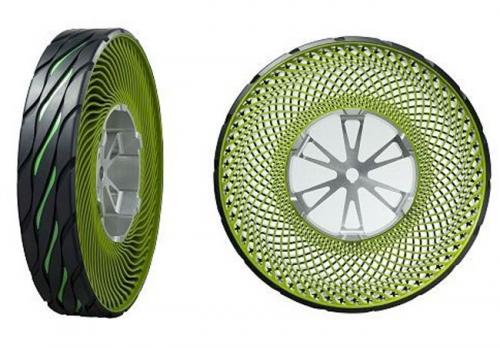
Visitors to the 42nd Tokyo Motor Show are to witness a new breed of airless tires from Bridgestone. Interest in the general press is already humming because of the material, design, and features of the Bridgestone debut on show. The concept tires use recycled thermoplastic, outside tread included. Fittingly colored green, the tires are being promoted for their green advantage of being completely recyclable.

The spokes are made of reusable thermoplastic resin. In design, interest is drawn toward the thermoplastic fins, staggered so that connections to the hub and the rim do not torque and there is no structural breakdown. The tires’ resin spokes radiate from rim to tread. They curve to the left and right to support vehicle loads. Bridgestone is not the first to experiment with an airless tire concept. Observers point to Michelin’s debut in 2005 of its airless Tweel tires. These were seen with much interest as a novel departure from the traditional wheel hub assembly, though concerns were raised in some quarters about their being noisy and vibrations at high speeds.

The name Tweel is a combination of the words tire and wheel. Michelin used polyurethane spokes arrayed in a wedge pattern. In describing differences between the Michelin and Bridgestone concept, observers say a key contrast is in size of the ribs. Michelin’s tires were viewed as more suitable for military applications—this is not like the Bridgestone concept, which is suited for something more consumer-driven. Another tire concept innovator has been Yokohama Rubber Co. Ltd. The company announced in October this year its airless tire concept which relies on mechanical rather than pneumatic support.

Yokohama introduced its tire concept earlier this year at a design expo in Japan. Bridgestone’s airless tires have a deeper structure of plastic ribs than either of the other two approaches, and it has a higher aspect ratio, according to Plastics News. Obviously, the key benefit for the consumer will be seen in the fact that the Bridgestone tires cannot suffer punctures. On the other hand, these have a way to go before seeing car commercialization. The tires are in prototype stage only and due for further evaluations. The company has tested the tires, nine inches across, on single-seater electric carts in Japan. Observers see similar uses, at this earlier level, as potential for use in motorized golf carts, lawnmowers and vehicles for the elderly.

Read more at: http://phys.org/news/2011-12-bridgestone-airless-concept-tokyo.html#jCp


Leave a comment

Filed under Humor and Observations

Verizon Lists Data-Draining and Battery-Killing Apps by Name

igaOM

Verizon Names Data-Draining and Battery-Killing Apps

By  on February 11, 2013

Verizon Wireless may have shut down its own app store, but it’s not wiping its hands of app curation entirely. The carrier has started reviewing, rating, and recommendingAndroid and iPhone apps for its customers.

What’s interesting about Verizon’s approach is it isn’t making its recommendations based on how entertaining, useful, or fun a particular app is. Instead, a team of Verizon engineers is looking at each app’s impact on the phone’s battery life, its drain on a customer’s data plan, and how loosely it plays with security and customer privacy.

Basically, Verizon is compiling a series of regularly updated recommendation lists. The first is a list of 20 apps available either for Android or iOS that Verizon claims deliver a “best in class” experience on smartphones and tablets. As you might expect, Verizon isn’t being entirely objective in its choices, but it never claimed to be. One of the apps is even Verizon’s own AppLuvr software, which recommends other apps based on what’s already installed on smartphones.

The second list applies a much more visible methodology, rating the top 25 free and top 25 paid apps in Google (GOOG) Play based on three criteria: security, battery consumption, and data usage. The third set of reviews is essentially Verizon’s naughty list: 13 apps—all games—that will drain your battery or eat up your data plan at a rapid clip.

Verizon isn’t making any friends here among the game development shops. Enormously popular games, such as Halfbrick’s Fruit Ninja Free and OMGPOP’s Draw Something, got bad marks because of their battery drain. Other apps, such as Facebook (FB) Messenger and eBay (EBAY), scored relatively high but were penalized because of their high data consumption.

That may come as a surprise to many users, since Facebook and eBay wouldn’t appear to consume that much data, especially compared with streaming multimedia apps such as Pandora (P) and Netflix (NFLX), which received the highest possible Verizon ratings. But what Verizon is likely highlighting here is the persistence of those two apps’ connections. While Facebook might consume only a tiny fraction of the data in a single hour that, say, a Netflix video stream would require, the social networking app is always running in the background—transmitting a constant stream of signaling traffic over the network and whittling away at your data plan.

Alcatel-Lucent (ALU) recently analyzed the enormousimpact Facebook has on mobile networks through that signaling traffic. On Nov. 15, the social networking giant updated its iOS and Android apps, precipitating a 60 percent boost in Facebook signal load on mobile networks, even though the number of new Facebook mobile users increased only 4 percent in the same time frame. Alcatel-Lucent now estimates that Facebook is responsible for more than 15 percent of all mobile signaling traffic and accounts for more than 20 percent of all network air time.

Carriers have long implored developers to keep the constraints of mobile networks in mind and build more efficient apps. With these rankings Verizon could be upping that pressure, punishing developers who keep developing unnecessarily chatty software.

As you might expect, neither Facebook Messenger nor the main Facebook app made Verizon’s list of “must have apps” (though eBay did). Verizon, however, named Facebook’s much more network-efficient Instagram photo-sharing app in its top 20. I doubt Facebook cares either way.

Any time a carrier produces a must-have list, you should take it with a grain of salt, but I will give Verizon credit: It actually recommended Tango, an over-the-top voice, video, and messaging app that competes directly with Verizon’s core voice and SMS services.

Leave a comment

Filed under Humor and Observations

New Coal Process Eliminates 99% of Pollution

Coal: the cleanest energy source there is?

By 

How Green

Published February 20, 2013

FoxNews.com

  • Clean Coal.jpg

    At a research-scale combustion unit at Ohio State University, engineers are testing a clean coal technology that harnesses the energy of coal chemically, without burning it. Here, doctoral student Elena Chung (left) and master’s student Samuel Ayham (right) display chunks of coal along with pulverized coal (bottle, center) and the iron oxide beads (bottle, right) that enable the chemical reaction. (Jo McCulty / Ohio State University)

  • Clean Coal 2.jpg

    At Ohio Stateâs Clean Coal Research Laboratory, Liang-Shih Fan (left), professor of chemical and biomolecular engineering, examines a sub-pilot scale combustion unit with Dawei Wang (right), a research associate and team leader in the lab. (Jo McCulty / Ohio State University)

Researchers have discovered a stunning new process that takes the energy from coal without burning it — and removes virtually all of the pollution.

The clean coal technique was developed by scientists at The Ohio State University, with just $5 million in funding from the federal government, and took 15 years to achieve.

“We’ve been working on this for more than a decade,” Liang-Shih Fan, a chemical engineer and director of OSU’s Clean Coal Research Laboratory, told FoxNews.com, calling it a new energy conversion process. “We found a way to release the heat from coal without burning.”

The process removes 99 percent of the pollution from coal, which some scientists link to global warming. Coal-burning power plants produced about one-third of the nation’s carbon dioxide total in 2010, or about 2.3 billion metric tons, according to the Environmental Protection Agency (EPA).

‘We found a way to release the heat from coal without burning.’

– Liang-Shih Fan, a chemical engineer and director of OSU’s Clean Coal Research Laboratory 

Retrofitting them with the new process would be costly, but it would cut billions of tons of pollution.

“In the simplest sense, conventional combustion is a chemical reaction that consumes oxygen and produces heat,” Fan fold FoxNews.com. “Unfortunately, it also produces carbon dioxide, which is difficult to capture and bad for the environment.”

And simply put, the new process isn’t.

Heating, Not Burning, Coal
Fan discovered a way to heat coal, using iron-oxide pellets for an oxygen source and containing the reaction in a small, heated chamber from which pollutants cannot escape. The only waste product is therefore water and coal ash — no greenhouse gases. As an added benefit, the metal from the iron-oxide can be recycled.

“Oxidation” is the chemical combination of a substance with oxygen. Contrast this with old-fashioned, coal-fired plants, which use oxygen to burn the coal and generate heat. This in turn makes steam, which turns giant turbines and sends power down electric lines.

The main by-product of that old process — carbon dioxide, known chemically as CO2 — is released through smokestacks into the earth’s atmosphere.

Fan’s process, called “coal-direct chemical looping,” has been proven in a small scale lab at OSU. The next step is to take it to a larger test facility in Alabama, and Fan believes the technology can be commercialized and used to power an energy plant within five to 10 years, if all goes smoothly. The technology generated 25 kilowatts of thermal energy in current tests; the Alabama site will generate 250 kilowatts.

Can Coal Ever Be ‘Clean’?
Some environmentalists are skeptical of the technology, and of the idea of clean coal in general.

“Claiming that coal is clean because it could be clean — if a new technically unproven and economically dubious technology might be adopted — is like someone claiming that belladonna is not poisonous because there is a new unproven safe pill under development,” wrote Donald Brown at liberal think tank Climate Progress.

Yet the federal Department of Energy believes that the process can create 20 megawatts to 50 megawatts by 2020, said Jared Ciferno, the agency’s director of coal and power-production research and development, in a statement.

The government plans to continue to support the project, as well as the concept of “clean coal” in general.

Meanwhile, Fan is exploring the possibility of establishing a start-up company and licensing the process to utilities, and has the potential to patent 35 different parts of the process.

Other scientists and experts are enthused about the prospects for this technology.

Yan Feng with Argonne National Laboratory’s Environmental Science Division, Climate Research Section, called it “an advancement in chemical engineering. “It is very important that we act on CO2 capturing and sequestration as well as emission controls of other warming agents like tropospheric ozone and black carbon.”

Adds a spokesman for Kingsport, Tenn.-based Eastman Chemical Company, a global Fortune 250 chemical manufacturer that works in clean energy, “researchers continue to uncover innovative ways to use coal efficiently/sustainably.”

Concludes Dawei Wang, a research associate at OSU, the technology’s potential benefits even go beyond the environment and issues like sustainability.

“The plant could really promote our energy independence. Not only can we use America’s natural resources such as Ohio coal, but we can keep our air clean and spur the economy with jobs,” he said.

Read more: http://www.foxnews.com/science/2013/02/20/coal-cleanest-energy-source-there-is/#ixzz2LehOrgGr

Leave a comment

Filed under Humor and Observations

Human Ear Made by 3D Printer

3D-printed ear created in lab

By Tanya Lewis

Published February 21, 2013

LiveScience

  • 3d-printed-ear1

    Mechanical engineer Larry Bonassar holds a fabricated ear printed with a 3D printer in his lab at Cornell University’s Weill Hall. (Lindsay France/Cornell University Photography)

  • 3d-printed-ear2.jpg

    A 3D printer fabricating an ear. (Lindsay France/Cornell University Photography)

With 3D printing, it seems the things you can make are limited only by your imagination. The latest innovation: a 3D-printed artificial ear. 
SUMMARY

Ear looks and functions like a normal human ear

Created by squirting a gel made of living cow ear cells and collagen into an injection mold

Current replacement ears often made from a patient’s harvested rib — a difficult and painful process


The ear, which looks and functions like a normal human ear, was created by squirting living cells into an injection mold. Over the course of three months, each ear grew cartilage in the shape of its mold. These ersatz ears could replace the ears of children with congenital deformities, researchers report online today (Feb. 20) in the journal PLOS ONE.

“A bioengineered ear replacement like this would also help individuals who have lost part or all of their external ear in an accident or from cancer,” co-lead author Jason Spector, a plastic surgeon at Weill Cornell Medical College in New York City, said in a statement. If the ears prove safe and successful, it could be possible to implant one in a human in as few as three years, Spector said.

Children with a deformity called microtia have an intact inner ear but an external ear that fails to develop fully, causing hearing loss. The prevalence ranges from slightly fewer than one to as many as four babies per 10,000 births, depending on the country. [The 9 Most Bizarre Medical Conditions]

The artificial ears were made by producing a digital 3D image of a child’s intact ear and feeding that into a 3D printer to produce an ear-shaped mold. Then the scientists injected a gel made of living cow ear cells and collagen (a substance used to make gelatin) into the mold, and out popped an ear.

The whole process took less than two days: half a day to design the mold, a day to print it, half an hour to inject the gel, and 15 minutes to allow it to set.

Then the researchers implanted the fabricated ears on the backs of rats, where the ears grew for one to three months. Creepy as it sounds, it isn’t the first time scientists have grown ears on rodents, as a model for naturally growing ears.

In medicine, current replacement ears are made from a Styrofoam-like material or by an Eve-like genesis out of a patient’s harvested rib. The latter is difficult and painful, and rarely produces an ear that works well or looks natural.

The advantage of 3D-printed replacement ears is that they could be made-to-order, using molds from the patient’s normal ear (if they have one) or from one of a person of similar size. The researchers are now working on growing human ear cartilage cells in the lab, which would reduce the chances of tissue rejection.

Read more: http://www.foxnews.com/science/2013/02/21/3d-printed-ear-created-in-lab/?intcmp=features#ixzz2LbJH8CJ2

Leave a comment

Filed under Humor and Observations, Uncategorized

3D Pen – Draw 3D Art!

The world’s first 3D printing pen: Yours for just $75

The 3Doodler, 3D printing pen

Come September, if everything goes to plan, the world’s first 3D printing pen will go on sale for $75. The pen, called the 3Doodler, essentially allows you to lift your flat sketches off the paper — or, if you wish, to actually draw in three dimensions.

3Doodler is a Kickstarter project, and in under 24 hours it has obtained more than $500,000 in pledges — significantly more than its $30,000 target. As you can see in the video below, the inventors have already created an impressive prototype — and now it’s time to bring the 3Doodler to market. The target price is $75 for a September 2013 release. The inventors say they have already located a Chinese manufacturer who is capable of meeting these targets. The final device should 24mm (1in) thick and weigh less than 200g, with an external power brick that accepts 110-240V.

In essence, 3Doodler is a standard 3D printer, but your hand controls the print head instead of a bunch of computer-controlled motors. (See: What is 3D printing?) Inside the 3Doodler is a filament feeder (which accepts ABS or PLA plastic), a heating element, and an extruder — and that’s about it. The melted plastic comes out of the extruder and very quickly sets. As far as we can tell, the plastic oozes out of the extruder at a set rate — so depending on whether you want a thin (weak and flexible) or thick (strong and rigid) line, you move the 3Doodler quickly or slowly. For strength and flexibility, you just go back and forth over the same section, building up a web of plastic tendrils (like in the Eiffel Tower above).

Judging by the massive support for 3Doodler on Kickstarter, it’s safe to assume that people are really excited at the concept of a freehand 3D printer. It’s not hard to see why, though, if you were a child who dreamt of drawing sketches that literally jump off the paper. The actual reality of freehand 3D printing might be a little more complex than most users bargain for, but to that end the inventors have teamed up up with professional artists to provide 3Doodler backers with templates/stencils that you can simply fill in. The Kickstarter page also seems to lack any evidence that 3Doodler is capable of drawing straight lines, but hopefully it’s just a matter of using a ruler.

A collection of 3Doodler objects

Moving forward, this could be a very exciting stepping stone for inventors and hobbyists alike. While 3D printers have revolutionized rapid prototyping tool, the 3Doodler is even faster; it adds a whole new dimension (!) to back-of-the-napkin brainstorming. To begin with, I suspect it will be quite hard to create meaningful sketches with a 3Doodler, but in time — and with a whole range of usability tweaks and add-on accessories that I’m sure will follow — the 3D printing pen might become as ubiquitous as the 2D Bic ballpoint. (See: 3D printing: a replicator and teleporter in every home.)

1 Comment

Filed under Humor and Observations, Uncategorized

Woman Sought to Have Neanderthal Baby

Scientist seeks ‘adventurous woman’ to have Neanderthal baby

Published January 21, 2013

FoxNews.com

  • Homo Neanderthalensis

    Hyper-realistic busts of human ancestors — like this version of homo neandertal — give us a glimpse of what our ancient relatives may have looked like. (John Gurche)

  • An artist imagines the typical Neanderthal family.

    An artist imagines the typical Neanderthal family. (NASA/JPL-Caltech)

  • Neanderthal Tooth Fairy

    In this picture made available by Szczecin University’s Department of Archaelogy on Monday, Feb. 1, 2010 one of three Neanderthal teeth discovered in Poland is pictured . A team of Polish scientists say they have discovered three Neanderthal teeth in a cave in the southern part of the country. Mikolaj Urbanowski, an archaeologist and the lead researcher, said Monday that, although Neanderthal artifacts have been unearthed in Poland before, the teeth are the first remains of Neanderthals themselves discovered in the country. (AP)

EDITOR’S NOTE: The genetics professor quoted here, George Church, said after publication of this story that his quotes to the German magazine on which this article is based were distorted. An updated version of the story appears here.

Where’s Fred Flintstone when you need him?

A professor of genetics at Harvard’s Medical School believes he’s capable of bringing the long-extinct Neanderthal back to life — all he’s lacking is the right mother.

“I can create a Neanderthal baby, if I can find a willing woman,” George Church told German newspaper Spiegel Online. The DNA of the Neanderthal, a long extinct relative of man, has been more or less rebuilt, a process called genetic sequencing.

In 2005, 454 Life Sciences began a project with the Max Planck Institute to sequence the genetic code of a 30,000 year old Neanderthal woman. Now nearly complete, the sequence will let scientists look at the genetic blueprint of humankind’s nearest relative, understand its biology and maybe even create a living person.

And with that blueprint, it’s very possible to “resurrect” the Neanderthal, he argues — something Church has been pushing for years. Church did not respond to FoxNews.com requests to confirm the Spiegel Online story, but last year, he told Bloomberg he was keen on the idea.

“We have lots of Neanderthal parts around the lab. We are creating Neanderthal cells. Let’s say someone has a healthy, normal Neanderthal baby. Well, then, everyone will want to have a Neanderthal kid. Were they superstrong or supersmart? Who knows? But there’s one way to find out.”

Last year, researchers finished sequencing the genome of another extinct human relative, the denisovan — based solely off a piece of fingerbone and two molars.

Read more: http://www.foxnews.com/science/2013/01/21/scientist-seeks-adventurous-woman-to-have-neanderthal-baby/?intcmp=features#ixzz2LaOI7PjA

1 Comment

Filed under Humor and Observations

$68,000 Whale Vomit

You might not realize it, but solidified whale vomit, also known as “ambergris” which sounds better, is a very valuable element in making perfumes.  In fact, so valuable, that an island in Belize is named Ambergris Caye, all the way back to the old West Indies pirate days.  The wonderful town of Whale Vomit.  Even today when this rare element washes ashore, those lucky enough to find it, and who can recognize it, can be overnight much more wealthy.  The problem is, it is very rare, often looks like a variety of rocks, and most people don’t go near it when it smells bad.  Here is one such example of a lucky whale vomit gatherer…

BRITON FINDS ‘RARE WHALE VOMIT’ WORTH $68,000

THE DAILY DISH  PawNation

By AFP Jan 31st 2013

LONDON, (AFP) – A British man has been offered 50,000 euros for a strange-smelling rock his dog found on a beach, which is likely a rare form of whale vomit used in perfumes, the BBC reported Thursday.

Ken Wilman was walking his dog Madge in the coastal town of Morecambe in Northwest England when she began “poking at a rather large stone” with a waxy texture and yellowish color. At first he left it on the beach, but “something triggered in my mind”, Wilman said, prompting him to go back and retrieve the object, which he believes is a piece of ambergris, a substance found in the digestive systems of sperm whales.

Whales sometimes spew up ambergris, which floats on water and has been highly prized for centuries. It is used in perfume-making for the musky fragrance it acquires as it ages — but newer ambergris is foul-smelling.

“When I picked it up and smelled it I put it back down again and I thought ‘urgh’,” Wilman told the BBC. “It has a musky smell, but the more you smell it the nicer the smell becomes.”

He is waiting for tests to confirm his find is ambergris, nicknamed “floating gold”, but says he has been offered 50,000 euros (£43,000, $68,000) for it by a French dealer.

“It’s worth so much because of its particular properties,” Andrew Kitchener, principal curator of vertebrates at the National Museum of Scotland, told the broadcaster. “It’s a very important base for perfumes and it’s hard to find any artificial substitute for it.”

The substance gets a mention in the classic 1851 whaling novel Moby Dick, where author Herman Melville writes: “Who would think, then, that such fine ladies and gentlemen should regale themselves with an essence found in the inglorious bowels of a sick whale! Yet so it is.”

Unfortunately, digging dogs don’t always find prizes worth thousands of dollars. Most of the time they just make a mess. Canines dig for a variety of reasons such as boredom, high energy levels and hunting instincts. As an owner, to curb digging you can either redirect your dog’s energies to something else or remove the elements that encourage it to dig. Some dogs will continue to dig anyways, and may require training, fences or a digging pit. Go to our partner petMD to learn more.


Leave a comment

Filed under Humor and Observations, Uncategorized