Hard to believe that in the age of mustard gas, maxim machine guns, trench warfare and heavy artillery, even the birth of the airplane, people still used armor. However, not so different than our modern day helmets, kevlar and bullet proof vests, or modern bomb disposal gear. Still, for some reason these old, authentic photos, hold a chill and a bit of the surreal dieselpunk feel to them. Thanks to vio9, Chris Wild and the Retronaut for these pictures.
3d printing of guns – update
As followers know, I have said that 3d printing will change everything as we know it. In an earlier post, I discussed how guns can be printed, and another post talks about how the military uses 3d printing for making knives and other tools. Here is an update on this revolutionary technology:
Print and fire: 3D printing could muzzle new gun laws
-

Cody Wilson of Defense Distributed testing out the “Cuomo Clip” (DefenseDistributed.com)
-
DefenseDistributed.com -

A computer rendering of a “Cuomo Clip”, a 30-round ammo magazine for the AR-15 rifle. (DefenseDistributed.com)
Gun control measures passed or proposed in the wake of the Sandy Hook school massacre have targeted magazines that can feed 30 rounds or more into the firing chambers of AR-15s and other semi-automatic guns. New York has banned magazines holding more than seven rounds, and a federal bill proposed by Sen. Dianne Feinstein, D-Calif., would ban magazines holding more than 10 rounds.
But the laws are at least one step behind technology. Using 3D printers and schematics available on the Internet, gun owners can manufacture a fully functional, plastic magazine clip. Plans are free, although getting access to a 3D printer may prove expensive, at least for now.
“If you can download it, you can have it.”
– Cody Wilson, Defense Distributed/Wiki Weapons Project
“If you can download it, you can have it,” said University of Texas law student Cody Wilson, who is part of Defense Distributed
, a group that has created the design for what they refer to as a “Cuomo Clip” along with other gun parts. It is all under an initiative they refer to as the Wiki Weapon Project.
“It’s basically to head them [legislators] off at the pass, which we have,” Wilson added, noting that “hundreds of thousands” of visitors have gone to his group’s site to download the CAD file for the ammo magazine since it was first posted in mid-January.
The “Cuomo Clip,” named for New York Gov. Andrew Cuomo, who pushed the high-capacity clip ban through the Legislature, is made from a plastic filament similar to the type of material used to manufacture LEGO building blocks. It is also loaded with a large spring that helps to push rounds of ammo into the gun chamber.
The ammo magazine clip appears to be durable; Defense Distributed test-fired 86 rounds from a 30-round prototype last month, and the clip showed no signs of damage.
The cutting edge technology, in which three-dimensional objects can be manufactured from melted plastic thread, is likely to complicate efforts to control firearms. No such ability existed in 1994, when large-capacity clips were first banned in an initial federal assault weapons ban that lasted a decade.
Although the new ban proposed by Feinstein would prohibit the manufacture of magazines, it focuses on traditional arms makers and sellers. How the law might be enforced against individuals making their own magazines — and possibly even guns in the future — is unclear.
Rep. Steve Israel, D-N.Y., has called for amending the Undetectable Firearms Act of 1988, which initially sought to ban guns that could be sneaked through metal detectors, to include a ban on “homemade, 3-D printed, plastic high-capacity magazines.”
“Congress passed a law banning plastic guns for two decades when they were just a movie fantasy,” Israel told FoxNews.com. “With the advent of 3-D printers, these guns are suddenly a real possibility, and the law Congress passed is set to expire this year.
“We should act now to give law enforcement authorities the power to stop the development of these weapons before terrorists and criminals can easily bring them on planes. We need to be proactive and keep ahead of the technology. When the legislation was originally passed in 1988, no one would have imagined that parts of a gun and a magazine could be made with a printer — imagine what the technology will be even five years down the road.”
Defense Distributed and the Wiki Weapons Project also has made schematics of other parts of the AR-15 and other weapons and modifications, including pistol grips, but has avoided attempting to design and distribute plans for a fully-functional gun.
Filed under Humor and Observations
The Immediate Impact of the Telephone on New York
“In 1875 Alexander Graham Bell invented the telephone and in 1878 the first telephone was installed in Madison by Richard Johnson. It connected his home, the Johnson Starch Factory and the J. M. & I Railroad depot. It was a convenience for him and, by all accounts, a source of amusement for his family, especially his young daughter who took every opportunity to sing to people on the other end of the line.” – History Rescue Project
So, new tech invented in 1875, installed three years later, first person to use it extensively was a young girl. Sound familiar? The amazing thing is what happened next. One decade later, the pictures below show what New York City looked like with the telephone wires installed in less than ten years.
Telephone Wires over New York
c. 1887-1888:
Filed under Humor and Observations
Sunken Cities Of The Ancient World
Though finding Atlantis may still be a pipe dream, these cities, long submerged in the depths of their surrounding oceans, provide enough mystery and wonder to whet your imaginations.
Cleopatra’s Kingdom, Alexandria, Egypt

Lost for 1,600 years, the royal quarters of Cleopatra were discovered off the shores of Alexandria. A team of marine archaeologists, led by Frenchman, Franck Goddio, began excavating the ancient city in 1998. Historians believe the site was submerged by earthquakes and tidal waves, yet, astonishingly, several artifacts remained largely intact. Amongst the discoveries were the foundations of the palace, shipwrecks, red granite columns, and statues of the goddess Isis and a sphinx. The Egyptian Government plans to create an underwater museum and hold tours of the site.


Bay of Cambay, India

The Bay of Cambay was discovered by marine scientists in early 2002. The city is located 120 feet underwater in the Gulf of Cambay off the western coast of India. The city is five miles long and two miles wide, carbon dating estimates the site to be a whopping 9,500 years old, and, more amazingly, architectural and human remains are still intact. The discovery astounded scientists because it predates all other finds in the area by 5,000 years, suggesting a much longer history of the civilization than was first assumed. Marine scientists used sonar images and sum-bottom profiling to locate the lost ruins and it is believed the area was submerged when the ice caps melted in the last Ice Age. The Indian nationals have dubbed the find ‘Dwarka’ (The Golden City) in honor of ancient submerged city said to belong to Hindu god, Krishna.

Port Royal, Jamaica

Once referred to as the ‘Wickedest City on Earth’ (because of its rampant piracy, prostitution and rum consumption), part of Port Royal sank after an earthquake in 1692. The ruins scattered in the Kingston Harbor, and currently, the remains of the city encompasses 13 acres at depths of up to 40 feet. Archaeological investigations of the site began in 1981, led by the Nautical Archaeology Program of Texas A&M University. The investigations unearthed historical documents, organic artefacts and vast amount of architectural debris.

Yonaguni-Jima, Japan

Some 68 miles past the east coast of Taiwan, off the coast of Yonaguni Islands, a sunken ruin was discovered by a sport diver, in 1995. The ruins are estimated to be around 8,000 years old, however, it is still unclear which missing city they made up. The most spectacular discovery amongst the submerged ruins is a large pyramid structure, finely designed archways resembling the Inca civilization, staircases and hallways, and carved stones.


Baiae and Portus Julius, Italy

Baiae was an ancient Roman town overlooking the Bay of Naples, where rich Romans and emperors whiled away their time in their villas. It was also connected to the Roman Empire’s biggest naval base, Portus Julius. However, the town and port were built on a tract of volcanic land, the activity of which is said to have caused the structure to collapse into the ocean.


Pavlopetri, Greece

The ruins of the ancient Mycenaean town of Pavlopetri date back to the Neolithic period (2,800 BC), and unveil a cultural hub of ancient Greece. The submerged city was discovered three to four metres off the coast of southern Laconia, and has many intact buildings, courtyards, streets, chamber tombs and graves. Pavlopetri was believed to be a thriving harbour town and sheds light on many mysteries of the Mycenaean civilization.


Filed under Humor and Observations
Random Humor
Here are some collected random humor pictures for your enjoyment.
- For electric guitars no doubt…
- If you saw this car, would you notice the driver?
- Terrible joke for new owners
- And they are all within seven degrees of Kevin Bacon
- Mean, but there is a resemblance
- And myspace
- Sold!
- Has no one told him about razors?
- My Big Fat Greek Economic Crisis
- Sorry Canada
- Sorry Russia
- Very Sorry England…
- Mean, but true
- Yeah, I see it.
- True. BFM rules.
Filed under Humor and Observations
Was Dracula an Irishman?
Bram Stoker’s Dracula inspired by an Irish legend?
Did an early Irish vampire legend influence the creation of Count Dracula? There are a group of people in the north of Ireland who are sure Bram Stoker was influenced by a old story from their area.
When the Irish writer Bram Stoker published his novel ‘Dracula’ in 1897, it quickly grew into a worldwide publishing sensation. To this day it is Bram Stoker who has done most to shape the modern conception of vampires which we see in movies and fiction – from Lost Boys to the Twilight series.
There has been a lot of speculation about where Bram Stoker got the idea for the character of Dracula, and the unique characteristics he gave this fearsome vampire. Much has been made of the connection to Eastern-European vampire myths, and the medieval prince known as Vlad the Impaler or Vlad Tepes.
However there is also lesser-known but fascinating local Irish myth of an evil magician who could not be killed and came back from the grave three times, This is a highly unusual myth for Ireland, where there is little tradition of ‘undead’ stories. Thus it was a legend likely to attract the attention of an Irish writer such as Bram Stoker who was very interested in folklore.
The people who live near the final resting place of this Irish undead, have told me that the legend was the original inspiration for Bram Stoker’s Dracula. Not only that, but they tell me that this burial site continues to be associated with strange and disturbing events to this day.
The Story of Abhartach – the original Irish vampire
In County Derry in Northern Ireland, there is a small townland named ‘Slaghtaverty’ which in Irish means ‘ Abhartach’s Tomb’. When I was working in this rural area recently on a community history project, the locals told me the story of how the townland got it’s name, how the legend inspired Bram Stoker to create ‘Dracula’ and how strange events continue to happen in the vicinity of the large stone tomb that stands there.
Abhartach (pronounced Av-ar-chack), so the story goes, was an evil ruler in the area, a stunted man but a powerful magician. He terrorized all the people for miles around, until they wished him dead. But as none of his subjects had the courage to kill the magical man themselves they got a warrior from a neighbouring area to do it. This warrior, called Cathain, duly killed Abhartach and buried him upright as was traditional for a Celtic chief at this time.
However, the next day Abhartach appeared once more among his people, this time demanding a sacrifice of blood from the wrists of his subjects. He had become one of, what was called in Irish, the marbh beo – the living dead. Three times Cathain killed and buried Abhartach and three times he rose from his grave seeking blood from his people. Until the people, in their desperation, turned to a Christian saint who lived in the area and asked him how they could be rid of this evil undead creature forever.
Cathain was instructed by the saint to kill Abhartach once more but this time to do it with a sword made of yew wood, to bury him upside down, with a large stone on top and then to plant thorn trees around the grave. This Cathain did and Avartach has never been seen again, though his grave still stands in a field in the townland of Slaghtaverty, covered in an enormous stone slab, a lonely thorn tree growing beside it.
Other influences on Bram Stoker’s Dracula
Of course Bram Stoker would not have taken his inspiration for Count Dracula from a single source. Stoker was well aware of Eastern European folklore, as well as earlier Gothic vampire stories such as Politori’s ‘Vampyre’ and Carmilla by Sheridan Le Fanu.
Vlad the Impaler of Romania, a cruel Medieval prince, has often been sighted as inspiration for Dracula. While he may have lent Dracula his nickname (Dracul – son of the devil) he doesn’t share many characteristics with the blood-sucking Count; Vlad the Impaler was a cruel leader but he is never recorded as having drunk blood, or as having lived beyond the grave.
You can read more on this topic at my article: Count Dracula: myth, fiction and historical reality.
Did Abhartach influence Stoker’s Count Dracula?
The parallels between Abhartach and Bram Stoker’s Dracula are extremely interesting. The idea of an evil man who has a magical way to overcome death and rise from the grave, is familiar to anyone who has read Dracula or who has seen the film adaptations. Further similarities include the demands blood sacrifice from his subjects – the image of taking blood from weaker people ispowerfully interwoven with thevampire myth as we know it today. As is the idea that there is a special way to kill the undead – we are all very familiar today with the idea that vampires must be killed by a wooden stake, or buried upside down, just like the saint said Abhartach could be killed over a thousand years ago.
Although today few but the locals who live near the grave have heard of Abhartach, it was once a well-reported story in Ireland. The story is said to date from the 5th or 6th century BC – making it one of the world’s earliest vampire legends. It was treated as true history and published in the book A General History of Ireland by Dr Geoffrey Keating in 1631. It was later collected and printed as an interesting local legend included in the Ordnance Survery of County Londonderry in 1835 and the story of Avartach was further reprinted by Patrick Weston Joyce in A History of Ireland in 1880.
It is quite probable that Bram Stoker knew of this story and it may have influenced his decision to write a vampire novel. What is particularly interesting is that two of the earliest and most influential vampire novels were written by Irishmen – Carmilla by Sheridan Le Fanu and Dracula by Bram Stoker. Although they were surely influenced by European legends and Gothic literature as well, there is definitely a case for the argument that they were also inspired by the local Irish legend of Abhartach.
Strange events at ‘Dracula’s Grave’
Whatever the case for Stoker’s connection with Avartach’s grave, the tomb has a reputation for strange and unsettling events which continues into living memory of the local residents. In fact people in the area refer to the tomb as ‘Dracula’s Grave’. They rarely visit the site – and never after dark!
Not so many years ago the owner of the land where the tomb sits decided that it was time to get rid of the grave and the tree and to take full possession of his field. A group of men gathered together to do the work of moving the stones and a chainsaw was brought to cut down the tree. But when they tried to start the chainsaw to cut down the thorn tree the saw stalled and would not work. So a second chainsaw was brought down to the field and it too would not start which was too much of a co-incidence. The men began to feel distinctly unsettled.
But the final straw came when the tractor they had brought along to pull away the tombstone started of its own accord and drove itself to the other side of the field, crushing one of the chainsaws into the mud as it did so. The men fled. And no attempt to remove the tomb or the thorn tree has been made since.
Filed under Humor and Observations, Writing
Awesome Writer Needs Agent! Please Help!
My great friend, David Nicol has completed a novel that I have read through and it is AMAZING! It centers on an American marrying into a Scottish family in the 1970’s. What My Big Fat Greek Wedding did for Greek Families, or what Polish Wedding did for Poles, this book succeeds in accomplishing for the Scottish. It is an amazingly funny, uplifting, and dramatic glimpse into the lives of real people living real lives. I could just read about their adventures forever. This is David’s first novel and he needs an agent and publisher who want to get rich off a wonderful new talent. Please give him a chance, and read his manuscript. Below is his picture and a query letter:
Dear,
I am seeking representation for Mac and June: Love In The Time Of Oil, my completed commercial fiction novel, set in 1970’s Aberdeen, Scotland.
When twenty-three-year-old American, Mac Wagner, falls for June Meldrum in an Aberdeen dancehall, he discovers that love in a strange land (Scotland) – and the quirky family that accompanies her, are a revelation for his feelings. Shackled by childhood issues of unloving parents, Mac finds that love comes in many guises, not least in the form of June’s grumpy Grandpa, a man with hidden talents, secrets, and a wicked tongue.
Along the way, Mac falls in love not only with June, but with the whole, raucous Meldrum family. June’s mother, Bessie, discovers a lump in her breast, her Aunt Peggy has a torrid affair with a young Italian waiter, and Grandpa reveals a family secret to Mac that only the old man knows about. Mac is forced by the oil company he works for to choose between a promotion back in the States, and termination. Unwilling to pile more pressure on the Meldrums while June’s mother awaits her fate, and the family deals with Peggy’s infidelity, he keeps this work predicament to himself, confiding only in the old man he has come to love and respect.
Mac And June is the feel-good tale of a young man’s introduction to Scotland and her people. Through humor and good-natured banter, the story immerses us in a different time and place.
While intended for a mainstream audience, the book contains adult language, irreverent humor, as well as pervasive drinking and smoking.
I have been published in Twisted History, an anthology of short stories. My work has also appeared twice in Palo Verde Pages, an Arizona literary magazine. I am a native of Scotland, but have lived in the USA for over twenty years.
The first five pages of text are pasted below. Thank you for taking the time to consider my work. I look forward to hearing from you.
Kind regards,
James David Nicol
Filed under Writing
Cute Dogs for Your Monday Blues
Your every monday hit of cute dogs to help start your week off well. Enjoy:
- 2 month old puppy…
- Silence of the Lambs
- The Dog Spider
- The Dog Scorpion
- Let me in, its dark out here!
- Go for a ride?
- Batman fan dog happy
- Kids and dogs…
- He does not seem to enjoy dress up
- A royal gathering
- Hiking
- Mommy knows how to rub ears
- Sidewalk cafe, sun glasses and Beer
- Jose Cuervo for dogs
- A calm moment of chess in front of the fire
- reading one of my books
- Fist to Paw bumb
- I think he is going to get the ball
- comfy dog
- Pay back!
- Happy dog
- seems to have got twisted about
- Nahhhh
- Run, run just for the fun of it!
- Flying dog
- A noble lineage
- Big Dog, window, happiness
- Santa’s sleigh dogs
- Wind in his hair…
- The dogs sat on her lap to watch tv. Days later they found her under the seat cushion.
- Cuddly puppy
- Chillin
- Wrestling with friends
- I don’t want you to adopt me, I want that family with the kids.
Filed under Animals
35 ancient pyramids discovered in Sudan
By Owen Jarus
Published February 07, 2013
LiveScience
-

Among the discoveries are pyramids with a circle built inside them, cross-braces connecting the circle to the corners of the pyramid. Outside of Sedeinga only one pyramid is known to have been built in this way. (Vincent Francigny/SEDAU)
-

This aerial photo shows a series of pyramids and graves that a team of archaeologists has been exploring at Sedeinga in Sudan. Since 2009 they have discovered at least 35 small pyramids at the site, the largest being 22 feet in width. (B-N Chagny, SEDAU/SFDAS)
-

People were buried beside the pyramids in tomb chambers that often held more than one individual. This image shows a child who was buried with necklaces. (Vincent Francigny/SEDAU)
Discovered between 2009 and 2012, researchers are surprised at how densely the pyramids are concentrated. In one field season alone, in 2011, the research team discovered 13 pyramids packed into roughly 5,381 square feet, or slightly larger than an NBA basketball court.
They date back around 2,000 years to a time when a kingdom named Kush flourished in Sudan. Kush shared a border with Egypt and, later on, the Roman Empire. The desire of the kingdom’s people to build pyramids was apparently influenced by Egyptian funerary architecture
.
‘They reached a point where [the necropolis] was so filled with people and graves that they had to reuse the oldest one.’
– Vincent Francigny, a research associate with the American Museum of Natural History in New York
At Sedeinga, researchers say, pyramid building continued for centuries. “The density of the pyramids is huge,” said researcher Vincent Francigny, a research associate with the American Museum of Natural History in New York, in an interview with LiveScience. “Because it lasted for hundreds of years they built more, more, more pyramids and after centuries they started to fill all the spaces that were still available in the necropolis.”
The biggest pyramids they discovered are about 22 feet wide at their base with the smallest example, likely constructed for the burial of a child, being only 30 inches long. The tops of the pyramids are not attached, as the passage of time and the presence of a camel caravan route resulted in damage to the monuments. Francigny said that the tops would have been decorated with a capstone depicting either a bird or a lotus flower on top of a solar orb.
The building continued until, eventually, they ran out of room to build pyramids. “They reached a point where it was so filled with people and graves that they had to reuse the oldest one,” Francigny said.
Francigny is excavation director of the French Archaeological Mission to Sedeinga, the team that made the discoveries. He and team leader Claude Rilly published an article detailing the results of their 2011 field season in the most recent edition of the journal Sudan and Nubia.
The inner circle
Among the discoveries were several pyramids designed with an inner cupola (circular structure) connected to the pyramid corners through cross-braces. Rilly and Francigny noted in their paper that the pyramid design
resembles a “French Formal Garden.”
Only one pyramid, outside of Sedeinga, is known to have been constructed this way, and it’s a mystery why the people of Sedeinga were fond of the design. It “did not add either to the solidity or to the external aspect [appearance] of the monument,” Rilly and Francigny write.
A discovery made in 2012 may provide a clue, Francigny said in the interview. “What we found this year is very intriguing,” he said. “A grave of a child and it was covered by only a kind of circle, almost complete, of brick.” It’s possible, he said, that when pyramid building came into fashion at Sedeinga it was combined with a local circle-building tradition called tumulus construction, resulting in pyramids with circles within them.
An offering for grandma?
The graves beside the pyramids had largely been plundered, possibly in antiquity, by the time archaeologists excavated them. Researchers did find skeletal remains and, in some cases, artifacts.
One of the most interesting new finds was an offering table found by the remains of a pyramid. . It appears to depict the goddess Isis
and the jackal-headed god Anubis and includes an inscription, written in Meroitic language, dedicated to a woman named “Aba-la,” which may be a nickname for “grandmother,” Rilly writes.
It reads in translation:
Oh Isis! Oh Osiris!
It is Aba-la.
Make her drink plentiful water;
Make her eat plentiful bread;
Make her be served a good meal.
The offering table with inscription was a final send-off for a woman, possibly a grandmother, given a pyramid burial nearly 2,000 years ago.
Read more: http://www.foxnews.com/science/2013/02/07/35-ancient-pyramids-discovered-in-sudan/#ixzz2KX2Ox858
Filed under Humor and Observations
Disturbingly Racist 1882 Clockwork Toy Catalog – And Django Unchained Slave Dolls
The first thing I did when I saw this posted was to be shocked at the types of clockwork toys being sold in 1882, a good 17 years after the end of the Civil War, and not in the South, but in the North. The second was to confirm this was a valid source, which I confirmed with three other original sources including the Library of Congress. I post this disclaimer because I strongly object to the toys herein and they serve a lesson on how far we have come, and how much farther we have to go.
In the recent movie Django Unchained, the depiction of the pre-war South is writ large, not as inaccurate as Quentin Terantino’s Inglorious Bastards where Hitler gets killed and the whole World War 2 history is rewritten, but enough to make an avid historian such as myself cringe many times nonetheless. Still, the pulp fiction ultra-violence was not what offended me the most, but the merchandisers actually manufacturing and selling Django Slave Doll action figures. REALLY? Even Ebay, where you can auction yourself, pornography and all manner of things, had sense to know these were unacceptable and banned their sale. Here is a picture:
Do we really want children playing with slave master and slave dolls? What type of game would they play if their parents were crass enough to take them to that movie and then buy these toys? Are there whip and servant quarters accessories?
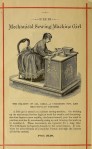
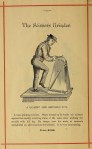
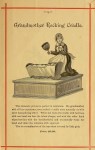
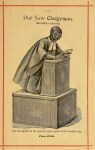
So it was the same outrage I felt over this 1882 Clockwork Toy Catalog, shown below in its entirety.
Harriett Beecher Stowe wrote the novel Uncle Tom’s Cabin in 1851 as a serial, made into a novel format in 1852. By just 1853, it has sold over 500,000 copies world wide. As an author, I know even today, selling 500,000 books in a year would be amazing. It basically had the popularity of Harry Potter, Twilight, or other mass selling books.
Uncle Tom’s Cabin was a rejection of the existing stereotypes of minstrel shows; Stowe’s melodramatic story humanized the suffering of slavery for White audiences by portraying Tom as a Christlike figure who is ultimately martyred, beaten to death by a cruel master because Tom refuses to betray the whereabouts of two women who escape from slavery.
Senator Charles Sumner credited Uncle Tom’s Cabin for the election of Abraham Lincoln and Lincoln himself reportedly quipped that Stowe had triggered the American Civil War. Frederick Douglass praised the novel as “a flash to light a million camp fires in front of the embattled hosts of slavery”
So it is that just 29 years later, after Uncle Tom’s Cabin is a best seller of nearly all time, that a New York toy company is making Uncle Tom Minstrel toys for kids. The caption includes, “funny as it is, there is also something pathetic in it, too”. This is in addition to many other degrading toys including a “Heathen Chinese.” I had hoped to post this to show how we have changed. However, the utter insensitivity of the Django Unchained people to sell slave owner and slave dolls show perhaps we are still a stupid and backward people. God created us all in His image, equal, each with a body, each with a soul.
The Library of Congress Record
Author: Automatic toy works, New York. [from old catalog]
Subject: Toys
Publisher: New York, Lockwood & Crawford, stationers
Language: English
Call number: 5886719
Digitizing sponsor: The Library of Congress
Book contributor: The Library of Congress
Collection: library_of_congress; americana
Full catalog record: MARCXML
Selected metadata
| Page-progression: | lr |
| Scanningcenter: | capitolhill |
| Mediatype: | texts |
| Identifier-bib: | 00215344708 |
| Identifier: | automatictoywork00auto |
| Scanner: | scribe9.capitolhill.archive.org |
| Ppi: | 400 |
| Camera: | Canon 5D |
| Operator: | scanner-elizabeth-kornegay@… |
| Scandate: | 20110128151537 |
| Imagecount: | 22 |
| Identifier-access: | http://www.archive.org/details/automatictoywork00auto |
| Identifier-ark: | ark:/13960/t6640k162 |
| Ocr: | ABBYY FineReader 8.0 |
| Sponsordate: | 20110131 |
Filed under Humor and Observations, Uncategorized