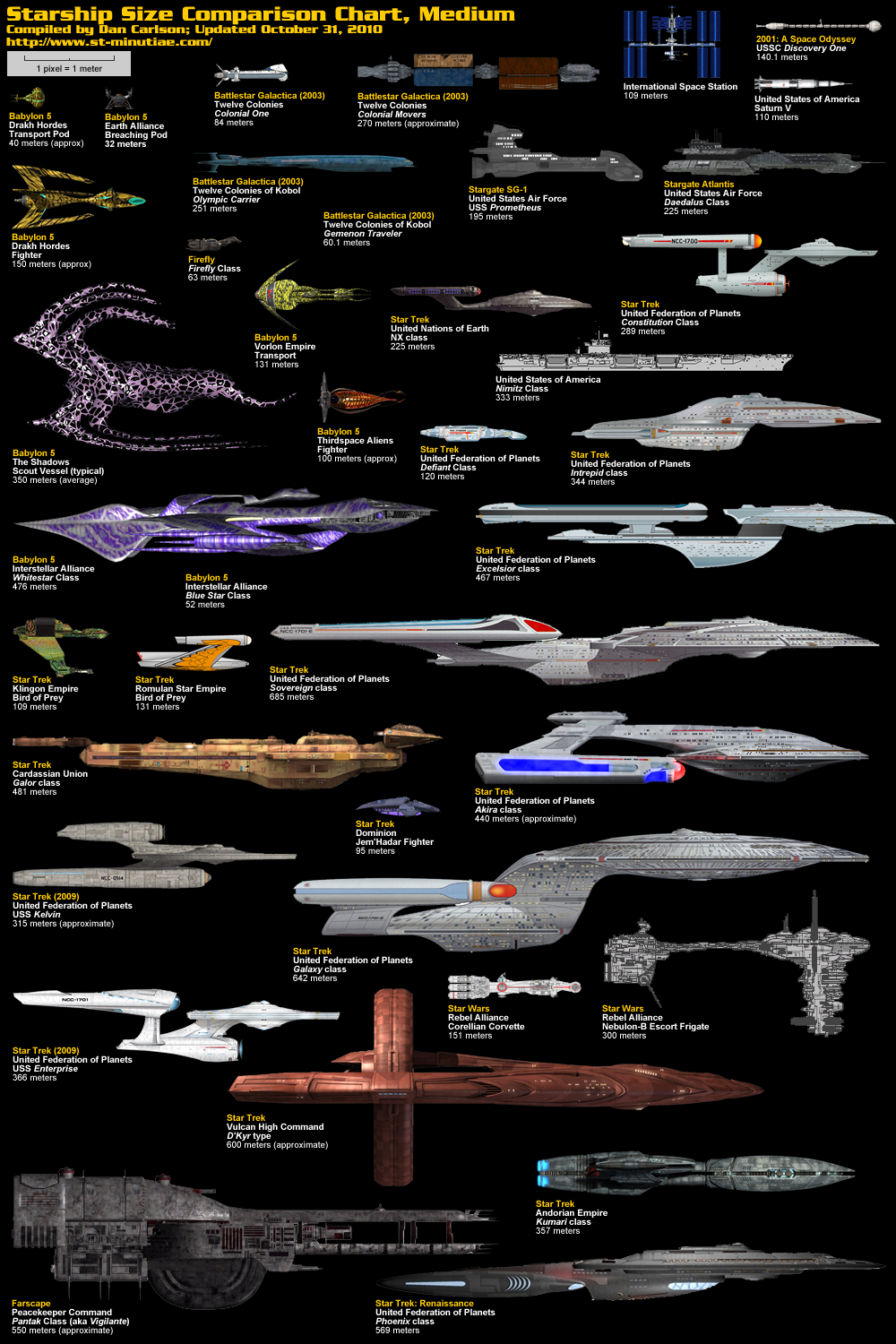
If you do not know the terms “firefly”, “battle of serenity”, “browncoat”, or “fixin to do some misbehaving” then you have missed the best TV show that never finished it’s first season. Watch Firefly on Netflix, then follow-up with “Serenity” the movie. Fans are called “browncoats”. Here is the layout of the ship for my fellow browncoats…
Tag Archives: firefly
Cosplay Pictures for Your Saturday
Cosplay pictures for your weekend enjoyment!
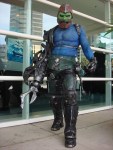
- Link from Legend of Zelda
- Sara Moni
- Red Sonja
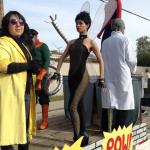
- The Huntress
- Harley Quinn/Slave Leia mash-up
- Need a bigger net
- Daenarys Texting her dragons
- Toni Darling as Lady Death
- Sara Moni as Inarra from Firefly
- Winner Twins and some young fans
- Scary blind date
- Black Cat hanging out with Jabba the Hutt
- Harley Quinn
- Cara Nicole as Knightengale
- Jedi
- Veronica and Velma, the V girls from Scooby Doo
- Steampunker
- Sara Moni
- April O’Neil from Teenage Mutant Ninja Turtles
- Lady Joker
- Lolita Goth
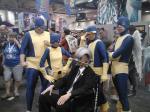
- Original X-Men Yellow Team
- Captain America
- Superdog
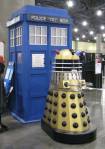
- Dr. Who, TARDIS and Dalek
- Black Cat with Spiderman
Filed under Humor and Observations
Who Has The Fastest Space Vehicle?
Star Trek, Star Wars, Firefly, Dr. Who… Who has the fastest space travel? Who indeed…
If you click this link, they let you race the various ships across space to find out.
From Slate.com:
Star Trek is all about interstellar travel. It’s right there in the title. “Warp 6!” or “Warp 9!” captains bark, sometimes following with a pedantic “point four” and punctuating with a “do it!” or “punch it!” or “engage!” The numbers give the impression of a well-defined system of speed, but that’s misleading, and in this regard Star Trek is a good example of a recurring theme in popular science fiction: the obfuscation of distance and speed. When characters need to get from Point A to Point B with a speed that seems to defy existing rules, science fiction invents wormholes or slipstreams or other anomalies or allows captains to “risk” the ship by pushing it to a speed at which “she can’t take much more of this!” Or, worse, writers simply ignore the rules and leave it to fans, struggling to make sci-fi as real as possible, to explain away the inconsistencies for themselves in so many forums and wiki discussion pages.
It’s a little odd that a genre about science, the field of precision, can be so imprecise. The truth is that spaceships almost always fly at the speed of the plot. But, for those who refuse to accept that, this is a definitive guide to ship speeds, based on highly scientific computer simulations and highly unscientific speculation.
Enterprise: Nerds at Memory Alpha, the Star Trek wiki, have already arrived at a sprawling explanation that employs multiple warp scales associated with different eras of Star Trek’s fictitious history. The short version: As determined by a writers’ guide for the original series, theEnterprise of the original series, going at maximum, slightly unsafe warp, can reach Alpha Centauri in about three days. Although this conflicts with the apparently short trip the ship takes from Earth to Vulcan in Star Trek (2009), we’ll defer to the original series on this one. Later ships are faster, but even Voyager, one of the fastest Federation ships in the Star Trek universe, expected to take several decades to cross the galaxy and return home.
Millennium Falcon: When Luke and Obi Wan first meet Han Solo in Mos Eisely, the first thing the smuggler does is brag about his ship. “You’ve never heard of the Millennium Falcon?” Han asks. That’s when A New Hope makes its infamous technical blunder. “It’s the ship that made the Kessel Run in less than 12 parsecs,” Han says. A parsec is, of course, a unit of distance, not time. Unfortunately, even the elaborate explanationof later material offers no more clues about the Millennium Falcon’s actual speed than the original flub. “She’ll make point five past light speed,” Han will later brag, but what does that mean? It certainly doesn’t mean 1.5 times the speed of light speed, because it would still take the ship several years to move between stars.
The Skywalker gang travels from Tatooine to where Alderaan is supposed to be in a matter of hours at the most, and the two planets, if this star chart is to be believed, are half a galaxy apart—though that wouldn’t jibe with a Star Wars role-playing book that suggests it would take several months to cross the galaxy. Crossover comics notwithstanding, the characters never make voyages to other galaxies, though this is apparently due to a disturbance at the edge of the galaxy. And a question I posed to the Star Wars subreddit yielded mixed answers.
Here’s my conclusion: In the films, the characters travel among Tatooine, Alderaan, Yavin, Hoth, Dagobah, Bespin, Naboo, Coruscant, Mustafar, and Geonosis, and never does it seem as if months or even weeks have passed. Every time a Star Wars character travels, it appears no more than the Star Wars equivalent of a short road trip, so we’ll conclude, assuming Han can get the hyperspace engine working, that the Millennium Falcon could reach the galactic center in mere minutes.
TARDIS: “All of time and space; everywhere and anywhere; every star that ever was,” the Eleventh Doctor says in a trailer for Series 5. In the 797 episodes of all the series, the TARDIS is seen at times instantly rematerializing in new galaxies or universes or times, usually accompanied with its signature noise. At others, it hurtles through space or chases down cars. We’re going to stick with its fastest mode of travel and assume it can travel to any place and any time, virtually instantaneously.
Planet Express Ship: The Planet Express Ship’s dark matter drive, which pulls the universe around it at 200 percent fuel efficiency, allows it to routinely make trips to other galaxies, such as the Galaxy of Terror, as well as, on one “morning off,” the edge of the universe. Its regular intergalactic flights make it easily one of the speediest ships in science fiction.
Heart of Gold: The Heart of Gold runs on the infinite improbability drive, which, according to The Hitchhiker’s Guide to the Galaxy, is “a wonderful new method of crossing vast interstellar distances in a mere nothingth of a second.” The only caveat: “you’re never sure where you’ll end up or even what species you’ll be when you get there.”
Jupiter 2: The ship of the lost Robinson family was to reach Alpha Centauri in 5.5 years, according to the aired pilot.
Serenity: Travel in the Verse is strictly interplanetary. A production manual suggested Malcolm Reynolds’ Firefly-class ship takes 16 days to travel one astronomical unit, or the distance between the Earth and the sun, although whether this is canonical is debatable. Material tied to theSerenity Role Playing Game suggests the planets of the Verse are arrayed among four very close stars that span, if this “Complete and Official Map of the Verse” is to be believed, a couple of hundred AU. Even with Wash at the helm, Kaylee in the engine room, and Malcolm spouting Chinese curses the whole way, Serenity would need a few decades to travel to another star system.
Battlestar Galactica: Galactica travels through space skipping from one location to another in instant jumps of a few light-years. The maximum range of each jump is obscure, but seems to be about 16 “Colonial light-years,” which I’m going to equate to light-years over the objections of possibly hundreds of nerds. The duration of the cool-down period is similarly elusive, but it’s “brief,” so let’s say five minutes. That’s about 4,600 light-years in a day, which means, excluding any structural damage to the ship, Galactica can travel to center of the galaxy in about six days doing one jump after another, with Cylons on their heels the whole way.
Voyager 1: The real-world space probe, launched in 1977, is traveling away from the sun at 38,600 miles per hour. That’s about 0.00005 light-years per year. If the probe were heading in the direction of Alpha Centauri, it would take several thousand years to arrive.
Filed under Humor and Observations
Joss Whedon’s Top 10 Writing Tips
Film critic Catherine Bray interviewed Joss Whedon in 2006 for UK movie magazine Hotdog to find out his top ten screenwriting tips. Photo: Joss Whedon at San Diego Comic Con – courtesy of Gage Skidmore.
Joss Whedon is most famous for creating Buffy the Vampire Slayer, its spin-off Angel and the short-lived but much-loved Firefly series. But the writer and director has also worked unseen as a script doctor on movies ranging from Speed to Toy Story. Here, he shares his tips on the art of screenwriting.
1. FINISH IT
Actually finishing it is what I’m gonna put in as step one. You may laugh at this, but it’s true. I have so many friends who have written two-thirds of a screenplay, and then re-written it for about three years. Finishing a screenplay is first of all truly difficult, and secondly really liberating. Even if it’s not perfect, even if you know you’re gonna have to go back into it, type to the end. You have to have a little closure.
2. STRUCTURE
Structure means knowing where you’re going; making sure you don’t meander about. Some great films have been made by meandering people, like Terrence Malick and Robert Altman, but it’s not as well done today and I don’t recommend it. I’m a structure nut. I actually make charts. Where are the jokes? The thrills? The romance? Who knows what, and when? You need these things to happen at the right times, and that’s what you build your structure around: the way you want your audience to feel. Charts, graphs, coloured pens, anything that means you don’t go in blind is useful.
3. HAVE SOMETHING TO SAY
This really should be number one. Even if you’re writing a Die Hard rip-off, have something to say about Die Hard rip-offs. The number of movies that are not about what they purport to be about is staggering. It’s rare, especially in genres, to find a movie with an idea and not just, ‘This’ll lead to many fine set-pieces’. The Island evolves into a car-chase movie, and the moments of joy are when they have clone moments and you say, ‘What does it feel like to be those guys?’
4. EVERYBODY HAS A REASON TO LIVE
Everybody has a perspective. Everybody in your scene, including the thug flanking your bad guy, has a reason. They have their own voice, their own identity, their own history. If anyone speaks in such a way that they’re just setting up the next person’s lines, then you don’t get dialogue: you get soundbites. Not everybody has to be funny; not everybody has to be cute; not everybody has to be delightful, and not everybody has to speak, but if you don’t know who everybody is and why they’re there, why they’re feeling what they’re feeling and why they’re doing what they’re doing, then you’re in trouble.
5. CUT WHAT YOU LOVE
Here’s one trick that I learned early on. If something isn’t working, if you have a story that you’ve built and it’s blocked and you can’t figure it out, take your favourite scene, or your very best idea or set-piece, and cut it. It’s brutal, but sometimes inevitable. That thing may find its way back in, but cutting it is usually an enormously freeing exercise.
6. LISTEN
When I’ve been hired as a script doctor, it’s usually because someone else can’t get it through to the next level. It’s true that writers are replaced when executives don’t know what else to do, and that’s terrible, but the fact of the matter is that for most of the screenplays I’ve worked on, I’ve been needed, whether or not I’ve been allowed to do anything good. Often someone’s just got locked, they’ve ossified, they’re so stuck in their heads that they can’t see the people around them. It’s very important to know when to stick to your guns, but it’s also very important to listen to absolutely everybody. The stupidest person in the room might have the best idea.
7. TRACK THE AUDIENCE MOOD
You have one goal: to connect with your audience. Therefore, you must track what your audience is feeling at all times. One of the biggest problems I face when watching other people’s movies is I’ll say, ‘This part confuses me’, or whatever, and they’ll say, ‘What I’m intending to say is this’, and they’ll go on about their intentions. None of this has anything to do with my experience as an audience member. Think in terms of what audiences think. They go to the theatre, and they either notice that their butts are numb, or they don’t. If you’re doing your job right, they don’t. People think of studio test screenings as terrible, and that’s because a lot of studios are pretty stupid about it. They panic and re-shoot, or they go, ‘Gee, Brazil can’t have an unhappy ending,’ and that’s the horror story. But it can make a lot of sense.
8. WRITE LIKE A MOVIE
Write the movie as much as you can. If something is lush and extensive, you can describe it glowingly; if something isn’t that important, just get past it tersely. Let the read feel like the movie; it does a lot of the work for you, for the director, and for the executives who go, ‘What will this be like when we put it on its feet?’
9. DON’T LISTEN
Having given the advice about listening, I have to give the opposite advice, because ultimately the best work comes when somebody’s fucked the system; done the unexpected and let their own personal voice into the machine that is moviemaking. Choose your battles. You wouldn’t get Paul Thomas Anderson, or Wes Anderson, or any of these guys if all moviemaking was completely cookie-cutter. But the process drives you in that direction; it’s a homogenising process, and you have to fight that a bit. There was a point while we were making Firefly when I asked the network not to pick it up: they’d started talking about a different show.
10. DON’T SELL OUT
The first penny I ever earned, I saved. Then I made sure that I never had to take a job just because I needed to. I still needed jobs of course, but I was able to take ones that I loved. When I say that includes Waterworld, people scratch their heads, but it’s a wonderful idea for a movie. Anything can be good. Even Last Action Hero could’ve been good. There’s an idea somewhere in almost any movie: if you can find something that you love, then you can do it. If you can’t, it doesn’t matter how skilful you are: that’s called whoring.
Filed under Writing
More Crossovers
Crossovers, also called “mash-ups” are where you take two or more separate stories, ideas, etc. and put them together as one, usually intended to be in a funny way. This is a recurring post on this blog site. To see previous ones, type “crossover” into the Search box on the Home page. Enjoy!
- Chewbacca on a Giant Squirrel
- Better than Angelina Jolie and Brad Pitt?
- Both come with a Surgeon General warning.

- Go ahead Voldemort, make his day!
- Too strange?
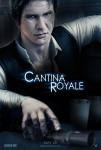
- Yeah, I would see it. Solo, Han Solo.

- Firefly – Dr. Who crossover!
- Batman with a freakin’ light saber fighting a shark
- Robocop/Star Wars
- Another Firefly/Dr. Who
- My money is on Venom.
- Manga Potter
- Firely with Star Wars, Tron, etc.
- Arnold Avatar Na’vi
- Catman
- Biker Crusaders
- Even Wolverine can’t make a Volvo look cool
- Not a Clinton fan, but the artwork rocks
- Saving Private Rambo
- Doh!
- Strange one…
- Eminem meets Punisher, how weird is that?
- Darth Box
- Franken Castle
- I would bet on the Stormtroopers, but even at that range they will miss…
- One large Dinosaur Rib please.
- Here are some Imperial Credits from my last carbonite freeze…
- Greenpeace vs. Developers Chess Match – very strange
- That is just Goofy…
Filed under Humor and Observations