Tag Archives: NASA

Space station shipment launched from Virginia

Space station shipment launched from Virginia

Orbital Sciences Corp. launched its Cygnus capsule from the Virginia coast, its third space station delivery for NASA.

Daylight and clouds limited visibility, but observers from North Carolina to New Jersey still had a shot at seeing the rising Antares rocket. It resembled a bright light in the early afternoon sky.
untitled (5)

Its destination, the space station, was soaring 260 miles above Australia when the Cygnus took flight. The unmanned capsule should arrive there Wednesday.

This newest Cygnus contains more than 3,000 pounds of supplies, much of it food. Also on board: mini-satellites, science samples, equipment and experimental exercise clothes. NASA said the new type of clothing is resistant to bacteria and odor buildup. So the astronauts won’t smell as much during their two hours of daily workout in orbit and they’ll require fewer clothing changes.

NASA is paying for the delivery service. The space agency hired two companies — the Virginia-based Orbital Sciences and California’s SpaceX — to keep the space station well stocked once the shuttle program ended. The international partners also make shipments; the European Space Agency, for example, will launch its supply ship in 1 1/2 weeks from French Guiana.

This particular Cygnus delivery was delayed a few months by various problems, including additional engine inspections and, most recently, bad weather at the Wallops Island launch site.

untitled (6)

The Cygnus will remain at the space station for about a month. It will be filled with trash and cut loose for a fiery re-entry. Unlike the SpaceX Dragon capsule, the Cygnus is not built to return safely to Earth.

Saturday, meanwhile, marked the 5,000th day of continuous human habitation at the 260-mile-high outpost. Six men currently are on board, representing the United States, Russia and Germany.

“Humans are explorers!” German astronaut Alexander Gerst said via Twitter.

Leave a comment

Filed under Humor and Observations

Mars ‘flying saucer’ splashes down after NASA test

mars-saucer-cropped-internal.jpg

FILE – In this undated file photo provided by NASA, a saucer-shaped test vehicle known as a Low Density Supersonic Decelerator is shown in the Missile Assembly Building at the US Navy’s Pacific Missile Range Facility at Kekaha on the island of Kauai in Hawaii.AP/NASA

After several weather delays, NASA on Saturday launched a helium balloon carrying a saucer-shaped vehicle high in Earth’s atmosphere to test technology that could be used to land on Mars.

The craft deployed a novel inflatable braking system on its way back to Earth, but its massive parachute failed to fully unfurl as it descended to a splashdown.

Control room cheers that greeted successful steps in the complex test rapidly died as the parachute appeared to emerge tangled.

“Please inform the recovery director we have bad chute,” a mission official ordered.

Since the twin Viking spacecraft landed on the red planet in 1976, NASA has relied on the same parachute design to slow landers and rovers after piercing through the thin Martian atmosphere.

The $150 million experimental flight tests a novel vehicle and a giant parachute designed to deliver heavier spacecraft and eventually astronauts.

Viewers around the world with an Internet connection followed portions of the mission in real time thanks to cameras on board the vehicle that beamed back low-resolution footage.

After taking off at 11:40 a.m. from the Pacific Missile Range Facility on the Hawaiian island of Kauai, the balloon boosted the disc-shaped vehicle over the Pacific. Its rocket motor should then ignite, carrying the vehicle to 34 miles high at supersonic speeds.

The environment this high up is similar to the thin Martian atmosphere. As the vehicle prepared to drop back the Earth, a tube around it expanded like a Hawaiian puffer fish, creating atmospheric drag to dramatically slow it down from Mach 4, or four times the speed of sound.

Then the parachute if only partially — and the vehicle splashed down about three hours later. At 110 feet in diameter, the parachute is twice as big as the one that carried the 1-ton Curiosity rover through the Martian atmosphere in 2011.

Despite the parachute problem, “what we just saw was a really good test,” said NASA engineer Dan Coatta with the Jet Propulsion Laboratory in Pasadena, California.

The test was postponed six previous times because of high winds. Winds need to be calm so that the balloon doesn’t stray into no-fly zones.

Engineers planned to analyze the data and conduct several more flights next year before deciding whether to fly the vehicle and parachute on a future Mars mission.

“We want to test them here where it’s cheaper before we send it to Mars to make sure that it’s going to work there,” project manager Mark Adler of the NASA Jet Propulsion Laboratory said during a pre-launch news conference in Kauai in early June.

The technology envelope needs to be pushed or else humanity won’t be able to fly beyond the International Space Station in low-Earth orbit, said Michael Gazarik, head of space technology at NASA headquarters.

Technology development “is the surest path to Mars,” Gazarik said at the briefing.

The Los Angeles Times reported that teams working on the project will report at different times. These teams include specialists who will launch the balloon and communication teams. There are antennas near the base, the report said.

There is a lot that can go wrong, but that’s precisely why the teams say these tests are imperative.

“We learn even more when we fail,” Robert Manning, the chief engineer, told The Times. “If you’re not dropping balls, you’re not learning how to juggle.”

Click for more from LA Times

The Associated Press contributed to this report

Leave a comment

Filed under Humor and Observations

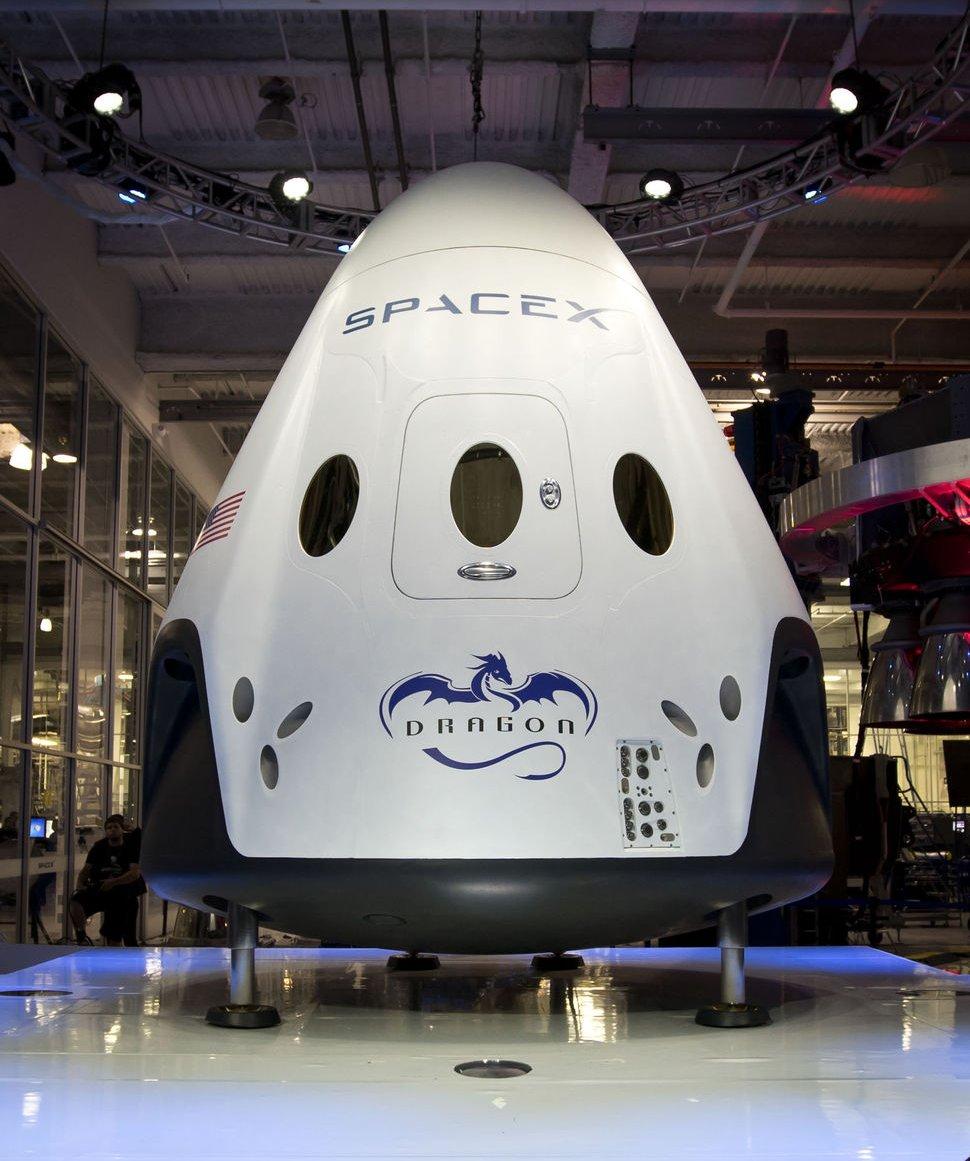
Inside The New Dragon Spacecraft

The Dragon V2 Capsule can carry humans, dock with the ISS, and land on its own.

Leave a comment

Filed under Humor and Observations

Robotic cops to monitor traffic in space

Robotic cops to monitor traffic in space

By

War Games

Published February 06, 2014

FoxNews.com

In the absence of red and green lights to control traffic in space, a team of scientists at the Lawrence Livermore National Laboratory is developing mini-satellites that will work as “traffic cops” to help prevent collisions.

The threat of collisions in space is serious: If a military satellite is hit and damaged, it could mean loss of communications, visual information on the ground and GPS for deployed troops. There is also a serious threat to spacecraft with humans aboard, like shuttles and the International Space Station.

It’s the stuff of movies. Anyone see “Gravity”?

But it’s a real threat too, one that escalates as the quantity of space debris grows. According to NASA, more than 500,000 pieces of space junk are orbiting the Earth, and some of them are traveling at crazy speeds – as in 17,500 mph, more than fast enough for a tiny fragment of orbital debris to cause damage to a satellite or a spacecraft.

But what if we had a force that could act as a sort of satellite traffic control, one that could stop collisions, help control space traffic and, very importantly, prevent satellites from colliding?

The answer is the STARE (Space-Based Telescopes for Actionable Refinement of Ephemeris) mission, which was launched to help avoid space collisions. Ultimately, the plan is to create a constellation of “space cop” nano-satellites that will operate in low earth orbit.

It is incredibly hard to accurately predict a satellite’s location in low earth orbit at any moment, largely because of uncertainties like atmospheric drag, which creates errors in tracking satellite position and velocity.

To cope with these errors, the Space Surveillance Network has to repeatedly observe the nearly 20,000 objects it tracks.

But even with all this effort, the accuracy of a satellite’s position in low earth orbit is only within about one kilometer – about 3/5ths of a mile.

Not knowing exactly where the space objects are located means that for every anticipated collision, there are about 10,000 false alarms. And the false alarms create a “Chicken Little” effect: when there is a collision warning, satellite operators think it is just another false alarm, and they seldom move their assets.

The STARE mission aims to reduce this kilometer of uncertainty down to 100 meters or less, which would dramatically reduce the number of false alarms.

Now the Lawrence Livermore team, led by Wim de Vries and lead engineer Vincent Riot, has proven it can be done.

To demonstrate the new technology, the team chose as its target the NORAD 27006 satellite.

The scientists used six images taken by a ground-based satellite over a 60-hour period to prepare. Then they took four observations during the first 24 hours of the test mission for calculations, and they were able to predict NORAD’s trajectory to within less than 164 feet over the next 36 hours, a very promising number since the team had hoped to reduce uncertainty only to about 328 feet.

Then, from the ground, the Livermore team changed the orbit of the satellite. Their findings were published in the recent Journal of Small Satellites.

Ultimately, when their “traffic cop” is deployed to space, it will perform the same sorts of observations and analysis in orbit that the scientists made on the ground. When development is completed, it will prevent all sorts of collisions: satellite with satellite, satellite with debris and more.

And all of that without a whistle.

Ballet dancer turned defense specialist Allison Barrie has traveled around the world covering the military, terrorism, weapons advancements and life on the front line. You can reach her at wargames@foxnews.com or follow her on Twitter @Allison_Barrie.

Leave a comment

Filed under Humor and Observations

Astronauts warn UN of threat to Earth from asteroids

Astronauts warn UN of threat to Earth from asteroids

By Laura Poppick

Published October 28, 2013

  • asteroid-impact

    An artist’s illustration of a massive asteroid impact on earth. Some single-celled organisms may be able to survive extreme impacts such as these, scientists say. (NASA/DON DAVIS)

  • potential-hazardous-asteroids-crop

    This NASA graphic shows the orbits of all the known Potentially Hazardous Asteroids (PHAs), numbering over 1,400 as of early 2013. Shown here is a close-up of the orbits overlaid on the orbits of Earth and other inner planets. (NASA/JPL-CALTECH)

NEW YORK –  Members of the United Nations met with distinguished astronauts and cosmonauts this week in New York to begin implementing the first-ever international contingency plan for defending Earth against catastrophic asteroid strikes.

Six of the space travelers involved in these U.N. discussions discussed the asteroid defense effort Friday in a news conference hosted by astrophysicist Neil deGrasse Tyson at the American Museum of Natural History. Their goal: to drive home the very-real threats posed by near-Earth objects (NEOs), or asteroids traveling within the radius of Earth’s orbit with the sun. You can see a video of the asteroid defense discussion here.

Scientists estimate that there are roughly 1 million near-Earth asteroids that could potentially pose a threat to the planet, but only a small fraction of these have actually been detected by telescopes. There are about 100 times more asteroids lurking in space than have ever been located, said Edward Lu, a former NASA astronaut and co-founder of the non-profit B612 Foundation advocating asteroid defense strategies. “Our challenge is to find these asteroids first, before they find us,” Lu said. [Photos: Potentially Dangerous Asteroids Up Close]

‘This decision of what to do, how to do it and what systems to use has to be coordinated internationally.’

– Former NASA astronaut and B612 co-founder Russell Schweickart

To help achieve this goal, Lu co-founded an organization called the B612 Foundation in 2002. Today, the group is developing a privately built infrared space telescope — called the Sentinel Space Telescope — with the sole purpose of locating threatening asteroids. The foundation hopes to launch the telescope by 2018.

The Sentinel telescope will help space agencies identify threatening near-Earth objects years before they hit Earth, providing governments and space agencies with enough time to take action, Lu and his colleagues said. Such action would entail deploying a spacecraft — or multiple spacecrafts, depending on the size of the space rock — toward the asteroid in order to smack it off course.

The technology and funds to deflect an asteroid in this way already exist, the panel explained, but the Association of Space Explorers, a group that includes active and retired astronauts, decided to involve the United Nations in their decision-making efforts to avoid nationally biased action in the event of an emergency.

“The question is, which way do you move [the asteroid]?” former NASA astronaut and B612 co-founder Russell Schweickart said in the news conference. “If something goes wrong in the middle of the deflection, you have now caused havoc in some other nation that was not at risk. And, therefore, this decision of what to do, how to do it and what systems to use has to be coordinated internationally. That’s why we took this to the United Nations.”

The panel hopes that the discussions with the United Nations this week —which extend from discussions dating back to 2008, when the panel presented the United Nations with the first draft of a report titled “Asteroid Threats: A Call for Global Response” —will improve public awareness of the threats at hand, and encourage policymakers to develop plans and appoint leaders to deal with threats in a timely manner.

The explosion of a truck-size asteroid over Chelyabinsk, Russia, this past February —which blew out windows throughout the entire city and injured more than 1,000 people —helped draw public attention to what the panelists described as the often-overlooked and underappreciated threat to the planet.

“It did make a difference in policymakers realizing that this is not just a science-fiction concept, or something that will happen in 100 or 500 years in the future,” Thomas Jones, former NASA astronaut and senior research scientist at the Florida Institute for Human and Machine Cognition, told SPACE.com at the news conference. “The fact that it happened right now, I think, enforced the reality.”

The recommendations that the group presented to the United Nations this week provide an outline of what governments will ultimately implement in the event of an emergency. However, the details of these recommendations are still in the works, Schweickart said.

Leave a comment

Filed under Humor and Observations

Arctic sea ice up 60 percent in 2013

Arctic sea ice up 60 percent in 2013

Published September 09, 2013

FoxNews.com
  • arctic sea ice 2012 vs 2013.jpg

    NASA satelite images show the changing Artic sea ice coverage. from August 2012 (left) to August 2013 (right) — a growth of about a million square miles. (NASA)

About a million more square miles of ocean are covered in ice in 2013 than in 2012, a whopping 60 percent increase — and a dramatic deviation from predictions of an “ice-free Arctic in 2013,” the Daily Mail noted.

Arctic sea ice averaged 2.35 million square miles in August 2013, as compared to the low point of 1.32 million square miles recorded on Sept. 16, 2012, according to the National Snow and Ice Data Center. A chart published Sept. 8 by NSIDC shows the dramatic rise this year, putting total ice cover within two standard deviations of the 30-year average.

Noting the year over year surge, one scientist even argued that “global cooling” was here.

“We are already in a cooling trend, which I think will continue for the next 15 years at least. There is no doubt the warming of the 1980s and 1990s has stopped,” Anastasios Tsonis of the University of Wisconsin told London’s Mail on Sunday.

The surge in Arctic ice is a dramatic change from last year’s record-setting lows, which fueled dire predictions of an imminent ice-free summer. A 2007 BBC report said the Arctic could be ice free in 2013 — a theory NASA still echoes today. 

“[An ice-free Arctic is] definitely coming, and coming sooner than we previously expected,“ Walt Meier, a glaciologist at NASA’s Goddard Space Flight Center in Greenbelt, Md, told LiveScience last month. “We’re looking at when as opposed to if.”

Noting the growth in ice, the Snow and Ice Data Center said that coverage was still well below the 30-year average. And the year over year growth in ice is “largely irrelevant,” argued The Guardian, noting that more ice is to be expected after the record low a year ago.

“We should not often expect to observe records in consecutive years. 2012 shattered the previous record low sea ice extent; hence ‘regression towards the mean’ told us that 2013 would likely have a higher minimum extent,” wrote Dana Nuccitelli.

Meanwhile, global surface temperatures have been relatively flat over the past decade and a half, according to data from the U.K.’s weather-watching Met Office.

A leaked draft of the next major climate report from the U.N. cites numerous causes to explain the slowdown in warming: greater-than-expected ash from volcanoes, a decline in heat from the sun, more heat being absorbed by the deep oceans, and so on.

Climate skeptics have spent months debating the weather pattern, some citing it as evidence that global warming itself has decelerated or even stopped.

“The absence of any significant change in the global annual average temperature over the past 16 years has become one of the most discussed topics in climate science,” wrote David Whitehouse of the Global Warming Policy Foundation in June. “It has certainly focused the debate about the relative importance of greenhouse gas forcing of the climate versus natural variability.”

3 Comments

Filed under Humor and Observations

NASA abandons hope for failing Kepler space telescope

NASA abandons hope for failing Kepler space telescope

Published August 15, 2013

FoxNews.com
  • NASA Kepler Space Telescope

    An artist’s interpretation of the Kepler observatory in space. (NASA)

  • Newly discovered planets named Kepler-62e and -f

    Two newly discovered planets named Kepler-62e and -f. Scientists using NASA’s Kepler telescope found the distant planets, which they say are in the right place and are the right size for potential life. (AP PHOTO/HARVARD SMITHSONIAN CENTER FOR ASTROPHYSICS)

Efforts to save a $600 million tool in NASA’s quest for life elsewhere in the universe have been unsuccessful, the space agency said — but there’s still life left in the robotic planet hunter.

In May, a specialized gyroscopic wheel used to point the Kepler Space Telescope toward the sun failed, the second such failed wheel. And despite months of analysis and testing, the spacecraft will never be restored to working order. But despite the breakdown, Kepler has proven a remarkable success, NASA said.

“Kepler has made extraordinary discoveries in finding exoplanets including several super-Earths in the habitable zone,” said John Grunsfeld, associate administrator for NASA’s Science Mission Directorate in Washington. “Knowing that Kepler has successfully collected all the data from its prime mission, I am confident that more amazing discoveries are on the horizon.”

NASA said its efforts will now turn to making the most of the research craft while it still can.

‘I’m confident that more amazing discoveries are on the horizon.’

– John Grunsfeld, associate administrator, NASA’s science mission directorate 

Kepler is the first NASA mission capable of finding Earth-size planets in or near the habitable zone, the range of distance from a star where the surface temperature of an orbiting planet might be suitable for liquid water. Launched in 2009, it has discovered thousands of such planets, including a pair just 1,200 light years away.

Called Kepler-62-e and Kepler-62-f, the news of their discovery came in April. But shortly after, Kepler’s mission ran into trouble.

Kepler is powered by four solar panels, and the spacecraft must execute a 90-degree roll every 3 months to reposition them toward the sun while keeping its eye precisely aimed. Kepler launched with four wheels to control that motion — two of them have now failed.

On Aug. 8, engineers conducted a system-level performance test to evaluate Kepler’s current capabilities. They determined that the wheel which failed last year can no longer provide the precision pointing necessary for science data collection. The spacecraft was returned to its point rest state, which is a stable configuration where Kepler uses thrusters to control its pointing with minimal fuel use.

“At the beginning of our mission, no one knew if Earth-size planets were abundant in the galaxy. If they were rare, we might be alone,” said William Borucki, Kepler science principal investigator at NASA’s Ames Research Center in Moffett Field, Calif. “Now at the completion of Kepler observations, the data holds the answer to the question that inspired the mission: Are Earths in the habitable zone of stars like our sun common or rare?”

Kepler will continue working, and NASA will look to reduce fuel consumption to extend the lifespan of the spacecraft. For example, a different mode of steering Kepler will enable NASA to extend its life by years, explained Charles Sobeck, deputy project manager with Ames Research Center.

“We’re not down and out. The spacecraft is safe, it is stable,” Sobeck said in May. And regardless, Kepler is already a win for NASA.

“The mission itself has been spectacularly successful,” he added. Most other scientists agree.

The quest for “exoplanets” has generated enormous interest among the public and with scientists. And it will continue. A second mission will launch in 2017 and will use the same method that Kepler has used to continue the mission; it will seek the closest exoplanet — which may be under two dozen light years away.

The James Webb Space Telescope will also help in the quest for life in the universe.

Leave a comment

Filed under Humor and Observations

Water Found on Mars!

H2 oh my: NASA’s Curiosity rover finds water in Mars dirt

By Mike Wall

Published September 26, 2013

  • curiosity-mosaic-sol-85

    SA’s Mars rover Curiosity is a mosaic of photos taken by the rover’s Mars Hand Lends Imager taken on Sol 85, the rover’s 85th Martian day, as Curiosity was sampling rocks at a stop dubbed Rocknest in Gale Crater. Image released Sept. 26, 2013.(NASA/JPL-CALTECH/MALIN SPACE SCIENCE SYSTEMS)

  • curiosity-rocknest-closeup

    At left, a closeup view of the Mars rock target Rocknest taken by the Curiosity rover showing its sandy surface and shadows that were disrupted by the rover’s front left wheel. At right, a view of Mars samples from Curiosity’s third dirt scoop (SCIENCE/AAAS)

  • curiosity-chemin-science-result

    This image depicts the science result from the Mars rover Curiosity’s CheMin instrument, showing an X-ray diffraction of the rover’s fifth scoop of Martian dirt. The black semi-circle at the bottom is the shadow of the beam stop. Image released(SCIENCE/AAAS)

Future Mars explorers may be able to get all the water they need out of the red dirt beneath their boots, a new study suggests.

NASA’s Mars rover Curiosity has found that surface soil on the Red Planet contains about 2 percent water by weight. That means astronaut pioneers could extract roughly 2 pints of water out of every cubic foot of Martian dirt they dig up, said study lead author Laurie Leshin, of Rensselaer Polytechnic Institute in Troy, N.Y.

“For me, that was a big ‘wow’ moment,” Leshin told SPACE.com. “I was really happy when we saw that there’s easily accessible water here in the dirt beneath your feet. And it’s probably true anywhere you go on Mars.” [The Search for Water on Mars (Photos)]

The new study is one of five papers published in the journal ScienceThursday that report what researchers have learned about Martian surface materials from the work Curiosity did during its first 100 days on the Red Planet.

Soaking up atmospheric water
C
uriosity touched down inside Mars’ huge Gale Crater in August 2012, kicking off a planned two-year surface mission to determine if the Red Planet could ever have supported microbial life. It achieved that goal in March, when it found that a spot near its landing site called Yellowknife Bay was indeed habitable billions of years ago.

‘The dirt is acting like a bit of a sponge and absorbing water from the atmosphere.’

– Laurie Leshin, of Rensselaer Polytechnic Institute 

But Curiosity did quite a bit of science work before getting to Yellowknife Bay. Leshin and her colleagues looked at the results of Curiosity’s first extensive Mars soil analyses, which the 1-ton rover performed on dirt that it scooped up at a sandy site called Rocknest in November 2012.

Using its Sample Analysis at Mars instrument, or SAM, Curiosity heated this dirt to a temperature of 1,535 degrees Fahrenheit, and then identified the gases that boiled off. SAM saw significant amounts of carbon dioxide, oxygen and sulfur compounds — and lots of water on Mars.

SAM also determined that the soil water is rich in deuterium, a “heavy” isotope of hydrogen that contains one neutron and one proton (as opposed to “normal” hydrogen atoms, which have no neutrons). The water in Mars’ thin air sports a similar deuterium ratio, Leshin said.

“That tells us that the dirt is acting like a bit of a sponge and absorbing water from the atmosphere,” she said.

Some bad news for manned exploration
SAM detected some organic compounds in the Rocknest sample as well — carbon-containing chemicals that are the building blocks of life here on Earth. But as mission scientists reported late last year, these are simple, chlorinated organics that likely have nothing to do with Martian life. [The Hunt for Martian Life: A Photo Timeline]

Instead, Leshin said, they were probably produced when organics that hitched a ride from Earth reacted with chlorine atoms released by a toxic chemical in the sample called perchlorate.

Perchlorate is known to exist in Martian dirt; NASA’s Phoenix lander spotted it near the planet’s north pole in 2008. Curiosity has now found evidence of it near the equator, suggesting that the chemical is common across the planet. (Indeed, observations by a variety of robotic Mars explorers indicate that Red Planet dirt is likely similar from place to place, distributed in a global layer across the surface, Leshin said.)

The presence of perchlorate is a challenge that architects of futuremanned Mars missions will have to overcome, Leshin said.

“Perchlorate is not good for people. We have to figure out, if humans are going to come into contact with the soil, how to deal with that,” she said.

“That’s the reason we send robotic explorers before we send humans — to try to really understand both the opportunities and the good stuff, and the challenges we need to work through,” Leshin added.

A wealth of discoveries
The four other papers published in Science today report exciting results as well.

For example, Curiosity’s laser-firing ChemCam instrument found a strong hydrogen signal in fine-grained Martian soils along the rover’s route, reinforcing the SAM data and further suggesting that water is common in dirt across the planet (since such fine soils are globally distributed).

Another study reveals more intriguing details about a rock Curiosity studied in October 2012. This stone — which scientists dubbed “Jake Matijevic” in honor of a mission team member who died two weeks after the rover touched down — is a type of volcanic rock never before seen on Mars.

However, rocks similar to Jake Matijevic are commonly observed here on Earth, especially on oceanic islands and in rifts where the planet’s crust is thinning out.

“Of all the Martian rocks, this one is the most Earth-like. It’s kind of amazing,” said Curiosity lead scientist John Grotzinger, a geologist at the California Institute of Technology in Pasadena. “What it indicates is that the planet is more evolved than we thought it was, more differentiated.”

The five new studies showcase the diversity and scientific value ofGale Crater, Grotzinger said. They also highlight how well Curiosity’s 10 science instruments have worked together, returning huge amounts of data that will keep the mission team busy for years to come.

“The amount of information that comes out of this rover just blows me away, all the time,” Grotzinger told SPACE.com. “We’re getting better at using Curiosity, and she just keeps telling us more and more. One year into the mission, we still feel like we’re drinking from a fire hose.”

The road to Mount Sharp
The pace of discovery could pick up even more. This past July, Curiosity left the Yellowknife Bay area and headed for Mount Sharp, which rises 3.4 miles into the Martian sky from Gale Crater’s center.

Mount Sharp has been Curiosity’s main destination since before the rover’s November 2011 launch. Mission scientists want the rover to climb up through the mountain’s foothills, reading the terrain’s many layers along the way.

“As we go through the rock layers, we’re basically looking at the history of ancient environments and how they may be changing,” Grotzinger said. “So what we’ll really be able to do for the first time is get a relative chronology of some substantial part of Martian history, which should be pretty cool.”

Curiosity has covered about 20 percent of the planned 5.3-mile trek to Mount Sharp. The rover, which is doing science work as it goes, may reach the base of the mountain around the middle of next year, Grotzinger said.

Leave a comment

Filed under Humor and Observations

NASA sees Han Solo on planet Mercury

NASA sees Han Solo on planet Mercury

Published September 23, 2013

news.com.au
  • Han Solo on Mercury 1.jpg

    Is this Han Solo? The picture on the left, returned by NASA’s Messenger probe to Mercury, suggests Jabba the Hutt may have stashed his recalcitrant smuggler’s carbonite-encased body on the inferno planet closest to our Sun. (NASA)

  • Han Solo on Mercury.jpg

    A rock formation on Mercury looks suprisingly like Han Solo encased in carbonite, NASA joked recently. (NASA/JOHNS HOPKINS UNIVERSITY APPLIED PHYSICS LABORATORY/CARNEGIE INSTITUTION OF WASHINGTON)

A photo of the surface of the planet Mercury has set astronomers giggling with what appears to be Star Wars’ hero Han Solo — frozen in carbonite.

The picture, released by the Messenger spacecraft division of NASA, shows a formation in the terrain of the Caloris basin “in the shape of a certain carbonite-encased smuggler who can make the Kessel Run in less than 12 parsecs.”

“If there are two things you should remember, it’s not to cross a Hutt, and that Mercury’s surface can throw up all kinds of surprises,” the NASA website posted.

The region of Mercury’s surface was shaped by magma ejected during the formation of the Caloris basin. The body-shaped lumps may be remnants of what was there before.

The Messenger spacecraft is the first sent in to orbit the inferno planet closest to our Sun. During its two years of operation, it has so far taken more than 150,000 images as well as many other sensor readings.

2 Comments

Filed under Humor and Observations

Sun’s 8.2-billion-year-old twin found

Sun’s 8.2-billion-year-old twin found

By Irene Klotz

Published August 28, 2013

Discovery News
  • sunstwin2.jpg

    This image tracks the life of a Sun-like star, from its birth on the left side of the frame to its evolution into a red giant star on the right. (ESO/M. Kornmesser)

  • SUNSTWIN.jpg

    This image shows solar twin HIP 102152, a star located 250 light-years from Earth in the constellation of Capricornus (The Sea Goat). (ESO/Digitized Sky Survey 2. Ack: Davide De Martin)

About 250 light-years away in the constellation Capricornus (The Sea Goat) lies a star that looks awfully familiar.

Known as HIP 102152, the star is a virtual twin of our sun, which in and of itself is not so unusual. But HIP 102152 is older than our 4.6-billion-year old sun — by nearly 4 billion years, making it the oldest solar twin found to date.

“It is important for us to understand our sun in the proper context of stellar astronomy and to identify which of its properties are unique and normal, to predict what its fate may someday be,” astronomer TalaWanda Monroe, a postdoctoral fellow at the University of San Paulo in Brazil, wrote in an email to Discovery News.

New high-definition footage from the Solar Dynamic Observatory shows coronal mass ejections, huge eruptions of plasma blasting into space before showering back down on the sun’s surface.

NASA’s Solar Dynamics Observatory

With human lifespans so limited, seeing the sun in context means astronomers must find stars with similar mass, chemical composition, temperature and other characteristics. From that, they can then extrapolate information about our sun, such as how bright it shined in its youth and how different its radiation may be in the future.

“HIP 102152 is an ideal star to anchor the end of the timeline,” Monroe said.

Stars like the sun last about 10 billion years before running out of hydrogen fuel for their thermonuclear reactions. They then cool and expand into what is known as a “red giant” phase.

HIP 102152 may be like the sun in another way as well. Unlike other solar twins, chemical analysis of HIP 102152’s light shows a good match to the sun’s, including a telltale sign of possible rocky planets.

Scientists found elements common in dust and meteorites missing from HIP 102152’s light — “a strong hint … that the elements may have gone into making rocky bodies and/or planets” around the star,” Monroe wrote.

So far, attempts to search for any orbiting planets have not been successful.

The group also was able to make a direct tie between the amount of lithium in a star and the star’s age.

Some previous studies suggested a low lithium content may indicate the presence of giant planets, said astronomer Jorge Melendez, also with the University of San Paulo.

The new research shows that as a solar-type star ages, its lithium content decreases.

“We could use lithium to estimate the age of a star, something that is very difficult to obtain,” Melendez wrote in an email to Discovery News.

The discovery, made with the European Southern Observatory’s Very Large Telescope, was unveiled at press conference on Wednesday and is the subject of an upcoming paper in Astrophysical Journal Letters.

Read more: http://www.foxnews.com/science/2013/08/28/sun-82-billion-year-old-twin-found/?intcmp=trending#ixzz2eKKEX1LY

1 Comment

Filed under Humor and Observations