The Drifter is a four part sci-fi serial I penned for The WOD Magazine. The first three parts have been published. You lucky readers of this blog can read all four parts. Just go to my page “Flash Fiction” and you can read it in its entirety. It is only 2,800 words total. It was a bit of a challenge to write flash fiction in four parts. I hope you find the story entertaining and thought provoking.
Tag Archives: writing
Great Character Descriptions from Science Fiction and Fantasy Books
As an author I found this very helpful. I was pleased to see that I have read most of the books as well. Putting good reading into your head helps get good writing out of it. These descriptions are far from the police version – 6 foot, medium build, 30s, caucasion male. I think all of us can learn to think a bit outside the box in creating our descriptions.
Reposted from StumbleUpon, from I09, written by CHARLIE JANE ANDERS AND MANDY CURTIS.

The best science fiction and fantasy books aren’t just about amazing ideas, or huge vistas — they’re about people. So part of the key to a really successful SF/fantasy book is to describe people in a memorable, cool fashion.
A good description of a character goes a long way to letting you get to know that person — but it’s a tricky business. The best way to learn this challenging skill is by studying how others have pulled it off in the past. So here are some examples of our favorite character descriptions from science fiction and fantasy books.
Top image by Tomasz Jendruszek.
Ender’s Game by Orson Scott Card (page 10):
“Ender did not see Peter as the beautiful ten-year-old boy that grown-ups saw, with dark, tousled hair and a face that could have belonged to Alexander the Great. Ender looked at Peter only to detect anger or boredom, the dangerous moods that almost always led to pain.” Nice construction, telling us how other people see Peter, but then juxtaposing it with the more visceral way that Ender sees him.
The Hundred Thousand Kingdoms by N.K. Jemisin (page 30):
“… Face like the moon, pale and somehow wavering. I could get the gist of his features, but none of it stuck in my mind beyond an impression of astonishing beauty. His long, long hair wafted around him like black smoke, its tendrils curling and moving of their own volition. His cloak — or perhaps that was his hair too — shifted as if in an unfelt wind. I could not recall him wearing a cloak before, on the balcony. The madness still lurked in his face, but it was a quieter madness now, not the rabid-animal savagery of before. Something else — I could not bring myself to call it humanity — stirred underneath the gleam.” This is full of lovely imagery, including the hair and the cloak moving like smoke — and it leaves you with a really sharp impression even as you don’t ever get a clear impression of him, because Yeine doesn’t either. It’s like a painting that sticks with you.
Hitchhiker’s Guide to the Galaxy by Douglas Adams (page 11):
“He was not conspicuously tall, his features were striking but not conspicuously handsome. His hair was wiry and gingerish and brushed backward from the temples. His skin seemed to be pulled backward from the nose. There was something very slightly odd about him, but it was difficult to say what it was. Perhaps it was that his eyes didn’t seem to blink often enough and when you talked to him for any length of time your eyes began involuntarily to water on his behalf. Perhaps it was that he smiled slightly too broadly and gave people the unnerving impression that he was about to go for their neck.” This description of Ford Prefect is sparky and full of action, you can practically see him smiling unblinkingly at you.
Lord of the Rings: The Fellowship of the Ring by J.R.R. Tolkien (page 274):
“The face of Elrond was ageless, neither old nor young, though in it was written the memory of many things both glad and sorrowful. His hair was dark as the shadows of twilight, and upon it was set a circlet of silver; his eyes were grey as a clear evening, and in them was a light like the light of stars.” You can almost feel night gathering as you read that passage, from the gray of evening to the appearance of the night sky, and the overall impression is one of great age despite the claim of agelessness.
The Hunger Games by Suzanne Collins (page 98):
“She’s the twelve-year-old, the one who reminded me so of Prim in stature. Up close she looks about ten. She has bright, dark eyes and satiny brown skin and stands tilted up on her toes with arms slightly extended to her sides, as if ready to take wing at the slightest sound. It’s impossible not to think of a bird.” A lot of the best character descriptions have action or a element of movement to them, so you not only see the character, you see her in motion. (Doris Lessing has a good passage about this in one of her Martha Quest novels.) Here, we get Rue’s physical details, but we also have an indelible sense of how she moves.
Do Androids Dream of Electric Sheep? by Philip K. Dick (page 39):
“Black-haired and slender, wearing the huge new dust-filtering glasses, she approached his car, her hands deep in the pockets of her brightly striped long coat. She had, on her sharply defined small face, an expression of sullen distaste.” The body language, with the hands deep in the coat pockets, is super clear — you can practically see her hunching over. And you have to love the giant glasses and the “sharply defined small face.”

Soulless by Gail Carriger (page 8):
“The fourth Earl of Woolsey was much larger than Professor Lyall and in possession of a near-permanent frown. Or at least he always seemed to be frowning when he was in the presence of Miss Alexia Tarabotti, ever since the hedgehog incident (which really, honestly, had not been her fault). He also had unreasonably pretty tawny eyes, mahogany-colored hair, and a particularly nice nose.” What’s great here is that you digress into backstory that gives you a tantalizing hint about this character’s bad temper, and then suddenly you’re snapped back into very concrete physical description — but the physical description seems sharper because you’ve gotten this impression of Lord Maccon as a person.
A Clockwork Orange by Anthony Burgess (page 2):
“These sharps were dressed in the heighth of fashion too, with purple and green and orange wigs on their gullivers. Each one not costing less than three or four weeks of those sharps’ wages, I should reckon, and make-up to match (rainbows round the glazzies, that is, and the rot painted very wide). Then they had long black very straight dresses, and on the groody part of them they had little badges of like silver with different malchick’s names on them-Joe and Mike and suchalike.” Describing the three devotchkas, Burgess gives us a crash course in dystopian future fashion.
Dune by Frank Herbert (page 459):
“Through the door came two Sardukar herding a girl-child who appeared to be about four years old. She wore a black aba, the hood thrown back to reveal the attachments of a stillsuit hanging free at her throat. Her eyes were Fremen blue, staring out of a soft, round face. She appeared completely unafraid and there was a look to her stare that made the Baron feel uneasy for no reason he could explain.” Your immediate impression of Alia is one of power and disturbing intensity. But there’s a lot of implied violence in the description too — the hood that’s “thrown back” and the emphasis on her bare throat. It’s immediately intense and gripping.
Harry Potter and the Philosopher’s Stone by J.K. Rowling (page 8):
“If the motorcycle was huge, it was nothing to the man sitting astride it. He was twice as tall as a normal man and at least five times as wide. He looked simply too big to be allowed, and so wild — long tangles of bushy black hair and beard hid most of his face, he had hands the size of trash can lids, and his feet in their leather boots were like baby dolphins.” The idea that Hagrid is “simply too big to be allowed” is fantastic — it’s the Dursleys’ viewpoint seeping through, but also maximizes how big and unruly he seems. And his feet are like baby dolphins! It’s comical and totally lodges itself in your brain.
Slaughterhouse Five by Kurt Vonnegut (page 23):
“He was a funny-looking child who became a funny-looking youth — tall and weak, and shaped like a bottle of Coca-Cola.” I love the pithiness of Vonnegut, the quirky images that say a lot in a few words.
Boneshaker by Cherie Priest (page 22):
“Without the coat, her body had a lean look to it — as if she worked too long, and ate too little or too poorly. Her gloves and tall brown boots were caked with the filth of the plant, and she was wearing pants like a man. Her long, dark hair was piled up and back, but two shifts of labor had picked it apart and heavy strands had scattered, escaping the combs she’d used to hold it all aloft.” This is another description that gives you both the physical details but also a sense of who Briar is, and exactly how poverty and hard labor have affected her.
Nineteen Eighty-Four by George Orwell (page 12):
“She was a bold-looking girl of about twenty-seven, with thick dark hair, a freckled face, and swift, athletic movements. A narrow scarlet sash, emblem of the Junior Anti-Sex League, was wound several times around her waist of her overalls, just tightly enough to bring out the shapeliness of her hips.” I love the irony of the anti-sex sash bringing out the shapeliness of Julia’s hips, but also the repeated suggestions that she’s bold and fast-moving.
Neverwhere by Neil Gaiman (page 7):
“There are four simple ways for the observant to tell Mr. Croup and Mr. Vandemar apart: first, Mr. Vandemar is two and a half heads taller than Mr. Croup; second, Mr. Croup has eyes of a faded china blue, while Mr. Vandemar’s eyes are brown; third, while Mr. Vandemar fashioned the rings he wears on his right hand out of the skulls of four ravens, Mr. Croup has no obvious jewelry; fourth, Mr. Croup likes words, while Mr. Vandemar is always hungry. Also, they look nothing alike.” I love how the first sentence sets you up to believe the two characters are almost identical, and by the time the expectation is subverted, you’ve gotten a very clear impression of both of them because you’ve been paying extra-careful attention.
Fahrenheit 451 by Ray Bradbury (page 4):
“He knew that when he returned to the firehouse, he might wink at himself, a minstrel man, burnt-corked, in the mirror. Later, going to sleep, he would feel the fiery smile still gripped by his face muscles, in the dark. It never went away, that smile, it never ever went away, as long as he remembered.” It’s not exactly a description, but it gives us a vivid impression of Guy Montag, his creepy smile and his burnt face.
The Golden Compass by Philip Pullman (page 12):
“Lord Asriel was a tall man with powerful shoulders, a fierce dark face, and eyes that seemed to flash and glitter with savage laughter. It was a face to be dominated by, or to fight: never a face to patronize or pity. All his movements were large and perfectly balanced, like those of a wild animal, and when he appeared in a room like this, he seemed a wild animal held in a cage too small for it.” I love the idea that his movements can be both huge and completely controlled, and that his face tells you what the two proper responses to it are.
Brave New World by Aldous Huxley (page 4):
“Tall and rather thin but upright, the Director advanced into the room. He had a long chin and big rather prominent teeth, just covered, when he was not talking, by his full, floridly curved lips. Old, young? Thirty? Fifty? Fifty-five? It was hard to say.” It’s funny how a lot of descriptions leave some things unresolved, like the Director of Hatcheries and Conditioning’s age — but you know that he’s someone who “advances” into a room rather than strolling in, and he’s always talking and displaying his giant teeth.
A Game of Thrones by George R.R. Martin (page 40):
“Fifteen years past, when they had ridden forth to win a throne, the Lord of Storm’s End had been clean-shaven, clear-eyed, and muscled like a maiden’s fantasy. Six and a half feet tall, he towered over lesser men, and when he donned the armor and the great antlered helmet of his house, he became a veritable giant. He’d had a giant’s strength too, his weapon of choice a spiked iron warhammer that Ned could scarcely lift. In those days, the smell of leather and blood had clung to him like perfume.
“Now it was perfume that clung to him like perfume, and he had a girth to match his height. Ned had last seen the king nine years before during Balon Greyjoy’s rebellion, when the stag and the direwolf had joined to end the pretensions of the self-proclaimed King of the Iron Islands. Since the night they had stood side by side in Greyjoy’s fallen stronghold, where Robert had accepted the rebel lord’s surrender and Ned had taken his son Theon as hostage and ward, the king had gained at least eight stone. A beard as course and black as iron covered his jaw to hide his double chin and the sag of his royal jowls, but nothing could hide his stomach or the dark circles under his eyes.” Instead of a contrast between how other people see a character and the POV character sees him, as in Ender’s Game, you have a lovely contrast between how Robert appeared in his prime and how he appears now — which serves to accentuate his present decrepitude far more than a simple description would.
Filed under Humor and Observations, Writing
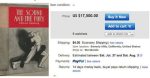
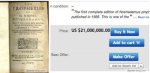
Rare Books
Here are a list of some rare books and their prices. Just a reminder, you can buy my books today instead of waiting years until they cost millions.
Filed under Humor and Observations, Writing
Rules for Writers
Rules for Writers
- Verbs has to agree with their subjects.
- Prepositions are not words to end sentences with.
- And don’t start a sentence with a conjunction.
- It is wrong to ever split an infinitive.
- Avoid clichés like the plague. (They’re old hat.)
- Also, always avoid annoying alliteration.
- Be more or less specific.
- Parenthetical remarks (however relevant) are (usually) unnecessary.
- Also too, never, ever use repetitive redundancies.
- No sentence fragments.
- Contractions aren’t necessary and shouldn’t be used.
- Foreign words and phrases are not apropos.
- Do not be redundant; do not use more words than necessary; it’s highly superfluous.
- One should NEVER generalize.
- Comparisons are as bad as clichés.
- Don’t use no double negatives.
- Eschew ampersands & abbreviations, etc.
- One-word sentences? Eliminate.
- Analogies in writing are like feathers on a snake.
- The passive voice is to be ignored.
- Eliminate commas, that are, not necessary. Parenthetical words however should be enclosed in commas.
- Never use a big word when a diminutive one would suffice.
- DO NOT use exclamation points and all caps to emphasize!!!
- Use words correctly, irregardless of how others use them.
- Understatement is always the absolute best way to put forth earth shaking ideas.
- Use the apostrophe in it’s proper place and omit it when its not needed.
- Eliminate quotations. As Ralph Waldo Emerson said, “I hate quotations. Tell me what you know.”
- If you’ve heard it once, you’ve heard it a thousand times: Resist hyperbole; not one writer in a million can use it correctly.
- Puns are for children, not groan readers.
- Go around the barn at high noon to avoid colloquialisms.
- Even IF a mixed metaphor sings, it should be derailed.
- Who needs rhetorical questions?
- Exaggeration is a billion times worse than understatement.
- The passive voice should never be used.
- Do not put statements in the negative form.
- Verbs have to agree with their subjects.
- A writer must not shift your point of view.
- Place pronouns as close as possible, especially in long sentences of 10 or more words, to their antecedents.
- Writing carefully, dangling participles must be avoided.
- If any word is improper at the end of a sentence, a linking verb is.
- Take the bull by the hand and avoid mixing metaphors.
- Avoid trendy locutions that sound flaky.
- Everyone should be careful to use a singular pronoun with singular nouns in their writing.
- Always pick on the correct idiom.
- The adverb always follows the verb.
- Be careful to use the rite homonym.
- Proofread carefully to see if you any words out.
Thank you to Jenni Larsen for submitting these rules to curiouser.co.uk.
Filed under Writing
I Will Be Signing books at Hob Nobs This Friday
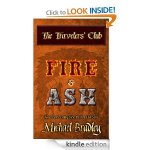
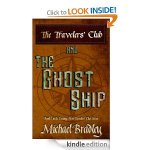
I will be at Hob Nobs Cafe and Spirits in Phoenix on Friday, August 2nd, signing copies of The Travelers’ Club and the Ghost Ship, The Travelers’ Club – Fire and Ash, Twisted History and Twisted Nightmares. Come join me for this First Friday event. They will have a live band playing starting at 8 pm. I will be just inside the entrance starting around 7:30 pm. I look forward to seeing you there!
Filed under Humor and Observations, Uncategorized, Writing
Latest Issue of The WOD Magazine
Get your online copy free here:
TheWOD_Issue1-4_Color_LowRes (2)
Yours truly has a serial short story, movie reviews and other things in there this month.
Filed under Humor and Observations, Writing
Independence Day – Original Short Story
The Second Most Important July 4th
by Michael Bradley
The face in the mirror was dark, furrowed by stress and grief, and grown old. The man had dreamt he would die in office in this dark estate ironically called cheerily as the White House. In the next room over his beloved wife chanted in a shameful séance with the hope of contacting the spirit of their son Willie who had passed beyond the veil last year at the young age of eleven. The loss of this second of their four children had pushed his wife past her thinly held sanity and at times he worried she would never come back fully to normality.
He moved from the mirror and looked out over the lawn from the veranda. It was dark, but the sheep ambled about, half-heartedly eating the early summer grass, failing under the heat and humidity stifling the swampy city during the day. He wondered when the bloodshed would end. Surely this calamity had befallen this once great union due to turning from God Almighty and continuing to practice the sins of enslaving our fellow man. Perhaps his own willingness to preserve the union even if it meant preserving slavery had contributed to the amount of blood that must be shed to purge this evil guilt from the nation.
Abraham… The Father of a Great Nation. How poorly named am I if I cannot bring this terrible war to an end? Lincoln looked into the darkness, wondering what he could do next. There would be an election next year. After years of battle losses he stood little hope of victory. The war that was supposed to end in months was three years old and showed no sign of stopping. If he lost his election, slavery would continue, the union would dissolve, and all this death would be meaningless.
Less than ninety years ago those brave God fearing individuals had risen up and declared this nation free of tyranny on July 4, 1776. They too had bled for the cause and spent years in doubt to bring forth this new nation conceived in liberty for all. Lincoln could not help but ponder this on July 3, 1863. What have I to celebrate on the morrow?
*****
Far away to the west, on a promontory high over the Mississippi River another man stood in front of a mirror, a small shaving mirror jarred by another artillery shell falling on his makeshift shelter in a cut-out mud cave. His image was gaunt and skeletal. His hand shook from hunger and thirst as much as the mirror did from percussive explosions. He wanted to take his time to look proper, shave, and put on his least dirty uniform.
John had called for reinforcements countless times and there had been no answer of late. Earlier on he had been encouraged to hold fast, to maintain the Gibraltar of the West here in Vicksburg. Now he found himself surrounded and Union gunboats pounded from the river while Grant’s men assaulted the town non-stop with artillery shells and sniper rounds. The people of the town and his own men had demonstrated exemplary honor and bravery. But even that rarest of commodities was gone.
For a week now there had been no food. The shoes, belts, and rats were the last to be eaten. The horses had been killed and devoured over a month ago. Despite the nearness to the huge river, fresh water was scarce. High on a promontory overlooking a bend in the river, Vicksburg was great for defense but not for digging wells. The constant shelling and lack of food made even a well digging detail deadly. His men were nearly out of ammunition and the people of the town were living in caves on the hill, unable to survive in the burnt out buildings of what was once a town.
General John C. Pemberton had served in wars for the Union and was a Pennsylvania born man. Despite that, he had resigned to join the Confederacy. His two younger brothers fought for the Union and John knew that if he surrendered Vicksburg, many would claim he was a traitor. Still, he could not bear to look at another child living in a dug-out mud hole, starving slowly because of his reticence. What price honor if bought with the lives of his men and an entire civilian population?
*****
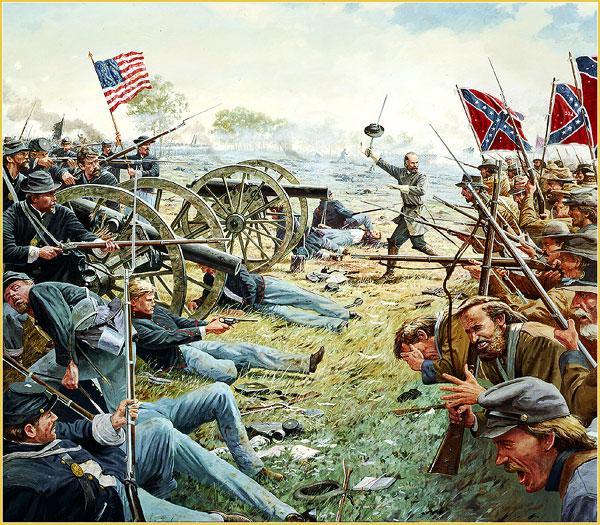
Five days ago the forty-eight year old general known as “the Snapping Turtle” had been placed in command of a beaten army. The Army of the Potomac had lost every major engagement during the three years of the war and had revolving commanders as a result. Disorganized and spread out, George had no time to do anything except assign corps and division commanders and pull his forces a bit closer together. This force was the only defense between Confederate General Robert E. Lee and the Capitol at Washington.
George looked over the maps and dealt with receiving information and sending out orders in the midst of the largest battle of the war. Two days ago, the Army of Northern Virginia made contact with his men and they were fighting a bloody duel near the town of Gettysburg. If it was another loss, it could mean the loss of the entire war. Just three days in charge and this happens.
The first day had gone for the rebels. Still, despite urgings by some, he put it to his generals to vote in a public meeting on staying. Afraid to be labeled cowards, they all voted to stay. It is what George wanted, but he did not want anyone to be able to second guess if they lost. He had interior lines, made so clearly important by the campaigns of Napoleon. Each time Lee hit his lines he nearly broke through, but Meade was able to hold on by reinforcing that section.
Today his men seemed to have turned the tide. Tens of thousands already lie dead and wounded for miles. The scene was like Hell on Earth. Despite the carnage the rebels would not stop. This day, July 3rd, General George Meade could only look at his maps, move his troops, and hope they would hold. His men were brave, they were here in force in good fortified lines, but could they hold after so many losses?
*****
The following day, Independence Day, President Abraham Lincoln went solemnly down the stairs of his residence to the telegraph room. Despite the anger of the public, his generals and even his own cabinet, he took a personal hand in managing the war. Several times per day he received dispatches from his generals and gave them ‘suggestions’ on what they should do. He finally had generals in place that would fight. Was it enough?
It was a shocking surprise. The Confederates had surrendered Vicksburg to General Grant along with 30,000 rebel troops. The Gibraltar of the West had fallen and the Mississippi was now a Union River. The Confederacy was effectively cut in two. General Pemberton had waited until July 4th to surrender in hopes of getting favorable terms on Independence Day. Instead, General Grant had insisted on ‘unconditional surrender’ and it had been given.
President Lincoln allowed himself a broad smile that was all too rare for him in recent months. More reports came in. Victory at Gettysburg. General Meade reports that the Army of Northern Virginia has been beaten in battle and is now retreating south back into Virginia. The Capitol is safe; the Union holds the field, victory in the east for now.
Could it really be? On this glorious Independence Day when the future of the nation was at its darkest, victory at Vicksburg and Gettysburg? Lincoln leaped to his feet in relief and cheered. The Union would persevere yet longer. He might win his next election and finish this horrible conflict. He would use the loss of so many lives as the catalyst to free those in bondage. The war, and the nation, would serve a purpose.
Filed under Humor and Observations, Uncategorized, Writing
My Friend Hal Astell Has Two New Books Out
Hal Astell is an amazing friend and a person who knows more about movies and films than anyone else I know. His peculiar field of study is the B-movie genre although his cinematic knowledge extends to the entire film industry. You can find his site at:
http://www.apocalypselaterfilm.com/
These are the new books:
-
Here are some comments from Hal when I asked him to give me information on the books to post here:
Actually, the easiest bet for links would be to go to Apocalypse Later at http://www.apocalypselaterfilm.com/. I have both covers up at the top of the page, with artist details and links and Amazon links.
There’s a decent amount of information on the Amazon pages too. They run $14.99 and $12.99, though Amazon have them on sale. I have copies for sale through my site as well.
Here’s some quick background on each though. Please let me know if you need anything more.
Huh? An A-Z of Why Classic American Bad Movies Were Made grew out of a series of reviews I wrote for Cinema Head Cheese (http://cinemaheadcheese.blogspot.com/).
Originally I was just reviewing films that people have called ‘the worst movie of all time’ and having fun slating them, but gradually I got more serious (while still having fun) and started to discover some amazing reasons behind these films.
I think the one that started to reshape the project was The Creeping Terror, which was a con job. The director never even intended to make a movie, just start one and abscond halfway through with the money. The film was finished by the financial backers of the piece, many of whom were in it. Then I started to add up reasons and the A-Z format came to mind as a framework.
In the book I cover 26 films, dating from between 1932-1980, explaining why someone thought it was a good idea to make them. Some are big budget Hollywood productions, like Strange Interlude, with Clark Gable and Norma Shearer, an adaptation of a play built around a terrible gimmick. Some are microbudget movies, like Manos: The Hands of Fate, which was made for a bet. Some were real discoveries, like They Saved Hitler’s Brain, which added new unrelated footage to an older movie in order to pad out a TV timeslot. These films run the gamut of genres, eras and budgets.
Velvet Glove Cast in Iron: The Films of Tura Satana is a lot more straightforward. It covers every film and every TV episode that actress Tura Satana was in, while providing a background to why she was so important. In my opinion, every movie of the last half century with a strong female lead owes a lot to her and what she did as Varla in Russ Meyer’s Faster, Pussycat! Kill! Kill!
The covers are awesome, thanks to my wonderful artists. They were the most expensive part of production but they were worth every penny.
The Tura cover is a deliberate take on the old men’s magazines, not porn but action mags. Usually there was a tough guy on the cover in a dominant pose, dominating everything around him. At his feet, there would be a scantily clad woman, an obvious damsel in distress. This is the same sort of thing but reversed: Tura is the dominant woman with a man in distress under her boot. She’s dressed in Varla’s outfit and the scene is reminiscent of the key scene early in Faster, Pussycat! Kill! Kill! where her rogue go go dancer fights an all-American boy after they race cars and leaves him dead in the dirt, before kidnapping his Gidget-esque girlfriend. While she’s an anti-hero, if any sort of hero at all, that scene is one of the most important feminist moment in films ever.
The Huh? cover is a lot more simple. It’s just various characters from some of the films I cover in the book, all sharing a speech bubble that says, ‘Huh?’ as if they can’t understand how their movies were made either.
By the way, I’m told that Amazon promotes books that reach fifty reviews. I’ll be going in and writing reviews for all the books I’ve bought from local authors (including yours) in the hope of getting to fifty. If you enjoy my books (or even if you don’t), it would be much appreciated if you would do the same.
Take care,
Hal Astell
Filed under Humor and Observations, Writing
Writing Emotions and Facial Expressions
As a writer, it is important to “show not tell.” Every author gets tired of that over simplified mantra uttered endlessly in coffee shops across the world. Still, it is better to show than to tell.
For instance – Which of the following is better:
1) He looked amused.
2) His eyebrows lifted and his lips curled up slightly at the ends.
The first is telling. The narrator (if not written in first person) is telling you they “look amused” which may or may not bring a mental picture to you the reader. In any case, it is an opinion of the character by the narrator.
The second tells you as a reader what you actually see. It lets you determine why, if they are amused, interested, whatever. It lets you as the reader discover what is going on without too much work.
I found a resource that helps with these small descriptions of emotion and facial features. So odd the things you can find at random on the web. By using the link below, you can match common facial features with the emotions they represent so you can show your reader instead of telling them. Enjoy!
Filed under Writing
More Evil Bases
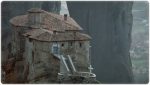
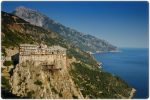
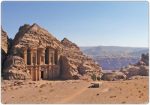
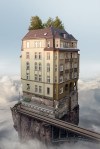
As an author, I always try to look at regular photos differently. One of my occasional post categories is “Evil Bases”. For more, type that into the search box on my home page. For your enjoyment, more evil bases to choose from for your evil archvillains.
- The Retro-Modern Lair
- The high mountain monastery
- Hard to approach
- How cool would this evil fortress be?
- Rock Promontory Luxury
- A great view and only one approach
- Ocean View castle
- Ancient Mountainside ruins lair
- Urban Castle with your own island for a moat
- Sky Mansion
- Remote, behind the waterfall lair
- Converted Missile Silo, you know you want one. Hardened for all attacks except a direct nuclear strike.
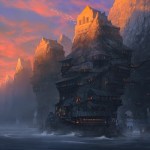
- Art by Noah Bradley. The Evil Seaside lair built into the cliff
- High Mountain Elegance, lots of room for minions
- Stark castle. Reminds me of the entrance to Moria with the tentacle monster in the pond in front.
- The lone wizard tor.
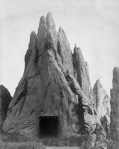
- Great Crypt Lair for Vampire, Mummy, Wraiths…
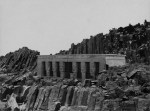
- What evil lurks in the dark behind those columns?
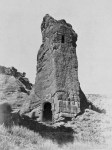
- A mine, a mountain fort, a rock turret?
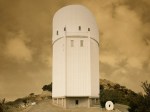
- Very Art Deco classy villain tower
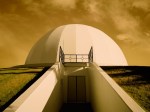
- Nothing says weird science experiments like a dome popping out of the ground
- The observation deck of an alien craft, concealed in a remote moor
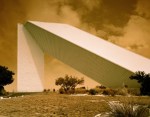
- Tilted architecture, or the launch pad for world domination?
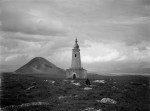
- The lonely tower where only screams are heard at night, along with strange lights.
- The seemingly abandoned castle…
Filed under Humor and Observations