
8 New Punctuation Marks We Desperately Need
by Mike Trapp on February 20, 2013
- Reposted from CollegeHumor


by Mike Trapp on February 20, 2013
Filed under Humor and Observations, Writing
Most people think as an author and a magazine columnist that I create new things and new stories. Oddly, the answer is yes and no. We are the sum of our neural connections and memories. I do not believe you can create anything new. All you can do is take what is already in your head, and mix and match it into something new. A good friend and fellow author disagreed with me. In fact, he intentionally made up a name at random and put it in his story. He was very proud to “prove me wrong.” That week, he made the same turn he always did on his way home and noticed a small sign – with his entirely random name on it. He changed the name in his story – to another random one, and went on his way, maybe a little more interested in my theory.
Throughout history, their are certain motifs, stories, and character archetypes which have been laid down in verbal tradition, through religion, stories, movies, TV, pretty much every interaction you have with your fellow man. Here it is in the Bible:
New International Version (NIV)
What has been will be again,
what has been done will be done again;
there is nothing new under the sun.
So how then do you come up with “new” ideas if there is nothing “new”? Stephen King in On Writing said as an author you should at least as much time reading as you do writing. The more inputs you have, the more combinations can be made. I have read at least one book a week since I was twelve. I estimate I have read around 4,000 books. I watch movies, I travel to new places, try new things, eat new foods. People you meet, movies you see, conversations you have, failures and successes in careers all stay inside that grey matter in magical ways.

So, in my own opinion, the only way to be “creative” in your writing, is to constantly explore, learn and put more little bits of potential into your head. Mine usually come together best in that twilight moment of falling asleep. I have written chapters, even entire books in my head as I drift off. For some reason, for me, that is the time when all those life bits and memories swirl around in a big ocean and rejoin to make original patterns out of old data.
Writing is creative for sure. Writing is even original to everyone else who reads it, because they do not share all the bits and pieces that you do in your brain. They see with a different collection of fragments floating in their ocean. But to me, as a writer, I know everything I write came from somewhere else, even if I don’t know what strange combination floated together.

Having indulged my philosophical side, here is a list of common Character Archetypes used in literature, compiled at Listology:
Filed under Writing
Reposted from the wonderful folks at Creative Writing Now. Below the article is their information for contacts, etc. These are some great flesh-out questions for both authors, and in my opinion, readers to get better stories. Enjoy!
Here are some questionnaires for writing character profiles. You’ll find more fiction-writing resources at the bottom of this page.
Free Fiction Writing Course: ENDLESS STORY IDEAS
This free 3-day online writing course will show you techniques to find new creative writing ideas whenever you need them.
Writing Character Profiles – Questionnaire 1 (Adult Characters)
|
Writing Character Profiles – Questionnaire 2 (Child Characters)
|
Writing Character Profiles – Additional Questions
Click here for more on creating characters and using character profiles.
About Creative Writing NowCreative Writing Now was founded by writing teachers to be a supportive and friendly online space for authors and poets at all stages in their writing lives. Our mission:
Meet some of our team
Legal informationThis website is owned by William Victor, S.L. You can find the company’s legal information here. Contact usQuestions? Feedback? We’d love to hear from you. You can use our e-mail form below to drop us a line, or write to us by snail mail c/o William Victor, Calle Viriato 2, puerta 639, 28010 Madrid, Spain. |
Filed under Writing
I had a very bad childhood, full of abuse, both physical and emotional, but luckily not sexual, though my siblings were not spared that atrocity. My dad was the worst abuser but my mom the most frequent. I grew up poor white trash in an uncultured, uneducated violent, crude family. I used to pray I was adopted or picked up as the wrong baby at the hospital. Unfortunately, I look like my father now. You have no idea how disconcerting to look in the mirror and look like the person who beat you and yelled at you. My family came from Arkansas and Oklahoma during the dust bowl like the Joad family but without the noble spirits and likable characters. My father bragged of tales of him and his brothers trying to kill each other with pitchforks and shovels. His father was eventually put in a home when he tried to kill his wife with a rifle. His wife, my grandmother, used to torture me for hours when my parents dropped me off at her house, so I could hardly blame him. In her later years, she tried to send me notes saying she loved me and thought about me. My wife wondered why I tossed them out. In any case, it has left its mark on me for good and ill and I am trying to compile stories and put them in a memoir. Here is one such draft:
The Ladder
by Michael Bradley
The ladder loomed above me like the face of El Capitan. I could force myself to the first step, and shaking like a leaf to the second. After that, panic set in. It is difficult to explain fear of heights to anyone who does not have a phobia, but the fear is overwhelming, primal, and cannot be overcome. My Dad was screaming at me as usual. He pulled his well worn leather belt with the metal buckle through his pant loops and began to whip me with it.
I wanted to climb the ladder and prune the tree, but try as I might, I could not pass the second step. I was used to beatings. I was hit every day and at least once a week my Dad would whip me with his belt until my legs were bloody. I fell from the ladder as he whipped my legs, then on the ground, my arms and my face.
A neighbor ran over to stop it. I was worried the neighbor would hurt my Dad. I knew my Dad had a heart condition and could not fight the neighbor without being hurt. Through my tears I pleaded, “Don’t hurt my Dad, please.” The neighbor looked uncomfortable and left after speaking to my Dad. My Dad beat me more for making so much noise.
My Mother came out to stop him. My Mother only beat me in the house, not outdoors. “They will call the police,” she said. I did not want my Dad to go to jail, but I could not climb the ladder. My Dad stopped whipping me and moved toward the house.
Then with a suddenness he ran back to me, grabbed me by my small left arm and yanked me up, spun me around wildly and let go. I flew about fifteen feet into a prickly bush. I laid there for quite awhile, then got up, limped to my room and hid in my closet. It was the day after my seventh birthday.
Twenty years later I found my Dad had dislocated my shoulder that day and broke my clavicle. The jagged repair cut my shoulder joint apart while playing racquetball and a surgeon fixed the old injury. He fixed the physical injury, but the emotional one is still there. Among hundreds of wounds, days in school where blood would soak into my pants as they tore at scabs on my legs, but no one seemed to notice. Nor did they notice my ulcer that year, my scratching myself till I bled, or my constant shaking.
Freedom came to me in a strange way. At fifteen, my Dad died, his heart gave out in surgery. My Mother abandoned me months later, moving from California to Tennessee with a man she knew for two weeks. I have seen her around three times in the last thirty years. Physical freedom came immediately, but emotional freedom arrived just a few years ago. Some wounds take longer to heal, like the ladder.
Filed under Writing
So, as most of you know I usually write adventure, steampunk, science fiction, science fact and humor. Recently, I have penned a few short stories to submit to our upcoming horror anthology. (yes, my stories are tossed in the bin anonymously too, they have to get voted in). Writing horror does not come naturally to me, so it has been a challenge for me to get into that dark place. Now, I know I have been successful…
Case in point, picking up food at Costco today for visitors over the holiday. I see a young man of around thirty, loading big boxes of Clorox Bleach onto a cart that has like twenty industrial sized rolls of Paper towels. The only other thing in the cart is a few snacks. My first thought – “That man is going to kill someone today, and is buying paper towels and bleach to clean up the crime scene!” Seriously, that is what popped into my head in the Costco aisle today.
Last night and today I am working on my upcoming novel Blood Bank – a post-apocalyptic vampire novel. I wonder if I will start noticing pale people or looking at necks for bite marks.

Filed under Humor and Observations, Writing
This is a short story from yours truly that has been published a few times in limited distribution publications. Sharing it here for free. Enjoy!
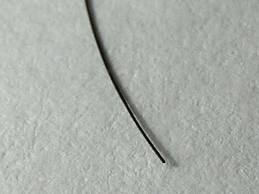
THE HAIR
by Michael Bradley
Edward looked in the mirror but saw no signs of change. I must be going crazy. He had been to the dermatologist again and they had referred him to the hospital. Edward was a scientist with a prestigious job at the Smithsonian and could not believe he was headed to the hospital over a hair on his leg. He had noticed it weeks ago, poking up like a solitary black spike an inch below his left knee. Oddly, it filled his dreams. He would wake up and turn on the lights only to see the solitary strand, defiant, seemingly looking back at him. What was it trying to tell him?
More and more Edward had difficulty concentrating at work due to his preoccupation with the hair. Even with his trousers covering it, he could not get the hair out of his mind. It seemed to twitch both physically and mentally. Of course, he had tried cutting it off. But every time he did, it was back an hour later, the same length and the same determination to get his attention.
In desperation Edward went to a colleague with a doctorate in psychology. The answer had been obvious and quick. Get it seen by a Dermatologist and have them remove it. His co-worker assured him that preoccupation with body irregularities was normal and even healthy. It was nature’s way to get us to remove problems early. Perhaps the hair was the result of some melanoma or squamous cell carcinoma. Best just to get it taken off and be done with it.
That was a week ago. The lab had just finished its tests and they were inconclusive. The follicle and surrounding tissue were unidentifiable. The testing cannot be sure all the affected tissue was removed, please consult your Dermatologist. The Dermatologist was not pleased. Never had they seen such a report. Due to its content, Edward was advised to go the surgical center immediately, as they were not equipped to cut away large portions at the Dermatologist’s office.
Edward looked down at his bare leg. The skin around the hair had not healed much from the slice taken off last week, but the hair stood un-phased by all the attention it had received. What the Hell is going on? Am I really checking myself into the emergency room over a single hair?
Edward dressed and got into his Prius and drove down to the Emergency Room. Every time he hit the break he felt the stiff hair pushing against his pant leg. He tried not to think about it, but ended up almost running a red light because he did not want to hit the brake on yellow. They have to be able to get this thing off of me or I’m going to go nuts!
The admissions nurse groaned when he told her his condition and pointed him to the crowded waiting room. He understood her disdain when there were people with real life saving needs coming in every fifteen minutes. But, she had not shooed him off when she heard his Dermatologist had told him to come in. Cancer could spread fast and she did not want the liability of sending him away. Jobs were scarce right now.
It was almost nine hours later they called his name. Luckily, they knew from talk behind the counter who he was and woke him with a few shakes. “Edward Denton? They are ready for you now.” He got up groggily, immediately feeling the hair dancing in his left leg like some burrowing animal. While it had twitched before, it went wild now. Finally, I will get this damn thing off my leg.
At first the tired doctor at the end of a tough shift actually laughed out loud when he read Edward’s chart. “A hair?”
Edward flushed in embarrassment, but he had waited too long for this and knew he had to deal with it. “Yes, Doctor. I know, it sounds stupid, but my Dermatologist insisted I come in right away.” The doctor nodded and mumbled something under his breath about ’boutique doctors.’
The nurse had Edward disrobe and put on the open backed blue paper gown, making the whole ordeal even more humiliating. When he was ready the doctor quickly examined the area, had it scrubbed with disinfectant and reached for the syringe. “I must admit it is odd to have grown back with the surrounding epidermis removed. There are certain species of blow fly that get under the skin and put a hair like strand out to breath. Have you been overseas lately?”
“No, I work at the Smithsonian. It’s been years since I had a vacation, and I spent that with my folks in New Hampshire.” Edward barely felt the injection of the local anesthetic.
“Well, in any case, we’ll get rid of it whatever it is.” The doctor picked up a scalpel. “You probably want to lean back for this. Most people don’t like to see their own blood.”
“If you don’t mind, I’d like to watch. It’s all I’ve been able to think about for weeks and I want to know what the Hell it is.” Edward looked determined so the doctor just nodded his head and started to cut.
“Nurse, come over and look at this. You see there is no sebaceous gland, bulb or papilla. It’s almost like a synthetic thread.” The doctor and nurse were fascinated now, and other end of shifters came over to look as well. “Have you had any accidents with sewing devices or industrial threading?”
“I’m sure I would have remembered something like that. No, it is just a hair that always comes back.” Edward was annoyed by all the extra eyes on his hair. He felt the hair twitching back and forth madly.
“Do you see that?” All the medical professionals moved in close to the doctor.
Edward seemed hopeful. “You mean you can see it twitch too? I was worried I was imaging it.”
“See it twitch? Heck, it’s like some kind of ice skater doing spins and everything.” The doctor took the scalpel away and asked for clamps. “We’ll just pull this thing out and see how far in it goes. You probably picked up some kind of foreign object and it is natural for a body to keep pushing it out, making it look like it is re-growing or moving.”
The doctor began to pull and the hair came out quickly, longer and longer. Soon, several feet were hanging from the clamp and it showed no end to it. He had the nurse and the others help him, and soon they were so dedicated to their efforts they lost track of what was happening.
Edward looked on with growing horror. As each length of hair came out, there was no blood, but he saw his leg getting smaller. It seemed that the leg tissue, bone and blood vessels were turning into even more hair. Now his leg was crawling with the thick black strands and they writhed like snakes. “Stop! You’re taking out my leg!”
“Nurse, give him a sedative. This thing goes deep, I think he is going into shock.” The doctor turned back to the patient’s leg and froze. The leg below the knee had completely changed to a coil of black fibers twisting and writhing where human tissue had been a just moment ago. The audience of medical staff stood back with a collective gasp and watched as the fibrous mass continued to convert Edward’s body, reaching up past the left knee and moving to his hip area.
Edward screamed and could not stop. Something inside him snapped. Some dam holding back a secret knowledge burst. “No!” His scream became primal, curdling the blood of the onlookers, now all standing back from the table in horror.
Edward then realized he was not Edward at all. He remembered he had been sent here long ago. He had waited, alone in the chunk of stone on his long voyage, surviving on this new planet, sent here to conquer. The host had been Edward Denton, the man who could not resist touching the meteorite sample which he had clung to for millennium. He had taken over the host and assumed his identity, but it had gone wrong. He had become his new host completely, forgetting his real nature.
Some part of him had remembered, had risen above the host to warn him, to remind him. The hair.
He was the hair.
It was too late now, he had failed. His only hope is that a piece of him would be preserved to find a new host. Perhaps the slice from the Dermatologist now at the lab, or the pieces he had shaved off and put in the trash or the toilet. Or even now, he could see with the last of his human host’s vision that the medical professionals looked on with disgust, fright, but with a hope of a Nobel prize in their minds.
If he got another chance, he would have to be careful. He would not convert so much that he forgot who he was. Next time, he would be more careful.
The doctor stood silent for a long time. “Call the Center for Disease Control. Get this area cordoned off and everyone in hazard suits. This could be the discovery of a lifetime, let’s not make any mistakes with this.”
The former Edward Denton lie on the table, a black mass of seething strands.
Filed under Uncategorized, Writing
Digging into NaNoWriMo? Working on something much shorter? Either way, Kurt Vonnegut has a few tips for your characters, your sentences, and how you treat your readers. It’s and oldie but goodie, shared by reader Zan.
In his book Bagombo Snuff Box: Uncollected Short Fiction, Vonnegut listed eight rules for writing a short story:
Vonnegut qualifies the list by adding that Flannery O’Connor broke all these rules except the first, and that great writers tend to do that.
reposted.
In our Writing Group Tonight we Had a Lond Discussion on Writing Voice, Style and When to use Italics for Internal Dialogue. Surprisingly, this somewhat uncomfortable and unwanted discussion finds itself regularly folded up at our dinner table wishing to be entertained ad nauseum.
I found this site had a nice approach to the topic and have reposted a good portion of one of their articles here: All of the borrowed parts are italics with my own lame interjections found among them in normal type.
Someone in your story has to tell us that Jeff pulled out his gun, that Samantha smiled at the tall stranger, that daylight was breaking over the valley. That someone is the narrator or “author’s persona.”
The author’s persona of a fictional narrative can help or hinder the success of the story. Which persona you adopt depends on what kind of story you are trying to tell, and what kind of emotional atmosphere works best for the story.
The persona develops from the personality and attitude of the narrator, which are expressed by the narrator’s choice of words and incidents. These in turn depend on the point of view of the story.
– It can be very dangerous to your writing if your narrator obtains its own ethics and judgements on events and equally a problem if your narrator in indistinguishable from your main character. Narrator – Johhny Bob got the drop on him as usual and put an end to the bloke’s wicked ways. My preference, “Where is that matey Steve so we can break his leg and collect fer what money he owes me so as I can get back to me drinking with that fresh tart off the harbor swing shift,” Thought Johnny Bob. Narrator – Steve sees Johnny Bob just in time, and pulls out his gun, and manages to get in a lucky shot to cap him before he could be nicked himself.
First-person point of view is usually subjective: we learn the narrator’s thoughts, feelings, and reactions to events. In first-person objective, however, the narrator tells us only what people said and did, without comment.
Other first-person modes include:
¶the observer-narrator, outside the main story (examples: Mr. Lockwood in Wuthering Heights, Nick Carraway in The Great Gatsby)
¶detached autobiography (narrator looking back on long-past events)
¶multiple narrators (first-person accounts by several characters)
¶interior monologue (narrator recounts the story as a memory; stream of consciousness is an extreme form of this narrative)
¶dramatic monologue (narrator tells story out loud without major interruption)
¶letters or diary (narrator writes down events as they happen; narrative told through letters is also known as the epistolary novel)
If the point of view is first-person, questions about the persona are simple: the character narrating the story has a particular personality and attitude, which is plausibly expressed by the way he or she describes events.
First person is extremely powerful to write and read, but I find it very dificult. It just might not be for you. It might not be for you audience either if they don’t like who is telling them the tail, or if it is unusual in the genre.
The second-person mode is rare: You knocked on the door. You went inside. Very few writers feel the need for it, and still fewer use it effectively.
If the point of view is third-person limited, persona again depends on the single character through whose eyes we witness the story. You may go inside the character’s mind and tell us how that character thinks and feels, or you may describe outside events in terms the character would use. Readers like this point of view because they know whom to “invest” in or identify with.
In third-person objective, we have no entry to anyone’s thoughts or feelings. The author simply describes, without emotion or editorializing, what the characters say and do. The author’s persona here is almost non-existent. Readers may be unsure whose fate they should care about, but it can be very powerful precisely because it invites the reader to supply the emotion that the persona does not. This is the persona of Icelandic sagas, which inspired not only Ernest Hemingway but a whole generation of “hard-boiled” writers.
If the point of view is third-person omniscient, however, the author’s persona can develop in any of several directions.
1. “Episodically limited.” Whoever is the point of view for a particular scene determines the persona. An archbishop sees and describes events from his particular point of view, while a pickpocket does so quite differently. So the narrator, in a scene from the archbishop’s point of view, has a persona quite different from that of the pickpocket: a different vocabulary, a different set of values, a different set of priorities. (As a general rule, point of view should not change during a scene. So if an archbishop is the point of view in a scene involving him and a pickpocket, we shouldn’t suddenly switch to the pickpocket’s point of view until we’ve resolved the scene and moved on to another scene.)
I find this type of perspective most helpful when writing in a Tom Clancy or Clive Cussler style where people and events occur all over the world, and somehow, they will all effect each other before the book is completed. You still need to give your reader some indication in each scene, or by the number of scenes, who the more important players are. For instance, half -way through the novel they should know most of the “good-guys” and “bad-guys” and only be unsure of those you wish them to be unsure of.
2. “Occasional interruptor.” The author intervenes from time to time to supply necessary information, but otherwise stays in the background. The dialogue, thoughts and behavior of the characters supply all other information the reader needs.
3. “Editorial commentator.” The author’s persona has a distinct attitude toward the story’s characters and events, and frequently comments on them. The editorial commentator may be a character in the story, often with a name, but is usually at some distance from the main events; in some cases, we may even have an editorial commentator reporting the narrative of someone else about events involving still other people. The editorial commentator is not always reliable; he or she may lie to us, or misunderstand the true significance of events.
Third-person omniscient gives you the most freedom to develop the story, and it works especially well in stories with complex plots or large settings where we must use multiple viewpoints to tell the story. It can, however, cause the reader to feel uncertain about whom to identify with in the story. If you are going to skip from one point of view to another, start doing so early in the story, before the reader has fully identified with the original point of view.
The author’s persona can influence the reader’s reaction by helping the reader to feel close to or distant from the characters. Three major hazards arise from careless use of the persona:
1. Sentimentality. The author’s editorial rhetoric tries to evoke an emotional response that the story’s events cannot evoke by themselves—something like a cheerleader trying to win applause for a team that doesn’t deserve it. A particular problem for the “editorial commentator.”
2. Mannerism. The author’s persona seems more important than the story itself, and the author keeps reminding us of his or her presence through stylistic flamboyance, quirks of diction, or outright editorializing about the characters and events of the story. Also a problem for the editorial commentator. However, if the point of view is first person, and the narrator is a person given to stylistic flamboyance, quirks of diction, and so on, then the problem disappears; the persona is simply that of a rather egotistical individual who likes to show off.
3. Frigidity. The persona’s excessive objectivity trivializes the events of the story, suggesting that the characters’ problems need not be taken seriously: a particular hazard for “hardboiled” fiction in the objective mode, whether first person or third person.
Verb tense can also affect the narrative style of the story. Most stories use the past tense:
I knocked on the door. She pulled out her gun.
This is usually quite adequate although flashbacks can cause awkwardness:
I had knocked on the door. She had pulled out her gun.
A little of that goes a long way.
Be careful to stay consistently in one verb tense unless your narrator is a person who might switch tenses:
So I went to see my probation officer, and she tells me I can’t hang with my old buddies no more.
Some writers achieve a kind of immediacy through use of the present tense:
I knock on the door. She pulls out her gun.
We don’t feel anyone knows the outcome of events because they are occurring as we read, in “real time.” Some writers also enjoy the present tense because it seems “arty” or experimental.
But most readers of genre fiction don’t enjoy the present tense, so editors are often reluctant to let their authors use it. I learned that the hard way by using present tense in my first novel, The Empire of Time; it was enough to keep the manuscript in editorial limbo for months, and the final offer to publish was contingent on changing to past tense. Guess how long I agonized over that artistic decision!
Having reblogged most of that and ommented on it, I would say three things:
1) Be able to identify the style you write in and try to stay in that style your entire story;
2) If you know you are only good at one or two voices – just stick with them.
3) If you are a complete master at writing, with the word at your sole command, think of the story you wish to tell, and use the voice, and the characters and scenes which you believe best tell the story.
While writers usually lie to millions of folks – it is what fiction is by definition, they are usually more honest amongst their own inner circle of writers. You don’t get to that spot easily. You spend ups and downs, you show your acceptance and they show theirs. Over time, life reveals people to you. Then, we few, we happy few, we Band of Brothers…(sorry, I break off easily into Henry V for no reason at all). But I digress…
Medicines that Affect Your Brain
They may lie to their spouses, friends, dates, roommates, etc, but when it comes right down to it, stoned and drunk people are thinking very little of their next book idea, and even less about actually writing something on it. Recreationally, they may turn to such things as an excuse to chase the Green Genie or to release their imagination, most of the time they are pissed off they don’t have ideas they think are actually good enough to justify they hard work of writing them down – so they get drunk.
That does not mean that their aren’t stars who are awesome stoned, I wonder what Morrison would have been like if he had been sober? Stephen King was a master novelist with or without drinks and drugs. Would Cujo have been better if he could remember having written most of it? I am only speaking of novelists for the most part here, not performance art, poetry, and other things that I think actually were created to do while high.
In my own experience, I have been on Morphine and Percoset for some time now, legally, through doctors and pain specialists. First, for two months waiting to excise my dead bones. The pain from the bones was too much for me to get things done. With the pain killers, the pain was dulled enough I could write, but my memory came and went on small items. (Wow, I wrote that same scene in TWO chapters back to back, not just one…) Now, I have had my dead upper femur, joint and hip removed. I am still on post op morphine and percoset and I have to tell you – Choice A – pain from Hell you would take anything to stop, Choice B – still a lot of pain but bizarre bad dreams, sweats, and a general lack of ideas that when written on paper, form a sentence.
I am recovering, thanks to God, your prayers, well wishers, my wife who takes care of me and my wonderful doctors, so I hope this recovery time is short. I have lucid times totalling about 6 hours per day in which I get my contract work done, but not much on my own fun stuff. I grew up in the drug scene in California in the 60s and 70s but did not participate much. For a few years around college I drank too much but that was about it. Still, then and now, I know many who choose the “lifestyle”. Those who take me into their confidence have all so far agreed that they usually get high to avoid stressing on trying to write when they are stuck. Very few get their ideas in a clowded state.
The Troubled Artist
I think this myth is a correlation mistaken as a causal relationship. Forgive me my economics… To make it clearer – Study shows that drinking diet sodas makes people fatter! We see that crap all the time. Then, if they even print it, you find the study. 1,200 people were interviewed. Those who said they drank more diet sodas were 40% fatter than those that did not. That is a correlation mistaken as a causal relationship. I have no doubt that fat people drink more diet soda. They refuse themselves the sweeter cola because they are fat! My hypothesis for the same data is that fat people, trying to maintain or lose weight, choose to drink diet sodas. It is physically impossible to provide a human body an object containing zero calories and expect it to gain weight.
I think a lot of Artists and Novelists who are outstanding live ‘troubled lives”. I would say that half of people working as dishwashers at bad restaurants lead “troubled” lives. I would guess nearly 100% of prostitutes or people starving in Africa live “troubled lives.” So why then are there not agents and publishers seeking out those people to write them books? I think it is simple correlation. Most people lead troubled lives, some happen to be authors and poets (I mean by some arguments only around 2,000 novelists at any time are living off their book income). I reject that troubles make you write better – because you “know.” Unless you sing or write the Blues, and then any fool knows it is the truth.
Again, within the inner circle of published authors, you are more likely to hear about illness, surgeries, dying loved ones, kids or parents with problems, money issues, cars that stopped working, looking for a job, housing issues, etc. I have not once heard one say, I am so glad I have all these troubles, because my writing is showing so much more emotional depth now. Usually, the say, “that project is on hold for days, months, years, because of…hope I can get back on it… may never finish it…
My Writing Mode
Sitting in front of the computer screen, an ice cold Diet Pepsi (because I am fat I guess), a good mood, a clear head, my three dogs lying on my feet or the feet of my wife next to me on her own computer. That is hitting on all cylinders for me. Pain, troubles, drugs, drama are all the opposite of what let’s me write.
I had a post much earlier on this blog on those who die too young due to the “troubled lifestyle”. River Phoenix, Whitney Houston, Amy Winehouse, Heath Ledger, Michael Jackson and on and on. As a tip from a fellow writer. It won’t help your writing. If you want to write dark stuff, you will experience enough in this world and see enough to have plenty of material.
Filed under Humor and Observations, Writing
I have been a full time novelist for just over 13 months. In that time I have had around twenty short stories published and two books, with a third novel coming out this summer, and a fourth planned for around Christmas. On the scale of great writers, I am not even on the scale. I learn through constant research, other authors, critique groups, magazines, reading a lifetime of books and trial and error. I suspect this is how all writers learn their trade. I say this because I am no expert yet, nor may I ever be. However, as I learn things, I plan to put these very basic and obvious lessons on paper, in hopes they may save a fellow writer a bit of their own agony along the way. Feel free to disagree with me, as with all things, I may be totally wrong.
1) Know how long your story is going to be? You don’t need an exact wordcount or number of pages mind you, but some idea. Is it tweet fiction, flash fiction, a short short story, a long short story, a novella, a novel, first in a series? The reason this is critical, is that the number of themes, characters and story and development arcs vary widely based on the length. I wrote some tweet fiction that got published. It has to be entire stories that fit in one tweet, like 140 characters or so, not words, characters. There is very little in the way of development, conflict, suspense building, intrigue and character arcs in 140 characters. Throw those rules out, trust me. In a short story, you make your point, you take a slice of the pizza, wanting the reader to eat the rest, but they only bought one slice. In a novel, which I find is my most comfortable length personally, you have lots of time for nuance, discovery, character arcs and adventure. So, I always wonder how someone as a fellow author says, I am not sure how long this will be. I don’t know how you can write it without some idea.
2) What is the Story? I am not big on outlines and planning out the entire blueprints ahead of time because it takes some of the fun of creation away from me. But I have read portions of books that were very strange to me. It starts with an interesting character, then an interesting place, then a hint of murder or mystery, then a historical event, then something, then something else. I ask, what about this guy at the beginning? Oh, he’s not that important. What about that cool town? Oh, I don’t come back to that. Sometimes stories can be about too many things. Sometimes one story could be eight great books instead of one really long confusing one. I would suggest that even if you aren’t sure where things are going, knowing the main characters, setting, and kind of an idea of the ending helps.
3) What is the Perspective? Is it all seen through the eyes of one person as they do it? Is it remembered? Is it revealed through a series of events or letters? Is it third person omniscient? Is there a narrator, what is the narrator’s voice? Do we get to see inside anyone’s thoughts? I find myself challenged a lot in my writing on this one. It is easy to have your narrator start sounding like your main character, opinions and all. It is distracting when some side character reveals their deepest thoughts out of the blue and never again. Perspective is probably the most important decision in a book in my opinion. Maybe that is because I am so limited in my mastery of it. I wish I could write first person as it happens. Those authors dazzle me, what power! If you are confused by the topic of perspective, you should probably read up on it, or buy a beer for a starving author and pick his or her brain.
4) What is the Genre? People glare at me when I ask this. Sometimes it is followed by a general defensive argument about why genres don’t matter. But they really do matter in my opinion. I like to read science fiction, history, fantasy, heroic fantasy, adventure, military history, and science. I like to sample other genres, but if I know something is romance, religious, memoirs, or slice of life, I’m not going to buy it. My wife is the exact opposite. She rarely reads anything I am interested in, and I rarely wish to read her stories of three Chinese sisters who grow up in messed up times, suffer, then come to America and smile while washing the dishes. The thing is, all genres have their audiences, and those audiences are drawn to them for certain types of reasons. Cross genres, mixes, whatever is fine by me. But if you as the author do not know what genre(s) you are writing for, it will be hard to know what the reader wants. Heck, it will be hard to tell the bookstore which shelf to put it on.
5) What is the Point of Your Book? Why Would You as a Reader Tell People to Read it? Again, there are no right or wrong answers, but there should be an answer. Do you have this idea burning inside you that has to get out? Are you trying to jump on the YA vampire band wagon? Do you want people to laugh, to cry, to learn? Are you making a political or social statement? Is it just so good of writing that each pages glows and the wise will use it to discourage future MFA students with its sheer unatainable brilliance? Again, I know many authors, many quite good, who stumble over this answer.
I will answer this question for you from my own reasoning. When I was young, I had a terrible childhood. I learned to read at a young age and was able to explore the world, ancient cities, conquer evil wizards, and live hundreds of lives and go to places which took my mind off my own horrible existence. The point of my books are to provide that same experience to others. My books are to be fun and enjoyable to read. I want a reader to smile when they are done and say to themselves, “I really enjoyed reading that.” It takes the pressure off too, because I never have to try to be an awesome literary star, dazzling with my prose and perhaps never being good enough. But having read thousands of adventure fantasy books, I know what I enjoyed about them, and I try to bring that same sense of fun and adventure to others.
Let me know what you think. Am I all wrong? If you think this is genius, make sure to comment, as writers have fragile egos which always appreciate stroking…
Filed under Writing


 Michael Bradley - Time Traveler