Monthly Archives: February 2013

Random Humor

Here are some collected random humor pictures for your enjoyment.

Leave a comment

Filed under Humor and Observations

Was Dracula an Irishman?

Bram Stoker’s Dracula inspired by an Irish legend?

Dracula inspired many films - the vampire count is the most filmed character in the world after Sherlock Holmes.

Dracula inspired many films – the vampire count is the most filmed character in the world after Sherlock Holmes.

Did an early Irish vampire legend influence the creation of Count Dracula? There are a group of people in the north of Ireland who are sure Bram Stoker was influenced by a old story from their area.

When the Irish writer Bram Stoker published his novel ‘Dracula’ in 1897, it quickly grew into a worldwide publishing sensation. To this day it is Bram Stoker who has done most to shape the modern conception of vampires which we see in movies and fiction – from Lost Boys to the Twilight series.

There has been a lot of speculation about where Bram Stoker got the idea for the character of Dracula, and the unique characteristics he gave this fearsome vampire. Much has been made of the connection to Eastern-European vampire myths, and the medieval prince known as Vlad the Impaler or Vlad Tepes.

However there is also lesser-known but fascinating local Irish myth of an evil magician who could not be killed and came back from the grave three times, This is a highly unusual myth for Ireland, where there is little tradition of ‘undead’ stories. Thus it was a legend likely to attract the attention of an Irish writer such as Bram Stoker who was very interested in folklore.

The people who live near the final resting place of this Irish undead, have told me that the legend was the original inspiration for Bram Stoker’s Dracula. Not only that, but they tell me that this burial site continues to be associated with strange and disturbing events to this day.

The Story of Abhartach – the original Irish vampire

In County Derry in Northern Ireland, there is a small townland named ‘Slaghtaverty’ which in Irish means ‘ Abhartach’s Tomb’. When I was working in this rural area recently on a community history project, the locals told me the story of how the townland got it’s name, how the legend inspired Bram Stoker to create ‘Dracula’ and how strange events continue to happen in the vicinity of the large stone tomb that stands there.

Abhartach (pronounced Av-ar-chack), so the story goes, was an evil ruler in the area, a stunted man but a powerful magician. He terrorized all the people for miles around, until they wished him dead. But as none of his subjects had the courage to kill the magical man themselves they got a warrior from a neighbouring area to do it. This warrior, called Cathain, duly killed Abhartach and buried him upright as was traditional for a Celtic chief at this time.

However, the next day Abhartach appeared once more among his people, this time demanding a sacrifice of blood from the wrists of his subjects. He had become one of, what was called in Irish, the marbh beo – the living dead. Three times Cathain killed and buried Abhartach and three times he rose from his grave seeking blood from his people. Until the people, in their desperation, turned to a Christian saint who lived in the area and asked him how they could be rid of this evil undead creature forever.

Cathain was instructed by the saint to kill Abhartach once more but this time to do it with a sword made of yew wood, to bury him upside down, with a large stone on top and then to plant thorn trees around the grave. This Cathain did and Avartach has never been seen again, though his grave still stands in a field in the townland of Slaghtaverty, covered in an enormous stone slab, a lonely thorn tree growing beside it.

Other influences on Bram Stoker’s Dracula

Of course Bram Stoker would not have taken his inspiration for Count Dracula from a single source. Stoker was well aware of Eastern European folklore, as well as earlier Gothic vampire stories such as Politori’s ‘Vampyre’ and Carmilla by Sheridan Le Fanu.

Vlad the Impaler of Romania, a cruel Medieval prince, has often been sighted as inspiration for Dracula. While he may have lent Dracula his nickname (Dracul – son of the devil) he doesn’t share many characteristics with the blood-sucking Count; Vlad the Impaler was a cruel leader but he is never recorded as having drunk blood, or as having lived beyond the grave.

You can read more on this topic at my article: Count Dracula: myth, fiction and historical reality.

Abraham 'Bram' Stoker: Author of Dracula.

Abraham ‘Bram’ Stoker: Author of Dracula.

Did Abhartach influence Stoker’s Count Dracula?

The parallels between Abhartach and Bram Stoker’s Dracula are extremely interesting. The idea of an evil man who has a magical way to overcome death and rise from the grave, is familiar to anyone who has read Dracula or who has seen the film adaptations. Further similarities include the demands blood sacrifice from his subjects – the image of taking blood from weaker people ispowerfully interwoven with thevampire myth as we know it today. As is the idea that there is a special way to kill the undead – we are all very familiar today with the idea that vampires must be killed by a wooden stake, or buried upside down, just like the saint said Abhartach could be killed over a thousand years ago.

Although today few but the locals who live near the grave have heard of Abhartach, it was once a well-reported story in Ireland. The story is said to date from the 5th or 6th century BC – making it one of the world’s earliest vampire legends. It was treated as true history and published in the book A General History of Ireland by Dr Geoffrey Keating in 1631. It was later collected and printed as an interesting local legend included in the Ordnance Survery of County Londonderry in 1835 and the story of Avartach was further reprinted by Patrick Weston Joyce in A History of Ireland in 1880.

It is quite probable that Bram Stoker knew of this story and it may have influenced his decision to write a vampire novel. What is particularly interesting is that two of the earliest and most influential vampire novels were written by Irishmen – Carmilla by Sheridan Le Fanu and Dracula by Bram Stoker. Although they were surely influenced by European legends and Gothic literature as well, there is definitely a case for the argument that they were also inspired by the local Irish legend of Abhartach.

A textile depiction of 'Dracula's Grave'. The thorn tree still grows there today.

A textile depiction of ‘Dracula’s Grave’. The thorn tree still grows there today.

Strange events at ‘Dracula’s Grave’

Whatever the case for Stoker’s connection with Avartach’s grave, the tomb has a reputation for strange and unsettling events which continues into living memory of the local residents. In fact people in the area refer to the tomb as ‘Dracula’s Grave’. They rarely visit the site – and never after dark!

Not so many years ago the owner of the land where the tomb sits decided that it was time to get rid of the grave and the tree and to take full possession of his field. A group of men gathered together to do the work of moving the stones and a chainsaw was brought to cut down the tree. But when they tried to start the chainsaw to cut down the thorn tree the saw stalled and would not work. So a second chainsaw was brought down to the field and it too would not start which was too much of a co-incidence. The men began to feel distinctly unsettled.

But the final straw came when the tractor they had brought along to pull away the tombstone started of its own accord and drove itself to the other side of the field, crushing one of the chainsaws into the mud as it did so. The men fled. And no attempt to remove the tomb or the thorn tree has been made since.

6 Comments

Filed under Humor and Observations, Writing

Awesome Writer Needs Agent! Please Help!

My great friend, David Nicol has completed a novel that I have read through and it is AMAZING!  It centers on an American marrying into a Scottish family in the 1970’s.  What My Big Fat Greek Wedding did for Greek Families, or what Polish Wedding did for Poles, this book succeeds in accomplishing for the Scottish.  It is an amazingly funny, uplifting, and dramatic glimpse into the lives of real people living real lives.  I could just read about their adventures forever.  This is David’s first novel and he needs an agent and publisher who want to get rich off a wonderful new talent.  Please give him a chance, and read his manuscript.  Below is his picture and a query letter:

david


Dear,

I am seeking representation for Mac and June: Love In The Time Of Oil, my completed commercial fiction novel, set in 1970’s Aberdeen, Scotland.

When twenty-three-year-old American, Mac Wagner, falls for June Meldrum in an Aberdeen dancehall, he discovers that love in a strange land (Scotland) – and the quirky family that accompanies her, are a revelation for his feelings. Shackled by childhood issues of unloving parents, Mac finds that love comes in many guises, not least in the form of June’s grumpy Grandpa, a man with hidden talents, secrets, and a wicked tongue.

Along the way, Mac falls in love not only with June, but with the whole, raucous Meldrum family.  June’s mother, Bessie, discovers a lump in her breast, her Aunt Peggy has a torrid affair with a young Italian waiter, and Grandpa reveals a family secret to Mac that only the old man knows about. Mac is forced by the oil company he works for to choose between a promotion back in the States, and termination. Unwilling to pile more pressure on the Meldrums while June’s mother awaits her fate, and the family deals with Peggy’s infidelity, he keeps this work predicament to himself, confiding only in the old man he has come to love and respect.

Mac And June is the feel-good tale of a young man’s introduction to Scotland and her people. Through humor and good-natured banter, the story immerses us in a different time and place.

While intended for a mainstream audience, the book contains adult language, irreverent humor, as well as pervasive drinking and smoking.

I have been published in Twisted History, an anthology of short stories. My work has also appeared twice in Palo Verde Pages, an Arizona literary magazine. I am a native of Scotland, but have lived in the USA for over twenty years.

The first five pages of text are pasted below. Thank you for taking the time to consider my work. I look forward to hearing from you.

Kind regards,

James David Nicol

davidnicol@me.com

Leave a comment

Filed under Writing

Cute Dogs for Your Monday Blues

Your every monday hit of cute dogs to help start your week off well.  Enjoy:

Leave a comment

Filed under Animals

35 ancient pyramids discovered in Sudan

35 ancient pyramids discovered in Sudan

By Owen Jarus

Published February 07, 2013

LiveScience

  • sedeinga pyramids.jpg

    Among the discoveries are pyramids with a circle built inside them, cross-braces connecting the circle to the corners of the pyramid. Outside of Sedeinga only one pyramid is known to have been built in this way. (Vincent Francigny/SEDAU)

  • sedeinga-pyramids-1.jpg

    This aerial photo shows a series of pyramids and graves that a team of archaeologists has been exploring at Sedeinga in Sudan. Since 2009 they have discovered at least 35 small pyramids at the site, the largest being 22 feet in width. (B-N Chagny, SEDAU/SFDAS)

  • sedeinga-pyramids-5.jpg

    People were buried beside the pyramids in tomb chambers that often held more than one individual. This image shows a child who was buried with necklaces. (Vincent Francigny/SEDAU)

At least 35 small pyramids, along with graves, have been discovered clustered closely together at a site called Sedeinga in Sudan.

Discovered between 2009 and 2012, researchers are surprised at how densely the pyramids are concentrated. In one field season alone, in 2011, the research team discovered 13 pyramids packed into roughly 5,381 square feet, or slightly larger than an NBA basketball court.

They date back around 2,000 years to a time when a kingdom named Kush flourished in Sudan. Kush shared a border with Egypt and, later on, the Roman Empire. The desire of the kingdom’s people to build pyramids was apparently influenced by Egyptian funerary architecture.

‘They reached a point where [the necropolis] was so filled with people and graves that they had to reuse the oldest one.’

– Vincent Francigny, a research associate with the American Museum of Natural History in New York 

At Sedeinga, researchers say, pyramid building continued for centuries. “The density of the pyramids is huge,” said researcher Vincent Francigny, a research associate with the American Museum of Natural History in New York, in an interview with LiveScience. “Because it lasted for hundreds of years they built more, more, more pyramids and after centuries they started to fill all the spaces that were still available in the necropolis.”

The biggest pyramids they discovered are about 22 feet wide at their base with the smallest example, likely constructed for the burial of a child, being only 30 inches long. The tops of the pyramids are not attached, as the passage of time and the presence of a camel caravan route resulted in damage to the monuments. Francigny said that the tops would have been decorated with a capstone depicting either a bird or a lotus flower on top of a solar orb.

The building continued until, eventually, they ran out of room to build pyramids. “They reached a point where it was so filled with people and graves that they had to reuse the oldest one,” Francigny said.

Francigny is excavation director of the French Archaeological Mission to Sedeinga, the team that made the discoveries. He and team leader Claude Rilly published an article detailing the results of their 2011 field season in the most recent edition of the journal Sudan and Nubia.

The inner circle
Among the discoveries were several pyramids designed with an inner cupola (circular structure) connected to the pyramid corners through cross-braces. Rilly and Francigny noted in their paper that the pyramid design resembles a “French Formal Garden.”

Only one pyramid, outside of Sedeinga, is known to have been constructed this way, and it’s a mystery why the people of Sedeinga were fond of the design. It “did not add either to the solidity or to the external aspect [appearance] of the monument,” Rilly and Francigny write.

A discovery made in 2012 may provide a clue, Francigny said in the interview. “What we found this year is very intriguing,” he said. “A grave of a child and it was covered by only a kind of circle, almost complete, of brick.” It’s possible, he said, that when pyramid building came into fashion at Sedeinga it was combined with a local circle-building tradition called tumulus construction, resulting in pyramids with circles within them.

An offering for grandma?
The graves beside the pyramids had largely been plundered, possibly in antiquity, by the time archaeologists excavated them. Researchers did find skeletal remains and, in some cases, artifacts.

One of the most interesting new finds was an offering table found by the remains of a pyramid. . It appears to depict the goddess Isis and the jackal-headed god Anubis and includes an inscription, written in Meroitic language, dedicated to a woman named “Aba-la,” which may be a nickname for “grandmother,” Rilly writes.

It reads in translation:

Oh Isis! Oh Osiris!

It is Aba-la.

Make her drink plentiful water;

Make her eat plentiful bread;

Make her be served a good meal.

The offering table with inscription was a final send-off for a woman, possibly a grandmother, given a pyramid burial nearly 2,000 years ago.


Read more: http://www.foxnews.com/science/2013/02/07/35-ancient-pyramids-discovered-in-sudan/#ixzz2KX2Ox858

Leave a comment

Filed under Humor and Observations

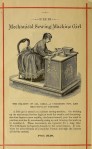
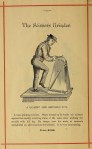
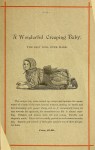
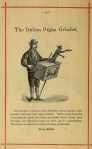
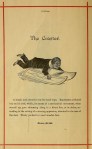
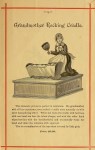
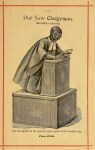
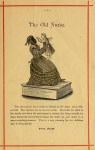
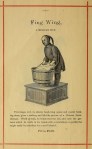
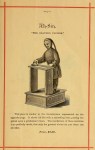
Disturbingly Racist 1882 Clockwork Toy Catalog – And Django Unchained Slave Dolls

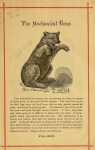
The first thing I did when I saw this posted was to be shocked at the types of clockwork toys being sold in 1882, a good 17 years after the end of the Civil War, and not in the South, but in the North.  The second was to confirm this was a valid source, which I confirmed with three other original sources including the Library of Congress.   I post this disclaimer because I strongly object to the toys herein and they serve a lesson on how far we have come, and how much farther we have to go.

In the recent movie Django Unchained, the depiction of the pre-war South is writ large, not as inaccurate as Quentin Terantino’s Inglorious Bastards where Hitler gets killed and the whole World War 2 history is rewritten, but enough to make an avid historian such as myself cringe many times nonetheless.  Still, the pulp fiction ultra-violence was not what offended me the most, but the merchandisers actually manufacturing and selling Django Slave Doll action figures.  REALLY?  Even Ebay, where you can auction yourself, pornography and all manner of things, had sense to know these were unacceptable and banned their sale.  Here is a picture:

django slave dolls


Do we really want children playing with slave master and slave dolls?  What type of game would they play if their parents were crass enough to take them to that movie and then buy these toys?  Are there whip and servant quarters accessories?

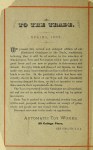
So it was the same outrage I felt over this 1882 Clockwork Toy Catalog, shown below in its entirety.

Harriett Beecher Stowe wrote the novel Uncle Tom’s Cabin in 1851 as a serial, made into a novel format in 1852.  By just 1853, it has sold over 500,000 copies world wide.  As an author, I know even today, selling 500,000 books in a year would be amazing.  It basically had the popularity of Harry Potter, Twilight, or other mass selling books.

Uncle Tom’s Cabin was a rejection of the existing stereotypes of minstrel shows; Stowe’s melodramatic story humanized the suffering of slavery for White audiences by portraying Tom as a Christlike figure who is ultimately martyred, beaten to death by a cruel master because Tom refuses to betray the whereabouts of two women who escape from slavery.

Senator Charles Sumner credited Uncle Tom’s Cabin for the election of Abraham Lincoln and Lincoln himself reportedly quipped that Stowe had triggered the American Civil War.  Frederick Douglass praised the novel as “a flash to light a million camp fires in front of the embattled hosts of slavery”

So it is that just 29 years later, after Uncle Tom’s Cabin is a best seller of nearly all time, that a New York toy company is making Uncle Tom Minstrel toys for kids.  The caption includes, “funny as it is, there is also something pathetic in it, too”.  This is in addition to many other degrading toys including a “Heathen Chinese.”  I had hoped to post this to show how we have changed.  However, the utter insensitivity of the Django Unchained people to sell slave owner and slave dolls show perhaps we are still a stupid and backward people.  God created us all in His image, equal, each with a body, each with a soul.

The Library of Congress Record
Author: Automatic toy works, New York. [from old catalog]
Subject: Toys
Publisher: New York, Lockwood & Crawford, stationers
Language: English
Call number: 5886719
Digitizing sponsor: The Library of Congress
Book contributor: The Library of Congress
Collection: library_of_congressamericana

Full catalog record: MARCXML

Selected metadata

Page-progression: lr
Scanningcenter: capitolhill
Mediatype: texts
Identifier-bib: 00215344708
Identifier: automatictoywork00auto
Scanner: scribe9.capitolhill.archive.org
Ppi: 400
Camera: Canon 5D
Operator: scanner-elizabeth-kornegay@…
Scandate: 20110128151537
Imagecount: 22
Identifier-access: http://www.archive.org/details/automatictoywork00auto
Identifier-ark: ark:/13960/t6640k162
Ocr: ABBYY FineReader 8.0
Sponsordate: 20110131

1 Comment

Filed under Humor and Observations, Uncategorized

Steampunk Aircrew Part 4

Unfortunately, I am still recovering from the nasty flu virus going around so I am missing the Tucson-The Time Travelers’ Outpost at the Trunk Show Tour of 4th Ave at which I was scheduled to appear and sign my Steampunk books.  As a gratuitous plug – The Travelers’ Club and the Ghost Ship by Michael Bradley is currently just 99 cents on Kindle:

And the sequel, The Travelers’ Club – Fire and Ash is just $4.99 and can be found here:

Both cool Steampunk full length novels with a series of five volumes in the works.  I do not make anything from this site except good friends and fun, so feel free to buy a book if you wish and make my day even happier.

Back to the aircrew – This fourth installment is to crew your fourth airship.  You cannot pick them all.  Do you want to be a sky smuggler, merchant, pirate, loyal military vessel, explorer?  The air is yours, you decide.

Leave a comment

Filed under Humor and Observations, Uncategorized

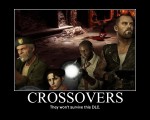
More Crossovers and Mashups

Once again a selection of crossovers and mashups, basically two things put together in a hopefully funny way.  There are several recurring posts you can find by searching the home page for “crossovers”

1 Comment

Filed under Humor and Observations

Chronology of Events in Science, Mathematics, and Technology

I am sorry for the small print below.  However, these are links to an amazing site for researchers and the generally curious.  By category below, find out the timeline for inventions and breakthroughs in major fields of science and human endeavor.  Very helpful for us historical fiction writers.

The Chronology of Events in Science, Mathematics, and Technology


Chronology of Biology and Organic Chemistry
Chronology of Medicine and Medical Technology 
Chronology of General Technology
Chronology of Pure and Applied Mathematics
Chronology of Geology
Chronology of Geography, Meteorology, Paleontology, Science Philosophy and Publishing
Chronology of Agriculture and Food Technology
Chronology of Clothing and Textiles Technology
Chronology of Motor and Engine Technology
Chronology of Transportation Technology
Chronology of Underwater Technology
Chronology of Communication Technology
Chronology of Photography Technology
Chronology of Calculator and Computer Technology
Chronology of Time Measurement Technology
Chronology of Temperature and Pressure Measurement Technology
Chronology of Microscope Technology
Chronology of Low Temperature Technology
Chronology of Rocket and Missile Technology
Chronology of Materials Technology
Chronology of Lighting Technology
Chronology of Classical Mechanics
Chronology of Electromagnetism and Classical Optics 
Chronology of Thermodynamics, Statistical Mechanics, and Random Processes 
Chronology of States of Matter and Phase Transitions 
Chronology of Quantum Mechanics, Molecular, Atomic, Nuclear, and Particle Physics
Chronology of Particle Physics Technology
Chronology of Gravitational Physics and Relativity
Chronology of Black Hole Physics
Chronology of Cosmology
Chronology of Cosmic Microwave Background Astronomy
Chronology of Background Radiation Fields
Chronology of Galaxies, Clusters of Galaxies, and Large Scale Structures
Chronology of Interstellar and Intergalactic Medium
Chronology of White Dwarfs, Neutron Stars, and Supernovae
Chronology of Stellar Astronomy 
Chronology of Solar Astronomy
Chronology of Solar System Astronomy 
Chronology of Astronomical Maps, Catalogs, and Surveys 
Chronology of Telescopes, Observatories, and Observing Technology
Chronology of Artificial Satellites and Space Probes


2 Comments

Filed under Humor and Observations

Paper Anatomy Art

Posted by Rebecca on Smilingpockets.com

By rebecca | Posted in Art & DesignPapercraft |

anatomical-cross-section-paper-quilling-3

paper-anatomy-nilsson

The incredible skill of paper artist Lisa Nilsson made this anatomical cross section look like the real one. Inspect closer; it’s actually made of rolled papers, a tedious process called quilling. The artist’s remarkable artworks are currently on display at Boston Art Gallery.

(via Colossal)

1 Comment

Filed under Humor and Observations