Monthly Archives: March 2013

Celebrating the “Nutty” Artistry of Steve Casino

Celebrating the amazing and “nutty” artwork of Steve Casino, “painter of nuts.”  Here is a link to his site showing his hand crafted peanut shell artistry.  Following are some samples from this site.  Pretty cool.  My ongoing effort to highlight artists with unique styles or materials.  Earlier posts include jelly bean art, fractal images, book art, etc.  Typing “art” into the search box on the Home page should bring most of them up.

http://stevecasino.com/

1 Comment

Filed under Humor and Observations, Uncategorized

Man Swallowed by Golf Course

Illinois Sinkhole: Mark Mihal Survives Getting Swallowed On Golf Course

AP  |  Posted: 03/12/2013 10:46 am EDT  |  Updated: 03/13/2013 9:19 am EDT

 
Illinois Sinkhole

Golf courses are great, but there’s a hole in one.

WATERLOO, Ill. (AP) — When it comes to dealing with this divot, score one for golfer Mark Mihal.

The St. Louis Post-Dispatch (http://bit.ly/13QvcoX) reports that the mortgage broker from Creve Coeur, Mo., is recovering after a sinkhole opened up beneath him Friday on the fairway at the 14th hole of a southwestern Illinois golf course.

The pit that swallowed him was 18 feet deep and 10 feet wide.

illinois sinkhole

The 43-year-old Mihal was hoisted to safety with a rope. The encounter at Annbriar Golf Course near Waterloo just southeast of St. Louis left him with a dislocated shoulder.

Although Mihal says he still considers the course one of his favorites, he’s having second thoughts about returning there, saying “it’d be kind of strange playing that hole again, for sure.”

Information from: St. Louis Post-Dispatch, http://www.stltoday.com

Leave a comment

Filed under Humor and Observations

The Great Paris Exposition Telescope

1900:

The Great Paris Exposition Telescope

“The Great Paris Exhibition Telescope with a 1.25 m diameter lens was the largest refracting telescope ever constructed.  When the year-long exposition was over, The company which had organized in build the telescope declared bankruptcy and were unable to sell it. It was ultimately broken up for scrap; the lenses are still stored away at the Paris Observatory.”– Wikipedia

Leave a comment

Filed under Humor and Observations

What Antarctica looked like before the ice

What Antarctica looked like before the ice

By Becky Oskin

Published March 08, 2013

LiveScience

  • antarctica_3d

    This 3-D reconstruction of the topography hidden under Antarctica’s two-mile-thick coating of ice was made using data from radar surveys. The continent was relatively flat before glaciers started carving deep valleys 34 million years ago, a new (Stuart N. Thomson/UA department of geosciences)

Like Alaska’s mighty Yukon, a broad river once flowed across Antarctica, following a gentle valley shaped by tectonic forces at a time before the continent became encased in ice. Understanding what happened when rivers of ice later filled the valley could solve certain climate and geologic puzzles about the southernmost continent.

The valley is Lambert Graben in East Antarctica, now home to the world’s largest glacier. Trapped beneath the ice, the graben (which is German for ditch or trench) is a stunning, deep gorge. But before Antarctica’s deep freeze 34 million years ago, the valley was relatively flat and filled by a lazy river, leaving a riddle for geologists to decode: How did Lambert Graben get so steep, and when was it carved?

The key to Lambert Graben’s history was found in layers of sediments just offshore, in Prydz Bay. In a new study, Stuart Thomson, a geologist at the University of Arizona (UA) in Tucson, looked into the past by decoding sands deposited by the river, and the messy piles left behind by the glacier. The river sands are topped with a thick layer of coarser sediment that signals the onset of glacial erosion in the valley, the researchers found. The erosion rate more than doubled when the glaciers moved in, Thomson said.

‘Glaciers can carve deep valleys quickly — and did so on Antarctica before it got … covered by 1 or 2 miles of thick, stationary ice.’

– Peter Reiners, a UA geologist 

“The only way that could happen is from glaciers,” he said. “They started grinding and forming deep valleys.”

Understanding when glaciers first wove their way across Antarctica will help scientists better model the ice sheet’s response to Earth’s climate shifts, the researchers said.

“There’s a big effort to model how glaciers flow in Antarctica, and these models need a landscape over which glaciers can flow,” Thomson told OurAmazingPlanet. “Once these models can predict past changes, they can more accurately predict what will happen with future climate changes.”

The sediments also hold clues to the tectonic evolution of East Antarctica, and a mountain range buried beneath the vast, thick ice sheet. [Album: Stunning Photos of Antarctic Ice]

The findings are detailed in the March 2013 issue of the journal Nature Geoscience.

History of the ice
Lambert Graben formed during the breakup of Gondwana, an ancient supercontinent, a process that happened in stages. Antarctica, India and Africa tore apart in the Late Cretaceous (about 80 million years ago). The split created long, linear valleys oriented perpendicular to the continental coastlines. At the time, Earth’s climate was warmer than it is today, and as Antarctica moved southward, settling into its home over the South Pole, the continent teemed with plants and animals.

Scientists can partially reconstruct this past environment with fossils and through radar that peers beneath the ice to map the shapes of the rock below. A 3D map of Antarctica today shows chasms carved by glaciers, rugged mountains and other remnants of its warmer existence.

But the surveys tell nothing about how the landscape looked before the ice carved out all those features. “People have speculated when the big fjords formed under the ice,” Thomson said. “But no one knows for sure until you sample the rocks or the sediments.”

Thomson and his colleagues analyzed sediments drilled from the ocean floor just offshore of Lambert Glacier, as well as from onshore moraines, the rock piles pushed up by glaciers. Tests on minerals in the sands and muds helped them figure out when and how fast the surface eroded.

Here’s what the sediments say: From about 250 million to 34 million years ago, the region around Lambert Glacier was relatively flat, and drained by slow-moving rivers, Thomson said. About 34 million years ago, which coincides with a cooling of Earth’s climate, big glaciers appeared, shaping the spectacular valley now hidden under thick ice.

“It seemed like it occurred very early on, 34 [million] to 24 million years ago,” Thomson said. Erosion slowed dramatically as the ice sheet stabilized about 15 million years ago, he said.

Some 5,250 to 8,200 feet of rock have since disappeared, ground down by glaciers and carried away by the ice, according to the study.

“Glaciers can carve deep valleys quickly — and did so on Antarctica before it got so cold that the most of it got covered by 1 or 2 miles of thick, stationary ice,” Peter Reiners, a UA geologist and study co-author, said in a statement.

Clues to buried mountain range

Lambert Graben extends about 375 miles inland, ending at one of Antarctica’s most enigmatic features — an entombed mountain range called the Gamburtsev Mountains. Buried under the ice, the mountains rose during Gondwana’s rifting. Geologic evidence suggests two pulses of upliftfrom rifting events about 250 million years ago and 100 million years ago pushed up the jagged peaks.

But Thomson and his colleagues did not find evidence in the sediments for a second uplift phase 100 million years ago. The river sands contain minerals from the Gamburtsev Mountains, and the tiny grains suggest the mountains got their height with one tectonic push.

“This underscores both the mountain range’s remarkable age and the extraordinary degree of subglacial landscape preservation,” writes Darrel Swift in an accompanying article in Nature Geoscience. Swift, a geologist at the University of Sheffield in the United Kingdom, was not involved in the study.

Read more: http://www.foxnews.com/science/2013/03/08/what-antarctica-looked-like-before-ice/?intcmp=obinsite#ixzz2O9j2guAz

Leave a comment

Filed under Humor and Observations

Kate Upton says Maybe to Geeky High School Prom Invitation

Confidence to go where no geek has gone before might pay off.  Arguably one of the best looking young ladies in history, super model Kate Upton, fresh off her cover photo on the Sports Illustrated “Swimsuit Issue” was asked by a geeky young man to go to the prom with her.  She retweeted his request and said maybe, and she would check her calendar.  Cheers for Kate Upton for raising the expectations of a generation of geeky guys.  It reminds me of Mila Kunis and Justin Timberlake going to the Marine Corps Ball.  I hope the date happens and he does not die from the strain on his heart.

Geeky high schooler asks Kate Upton to prom on YouTube; she says maybe

Published March 20, 2013

FoxNews.com 


The lovely and talented Kate Upton

The curvy model is everywhere these days.

Remember when Mila Kunis accepted a Marine’s YouTube video invitation to attend the Marine Corps ball?

Well now a high school senior is trying the same tack, only this time its with supermodel Kate Upton.

And it just might work, too.

Geeky Upton escort wannabe Jake Davidson posted a YouTube video on Sunday asking the Upton to accompany him to his high school prom, because he doesn’t have a girlfriend.

“I’m gonna be real with you here, I don’t have a girlfriend, and with prom season coming around, that could be problematic for some,” he explains. “But I’m me, I’m Optimus Prime, and I see the glass half full.”

He proved that by explaining why apparent opposites such as he and Upton attract: “You’re the ying to my yang, I’m Jewish, 5’9 on a really good day – and I can’t dance at all. You’re Christian, 5’10, and that Cat Daddy video should have won an Oscar for best short film – you could say this is destiny.”

“Kate we can ride around all night long, ’til 11, that’s my curfew,” he added.

The video has already been viewed by over 100,000 people, including Upton, who retweeted it to her followers and also responded via Twitter:

“You can call me Katie if you want! How could I turn down that video! I’ll check my schedule ;)”

Davidson couldn’t believe his luck.

“You truly are incredible,” he replied. “Just responding made my year, thanks so much! P.S. Hope your schedule is free!”

Read more: http://www.foxnews.com/entertainment/2013/03/20/geeky-high-schooler-asks-kate-upton-to-prom-on-youtube-says-maybe/?intcmp=features#ixzz2O9hBr9AL

Leave a comment

Filed under Humor and Observations

Book Publishers Scramble to Rewrite Their Future

Book Publishers Scramble to Rewrite Their Future

  • BY EVAN HUGHES
  • 03.19.13
  • 6:30 AM


Illustration: Stephen Doyle 

While working in a bookstore in Boone, North Carolina, back in 2011, a 36-year-old college dropout named Hugh Howey started writing a series of sci-fi novellas called Wool. His stories were set in a postapocalyptic world where all human survivors live in an underground silo, a microsociety where resources are so scarce that one person has to die before another can be born. Howey had already published a book with a small press, but he wanted to retain creative control, and he didn’t want to go through the arduous process of finding an agent. So he decided to put out the new books himself, selling digital downloads and print editions through Amazon. In the first six months he sold 14,000 copies. Each new installment met with immediate enthusiasm. Within hours he’d receive emails from readers hungry for more.

By January of last year, agents were calling Howey, looking to publish the books through more established channels, but he was reluctant. At that point, the Wool series was already making him close to $12,000 a month. Nelson Literary Agency founder Kristin Nelson won Howey over when she admitted that she wasn’t sure traditional publishing could offer him anything better than what he was doing on his own. (When she recounted this remark at a recent industry conference, the publishing professionals in the audience shifted uncomfortably in their chairs.) By May, Wool was bringing in $130,000 a month, and Howey and Nelson had sold the film option to 20th Century Fox and Ridley Scott. A couple of publishers made seven-figure offers for the rights to sell the book in hardcover, paperback, and ebook, but Howey and Nelson turned them down. He’d make that much in a year of digital sales alone.

Then Simon & Schuster’s president sent Nelson an email that opened the door to a six-figure deal for print rights only. It was an extraordinary concession—the publisher would agree to put its full marketing muscle behind Wool despite having to forgo the ebook revenue stream that has generated the bulk of the series’s earnings. It’s often said in publishing that with a blockbuster book, everybody wins. But with Wool, it’s Hugh Howey who has won biggest.

After centuries in which books and the process of publishing them barely changed, the digital revolution has thrown the entire business up for grabs. It’s a transformation that began with the rise of Amazon as an online bookseller and accelerated with the resulting decline of the physical bookstore. But with the shift to ebooks—which now represent upwards of 20 percent of big publishers’ revenue, up from 1 percent in 2008—every aspect of the existing framework is now open to debate: how much books will cost, how long they’ll be, whether they’ll be edited, who will publish them, and whether authors will continue to be paid in advance to write them. It’s a future that Amazon doesn’t control and one where traditional publishers might eventually thrive, not just survive. The only certainty is that the venerable book business, a settled landscape for so long, is now open territory for anyone to claim.

Of all the worries in the publishing world these days, the king of them is cultural irrelevance. “The fact is that people don’t read anymore,” Steve Jobs told a reporter in 2008, blurting out the secret fear of bookish people everywhere. But consider this: In one week, people who don’t read anymore bought about half a million copies of a really long book called Steve Jobs. In the past year, Vintage has sold one book from the Fifty Shades of Grey trilogy for every six American adults. The Big Six publishers—Random House, Penguin, Hachette, Macmillan, Simon & Schuster, and HarperCollins—all make money, and at profit margins that are likely better than they were 50 years ago.

Meanwhile, readers have an unprecedented array of options. E-readers have gotten consistently cheaper and better since the first Kindle shipped in 2007, giving customers instant access to millions of titles. For a couple of dollars you can buy a self-published sensation or a Kindle Single rather than a full-length book. Add it all together and you have a more vibrant market for literary material than ever before, with nearly 3 billion copies sold every year. Amazon likes to point out that new Kindle buyers go on to purchase almost five times as many books from Amazon, print and digital, in the ensuing year as they did in the prior one. “I believe we’ll look back in five years,” says Russ Grandinetti, VP of Kindle content for Amazon, “and realize that digital was one of the great expansions of the publishing business.”

For all the digital optimism, not even Amazon is ready to declare the traditional model dead. In May 2011 the company announced that it was going head-to-head with the Big Six by launching a general-interest imprint in Manhattan, headed by respected industry veteran Larry Kirshbaum. It signed up celebrity authors, paying a reported $850,000 for a memoir by Laverne & Shirley star Penny Marshall and winning over best-selling self-help author Timothy Ferriss. Tired of being undersold by Amazon and wary of its encroachment into their business, many brick-and-mortar booksellers refused to stock the titles. The boycott has worked so far: Marshall’s book flopped, and Ferriss’ undersold his previous offering. Ferriss says he doesn’t regret his experiment with Amazon Publishing, but he allows, “I could have made more money—certainly up to this point—by staying with Random House.”

Still, it’s not clear that traditional publishers are well positioned to own the digital future. They are saddled with the costs of getting dead trees to customers—paper, printing, binding, warehousing, and shipping—and they cannot simply jettison those costs, because that system accounts for roughly 80 percent of their business. Ebooks continue to gain ground, but the healthiness of the profit margins is unclear. J. K. Rowling’s latest book helps illustrate this bind. At a rumored advance of $7 million, Little, Brown essentially backed up an armored car to Rowling’s house to pay her before seeing a nickel in revenue. The publisher then paid highly trained people to improve the novel and well-connected people to publicize and market it until it was inescapable. Little, Brown’s landlord in Manhattan occasionally asks for rent too. If a reader can buy the Kindle edition for $8.99, the public might eventually find it absurd to pay $19.99 for a printed version, let alone the $35 that Little, Brown wants for the hardcover.

What’s more, awarding huge contracts for books that may not even be written yet creates tremendous risk. The industry is plagued by what indie-publishing entrepreneur Richard Nash has called the “pathology of unearned advances.” An author who gets a book deal is paid an advance against royalties, and if the royalties end up exceeding the advance, the author starts getting more checks. But that doesn’t usually happen.

The uncertainty about a book’s potential value cuts both ways. Daniel Menaker, former executive editor in chief of Random House, told me what happened when a fellow editor there presented a case to his colleagues for making an offer on Laura Hillenbrand’s Seabiscuit: “People just laughed, and someone said, ‘Talk about beating a dead horse.’ ”  Good one! The editor, Jonathan Karp, luckily won the argument, and Random House bought the rights for only five figures. More than 2 million copies were in print even before the movie came out. Unfortunately, the more common scenario is that a publisher opens the vault for a book that tanks. Bantam paid a reported $2 million in 2005 for two novels from a sci-fi writer named Gordon Dahlquist. If the title The Glass Books of the Dream Eaters doesn’t sound familiar, you’re not alone.

The disappearance of the physical bookstore would endanger the entire book business—even Amazon.

The publishing houses stay afloat only because the megahits pay for the flops, and there’s generally enough left over for profit. Predicting the success or failure of any given book is impossible. Menaker recalls Jason Epstein, who led Random House for four decades, telling him, “Make no mistake—this is gambling.” Which is why the pricing pressure on ebooks is so scary to publishers: If they are the gambler at the slot machines, placing scores of bets and relying on the winnings to trump the losses, Amazon represents a casino that offers smaller and smaller payouts.

Beyond the immediate concern over prices, publishers also worry that the disappearance of the physical bookstore could endanger the entire book business, even (ironically) Amazon. Research has shown that readers don’t tend to use online bookstores to discover books; they use them to purchase titles they find out about elsewhere—frequently at physical stores. (If you want to see a bookstore owner get angry, mention Amazon’s Price Check app, which allows customers to scan an item in a physical store and buy it for less from Amazon then and there.) With no stores to browse in, publishers fear, book sales everywhere could take a significant hit.

This is one reason that, in 2010, five of the Big Six publishers worked with Apple to institute a new model to keep other retailers competitive with Amazon. In an attempt to win customers, Amazon had been routinely selling ebooks at a loss, paying, say, $12 to $15 wholesale for a popular ebook and then selling it for $9.99. Under the new so-called agency model, the publisher would have the power to set the price everywhere—between $12.99 and $14.99 for most best sellers—but the retailer would take 30 percent. That is, the publishers agreed to a scheme in which Amazon would make significantly more per book and they would make less. They were playing the long game, trying to protect physical stores and print sales and chip away at Amazon’s overwhelming ebook market share.

After fighting the plan, Amazon caved. But the Department of Justice sued the five publishers and Apple for collusion, and Amazon described one of the resulting settlements as “a big win for Kindle owners.” The recently announced merger of the two biggest of the Big Six, Random House and Penguin, is widely seen as a move to build an entity that can stand up to Amazon’s market power.

In the long term, what publishers have to fear the most may not be Amazon but an idea it has helped engender—that the only truly necessary players in the game are the author and the reader. “I was at a meeting God knows how many years ago at MIT,” former Random House chief Epstein says, “and someone used the word disintermediation. When I deconstructed that, I said, ‘Oh my God, that’s the end of the publishing business.’ ”  At a time when a writer can post a novel online and watch the revenue pour in by direct deposit, the publishing industry’s skill at making books, selling them by hand to bookstores, and managing the distribution of the product threatens to become irrelevant. In Epstein’s vision, the writer may need a freelance editor, a publicist, and an agent who functions as a kind of business manager, but authors will keep a bigger share of the proceeds with no lumbering media corporation standing in the way.

So far this phenomenon has largely been limited to previously unknown writers like Hugh Howey. Amanda Hocking, a 26-year-old Minnesotan who worked days at an assisted-living facility, grossed about $2 million on ebooks in a little over a year with her paranormal romances and zombie novels for young adults. John Locke, a self-published crime writer, had already beaten Hocking to the 1-million-ebook mark on Amazon. And then, of course, there is E. L. James’ Fifty Shades of Grey, which began as self-published Twilight fan fiction but wound up making 2012 so bountiful for Random House that it gave a $5,000 bonus to each employee.

But these are the exceptions. In general, new writers gain much more than they lose by signing with a major house. Most self-published authors have trouble selling a copy outside of their immediate family. Even if they have talent, they lack professional help or the imprimatur of quality that a publisher can bring. Indeed, Fifty Shades, which some have taken to be the definitive evidence in favor of self-publishing, is more accurately a demonstration of the opposite: The book became a massive commercial success only after Random House got involved, placing giant stacks of paperbacks in bookstores everywhere and buying huge ads in the London Underground.

The real danger to publishers is that big-ticket authors, who relied on the old system to build their careers, will abandon them now that they have established an audience. As Howey says, “When that happens, all bets are off.” The John Grishams of the world already manage to extract excellent deals in the traditional way because of their huge and reliable sales, and few writers relish the work of being their own publisher. But as that work grows easier—as complex print distribution loses ground to low-cost digital delivery—the big names are starting to get tempted. Stephen King has been experimenting with bypassing his publisher, releasing his latest essay as a Kindle Single directly (albeit with some editing and promotion) through the Amazon store. The popular suspense writer Barry Eisler turned down a $500,000 book contract with the intention to self-publish—but before he could do so, Amazon Publishing offered him a sweetheart deal.

Pretty soon one of these famous writers will step up to the cliff and actually jump. Maybe it will be Tim Ferriss. His less-than-stellar results with Amazon might push him back to a traditional publisher—or in another direction entirely. A great deal of money hinges on what he and his fellow best-selling authors decide to do next. “I wouldn’t be surprised if I self-published in the next few years,” Ferriss says. “Wouldn’t remotely surprise me.”

Evan Hughes (@evanhughes) is the author of Literary Brooklyn.

4 Comments

Filed under Writing

Star Trek’s Tractor Beam Created

Star Trek ‘tractor beam’ created by scientists

Published January 27, 2013

SkyNews

  • Tractor Beam

    In “Stak Trek,” Federation starships relied upon tractor beams to hold and tow other vessels. Scientists may not be there yet, but they have managed to tow a small particle using light beams.

A team of scientists has created a real-life miniature “tractor beam” – as featured in the Star Trek series – in a development which may lead to more efficient medical testing.The microscopic beam – created by scientists from Scotland and the Czech Republic – allows a source of light to attract objects.

Light manipulation techniques have existed since the 1970s, but researchers say the experiment is the first instance of a beam being used to draw objects towards light.

Researchers from the University of St Andrews and the Institute of Scientific Instruments (ISI) in the Czech Republic say development of the beam may be an aid to medical testing, such as in the examination of blood samples.

A tractor beam was used to pull in spaceships and other large objects in the popular US science fiction show.

Normally, when matter and light interact, a solid object is pushed by the light and carried away in a stream of photons.

However, in recent years, researchers have realised that there is a space of parameters when this force reverses.

The scientists have now demonstrated the first experimental realisation of the concept.

Professor Pavel Zemanek of the ISI said: “The whole team have spent a number of years investigating various configurations of particles delivery by light.

“I am proud our results were recognised in this very competitive environment and I am looking forward to new experiments and applications. It is a very exciting time.”

Dr Oto Brzobohaty, also of the ISI, said: “These methods are opening new opportunities for fundamental phonics as well as applications for life-sciences.”

Read more: http://www.foxnews.com/science/2013/01/26/star-trek-tractor-beam-created-by-scientists/#ixzz2O3mTPFXo

2 Comments

Filed under Humor and Observations

Smart Faith Conference

If discussion of religious belief bothers you, skip this post.

Are you a Christian, a questioning believer or an agnostic?  I don’t want to preach to you at all.  But many of us Christian believers are also scientific and still believe completely.  In this world, people of faith are increasingly viewed as backward for their beliefs.  If you want an honest examination of these issues and want to hear them discussed, some fellow Steampunk fans of mine, Davina White and Kathleen Hill told me of a great conference coming up.  The Smart Faith Conference exams Christianity in a world of science that makes some question their faith.

It will be the evening of June 7th, and all day June 8th here in Phoenix, Arizona.

sf

If you read this blog, you know I am heavily into science, astrophysics and ancient history.  I have three science degrees, one in computer science, one in electronic engineering and one in economics.  I write both science fiction and science fact columns for magazines.  Everyone finds themselves asking why am I here?  Is this all there is?  What happens when I die?  All of science and faith comes down to one question – Did it just happen, or was their a Designer, a Creator?  To me, both theories are unprovable and the science supports both.  (Which my reasoning could be a whole book.)  My son is studying to become a bio-chemical engineer and we had a very good discussion.  He is at the age where he questions his faith.  He is young, in college, taking science, all hostile to beliefs.  I was there, I know.

Do you believe what you believe because you grew up that way, or is it a rational thought?  Everyone has to decide for themselves.  Faith is a choice.  There will be no proof.  However, all I know leads me to think a Creator is more likely than random chance.  Many of my smart friends disagree with me.  If you are interested in hearing about “smart faith” I encourage you to register for this conference.

http://www.smartfaith.org/


Leave a comment

Filed under Humor and Observations, Uncategorized

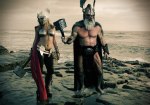
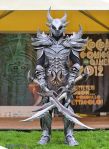
Still More Cosplay Pictures

I have so many cosplay friends that I have tons of pictures, so get used to seeing them.  For you who still don’t know, cosplay, or “costume play” is a world-wide culture of fun-loving people who dress up for fun as anime, comic book characters, tv or movies, steampunk, sci-fi, or whatever moves them.  If you want to see earlier posts, type “cosplay” into the search box on the home page.  Enjoy!

Leave a comment

Filed under Humor and Observations

Zombie Apocalypse (warning graphic images)

Here is a regular post on my site, images from the upcoming zombie apocalypse.  For earlier posts, type “zombie apocalypse” into the search box on my home page.  Enjoy!

1 Comment

Filed under Humor and Observations