
I am Irish. My name was Anglicized from O’Brolochain to Bradley when my ancestors arrived in America. I could go on and on about my ancestral home, but I will try to hit on some high points. Your pay off is that you can read it and learn cool stuff, or you can scroll down to the Irish picture gallery, which also has some fine looking Irish ladies mixed in. My family comes from County Derry. None of us were famous, we were from a minor clan, and someone rose to local parrish Abbot at some point. We were poor and fled to America for jobs and food. Our people fought in wars, fought in bars, built the railroads, owned slaves and led the Confederates, but filled the ranks of the Union too. We have more Irish living abroad than in Ireland thanks to the damnable British! Yes, I explain some of “The Troubles” below as well.
My son was asked to write about his family history as a child. I told him we were poor, drunken brawlers. We were starving, so we came to America and stayed mostly in the North where we were despised and worked at crap jobs like building the railroads. The luckier and immoral ones went South, learned how to buy land and became slaveholders. When slavery ended, many slaves took their old master’s last names. If you meet a black person named Bradley, chances are they are descended from slaves that my ancestors owned. Not a good history. It gets worse… In WW2, many of the Irish sided with Hitler as a chance to rebel against the British. My son and I both have our names on the fly watch list because Michael Bradley and Alex Bradley are common names in our homeland, and apparently, some named that have been part of “The Troubles.” As a result, I cannot check in more than two hours early, I get searched, show documentation with picture and birth-date, and all my luggage is searched. Yes, it does not just happen to Middle Easterners. My wife said, you can’t have him write that stuff for class. I said, “Why not, it is true? Not everyone is descended from people who had it easy.”
Erin go Bragh!

Erin go Bragh is an anglicisation of the Irish phrase Éirinn go Brách (pronounced [ˈeːɾʲɪn̠ʲ ɡə ˈbˠɾˠɑːx]), in which Éirinn is the dative of Éire (meaning “Ireland”). In standard modern Irish the phrase is Éire go Brách (pronounced [ˈeːɾʲə ɡə ˈbˠɾˠɑːx]). It is probable that the English version was taken from what was a “dative” context, such as Go bhfanad in Éirinn go brách (“May I stay in Ireland for ever”) or Go bhfillead go hÉirinn go brách (“May I go back to Ireland for ever”).
Alternatively, given that in a few local dialects (particularly in Waterford Irish and South Connacht Irish) Éirinn has replaced Éire as the ordinary name for Ireland, it could be that the phrase was taken from a speaker of such a dialect. This replacement of the nominative by the dative is common among Irish feminine and some masculine nouns of the second and fifth declensions, and is most widespread in the two dialect areas mentioned.[2] The word brách is an adjective/nominal which is equivalent to “for ever”, “eternal”, “always”, “still”, and conveys the global semantics of “unchanging”—such as in the phrases Fan go brách (“Just wait – don’t move – be patient and wait a bit more”) or fuair sé an litir agus as go brách leis go dtí an sagart chun í a thaispeáint dó (“he got the letter and without waiting off with him to the priest to show him it”).
A phrase confused with Erin go Bragh is Érin go Breá.[citation needed] This is actually [Tá] Éire go breá (“Ireland is (doing) fine/great/excellent”).
St. Patrick’s Day

- St. Patrick is known for “driving the snakes out of Ireland.” This is generally believed to mean he drove out the remnants of paganism and converted the country to Christianity. Although most hear that and think he was like the Pied Piper who led rats out of a city. It does not in fact mean actual snakes, but anti-Christians, such as the serpent in the Garden of Eden.
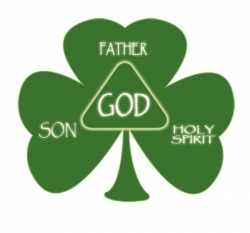
- St. Patrick also made the Shamrock a national symbol of Ireland. He used its three sections to explain the Holy Trinity of God the Father, Jesus the Son, and the Holy Spirit. Each separate, but one.
- Saint Patrick (Latin: Patricius; Proto-Irish: *Qatrikias;[2] Modern Irish: Pádraig;[3] Welsh: Padrig;[4] c. 387 – 17 March c. 460[5] or c. 492[6]) was a Romano-British Christian missionary and bishop inIreland. Known as the “Apostle of Ireland”, he is the primary patron saint of the island along with Saints Brigid and Columba.
- Two authentic letters from him survive, from which come the only generally accepted details of his life.[7] When he was about 16, he was captured from his home and taken as a slave to Ireland, where he lived for six years before escaping and returning to his family. After becoming a cleric, he returned to northern and western Ireland as an ordained bishop, but little is known about the places where he worked. By the seventh century, he had already come to be revered as the patron saint of Ireland.
- Most available details of his life are from subsequent hagiographies, and these are now not accepted without detailed criticism. The Annals of Ulster state that he arrived in Ireland in 432, ministered inUlster around 443, and died in 457 or 461.[8] The text, however, distinguishes between “Old Patrick”[9] and “Patrick, archapostle of the Scots,”[10] who died in 492.[8] The actual dates of Patrick’s life cannot be fixed with certainty but, on a widespread interpretation, he was active as a missionary in Ireland during the second half of the 5th century.[11] He is generally credited with being the first bishop of Armagh, Primate of All Ireland.
- Saint Patrick’s Day is observed on March 17, the date of his death.[12] It is celebrated both inside and outside Ireland, as both a liturgical and non-liturgical holiday. In the dioceses of Ireland, it is both asolemnity and a holy day of obligation; outside Ireland, it can be a celebration of Ireland itself.
Irish in America
- Irish immigrants of this period participated in significant numbers in the American Revolution, leading one British major general to testify at the House of Commons that “half the rebel Continental Army were from Ireland.”
- The relatively small number of Irish Catholics concentrated in a few medium-sized cities, where they were highly visible, especially in Charleston, Savannah and New Orleans.[18][19] They became local leaders in the Democratic party, generally favored preserving the Union in 1860, but became staunch Confederates after secession in 1861.
- During the American Civil War, Irish Americans volunteered in high numbers for the Union Army, and at least thirty-eight Union regiments had the word “Irish” in their title. 144,221 Union soldiers were born in Ireland; additionally, perhaps an equal number were of Irish descent.[43] Many immigrant soldiers formed their own regiments, such as the Irish Brigade.[44]
- The majority of the Union Pacific track across the Nebraska and Wyoming territory till it approached Utah territory was built by veterans of both the Union and Confederate armies and many immigrant Irishmen. (It upsets me that even history books now refer to the blacks and chinese building the railroad, when in fact it was the Irish in the East in Midwest and the Chinese in West. A few blacks were employed but in insignificant numbers compared to the Irish.) The blacks endured slavery and discrimination in the South, but the Irish suffered slavery and ethnic cleansing in their own country for decades, and received further abuse in America. So our tale should not be forgotten either.
Number of Irish in America
- After the potato famines and British land grabs and extermination of Irish, so many Irish moved to America, that by 1910 more Irish born lived in the United States than were left in Ireland. Ever since then more Irish have lived outside Ireland. The population in Ireland dropped from over 8 million to less than 4 million during that period of suffering.
- Irish Americans are citizens of the United States who can trace their ancestry to Ireland. A total of 36,278,332 Americans—estimated at 11.9% of the total population—reported Irish ancestry in the 2008 American Community Survey conducted by the U.S. Census Bureau.[6] Roughly another 3.5 million (or about another 1.2% of Americans) identified more specifically with Scotch-Irishancestry. The Irish diaspora population in the United States is roughly six times the modern population of Ireland.
- The only self-reported ancestral group larger than Irish Americans is German Americans.[6] The Irish are widely dispersed in terms of geography, and demographics. Irish American political leaders have played a major role in local and national politics since before the American Revolutionary War: eight Irish Americans signed the United States Declaration of Independence, and twenty-twoAmerican Presidents, from Andrew Jackson to Barack Obama, have been at least partly of Irish ancestry.
American Presidents with Irish ancestry

United States President Ronald Reaganspeaking to large crowd in his ancestral home in Ballyporeen, Ireland in 1984.
- Andrew Jackson
- 7th President 1829–37: He was born in the predominantly Scotch-Irish[150] Waxhaws area of South Carolina two years after his parents left Boneybefore, near Carrickfergus in County Antrim. A heritage centre in the village pays tribute to the legacy of ‘Old Hickory’, the People’s President. Andrew Jackson then moved to Tennessee, where he served as Governor[151]
- James Knox Polk
- 11th President, 1845–49: His ancestors were among the first Ulster-Scots settlers, emigrating from Coleraine in 1680 to become a powerful political family in Mecklenburg County, North Carolina. He moved to Tennessee and became its governor before winning the presidency.[152]
- James Buchanan
- 15th President, 1857–61: Born in a log cabin (which has been relocated to his old school in Mercersburg, Pennsylvania). The Buchanans were originally from Deroran, near Omagh in County Tyronewhere the ancestral home still stands.[152]
- Andrew Johnson
- 17th President, 1865–69: His grandfather left Mounthill, near Larne in County Antrim around 1750 and settled in North Carolina. Andrew worked there as a tailor and ran a successful business inGreeneville, Tennessee, before being elected Vice President. He became President following Abraham Lincoln‘s assassination.[152]
- Ulysses S. Grant
- 18th President, 1869–77: The home of his maternal great-grandfather, John Simpson, at Dergenagh, County Tyrone, is the location for an exhibition on the eventful life of the victorious Civil Warcommander who later served two terms as President. Grant visited his ancestral homeland in 1878.[153]
- Chester A. Arthur
- 21st President, 1881–85: His election was the start of a quarter-century in which the White House was occupied by men of Ulster-Scots origins. His family left Dreen, near Cullybackey, County Antrim, in 1815. There is now an interpretive centre, alongside the Arthur Ancestral Home, devoted to his life and times.[152][154]
- Grover Cleveland
- 22nd and 24th President, 1885–89 and 1893–97: Born in New Jersey, he was the maternal grandson of merchant Abner Neal, who emigrated from County Antrim in the 1790s. He is the only president to have served non-consecutive terms.[152]
- Benjamin Harrison
- 23rd President, 1889–93: His mother, Elizabeth Irwin, had Ulster-Scots roots through her two great-grandfathers, James Irwin and William McDowell. Harrison was born in Ohio and served as a brigadier general in the Union Army before embarking on a career in Indiana politics which led to the White House.[152][155]
- William McKinley
- 25th President, 1897–1901: Born in Ohio, the descendant of a farmer from Conagher, near Ballymoney, County Antrim, he was proud of his ancestry and addressed one of the national Scotch-Irish congresses held in the late 19th century.[156] His second term as president was cut short by an assassin’s bullet.[152][157]
- Theodore Roosevelt
- 26th President, 1901–09: His mother, Mittie Bulloch, had Ulster Scots ancestors who emigrated from Glenoe, County Antrim, in May 1729. Roosevelt praised “Irish Presbyterians” as “a bold and hardy race.”[158] However, he is also the man who said: “But a hyphenated American is not an American at all. This is just as true of the man who puts ‘native’ before the hyphen as of the man who puts German or Irish or English or French before the hyphen.” [1] (*Roosevelt was referring to “nativists“, not American Indians, in this context)[159]
- William Howard Taft
- 27th President 1909–13[160][161]
- Woodrow Wilson
- 28th President, 1913–21: Of Ulster-Scot descent on both sides of the family, his roots were very strong and dear to him. He was grandson of a printer from Dergalt, near Strabane, County Tyrone, whose former home is open to visitors.[152]
- Warren G. Harding
- 29th President 1921–23[162]
- Harry S. Truman
- 33rd President 1945–53[163][164]
- John F. Kennedy
- 35th President 1961–63, (County Wexford)
- Richard Nixon
- 37th President, 1969–74: The Nixon ancestors left Ulster in the mid-18th century; the Quaker Milhous family ties were with County Antrim and County Kildare.[152]
- Jimmy Carter
- 39th President 1977–1981 (County Antrim and County Londonderry):[153] One of his maternal ancestors, Brandon McCain, emigrated from County Londonderry to America in 1810.
- Ronald Reagan
- 40th President 1981–89: He was the great-grandson, on his father’s side, of Irish migrants from County Tipperary who came to America via Canada and England in the 1840s. His mother was of Scottish and English ancestry.[165]
- George H. W. Bush
- 41st President 1989–93 (County Wexford): historians have found that his now apparent ancestor, Richard de Clare, Earl of Pembroke. Shunned by Henry II, he offered his services as a mercenary in the 12th-century Norman invasion of Wexford, Ireland in exchange for power and land. Strongbow married Aoife, daughter of Dermot MacMurrough, the Gaelic king of Leinster.[166][167]
- Bill Clinton
-


Obama greets local residents on Main Street in Moneygall, Ireland, May 23, 2011.
- 42nd President 1993–2001: He claims Irish ancestry despite there being no documentation of any of his ancestors coming from Ireland [152][168]
- George W. Bush
- 43rd President 2001–09: One of his five times great-grandfathers, William Holliday, was born in Rathfriland, County Down, about 1755, (a British merchant living in Ireland) and died in Kentucky about 1811–12. One of the President’s seven times great-grandfathers, William Shannon, was apparently born somewhere in County Cork about 1730, and died in Pennsylvania in 1784.[167]
- Barack Obama
- 44th President 2009–present: Some of his maternal ancestors came to America from a small village called Moneygall, in County Offaly.[149][169] His ancestors lived in New England and the South and by the 1800s most were in the Midwest.

[edit]Vice Presidents of Irish descent
[edit]Other presidents of Irish descent
- Sam Houston
- President of Texas 1836–38 and 1841–44
[edit]Irish-American Justices of the Supreme Court
-
- William Paterson: born in County Antrim, Ireland.
- Joseph McKenna
- Edward D. White
- Pierce Butler
- Frank Murphy
- James Francis Byrnes
- William J. Brennan
- Anthony Kennedy
History of Ireland – High Points Only
- The first known settlements in Ireland began around 8000 BC.
- The 17th century was perhaps the bloodiest in Ireland’s history. Two periods of war (1641–53 and 1689–91) caused huge loss of life. The ultimate dispossession of most of the Irish Catholic landowning class was engineered, and recusants were subordinated under the Penal Laws.
- During the 17th century Ireland was convulsed by eleven years of warfare, beginning with the Rebellion of 1641, when Irish Catholics rebelled against the domination of English and Protestant settlers. The Catholic gentry briefly ruled the country as Confederate Ireland (1642–1649) against the background of the Wars of the Three Kingdoms until Oliver Cromwell reconquered Ireland in 1649–1653 on behalf of theEnglish Commonwealth. Cromwell’s conquest was the most brutal phase of the war. By its close, up to a third of Ireland’s pre-war population was dead or in exile. As retribution for the rebellion of 1641, the better-quality remaining lands owned by Irish Catholics were confiscated and given to British settlers commenced. Several hundred remaining native landowners were transplanted to Connacht.
- Forty years later, Irish Catholics, known as “Jacobites”, fought for James from 1688 to 1691, but failed to restore James to the throne of Ireland, England and Scotland.
- Ireland became the main battleground after the Glorious Revolution of 1688, when the Catholic James II left London and the English Parliament replaced him withWilliam of Orange. The wealthier Irish Catholics backed James to try to reverse the Penal Laws and land confiscations, whereas Protestants supported William and Mary in this ‘Glorious Revolution’ to preserve their property in the country. James and William fought for the Kingdom of Ireland in the Williamite War, most famously at the Battle of the Boyne in 1690, where James’ outnumbered forces were defeated.
Slavery and Extermination by the British
- From the 15th to the 18th century, Irish prisoners were sold as slaves. For centuries, the Irish were de-humanised by the English, described as savages, so making their murder and displacement appear all the more justified.[19] In 1654 the British parliament gave Oliver Cromwell a free hand to banish Irish “undesirables”. Cromwell rounded up Catholics throughout the Irish countryside and placed them on ships bound for the Caribbean, mainly Barbados. The authorities in the West Indies, fearing the Irish would resist servitude, treated the prisoners harshly. Records suggest that priests may have been routinely tortured and executed. By 1655, 12,000 political prisoners had been forcibly shipped to Barbados.[20]
- Known as a hero in Britain, Oliver Cromwell led several armies to Ireland for the purpose of stealing their lands and thinning out the Irish population for resettlement by British. He is probably the most hated person ever in Ireland.
- Subsequent Irish antagonism toward England was aggravated by the economic situation of Ireland in the 18th century. Some absentee landlords managed their estates inefficiently, and food tended to be produced for export rather than for domestic consumption. Two very cold winters near the end of the Little Ice Age led directly to a famine between 1740 and 1741, which killed about 400,000 people and caused over 150,000 Irish to leave the island. In addition, Irish exports were reduced by the Navigation Acts from the 1660s, which placed tariffs on Irish products entering England, but exempted English goods from tariffs on entering Ireland. Despite this most of the 18th century was relatively peaceful in comparison with the preceding two centuries, and the population doubled to over four million.
- The second of Ireland’s “Great Famines”, An Gorta Mór struck the country during 1845–49, with potato blight, exacerbated by the political and laissez-faire economic factors of the time[22] leading to mass starvation and emigration. (See Great Irish Famine.) The impact of emigration in Ireland was severe; the population dropped from over 8 million before the Famine to 4.4 million in 1911. Gaelic or Irish, once the island’s spoken language, declined in use sharply in the nineteenth century as a result of the Famine and the creation of the National School education system, as well as hostility to the language from leading Irish politicians of the time; it was largely replaced by English.
- The English Parliament was well aware that they had removed the food from Ireland, left their fields fallow, and they were now suffering starvation. When debated in Parliament, the British MPs discussed at length and decided the best thing would be to let the Irish starve or move away so it would be easier to suppress them and take their land. They literally let over half the population of the country starve or cross oceans to get food, when they could have saved them. The willful starvation and forced immigration of over half the Irish is why there is still so much hatred for the British, even centuries after Cromwell and slavery and land robbery. The famines happened just 100 years ago, and Ireland has never been the same.
Here it is, picture gallery of Irishness…




-

- Love this. By the way, only real Whiskey can use the e, other is referred to as whisky



-

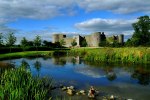
- Irish had to clear rocks from the poor soil and use them to build walls to keep away wind and rain erosion from the thin soil. Everything in Ireland was hard work.



-

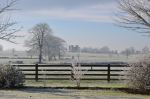
- The dog ate the Leprechaun, took his hat and pipe, and his bucket o’ gold




-

- Kiss them, they’re Irish!

-

- That is the Irish Flag she is holding. Yeah, look up, there is a flag

-

- Irish lassie
-

- Irish soccer fan, the match is not going well
-

- Miss Ireland
-
- I want
-

- Olivia Wide – Yep, Irish
-
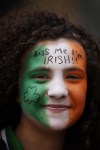
- The Shamrock, the Irish Flag, and an invite to kiss her. All she needs is to be holding a yard of Guinness to be perfect.
-

- Irish Wolfhound
-

- Jenny McCarthy – Yep, Irish
-

- Newgrange in Eire, built 3200 BC
-

- Just one example of discrimination. In the North, it was No Irish, In the South, No Coloreds, in the West, No Chinese. People forget how the Irish were treated.
-

- Thanks to a thousand years of British efforts to ban it, this is the percentage of Irish that still speak Gaelic.
-

- Yep, Irish. After fishing and growing potatoes all day, now you know how we grew in population at night
-

- Irish lassie
-

- Irish food, mashed taters over stew. Shepherd’s pie.
-

- Boston dies the water green on St. Patty’s Day
-

- Early Eire
-

- Eire after Viking Invasions
-
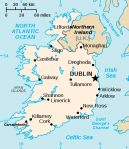
- Eire today. Top part is British controlled, bottom independent. Notice how the earlier picture of Gaelic speaking gets thinner and ends as you approach the British area…
-
- Love this. By the way, only real Whiskey can use the e, other is referred to as whisky
-
- Irish had to clear rocks from the poor soil and use them to build walls to keep away wind and rain erosion from the thin soil. Everything in Ireland was hard work.
-
- The dog ate the Leprechaun, took his hat and pipe, and his bucket o’ gold
-
- Kiss them, they’re Irish!
-
- That is the Irish Flag she is holding. Yeah, look up, there is a flag
-
- Irish lassie
-
- Irish soccer fan, the match is not going well
-
- Miss Ireland
-
- I want
-
- Olivia Wide – Yep, Irish
-
- The Shamrock, the Irish Flag, and an invite to kiss her. All she needs is to be holding a yard of Guinness to be perfect.
-
- Irish Wolfhound
-
- Jenny McCarthy – Yep, Irish
-
- Newgrange in Eire, built 3200 BC
-
- Just one example of discrimination. In the North, it was No Irish, In the South, No Coloreds, in the West, No Chinese. People forget how the Irish were treated.
-
- Thanks to a thousand years of British efforts to ban it, this is the percentage of Irish that still speak Gaelic.
-
- Yep, Irish. After fishing and growing potatoes all day, now you know how we grew in population at night
-
- Irish lassie
-
- Irish food, mashed taters over stew. Shepherd’s pie.
-
- Boston dies the water green on St. Patty’s Day
-
- Early Eire
-
- Eire after Viking Invasions
-
- Eire today. Top part is British controlled, bottom independent. Notice how the earlier picture of Gaelic speaking gets thinner and ends as you approach the British area…

 World’s biggest boob job are a size 38KKK
 In early 2009, Sheyla Hershey of Brazil was awarded the Guinness World Record for having the largest set of breasts. After nine surgeries and more than a gallon of silicone, her breasts are a size 38KKK.
 There is a NGO that fights for women’s right to be topless
 GoTopless.org is an US organization which claims that women have the same constitutional right to be bare chested in public places as men. They often promote (topless) gatherings to claim for their rights. (
 The left breast is usually larger
 No two breasts are exactly the same size, and it is usually your left breast that is bigger than the right side. However, often the difference is so slight you’d never notice they are of different sizes. Nipples also come in varying sizes, not only that, they also point in different directions.
 Breasts are the first thing men notice in a woman
 No news here. Research conducted at the Victoria University of Wellington showed that breasts are often the first thing men look at, and for a longer time than other body parts. Nothing to be ashamed of since another study said that staring at women’s breasts for just minutes a day can improve a man’s health and add four to five years to his life. (
 Men can lactate too
 It’s exceptionally rare, but since men possess mammary glands just like women do, they have the capacity to produce milk. When male lactation happens, it’s usually because of hormonal treatments for diseases like cancer. (
 England is the country with biggest breasts in Europe
 A survey made by bra maker Triumph found that British women have the biggest boobs in Europe. More than half of women in that country wear a size D cup. Denmark scored second while Holland was third. On the other hand, Italian women had the smallest breasts where 68 percent had a size B. (
 The average breast weighs one pound
 The average breast weighs about 0.5 kilograms (1.1 lb). Each breast contributes to about 4-5% of the body fat and thus 1% of the total body weight of an average woman. (
 Breasts get fat
 In your 20s, your boobs are made up of fat, milk glands and collagen — the connective tissue that keeps them firm. But as you age, the glands and collagen shrink and are replaced by more and more fat. Instead of making your bra size go up, however, the added flab can send breasts down, closer to the floor, if you catch our drift. (
 Breasts augmentation may lead to suicide
 Women who get breast implants are at least three times more likely to commit suicide, a risk that increases with time. As the August 2007 Annals of Plastic Surgery reported, it’s unlikely that silicone toxicity causes the correlation. It’s more probable that women who undergo breast augmentation are more apt to have an underlying psychiatric problem that predisposes them to suicide. (
 Breasts implants can also save you from death
 Big breasts miraculously saved an Israeli woman from death at the hands of a Lebanese paramilitary organization. The incident occurred during a Hezbollah rocket attack. The victim got a boob job two years ago. During the war, she was wounded in the chest by shrapnel but survived because of her implants. While the patient is fine, the implant, unfortunately, did not survive. (
 Breasts implants are the number one cosmetic surgery in the US
 Two million women in the United States have breast implants. It’s number one cosmetic procedure requested by women, topping rhinoplasty and liposuction. The average age at which a woman gets implants is thirty-four. (
 In China, you can major in Bra Studies
 In Hong Kong, you can get a degree in Bra Studies from the Hong Kong Polytechnic University where they teach you how to design and build a bra. Recently, the students exhibited their designs at the ACE Style Institute of Intimate Apparel at the ITC Resource Centre.
 ]
]




























































 Michael Bradley - Time Traveler