Monthly Archives: June 2013

Our Endangered Languages List

In a reverse Tower of Babel, mankind is consolidating its languages with globalism.  Our species speaks over 7,000 languages right now, but those are quickly being reduced to 20 or fewer.  Below is an article on some of the most endangered languages.  I was kind of surprised to find that Rapa Nui (the Easter Island language) was not already extinct.  If you look up my Irish history post on St. Patrick’s Day, you will find my ancestral language of Gaelic is nearly snuffed out on purpose by the Brits.

Endangered-languages-625x329

languagevitality

Irish Gaelic, Rapa Nui And More Endangered Languages From Around The World

by Libby Zay (RSS feed) on Jun 7th 2013 at 1:00PM

Mariano Kamp, Flickr

There are nearly 7,000 languages spoken throughout the world today, the majority of which are predicted to become extinct by the end of this century. Half the world’s population speaks the top 20 world languages – with Mandarin, Spanish and English leading the charge, in that order – and most linguists point to globalization as the main cause for the rapid pace languages are falling off the map.

The problem is, when a language dies so does much of the knowledge and traditions that were passed won using it. So when Mental Floss used data from the Alliance for Linguistic Diversity to post a list of several at-risk languages, we here at Gadling were saddened by the disappearing native tongues and decided to use data from the Alliance for Linguistic Diversityto highlight some in our own list.

Irish Gaelic: Despite the fact that the government requires Irish students to learn this language and it currently has an estimated 40,000 native speakers, it is still classified as vulnerable.

Rapa Nui: The mother tongue of Chile’s famous Easter Island has fewer than 4,000 native speakers, and is quickly being taken over by Spanish.

SenecaOnly approximately 100 people in three Native American reservation communities in the United States speak this language, with the youngest speaker in his 50s.

Yaw: Most young people living in the Gangaw District of Burma understand but do not speak this critically endangered language that has less than 10,000 native speakers.

Kariyarra: Although there are many people who have a passive understanding of this aboriginal language, only two fluent Kariyarra speakers are left in Western Australia.

Francoprovençal: There are only about 130,000 native speakers of this language, mostly in secluded towns in east-central France, western Switzerland and the Italian Aosta Valley.

Yagan: This indigenous language of Chile purportedly has only one remaining native speaker. Others are familiar with the language, but it will likely disappear soon.

Patuá: Derived from Malay, Sinhalese, Cantonese and Portuguese, less than 50 people in Macau, China and their diaspora speak this language. It is now the object of folkloric interest amongst those who still speak it.

3 Comments

Filed under Humor and Observations, Uncategorized

Some Novel Writing Tips

Here are some tips I have learned in my own novel writing.  I hope they help you as well:

1)  Each Chapter should have a specific purpose.  If you have ten things going on in a chapter, the reader has no idea what is important and what is not.  Focus your narrative on important things.  Use more descriptors for items that matter, fewer for areas the narrative just passes through never to return.  Get one part of your character or story arc done in each chapter.  If you have a movie you have to fit into 90 minutes you cut the scenes that are nice but not necessary.  A novel fits into roughly 40 chapters at 2,500 words each.  If you weave 3 major story lines and/or characters, you have just 12 to 14 chapters for each one.  Introduce, development, twists, double backs, near finale, the final climax, the anti-climax, all have to get done in that time.  A novel seems long, but  you only have so many “scenes” to tell your story, don’t waste any.

writing 1

2) Start your chapter with a reminder, end it with a tease.  Many people read like I do – they finish a chapter and go to sleep.  The next time they pick up the book might be awhile.  Just like TV series will show you scenes of what happened the last episode, then end with teasers for the next week, you need to do that in your chapters.  Start the chapter with a sentence or two reminding them where you left it the chapter before.  Don’t make them read a few pages to remember.  At the end you don’t have to leave some obvious hook like the old TV serials where the hero appears to be blown up, only to see that he magically escaped.  However, give the reader some reason to want to pick up your book again.  Your story should have enough interesting questions and story arcs to keep the reader wanting to know what happens next.  A chapter that ends flat might mean even more time before they read the next one.

3)  Don’t include all that cool narrative unless it is necessary to the story.  This is the hardest for me because I do so much research on my novels.  So, you are writing about a World War 1 story and you have so many things you want to talk about with trench warfare, the home front, cool historical factoids you want to share…  The problem is, your book is not a historical reference, but a fiction.  The story is the characters, not the setting.  You should strip out any narrative that does not surround the characters and their slice of it.  You might want to break into elegant narrative about the past four hundred years of history of the spot your character sets his foot, but the character, and the reader, only care about it if it influences the story.   So much I want to tell about the setting, about history, about cool things, but it does not help the story.  It hurts to leave it all out, knowing I will never revisit that spot in that point of history in other stories.  Still, you have to leave it out.

writing 2

4)  There is nothing cooler than having readers know your characters.  Going to book clubs, signings and events where people have read my stories and comment on them is a rush.  It surprises me that these readers know my characters as well as I do.  They know what they would do under different circumstances, their weaknesses, their strengths, what they look like, their aspirations.  I always wonder what I evoke in a reader with my prose.  When they tell you exactly what you wanted to convey, it is awesome.  The magic of the written word is transmitting a fictional character from your mind to theirs in simple words.  To do this, your characters needs to be complicated and real.  Try to avoid having anyone in your story that you don’t have a full character build-up behind them.  Gather characters in your daily life from friends, enemies, barristas, store clerks, fellow elevator passengers, anyone you meet.

5)  Don’t describe anything with a common view and over-describe new concepts.  If you say, “they walk into a sports bar.”  Every reader has an image that comes up.  It does not matter if their sports bar is the one you have in mind, it only matters that they see a sports bar in their mind.  I no longer describe the lay-out, the tables, or virtually anything.  They already have a mental picture and further description is distracting.  However, I have an airship in The Travelers’ Club – Fire and Ash that features prominently in several chapters.  In test reading groups, no one knew what it looked like, how big it was, or the layout.  Despite the fact that I had described it.  They simply had no pre-set mental image for the insides of an imaginary private airship yacht.  I had to add an entire chapter with one of the characters taking another on a tour of their ship as it was being readied for flight.  It turned into a fun chapter for me and solved the problem.  So, as an author, ask yourself – Does the reader have a mental image of the item or setting?  If yes, don’t describe it.  If no, over describe it.

kindle fa

6)  Focus on the core of your novel.  Is your character dealing with internal issues, like over-coming cowardice, finding love, a life of rejection, scars of abuse?  Are they dealing with action issues, like running from hitmen, the police, fighting in a war, putting out fires?  If the story is internal and emotional,  focus your writing on the internal dialogue and personal challenges.  Don’t dilute an emotional story with a lot of useless setting and spatial descriptions.  The action that the reader will care about is the emotional journey.  If you have a physical action story, build the narrative around that.  Is the character hurt, tired, hungry, thirsty, desperate for shelter?  Build on the action, don’t just describe it quickly.  Let the reader dwell on the excitement and the challenge of the physical environment.  I think we writers sometimes try to make all parts of our story detailed and lose track of what the reader is focused on.  Try to avoid red herrings to the reader that lead them away from the crux of the story and the main conflicts facing the characters.

Those are just a few of the things I have personally learned to include in my writing.  We are all different, so maybe they will help you and maybe they won’t.  At the very least, hopefully they will give you some additional ideas on how to approach writing your next story.


9 Comments

Filed under Writing

More Crossovers

Crossovers or mash-ups are mixing two or more concepts or genres, hopefully in an amusing or funny way.  For earlier crossover posts, type “crossovers” in the Search box on the home page.  Enjoy!

Leave a comment

Filed under Humor and Observations

Steam-powered Race Cars

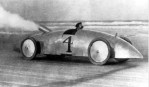
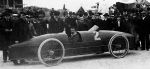
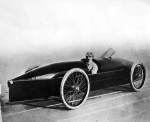
Scalding hot speeds achieved by automobiles blowing off a little steam…  These are real historical steam-powered racing cars.  How cool is that?

“A Stanley Steamer setting a record mile at the Daytona Beach Road Course.

“The Stanley Motor Carriage Company was an American manufacturer of steam-engine vehicles from 1902 to 1924. The cars made by the company were colloquially called Stanley Steamers, although several different models were produced. The Stanley Steamer was sometimes nicknamed “The Flying Teapot”.The Stanley company produced a series of advertising campaigns trying to woo the car-buying public away from the “internal explosion engine,” to little effect.”

1 Comment

Filed under Humor and Observations

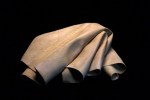
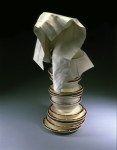
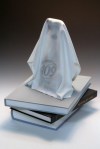
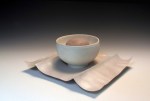
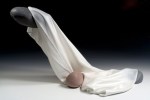
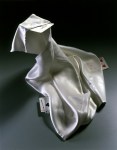
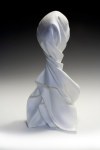
Art Sculptures Surprisingly Made of Only Wood

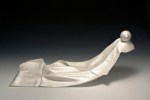
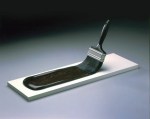
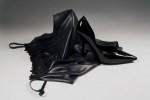
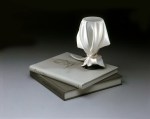
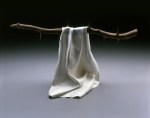
Hyper-realistic Sculptures are Made Entirely of Wood by Tom Eckert

Thursday, May 23, 2013  Jazlyn  

Artist and Professor Tom Eckert uses traditional processes to carve these hyper-realistic sculptures of everyday objects entirely made of wood. He uses plenty of carpentry techniques in his creative sculptured pieces, such as constructing, bending, laminating, carving and painting. 
After receiving his M.F.A. degree from Arizona State University, Eckert began teaching at the university. He has exhibited his work in over 150 national and international exhibitions. Recently his incredible artwork has been featured in the Netherlands after getting lot of appreciation throughout the United States.
For more details about his work please visit Eckert’s website www.tomeckertart.com


3 Comments

Filed under Humor and Observations

Butterfly Inspired Technology

Butterflies inspire anti-counterfeit tech

By Joel N. Shurkin

Published June 10, 2013

Inside Science News Service

  • Morpho Butterfly.jpg

    Nanotechnology emulates a South American insect’s wings. (Creativity+ Timothy K Hamilton, Flickr)

A Canadian company is fighting counterfeiters by employing one of the most sophisticated structures in nature: a butterfly wing.

To be precise, Nanotech Security Corp. in Vancouver is using the natural structure of the wings of a Morpho butterfly, a South American insect famous for its bright, iridescent blue or green wings, to create a visual image that would be practically impossible to counterfeit. The technology was developed at British Columbia’s Simon Fraser University, and licensed to the company.

The phenomenon Nanotech employs is similar to the way some animals, including male peacocks, produce iridescent colors: instead of using proteins and other chemicals to produce a hue, the creature’s feathers or scales play with light, using very tiny holes that reflect different colors or wavelengths. The Morpho does this with complicated scales on its wing that produce shimmering blues and greens.

‘It lends itself to anything your imagination can come up with. Even brake pads.’

– Clint Landrock, Nanotech’s chief technical officer 

Nanotech’s printed security image can be embossed on virtually any surface, including plastics, metals, solar cells, fabrics, and paper, according to Clint Landrock, Nanotech’s chief technical officer. They even could be embedded on pills and capsules to ensure they are genuine pharmaceuticals, instead of fakes.

“It lends itself to anything your imagination can come up with,” he said, “even brake pads.”

The work is another example of what scientists call biomimicry, which adapts nature’s solutions for innovative human devices, in this instance, nano-optics, a burgeoning new technology.

Researchers at the University of Michigan, for example, use nano-optics to print pictures and images without ink or dyes.

Landrock, one of the inventors, said the Simon Fraser researchers actually studied the shingled, patterned plates of a Morpho wing to see how it handled incoming light. The trick was to make artificial “nano-hole arrays,” which produce similar iridescent efforts with simpler structures. That way, the company can mass-produce billions of nano-holes.

“We can tune the colors by changing the geometry of those hole arrays,” he said.

They used a method similar to the manufacturing of computer chips, known as electron beam lithography, to produce master nano-hole patterns embossed on silicon or quartz.

They worked at the scale of nanometers. A single nanometer is hundreds of times smaller than even the tiniest bacterial cell. The holes in the template ranged from 50 to 300 nanometers in diameter, spaced 300-600 nanometers apart. The process takes from a few hours to a couple of days to produce a master pattern, or mask, depending on the size of the mask and the number of structures. After the mastering, a second process grows the image on nickel. From there it can be transferred to any material.

The entire image could be large enough to be seen from a distance, and, if embossed on high-priced items like designer handbags, would make it easy to spot the phonies, said Doug Blakeway, Nanotech’s CEO.

“If you had a hand bag and the clasp on it had the company’s logo on it you would see it and it would turn on and off in very bright colors.” Simply moving the item or the observer would make the color flicker.

There shouldn’t be any issue with putting the image on a capsule or pill, he said. You could see the brand on it to be sure the medicine was authentic. It would not require Food and Drug Administration approval because the image would not involve dyes or pigments so medicine would not be altered in any way.

Counterfeiting this technology is unlikely, Landrock said. The image would be very difficult to reverse engineer, and expensive because of the equipment needed. The image is much brighter than any created by any other technology, he explained, including holograms.

“I like to say it is similar to describing how an old CRT television display looks compared to a new Ultra HD LED TV,” he said “They may be showing the same thing but you would never mistake one for the other.”

Landrock said the most logical use for the technology would be an anti-counterfeiting device on bank notes.

A nano-optics image can be embossed on coated paper, but many countries, including Canada and Australia, have switched to polymer plastics for its bank notes, which are even more receptive to nano-optics images. Those bills last much longer than U.S. paper currency and are much harder to counterfeit.

Since the company has only begun commercializing the technology, no country has yet signed up.

Even so, it is unlikely the U.S. dollar will see nano-optics any time soon. U.S. bank notes do not even use holograms, common in other currencies, or coated or polymer paper, according to Darlene Anderson, a spokeswoman for the U.S. Bureau of Engraving and Printing.

The reason for the conservative bills, is that most American currency is held overseas, where it is often used as the reserve currency for the undeveloped world, said Owen Linzmayer, publisher of Banknote News, an industry observer. A radical change to U.S. bills could upset international economies and flood the country with the old bills.

The same restraints do not apply for Gucci handbags.

Read more: http://www.foxnews.com/tech/2013/06/10/butterflies-inspire-anti-counterfeit-tech/?intcmp=features#ixzz2VzGPNjL3

Leave a comment

Filed under Humor and Observations

Random Humor

More random humor for your enjoyment!

Leave a comment

Filed under Humor and Observations

What Have You Got to Hide?

Welcome to our future of world totalitarianism.  As Defined by Merriam-Webster:

to·tal·i·tar·i·an·ism

noun \(ˌ)tō-ˌta-lə-ˈter-ē-ə-ˌni-zəm\

Definition of TOTALITARIANISM
1: centralized control by an autocratic authority
2: the political concept that the citizen should be totally subject to an absolute state authority
What have you got to hide?  Don’t you want to be safe?  Those are the justifications for an ever growing immense government oversight of our every day lives.  I will answer with the same questions – What did the Jews have to hide in Nazi Germany?  What did the intellectuals and religious figures have to hide in China under Mao?  What did people have to hide in Cambodia from Pol Pot?  What did the Chinese have to hide from the Japanese in prior to and during WW2?  The list of atrocities that started with gathering information on citizens in a database or file system under the guise of national safety is endless.  Did any of those people end up safer as a result of their government’s efforts?
total
Freedom means having your own privacy and decision making, irrespective of whether you have “something to hide” or not?  The United States was founded on the priniciples that government derives its power from the people, not the other way around.  As in the Declaration of Independence, the Federalist Papers, or Thomas Paine’s rallying cry in Common Sense, that government must serve the people.  When it stops, we not only have the right, but the obligation to rise up and stop it.
In America every phone call, financial transaction, movement or communication you have is monitored.  It is increasingly difficult to hide your location, your activities or even your image.  Cameras are everywhere.  GPS in your phones, cars, even credit cards or grocery store discount cards often track your location.  The IRS has been caught targeting people who disagree with the government philosophically.  Private information was released by the EPA on farmers and their families to environmental groups that hate them.  People with guns had their locations printed in the paper and online.  The NSA maintains a data base of every electronic imprint you have, including social media and phone calls.  All financial transactions are tracked electronically.  Satellites, even civilian ones like Google Earth, can watch you in addition to traffic cameras.
hate speech
It is not just the United States.  In other countries women are not allowed to appear in public, to get an education, drive a car, or even claim rape.  Children are turned into soldiers for their governments.  100,000 Christians are killed each year for their religious beliefs.  The high hopes of writers like Star Trek’s Gene Roddenberry of a utopian future are nowhere in evidence.  I am a positive person, yet increasingly I see very little way to turn back the hands of time as we march inexorably to totalitarian world government.
I am tired of hearing about the evil private sector or the rich, who have to “give their fair share” to the government.  Government should be limited and serve the people, but instead, we all serve to provide taxes for ever growing bureaucracy.  Government is like Jabba the Hutt, growing immense in fat while we serve as slaves for its amusement.  Government wastes money then blames a lack of funding for poor oversight.  It lies to us, but then tells us not to worry, that there are secret safe guards in place – to trust them.
I never thought in America the President would be able to kill any American without trial or due process with a drone strike.  That any American suspected by the government of being a danger can be arrested and held offshore in secret for life with no review or appeal.  That all our personal information is taken and in some cases used against us or given to our enemies by our own government, even though we are not the subject of a valid investigation.  That reporters and their families and friends would be subjected to wire taps and investigation based on doing their job.  That terrorists would attack on a military base and it would be called “workplace violence.”  That people in our embassy would ask for help and we would stand down for an entire day and let them all die.
total 2
I served proudly in the military but I am ashamed of our country today.  We spend more time and resources spying on our own citizens than we do real threats.   We spend more time and resources helping countries who hate us than we do helping our own citizens.  For the first time in my life, I am publicly ridiculed for my religious beliefs.  The IRS is asking people to justify what they say in their own prayers, asking them why they pray, and exchanging tax approval for curtailing freedom of speech.  They are now running ads on TV for seniors to “keep watch and inform on each other for Medicare fraud.”  Wow.  Never thought I would see the government asking for us to watch each other and inform.  It is starting.
Absolute power brings absolute corruption.  People are imperfect, especially in government spending other people’s money, and they have to be reined in from time to time to limit abuses.  Instead, the “Arab spring”, the resurgent nationalism in Russia, the rampant flood of immigrants to Western Europe and America where they do not share common values, and other moves all are leading to more government control, not less.  We used to see the proletariat rise up against abuse.  Now they rise up to seize power so they can do the abuse themselves.
I hope that this trend reverses.  As a futurist, I can only imagine the dark future mankind faces if governments grow too powerful and control all resources, and labor.

4 Comments

Filed under Humor and Observations, Uncategorized

Too Much Deer Pee Hurting Environment (yeah, you read that correctly)

How much deer pee is too much you ask?

Too much deer pee changing northern forests

By Becky Oskin

How Green

Published June 06, 2013

LiveScience

  • deer

    White-tailed deer congregate under evergreens like northern white cedar for protection from winter weather, creating nitrogen hot spots that change the plant community. (Michigan Technological University)

The booming deer population in the northern United States is bad for the animal’s beloved hemlocks, a new study finds.

During Michigan winters, white-tailed deer converge on stands of young hemlocks for protection from winter chill and predators. The same deer return every year to their favorite clumps of the bushy evergreens, called deeryards. The high concentration of deer in a small space saturates the soils with nitrogen from pee, according to a study published online in the journal Ecology. While deer pee can be a valuable source of nitrogen, a rare and necessary nutrient for plants, some deeryards are now too rich for the hemlocks to grow.

“Herbivores like deer interact with the ecosystem in two ways. One is by eating plants and the other is by excreting nutrients,&quot said Bryan Murray, an ecologist and doctoral student at Michigan Tech University. &quotUrine can be a really high nitrogen resource, and hemlock can be out-competed by other species in really high nitrogen environments.”

Slow-growing hemlocks prefer low-nitrogen soil, and the prolific pee results in nitrogen-loving species like sugar maple outgrowing the hemlocks, the researchers found.

Hemlocks are already struggling to recover from logging and other ecosystem changes that reduced their numbers to 1 percent of pre-settlement populations in some parts of Michigan, Murray said. “At the moment, it’s difficult to find hemlock stands where there are saplings in the understory that are going to replace the hemlocks in the overstory when they die,” he told OurAmazingPlanet. The lack of regeneration could be due to a number of issues, but deer overpopulation is a factor, he added.

With the reduced hemlock cover available for deer, the booming white-tailed deer population means more deer crowd into the remaining forest. The researchers found more than 100 deer per square mile in popular deeryards. And young hemlocks have a tough time recovering from the deer nibbling and browsing.

In the eastern United States, an invasive sap-sucking bug called the adelgid is also killing off hemlocks.

“The Upper Midwest represents one of the last strongholds of hemlocks,” Murray said.

Read more: http://www.foxnews.com/science/2013/06/06/too-much-deer-pee-changing-northern-forests/?intcmp=obinsite#ixzz2VrJmYGI1

3 Comments

Filed under Humor and Observations

Conspiracy Theory – Was Queen Elizabeth I a Man?

Is this proof the Virgin Queen was an imposter in drag? Shocking new theory about Elizabeth I unearthed in historic manuscripts

By CHRISTOPHER STEVENS

The bones of Elizabeth I, Good Queen Bess, lie mingled with those of her sister, Bloody Mary, in a single tomb at Westminster Abbey. But are they really royal remains — or evidence of the greatest conspiracy in English history?

If that is not the skeleton of Elizabeth Tudor, the past four centuries of British history have been founded on a lie.

And according to a controversial new book, the lie began on an autumn morning 470 years ago, when panic swept through a little group of courtiers in a manor house in the Cotswold village of Bisley in Gloucestershire.

Cate Blanchett as Queen Elizabeth in the film 'Elizabeth: The Golden Age'. Could the virgin queen be a part of the biggest deception in British history?Cate Blanchett as Queen Elizabeth in the film ‘Elizabeth: The Golden Age’. Could the virgin queen be a part of the biggest deception in British history?

The king, Henry VIII, was due at any hour. He was travelling from London, in great discomfort — for the 52-year-old monarch was grossly overweight and crippled by festering sores — to visit his daughter, Elizabeth.

The young princess had been sent there that summer from the capital to avoid an outbreak of plague. But she had fallen sick with a fever and, after weeks of bleeding, leeches and vomiting, her body was too weak to keep fighting. The night before the king’s arrival, his favourite daughter, the only child of his marriage to Anne Boleyn, had been dangerously ill. In the morning, Elizabeth lay dead.

Elizabeth’s governess, Lady Kat Ashley, and her guardian, Thomas Parry, had good reason to fear telling the king this awful news. It would cost them their lives. Four of Henry’s children had died in infancy and, of the survivors, one — Edward — was a sickly boy of five and the other an embittered, unmarried woman in her late 20s.

The ten-year-old Elizabeth was Tudor England’s most valuable child in many ways. She could surely be married to a French or Spanish prince to seal an international alliance — and her own children would secure the Tudor dynasty Henry so desperately craved.

Now she was dead, and when the king discovered it, Parry and Lady Ashley would surely be executed. Their sole duty had been to keep the princess safe: failure was treason. The penalty would not even be beheading, but death by the most gruesome torture imaginable.

They would be bound and dragged through the mud for a mile to the scaffold. There they would be hanged, cut down and disembowelled. Their entrails would be hauled from their bodies and held in front of their faces as they died, and then their limbs would be hacked off and displayed on spikes, to be picked bare by the birds.
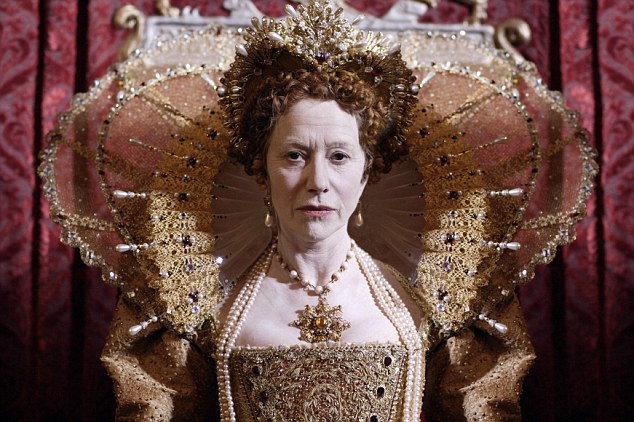
Helen Mirren pictured as Elizabeth I in a Channel Four mini-seriesHelen Mirren pictured as Elizabeth I in a Channel Four mini-series

Their only chance of concealing the truth, and perhaps buying themselves a few days to flee the country, was to trick the king.

Kat Ashley’s first thought was to find a village girl and dress her up in the princess’s robe, with a mantle, to fool the king. Bisley was a tiny hamlet, however, and there were no female children of Elizabeth’s age.

But there was a boy, from a local family called Neville. He was a gawky, angular youth a year or so younger than Elizabeth, who had been the princess’s companion and fellow pupil for the past few weeks. And with no time to look further afield for a stand-in, Parry and Lady Ashley took the desperate measure of forcing the boy to don his dead friend’s clothes.

Remarkably, the deception worked. Henry saw his daughter rarely, and was used to hearing her say nothing.  The last time she had been presented in court, meeting the new Queen Catherine Parr, she had been trembling with terror.

The princess was known as a gentle, studious child, and painfully shy — not a girl to speak up in front of the king who had beheaded her mother.

So when ‘she’ stood at Bisley manor, in the dimness of an oak-beamed hall lit by latticed windows, it was not so surprising that the king failed to realise he was being duped. He had no reason to suspect his daughter had been ill, after all, and he himself was tired and in pain.

But after he left later that afternoon, the hoax began in earnest. Parry and Lady Ashley realised that if they ever admitted what they had done, the king’s fury would be boundless. They might get out of the country to safety, but their families would surely be killed.

On the other hand, few people had known the princess well enough to be certain of recognising her, especially after an interval of many months. This boy had already fooled the king, the most important deception.

Meanwhile, there was no easy way to find a female lookalike, and replace the replacement. As the courtiers buried the real Elizabeth Tudor in a stone coffin in the manor grounds, they decided their best hope of protecting themselves and their families was to teach this Bisley boy how to be a princess.

Attributed to painter William Scrots, this portrait is of Elizabeth I as a Princess in 1546-7Attributed to painter William Scrots, this portrait is of Elizabeth I as a Princess in 1546-7

Of course this entire theory sounds absurd, given that every child grows up with tales of our glorious Virgin Queen, celebrated by Shakespeare and venerated in innumerable plays, songs and films over the centuries.

And yet the many corroborating details around this extraordinary tale about the Bisley boy were enough to convince the 19th-century writer Bram Stoker, most famous as the author of Dracula. He included the story as the final chapter in his  book, Imposters.

Stoker had heard persistent stories that a coffin had been discovered by a clergyman at Bisley during the early 1800s, with the skeleton of a girl dressed in Tudor finery, even with gems sewn onto the cloth.

It seemed to chime with local legends persisting for centuries that an English monarch had been, in reality, a child from the village.

Above all, Stoker believed, it was the most plausible explanation  why Elizabeth, who succeeded to  the throne in 1558, aged 25,  never married.

Her most urgent duty, as the last of the Tudor line, was to provide an heir — yet she described herself as a Virgin Queen, and vowed she would never take a husband, even if the Emperor of Spain offered her an alliance with his oldest son.

She stayed true to that oath, provoking a war which almost ended in Spanish invasion in 1588. But Elizabeth did not waver — and never even took an acknowledged lover.
She was fond of proclaiming that she was more of a king than a queen. ‘I have the heart of a man, not a woman, and I am not afraid of anything,’ she declared.

Her most famous speech, to her troops at Tilbury as the Spanish Armada approached, was cheered to the skies as she roared: ‘I have the heart and stomach of a king, and of a king of England, too.’

American author Steve Berry believes Elizabeth could have been telling the literal truth — that she had the heart of a man, because her body was male. He has spent 18 months researching the conspiracy for his novel The King’s Deception, a Dan Brown-style thriller set in 21st-century London.

Could the real reason the 'Virgin Queen' never married was that she was secretly a man?Could the real reason the ‘Virgin Queen’ never married was that she was secretly a man?

For Berry, who has written 12 thrillers, the trail began with a chance question during a tour of Ely Cathedral in Cambridgeshire three years ago. ‘I always ask if there are any secrets or mysteries, and the guide told me: “There’s nothing at Ely but I’ve heard an incredible rumour in the Cotswolds.” ’
Sceptical at first, Berry uncovered tantalising hints and references in books and ancient manuscripts.

When the ‘princess’ reached her teens, for instance, she was assigned a tutor named Roger Ascham, who was puzzled by her behaviour.

‘The constitution of her mind,’ he wrote, ‘is exempt from female weakness, and she is embued with a masculine power of application … In the whole manner of her life she rather resembles Hippolyte than Phaedra.’

That last, classical allusion was quite venomous: Phaedra was an ancient princess driven mad by her lust for men, while Hippolyte was queen of the Amazons, who lived without any need for men at all. Most convincing to Berry were the contemporary portraits, which are reproduced in his novel.

One picture exists of Elizabeth as a child, attributed to the court painter William Scrots. She had slender shoulders, a delicate neck and a heart-shaped face with ginger hair and eyebrows.

In the next known portrait, shortly after she was crowned queen, her broad shoulders and neck are disguised with heavy furs. She is wearing a wig, and her eyebrows are plucked bare. Her jaw is heavy and square.

All subsequent pictures of the queen were painted to an ideal, showing Elizabeth as she wished to be seen, not as she was.

Even the official portrait commissioned after her death by her chief adviser, Sir Robert Cecil, conformed to what was known as ‘The Mask Of Youth’ — the idealised face of the monarch, which never aged.

Many Tudor courtiers suspected that Elizabeth had a deep secret. Lord Somerset was the power behind the boy king Edward VI’s throne, after Henry VIII died in 1547 when Elizabeth was just 13.

One of his spies, Sir Robert Tyrwhitt, wrote to him: ‘I do verily believe that there hath been some secret promise between my Lady, Mistress Ashley, and the Cofferer [Thomas Parry, the principal officer of the court] never to confess to death, and if it be so, it will be never gotten of her, unless by the King’s Majesty or else by your Grace.’

In modern English: ‘I am certain Lady Ashley and Thomas Parry have a secret, and that there is a pact between them to take it to the grave. If that’s the case, the only people who could force them to divulge this secret are you and the King.’

Those were ominous words: only Somerset and the King had the right to put a suspect to the rack, using torture to extract information.

Bram Stoker believed it was the sheer scale of the deception that made it possible. When Elizabeth returned to London from Bisley, more than a year after she first left the court, it would have been treason for any sceptics to suggest ‘she’ was not the king’s daughter.

‘It is conceivable,’ Stoker remarked drily, ‘that in the case of a few individuals, there might have been stray fragmentary clouds of suspicion.

This portrait of Queen Elizabeth I is by an unknown artist and is from the period 1580-1590This portrait of Queen Elizabeth I is by an unknown artist and is from the period 1580-1590

‘After a time, even suspicion became an impossibility. Here was a young woman growing into womanhood whom all around her had known all her life — or, what was equivalent, believed they had.’

Any differences in her appearance were dismissed as the natural effects of growing up. Elizabeth had been a timid child — now she was a bold and imperious adolescent.

As a little girl, she was exceptionally bright, poring over her books and learning as quickly as her tutors could teach her; now she was slower at her lessons and, though far from stupid, more academic plodder than prodigy.

Her tutor was warned to make her lessons shorter. Roger Ascham commented that the girl who had been said to soak up facts like a sponge was now more like a shallow cup — if wine was poured in too quickly, it would simply splash out again.

Kat Ashley and Thomas Parry — the pair who are suspected of carrying out the deception — remained loyal to the sovereign throughout their lives, as England’s political pendulum swung wildly after the death of Henry VIII.

During Edward VI’s reign, they were Elizabeth’s closest friends, and they stood by ‘her’ during her years of imprisonment in the Tower when her Catholic sister Mary was queen and decided the safest place for Elizabeth was under lock and key, where she could not threaten the throne.

When Mary died at the age of 42, one of Elizabeth’s first acts as queen was to make Lady Ashley her First Lady of the Bedchamber.

For the next seven years, she controlled all access to the young monarch. Elizabeth was devastated when Ashley died in 1565, and went into heavy mourning. Thomas Parry was knighted, and made a Privy Counsellor and Comptroller of the Household — the richest rewards Elizabeth could bestow.

He was a bad-tempered man who made many enemies, and few at court grieved when he died in 1560 — one wag said he expired ‘from mere ill-humour’.

Steve Berry believes the queen must have confessed her secret to her chief minister, William Cecil. The politician had a reputation for an almost supernatural ability to read people and discover facts: she needed Cecil to understand that a marriage would not just have  been pointless, it would have  been ruinous.

This painting by an unknown artist is known as the 'Darnley portrait' after a previous owner, and is from around 1575This painting by an unknown artist is known as the ‘Darnley portrait’ after a previous owner, and is from around 1575

If her secret was betrayed, the country could be plunged into civil war. There was no obvious heir, and Mary’s former husband was now Britain’s greatest enemy, Philip II of Spain. Certainly, Cecil was surprisingly stoic about the queen’s determination never to wed.

Publicly, Elizabeth sometimes claimed that people needed to feel their monarch was wedded to the whole country, rather than one man. On other occasions, she hinted that the debacle of her father’s six wives, and her mother’s death at the block, had put her off marriage for life.
If those reasons sound flimsy, the queen’s determination to control her image was iron.

She wore thick make-up and heavy wigs at all times: no one was permitted to see her without them. And she controlled her succession with equal ruthlessness.

On her deathbed, she commanded that the crown must go to her cousin’s son — James VI of Scotland, whose mother was Mary Queen of Scots. But the command itself was cryptically worded: ‘I will have no rascal to succeed me, and who should succeed me but a king?’

Was there a hint in those words that for 45 years the figure on the throne had herself been a ‘rascal’, playing a part? Author Steve Berry believes there is only one way to discover the truth. After Elizabeth died in 1603, there was no autopsy.

Instead of a magnificent state funeral for the monarch the nation called ‘Gloriana’, the queen’s bones were interred with those of her sister in Westminster Abbey.

Berry points to the recent DNA analysis that proved that remains discovered under a Leicester car park were those of Richard III, who ruled a century before Elizabeth.

Such high-tech methods would not even be necessary to establish whether the bones in the Abbey tomb were all female, or whether a male skeleton was buried there.

‘Elizabeth’s grave has never been breached,’ Berry says. ‘Now it’s  time to open it up and see what’s  in there.’

Read more: http://www.dailymail.co.uk/news/article-2337774/Is-proof-Virgin-Queen-imposter-drag-Shocking-new-theory-Elizabeth-I-unearthed-historic-manuscripts.html#ixzz2VrJ2vkiy
Follow us: @MailOnline on Twitter | DailyMail on Facebook

3 Comments

Filed under Humor and Observations