I was seven years old in 1970 and had no idea it was still this blatant. This ad is to get you to fly Eastern Airlines because of their high standards. They refer to stewardesses as ‘girls’ and they say of course we look at their face, figures and weight for you, but we look beyond that too. Wow.
Monthly Archives: August 2013
400 Byzantine coins, gold jewelry found discarded in refuse pit
History’s dumping ground: 400 Byzantine coins, gold jewelry found discarded in refuse pit
-

A gold coin and three items inlaid with gold that adorned jewelry. (Assaf Peretz/Israel Antiquities Authority)
-

A cluster of Samaritan lamps found at the site. (Pavel Shargo/Institute of Archaeology, Tel Aviv University)
-

Bronze rings that were uncovered in the excavation. (Assaf Peretz/Israel Antiquities Authority)
The excavation site is located on the outskirts of the ancient Israeli city of Arsuf, just north of Tel Aviv. This is not the first discovery made at the site; archaeologists previously uncovered a large winepress and a miniature model of a Byzantine church
from 500 A.D.
However, Professors Oren Tal and Moshe Ajami say their latest find is the most fascinating so far.
“The most intriguing find in the area is a number of Byzantine refuse pits,” Tal of Tel Aviv University and Ajami of the Israel Antiquities Authority (IAA) said in a statement. “One of them is especially large (more than 30 meters in diameter) and contained fragments of pottery vessels, fragments of glass vessels, industrial glass waste and animal bones.”
What stood out to Tal and Ajami was the large number of “usable artifacts” found in the refuse pit. This discovery “raises questions,” they said.
“This is very fascinating,” Tal told the Jerusalem Post
. “You don’t expect [intact lamps] to be found in dumps and refuse, because they need to be used and they need to be sold. Our understanding is that there is some sort of probable cultic aspect of intentionally discarding usable and intact vessels among the Samaritan community that inhabited Apollonia in the late Byzantine period.”
A noteworthy find includes an octagonal ring with excerpts of versus from the Samaritan Pentateuch, a version of the Old Testament, engraved on both sides. One reads “Adonai is his name,” and the other side reads, “One God, and so on.”
“Approximately a dozen Samaritan rings have been published so far in scientific literature, and this ring constitutes an important addition given the assemblage in which it was discovered,” the archaeologists explained. The ring may indicate that the community was more religious than previously thought.
The excavation also helped shed light on who was living in the Arsuf area during the fifth and sixth centuries.
“We didn’t know that in this site we had so many Samaritan people in this period,” Tal told the Jerusalem Post. “It’s a huge community.”
Filed under Humor and Observations
Chinese Paris – Incredible…
Chinese Paris
This area in Hangzhou, Zhejiang Province, China looks oddly reminiscent of Paris, France. It is also called “Chinese Paris”. Built in 2007 by real estate company Zhejiang Guangsha, the residential area with European-style villas was constructed to attract the country’s wealthy people. However, the town now has a population of just two thousand as many people are not able to afford the houses in this upper-class area.
2
Filed under Humor and Observations
Cute Dogs for Your Monday Blues
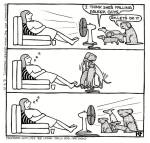
Sorry for the late post, I am operating off my back-up system, which is not up to snuff. My main computer is down with a fan issue. My main 8 inch fan went kaput. The tech is having problems getting it out to replace it…sigh. Here you go for both our Monday blues.
- Dog bride
- Yes, that is a dog.
- Sticks and stairs.
- Snow fun
- Chillin at the pool
- Star Wars dog
- Fan dogs
- Little puppy
- Basket of Huskies
- Buddies
- Comforter
- Winker
- Jumping rope
- Bird perch
- Lion dog
- Lewis and Bark
Filed under Animals
Badger unearths medieval grave
Dig this: Badger unearths medieval grave
By Marc Lallanilla
Published August 16, 2013
-

The grave of a medieval Slavic warlord, with a bronze bowl at his feet, was uncovered in Germany by a digging badger. (Felix Biermann, Georg-August-Universität Göttingen)
-

The grave of a medieval Slavic warlord, with a bronze bowl at his feet, was uncovered in Germany by a digging badger. (Felix Biermann, Georg-August-Universität Göttingen)
But archaeologists in Germany simply turned to badgers, the digging mammals that are the bane of gardeners everywhere. A badger living in the countryside near the town of Stolpe recently uncovered a remarkable site: the 12th-century burial ground of eight people, two of whom were apparently Slavic warlords.
Two sculptors who live in the area had been watching a badger digging a large sett (den). Upon closer examination, they noticed a pelvic bone inside the sett. “We pushed a camera into the badger’s sett and took photos by remote control,” Hendrikje Ring, one of the sculptors, told Der Spiegel
. “We found pieces of jewelry, retrieved them and contacted the authorities.”
‘He had been hit by lances and swords, and had also fallen from a horse.’
– Archaeologist Felix Biermann
One warlord was buried with a two-edged sword and a large bronze bowl at his feet, The Local
, an English-language news site, reports. “At the time, such bowls were used to wash the hands before eating,” archaeologist Felix Biermann of Georg-August University in Gttingen told The Local. “The bowls would be a sign that a man belonged to the upper classes.”
The same warrior also wore an elegant bronze belt buckle in the shape of an omega, with the head of a stylized snake at each end. “He was a well-equipped warrior,” said Biermann, who is leading the team excavating the site. “Scars and bone breaks show that he had been hit by lances and swords, and had also fallen from a horse.”
Another grave held the skeleton of a woman with a coin in her mouth. According to ancient religious beliefs, people were often buried with coins to pay a ferryman to transport them across the river that separated the living world from the realm of the dead.
This badger-assisted archaeological find isn’t the first time historical artifacts have been discovered in unusual ways. The Dead Sea Scrolls
were found in 1947 by a Bedouin shepherd boy who was searching for a sheep that had strayed from his flock. He threw a rock into a cave and, instead of a bleating lamb, heard the sound of pottery breaking, leading to the scrolls’ discovery.
And earlier this month, the buried remains of the residents from Bedlam, Europe’s oldest insane asylum
, were uncovered during the construction of the Crossrail subway line in London.
The archaeological finding in Germany is significant because it occurred at a place and time of conflict between heathen Slavic tribes and Christians, said Thomas Kersting, an archaeologist at the Brandenburg Department for Monument Protection.
One of the warriors’ graves appears to have been robbed of its sword, Kersting explained. “If someone went to this grave and opened it in full view of the local castle and took out the sword, that’s a sign that something’s not working anymore,” Kersting told Der Spiegel. “It highlights the time of upheaval when the rule of the Slavic tribes was coming to an end.”
Filed under Animals, Humor and Observations
New mammal species discovered
New mammal species discovered: a raccoon-sized critter with teddy bear looks
-

Aug. 15, 2013: The Smithsonian announced that the olinguito, which they had previously mistaken for an olingo, is actually a distinct species. (AP Photo/Smithsonian Institution, Mark Gurney)
-

Aug. 15, 2013: The Smithsonian announced that the olinguito, which they had previously mistaken for an olingo, is actually a distinct species. (AP Photo/Smithsonian Institution, Mark Gurney)
Researchers announced Thursday a rare discovery of a new species of mammal called the olinguito. It belongs to a grouping of large creatures that include dogs, cats and bears.
The raccoon-sized critter leaps through the trees of mountainous forests of Ecuador and Colombia at night, according to a Smithsonian researcher who has spent the past decade tracking them.
- SUMMARY
The olinguito lived in the National Zoo in Washington, mistaken for an olingo.
Olinguitos are smaller, have shorter tails, a rounder face, tinier ears and darker bushier fur.
Researchers guess there are thousands of olinguitos in the mountainous forest.
But the adorable olinguito (oh-lihn-GEE’-toe) shouldn’t have been too hard to find. One of them lived in the Smithsonian-run National Zoo in Washington for a year in a case of mistaken identity.
“It’s been kind of hiding in plain sight for a long time” despite its extraordinary beauty, said Kristofer Helgen, the Smithsonian’s curator of mammals.
The zoo’s little critter, named Ringerl, was mistaken for a sister species, the olingo. Ringerl was shipped from zoo to zoo from 1967 to 1976: Louisville, Ky., Tucson, Ariz., Salt Lake City, Washington and New York City to try to get it to breed with other olingos.
It wouldn’t.
“It turns out she wasn’t fussy,” Helgen said. “She wasn’t the right species.”
The discovery is described in a study in the journal ZooKey.
Helgen first figured olinguitos were different from olingos when he was looking at pelts and skeletons in a museum. He later led a team to South America in 2006.
“When we went to the field we found it in the very first night,” said study co-author Roland Kays of the North Carolina Museum of Natural Sciences. “It was almost like it was waiting for us.”
It’s hard to figure how olingos and onlinguitos were confused for each other.
“How is it different? In almost every way that you can look at it,” Helgen said.
‘It looks kind of like a fuzzball … a cross between a teddy bear and a house cat.’
– Kristofer Helgen, the Smithsonian’s curator of mammals
Olinguitos are smaller, have shorter tails, a rounder face, tinier ears and darker bushier fur, he said.
“It looks kind of like a fuzzball … kind of like a cross between a teddy bear and a house cat,” Helgen said.
It eats fruit, weighs about 2 pounds and has one baby at a time. Helgen figures there are thousands of olinguitos in the mountainous forest, traveling through the trees at night so they are hard to see.
While new species are found regularly, usually they are tiny and not mammals, the warm-blooded advanced class of animals that have hair, live births and mammary glands in females.
Outside experts said this is not merely renaming something, but a genuine new species and a significant find, the type that hasn’t happened for about 35 years.
“Most people believe there are no new species to discover, particularly of relatively large charismatic animals,” said Case Western Reserve University anatomy professor Darin Croft. “This study demonstrates that this is clearly not the case.”
Filed under Animals, Humor and Observations
Amazing Landscape Art You Won’t Believe
When you see the first picture, you swear it is a high definition photo of a real place. Then you get to see how Matthew Albanese created the scene and then set up lighting and the shooting angles. Amazing.
Matthew Albanese creates models of nature with fake fur, cotton wool, grout and cleverly placed lights. The effect is mesmerizing and indescribably beautiful. See much more at Matthew Albanese’ amazing work at his website HERE
Filed under Humor and Observations, Uncategorized
Heroes of Cosplay on TV – What They Got Right and Wrong
I was anticipating the new Heroes of Cosplay on SyFy with fear and trepidation. Reality TV in general focuses on the sickeningly self-centered attention seekers in each aspect of life. I don’t want to ever watch a show where people manipulate, form factions and backstab to get others voted off for money. Other reality TV shows revel in making the viewer feel better by watching the shallow and meaningless lives of others, whether it be Real Housewives or Jersey Shore. So I had expected Heroes of Cosplay to focus on shallow people, conflict and to make fun of cosplay.
Here is how the first episode went, right and wrong:
Things They Got Right
1) Not all cosplayers are glamorous with large chests on skinny bodies.
2) Cosplayers spend a lot of time thinking about their characters.
3) Cosplayers plan costumes way in advance.
4) Cosplaying costs money, time and effort.
5) Cosplayers make their own costumes when they can and spend a heck of a lot of work on it.
6) Cosplayers want people to notice their costume, and to give positive feedback.
7) Cosplayers put a lot of focus in their life on their hobby.
Things They Got Wrong
1) Cosplay is about competition. WRONG. I have never seen anyone act like a beauty pageant contestant and worry about someone else’s outfit. In fact, every cosplayer really appreciates everyone else’s cosplay. It is rare to have a competition and even rarer to have cash prizes. The cash prizes are so low that they never cover the cost of the conference much less hotel, travel, food and the costume itself. I have been in several “costume contests” and usually there are more contestants than audience. We all line up in categories, have fun cosplaying, and cheer each other. It is a very positive, non-nerve wracking, non-competitive process.
2) Cosplay is time driven. WRONG. There are no deadlines in cosplay. There are cons all over the place. I don’t know anyone who is “not ready” to go. Most cosplayers have multiple outfits and know when they will get to a con and what they are going to do months in advance.
3) Cosplayers are bitchy. WRONG. They made all the cosplayers look weird, demanding, controlling, stressed out and unreasonable. The men in their lives were all suffering. Cosplayers are fun-loving people comfortable with who they are. The men in their lives have fun with them and join in.
4) Cons are all about a contest. WRONG. At the last six cons I attended, if there was a competition, I did not know about it, nor care about it. Cons are about walking around, seeing cosplayers who are cool, being cool yourself, looking through great vendor stuff, meeting people from shows, comics, etc., spending time with friends, and socializing. Cons are like Disneyland. Lots of things to see and do, everyone is there to have a good time. In the TV show, the little time they spend not about the competition is stressing over meeting the judge and then partying too much at a bar. Ok, the latter part does happen… But partying at the bar does not keep you from being in costume the next day, after about 1 pm.
5) The ending – who will be the winning Cosplayer and get the Title? WRONG What title? What winning? The winning in cosplay is the one who has the most fun. It’s only about fun. Friends, dressing up as a cool character, roleplaying, making little kids happy, appreciating each other. They are trying to turn cosplay into faceoff, or iron chef, or the great race. That misses the whole point. Most of the cosplayers I know all participate in charity events for little kids, are they going to show that? I hope so.
6) The heroes… I met YaYa Han at a con where she was cosplaying Jessica Rabbit. I did not know who she was at the time. I have never heard of any of the others cosplayers. Where is Jessica Nigri? Seriously? They show her in the opening credits, I hope they compensated her. Where is Toni Darling? Cara Nicole/AZ Powergirl? Katy Mor? LeeAnna Vamp? Brianna? Ivy Doomkitty? The ladies of LT3? There are some famous cosplayers out there but not in the show.
7) All women? There is only one male on the show with very little screen time. In my opinion they should do one with all women, one with all men, or one with an even numbers. I don’t think it works to focus all on women and one token guy. There are a lot of cosplayers out there of all races, genders, and ages.
In summary – So far they have not made cosplayers look like social rejects and idiots. They have not made out like people are making fortunes in cosplay and have huge corporate sponsors, and they have shown some of the effort that goes into costume making, which are all good. However, the show focuses on stress and competition, neither of which should be part of cosplay in my opinion. I hope the show does not influence a new generation to come into cosplay with the attitude of “being the best”. That has no place in cosplay.
Filed under Humor and Observations
Great Character Descriptions from Science Fiction and Fantasy Books
As an author I found this very helpful. I was pleased to see that I have read most of the books as well. Putting good reading into your head helps get good writing out of it. These descriptions are far from the police version – 6 foot, medium build, 30s, caucasion male. I think all of us can learn to think a bit outside the box in creating our descriptions.
Reposted from StumbleUpon, from I09, written by CHARLIE JANE ANDERS AND MANDY CURTIS.

The best science fiction and fantasy books aren’t just about amazing ideas, or huge vistas — they’re about people. So part of the key to a really successful SF/fantasy book is to describe people in a memorable, cool fashion.
A good description of a character goes a long way to letting you get to know that person — but it’s a tricky business. The best way to learn this challenging skill is by studying how others have pulled it off in the past. So here are some examples of our favorite character descriptions from science fiction and fantasy books.
Top image by Tomasz Jendruszek.
Ender’s Game by Orson Scott Card (page 10):
“Ender did not see Peter as the beautiful ten-year-old boy that grown-ups saw, with dark, tousled hair and a face that could have belonged to Alexander the Great. Ender looked at Peter only to detect anger or boredom, the dangerous moods that almost always led to pain.” Nice construction, telling us how other people see Peter, but then juxtaposing it with the more visceral way that Ender sees him.
The Hundred Thousand Kingdoms by N.K. Jemisin (page 30):
“… Face like the moon, pale and somehow wavering. I could get the gist of his features, but none of it stuck in my mind beyond an impression of astonishing beauty. His long, long hair wafted around him like black smoke, its tendrils curling and moving of their own volition. His cloak — or perhaps that was his hair too — shifted as if in an unfelt wind. I could not recall him wearing a cloak before, on the balcony. The madness still lurked in his face, but it was a quieter madness now, not the rabid-animal savagery of before. Something else — I could not bring myself to call it humanity — stirred underneath the gleam.” This is full of lovely imagery, including the hair and the cloak moving like smoke — and it leaves you with a really sharp impression even as you don’t ever get a clear impression of him, because Yeine doesn’t either. It’s like a painting that sticks with you.
Hitchhiker’s Guide to the Galaxy by Douglas Adams (page 11):
“He was not conspicuously tall, his features were striking but not conspicuously handsome. His hair was wiry and gingerish and brushed backward from the temples. His skin seemed to be pulled backward from the nose. There was something very slightly odd about him, but it was difficult to say what it was. Perhaps it was that his eyes didn’t seem to blink often enough and when you talked to him for any length of time your eyes began involuntarily to water on his behalf. Perhaps it was that he smiled slightly too broadly and gave people the unnerving impression that he was about to go for their neck.” This description of Ford Prefect is sparky and full of action, you can practically see him smiling unblinkingly at you.
Lord of the Rings: The Fellowship of the Ring by J.R.R. Tolkien (page 274):
“The face of Elrond was ageless, neither old nor young, though in it was written the memory of many things both glad and sorrowful. His hair was dark as the shadows of twilight, and upon it was set a circlet of silver; his eyes were grey as a clear evening, and in them was a light like the light of stars.” You can almost feel night gathering as you read that passage, from the gray of evening to the appearance of the night sky, and the overall impression is one of great age despite the claim of agelessness.
The Hunger Games by Suzanne Collins (page 98):
“She’s the twelve-year-old, the one who reminded me so of Prim in stature. Up close she looks about ten. She has bright, dark eyes and satiny brown skin and stands tilted up on her toes with arms slightly extended to her sides, as if ready to take wing at the slightest sound. It’s impossible not to think of a bird.” A lot of the best character descriptions have action or a element of movement to them, so you not only see the character, you see her in motion. (Doris Lessing has a good passage about this in one of her Martha Quest novels.) Here, we get Rue’s physical details, but we also have an indelible sense of how she moves.
Do Androids Dream of Electric Sheep? by Philip K. Dick (page 39):
“Black-haired and slender, wearing the huge new dust-filtering glasses, she approached his car, her hands deep in the pockets of her brightly striped long coat. She had, on her sharply defined small face, an expression of sullen distaste.” The body language, with the hands deep in the coat pockets, is super clear — you can practically see her hunching over. And you have to love the giant glasses and the “sharply defined small face.”

Soulless by Gail Carriger (page 8):
“The fourth Earl of Woolsey was much larger than Professor Lyall and in possession of a near-permanent frown. Or at least he always seemed to be frowning when he was in the presence of Miss Alexia Tarabotti, ever since the hedgehog incident (which really, honestly, had not been her fault). He also had unreasonably pretty tawny eyes, mahogany-colored hair, and a particularly nice nose.” What’s great here is that you digress into backstory that gives you a tantalizing hint about this character’s bad temper, and then suddenly you’re snapped back into very concrete physical description — but the physical description seems sharper because you’ve gotten this impression of Lord Maccon as a person.
A Clockwork Orange by Anthony Burgess (page 2):
“These sharps were dressed in the heighth of fashion too, with purple and green and orange wigs on their gullivers. Each one not costing less than three or four weeks of those sharps’ wages, I should reckon, and make-up to match (rainbows round the glazzies, that is, and the rot painted very wide). Then they had long black very straight dresses, and on the groody part of them they had little badges of like silver with different malchick’s names on them-Joe and Mike and suchalike.” Describing the three devotchkas, Burgess gives us a crash course in dystopian future fashion.
Dune by Frank Herbert (page 459):
“Through the door came two Sardukar herding a girl-child who appeared to be about four years old. She wore a black aba, the hood thrown back to reveal the attachments of a stillsuit hanging free at her throat. Her eyes were Fremen blue, staring out of a soft, round face. She appeared completely unafraid and there was a look to her stare that made the Baron feel uneasy for no reason he could explain.” Your immediate impression of Alia is one of power and disturbing intensity. But there’s a lot of implied violence in the description too — the hood that’s “thrown back” and the emphasis on her bare throat. It’s immediately intense and gripping.
Harry Potter and the Philosopher’s Stone by J.K. Rowling (page 8):
“If the motorcycle was huge, it was nothing to the man sitting astride it. He was twice as tall as a normal man and at least five times as wide. He looked simply too big to be allowed, and so wild — long tangles of bushy black hair and beard hid most of his face, he had hands the size of trash can lids, and his feet in their leather boots were like baby dolphins.” The idea that Hagrid is “simply too big to be allowed” is fantastic — it’s the Dursleys’ viewpoint seeping through, but also maximizes how big and unruly he seems. And his feet are like baby dolphins! It’s comical and totally lodges itself in your brain.
Slaughterhouse Five by Kurt Vonnegut (page 23):
“He was a funny-looking child who became a funny-looking youth — tall and weak, and shaped like a bottle of Coca-Cola.” I love the pithiness of Vonnegut, the quirky images that say a lot in a few words.
Boneshaker by Cherie Priest (page 22):
“Without the coat, her body had a lean look to it — as if she worked too long, and ate too little or too poorly. Her gloves and tall brown boots were caked with the filth of the plant, and she was wearing pants like a man. Her long, dark hair was piled up and back, but two shifts of labor had picked it apart and heavy strands had scattered, escaping the combs she’d used to hold it all aloft.” This is another description that gives you both the physical details but also a sense of who Briar is, and exactly how poverty and hard labor have affected her.
Nineteen Eighty-Four by George Orwell (page 12):
“She was a bold-looking girl of about twenty-seven, with thick dark hair, a freckled face, and swift, athletic movements. A narrow scarlet sash, emblem of the Junior Anti-Sex League, was wound several times around her waist of her overalls, just tightly enough to bring out the shapeliness of her hips.” I love the irony of the anti-sex sash bringing out the shapeliness of Julia’s hips, but also the repeated suggestions that she’s bold and fast-moving.
Neverwhere by Neil Gaiman (page 7):
“There are four simple ways for the observant to tell Mr. Croup and Mr. Vandemar apart: first, Mr. Vandemar is two and a half heads taller than Mr. Croup; second, Mr. Croup has eyes of a faded china blue, while Mr. Vandemar’s eyes are brown; third, while Mr. Vandemar fashioned the rings he wears on his right hand out of the skulls of four ravens, Mr. Croup has no obvious jewelry; fourth, Mr. Croup likes words, while Mr. Vandemar is always hungry. Also, they look nothing alike.” I love how the first sentence sets you up to believe the two characters are almost identical, and by the time the expectation is subverted, you’ve gotten a very clear impression of both of them because you’ve been paying extra-careful attention.
Fahrenheit 451 by Ray Bradbury (page 4):
“He knew that when he returned to the firehouse, he might wink at himself, a minstrel man, burnt-corked, in the mirror. Later, going to sleep, he would feel the fiery smile still gripped by his face muscles, in the dark. It never went away, that smile, it never ever went away, as long as he remembered.” It’s not exactly a description, but it gives us a vivid impression of Guy Montag, his creepy smile and his burnt face.
The Golden Compass by Philip Pullman (page 12):
“Lord Asriel was a tall man with powerful shoulders, a fierce dark face, and eyes that seemed to flash and glitter with savage laughter. It was a face to be dominated by, or to fight: never a face to patronize or pity. All his movements were large and perfectly balanced, like those of a wild animal, and when he appeared in a room like this, he seemed a wild animal held in a cage too small for it.” I love the idea that his movements can be both huge and completely controlled, and that his face tells you what the two proper responses to it are.
Brave New World by Aldous Huxley (page 4):
“Tall and rather thin but upright, the Director advanced into the room. He had a long chin and big rather prominent teeth, just covered, when he was not talking, by his full, floridly curved lips. Old, young? Thirty? Fifty? Fifty-five? It was hard to say.” It’s funny how a lot of descriptions leave some things unresolved, like the Director of Hatcheries and Conditioning’s age — but you know that he’s someone who “advances” into a room rather than strolling in, and he’s always talking and displaying his giant teeth.
A Game of Thrones by George R.R. Martin (page 40):
“Fifteen years past, when they had ridden forth to win a throne, the Lord of Storm’s End had been clean-shaven, clear-eyed, and muscled like a maiden’s fantasy. Six and a half feet tall, he towered over lesser men, and when he donned the armor and the great antlered helmet of his house, he became a veritable giant. He’d had a giant’s strength too, his weapon of choice a spiked iron warhammer that Ned could scarcely lift. In those days, the smell of leather and blood had clung to him like perfume.
“Now it was perfume that clung to him like perfume, and he had a girth to match his height. Ned had last seen the king nine years before during Balon Greyjoy’s rebellion, when the stag and the direwolf had joined to end the pretensions of the self-proclaimed King of the Iron Islands. Since the night they had stood side by side in Greyjoy’s fallen stronghold, where Robert had accepted the rebel lord’s surrender and Ned had taken his son Theon as hostage and ward, the king had gained at least eight stone. A beard as course and black as iron covered his jaw to hide his double chin and the sag of his royal jowls, but nothing could hide his stomach or the dark circles under his eyes.” Instead of a contrast between how other people see a character and the POV character sees him, as in Ender’s Game, you have a lovely contrast between how Robert appeared in his prime and how he appears now — which serves to accentuate his present decrepitude far more than a simple description would.
Filed under Humor and Observations, Writing
America’s Forgotten Pin-Up Girl (Full Figure Woman Hilda)
In today’s world where anorexia and heroin chic fashion abound, it is kind of cool to show that full figured women were popular and even pin-ups at one time. I came across this and wanted to share it.

America’s Forgotten Pin-Up Girl
In “have you met” “Nostalgia” on August 2, 2013 at 1:14 pm
Word of the day:
Zaftig /zäftig/ adjective: (of a woman) Having a full, rounded figure; plump.
Meet Hilda, the creation of illustrator Duane Bryers and pin-up art’s best kept secret. Voluptuous in all the right places, a little clumsy but not at all shy about her figure, Hilda was one of the only atypical plus-sized pin-up queens to grace the pages of American calendars from the 1950s up until the early 1980s, and achieved moderate notoriety in the 1960s.
“She’s a creation out of my head. I had various models over the years, but some of my best Hilda paintings I’ve ever done were done without a model,” veteran artist Duane told the online pin-up gallery Toil,
Despite being one of history’s longest running calendar queens alongside the likes of Marilyn Monroe, even the most dedicated vintage enthusiasts probably won’t have come across Hilda before.
“[Duane Bryers] had the chops to have been one of the greatest pin-up artists in America, but possibly his lust for ample-sized women prevented that,” admits the online gallery curator and Hilda collector, Les Toil.
That isn’t to say Hilda wasn’t capable of “inspiring strong sexual sensations in any red blooded woman-lover” (and still is). Another reason why our Hilda may not have not have enjoyed as much success is due to the fact that her face and body would often look different from calendar to calendar. “Unfortunately Mr. Bryers’ continuity skills weren’t perfect (which he admitted),” notes Les.
Of the moment he first discovered the lost Hilda watercolour illustrations, Les recalls:
“Quite a few summers back while perusing a local outdoors antique show, I came across a vintage calendar from 1965. As my eyes settled on this fine piece of lost Americana, all else slipped away … A light from the heavens shone directly on Hilda’s sweet, rosy face, fiery red mop top and that incredible abundant anatomy. Hilda is the only known ample sized icon in pin-up history that I have come upon. And yes, she very well does qualify as an icon.”
So let’s hang out with Hilda and appreciate her sexy round bottom for a moment …
Discover more of Hilda and her playful adventures on ToilGirls.com
Filed under Humor and Observations