Monthly Archives: November 2013

Thank You Fellow Veterans Past and Present

Veterans Day is an opportunity for all of us to thank those who have risked it all to uphold the Constitution and the nation.  Here is the oath I took when I entered the United States Air Force:

The Oath of Enlistment 

“I, Michael Bradley, do solemnly swear (or affirm) that I will support and defend the Constitution of the United States against all enemies, foreign and domestic; that I will bear true faith and allegiance to the same; and that I will obey the orders of the President of the United States and the orders of the officers appointed over me, according to regulations and the Uniform Code of Military Justice. So help me God.”

honorvet1

There is no expiration date on the oath.  It does not say as long as I am active duty or in uniform.  As a disabled veteran, I can tell you that helping veterans is very important.  Battlefield medicine has become so good that I saw a recent statistic that 98% of wounded now survive.  Unfortunately, stateside VA care is abysmal.  There are wait lines for disability approval that can last years.  Mental health, financial help and family help are often lacking.

Veterans Day_1

So at least for this day, join me in supporting those who have served, past and present.  See if you can reach out to at least one veteran in your life and say thank you.  It really does mean a lot.  Try writing or emailing your Congressman and Senators as well.  Our veterans deserve a whole lot better treatment when they return home.  These are young men and women, mostly 18 to 22 who join our military VOLUNTARILY to serve.  They serve so that you don’t face a draft or danger from other nations.  That alone should be reason to say thanks.

Veterans-Day-_1024-768_Ranotosh


Leave a comment

Filed under Humor and Observations, Uncategorized

1873: Steam engine on a Rigi railway, Switzerland

1873: Steam engine on a Rigi railway, Switzerland
“Rigi Railways are a group of railways on Mount Rigi, Lake Lucerne, Switzerland.The Vitznau-Rigi Bahn is also notable as the first mountain rack railway in Europe”

2 Comments

Filed under Humor and Observations

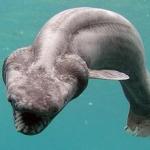
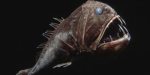
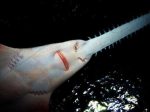
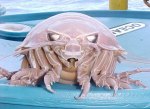
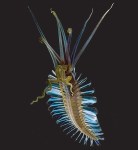
Real Life Monsters

I have posted before on real life monsters.  You can access those earlier posts by typing, “real life monsters” into the search block on my home page.  Enjoy!

Leave a comment

Filed under Animals, Humor and Observations

29th Wedding Anniversary

Today my wife and I have been married for 29 years.  I married her when she was just 17 (she lied about her age or I would have not dated her; I found out a week before we were hitched her Dad would have to sign for us.)  Through the ups and downs we have stuck it out.  I have now taken the best years of her life away from her – 17 to 46.  Now I get to spend the rest of them with her too, poor woman…  🙂

Happy Anniversary Becky!

4 Comments

Filed under Humor and Observations

Kraken rises: New fossil evidence of ‘sea monster’

Kraken rises: New fossil evidence of ‘sea monster’

By Stephanie Pappas

Nature’s Mysteries

Published November 01, 2013

LiveScience
  • Pirates of the Caribbean Kraken

    The Kraken destroys the Edinburgh Trader in the film, “Pirates of the Caribbean: Dead Man’s Chest.” (WALT DISNEY PICTURES)

  • kraken-beak

    This fossil discovered in Berlin-Ichthyosaur State Park in Nevada may be part of the beak of an ancient giant cephalopod, such as an octopus or squid. (MARK MCMENAMIN)

DENVER –  Did a giant kraken troll the Triassic seas, crushing ichthyosaurs and arranging their bones into pleasing patterns?

It sounds like a Halloween tale, but researchers who first suggested the existence of this ancient sea monster in 2011 say they now have more evidence backing up their controversial theory. Not only have they discovered a second example of strangely arranged bones, they’ve found a fossil that appears to be the beak of an ancient squid or octopus.

“This was extremely good luck,” said Mark McMenamin, a paleontologist at Mount Holyoke College in Massachusetts who presented his here Wednesday at the annual meeting of the Geological Society of America (GSA). “This was finding the needle in the haystack, really.” [See Images of New ‘Kraken’ Fossils & Lair]

Still, the kraken theory has not gained widespread acceptance.

“A kraken isn’t really necessary,” said David Fastovsky, a paleontologist at the University of Rhode Island who attended McMenamin’s GSA presentation and penned a response to the evidence for the Paleontological Society. “Everything can be explained by much less exotic means.”

Kraken controversy
McMenamin caused a splash when he and his colleagues first floated the idea of the kraken at a GSA meeting in 2011. The evidence: A bizarre arrangement of vertebrae of the ichthyosaur Shonisaurus popularis found in Berlin-Ichthyosaur State Park in Nevada.

‘When I saw that photograph, basically my eyeballs popped out.’

– Mark McMenamin, a paleontologist at Mount Holyoke College in Massachusett 

S. popularis was a school-bus-size, flippered marine reptile that lived during the Triassic period, 250 million to 200 million years ago. The bones of one of these ichthyosaurs were found in a strange linear pattern. McMenamin and his colleagues argued that they were arranged there by a giant cephalopod (an octopus or squid) playing with its food.

This hypothesis isn’t quite as out there as it may seem: Modern octopuses are known to manipulate bones, shells and other debris to form middens, concealing the entrances to their dens. And today’s giant squid are known to battle it out with sperm whales, as evidenced by tentacle scars found on whales and squid found in whale stomachs. The bone arrangements could be the earliest evidence of cephalopod intelligence, McMenamin said. [Release the Kraken! Giant Squid Photos]

Still, the idea engendered a lot of backlash. Glenn Storrs, the curator of vertebrate paleontology at the Cincinnati Museum Center, summed up the skepticism to LiveScience in 2011, calling the weird bone arrangement “circumstantial evidence.”

The kraken is back

Now, McMenamin has more. First, he argues, the arrangement of bones could not have been made by natural processes like currents or mud compaction. The shape of the bones is such that there is “virtually zero” probability that currents could have nudged them into that arrangement, McMenamin told a crowded auditorium of geoscientists at this year’s meeting.

“You always go from a more ordered to a less ordered state, not the other way around,” he said.

The organized state of the bones is the strongest evidence that some intelligent creature arranged them, McMenamin told LiveScience. But something else came up that has him convinced: A second example of the weird bone pattern.

This one comes from an ichthyosaur fossil formerly on display at the University of Nevada, Las Vegas Museum of Natural History. The fossil had been laid out in the museum exactly as found in the field. The exhibit is long gone now, but a curator passed a photo on to McMenamin.

“When I saw that photograph, basically my eyeballs popped out,” McMenamin told LiveScience.

Next to the ichthyosaur was a “debris pile” of scattered bones that were no longer in their proper place in the skeleton. And off to the side was a double row of vertebrae in the same configuration as McMenamin and his colleagues had seen in the original ichthyosaur remains.

The rib cage of the museum specimen shows damage, as if something perhaps the tentacles of a giant deep-sea monster? had constricted them in a bear hug.

“We think one plausible explanation of this is an attack on the icthyosaur by a much larger predator,” McMenamin said.

A smoking gun?
Once he saw the museum photograph, McMenamin made a field expedition back to Berlin-Ichthyosaur State Park, where he and his colleagues combed through fossils weathering out of rock in search of more cephalopod evidence. Almost unbelievably, they found it.

Among the fossils the team collected on their trip was a strange, pointed object that McMenamin almost tossed, thinking it might be a fish. But the fossil had un-fish-like fibers running through it, so he hung on to it. Months later, he bought a modern Humboldt squid beak off eBay for $60 and compared it to the ancient fossil.

The fracturing patterns and fibers matched. McMenamin thinks he has the beak of an elusive Triassic kraken.

The fossil “shows that indeed there were giant cephalopods in this area,” he said.

Or Not… ?
If the fossil is indeed a beak, it’s too fragmentary to prove the size of the cephalopod it belonged to, Fastovsky told LiveScience. He found the rest of McMenamin’s new evidence similarly unconvincing.

The measurement McMenamin used to dismiss the notion of currents moving the bones was “absolutely inapproprriate for the question he is addressing,” Fastovsky said. The analysis measures the probabiliy of a point in a circle falling in a certain pie-slice of that circle, he said, not the relative stability of vertebrae in currents. In fact, Fastovsky said, little is known about the currents of the time, and no one has ever measured what it would take to shuffle vertebral fragments around.

Fastovsky also pushed back against the modern analogues for the hypothetical kraken’s behavior. Octopus middens aren’t organized in nice rows, he said. They’re piles of debris. And sperm whales attack squid, not the other way around.

There’s a simpler explaination, Fastovsky said. Ichthyosaurs die. They sink to the bottom, where scavengers get to work stripping their skeletons of flesh. The tendons and ligaments that held the vertebrae together rot away or are eaten.

“What happens to that vertebral column?” Fastovsky said. “Well, the first thing that happens is it sort of starts to fall over almost like a row of dominoes.”

The weird tiled position actually appears to be the most stable position for those falling dominoes to end up at rest, Fastovsky said.

“A perfectly reasonable, pedestrian, coherant story emerges that doesn’t require wholesale invention of what is unknown or unprecendented,” he said.

McMenamin says he hopes for more debate on his findings. So far, he said, the response to his talk has been positive.

“We’re getting a message from the past,” he said, “So I’m hoping the discussion is better this time.”

Leave a comment

Filed under Animals, Humor and Observations

Saturday Cosplay Pictures

Your Saturday cosplay pictures for your enjoyment!  Thanks to all my fellow cosplayers who come up with so many cool outfits and make this so much fun.

Leave a comment

Filed under Humor and Observations

8 Abandoned Antarctic Whaling Stations and Bases that are Still Amazing


8 Abandoned Antarctic Whaling Stations and Bases that are Still Amazing


The Antarctic region has been home to numerous fishing villages, whaling stations, scientific bases, and way stations for exploration. Many of these facilities have since been abandoned, left to the snow and ice. But they still serve as remarkable time capsules to the industries and expeditions of their times.


Whaling station and British base, Whalers Bay, Deception Island

8 Abandoned Antarctic Whaling Stations and Bases that are Still Amazing

The Whalers Bay station was used by a Norwegian-Chilean whaling company in the early 1900s as a ship base. When oil prices dropped during the Great Depression, the place was abandoned.

8 Abandoned Antarctic Whaling Stations and Bases that are Still Amazing

In 1944, the British Admirality and the Colonial Office built a permanent base there as the part of Operation Tabarin to establish a year-round presence in the Antarctic. However, due to volcanic eruptions between 1967 and 1969, the spot was once again abandoned and has been for more than four decades.

(via Wikimedia Commons 1 – 2 and Otts World)

Oasis Station (Soviet Union, 1956-1959) later renamed A. B. Dobrowolski Station (Poland, 1959-1979), Bunger Hills, Knox Coast

8 Abandoned Antarctic Whaling Stations and Bases that are Still Amazing

8 Abandoned Antarctic Whaling Stations and Bases that are Still Amazing

(via Luminous LandscapeWikimapia and Skyscrapercity)

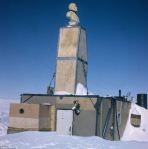
Pole of Inaccessibility, where Comrade Lenin is still watching, 1958

8 Abandoned Antarctic Whaling Stations and Bases that are Still Amazing

In December 1958, Soviet scientists set up a temporary base on The Inaccessibility Pole, marked with a bust of Lenin. This place has the world’s coldest year-round average temperature at -58.2°C (-72°F). The station is buried beneath the snow, but the plastic statue is still visible. If you dig down through the ice, you’ll find a golden visitor’s book to sign.

8 Abandoned Antarctic Whaling Stations and Bases that are Still Amazing

The photos were taken in 1965 (Olav Orhelm/Norwegian Polar Institute – above) and 2008 (Stein Tronstad/Norwegian Polar Institute – below).

8 Abandoned Antarctic Whaling Stations and Bases that are Still Amazing

The Expedition used these “Penguin” tractors to reach the Pole of Inaccessibility. Photo: N. Gvozdetsky

8 Abandoned Antarctic Whaling Stations and Bases that are Still Amazing

(via Sorpolen 2011 and Norwegian-U.S. Scientific Traverse of East Antarctica)

Shackleton’s Hut, 1909

8 Abandoned Antarctic Whaling Stations and Bases that are Still Amazing

The famous explorer simply left this fully stocked hut behind after the British Nimrod Expedition (1907-1909).

8 Abandoned Antarctic Whaling Stations and Bases that are Still Amazing

8 Abandoned Antarctic Whaling Stations and Bases that are Still Amazing

(via Wikimedia CommonsA Southern Migration and Flickr/Sandwichgirl)

Scott’s Hut, Ross Island, 1913

8 Abandoned Antarctic Whaling Stations and Bases that are Still Amazing

Robert Falcon Scott and his Terra Nova Expedition attempted to become the first people to reach the South Pole, but the Norwegian Roald Amundsen beat them by only a month. On the return journey, Scott and the other expedition members died from extreme cold, starvation, and exhaustion, but their hut, filled with lots of food, oil, and other goods, remains.

8 Abandoned Antarctic Whaling Stations and Bases that are Still Amazing

8 Abandoned Antarctic Whaling Stations and Bases that are Still Amazing

Later the building was used by Sir Ernest Shackleton (during the Imperial Trans Arctic Expedition, 1914-1917), and his supplies are still there, as well.

(via Flickr/sandwichgirl)

Base W, Detaille Island, 1956-1959

8 Abandoned Antarctic Whaling Stations and Bases that are Still Amazing

8 Abandoned Antarctic Whaling Stations and Bases that are Still Amazing

8 Abandoned Antarctic Whaling Stations and Bases that are Still Amazing

It was estabilished for meteorological and geological studies in 1956, but has been unmanned since 1959.

8 Abandoned Antarctic Whaling Stations and Bases that are Still Amazing

A stuffed penguin and some penguin eggs

(Photos by Kevin Fox and Rachel Lea Fox, via antarctic fox 1 – 2)

Grytviken, South Georgia

8 Abandoned Antarctic Whaling Stations and Bases that are Still Amazing

The settlement was established in 1904 by a Norwegian sea captain as a whaling station for his fishing company. It was closed in December 1966, but the church is still used occasionally for marriages.

8 Abandoned Antarctic Whaling Stations and Bases that are Still Amazing

The people had their own cinema (the photo above was taken in 1993), but it collapsed few years ago.

8 Abandoned Antarctic Whaling Stations and Bases that are Still Amazing

(via Wikimedia Commons 1 – 2 and DS World’s Lands)

Leith Harbour or Port Leith, 1909-1965

8 Abandoned Antarctic Whaling Stations and Bases that are Still Amazing

This was once the world’s largest whaling centre, but has been totally abandoned since 1965. The station housed a library, a cinema, and a hospital.

8 Abandoned Antarctic Whaling Stations and Bases that are Still Amazing

There is a gun mount on the hill behind the station, and another with the original 4.1′ gun on the west side of the harbour.

(via Penguinspirit and Peter Smith)

Leave a comment

Filed under Humor and Observations

Away From it All – Lenin’s Silent Vigil in Antarctica

Away From It All

http://www.stumbleupon.com/su/1Zcys9/:z!d9N!8.:Y.@noMBR/www.futilitycloset.com/2009/11/19/away-from-it-all-2/

http://commons.wikimedia.org/wiki/File:Southern_Pol_of_Inaccessibility_Henry_Cookson_team_n2i.JPG

Image: Wikimedia Commons

If you’re looking for a challenge, see if you can reach 82°06′S 54°58′E — it’s the most inaccessible point in Antarctica, the farthest from the ocean and the coldest place in the world.

You’ll know you’ve arrived because you’ll find a bust of Lenin peering weirdly across the ice toward Moscow.

Dig down 20 feet and you’ll uncover a pair of locked doors. Get those open and you can enter an old Soviet research hut, now completely entombed in snow.

And inside the hut is a golden visitors’ book to sign.

Leave a comment

Filed under Humor and Observations

Ballerina Takes Dancing “En Pointe” To A Whole New Level

Ballerina Wears Knife Shoes to Perform En Pointe

Ballerinas are often associated with beauty, grace, and elegant human forms. In his video En Puntas (‘On Points’), however, artist Javier Perez has managed to preserve all of these elements while also portraying the dark intensity, dedication and even violence that this graceful art form can represent.

En Puntas features ballerina Amelie Segarra dancing the en pointe ballet technique (in which the performer typically dances on the points of their toes) on the tips of huge, menacing kitchen knives in an empty, darkened theater. She struggles to maintain the grace that we typically expect of ballerinas as the knives scrape and stab ever more violently at the grand piano she’s standing on. Her composure, however, is periodically broken as she lets out a scream of frustration at the intense difficulty of her performance.

Coupled with the dark and empty theater she is performing in, the video makes for anything but light viewing. The intensity, frustration and violence of her performance (literally) on the razor’s edge are a testament to the intense dedication and sometimes physical suffering required of ballet performers.

Website: javierperez.es | via: (myampgoesto11mymodernmet)

4 Comments

Filed under Humor and Observations

Japan’s ‘toxic’ monster creeping towards US

Japan’s ‘toxic’ monster creeping towards US

By Maxim Lott

Published November 01, 2013

FoxNews.com
  • tsunami debris field graphic.jpg

    A NOAA model from Sept. 23 shows that a vast though disperse field of debris from a tsunami that struck Japan in 2011 is likely still dispersed north of the Main Hawaiian Islands and east of Midway Atoll. (NOAA)

  • Fukushima Tsunami Debris 5.jpg

    The 5 Gyres Institute, which monitors plastic pollution out at sea, said it found an abandoned boat, a tire, and a traditional Japanese tatami matt floating in the Pacific — all part of the massive debris field from the tsunami. (5GYRES.ORG)

  • Fukushima Tsunami Debris 1.jpg

    The 5 Gyres Institute, which monitors plastic pollution out at sea, said it found an abandoned boat, a tire, and a traditional Japanese tatami matt floating in the Pacific — all part of the massive debris field from the tsunami. (5GYRES.ORG)

  • Fukushima Tsunami Debris 2.jpg

    A giant dock from Japan that recently washed ashore in Oregon — carried across the Pacific after being torn loose by the tsunami.(NOAA)

  • Fukushima Tsunami Debris 4.jpg

    An aerial view of debris from the 8.9 magnitude earthquake and subsequent tsunami that struck northern Japan. (U.S. NAVY)

An enormous debris field is creeping toward the U.S. in the wake of the massive earthquake and tsunami that shook Japan in 2011, killing nearly 16,000 people and launching 1.5 million tons of floating objects into the sea.

That most concentrated part of the junk field is easily broader than Texas and centered approximately 1,700 miles off the Pacific coast, between California and Hawaii, although the National Oceanic and Atmospheric Administration (NOAA) hasn’t published more precise estimates. The agency estimates that the trash overall is scattered across an area in the ocean about three times the size of the continental United States.

The debris ranges from pulverized particles to entire docks that washed over from Japan, to intact boats, motorcycles, soccer balls, traditional Japanese flooring, and even some Japanese sea creatures never seen on the U.S. West Coast. “High windage” items reached the Pacific Northwest as early as winter 2011. Smaller debris is “sailing” here on the tides — NOAA estimates that the widely scattered detritus may show up intermittently along shorelines for a long period of time, over the next year or more.

In addition to physical junk, a wave of slightly radioactive water released from the broken Japanese Fukushima nuclear reactor is predicted to reach shore in 2014 — but scientists point out that it is so diluted that it is harmless.

‘We’re finding that all kinds of Japanese organisms are growing on the debris.’

– John Chapman of the Marine Science Center at Oregon State University 

In one of the more dramatic photos of debris, two rooftops and an upside-down boat can be seen floating in the ocean. In another, a giant dock from Japan washed ashore in Oregon.

Even more interesting may be what’s living on the dock.

“At first we were only thinking about objects like the floating docks, but now we’re finding that all kinds of Japanese organisms are growing on the debris,” John Chapman of the Marine Science Center at Oregon State University told FoxNews.com.

“We’ve found over 165 non-native species so far,” he added. “One type of insect, and almost all the others are marine organisms … we found the European blue mussel, which was introduced to Asia long ago, and then it grew on a lot of these things that are coming across the Pacific … we’d never seen it here, and we don’t particularly want it here,” he said, arguing that it could be “invasive” and displace current marine life.

Many other creatures have been found, too.

“In the debris we found the Northeastern sea star … as well as a type of brown algae that’s used to make miso soup. We’d never seen it here before.”

Chapman added that the migrant creatures took scientists completely by surprise.

“We thought, ‘the Pacific can’t be crossed by living organisms from Japan’ … and we were wrong, very wrong,” he said, adding that while a journey across the Pacific typically kills whatever clings to it, there were just so many pieces of debris launched by the tsunami that some were bound to take paths favorable to whatever organisms were on it.

“It wasn’t just the humans that were thrown around, it was these other things on the shore as well,” he said.

And he expects to see more creatures, because lot of debris is still out floating in the Pacific, according to the National Oceanic and Atmospheric Administration and to people who have been out to look for it.

“We found an abandoned boat, a tire, and a tatami matt — that’s traditional Japanese flooring made of woven reeds,” Stiv Wilson of the 5 Gyres Institute, which monitors plastic pollution out at sea, told FoxNews.com. Gyres was on an expedition to the “North Pacific Garbage Patch,” an area with few ocean currents where tons of plastic garbage accumulates, and that’s where he found the Japanese debris.

“We found a fishing vessel that was barely above water. It had Japanese characters on it and was made of fiberglass. On the front of the boat we found a rope that was ripped, so the tsunami wave probably hit it and tore it from dock. Then the wave must have hit it against something else, because the stern and the motor were missing.”

Gyres said he and his team also brought a Geiger counter with them to measure radiation.

“We didn’t find anything irradiated, we were getting inconsequential readings. I think there’s a little fearmongering about it.”
The National Oceanic and Atmospheric Administration agrees, and reports on its site: “Radiation experts agree that it is highly unlikely that any tsunami-generated marine debris will hold harmful levels of radiation from the Fukushima nuclear emergency.

Some debris in West Coast has been tested by the states, including items known to be from the tsunami, and no radioactive contamination above normal was found.”

That’s fortunate, as fisherman report seeing more debris lately.

“We have been seeing more and more,” Glen Spain, Northwest regional director of the Pacific Coast Federation of Fishermen’s Associations, told FoxNews.com.

“The major hazards of this stuff is that it can carry invasive species, like the pier that washed up. And the bigger stuff can be a navigational hazard.”

The next wave of debris will likely hit shores soon, Chapman noted.

“With winter and spring winds — that’s when it generally shows up. We’re going into that season again soon,” he said.

The author of the piece can be reached at maxim.lott@foxnews.com or on twitter at @maximlott.

4 Comments

Filed under Humor and Observations