
Welcome to Thailand’s Miss Tiffany’s 2014 Beauty Pageant for transgendered males, the ladyboys.
Be careful if you are concerned about gender issues while traveling to Thailand. These participants are truly difficult to identify.
Welcome to Thailand’s Miss Tiffany’s 2014 Beauty Pageant for transgendered males, the ladyboys.
Be careful if you are concerned about gender issues while traveling to Thailand. These participants are truly difficult to identify.


Filed under Humor and Observations
Yes, that is an actual picture of a human woman…

The Sun
But photos of Valeria Lukyanova, published by GQ, show the blonde’s eerie look. The mag traveled to the Ukraine to interview the YouTube sensation, and she dished about her need to adjust her looks and her thoughts on family life.
“Everyone wants a slim figure. Everyone gets breasts done. Everyone fixes up their face if it’s not ideal, you know? Everyone strives for the golden mean. It’s global now,” Lukyanova told GQ, shrugging off her major physical adjustments.
She made some controversial comments about race when discussing the trend toward more plastic surgery in recent years.
“For example, a Russian marries an Armenian, they have a kid, a cute girl, but she has her dad’s nose. She goes and files it down a little, and it’s all good,” she said. “Ethnicities are mixing now, so there’s degeneration, and it didn’t used to be like that.”
The Human Barbie confessed she was on an all-juice diet and only consumed a carrot juice concoction while at lunch with an editor from the magazine.
When asked about her future, the plastic-looking woman was adamant that she doesn’t intend on having any mini-Barbies running around in the future.
“The very idea of having children brings out this deep revulsion in me,” she said. “I’d rather die from torture because the worst thing in the world is to have a family lifestyle.”
Recently, Lukyanova traveled to the U.S. and met the “Human Ken,” Justin Jedlica. She said she would move to America if Hollywood came knocking, but so far no showbiz offers have come her way. Either way, she said she won’t be in the Ukraine much longer, explaining the reaction to her look hasn’t been pleasant.
“The next step is to cut off Ukraine entirely, because all I get here is sh-t. Why waste myself on this?”
















Filed under Humor and Observations
This is post is NOT about what you believe about issues or agree with others. It IS about whether you want to live in a world where you can lose your job for mainstream political beliefs that are later unpopular.

Case in point – Last week, Brendan Eich resigned as CEO of Mozilla under pressure after his support of California’s ban on gay marriage surfaced. In 2008, he made a $1,000 contribution supporting Proposition 8.
There is no evidence of Brendan Eich discriminating or persecuting gays or lesbians. When in 2008, he donated $1,000 to a California traditional marriage proposition, not only did 2/3 of Californians agree and pass the proposition, but at the time, Barack Obama publicly stated his own opposition to same sex marriage. (For the record, I don’t think government should be involved in marriage at all, nor should anyone use the government to keep others from living the way they wish, because today it is them, tomorrow it will be you.)

The point is, it was a private donation to a mainstream position – wrong or right – held by our President at the time and 2/3 of Californians. Under campaign disclosure laws, someone looked it up, started a boycott and protest, and now the CEO of Mozilla resigned and is gone. What if he had supported the opposition to the proposition and was pro-gay marriage and forced to resign? Would that also be ok?
What causes have you supported throughout your life? What petitions have you signed, organizations you have joined, money you have donated to charities? Would you want something from your past that was done due to your personal belief and mainstream at the time to cause you to lose your job and career?

In my opinion, it is just as wrong for people to persecute gays and lesbians in the past as it is for those groups who are now succeeding to persecute those who opposed them. Should we implement slavery for white people to make up for the past slavery of black people? Do we want to live in a country where the victorious take revenge on those they formerly disagreed with on a political issue to the point of taking away their ability to make a living?
Am I wrong about this? I have been wrong before. Still, if I am wrong, where does it stop? Is it winner take all where once you are on top you squash the enemy? I think that is not the way to live. Why not be graceful in our victories and give former foes time to become future friends?
Filed under Humor and Observations


Via Public Domain Review / Anorak
Filed under Humor and Observations
Being a science fiction creator is the most amazing adventure — you get to invent whole new worlds, brand new futures, and fantastic technologies, and you get to tell the most incredible stories about them. But it’s also a tough and heartbreaking career path, whether you’re in books, comics, movies or television. Here are 10 things that every brand new science fiction creator ought to know at the start.
Top image: guitfiddle on Deviant Art.
This is kind of a big one — no matter who you are or what kind of work you’re doing, you’re still telling a story that’s personally meaningful to you. Because science fiction is so idea-focused and so often driven by technologies or world-changing discoveries, it’s easy to lose sight of that. But not finding the personal story inside your huge alien-invasion narrative is the easiest way to fail. The only way to stand out, and the only way to tell stories that are going to move others, is to figure out what you’re personally connecting to in your work, no matter how clever or widescreen your premise.
We see this all the time nowadays — once a movie or book becomes a classic, people fixate on that one cool moment or that one clever line of dialogue. (Or sometimes, they fixate on something totally random, that just became a meme for some reason.) But no matter what, that one cool moment is not why people love that story — they love it for everything that sets up the cool moment, and everything else that makes it a great story. And this is why nostalgia is so deadly — because nostalgia tends to focus on the tip of the iceberg rather than the huge frozen juggernaut beneath. So if you spend a lot of time trying to recreate the coolest moment from your favorite TV episode, you’ll miss the stuff that mostly goes unnoticed, which made people care in the first place. Nostalgia always cheats, and the only answer is to try and create your own thing.

Image via JadrienC/Deviant Art.
Basically, you need to understand the difference between a premise and a plot. (This took me years to master, and I’m still not always great at telling the difference.) A premise is “in the future, everybody has a brain chip that regulates emotion.” A plot is “one person’s brain chip malfunctions,” or “someone invents a second brain chip that allows technology, but people who have both chips go insane.” A story that just lays out a basic premise isn’t really a story at all — it’s a pitch, at best. The hard part is often turning the idea into an actual story, and see point #1 above — you need to find what’s speaking to you personally about this premise.
Let’s say you manage to write a book that Ursula K. Le Guin could have written, or you figure out how to direct a movie exactly like James Cameron. Leaving aside the impossibility of fully capturing the style of one of the genre’s great originals, you’ll still be kind of screwed. For one thing, even if people may say they’re looking for the next James Cameron, they don’t mean they’re looking for a carbon copy of James Cameron. It’ll just fall flat. For another, the field is constantly changing, and if you copy your heroes too much, you risk coming up with a perfect rendition of what everybody was looking for 20 years ago. Pay homage to Le Guin all you want — but you also have to work to develop your own style, that’s something new and fresh.
People get paranoid about having their ideas stolen, or being accused of stealing someone else’s idea, or “wasting” an idea, or whatever. But ideas really are as common as dirt, and it’s easy to come up with more. Even cool ideas. Just spend half an hour reading New Scientist, or scanning the front page of the newspaper, or watching people in a public place — story ideas come from everywhere. And they’re mostly worthless. Even if you come up with a clever story idea that would make a Hollywood producer’s ears prick up, it’s still worthless unless you can turn it into something. And that, in turn, requires coming up with a protagonist who’s fascinating and belongs in the middle of that cool idea. Ideas are easy, but stories are freakishly hard.
If your characters aren’t clicking, or if you can’t figure out how to make them go in the direction your plot needs them to go in, that usually means you need to take a step back and think about what they’re really going through and what they would really feel in that situation. It’s tempting to push them into a pat resolution that satisfies your plot needs but doesn’t actually make that much sense for the characters. It’s also tempting to fall into a bleak, “existential” ending where your characters fail, just because you’re annoyed with them and can’t figure out what else to do with them. (And there’s nothing worse than a bleak ending that hasn’t been earned.) The end of your story is not a finish line, and this isn’t a race. Sometimes you need to go back and figure out where you went wrong.
Seriously. Everybody who’s been around for a while has a sob story in which they (or a friend) tried to jump on that hot vampire romance trend, or that super-popular “dystopian teen fiction” trend, and then realized that the trend was already on its last legs. You shouldn’t chase trends anyway, because that’s probably not going to result in work that you’re going to feel as good about in the end. But even if trend-chasing was a good idea, bear in mind there’s a long pipeline for books and an even longer one for movies or TV — the things you see coming out right now represent the trends that are already ending.
 SExpand
Image: Ben Wootten via Concept Ships
Research is a huge part of writing really good science fiction, especially if you’re speculating about future developments. Learn how to talk to scientists about their work — if you seem smart and interested in telling good stories about science, they’ll often be willing to talk toyou. Also, learn how to read scientific papers and do research. And learn how to do research about other cultures and other times, too — even if you’re not writing about them, it’ll make your worldbuilding way stronger.
This never really stops being true, for a lot of us. Especially when you’ve just finished something, you often can’t see what’s working. There’s no substitute at all for getting feedback from others, and running your work past professionals as much as you possibly can. Join a critique group or take classes, just to get more feedback on your work. When you wonder why your favorite writer or director has gone downhill since they became a megastar, it’s usually because they stopped getting feedback on their work. But especially when you’re starting out, you need constant abuse to get better at your craft.
Filed under Writing
Character Writing Tips from Writers Write

Writers can use these 12 Archetypes to create characters
The 12 Common Archetypes by Carl Golden
The twelve archetypes are divided into ego types, self types, and soul types.
1) The Four Ego Types
1. The Innocent
Motto: Free to be you and me
Core desire: to get to paradise
Goal: to be happy
Greatest fear: to be punished for doing something bad or wrong
Strategy: to do things right
Weakness: boring for all their naive innocence
Talent: faith and optimism
The Innocent is also known as the: utopian, traditionalist, naive, mystic, saint, romantic, dreamer.
2. The Orphan/Regular Guy or Gal
Motto: All men and women are created equal
Core Desire: connecting with others
Goal: to belong
Greatest fear: to be left out or to stand out from the crowd
Strategy: develop ordinary solid virtues, be down to earth, the common touch
Weakness: losing one’s own self in an effort to blend in or for the sake of superficial relationships
Talent: realism, empathy, lack of pretence
The Regular Person is also known as the: good old boy, everyman, the person next door, the realist, the working stiff, the solid citizen, the good neighbour, the silent majority.
3. The Hero
Motto: Where there’s a will, there’s a way
Core desire: to prove one’s worth through courageous acts
Goal: expert mastery in a way that improves the world
Greatest fear: weakness, vulnerability, being a “chicken”
Strategy: to be as strong and competent as possible
Weakness: arrogance, always needing another battle to fight
Talent: competence and courage
The Hero is also known as the: warrior, crusader, rescuer, superhero, the soldier, dragon slayer, the winner and the team player.
4. The Caregiver
Motto: Love your neighbour as yourself
Core desire: to protect and care for others
Goal: to help others
Greatest fear: selfishness and ingratitude
Strategy: doing things for others
Weakness: martyrdom and being exploited
Talent: compassion, generosity
The Caregiver is also known as the: saint, altruist, parent, helper, supporter.
2) The Four Soul Types
5. The Explorer
Motto: Don’t fence me in
Core desire: the freedom to find out who you are through exploring the world
Goal: to experience a better, more authentic, more fulfilling life
Biggest fear: getting trapped, conformity, and inner emptiness
Strategy: journey, seeking out and experiencing new things, escape from boredom
Weakness: aimless wandering, becoming a misfit
Talent: autonomy, ambition, being true to one’s soul
The explorer is also known as the: seeker, iconoclast, wanderer, individualist, pilgrim.
6. The Rebel
Motto: Rules are made to be broken
Core desire: revenge or revolution
Goal: to overturn what isn’t working
Greatest fear: to be powerless or ineffectual
Strategy: disrupt, destroy, or shock
Weakness: crossing over to the dark side, crime
Talent: outrageousness, radical freedom
The Outlaw is also known as the: rebel, revolutionary, wild man, the misfit, or iconoclast.
7. The Lover
Motto: You’re the only one
Core desire: intimacy and experience
Goal: being in a relationship with the people, work and surroundings they love
Greatest fear: being alone, a wallflower, unwanted, unloved
Strategy: to become more and more physically and emotionally attractive
Weakness: outward-directed desire to please others at risk of losing own identity
Talent: passion, gratitude, appreciation, and commitment
The Lover is also known as the: partner, friend, intimate, enthusiast, sensualist, spouse, team-builder.
8. The Creator
Motto: If you can imagine it, it can be done
Core desire: to create things of enduring value
Goal: to realize a vision
Greatest fear: mediocre vision or execution
Strategy: develop artistic control and skill
Task: to create culture, express own vision
Weakness: perfectionism, bad solutions
Talent: creativity and imagination
The Creator is also known as the: artist, inventor, innovator, musician, writer or dreamer.
3) The Four Self Types
9. The Jester
Motto: You only live once
Core desire: to live in the moment with full enjoyment
Goal: to have a great time and lighten up the world
Greatest fear: being bored or boring others
Strategy: play, make jokes, be funny
Weakness: frivolity, wasting time
Talent: joy
The Jester is also known as the: fool, trickster, joker, practical joker or comedian.
10. The Sage
Motto: The truth will set you free
Core desire: to find the truth.
Goal: to use intelligence and analysis to understand the world.
Biggest fear: being duped, misled—or ignorance.
Strategy: seeking out information and knowledge; self-reflection and understanding thought processes.
Weakness: can study details forever and never act.
Talent: wisdom, intelligence.
The Sage is also known as the: expert, scholar, detective, advisor, thinker, philosopher, academic, researcher, thinker, planner, professional, mentor, teacher, contemplative.
11. The Magician
Motto: I make things happen.
Core desire: understanding the fundamental laws of the universe
Goal: to make dreams come true
Greatest fear: unintended negative consequences
Strategy: develop a vision and live by it
Weakness: becoming manipulative
Talent: finding win-win solutions
The Magician is also known as the: visionary, catalyst, inventor, charismatic leader, shaman, healer, medicine man.
12. The Ruler
Motto: Power isn’t everything, it’s the only thing.
Core desire: control
Goal: create a prosperous, successful family or community
Strategy: exercise power
Greatest fear: chaos, being overthrown
Weakness: being authoritarian, unable to delegate
Talent: responsibility, leadership
The Ruler is also known as the: boss, leader, aristocrat, king, queen, politician, role model, manager or administrator.
Note: There are four cardinal orientations: freedom, social, ego, order. The types have a place on these orientations.
Article via soulcraft.co
Writers Write offers the best writing courses in South Africa. To find out about Writers Write – How to write a book, or The Plain Language Programme – Writing courses for business, email news@writerswrite.co.za
Join us on Facebook and Twitter for daily writing tips

Writers Write – Write to communicate
Filed under Writing
I had the honor of being friends with Don Jansen while we worked together at the House of Representatives. Don was a quiet man with a great sense of humor and loved by people of all parties and affiliations. He was so good at his job, that many a contentious issue was settled just by saying, “We got this legal opinion from Don.” In my experience, Don was never wrong in a legal opinion in over three decades of service. No one questioned his opinions because they knew he was as smart and thorough as he was honest, kind and honorable.
It is an unfortunate fact of life that as I see myself aging daily in the mirror that more and more often I have to say goodbye to ones that I love and care about. Don was a man for the rest of us to use as an inspiration to be better people ourselves. I have no doubt he is in a better place now, waiting in Paradise for his loved ones to join him in the next life. I hope I can be half the man that Don Jansen was during his life.
The following is the posting at the funeral home. You can never do justice to a man like Don Jansen in such a short summary or a tremendous life.

was born on August 21, 1948 in Luverne, Minnesota and was called to enter eternal life with his Lord and Savior Jesus Christ on March 29th, 2014. Donald William Jansen will be reunited with his parents William John Jansen and Florence Catherine Jansen who preceded him in death in 1982 and 1999 respectfully. Donald Jansen is survived by his loving wife, Jacqueline Jansen. Donald is also survived by his children Christopher (Annie Jansen), Morgan (Patty Gomez), and Madison Jansen, along with his grandchildren Darrin and William Jansen. Lastly, Donald is survived by his only sister, Mary Arnold, and numerous loving family members spanning across the United States. Donald left Minnesota with his parents and arrived in Phoenix, Arizona in 1951. He attended St. Agnes Catholic School and Brophy College Preparatory in Phoenix, Arizona. Donald graduated with a political science degree from Arizona State University in 1970 later serving in the United States Army as a Lieutenant. After his military service, Donald was accepted into Gonzaga Law School and graduated in 1975. Donald began an illustrious career with the State of Arizona spanning almost 40 years. Donald began his journey in 1976 through 1983 as an Assistant Rules Attorney. In 1984 he became the Legal Counsel to the Majority Leader leaving that post in 1986. From 1987 through 1992 he held the title of Executive Director of Legislative Council. In 1993 he landed the position of Policy Advisor & Special Counsel to the Majority, which ended in 1996. From 1997 through 2004 Donald was tapped to be the Counsel to the Majority, General Counsel, and Counsel to the Speaker of the House. Donald retired in 2005 after thirty years of incredible and dedicated service to the prosperity of the State of Arizona. Donald was loved by so many and is referred to as one of the most respected Arizona Constitutional Attorneys. He was asked to come back in 2005 with the title of Special Counsel to the Majority. From 2009 through 2014 Donald ended his career where he started as the Rules Attorney. Donald’s vast knowledge of the United States Constitution and the Arizona State Constitution was second to none. Donald’s dedication to his family and to this great State will be truly missed. Yet, his presence will be felt at his former Phoenix residence with his family and in the halls of the Arizona State Representatives. Visitation will be held from 6-8pm with a Scripture Service at 7pm, Thursday, April 3, at Whitney & Murphy Funeral Home, 4800 E. Indian School Road, Phoenix. Funeral Mass will be at 10:30am, Friday, April 4, at St. Agnes Catholic Church, 1954 N. 24th Street, Phoenix.
Filed under Humor and Observations
Cosplay pictures for you to enjoy!











































Filed under Humor and Observations
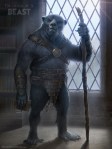
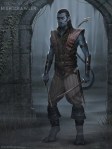
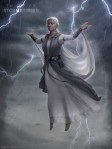
Artist Nate Hallinan created concept sketches for a medieval X-Men series.
“The Order of X is a group of ‘gifted’ individuals in the service of Lord Charles Xavier. The Order provides sanctuary and protection to individuals outcast by society due to their innate abnormalities. These people are often misidentified as monsters, demons, warlocks and witches. Only those who are accepting of the ‘gifted’ are welcome in the realm of Lord Xavier.”
A fan of his work even made a petition to have this made into a real comic series. You can sign it here.
Read more at http://www.geeksaresexy.net/2013/12/10/medieval-x-men-art-series-picture-gallery/#WjvJKXcR1j7KpHrW.99
Click photos to enlarge.





Filed under Humor and Observations, Uncategorized













































 Michael Bradley - Time Traveler