Monthly Archives: October 2014

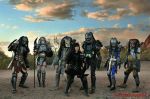
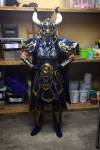
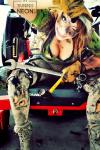
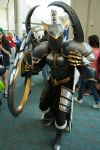
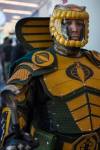
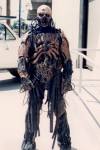
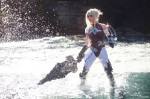
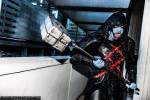
Cosplay Pictures for Your Enjoyment!

Cosplayers displaying their cosplay outfits and style.  Enjoy!

Leave a comment

Filed under Humor and Observations

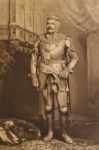
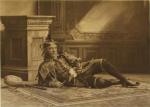
1897: The Duchess of Devonshire’s Jubilee Ball

1 Comment

Filed under Humor and Observations

Mummified fetus reveals ancient surgical procedure

mummified-fetus

A mummified fetus dating back to 1840 and discovered in Central Italy. (Ruggero D’Anastasio)

A 19th-century mummified fetus that underwent an ancient surgical procedure while in its mother’s womb has been discovered by researchers in Italy, according to a new report.

The procedure was apparently done when a mother’s life was in danger or the fetus had already died.

The investigators found the mummy after a devastating magnitude-6.3 earthquake occurred in L’Aquila in central Italy on April 6, 2009. The earthquake resulted in more than 300 deaths and damaged many buildings in the nearby area, including the historical St. John the Evangelist church in the village of Casentino. The floor of the church partially collapsed, exposing underground rooms holding mummified human bodies, which included the new found fetus that dates back to 1840, according to the researchers’ estimates.

When the researchers examined the fetus mummy using a radiograph, they saw a fetal skeleton that was not fully connected or articulated, which means that some of the bones were not in the exact same position to each other as they likely were when the fetus was alive. They were not able to establish the sex of the fetus, as they could not determine the morphology of its pelvic and jaw bones, which scientists use to identify sexual characteristics of skeletons. The researchers did estimate the fetus was at 29 weeks of development inside its mother’s womb. [See Photos of the Mummy Fetus and Excavation Site]

A few features of the mummy suggested that an operation had taken place. The fetus’ skull had been dissected in several places and disconnected from the spine, while its arms had been separated from the rest of the body at the joints, none of which typically occurs in the process of post-mortem examinations. All of these characteristics “strongly suggest a case of embryotomy,” which was a procedure that occurred before removing the fetus from the womb, study author Ruggero D’Anastasio of University Museum at University of Chieti, Italy, told Live Science.

This likely case of embryotomy “is the only anthropological proof of this surgical practice up to now in this geographical region,” he added.

Embryotomy was a common practice in ancient times, D’Anastasio said. The procedure was practiced in Alexandria and then in Rome during the first and second centuries, the researchers wrote in the study. Physicians typically performed it when a mother’s life was threatened due to delivery complications or when the fetus was already thought to be dead in the womb.

According to some reports, however, “embryotomy was [also] the most extreme method of abortion during the medieval period,” they wrote.

The remains of this fetus had been reassembled to match its anatomic shape, including the fragments of the skull being placed at the top of the mummy inside a headgear. The careful reassembly and dressing of the fetus indicates a high sense of compassion for the death of unborn children within the local community at the time, the researchers said.

The other human remains found at the site likely date back to the 19th century or earlier, as confirmed by a scientific method of age determination called radiocarbon dating and information gathered from personal objects. Those items include rings and rosary beads, shoes and clothes, as well as the textiles and shrouds used for wrapping the mummified bodies.

Some of the bodies had lesions from autopsy procedures, such as craniotomy, in which a bone flap is removed from the skull to access the brain, according to the report published online Aug. 12 in the International Journal of Osteoarcheology.


Leave a comment

Filed under Humor and Observations

Random Humor for the End of the Work Week

Enjoy!

1 Comment

Filed under Humor and Observations

Magnetic poles could swap sooner than we thought

(NEWSER) – Earth’s magnetic field is weakening at 10 times the rate experts thought it was — and that could mean a reversal of the magnetic north and south poles could be coming sooner than expected.

But don’t panic just yet: Scientists are talking in terms of some 2,000 years, Scientific American reports.

The magnetic field has been weakening at a rate of about 5% every decade, as opposed to 5% every century, as had been believed. The field, LiveScience notes, protects us from solar radiation.

Such polar flips remain somewhat mysterious, but they’re linked to the movement of iron at the planet’s center. That movement is occasionally disrupted for reasons that aren’t clear; this leads to weakening of the magnetic field, and, in some cases, a reversal of the poles. That process takes an average of 5,000 years, Scientific American reports, and it last happened 780,000 years ago.

It’s probably nothing to worry about, the publication notes: There’s no sign of a crisis in the fossil record during previous reversals. As for the solar protection, scientists haven’t seen evidence that the field has ever totally disappeared, NASA reports.

Leave a comment

Filed under Humor and Observations

NASA eyes crew deep sleep option for Mars mission

  • SpaceWorksEnterprises.jpg

    Artwork by Mark Elwood (SpaceWorks Enterprises, Inc.)

A NASA-backed study explores an innovative way to dramatically cut the cost of a human expedition to Mars — put the crew in stasis.

The deep sleep, called torpor, would reduce astronauts’ metabolic functions with existing medical procedures. Torpor also can occur naturally in cases of hypothermia.

“Therapeutic torpor has been around in theory since the 1980s and really since 2003 has been a staple for critical care trauma patients in hospitals,” aerospace engineer Mark Schaffer, with SpaceWorks Enterprises in Atlanta, said at the International Astronomical Congress in Toronto last week. “Protocols exist in most major medical centers for inducing therapeutic hypothermia on patients to essentially keep them alive until they can get the kind of treatment that they need.”

Coupled with intravenous feeding, a crew could be put in hibernation for the transit time to Mars, which under the best-case scenario would take 180 days one-way.

So far, the duration of a patient’s time in torpor state has been limited to about one week.

“We haven’t had the need to keep someone in (therapeutic torpor) for longer than seven days,” Schaffer said. “For human Mars missions, we need to push that to 90 days, 180 days. Those are the types of mission flight times we’re talking about.”

Economically, the payoff looks impressive. Crews can live inside smaller ships with fewer amenities like galleys, exercise gear and of course water, food and clothing. One design includes a spinning habitat to provide a low-gravity environment to help offset bone and muscle loss.

SpaceWorks’ study, which was funded by NASA, shows a five-fold reduction in the amount of pressurized volume need for a hibernating crew and a three-fold reduction in the total amount of mass required, including consumables like food and water.

Overall, putting a crew in stasis cuts the baseline mission requirements from about 400 tons to about 220 tons.

“That’s more than one heavy-lift launch vehicle,” Schaffer said

Leave a comment

Filed under Humor and Observations

The US Military No Longer Fights

The only boots on the ground are apparently going to be military serving outside their training taking care of Ebola patients.  While the President does not believe ISIS or terrorism are imminent threats to our national security, and his people assure us we have nothing to fear from Ebola, it is apparently a national threat worthy of troops?

When I was in the military, we were all taught how to kill.  Basically, our job was to kill the enemies of the United States.  This is the Oath I swore to:

“I,Michael Bradley, do solemnly swear that I will support and defend the Constitution of the United States against all enemies, foreign and domestic; that I will bear true faith and allegiance to the same; and that I will obey the orders of the President of the United States and the orders of the officers appointed over me, according to regulations and the Uniform Code of Military Justice. So help me God.”

There is no expiration date on that oath by the way.  It does not end, “Until such time as I am separated from service…”  We were taught simply to have the enemy die for THEIR cause, and to live for ours.  Several times I was nearly in combat and I did suffer a service related disability which I still have.  As a volunteer, disabled veteran and patriot, it disturbs me that our military no longer fights.  Thank God President Reagan was my Commander-in-Chief.  In fact, the recent administrations seem committed to never having our troops fight, with the dreaded “boots on the ground” bs.  Instead, they nation build, school build, do humanitarian work, police work, and basically do everything they are NOT trained to do.  They are trained to kill the enemy, not be social workers and the Peace Corps.

So now, we have our military going to West Africa, not to fight terrorists, but to be health aid workers.  They get to build and staff clinics for Ebola patients.  I remember fondly the portion of my military training on treating deadly viruses (sarcasm).  My real training was on firing pistols, automatic rifles and learning how to fix planes to bomb the hell out of the enemy.  Yep, can’t risk boots on the ground for the military to fight like they are trained to, as the best fighting force in the history of the planet.  Nope, let’s have them do blood samples.  Read for yourself…

US military personnel on Ebola mission to handle blood samples

According to officials, a small group of trained military medical technicians on the ground will not be required to make direct contact with patients infected with the Ebola virus. However, they will have to handle infected blood samples, which Pentagon officials acknowledged Tuesday could be just as dangerous, if not more.

The Ebola Virus

The Ebola Virus

Already, three mobile-testing labs, staffed by three or four technicians each, have been deployed in Liberia as part of Operation United Assistance, the U.S. military’s effort to combat the Ebola virus. Four more labs have been requested.

Pentagon officials say the servicemembers on these small teams are the only individuals who will be intentionally handling any raw material that could be infected.

Gen. David Rodriguez, the head of U.S. Africa Command, told Pentagon reporters on Tuesday that these teams are trained to take all the necessary precautions.

“Those people are trained to the very highest level of operating in a nuclear, biological, and chemical arena, and they are tested continually,” Rodriguez said. “The [team] from Walter Reed has been operating there for many years, for example.”

Nevertheless, Pentagon Press Secretary Rear Adm. John Kirby said even handling the blood samples comes with serious risk, “if not more risk” than actually coming in contact with patients.

Early stages

Early stages

Both Rodriguez and Kirby stressed that while a small team will be required to handle blood samples, most of the force is composed of engineers and logisticians who will not be dealing with patients.

“Let me assure you,” Rodriguez said, “by providing pre-deployment training, adhering to strict medical protocols while deployed, and carrying out carefully planned reintegration measures based on risk and exposure, I am confident that we can ensure our servicemembers’ safety and the safety of their families and the American people.”

The Pentagon had to clarify some of the general’s remarks after the briefing on Tuesday. Rodriguez had said repeatedly that these laboratory workers would have to come in contact with the patients to take blood samples.

But that was not correct — the samples will be provided to the lab workers.

On Tuesday afternoon, Rodriquez issued the following statement:

“In response to comments I made today about U.S. military personnel potentially coming in direct contact with Ebola infected individuals, specific to lab testing, I want to clarify  my remarks. U.S. military personnel working in the labs are not interacting with patients, only samples. The testing labs are manned by highly skilled and trained personnel from the U.S. Naval Medical Research Center. These labs provide 24-hour turnaround results on samples received from area clinics and healthcare providers, with the capability to process up to 100 samples per day.”

So far, nearly 300 U.S. troops have deployed to Liberia, with another 50 going to Senegal, where they’ll provide a staging base for the movement of equipment and personnel.

After liver and kidneys liquefy and the patient bleeds out from every opening.

After liver and kidneys liquefy and the patient bleeds out from every opening.

The troops in Liberia, which are still flowing in and could total as many as 4,000, are responsible for setting up 17 field hospitals, each capable of holding 100 beds. Those hospitals will be staffed by civilian aid workers, many from USAID.  The most sophisticated hospital they’ll build will be located in Monrovia, Liberia, a 25-bed operation designed only to treat caregivers who may become infected with the virus.

Meanwhile, Rodriguez said the mission could last for up to one year. He said $750 million already has been budgeted for the first six months.

He said containing the spread of the virus is a national security priority for President Obama.

Obama is expected to visit the Pentagon Wednesday, only his second visit inside the building since taking office in 2009.

The president will meet with senior military leaders to talk about Ebola as well as the Islamic State.

Leave a comment

Filed under Humor and Observations, Uncategorized

Ford Fakes Engine Sound on New Mustangs and Ford F-150 Trucks…sigh…

The final engine-downsizing complaint—that a V6, no matter how powerful, can’t sound like a V8—is dead, thanks to Ford. We recently learned that the EcoBoost engine’s aural deficiencies are being addressed in the Mustang, and now we know the same is true for the 2015 Ford F-150 pickup.

READ MORE: How Ford snuck a 2015 F-150 into the Baja 1000

Under hard acceleration, the speakers play a V8 soundtrack over what little you hear of the turbocharged 2.7- and 3.5-liter EcoBoost sixes. Added sound deadening means you hear less turbo whoosh than before, too.

Ford engineers call it “order content,” we call it “fake engine sound.” The jargontastic name derives from the fact that different engines have different sounds as a result of layout and firing order. A V6 has more third-order noise, a V8 has more fourth-order sound, etc. The tech in the new F-150 adds more of the fourth-order ruckus.

READ MORE: 2015 Ford Mustang GT first impressions

The system won’t come in all EcoBoosted trucks, just the more expensive ones—from well-spec’d Lariats on up.

So ultimately, there is a replacement for V8 displacement: turbos, direct injection, and speaker cones.

Source:  Road and Track Magazine

http://www.roadandtrack.com/go/news/the-2015-ford-f-150-pumps-v8-engine-noise-into-v6-trucks

Leave a comment

Filed under Humor and Observations

52-million-year-old ‘ant-loving’ beetle caught in amber

beetle-in-amber

The beetle Protoclaviger trichodens got trapped in this piece of amber in India 52 million years ago. (J. Parker | AMNH)

A newly discovered 52-million-year-old fossil of an “ant-loving” beetle is the oldest example of its species on record, and may help researchers learn more about this social parasite, a new study finds.

Like its descendants living today, the ancient beetle was likely a myrmecophile, a species that depends on ants for survival. The prehistoric beetle probably shared living quarters with ants and benefited from their hard work by eating ant eggs and taking the ants’ resources.

Other myrmecophiles include the lycaenid butterfly, which lays its eggs in carpenter ants’ nests, tricking the ants into caring for their young; and the paussine ground beetle, which also dupes ants by living alongside them as it preys on the ants’ young and workers. [The 10 Most Diabolical and Disgusting Parasites]

The beetles’ and butterflies’ shared parasitic behavior suggests that myrmecophily (ant love) is an ancient evolutionary phenomenon, the researchers said. But the fossil record of such creatures is poor, making it unclear how and when this practice arose, they added.

The amber-encased beetle, now known as Protoclaviger trichodens, and other stealth beetles began to diversify just as modern ants became more abundant in prehistoric times, the researchers found.

“Although ants are an integral part of most terrestrial ecosystems today, at the time that this beetle was walking the Earth, ants were just beginning to take off, and these beetles were right there inside the ant colonies, deceiving them and exploiting them,” beetle specialist and lead researcher Joseph Parker, a research associate at the American Museum of Natural History and postdoctoral researcher at Columbia University, said in a statement.

There are roughly 370 known beetle species that belong to the Clavigeritaegroup, myrmecophiles that are about 0.04 to 0.12 inches long. But many more myrmecophile beetles are likely awaiting discovery, Parker said.”This tells us something not just about the beetles, but also about the ants their nests were big enough and resource-rich enough to be worthy of exploitation by these super-specialized insects,” Parker explained. “And when ants exploded ecologically and began to dominate, these beetles exploded with them.”

Sneaky beetles

The beetles use a sneaky strategy to bypass the high security surrounding ant nests. Ants rely on pheromones to recognize intruders, which they then dismember and eat. In a feat that continues to mystify scientists, Clavigeritaebeetles are able to pass through this smelling system and participate in colony life. [Mind Control: See Photos of Zombie Ants]

“Adopting this lifestyle brings lots of benefits,” Parker said. “These beetles live in a climate-controlled nest that is well protected against predators, and they have access to a great deal of food, including the ants’ eggs and brood, and most remarkably, liquid food regurgitated directly to their mouths by the worker ants themselves.”

The beetles have evolved to look a certain way to reap these benefits, he said.

Clavigeritaebeetles look nothing like their close relatives. The segments within their abdomens and antennas are fused, likely to provide protection against worker ants, which are somehow tricked into carrying the beetles around the nest. Eventually, the worker ants carry the beetles to the brood galleries, where the beetles feast on eggs and larvae, Parker said.

The beetles also have recessed mouthparts, which make it easy for them to receive liquid food from worker ants. They also coat their bodies with oily secretions from brushlike glands that may encourage the ants to “adopt” them, in lieu of attacking them. But the chemical makeup of these secretions is unknown.

“If you watch one of these beetles interact inside an ant colony, you’ll see the ants running up to it and licking those brushlike structures,” Parker said.

Rare beetle find

Yet it’s rare to encounter Clavigeritaebeetles in the wild, making the new specimen which is possibly the first fossil of this group to be uncovered a valuable find.

Researchers named it Protoclaviger trichodens, from the Greek word prtos(“first”) and claviger (“club bearer”). To describe its tufts of hair, the research team used the Greek word trchas (“hair”) and the Latin word dens (“prong”).

The fossil, from the Eocene epoch (about 56 million years ago to 34 million years ago), is an amber deposit from what was once a rich rainforest in India. The body may look like that of modern Clavigeritaebeetles, but two hooklike brushes on top of its abdomen, called trichomes, give it a primitive appearance, the researchers said. Also, Protoclaviger‘s abdominal segments are still separate, unlike the fused-together segments in today’s beetles.

Protoclaviger is a truly transitional fossil,” Parker said. “It marks a big step along the pathway that led to the highly modified social parasites we see today, and it helps us figure out the sequence of events that led to this sophisticated morphology.”

The study was published today Oct. 2 in the journal Current Biology.

Leave a comment

Filed under Humor and Observations

Cute Dogs to Cheer Up Your Monday

Enjoy!

Leave a comment

Filed under Animals