Monthly Archives: October 2014

Carved Crayon Sculptures

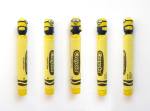
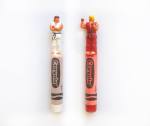
Wax Nostalgic features the artwork of Hoang Tran.  His art is made from carving crayons.  After the photo gallery, his information is included if you wish to use his services.


https://www.facebook.com/carvedcrayons?fref=photo

About

Wax Nostalgic features the artwork of Hoang Tran who specializes in carving everyday crayons into works of art.
Description

You can see most of my past work on http://hqtran.tumblr.com/

You can purchase some of my crayons onhttps://www.etsy.com/shop/CarvedCrayons

I also take requests for custom orders. You can message me here or email me at carvedcrayons@gmail.com

Leave a comment

Filed under Humor and Observations, Uncategorized

Sophisticated 600-year-old canoe discovered in New Zealand

auckland-canoe

This turtle was carved on the hull of a 600-year-old canoe found in New Zealand. Turtles are rare in pre-European Maori art. The engraving might be a nod to the Maori’s Polynesian ancestors, who revered the seafaring reptiles. (Tim Mackrell, Conservation Laboratory, The University of Auckland)

Sophisticated oceangoing canoes and favorable winds may have helped early human settlers colonize New Zealand, a pair of new studies shows.

The remote archipelagos of East Polynesia were among the last habitable places on Earth that humans were able to colonize. In New Zealand, human history only began around 1200-1300, when intrepid voyagers arrived by boat through several journeys over some generations.

A piece of that early heritage was recently revealed on a beach in New Zealand, when a 600-year-old canoe with a turtle carved on its hull emerged from a sand dune after a harsh storm. The researchers who examined the shipwreck say the vessel is more impressive than any other canoe previously linked to this period in New Zealand. [The 9 Craziest Ocean Voyages]

Separately, another group of scientists discovered a climate anomaly in the South Pacific during this era that would have eased sailing from central East Polynesia southwest to New Zealand. Both findings were detailed Sept. 29 in the journal Proceedings of the National Academy of Sciences.

Canoe on the coast

The canoe was revealed near the sheltered Anaweka estuary, on the northwestern end of New Zealand’s South Island.

“It kind of took my breath away, really, because it was so carefully constructed and so big,” said Dilys Johns, a senior research fellow at the University of Auckland in New Zealand.

The hull measured about 20 feet long and it was made from matai, or black pine, found in New Zealand. The boat had carved interior ribs and clear evidence of repair and reuse. Carbon dating tests showed that the vessel was last caulked with wads of bark in 1400.

Johns and colleagues say it’s likely that the hull once had a twin, and together, these vessels formed a double canoe (though the researchers haven’t ruled out the possibility that the find could have been a single canoe with an outrigger). If the ship was a double canoe, it probably had a deck, a shelter and a sail that was pitched forward, much like the historic canoes of the Society Islands (a group that includes Bora Bora and Tahiti) and the Southern Cook Islands. These island chains have been identified as likely Polynesian homelands of the Maori, the group of indigenous people who settled New Zealand.

The boat was surprisingly more sophisticated than the canoes described centuries later by the first Europeans to arrive in New Zealand, Johns told Live Science. At the time of European contact, the Maori were using dugout canoes, which were hollowed out from single, big trees with no internal frames. In the smaller islands of Polynesia, boat builders didn’t have access to trees that were big enough to make an entire canoe; to build a vessel, therefore, they had to create an elaborate arrangement of smaller wooden planks.

The newly described canoe seems to represent a mix of that ancestral plank technology and an adaptation to the new resources on New Zealand, since the boat has some big, hollowed-out portions but also sophisticated internal ribs, Johns and colleagues wrote.

The turtle carving on the boat also seems to link back to the settlers’ homeland. Turtle designs are rare in pre-European carvings in New Zealand, but widespread in Polynesia, where turtles were important in mythology and could represent humans or even gods in artwork. In many traditional Polynesian societies, only the elite were allowed to eat turtles, the study’s authors noted.

Shifty winds

A separate recent study examined the climate conditions that may have made possible the long journeys between the central East Polynesian islands and New Zealand. Scientists looked at the region’s ice cores and tree rings, which can act like prehistoric weather stations, recording everything from precipitation to wind patterns to atmospheric pressure and circulation strength. [10 Surprising Ways Weather Changed History]

Because of today’s wind patterns, scholars had assumed that early settlers of New Zealand would have had to sail thousands of miles from East Polynesia against the wind. But when the researchers reconstructed climate patterns in the South Pacific from the year 800 to 1600, they found several windows during the so-called Medieval Climate Anomaly when trade winds toward New Zealand were strengthened.(That anomaly occurred between the years 800 and 1300.)

“There are these persistent 20-year periods where there are extreme shifts in climate system,” the study’s head author, Ian Goodwin, a marine climatologist and marine geologist at Macquarie University in Sydney, told Live Science. “We show that the sailing canoe in its basic form would have been able to make these voyages purely through downwind sailing.”

Goodwin added that a downwind journey from an island in central East Polynesia might take about two weeks in a sailing canoe. But the trip would take four times that if the voyagers had to travel upwind.

Leave a comment

Filed under Humor and Observations

Cosplay Pictures for Saturday

Enjoy these talented cosplayers and their outfits for your weekend!

Leave a comment

Filed under Humor and Observations

Floating farms in the sky: Singapore concept design shows possible future of sustainable farming

Posted Tue at 5:22pmTue 30 Sep 2014, 5:22pm

In a post-apocalyptic future, where sea levels have swallowed the ground, food will be grown in great towers floating on the sea.

It sounds like something from science fiction, but a Spanish architectural firm is bringing the concept closer to reality.

In a pilot project for the shores of Singapore, Barcelona-based firm JAPA has designed a network of looping towers floating on the shoreline to house crops for the increasingly land-poor nation.

“What we propose is not just a single tower but it’s like a network of towers that will produce agriculture via hydroponics,” said Javier Ponce, head architect and founder of Forward Thinking Architecture, the ideas lab for JAPA.

“All the crops will be produced inside the vertical structures that will be placed or located next to the cities and more dense areas.

“They will [then] distribute the crops, reducing the food mileage, avoiding CO2 and other factors.”

The farms are stacked in towers that sit like looped ribbon and float upright on the coastlines of major cities. They are designed to stand 150 metres tall, but the prototypes will begin much smaller.

“We used the sun as a design driver. The loop shape enables the vertical structure to receive more sunlight without having significant shadows,” Mr Ponce said.

The towers have a number of sensors that will monitor the crops remotely. They will operate on self-managing protocols, with consumption data collected from the cities telling the towers what to grow and in what amount.

“We aim to use a metabolic layer on top of the physical structure like a protocol,” Mr Ponce said.

“The aim is that these vertical structures have this protocol that is based on real-time data of the city consumption, so this will help us to know the amount of food and type of food [required], avoiding a lot of food waste.”

Singapore floating farm design explainer graphic

Design could be the answer for densely populated countries

Singapore has the third highest population density in the world, with 7,700 people per square kilometre.

Lacking space for agriculture, Singapore is forced to import 90 per cent of its food.

This concept could be the answer to food security concerns for small, densely populated nations that stand to lose more farmable land to rising sea levels, climate change and population growth.

“We believe these types of initiatives can be applied closer to the existing and new emerging urban centres in order to help mitigate the future food issue,” Mr Ponce said.

This can transform a city’s nearby territories into more stimulating environments, capable of self-producing quality food

Javier Ponce, Forward Thinking Architecture

“This can transform a city’s nearby territories into more stimulating environments, capable of self-producing quality food in order to avoid massive imports from abroad.”

Mr Ponce said the design could have wide applications for other land-poor and small island nations.

“We believe it’s interesting to explore because you don’t have land and you have premium prices and water is scarce. We believe it is quite an interesting concept to explore but it will depend on each country,” he said.

The Singapore pilot project has not yet begun and already Mr Ponce said he has received interest from international agriculture organisations.

“We have been approached by some agricultural societies and some private clients as well but it will take further study and quite a bit of time to study this in order to give a real opinion based on testing,” he said.

“We would love to work with technology companies and governments in order to see if this can work in the future.”

Mr Ponce said the plans had been submitted to the Singaporean government, and the project would begin once they had been approved.

1 Comment

Filed under Humor and Observations

New 3D printer lets home cooks print their dinner

3drpinter.jpg

Foodini is a 3D printer that can print pizza, ravioli, burgers and more. (Natural Machines)

Here’s an appliance to help you make perfect pizza every time, and we mean every time.

The same technology being used to make guns, toys and even diamond rings, is being applied to homemade food.

Barcelona-based 3D printing startup Natural Machines is releasing the Foodini, a 3D printer that allows cooks to create perfectly formed meals, reports the BBC.

Users can combine up to six ingredients to at a time, and with a push of a button, the food comes out of the nozzle in a preprogrammed pattern. Think evenly made pizzas, burgers, and ravioli.  And it’s designed so the ordinary home cook can use it.

The Foodini, which looks a bit like a miniature oven, can also perform other useful food prep tasks, like decorate cakes.

However, it can only print in one material at a time, so you’ll have to switch different ingredients as you print. And it can only combine ingredients and not actually cook them.

But the concept is interesting because while it automates food production, it also allows home cooks to make items they would otherwise get from the box, like pasta.

The Foodini is expected to go on sale this spring for about $1,400.


1 Comment

Filed under Humor and Observations

TOP 10 TOILETS THROUGH TIME

Posted By:
Amy Commander
Reconstruction of the toilets at Housesteads Roman Fort by Philip Corke

It’s not glamorous, but everybody needs to do it. From Romans gossiping on the loo to medieval royal bottom-wiping, to the invention of our modern flushing toilet, here are 2,000 years of toilet history!

1. Housesteads Roman Fort, Hadrian’s Wall: All together now…

The best preserved Roman loos in Britain are at Housesteads Roman Fort on Hadrian’s Wall. At its height, the fort was garrisoned by 800 men, who would use the loo block you can still see today. There weren’t any cubicles, so men sat side by side, free to gossip on the events of the day. They didn’t have loo roll either, so many used a sponge on a stick, washed and shared by many people – lovely!

Visit Housesteads Roman Fort

Roman toilets at Housesteads Roman Fort on Hadrian's Wall

2. Old Sarum, Wiltshire: Luxury facilities, until you have to clean them…

These deep cesspits sat beneath the Norman castle at Old Sarum, probably underneath rooms reached from the main range, like private bathrooms. In the medieval period luxury castles were built with indoor toilets known as ‘garderobes’, and the waste dropped into a pit below. It was the job of the ‘Gongfarmer’ to remove it – one of the smelliest jobs in history? At Old Sarum the Gongfarmer was dangled from a rope tied around his waist, while he emptied the two 5m pits.

Visit Old Sarum

The garderobe pits at Old Sarum

3. Dover Castle, Kent: The royal wee

Henry II made sure that Dover Castle was well provided with garderobes. He had his own en-suite facilities off the principal bed-chamber. As with many castles of the era, chutes beneath the garderobes were built so that the waste fell into a pit which could be emptied from outside the building.

Medieval nobility would likely have a ‘groom of the stool’ – an important servant within the household responsible for making the experience comfortable for his employer, and bottom wiping!

Visit Dover Castle

Henry II's bedchamber at Dover Castle

4. Goodrich Castle, Herefordshire: The toilet tower

At Goodrich Castle there’s a whole tower dedicated to doing your business. The garderobe tower was built in the later Middle Ages to replace a small single latrine, and the survival of such as large example is extremely rare in England in Wales. The loos could be accessed from the courtyard from one of three doors, leading to the ‘cubicles’. There might have been more than one seat in each chamber.

Visit Goodrich Castle

Garderobe Tower at Goodrich Castle - the middle tower

5. Orford Castle, Suffolk: A Norman urinal

Garderobes are quite common in medieval castles, but urinals are a little more unusual. Henry II’s Orford Castlewas built as a show of royal power, and to guard the busy port of Orford. The constable – a senior royal official in charge of the castle – had his own private room, which has a urinal built into the thick castle wall.

Visit Orford Castle

Norman urinal at Orford Castle

6. Muchelney Abbey, Somerset: Thatched loo for monks

Many medieval abbey ruins across the country include the remains of the latrines, or ‘reredorter’ (meaning literally ‘at the back of the dormitory’), including Muchelney Abbey, Castle Acre Priory and Battle Abbey. At Muchelney the building survives with a thatched roof, making it the only one of its kind in Britain. The monks would enter the loo block via their dormitory and take their place in a cubicle – you can still see the fixings for the bench and partitions between each seat.

Visit Muchelney Abbey

The thatched monks' latrines at Muchelney Abbey

7. Jewel Tower, London: The Privy Palace

A precious survival from the medieval Palace of Westminster, Jewel Tower was part of the ‘Privy Palace’, the residence of the medieval kings and their families from 11th to 16th century. It was well supplied with garderobes, with one on each of the three floors. As the tower housed the royal treasure, while sitting on the loo you might have enjoyed the richest view in the kingdom!

Visit Jewel Tower

Door at Jewel Tower

8. Old Wardour Castle, Wiltshire: ‘A new discourse of a stale subject’

The forerunner to our modern flushing toilet was invented at Old Wardour Castle. The inventor Sir John Harington met with five others at the castle to discuss his idea for the first time in 1592. Sir John might have been influenced by the plumbing situation at Old Wardour – in the 14th century the castle was built with luxurious ‘en-suites’ for many of the important chambers, but by the end of the century it was more likely to just cause a big stink as both shafts and drains frequently blocked up.

Visit Old Wardour Castle

Old Wardour Castle

9. Audley End House, Essex: Feeling flush

Along with many other technological advancements, Audley End was one of the first country houses in England to have flushing toilets. The first of Joseph Bramah’s new hinged-value water closets was purchased in 1775, and a further 4 were bought in 1785 at a cost equivalent to the wages of two servants for a whole year! Although none of the Bramah toilets survive, there are two other early loos from the 1870s, one next to the chapel and another in the Coal Gallery.

Visit Audley End

Toilet at Audley End (structure on right)

10. Brodsworth Hall, South Yorkshire: Thunderboxes

Inside the elegant Victorian country house of Brodsworth Hall almost everything has been left exactly as it was when it was still a family home. So as well as the grand furniture, there’s also everything from the commodes of the 1840s to a modern pink bathroom from the 1960s/70s. A highlight has to be the flush thunderboxes – essentially mahogany boxes with a hole, and a brass handle for flushing – part of the original sanitary arrangements in the 1860s.

Visit Brodsworth Hall

Thunderbox at Brodsworth Hall

Uncover More Stories

If you fancy flushing out more toilet tales at historic sites around the country, choose from hundreds of castles, abbeys and ruins here. Don’t forget that English Heritage membership offers free access to over 400 historic sites, free or reduced price entry to hundreds of events and loads of other benefits.

Leave a comment

Filed under Humor and Observations

Cartoon Characters and Their Human Counterparts…

Enjoy!

1 Comment

Filed under Humor and Observations

New life: Scientists create first semi-synthetic organism with ‘alien’ DNA

SCIENCE EDITOR

The researchers believe the breakthrough is the first step towards creating new microbial life-forms with novel industrial or medical properties resulting from a potentially massive expansion of genetic information.

The semi-synthetic microbe, a genetically modified E. coli bacterium, has been endowed with an extra artificial piece of DNA with an expanded genetic alphabet – instead of the usual four “letters” of the alphabet its DNA molecule has six.

The natural genetic code of all living things is based on a sequence of four bases – G, C, T, A – which form two sets of bonded pairs, G to C and T to A, that link the two strands of the DNA double helix.

The DNA of the new semi-synthetic microbe, however, has a pair of extra base pairs, denoted by X and Y, which pair up together like the other base pairs and are fully integrated into the rest of the DNA’s genetic code.

The scientists said that the semi-synthetic E. coli bacterium replicates normally and is able to pass on the new genetic information to subsequent generations. However, it was not able to use the new encoded information to produce any novel proteins – the synthetic DNA was added as an extra circular strand that did not take part in the bacterium’s normal metabolic functions.

The study, published in the journal Nature, is the first time that scientists have managed to produce a genetically modified microbe that is able to function and replicate with a different genetic code to the one that is thought to have existed ever since life first started to evolve on Earth more than 3.5 billion years ago.

“Life on earth in all its diversity is encoded by only two pairs of DNA bases, A-T and C-G, and what we’ve made is an organism that stably contains those two plus a third, unnatural pair of bases,” said Professor Floyd Romesberg of the Scripps Research Institute in La Jolla, California.

“This shows that other solutions to storing information are possible and, of course, takes us closer to an expanded-DNA biology that will have many exciting applications, from new medicines to new kinds of nanotechnology,” Professor Romesberg said.

Expanding the genetic code with an extra base pair raises the prospect of building new kinds of proteins from a much wider range of amino acids than the 20 or so that exist in nature. A new code based on six base pairs could in theory deal with more than 200 amino acids, the scientists said.

“In principle, we could encode new proteins made from new, unnatural amino acids, which would give us greater power than ever to tailor protein therapeutics and diagnostics and laboratory reagents to have desired functions,” Professor Romesberg said.

“Other applications, such as nanomaterials, are also possible,” he added.

The researchers emphasised that there is little danger of the new life-forms living outside the confines of the laboratory, as they are not able to replicate with their synthetic DNA strand unless they are continuously fed the X and Y bases – synthetic chemicals called “d5SICS” and “dNaM”, that do not exist in nature.

The bacteria also need a special protein to transport the new bases around the cell of the microbe. The transporter protein comes from algae and if it, or the X and Y bases, are lacking, the microbial cells revert back to the natural genetic code, said Denis Malyshev of the Scripps Institute.

“Our new bases can only get into the cell if we turn on the “base transporter” protein. Without this transporter or when the new bases are not provided, the cell will revert back to A, T, G, C and the d5SICS and the dNaM will disappear from the genome,” Dr Malyshev said.

Leave a comment

Filed under Humor and Observations

8-year-old YouTube star makes $1.3 million per year

Prepare yourselves: You’re about to become jealous of an 8-year-old. Why, you ask? Well, let’s just say it’s not because of an epic collection of Legos or Barbies.  Here is his YouTube channel.


https://www.youtube.com/channel/UCHa-hWHrTt4hqh-WiHry3Lw

Evan spends his time reviewing toys and video games. He and his family create entertaining videos that often involve some special effects and time-lapse magic and post them on YouTube.

And then there’s the fact that Evan’s videos get millions of views. His Pirate Pig Attack Game video has received almost 7 million so far.

And finally, Evan’s YouTube channel brings home an incredible $1.3 million each year, according to Business Insider.

Newsweek reports the majority of that sum is made from ad revenue. But Evan’s father, Jared, told the publication Evan doesn’t even know about all the money and his popularity online.”For the most part, Evan goes about the day like any other second-grader. He goes to school, does his homework, hangs out with his friends, attends karate class, and, of course, he has his computer time.”

“Good Morning America” had Evan on the show Tuesday morning to talk about how he got started making his videos.

Evan explained, “I watched YouTube, and I guess asked my dad if I could start a YouTube channel.”

Michael Strahan asked, “Now, what is your all-time favorite toy? That’s what I want to know.” Evan replied, “Um, LEGOS!”

We decided to see how he stacked up against some other young, self-made millionaires.

App designer Nick D’Aloisio sold his news app to Yahoo for a whopping $30 million when he was just 17 years old.

And Evan’s already surpassed 15-year-old Madison Robinson. Last year Forbes reported she earned over $1 million in sales with her Fish Flops.

Seems like Evan’s in pretty good company. And as for all that money he’s raking in? He’ll be able to spend it when he’s older. For now, it’s in investment accounts for him and his sister, who also stars in the videos.

http://www.aol.com/article/2014/09/30/8-year-old-youtube-star-makes-1-3-million-per-year/20970024/?ncid=txtlnkusaolp00000058

1 Comment

Filed under Humor and Observations