Monthly Archives: April 2015

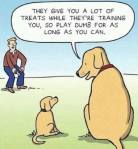
Cute Dogs for Your Monday Blues

Cute dogs to cheer up the beginning of your week…

Leave a comment

Filed under Animals, Humor and Observations

Vehicles – If you could choose only one…

If you could have any of the vehicles below, which one you choose?

Leave a comment

Filed under Humor and Observations

Ten real life legendary weapons…

Leave a comment

Filed under Uncategorized

Cosplay Pictures for Your Weekend

Cosplay and cosplayers for your viewing enjoyment!

Leave a comment

Filed under Uncategorized

Navy tests flying/undersea drone

FlyingWANDA.jpg

 (Naval Research Laboratory)

The U.S. Navy is working on a submarine-fighting drone that can operate both in the air and underwater.

The Flimmer (Flying Swimmer) is the brainchild of the Naval Research Laboratory. The drone, it says, can reach operational areas more quickly by flying over the surface of the water.

After successfully examining the performance of a “Test Sub” that combined a traditional submarine shape with a traditional aircraft shape, scientists  applied their findings to a flying version of the  NRL’s WANDA (Wrasse-inspired Agile Near-shore Deformable-fin Automaton ) drone.

According to the NRL’s Spectra magazine,  “Flying WANDA” has four fins and a wing, with the two aft fins mounted on the tips of the wing. Test flights confirmed Flying WANDA’s stability and control, and scientists have started testing the most effective “landing mode,” or splashdown, to protect the fin mechanisms.

“Experimentation with the Flying WANDA configuration continues,” wrote Dan Edwards of the NRL’s Electronic Warfare Division, who is leading the Flimmer project. “Future flights will explore the performance envelope using the fins as active control surfaces in the air and will continue the landing work.”

1 Comment

Filed under Humor and Observations

Aliens are likely huge, says scientist

Aliens are likely huge, says scientist

This video game publicity image released by 2K Games shows extraterrestrial invaders in “XCOM: Enemy Unknown.” (AP Photo/2K Games, File)

If you’re traveling to distant planets anytime soon, you might think twice about raising a ruckus: The inhabitants likely weigh an average of 650 pounds, a cosmologist says.

Apparently it all comes down to planet size and the conservation of energy,CNET reports. “Throughout the animal kingdom, species which are physically larger invariably possess a lower population density, possibly due to their enhanced energy demands,” says Fergus Simpson of the University of Barcelona.

That’s quite true on Earth, where we have seven billion (relatively big) people, and, the BBC noted last year, up to 100 trillion (tiny) ants.

Which brings us to outer space, where, Simpson says, “most inhabited planets are likely to be closer in size to Mars than the Earth.” And “since population density is widely observed to decline with increasing body mass, we conclude that most intelligent species are expected to exceed 300kg (660lbs),” he adds.

A scientist in Scotland says Simpson’s “average size calculation is reasonable,” but doesn’t account for gravitational pull—and planets with stronger gravity would probably have smaller animals, Newsweek reports.

SETI Institute researcher Seth Shostak says Simpson’s paper, published at arXiv.org, also leaves out evolutionary theory: With humans, for example, it’s our ability to walk upright and use opposable thumbs that gave us the upper hand on Earth.

“Polar bears are large but do not write great literature and build radio towers,” he says, “and a lot of that is probably because they are walking around on all fours.” (See which moon is the top contender for life outside Earth.)

This article originally appeared on Newser: Scientist: Aliens Are Likely Huge

Leave a comment

Filed under Humor and Observations

Creepy’ Doodles Emerge From Medieval Text


UV LIGHT REVEALS ERASED ADDITIONS TO THE WELSH ‘BLACK BOOK’

By Arden Dier,  Newser Staff
Posted Apr 7, 2015

(NEWSER) – Experts have uncovered what LiveScience calls “ghostly” secrets hidden in a medieval manuscript, which happens to be one of the first to reference King Arthur and Merlin. “The Black Book of Carmarthen” was compiled around 1250, but contains poetry, religious verses, and other texts dating as far back as the 9th century. While perusing its old pages with an ultraviolet light, however, experts at the University of Cambridge uncovered additional lines of verse and “quite creepy” ghost-like faces, the Independent reports. High-resolution photos helped researchers get a closer look at what they now think are drawings added to the 54-page tome after its creation. They were perhaps erased by someone named Jaspar Gryffyth, who penned his name in the book now housed at the National Library of Wales.

1015410-0-20150407100953

“It was a living text that was constantly added to,” but “this man in the 16th century went through the book tidying it up,” researcher Paul Russell tells the BBC. “The owner erased a lot of material from the left, right, top, and bottom margins. Anything he thought was an addition, he got rid of.” As the pages of the book are vellum, or stretched animal skin, Russell says a pumice stone was likely used. “It takes off a slight layer off the surface, but the ink has penetrated a bit further so what we can do is use UV light to bring out that ink.” Researchers were startled to find faces, a drawing of a fish, and what may be a never-before-seen Welsh poem. They’re continuing to search for more. (Another medieval discovery: a cemetery beneath Cambridge.)

1015411-0-20150407101037

4 Comments

Filed under Humor and Observations

Cute Dogs for Your Monday Blues

Cute dogs to cheer up the start of your week…

Leave a comment

Filed under Uncategorized

World’s first head transplant volunteer could experience something “worse than death”

World’s first head transplant volunteer could experience something “worse than death”

“I would not wish this on anyone,” says top surgeon.

This week, 30-year-old Russian man, Valery Spiridonov, announced that he will become the subject of the first human head transplant ever performed, saying he volunteers to have his head removed and installed on another person’s body.

If this sounds like some kind of sick joke, we’re right there with you, but unfortunately, this is all too real. Earlier this year, Italian surgeon Sergio Canavero outlined the transplant technique he intends to follow in the journal Surgical Neurology International, and said he planned to launch the project at the annual conference of the American Academy of Neurological and Orthopaedic Surgeons (AANOS) in the US in June, where he will invite other researchers to join him in his head transplant dream.

At the time, it sounded completely outlandish – and it still is – but the difference now is that Canavero actually has a living, breathing volunteer willing to be the guinea pig for what Christopher Hootan at The Independent says is predicted to be a 36-hour operation requiring the assistance of 150 doctors and nurses. You can read about the procedure here.

Hootan brings home what’s really at stake for Spiridonov – it’s not just death he has to worry about:

“A Werdnig-Hoffman disease sufferer with rapidly declining health, Spiridonov is willing to take a punt on this very experimental surgery and you can’t really blame him, but while he is prepared for the possibility that the body will reject his head and he will die, his fate could be considerably worse than death,” says Hootan. 

“I would not wish this on anyone,” said Dr Hunt Batjer, president elect of the American Association for Neurological Surgeons. “I would not allow anyone to do it to me as there are a lot of things worse than death.”

From speaking to several medical experts, Hootan has pin-pointed a problem that even the most perfectly performed head transplant procedure cannot mitigate – we have literally no idea what this will do to Spiridonov’s mind. There’s no telling what the transplant – and all the new connections and foreign chemicals that his head and brain will have to suddenly deal with – will do to Spiridonov’s psyche, but as Hootan puts it rather chillingly, it “could result in a hitherto never experienced level and quality of insanity”.

This is actually happening, and we’re terrified. Also, I’ve suddenly got a great idea for a movie, and judging from the creepy performance below, Canavero could pretty much be cast as himself:

Leave a comment

Filed under Humor and Observations

Gaining weight in midlife may decrease dementia risk, study suggests

obese _skinny_women.JPG

A study of nearly 2 million people in Britain suggests an unexpected protective effect against dementia: obesity in midlife.

The research, published Friday in the journal The Lancet Diabetes & Endocrinology, linked a 34 percent increased risk of dementia among people who had a BMI of less than 20 kg/m2. A BMI of 18.5 is considered to be underweight. Meanwhile, the study findings linked very obese people— those with a BMI greater than 40— to having a 29 percent decreased risk of dementia.

Study authors, from the London School of Hygiene & Tropical Medicine, did not examine the reasoning behind the link, but in a news release, they noted their findings contradict previous research that suggests obesity increases dementia risk.

Researchers collaborated with global data research firm OXON Epidemiology to analyze the study participants’ medical records from the Clinical Practice Research Datalink, a database comprising about 9 percent of the United Kingdom population. Study participants had a median age of 55 and an average BMI of 26.5, which is considered overweight, at the beginning of the study. During an average nine years of follow-up, nearly 50,000 people were diagnosed with dementia.

The authors noted a gradual declining trend of dementia risk above a BMI of 25, which is considered healthy, up to 35 and higher. The participants’ birth year, age of diagnosis, as well as potentially confounding factors believed to increase dementia risk— like alcohol use and smoking— didn’t impact the results significantly, the news release said.

 Lead study author Nawab Qizilbash, of OXON Epidemiology, and an honorary senior lecturer at the London School of Hygiene & Tropical Medicine, said further research is needed to identify the reason behind the link.

“If increased weight in mid-life is protective against dementia, the reasons for this inverse association are unclear at present,” he said in the news release. “Many different issues related to diet, exercise, frailty, genetic factors and weight change could play a part.”

Study author Stuart Pocock, medical statistics professor at the London School of Hygiene & Tropical Medicine, said his team’s initial findings may hold promise for future dementia treatment.

“Our results suggest that doctors, public health scientists, and policy makers need to rethink how to best identify who is at high risk of dementia,” Pocock said. “We also need to pay attention to the causes and public health consequences of the link between underweight and increased dementia risk, which our research has established. However, our results also open up an intriguing new avenue in the search for protective factors for dementia.”

Researchers noted in the release that their threshold for “underweight” in the study was 20 kg/m2, which is slightly higher than the BMI usually considered to be underweight, 18.5 kg/m2, to allow for more direct comparison with earlier dementia and BMI studies.

Leave a comment

Filed under Uncategorized