
You may be cool, but are you Kate Upton cool where people wait in line to touch your hair or see others touch her hair?

You may be cool, but are you …

You may be cool, but are you Kate Upton cool where people wait in line to touch your hair or see others touch her hair?
You may be cool, but are you …










Filed under Animals, Humor and Observations

The side view of a Palaeolithic dog fossil recovered from a cave in Belgium.
By CARL ZIMMER
Where did dogs come from? That simple question is the subject of a scientific debate right now. In May, a team of scientists published astudy pointing to East Asia as the place where dogs evolved from wolves. Now, another group of researchers has announced that dogs evolved several thousand miles to the west, in Europe.

Carl Zimmer
This controversy is intriguing even if you’re not a dog lover. It illuminates the challenges scientists face as they excavate the history of any species from its DNA.
Scientists have long agreed that the closest living relatives of dogs are wolves, their link confirmed by both anatomy and DNA. Somewhere, at some point, some wolves became domesticated. They evolved not only a different body shape, but also a different behavior. Instead of traveling in a pack to hunt down prey, dogs began lingering around humans. Eventually, those humans bred them into their many forms, from shar-peis to Newfoundlands.
A few fossils supply some tantalizing clues to that transformation. Dating back as far as 36,000 years, they look like wolfish dogs or doggish wolves. The oldest of these fossils have mostly turned up in Europe.
In the 1990s, scientists started using new techniques to explore the origin of dogs. They sequenced bits of DNA from living dog breeds and wolves from various parts of the world to see how they were related. And the DNA told a different story than the bones. In fact, it told different stories.
In a 2002 study, for example, Peter Savolainen, now at the Royal Institute of Technology in Sweden, and his colleagues concluded that dogs evolved in East Asia. Eight years later, however, Robert Wayne, a geneticist at the University of California, Los Angeles, and his colleagues analyzed some new dog breeds and concluded that the Middle East was where dogs got their start. (All such studies suggest that a few breeds may have been independently domesticated, although they differ on which ones and where.)
Dr. Savolainen and his colleagues continued to sequence DNA from more dogs, and they published more evidence for an East Asian origin of dogs — narrowing it down to South China.
While early studies of canine origins were limited to fragments of DNA, scientists are now starting to sequence entire genomes of dogs and wolves. In May, for example, Dr. Salovainen and Chinese colleagues reported that Chinese native dogs had the most wolflike genomes. By tallying up the mutations in the different dog and wolf genomes, they estimated that the ancestors of Chinese village dogs and wolves split about 32,000 years ago.
If this were true, then the first dogs would have become domesticated not by farmers, but by Chinese hunter-gatherers more than 20,000 years before the dawn of agriculture.
Dr. Wayne and his colleagues think that is wrong.
A dog may have wolflike DNA because it is a dog-wolf hybrid. In a paper that is not yet published, they analyze wolf and dog genomes to look for signs of ancient interbreeding. They cite evidence that, indeed, some of the DNA in dogs in East Asia comes from wolf interbreeding.
“That’s going to pump up the resemblance,” Dr. Wayne said.
Now Dr. Wayne and his colleagues are introducing a new line of evidence to the dog debate: ancient DNA. Over the past two decades, scientists have developed increasingly powerful tools to rescue fragments of DNA from fossils, producing “an explosion in the samples,” said Beth Shapiro of the University of California, Santa Cruz, a collaborator with Dr. Wayne.
On Thursday in the journal Science, Dr. Wayne, Dr. Shapiro and their colleagues report on the first large-scale comparison of DNA from both living and fossil dogs and wolves. They managed to extract DNA from 18 fossils found in Europe, Russia and the New World. They compared their genes to those from 49 wolves, 77 dogs and 4 coyotes.
The scientists examined a special kind of DNA found in a structure in the cell called the mitochondrion. Mitochondrial DNA comes only from mothers. Because each cell may have thousands of mitochondria, it is easier to gather enough genetic fragments to reconstruct its DNA.
The scientists did not find that living dogs were closely related to wolves from the Middle East or China. Instead, their closest relatives were ancient dogs and wolves from Europe.
“It’s a simple story, and the story is they were domesticated in Europe,” Dr. Shapiro said.
Dr. Shapiro and Dr. Wayne and their colleagues estimate that dogs split off from European wolves sometime between 18,000 and 30,000 years ago. At the time, Northern Europe was covered in glaciers and the southern portion was a grassland steppe where humans hunted for mammoths, horses and other big game.
“Humans couldn’t take everything, and that was a great treasure trove,” Dr. Wayne said. Some wolves began to follow the European hunters to scavenge on the carcasses they left behind. As they migrated along with people, they became isolated from other wolves.
Dog evolution experts praised the scientists for gathering so much new data. “I think it’s terrific,” said Adam Boyko, a Cornell biologist. Dr. Savolainen agreed. “I think it’s a fantastic sample,” he said.
But Dr. Savolainen said the analysis was flawed. “It’s not a correct scientific study, because it’s geographically biased,” he said.
The study lacks ancient DNA from fossils from East Asia or the Middle East, and so it’s not possible to tell whether the roots of dog evolution are anchored in those regions. “You just need to have samples from everywhere,” Dr. Savolainen said.
He also rejects Dr. Wayne’s argument that interbreeding in East Asia creates an illusion that dogs originated there. Dr. Savolainen points out that the study suggesting interbreeding was based on a wolf from northern China. “What they need to have is samples from south China,” he said.
There’s just one catch. South China is now so densely settled by people that no wolves live there. A similar problem applies to the fossil record.
“It may be impossible to go this way,” Dr. Savolainen said.
Dr. Wayne is not quite so pessimistic. He and his colleagues are hoping to widen their scope and find more DNA from fossils of dogs outside of Europe, while also looking at the genes of living dogs that might hold important clues. Yet he thinks it unlikely that the new evidence will change the basic conclusion of his latest study.
“But there have been so many surprises in the history of this research on dog domestication that I’m holding my breath till we get more information,” Dr. Wayne said.
Filed under Animals, Humor and Observations
Since many of had off Veteran’s Day (also celebrated by other names in other countries) celebrating the end of WW1 and honoring our veterans of all wars, Cute Dogs For Your Monday Blues is Cute Dogs for Your Tuesday Blues this week. Enjoy!



































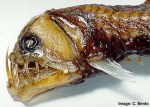
I have posted before on real life monsters. You can access those earlier posts by typing, “real life monsters” into the search block on my home page. Enjoy!
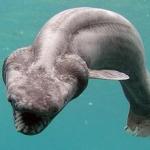
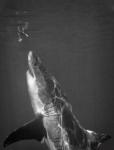









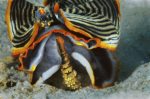
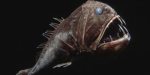
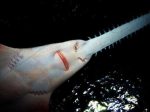

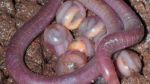


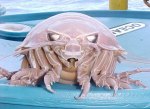


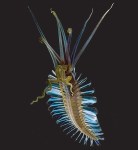




Filed under Animals, Humor and Observations
By Stephanie Pappas
Nature’s Mysteries
Published November 01, 2013

The Kraken destroys the Edinburgh Trader in the film, “Pirates of the Caribbean: Dead Man’s Chest.” (WALT DISNEY PICTURES)

This fossil discovered in Berlin-Ichthyosaur State Park in Nevada may be part of the beak of an ancient giant cephalopod, such as an octopus or squid. (MARK MCMENAMIN)
DENVER – Did a giant kraken troll the Triassic seas, crushing ichthyosaurs and arranging their bones into pleasing patterns?
It sounds like a Halloween tale, but researchers who first suggested the existence of this ancient sea monster in 2011 say they now have more evidence backing up their controversial theory. Not only have they discovered a second example of strangely arranged bones, they’ve found a fossil that appears to be the beak of an ancient squid or octopus.
“This was extremely good luck,” said Mark McMenamin, a paleontologist at Mount Holyoke College in Massachusetts who presented his here Wednesday at the annual meeting of the Geological Society of America (GSA). “This was finding the needle in the haystack, really.” [See Images of New ‘Kraken’ Fossils & Lair ]
]
Still, the kraken theory has not gained widespread acceptance.
“A kraken isn’t really necessary,” said David Fastovsky, a paleontologist at the University of Rhode Island who attended McMenamin’s GSA presentation and penned a response to the evidence for the Paleontological Society. “Everything can be explained by much less exotic means.”
Kraken controversy
McMenamin caused a splash when he and his colleagues first floated the idea of the kraken at a GSA meeting in 2011. The evidence: A bizarre arrangement of vertebrae of the ichthyosaur Shonisaurus popularis found in Berlin-Ichthyosaur State Park in Nevada.
‘When I saw that photograph, basically my eyeballs popped out.’
– Mark McMenamin, a paleontologist at Mount Holyoke College in Massachusett
S. popularis was a school-bus-size, flippered marine reptile that lived during the Triassic period, 250 million to 200 million years ago. The bones of one of these ichthyosaurs were found in a strange linear pattern. McMenamin and his colleagues argued that they were arranged there by a giant cephalopod (an octopus or squid) playing with its food.
This hypothesis isn’t quite as out there as it may seem: Modern octopuses are known to manipulate bones, shells and other debris to form middens, concealing the entrances to their dens. And today’s giant squid are known to battle it out with sperm whales, as evidenced by tentacle scars found on whales and squid found in whale stomachs. The bone arrangements could be the earliest evidence of cephalopod intelligence, McMenamin said. [Release the Kraken! Giant Squid Photos]
Still, the idea engendered a lot of backlash. Glenn Storrs, the curator of vertebrate paleontology at the Cincinnati Museum Center, summed up the skepticism to LiveScience in 2011, calling the weird bone arrangement “circumstantial evidence.”
The kraken is back
Now, McMenamin has more. First, he argues, the arrangement of bones could not have been made by natural processes like currents or mud compaction. The shape of the bones is such that there is “virtually zero” probability that currents could have nudged them into that arrangement, McMenamin told a crowded auditorium of geoscientists at this year’s meeting.
“You always go from a more ordered to a less ordered state, not the other way around,” he said.
The organized state of the bones is the strongest evidence that some intelligent creature arranged them, McMenamin told LiveScience. But something else came up that has him convinced: A second example of the weird bone pattern.
This one comes from an ichthyosaur fossil formerly on display at the University of Nevada, Las Vegas Museum of Natural History. The fossil had been laid out in the museum exactly as found in the field. The exhibit is long gone now, but a curator passed a photo on to McMenamin.
“When I saw that photograph, basically my eyeballs popped out,” McMenamin told LiveScience.
Next to the ichthyosaur was a “debris pile” of scattered bones that were no longer in their proper place in the skeleton. And off to the side was a double row of vertebrae in the same configuration as McMenamin and his colleagues had seen in the original ichthyosaur remains.
The rib cage of the museum specimen shows damage, as if something perhaps the tentacles of a giant deep-sea monster? had constricted them in a bear hug.
“We think one plausible explanation of this is an attack on the icthyosaur by a much larger predator,” McMenamin said.
A smoking gun?
Once he saw the museum photograph, McMenamin made a field expedition back to Berlin-Ichthyosaur State Park, where he and his colleagues combed through fossils weathering out of rock in search of more cephalopod evidence. Almost unbelievably, they found it.
Among the fossils the team collected on their trip was a strange, pointed object that McMenamin almost tossed, thinking it might be a fish. But the fossil had un-fish-like fibers running through it, so he hung on to it. Months later, he bought a modern Humboldt squid beak off eBay for $60 and compared it to the ancient fossil.
The fracturing patterns and fibers matched. McMenamin thinks he has the beak of an elusive Triassic kraken.
The fossil “shows that indeed there were giant cephalopods in this area,” he said.
Or Not… ?
If the fossil is indeed a beak, it’s too fragmentary to prove the size of the cephalopod it belonged to, Fastovsky told LiveScience. He found the rest of McMenamin’s new evidence similarly unconvincing.
The measurement McMenamin used to dismiss the notion of currents moving the bones was “absolutely inapproprriate for the question he is addressing,” Fastovsky said. The analysis measures the probabiliy of a point in a circle falling in a certain pie-slice of that circle, he said, not the relative stability of vertebrae in currents. In fact, Fastovsky said, little is known about the currents of the time, and no one has ever measured what it would take to shuffle vertebral fragments around.
Fastovsky also pushed back against the modern analogues for the hypothetical kraken’s behavior. Octopus middens aren’t organized in nice rows, he said. They’re piles of debris. And sperm whales attack squid, not the other way around.
There’s a simpler explaination, Fastovsky said. Ichthyosaurs die. They sink to the bottom, where scavengers get to work stripping their skeletons of flesh. The tendons and ligaments that held the vertebrae together rot away or are eaten.
“What happens to that vertebral column?” Fastovsky said. “Well, the first thing that happens is it sort of starts to fall over almost like a row of dominoes.”
The weird tiled position actually appears to be the most stable position for those falling dominoes to end up at rest, Fastovsky said.
“A perfectly reasonable, pedestrian, coherant story emerges that doesn’t require wholesale invention of what is unknown or unprecendented,” he said.
McMenamin says he hopes for more debate on his findings. So far, he said, the response to his talk has been positive.
“We’re getting a message from the past,” he said, “So I’m hoping the discussion is better this time.”
Filed under Animals, Humor and Observations
By Douglas Main
Published November 05, 2013

The bay cat, or Bornean marble cat, has only been recorded on video a handful of times before and was only first photographed in 2003. (OLIVER WEARN / SAFE PROJECT)
Several rare and endangered bay cats were spotted on camera in a heavily logged section of rainforest in Borneo, where scientists didn’t expect to find them, a group of researchers announced yesterday.
The bay cat, or Bornean marbled cat, has only been recorded on video a handful of times before and was only first photographed in 2003, according to a release from the Zoological Society of London and Imperial College London, whose scientists set up the cameras.
In the same area where the bay cats were found, in the northern Borneo, cameras also captured four other cat species, making it one of only four spots where all of these species have been recorded.
The four other cat species were the Sunda clouded leopard(Neofelis diardi), leopard cat (Prionailurus bengalensis), flat-headed cat (Prionailurus planiceps) and marbled cat (Pardofelis marmorata). Three out of four of these species are considered vulnerable to extinction by the International Union for Conservation of Nature (IUCN).
“We were completely surprised to see so many bay cats at these sites in Borneo where natural forests have been so heavily logged for the timber trade,” said Robert Ewers, an Imperial College London researcher, in the statement. [Watch: Cameras Spot Rare Bay Cats in Borneo]
Very little is known about Borneo bay cats because they are shy and have low population densities, according to the IUCN. However, scientists estimate there are fewer than 2,500 adults remaining in the wild, and that their population will decline by 20 percent in the next 12 years due to deforestation in Borneo, the IUCN reported.
Unlike other camera traps that are often set up at strategic locations, these were placed at random locations, which apparently helped to spot the endangered cats.
“We discovered that randomly placed cameras have a big influence on the species recorded,” said Oliver Wearn, a researcher at the Zoological Society of London. “This is something I was taught in school I remember doing a project on which plant species were most abundant on our playing field, and being taught to fling quadrats [a geometric tool used to define a study area] over my shoulder in a random direction before seeing what plants lay within it, rather than placing it somewhere that looked like a good place to put it the same principle applies here.”
Filed under Animals
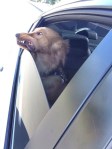
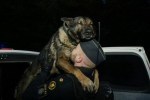
Your dose of cute dog pictures to help you through your Monday…



































Filed under Animals
More pictures of cute dogs to cheer up your Monday.





























Filed under Animals
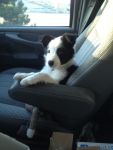
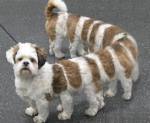
More cute dog pictures to cheer you up on your Monday morning.






























Filed under Animals
More cute dog pictures to cheer you up on your Monday. Enjoy!



































Filed under Animals
 Michael Bradley - Time Traveler