Category Archives: Humor and Observations

Was Dracula an Irishman?

Bram Stoker’s Dracula inspired by an Irish legend?

Dracula inspired many films - the vampire count is the most filmed character in the world after Sherlock Holmes.

Dracula inspired many films – the vampire count is the most filmed character in the world after Sherlock Holmes.

Did an early Irish vampire legend influence the creation of Count Dracula? There are a group of people in the north of Ireland who are sure Bram Stoker was influenced by a old story from their area.

When the Irish writer Bram Stoker published his novel ‘Dracula’ in 1897, it quickly grew into a worldwide publishing sensation. To this day it is Bram Stoker who has done most to shape the modern conception of vampires which we see in movies and fiction – from Lost Boys to the Twilight series.

There has been a lot of speculation about where Bram Stoker got the idea for the character of Dracula, and the unique characteristics he gave this fearsome vampire. Much has been made of the connection to Eastern-European vampire myths, and the medieval prince known as Vlad the Impaler or Vlad Tepes.

However there is also lesser-known but fascinating local Irish myth of an evil magician who could not be killed and came back from the grave three times, This is a highly unusual myth for Ireland, where there is little tradition of ‘undead’ stories. Thus it was a legend likely to attract the attention of an Irish writer such as Bram Stoker who was very interested in folklore.

The people who live near the final resting place of this Irish undead, have told me that the legend was the original inspiration for Bram Stoker’s Dracula. Not only that, but they tell me that this burial site continues to be associated with strange and disturbing events to this day.

The Story of Abhartach – the original Irish vampire

In County Derry in Northern Ireland, there is a small townland named ‘Slaghtaverty’ which in Irish means ‘ Abhartach’s Tomb’. When I was working in this rural area recently on a community history project, the locals told me the story of how the townland got it’s name, how the legend inspired Bram Stoker to create ‘Dracula’ and how strange events continue to happen in the vicinity of the large stone tomb that stands there.

Abhartach (pronounced Av-ar-chack), so the story goes, was an evil ruler in the area, a stunted man but a powerful magician. He terrorized all the people for miles around, until they wished him dead. But as none of his subjects had the courage to kill the magical man themselves they got a warrior from a neighbouring area to do it. This warrior, called Cathain, duly killed Abhartach and buried him upright as was traditional for a Celtic chief at this time.

However, the next day Abhartach appeared once more among his people, this time demanding a sacrifice of blood from the wrists of his subjects. He had become one of, what was called in Irish, the marbh beo – the living dead. Three times Cathain killed and buried Abhartach and three times he rose from his grave seeking blood from his people. Until the people, in their desperation, turned to a Christian saint who lived in the area and asked him how they could be rid of this evil undead creature forever.

Cathain was instructed by the saint to kill Abhartach once more but this time to do it with a sword made of yew wood, to bury him upside down, with a large stone on top and then to plant thorn trees around the grave. This Cathain did and Avartach has never been seen again, though his grave still stands in a field in the townland of Slaghtaverty, covered in an enormous stone slab, a lonely thorn tree growing beside it.

Other influences on Bram Stoker’s Dracula

Of course Bram Stoker would not have taken his inspiration for Count Dracula from a single source. Stoker was well aware of Eastern European folklore, as well as earlier Gothic vampire stories such as Politori’s ‘Vampyre’ and Carmilla by Sheridan Le Fanu.

Vlad the Impaler of Romania, a cruel Medieval prince, has often been sighted as inspiration for Dracula. While he may have lent Dracula his nickname (Dracul – son of the devil) he doesn’t share many characteristics with the blood-sucking Count; Vlad the Impaler was a cruel leader but he is never recorded as having drunk blood, or as having lived beyond the grave.

You can read more on this topic at my article: Count Dracula: myth, fiction and historical reality.

Abraham 'Bram' Stoker: Author of Dracula.

Abraham ‘Bram’ Stoker: Author of Dracula.

Did Abhartach influence Stoker’s Count Dracula?

The parallels between Abhartach and Bram Stoker’s Dracula are extremely interesting. The idea of an evil man who has a magical way to overcome death and rise from the grave, is familiar to anyone who has read Dracula or who has seen the film adaptations. Further similarities include the demands blood sacrifice from his subjects – the image of taking blood from weaker people ispowerfully interwoven with thevampire myth as we know it today. As is the idea that there is a special way to kill the undead – we are all very familiar today with the idea that vampires must be killed by a wooden stake, or buried upside down, just like the saint said Abhartach could be killed over a thousand years ago.

Although today few but the locals who live near the grave have heard of Abhartach, it was once a well-reported story in Ireland. The story is said to date from the 5th or 6th century BC – making it one of the world’s earliest vampire legends. It was treated as true history and published in the book A General History of Ireland by Dr Geoffrey Keating in 1631. It was later collected and printed as an interesting local legend included in the Ordnance Survery of County Londonderry in 1835 and the story of Avartach was further reprinted by Patrick Weston Joyce in A History of Ireland in 1880.

It is quite probable that Bram Stoker knew of this story and it may have influenced his decision to write a vampire novel. What is particularly interesting is that two of the earliest and most influential vampire novels were written by Irishmen – Carmilla by Sheridan Le Fanu and Dracula by Bram Stoker. Although they were surely influenced by European legends and Gothic literature as well, there is definitely a case for the argument that they were also inspired by the local Irish legend of Abhartach.

A textile depiction of 'Dracula's Grave'. The thorn tree still grows there today.

A textile depiction of ‘Dracula’s Grave’. The thorn tree still grows there today.

Strange events at ‘Dracula’s Grave’

Whatever the case for Stoker’s connection with Avartach’s grave, the tomb has a reputation for strange and unsettling events which continues into living memory of the local residents. In fact people in the area refer to the tomb as ‘Dracula’s Grave’. They rarely visit the site – and never after dark!

Not so many years ago the owner of the land where the tomb sits decided that it was time to get rid of the grave and the tree and to take full possession of his field. A group of men gathered together to do the work of moving the stones and a chainsaw was brought to cut down the tree. But when they tried to start the chainsaw to cut down the thorn tree the saw stalled and would not work. So a second chainsaw was brought down to the field and it too would not start which was too much of a co-incidence. The men began to feel distinctly unsettled.

But the final straw came when the tractor they had brought along to pull away the tombstone started of its own accord and drove itself to the other side of the field, crushing one of the chainsaws into the mud as it did so. The men fled. And no attempt to remove the tomb or the thorn tree has been made since.

6 Comments

Filed under Humor and Observations, Writing

35 ancient pyramids discovered in Sudan

35 ancient pyramids discovered in Sudan

By Owen Jarus

Published February 07, 2013

LiveScience

  • sedeinga pyramids.jpg

    Among the discoveries are pyramids with a circle built inside them, cross-braces connecting the circle to the corners of the pyramid. Outside of Sedeinga only one pyramid is known to have been built in this way. (Vincent Francigny/SEDAU)

  • sedeinga-pyramids-1.jpg

    This aerial photo shows a series of pyramids and graves that a team of archaeologists has been exploring at Sedeinga in Sudan. Since 2009 they have discovered at least 35 small pyramids at the site, the largest being 22 feet in width. (B-N Chagny, SEDAU/SFDAS)

  • sedeinga-pyramids-5.jpg

    People were buried beside the pyramids in tomb chambers that often held more than one individual. This image shows a child who was buried with necklaces. (Vincent Francigny/SEDAU)

At least 35 small pyramids, along with graves, have been discovered clustered closely together at a site called Sedeinga in Sudan.

Discovered between 2009 and 2012, researchers are surprised at how densely the pyramids are concentrated. In one field season alone, in 2011, the research team discovered 13 pyramids packed into roughly 5,381 square feet, or slightly larger than an NBA basketball court.

They date back around 2,000 years to a time when a kingdom named Kush flourished in Sudan. Kush shared a border with Egypt and, later on, the Roman Empire. The desire of the kingdom’s people to build pyramids was apparently influenced by Egyptian funerary architecture.

‘They reached a point where [the necropolis] was so filled with people and graves that they had to reuse the oldest one.’

– Vincent Francigny, a research associate with the American Museum of Natural History in New York 

At Sedeinga, researchers say, pyramid building continued for centuries. “The density of the pyramids is huge,” said researcher Vincent Francigny, a research associate with the American Museum of Natural History in New York, in an interview with LiveScience. “Because it lasted for hundreds of years they built more, more, more pyramids and after centuries they started to fill all the spaces that were still available in the necropolis.”

The biggest pyramids they discovered are about 22 feet wide at their base with the smallest example, likely constructed for the burial of a child, being only 30 inches long. The tops of the pyramids are not attached, as the passage of time and the presence of a camel caravan route resulted in damage to the monuments. Francigny said that the tops would have been decorated with a capstone depicting either a bird or a lotus flower on top of a solar orb.

The building continued until, eventually, they ran out of room to build pyramids. “They reached a point where it was so filled with people and graves that they had to reuse the oldest one,” Francigny said.

Francigny is excavation director of the French Archaeological Mission to Sedeinga, the team that made the discoveries. He and team leader Claude Rilly published an article detailing the results of their 2011 field season in the most recent edition of the journal Sudan and Nubia.

The inner circle
Among the discoveries were several pyramids designed with an inner cupola (circular structure) connected to the pyramid corners through cross-braces. Rilly and Francigny noted in their paper that the pyramid design resembles a “French Formal Garden.”

Only one pyramid, outside of Sedeinga, is known to have been constructed this way, and it’s a mystery why the people of Sedeinga were fond of the design. It “did not add either to the solidity or to the external aspect [appearance] of the monument,” Rilly and Francigny write.

A discovery made in 2012 may provide a clue, Francigny said in the interview. “What we found this year is very intriguing,” he said. “A grave of a child and it was covered by only a kind of circle, almost complete, of brick.” It’s possible, he said, that when pyramid building came into fashion at Sedeinga it was combined with a local circle-building tradition called tumulus construction, resulting in pyramids with circles within them.

An offering for grandma?
The graves beside the pyramids had largely been plundered, possibly in antiquity, by the time archaeologists excavated them. Researchers did find skeletal remains and, in some cases, artifacts.

One of the most interesting new finds was an offering table found by the remains of a pyramid. . It appears to depict the goddess Isis and the jackal-headed god Anubis and includes an inscription, written in Meroitic language, dedicated to a woman named “Aba-la,” which may be a nickname for “grandmother,” Rilly writes.

It reads in translation:

Oh Isis! Oh Osiris!

It is Aba-la.

Make her drink plentiful water;

Make her eat plentiful bread;

Make her be served a good meal.

The offering table with inscription was a final send-off for a woman, possibly a grandmother, given a pyramid burial nearly 2,000 years ago.

Read more: http://www.foxnews.com/science/2013/02/07/35-ancient-pyramids-discovered-in-sudan/#ixzz2KX2Ox858

Leave a comment

Filed under Humor and Observations

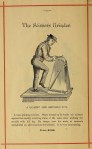
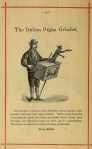
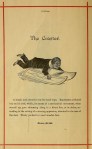
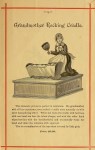
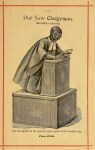
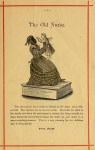
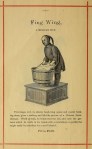
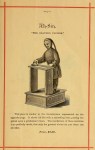
Disturbingly Racist 1882 Clockwork Toy Catalog – And Django Unchained Slave Dolls

The first thing I did when I saw this posted was to be shocked at the types of clockwork toys being sold in 1882, a good 17 years after the end of the Civil War, and not in the South, but in the North.  The second was to confirm this was a valid source, which I confirmed with three other original sources including the Library of Congress.   I post this disclaimer because I strongly object to the toys herein and they serve a lesson on how far we have come, and how much farther we have to go.

In the recent movie Django Unchained, the depiction of the pre-war South is writ large, not as inaccurate as Quentin Terantino’s Inglorious Bastards where Hitler gets killed and the whole World War 2 history is rewritten, but enough to make an avid historian such as myself cringe many times nonetheless.  Still, the pulp fiction ultra-violence was not what offended me the most, but the merchandisers actually manufacturing and selling Django Slave Doll action figures.  REALLY?  Even Ebay, where you can auction yourself, pornography and all manner of things, had sense to know these were unacceptable and banned their sale.  Here is a picture:

django slave dolls


Do we really want children playing with slave master and slave dolls?  What type of game would they play if their parents were crass enough to take them to that movie and then buy these toys?  Are there whip and servant quarters accessories?

So it was the same outrage I felt over this 1882 Clockwork Toy Catalog, shown below in its entirety.

Harriett Beecher Stowe wrote the novel Uncle Tom’s Cabin in 1851 as a serial, made into a novel format in 1852.  By just 1853, it has sold over 500,000 copies world wide.  As an author, I know even today, selling 500,000 books in a year would be amazing.  It basically had the popularity of Harry Potter, Twilight, or other mass selling books.

Uncle Tom’s Cabin was a rejection of the existing stereotypes of minstrel shows; Stowe’s melodramatic story humanized the suffering of slavery for White audiences by portraying Tom as a Christlike figure who is ultimately martyred, beaten to death by a cruel master because Tom refuses to betray the whereabouts of two women who escape from slavery.

Senator Charles Sumner credited Uncle Tom’s Cabin for the election of Abraham Lincoln and Lincoln himself reportedly quipped that Stowe had triggered the American Civil War.  Frederick Douglass praised the novel as “a flash to light a million camp fires in front of the embattled hosts of slavery”

So it is that just 29 years later, after Uncle Tom’s Cabin is a best seller of nearly all time, that a New York toy company is making Uncle Tom Minstrel toys for kids.  The caption includes, “funny as it is, there is also something pathetic in it, too”.  This is in addition to many other degrading toys including a “Heathen Chinese.”  I had hoped to post this to show how we have changed.  However, the utter insensitivity of the Django Unchained people to sell slave owner and slave dolls show perhaps we are still a stupid and backward people.  God created us all in His image, equal, each with a body, each with a soul.

The Library of Congress Record
Author: Automatic toy works, New York. [from old catalog]
Subject: Toys
Publisher: New York, Lockwood & Crawford, stationers
Language: English
Call number: 5886719
Digitizing sponsor: The Library of Congress
Book contributor: The Library of Congress
Collection: library_of_congressamericana

Full catalog record: MARCXML

Selected metadata

Page-progression: lr
Scanningcenter: capitolhill
Mediatype: texts
Identifier-bib: 00215344708
Identifier: automatictoywork00auto
Scanner: scribe9.capitolhill.archive.org
Ppi: 400
Camera: Canon 5D
Operator: scanner-elizabeth-kornegay@…
Scandate: 20110128151537
Imagecount: 22
Identifier-access: http://www.archive.org/details/automatictoywork00auto
Identifier-ark: ark:/13960/t6640k162
Ocr: ABBYY FineReader 8.0
Sponsordate: 20110131

1 Comment

Filed under Humor and Observations, Uncategorized

Steampunk Aircrew Part 4

Unfortunately, I am still recovering from the nasty flu virus going around so I am missing the Tucson-The Time Travelers’ Outpost at the Trunk Show Tour of 4th Ave at which I was scheduled to appear and sign my Steampunk books.  As a gratuitous plug – The Travelers’ Club and the Ghost Ship by Michael Bradley is currently just 99 cents on Kindle:

And the sequel, The Travelers’ Club – Fire and Ash is just $4.99 and can be found here:

Both cool Steampunk full length novels with a series of five volumes in the works.  I do not make anything from this site except good friends and fun, so feel free to buy a book if you wish and make my day even happier.

Back to the aircrew – This fourth installment is to crew your fourth airship.  You cannot pick them all.  Do you want to be a sky smuggler, merchant, pirate, loyal military vessel, explorer?  The air is yours, you decide.

Leave a comment

Filed under Humor and Observations, Uncategorized

More Crossovers and Mashups

Once again a selection of crossovers and mashups, basically two things put together in a hopefully funny way.  There are several recurring posts you can find by searching the home page for “crossovers”

1 Comment

Filed under Humor and Observations

Chronology of Events in Science, Mathematics, and Technology

I am sorry for the small print below.  However, these are links to an amazing site for researchers and the generally curious.  By category below, find out the timeline for inventions and breakthroughs in major fields of science and human endeavor.  Very helpful for us historical fiction writers.

The Chronology of Events in Science, Mathematics, and Technology


Chronology of Biology and Organic Chemistry
Chronology of Medicine and Medical Technology 
Chronology of General Technology
Chronology of Pure and Applied Mathematics
Chronology of Geology
Chronology of Geography, Meteorology, Paleontology, Science Philosophy and Publishing
Chronology of Agriculture and Food Technology
Chronology of Clothing and Textiles Technology
Chronology of Motor and Engine Technology
Chronology of Transportation Technology
Chronology of Underwater Technology
Chronology of Communication Technology
Chronology of Photography Technology
Chronology of Calculator and Computer Technology
Chronology of Time Measurement Technology
Chronology of Temperature and Pressure Measurement Technology
Chronology of Microscope Technology
Chronology of Low Temperature Technology
Chronology of Rocket and Missile Technology
Chronology of Materials Technology
Chronology of Lighting Technology
Chronology of Classical Mechanics
Chronology of Electromagnetism and Classical Optics 
Chronology of Thermodynamics, Statistical Mechanics, and Random Processes 
Chronology of States of Matter and Phase Transitions 
Chronology of Quantum Mechanics, Molecular, Atomic, Nuclear, and Particle Physics
Chronology of Particle Physics Technology
Chronology of Gravitational Physics and Relativity
Chronology of Black Hole Physics
Chronology of Cosmology
Chronology of Cosmic Microwave Background Astronomy
Chronology of Background Radiation Fields
Chronology of Galaxies, Clusters of Galaxies, and Large Scale Structures
Chronology of Interstellar and Intergalactic Medium
Chronology of White Dwarfs, Neutron Stars, and Supernovae
Chronology of Stellar Astronomy 
Chronology of Solar Astronomy
Chronology of Solar System Astronomy 
Chronology of Astronomical Maps, Catalogs, and Surveys 
Chronology of Telescopes, Observatories, and Observing Technology
Chronology of Artificial Satellites and Space Probes


2 Comments

Filed under Humor and Observations

Paper Anatomy Art

Posted by Rebecca on Smilingpockets.com

By rebecca | Posted in Art & DesignPapercraft |

anatomical-cross-section-paper-quilling-3

paper-anatomy-nilsson

The incredible skill of paper artist Lisa Nilsson made this anatomical cross section look like the real one. Inspect closer; it’s actually made of rolled papers, a tedious process called quilling. The artist’s remarkable artworks are currently on display at Boston Art Gallery.

(via Colossal)

1 Comment

Filed under Humor and Observations

Top 10 Most Overlooked Mysteries in History

Top 10 Most Overlooked Mysteries in History

February 25, 2008

Over the last few months we have gone through 30 of the worlds greatest mysteries but what we haven’t covered are ancient mysteries. This list aims to put that right! Here are ten great unsolved mysteries of science. Do you have a theory that might solve one of these mysteries? If so, tell us in the comments!

10. Rongorongo

Rongorongo5

While many people know of the Moai of Easter Island, not that many people know of the other mystery associated with Easter Island. ‘Rongorongo’ is the hieroglyphic written language of the region’s earlier inhabitants. Rongorongo is strange in that no other neighbouring oceanic people used a written language. It appeared around the 1700s, though was unfortunately lost after the early European colonizers banned it because of its ties to the native islanders’ pagan roots.

9. Lost City of Helike

H22Large

In the late 2nd century AD, the Greek writer Pausanias wrote an account of how (4-500 years earlier?) in one night a powerful earthquake destroyed the great city of Helike, with a Tsunami washing away what remained of the once-flourishing metropolis. The city, capital of the Achaean League, was a worship centre devoted to the ancient god Poseidon, god of the sea. There was no trace of the legendary society mentioned outside of the ancient Greek writings until 1861, when an archeologist found some loot thought to have come from Helike – a bronze coin with the unmistakable head of Poseidon. In 2001, a pair of archeologists managed to locate the ruins of Helike beneath the mud and gravel of the coast, and are currently trying to peice together the rise and sudden fall of what has been called the “real” Atlantis.

8. The Bog Bodies

Tollund1

This mystery may even be a problem for those legendary investigators from CSI and the like! The bog bodies are hundreds of ancient corpses found buried around the northern bogs and wetlands of Northern Europe. These bodies are remarkably well preserved, some dating back 2,000 years. Many of these bodies have tell-tale signs of torture and other medieval “fun”, which have made some researchers postulating that these unfortunate victims were the result of ritual sacrifices.

7. Fall of the Minoans

Bullleapingfresco

The Minoans are best known for the legend of Theseus and the Minotaur, but it is in fact the demise of this once-great civilisation that is more interesting. While many historians concentrate on the fall of the Roman Empire, the fall of the Minoans, who resided on the island of Crete, is an equal, if not greater mystery. Three and a half thousand years ago the island was shaken by a huge volcanic eruption on the neighbouring Thera Island. Archeologists unearthed tablets which have shown that the Minoans carried on for another 50 years after the eruption, before finally folding. Theories of what finally ended them have ranged from volcanic ash covering the island and devastating harvests to the weakened society eventually getting taken over by invading Greeks.

6. The Carnac Stones

Aerial Stones 2

Everyone has heard of Stonehenge, but few know the Carnac Stones. These are 3,000 megalithic stones arranged in perfect lines over a distance of 12 kilometers on the coast of Brittany in the North-West of France. Mythology surrounding the stones says that each stone is a soldier in a Roman legion that Merlin the Wizard turned in to stone. Scientific attempts at an explanation suggests that the stones are most likely an elaborate earthquake detector. The identity of the Neolithic people who built them is unknown.

5. Who Was Robin Hood?

1546186-Robin Hood Statue-Nottingham

The historical search for the legendary thief Robin Hood has turned up masses of possible names. One candidate includes the Yorkshire fugitive Robert Hod, also known as Hobbehod or Robert Hood of Wakefield. The large number of suspects is complicated further as the name Robin Hood became a common term for an outlaw. As literature began to add new characters to the tale such as Prince John and Richard the Lionheart the trail became more obscure. To this day no one knows who this criminal really was.

4. The Lost Roman Legion

800Px-Roman Legion At Attack 3

After the Parthians defeated underachieving Roman General Crassus’ army, legend has it that a small band of the POWs wandered through the desert and were eventually rounded up by the Han military 17 years later. First century Chinese historian Ban Gu wrote an account of a confrontation with a strange army of about a hundred men fighting in a “fish-scale formation” unique to Roman forces. An Oxford historian who compared ancient records claims that the lost roman legion founded a small town near the Gobi desert named Liqian, which in Chinese translates to Rome. DNA tests are being conducted to answer that claim and hopefully explain some of the residents’ green eyes, blonde hair, and fondness of bullfighting.

3. The Voynich Manuscript

Voynich

The Voynich Manuscript is a medieval document written in an unknown script and in an unknown language. For over one hundred years people have tried to break the code to no avail. The overall impression given by the surviving leaves of the manuscript suggests that it was meant to serve as a pharmacopoeia or to address topics in medieval or early modern medicine. However, the puzzling details of illustrations have fueled many theories about the book’s origins, the contents of its text, and the purpose for which it was intended. The document contains illustrations that suggest the book is in six parts: Herbal, Astronomical, Biological, Cosmological, Pharmaceutical, and recipes.

2. The Tarim Mummies

Gallery Lrg6

An amazing discovery of 2,000 year old mummies in the Tarim basin of Western China occurred in the early 90s. But more amazing than the discovery itself was the astonishing fact that the mummies were blond haired and long nosed. In 1993, Victor Mayer a college professor collected DNA from the mummies and his tests verified that the bodies were all of European genetic stock. Ancient Chinese texts from as early as the first millennium BC do mention groups of far-east dwelling caucasian people referred to as the Bai, Yeuzhi, and Tocharians. None, though, fully reveal how or why these people ended up there.

1. Disappearance of the Indus Valley Civilization

Indusvalley

The ancient Indus Valley people, India’s oldest known civilization had a culture that stretched from Western India to Afghanistan and a populace of over 5 million. le—India’s oldest known civilization—were an impressive and apparently sanitary bronze-age bunch. The scale of their baffling and abrupt collapse rivals that of the great Mayan decline. They were a hygienically advanced culture with a highly sophisticated sewage drainage system, and immaculately constructed baths. There is to date no archaeological evidence of armies, slaves, conflicts, or other aspects of ancient societies. No one knows where this civilization went.

This list was derived from the excellent article of the same name at livescience

1 Comment

Filed under Humor and Observations

New York City’s Hidden Subway Station

New York City’s Hidden Subway Station

WRITTEN BY  24 FEBRUARY 2012

Deep in the belly of New York’s subway system, a beautiful untouched station resides that has been forgotten for years with only a limited few knowing of its existence. Stunning decoration with tall tiled arches, brass fixtures and skylights run across the entire curve of the station, almost a miniature imitation of Grand Central Station… But it sounds like something straight out of Harry Potter, right?

It was opened in 1904, with the hope of making it the crowning glory of the New York subway system in elegant architecture and a place for commemorative plaques to honour the work that had resulted in such a successful underground mass transit system. It was to be the original southern terminus of the first ‘Manhattan Main Line’; however the station was closed and boarded up in 1945. The gem of the underground began gathering dust, forgotten by the general public, as passengers were forced off at the Brooklyn Bridge Stop before the train continued on to the terminus to make its turnaround.

The reason for its closure was that newer longer cars were required to match the demand of passengers that passed through the system. But as the stations tracks were severely curved, a dangerous gap between the train doors and the platform was formed making it an unsafe area. This combined with the fact that only about 600 people used it, resulted in its closure with only mythical plans of turning it into a transit museum. But this was never followed through.

However, now you don’t have to take my word that the secret City Hall Station exists, as the 6 Train will now allow the passengers who have been enlightened with the knowledge of its whereabouts to stay on the train during its turnaround and see the Station. You won’t be able to get off, but you’ll be taken for a slow tour of the platform and see what a beauty it was in its heyday!

And if that isn’t enough, The Underbelly Project has turned it into a kind-of off-limits art gallery. They are a group of street artists who have painted the walls of the unattractive concrete areas with their art in a spooky art exhibition that will be witnessed only by urban explorers who prowl the deep train system at night and Metropolitan Transportation Authority workers.

Over a hundred murals have been accumulated over time by graffiti artists, namely PAC and Workhorse (infamous NYC graffitists), who discovered the bare walls and invited others to add their art.

But if you want to go and view these art works, you will most definitely run the high risk of being arrested as venturing the tunnels is both highly illegal and dangerous! I’ll just stick to seeing the photographs as I’m pretty sure my search for art would turn into a horror story down in the black tunnels… or I’d get hit by a train.

4 Comments

Filed under Humor and Observations, Uncategorized

Sacred Sites of Ancient Greece

Sacred Sites of Ancient Greece

Temple of Hephaestus
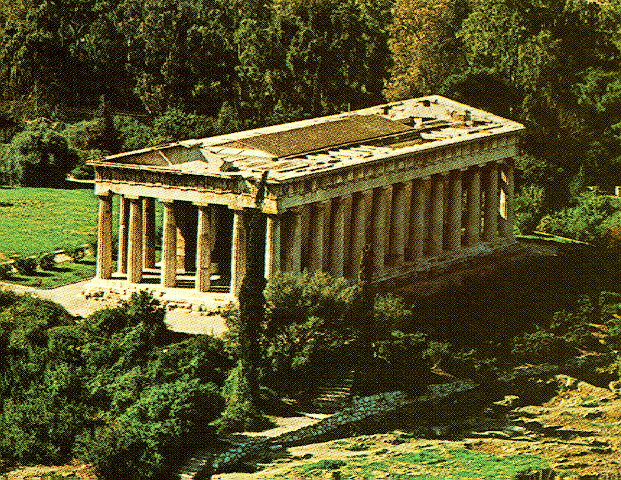
The Temple of Hephaestus in central Athens, Greece, is the best-preserved ancient Greek temple in the world, but is far less well-known than its illustrious neighbour, the Parthenon. The temple is also known as the Hephaesteum or Hephaesteion. It is sometimes called the Theseum, due to a belief current in Byzantine times that the bones of the legendary Greek hero Theseus were buried there; in fact the bones alleged to be those of Theseus were buried in the 5th century BC at another site nearer to the Acropolis.

The temple is located about 500m north-west of the Acropolis and about 1km due west of the modern centre of Athens, Syntagma Square. It was built in about 449 BC on what was then the western edge of the city of Athens, in a district which contained many foundries and metalwork shops. It was therefore dedicated to Hephaestos, the god of blacksmiths and metallurgy. It was designed by Ictinus, one of the architects who worked on the Parthenon. It stands on a slight rise and in ancient times commanded a fine view of the Agora.

Built of marble from Mount Pentelus, in the Doric style, the temple is hexastyle, that is with six columns under the pedimented ends, and has thirteen columns on each side (counting the corner columns twice). The temple is peripteral, with columns entirely surrounding the central enclosed cella. In the entablature there is the plain frieze that is expected with the sober Doric mode, but above it in the spaces between the triglyphs – which are like decoratively grooved beam-ends pegged into place – the labours of Heracles are depicted in bas-relief. Sculpted into the low-relief metope is the great story of Theseus and of his quest to kill the minotaur.

Unlike the Parthenon, the temple has all its columns and pediments intact, and even has most of its original roof. Its friezes and other decorations, however, have inevitably been badly damaged by thieves and looters over the centuries. It owes its survival to its conversion to a Christian Church, the Church of St George, in the 7th century AD. The survival of the exterior came at the cost of the ancient interior, which was removed and replaced by the structures of a Christian church.

During the centuries of Ottoman rule in Greece, the temple was the main Greek Orthodox church in Athens. When the first king of independent Greece, King Othon, entered the city in 1834, the service welcoming him to his new capital was held in the church.Today the temple has been preserved as an archaeological site under the supervision of the Ephorate of Antiquities of the Greek Interior Ministry. The temple itself has a small fence, but the visitor can get much closer than is possible at the Parthenon or most other antiquities in Greece. The temple is now surrounded by an ornamental garden. The site gets much less tourist traffic than the Acropolis and is a pleasant green spot in the heart of Athens.


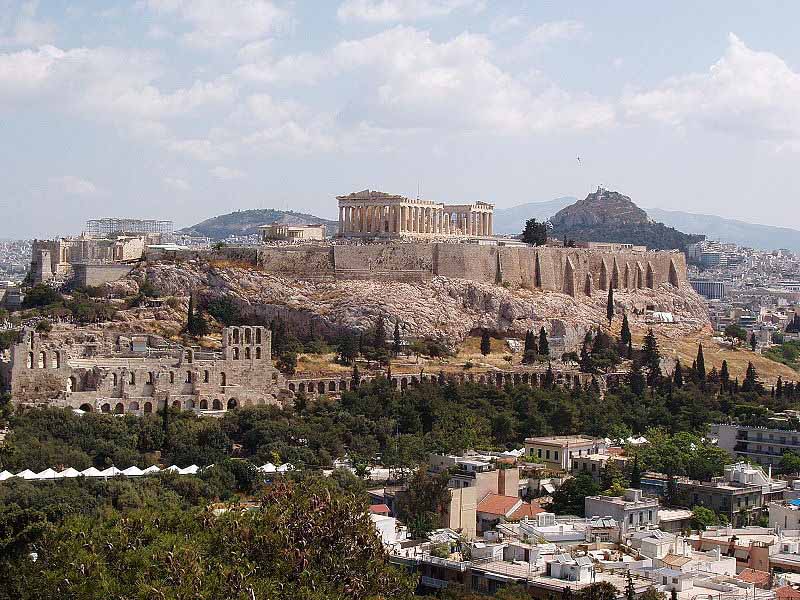
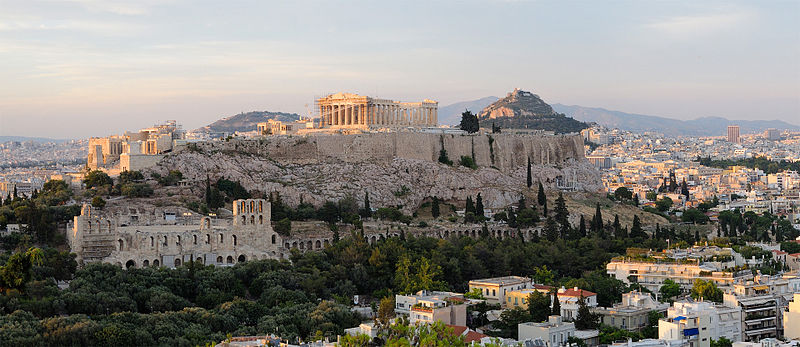
The Acropolis in Athens

The Acropolis is high above the city on a natural prominence.


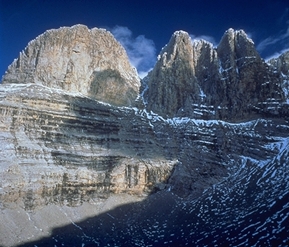
Mount Olympus
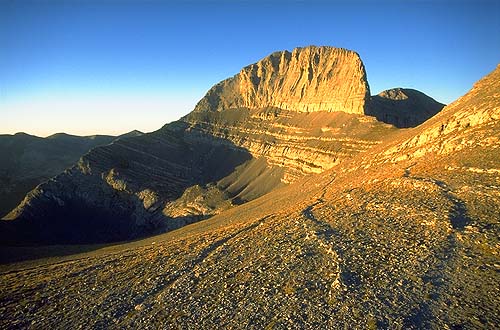
Mount Olympus s the highest mountain in Greece, at 2,917 (or 2,919, according to new measurements ) meters high; it is situated at 40°05 2N 22°21 2E, in mainland Greece.

Mount Olympus is noted for its very rich flora with several endemic species. The highest peak on Mount Olympus is Mitikas, which in Greek means “nose.” There are two refuges on a plain about forty five minutes away from Mitikas. Mitikas is the highest peak in Greece, the second highest being Stefani.

In Greek mythology, Mount Olympus is the home of the Twelve Olympians, the principal gods in the Greek pantheon. The Greeks thought of it as built up with crystal mansions wherein the gods, such as Zeus, dwelt. The etymology and meaning of the name Olympus (Olympos) is unknown, and it may be of Pre-Indo-European origin.


The Tumulus of Marathon
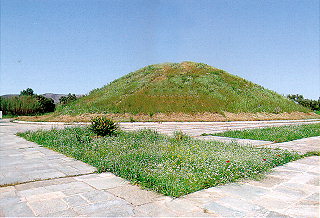
The fertile plain of Marathon was a natural place for the establishment and development of human activity from prehistoric to Roman times. Here on this plain the battle between the Athenians and the Persians was fought in 490 B.C. To this great event Marathon owes its worldwide fame and its important place in the conscience of the ancient Greeks. The Mound was raised over the graves of the 192 Athenians who died in the battle and whose remains were buried here after cremation of the dead.
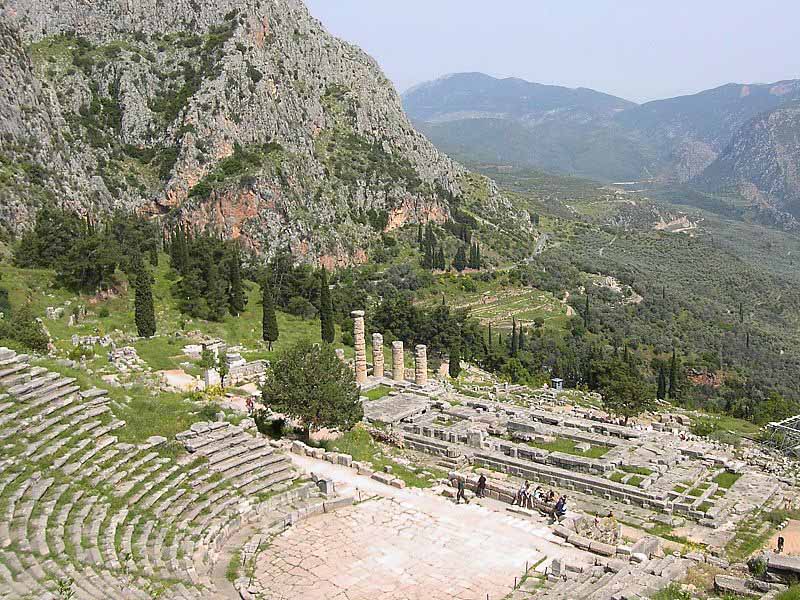


Theatre and Temple of Apollo in mountainous country at Delphi


Delphi, GreeceLocated about one hundred miles northwest of Athens is the ancient site of the panhellenic sanctuary of Delphi. The complex of buildings, which includes the Temple of Apollo where sat the famous oracle, The sacred Corycian Cave, and the Castalian Spring, is nestled in the forested slopes and rocky crags on the south side of the sacred mountain Mountains and the Sacred called Parnassus. The site had been sacred since at least the Bronze Age. According to legend, the shrine was originally guarded by the she-dragon Pytho. She was killed by Apollo who then took over the oracle. In antiquity, Delphi was regarded as the centre of the world.


Temple of Apollo
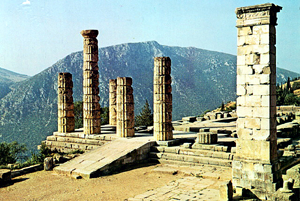
The visible ruins belong to the last temple, dated to the 4th century BCE, which was peripteral, in Doric order. It was erected on the remains of an earlier temple, dated to the 6th century BCE. Inside was the “adyton”, the centre of the Delphic oracle and seat of Pythia. The monument was partly restored during 1938-1941.


Castalian Spring
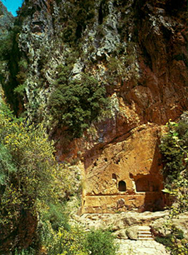
In Greece, the Phaedriades (“the shining ones”) were the pair of cliffs, ca 700 m high on the lower southern slope of Mt. Parnassos, which enclose the sacred site of Delphi, the center of the Hellenic world. Strabo, Plutarch and Pausanias all mentioned the Phaedriades in describing the site, a narrow valley of the Pleistus (today Xeropotamos) formed by Parnasse and Mt. Cirphis. Between them rises the Castalian Spring. Even today, at noontime, the rock faces reflect a dazzling glare.

The Castalian Spring in the ravine between the Phaedriades at Delphi is where all comers to Delphi, the contestants in the Pythian Games and especially suppliants who came to consult the Oracle, stopped to wash their hair. Two fountains fed by the sacred spring survive. The archaic (early 6th century BCE) fountain house has a marble-lined basin surrounded by benches. There is also a Hellenistic or Roman fountain with niches hollowed in the rock to receive votive gifts. The Castalian Spring predates all of classical Delphi: the archaic guardian of the spring was the serpent or dragon Python, killed by Apollo in its lair beside the spring.


Sanctuary of Poseidon and Athena at Sounion
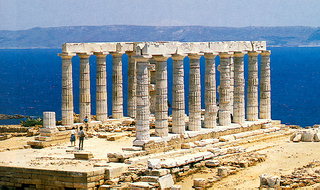
The sanctuary at Sounion is one of the most important sanctuaries in Attica. Sporadic finds point to the conclusion that the site was inhabited in the prehistoric period but there is no evidence of religious practice in such an early date. “Sounion Hiron” (sanctuary of Sounion) is first mentioned in the Odyssey, as the place where Menelaos stopped during his return from Troy to bury his helmsman, Phrontes Onetorides.

The finds of the 7th century B.C. are numerous and prove the existence of organized cult on two points of the promontory: at the southern edge where the temenos of Poseidon was situated, and about 500 m. to the NE of it, where the sanctuary of Athena was established.

Important votive offerings were dedicated during the 6th century B.C., but the architectural form of both sanctuaries remained unpretentious until the beginning of the 5th century B.C., when the Athenians initiated the construction of an imposing poros temple in the temenos of Poseidon.

The building was never completed, though, as both the temple and the offerings were destroyed by the Persians in 480 B.C. In the following decades, Sounion, like the rest of Attica, flourished, and an important building project was undertaken at both sanctuaries. At the end of the 5th century and during the Peloponnesian War, the Athenians fortified Sounion cape.

From the 1st century B.C. onwards, the sanctuaries gradually declined and Pausanias, who sailed along the coast of the promontory in the mid-2nd century A.D., wrongly considered the prominent temple on the top of the hill as the temple of Athena. The site of the temple was known in the following centuries, as is proved by descriptions of modern travelers, who visited Sounion before the excavations started, as well as by graffiti on the stones, among which, that made by Lord Byron.

Restricted excavations in the sanctuary of Poseidon were conducted in 1825 by the Dilettanti and by the German architect W. Doerpfeld. Systematic investigation was undertaken between 1897 and 1915 by the Athens Archaeological Society, under the direction of Val. Stais, with the collaboration of A. Orlandos. Since 1994, the Archaeological Society has been carrying out excavations at the Fortress.


Sanctuary of Poseidon
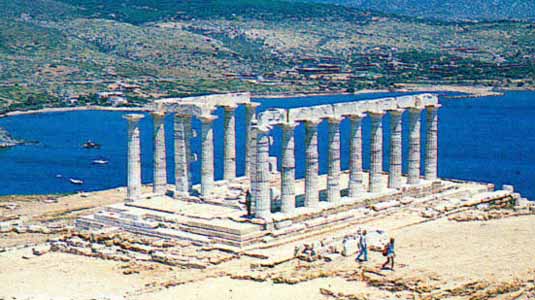
It is situated in the southernmost, highest part of the promontory. The area was evened off and supported by means of retaining walls on the north and west sides. A Propylon was constructed on the north side, and porticoes along the north and the east for the accommodation of the pilgrims. The site was dominated by the Classical temple.

At the end of the Archaic period an imposing temple was constructed in the position of the Classical one seen today, but it was slightly smaller in dimensions. It was Doric, made of poros, with an external colonnade of 6 x 13 columns, and an internal one which supported the roof. Its construction was interrupted by the Persian invasion and the temple remained unfinished.

The later temple, the one preserved today, was also Doric, with 6 x 13 columns, made of Agrileza marble, but without an internal colonnade. The stylobate measured 13,47 x 31,12 m. It was constructed in 450-440 B.C. and, according to another theory, was the work of the architect who had also built the Hephaisteion (“Theseion”) in the Ancient Agora of Athens, the Temple of Nemesis at Rhamnous, and the Temple of Ares which was probably erected in Acharnes.

The sculptural decoration of the temple, made of Parian marble, is preserved in a poor condition. The frieze of the east side depicted Centauromachy, and the east pediment (of which only a seated female figure is preserved) probably depicted the fight between Poseidon and Athena for the domination of Attica. The two antae of the east side and several of the columns of the east part of the temple are still preserved today, while the west is completely destroyed.

Propylon – Porticoes

The Propylon was constructed a little later than the Classical temple, and was made of marble and poros. It is Doric, distyle in antis on both sides (north and south). A partition wall inside the building has three doorways, of which the middle one is wider and has a ramp. A small rectangular hall is attached on the west wall of the Propylon, while porticoes are erected along the north and west sides of the sanctuary. The north of these porticoes is larger and slightly earlier.

The Fortress

Sounion cape was fortified in 412 B.C. during the Peloponnesian War, in order to control and secure the ships carrying cereals to Athens. The use of various materials and construction techniques is probably the result of repairs and additions made during the Chremonides’ War and the following years (266-229 B.C.). The sanctuary of Poseidon occupies the SE end of the fortress. The wall starts at the NE corner, extends to the north and turns to the west. Shipyards for the sheltering of two war ships were constructed on the coast, at the west end of the north branch of the fortification. Inside the fortress, excavations have brought to light part of a central street, remains of houses, and water cisterns.

Sanctuary of Athena

It is situated on a hill 500 m. to the NE of the Sanctuary of Poseidon. The area was evened off and enclosed with a poros polygonal circuit wall. Inside the enclosed area were erected the Temple of Athena, a smaller temple to the north, and altars. A deep pit on the SE side of the temenos was used as a deposit for the Archaic offerings destroyed by the Persians. The oval peribolos to the NW of the temenos has been identified as the “Heroon of Phrontes”.

Temple of Athena

It has a rectangular cella, measuring 16,4 x 11,6 m. The foundation of the pedestal supporting the cult statue is preserved on the west side of the cella, while four Ionic columns in the centre supported the roof. One of the peculiarities of the temple, mentioned also by Vitruvius, is the existence of an outer colonnade only on the east and south sides.

Some scholars consider that the temple of Athena Sounias was reconstructed after the mid-5th century B.C., while others believe that the cella was built during the Archaic period, was repaired after the Persian destructions, and the colonnade was added in the middle of the 5th century B.C. A second peculiarity of the sanctuary is the placement of the altar to the south of the temple.

Small Temple

Small, Doric, prostyle temple measuring 5 x 6.80 m., situated to the north of the Athena Temple. The pedestal of the cult statue is preserved inside the cella. The date of the structure and the identity of the deity worshipped is still a matter of debate.


The Ancient Agora of Athens
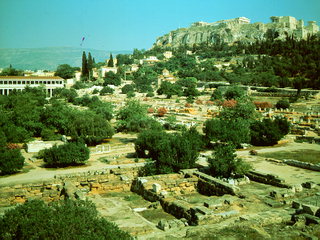
The Agora was the heart of ancient Athens, the focus of political, commercial, administrative and social activity, the religious and cultural center, and the seat of justice. The site was occupied without interruption in all periods of the city’s history. It was used as a residential and burial area as early as the Late Neolithic period (3000 B.C.). Early in the 6th century, in the time of Solon, the Agora became a public area.

After a series of repairs and remodeling, it reached its final rectangular form in the 2nd century B.C. Extensive building activity occurred after the serious damage made by the Persians in 480/79 B.C., by the Romans in 89 B.C. and by the Herulae in A.D. 267 while, after the Slavic invasion in A.D. 580, It was gradually abandoned. From the Byzantine period until after 1834, when Athens became the capital of the independent Greek state, the Agora was again developed as a residential area.

The first excavation campaigns were carried out by the Greek Archaeological Society in 1859-1912, and by the German Archaeological Institute in 1896-97. In 1890-91, a deep trench cut for the Athens-Peiraeus Railway brought to light extensive remains of ancient buildings. In 1931 the American School of Classical Studies started the systematic excavations with the financial support of J. Rockefeller and continued until 1941. Work was resumed in 1945 and is still continuing. In order to uncover the whole area of the Agora it was necessary to demolish around 400 modern buildings covering a total area of ca. 12 hectares.

In the 19th century the four colossal figures of Giants and Tritons at the facade of the Gymnasium were restored by the Greek Archaeological Society. In the years 1953-56, the Stoa of Attalos was reconstructed to become a museum and in the same period the Byzantine church of Aghioi Apostoloi, built around A.D. 1000, was restored by the American School. Between 1972 and 1975, restoration and preservation work was carried out at the Hephaisteion; the area was cleared of the vegetation, and the roof of the temple was repaired in 1978 by the Archaeological Service.


Stoa of Zeus Eleutherios
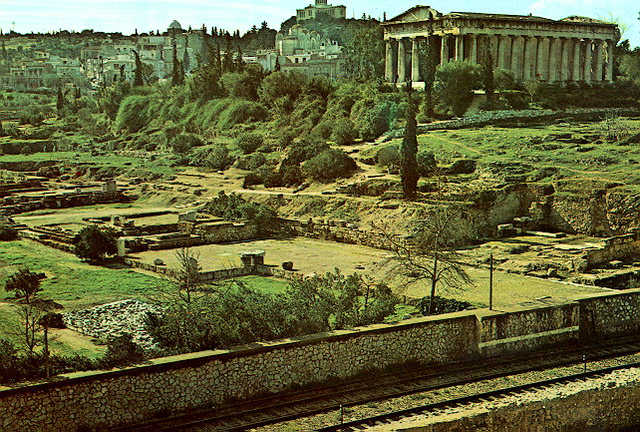
The stoa was erected at the end of the 5th century B.C. in honor of those who fought for the freedom and security of the city. Socrates is said to have met his friends in this stoa.

Temple of Apollo Patroos – Small Ionic temple, erected in ca. 340-320 B.C., identified as the temple of Apollo who was worshipped as the “Father” (Pater), the founder of the Ionian race. Inside the cella stood the cult statue of the god, made by the famous sculptor Euphranor.


Monument of the Eponymous Heroes
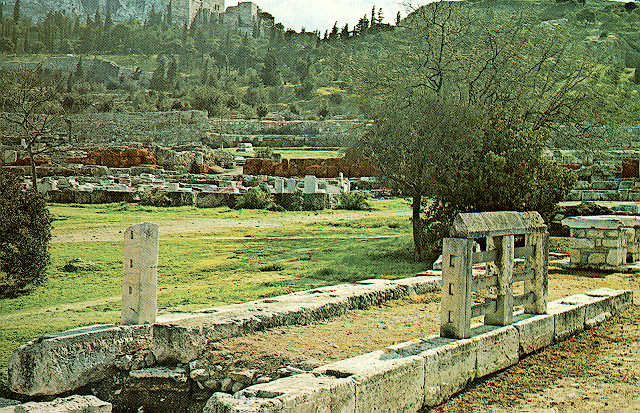
Remains of an oblong pedestal enclosed by a fence. It supported the bronze statues of the legendary heroes who gave their names to the ten tribes of Attica. In addition to its honorary function, the monument served as the official notice board of the city. It is dated to the second half of the 4th century B.C.


Rhamnous
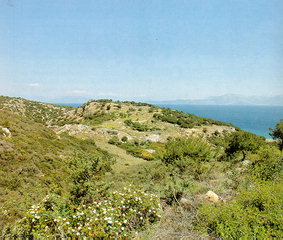
The site of ‘Rhamnous,’ the northernmost deme of Attica, lies north of Marathon overlooking the Euboean Strait. The site was known in Antiquity for its sanctuary of Nemesis, the implacable avenging goddess. A fortified acropolis dominates the two small harbors, from which grain was imported for Athens during the Peloponnesian War. Otherwise, Rhamnous was strategically significant enough to be fortified and receive an Athenian garrison. Remains of the two temples can be seen. The 6th century Temple of Nemesis was destroyed by the Persians in 480 BCE and replaced by a never-completed temple in the 5th century. A smaller temple that shares the sanctuary platform (peribolos) is thought to have been dedicated to Thetis, based on the dedications of two marble seats, to Nemesis and to Thetis.


Fortress
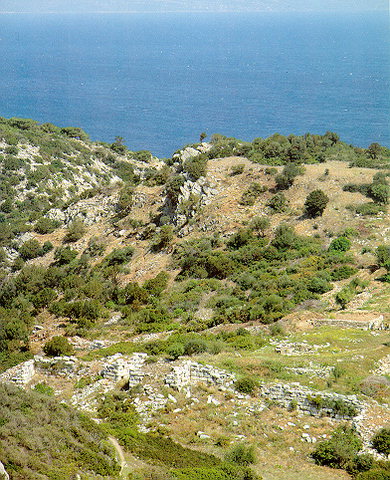
The Fortress comprises an outer system 800 metres long and a smaller interior circuit enclosing the top of the hill. The main entrance of the outer system is at the south and it is protected by square towers at each side of the gate. Within the circuit private and public buildings have been found, notable among which are the theatre and the gymnasium. Within this same area is also the agora of the deme. Military establishments stood at the top of the hill – within the interior circuit of the fortification. On the coast below two small harbors – the eastern and the western – served the ships that patrolled the Euboian channel. The Fortress of Rhamnous, as that of Sounion at the southern tip of Attica, is thought to have been constructed during the Peloponnesian War in order to control the ships bringing grain to Athens.


Thorikos
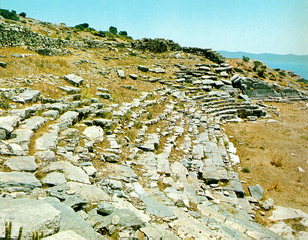
The hill known today as Velatouri is the centre of a Mycenaean settlement and also of the ancient deme of Thorikos. Preserved are the unusual theatre of the 6th-4th centuries B.C., parts of the settlement, some of the metal-working establishments, a square tower of the 4th century B.C., the cemeteries and the sanctuary of Demeter and Kore.

Between the years 1820 and 1995, excavations have been carried out by the Archaeological Society in Athens, the American School of Classical Studies, the Belgian Archaeological School, the 2nd Ephorate of Prehistoric and Classical Antiquities and by the Society of the Dilettanti.

The most important monuments and architectural units of the archaeological site are –

– The Mycenaean acropolis on the top of the Velatouri hill and the two tholos tombs of the same period.

– The Ancient Theatre of Thorikos. It is especially important for the history of the ancient theatre because of its unusual ellipsidal plan. Its original construction goes back to the 6th century B.C.

– ‘Industrial village’ – The central settlement of the ancient deme of Thorikos, which was a flourishing centre for the processing of metal from the Lavrion mines during the 5th and 4th centuries B.C. Roads and houses are spread out along the west slope of the Velatouri hill.

1 Comment

Filed under Humor and Observations