Category Archives: Humor and Observations

Random Humor

Some random humor to help get  you over the hump in the middle of the work week…

1 Comment

Filed under Humor and Observations

X-ray technology to reveal secrets of ‘unreadable’ 15th century scroll

3D X-ray technology to reveal secrets of ‘unreadable’ 15th century scroll

Published December 03, 2013

FoxNews.com
  • 15-century-manuscript.jpg

    The Bressingham roll. (NORFOLK RECORD OFFICE)

  • unrolled-most.jpg

    The Bressingham Roll as unrolled as possible. The section to the right of the image is stuck together. (NORFOLK RECORD OFFICE)

For decades, a 15th century Norfolk, England scroll was believed to be forever unreadable. The water-damaged parchment from Bressingham Manor was thought to be too fragile to be opened and read without causing the scroll to disintegrate.

Now using 3D X-ray technology typically used in dentistry, the scroll is set to be read virtually.

“Having the chance to unlock a part of Norfolk history which has been closed to us for maybe hundreds of years feels very special,” Gary Tuson from the Norfolk Records Office (NRO) told the BBC.

The X-ray system scanned the scroll and created approximately 40,000 images which when pieced together will reveal the text.

The process, called microtomography, process scans the iron and copper in the text’s ink to create a high contrast image of the scroll.

“We have documents from Bressingham Manor dating back to 1273, but when you get to the 15th Century you just can’t get at what it says on the inside of this roll,” said Tuson.

Researchers hope the document, which has been under the supervision of the Apocalypto Project, an effort between the NRO, experts at Queen Mary University of London and Cardiff University, will shed light on everyday life for Norfolk villagers in the 1400s.

“To be able to unlock documents like this, to be the first person to read them in hundreds of years, is fascinating,” David Mills, from the Apocalypto Project said. “As you start to delve through the image you start to see the outline of letters come together – it’s a great feeling.”

The results are expected to be released by Christmas.

Leave a comment

Filed under Humor and Observations

Active Volcano Discovered Underneath Antarctic

Active Volcano Discovered Underneath Antarctic Ice Sheet, Confirming Long-Held Suspicions

Posted: 11/18/2013 10:26 am EST  |  Updated: 11/18/2013 2:52 pm EST

 
Volcano Under Antarctica

By Becky Oskin, LiveScience Staff Writer:

Earthquakes deep below West Antarctica reveal an active volcano hidden beneath the massive ice sheet, researchers said today (Nov. 17) in a study published in the journal Nature Geoscience.

The discovery finally confirms long-held suspicions of volcanic activity concealed by the vast West Antarctic Ice Sheet. Several volcanoes poke up along the Antarctic coast and its offshore islands, such as Mount Erebus, but this is the first time anyone has caught magma in action far from the coast.

“This is really the golden age of discovery of the Antarctic continent,” said Richard Aster, a co-author of the study and a seismologist at Colorado State University. “I think there’s no question that there are more volcanic surprises beneath the ice.”

The volcano was a lucky find. The research project, called POLENET, was intended to reveal the structure of Earth’s mantle, the layer beneath the crust. In 2010, a team led by scientists from Washington University in St. Louis spent weeks slogging across the snow, pulling sleds laden with earthquake-monitoring equipment. [Images: Trek Across Antarctica]

Right place, right time

Two earthquake swarms struck beneath the researchers’ feet in January 2010 and March 2011, near the Executive Committee Range in the Marie Byrd Land region of the continent. As the researchers later discovered, the tremors — called deep, long-period earthquakes (DLPs) — were nearly identical to DLPs detected under active volcanoes in Alaska and Washington. The swarms were 15 to 25 miles (25 to 40 kilometers) below the surface.

“It’s an exciting story,” said Amanda Lough, the study’s lead author and a graduate student in seismology at Washington University in St. Louis. Though there were no signs of a blast, a 3,200-foot-tall (1,000 meters) bulge under the ice suggests the volcano had blasted out lava in the past, forming a budding peak.

volc3
The POLENET/ANET field team drags equipment to install remote seismic and GPS stations at Mount Sidley, a volcano in Antarctica (seen in background).

“We can say with pretty high confidence that there wasn’t an eruption while we were out there,” Lough told LiveScience’s OurAmazingPlanet. “We had people installing [seismometer] stations and flying airborne radar over the ice. But from the bed topography, we can see there is something building up beneath the ice.”

Scientists think that underground magma and fluids pushing open new paths and fracturing rock cause deep, long-period earthquakes. Many active volcanoes in Alaska’s Aleutian Islands have frequently produced these deep earthquake swarms without any signs of impending eruptions. However, researchers also monitor the tremors because a sudden uptick in shaking was seen before eruptions at Mount Spurr and Mount Redoubt in Alaska.

A volcanic flood

If the volcano in Antarctica did erupt, it would melt the bottom of the ice sheet immediately above the vent. Scientists aren’t sure what would happen next. In Iceland, volcanic eruptions can melt glaciers, causing massive floods calledjökulhlaups. But the ice above the Antarctic volcano is more than a half-mile (1 km) thick.

“How West Antarctic ice streams would react to an eruption a hundred or more kilometers [60 miles] inland from the grounding line is a yet-to-be-answered question,” said Stefan Vogel, a glaciologist with Australian Antarctic Division who was not involved in the study. The grounding line is the spot where glaciers detach from rock and float on water.

“There is certainly a need for more research, both in mapping the distribution and monitoring the activity level of subglacial volcanic activity beneath ice sheets, as well as studying the impact of subglacial volcanic activity on the hydrological system of glaciers and ice sheets,” Vogel said in an email interview.

It would take a super-eruption in the style of Yellowstone’s ancient blowouts to completely melt the ice above the active volcano, Lough and her co-authors calculated. And if the volcano under the ice is similar to ones close by, such as Mount Sidley, there’s no risk of a super-eruption. [Big Blasts: History’s 10 Most Destructive Volcanoes]

Instead, the millions of gallons of meltwater might simply hasten the flow of the nearby MacAyeal Ice Stream toward the sea.

“People hear the word ‘volcano’ and get caught up in the idea that it will change the way the ice sheet works, but this stuff has been going on underneath the ice [for millions of years], and the ice sheet is in balance with it,” Lough said. “Everyday magmatism isn’t enough to cause major problems.”

Hugh Corr, a glaciologist at the British Antarctic Survey who also discovered a buried Antarctic volcano, said an eruption could have a big effect, but it’s difficult to quantify.

“The biggest effect on the West Antarctic Ice Sheet is still climate change — warming the ocean, melting the ice shelves. That’s the most immediate risk, compared to if a volcano might go off,” said Corr, who was not involved in the study.

A geologic puzzle

Signs of active and extinct volcanoes pop up all over Antarctica. Ash layers and lava indicate volcanoes spouted while the continent froze during the past 20 million years or more. (An 8,000-year-old ash layer sits above the newly found volcano, but it comes from Mount Waesche, a nearby peak.)

“The [West] coast of Antarctica is like a ring of fire,” Corr said.

volc2
The Executive Committee Range in West Antarctica is home to a newly discovered active volcano.

The earthquake swarms line up with older volcanoes in the Executive Committee Range, suggesting the volcanic activity there is slowly migrating south by 6 miles (9.6 km) every million years. This migration is perpendicular to the motion of Antarctica’s tectonic plate, so a hotspot or mantle plume is not feeding the volcanoes, Lough said. (A mantle plume should make volcanoes that line up parallel to plate motion, like those of the Hawaiian Islands.)

The big mystery is figuring out why the volcano and its forerunners even exist. “Antarctica is certainly one of the most fascinating and enigmatic of all of Earth’s continents,” Aster said. [Video – Antarctica: Solving Geologic Mysteries]

Let’s set the scene. Antarctica is split by an incredible mountain range. Imagine if Utah’s spectacularly steep Wasatch Mountains cleaved North America from Texas all the way to Canada. That’s what the Transantarctic Mountains are like. In the West, the land dives off into a deep rift valley, where the crust has been tearing apart for about 100 million years. The newly found volcano sits on the other side of this rift, in a higher-elevation region called Marie Byrd Land.

While the torn crust may seem like the best explanation for Antarctica’s many volcanoes, many of the peaks fit no obvious pattern. Rifting and volcanism in Antarctica could be like nowhere else on Earth. “What is going on with the crust in Antarctica is still puzzling,” Lough said.

Email Becky Oskin or follow her @beckyoskin. Follow us @OAPlanetFacebook &Google+Original article on LiveScience’s OurAmazingPlanet.

1 Comment

Filed under Humor and Observations

Creepy – People Who Use Plastic Surgery to Look Like Dolls

As you know, I am a huge fan of cosplay – where people dress up in costumes, make-up, masks, etc. to look like comic book, steampunk, video game, or other characters.  This is NOT that.  This is people, especially growing in popularity in Ukraine, where people use cosmetic surgery and very unhealthy diets to make themselves look like non-human dolls.  All of these pictures are people, not dolls.  You agree, a little creepy?  (NOTE:  If any of these pictures are just make-up and not surgery, let me know and I will remove them.  I know some have obvious eye make-up added while others are tattooed like that.)

Leave a comment

Filed under Humor and Observations

Cute Dogs for Your Monday Blues

Your Monday dosage of cute dog pictures to help you start off the work week with a smile.  Enjoy!

Leave a comment

Filed under Animals, Humor and Observations

17th century shipwreck in Lake Michigan?

17th century shipwreck in Lake Michigan? Maybe

Published November 25, 2013
Associated Press
  • c2a3504a9a720827440f6a706700114e.jpg

    FILE – In this October 2012 file image from video provided by David J. Ruck timbers protrude from the bottom of Lake Michigan that were discovered by Steve Libert, head of Great Lakes Exploration Group, in 2001. Libert thinks the beam could be the bowsprit from the Griffin, a long-lost ship commanded by legendary French explorer La Salle, which he has sought for 30 years. Five months after a dive team searched Lake Michigan for a 17th century shipwreck, it’s still uncertain whether a wooden slab they removed from the lake bottom was part of the legendary Griffin. (AP Photo/David J. Ruck,File) MANDATORY CREDIT (THE ASSOCIATED PRESS)

  • 29a387e89a6f0827440f6a7067002639.jpg

    FILE – In this June 15, 2013 file photo, explorer Steve Libert waits on a fishing boat as dive teams prepare to inspect a site in northern Lake Michigan. Libert, who has searched 30 years for the French explorer La Salle’s lost ship the Griffin, hauled a nearly 400-pound beam ashore in June. Five months after a dive team searched Lake Michigan for a 17th century shipwreck, it’s still uncertain whether a wooden slab they removed from the lake bottom was part of the legendary Griffin. (AP Photo/John Flesher, File) (THE ASSOCIATED PRESS)

  • 018463ab9a710827440f6a7067001d4a.jpg

    FILE – In a Saturday Aug. 24, 2013 file photo, members of the Great Lakes Exploration Group carry a nearly 400-pound wooden slab into the radiology section of Otsego Memorial Hospital in Gaylord, Mich., for a CT scan to create images of tree rings from its interior. The group hopes the scan can date the timber and help determine whether it came from a ship called the Griffin that disappeared in Lake Michigan in 1679. Five months after a dive team searched Lake Michigan for a 17th century shipwreck, it’s still uncertain whether a wooden slab they removed from the lake bottom was part of the legendary Griffin. Scientists say they’ve produced no conclusive results. (AP Photo/John Flesher, File) (THE ASSOCIATED PRESS)



TRAVERSE CITY, MICH. –  Five months after divers searched a remote section of Lake Michigan for a mysterious 17th century ship and retrieved a wooden slab the group leader believes is part of the vessel, it’s still uncertain whether they are on the right track.


The object of the weeklong mission in June was the Griffin, built by the legendary French explorer La Salle, which disappeared in 1679 with its six-member crew, becoming the oldest known shipwreck in the upper Great Lakes. The dive team dug a deep hole at the base of the nearly 20-foot-long timber, which was wedged vertically into the lake floor, hoping other wreckage was beneath. To their disappointment, they found nothing.

Since then, the beam has undergone a CT scan at a Michigan hospital. A wooden sliver has been sent to a Florida lab for carbon-14 analysis. Three French experts who participated in the expedition have completed a report. Others are in the works, as scientists who have examined the slab or data from the tests compile their findings. Thus far, most have declined to take a position on whether the Griffin has been found.

“Based on the totality of the scientific results thus far, as well as historical research, to this point there are still two valid theories” about the wooden beam, said Ken Vrana, who served as project manager for the expedition. It could be part of a ship, or a “pound net stake” — an underwater fishing apparatus used in the Great Lakes in the 19th and early 20th centuries, he said.

Dean Anderson, Michigan’s state archaeologist, who has long been skeptical that the beam came from the Griffin, told The Associated Press last week he is convinced the latter alternative is correct.

“I’m looking at the evidence and the evidence is pointing to a net stake,” Anderson said. “I’m not seeing any evidence of a vessel element here.”

That theory is hotly disputed by Steve Libert, president of Great Lakes Exploration Group, who has spent three decades and more than $1 million on his quest for the Griffin. He contends the slab is a bowsprit — a spur or pole that extends from a vessel’s stem — which broke off and was jammed into the lake bed as the ship sank during a violent storm.

“I am very confident that this piece is from the Griffin,” Libert said, dismissing the net stake idea as “the most ridiculous thing I’ve ever heard of.”

His view is bolstered by findings of the French team, which included Michel L’Hour, director of the Department of Underwater Archaeological Research in the French Ministry of Culture and an authority on shipwrecks. Their report, which L’Hour shared with the AP, casts doubt on the stake theory, noting that the slab doesn’t have a sharp, pointed end typical of submerged stakes found elsewhere.

Instead, it has a sloping “beveled” end similar to those of bowsprits of wrecked European vessels from the 16th and 17th centuries that have been recovered, the report says.

It draws no conclusion about whether the timber came from the Griffin but says it has other characteristics consistent with a bowsprit from the period, including its length. Additionally, it says the section of the timber that protruded from the lake bed appears to have eroded for “one or several centuries.”

In August, Libert arranged to have the slab x-rayed with a CT scan machine at Otsego Memorial Hospital in Gaylord, hoping to obtain tree ring images that would determine its age. Only 29 rings were visible. Carol Griggs, a Cornell University expert in using ring patterns to date trees, said at least 50 were needed for an accurate measurement. So yet again, the results were inconclusive.

Libert also sent a sliver from the timber’s interior to Beta Analytical Inc., a Miami company that performs carbon-14 tests on archaeological and geological artifacts. The results were similar to radiocarbon analysis performed on other pieces from the slab a decade ago. They found the wood could have originated from any of several periods between 1670 and 1950.

Darden Hood, the company’s president, said in an interview “it could be misleading” to narrow down the time range any further.

“So the results are not in any way definitive,” Hood said in a letter to Libert. “They must be used as one line of evidence along with others to hopefully provide you with a solution.”

But William Lovis, a Michigan State University anthropology professor who reviewed the findings at Anderson’s request, said a computer program that uses tree-ring data to refine carbon-14 test results indicates a greater likelihood that the timber came from the 1800s than the late 1600s.

Vrana, the project manager, acknowledged that “it does not appear that the timber may be as old as the Griffin.”

Libert, however, said the carbon-14 findings support his position by failing to rule out that the beam dates from the 17th century. He said that fact, combined with other historical and archaeological data, makes a strong case that he’s recovered the Griffin bowsprit — and that other wreckage is waiting to be found in the same area. He plans to resume the search next spring.

“This would be probably the most important archaeological find in this country’s history,” he said.

___

Follow John Flesher on Twitter at http://twitter.com/JohnFlesher

Leave a comment

Filed under Humor and Observations

Evil Bases

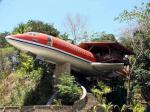
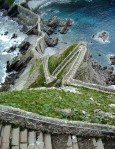
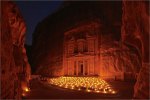
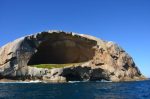
So, you are going to conquer the world or at least do something nefarious.  You want a secret evil base…  What do you look for?  Security?  Fear factor?  Space and housing for minions and projects?  Missile silos?  I think remoteness, difficulty of stealthy access and yes – beauty are all factors.  Who wants an evil base with no ambience?  After all, would you prefer to plot the domination of the universe in a cold grey room, or with a cocktail while getting a massage watching the sunset over a beautiful ocean?  I have posted similar selections before.  For more, type “evil bases” into the search block on my home page.

You decide.  Which of the following evil bases strikes your fancy?  (Click to enlarge pictures)

Leave a comment

Filed under Humor and Observations

Congratulations to My Oklahoma Sooners!

Sorry all you Cowboy fans, but congratulations to my Oklahoma Sooners alma mater on winning in the last twenty seconds in the Bedlam Bowl!  We started the year with a rookie QB who went down with an injury, then started The Bell Dozer, who had been our short yardage RB at QB till he was hurt.  Then our starter came back, got hurt again, then Bell and our third stringer QB switched off to eke out a win.  Go team!  15 of 17 years with ten wins or more!

ou

My alma mater list is actually quite long:

OU – Masters in Economics – Specializing in Managerial Finance

Roosevelt University – Bachelors’ in Computer Science – Specializing in Management Information Systems

Chaminade University, Hawaii Pacific College, University of Hawaii, University of the Pacific, Porterville College (all so I could take 21 units per semester)

Community College of the Air Force – Electronic Engineering – Specializing in Aeronautics

Of course, only OU gives me as much to cheer for sports-wise lol.


Leave a comment

Filed under Humor and Observations

Cosplay Pictures for Your Saturday!

Enjoy these awesome cosplayers and their outfits!

Leave a comment

Filed under Humor and Observations

Tongue-controlled wheelchairs

Tongue-controlled wheelchairs prove effective for quadriplegic patients

By Loren Grush

Published November 27, 2013

FoxNews.com
  • Tongue Drive System 1.jpg

    Jason DiSanto receives a tongue implant to test the Tongue Drive System. (GARY MEEK)

  • Tongue Drive System 2.jpg

    Jason DiSanto tests out the Tongue Drive System (GARY MEEK)

  • Jason DiSanto.jpg

    Jason DiSanto poses with the sip-and-puff-system (GARY MEEK)

For patients who no longer have the use of their limbs and torso, life must be navigated through a powered wheelchair – which users often control by blowing into a plastic straw to execute basic functions.

But now, a novel technology may soon allow patients with quadriplegia to better control their wheelchairs by utilizing a surprising new body part: the tongue.

Called the Tongue Drive System, the method involves implanting a magnetic stud into patients’ tongues, allowing them to use the muscle as a joystick for their wheelchairs. Sensors in the stud relay the tongue’s position to a headset placed on the patient’s head, which communicates one of six basic functions for the wheelchair to perform.

The system allows users to not only control their wheelchair, but also surf a computer, use a cellphone, turn on a television and much more.

“One of the main advantages of the tongue is that it is directly connected to the brain through cranial nerves, as opposed to the rest of the body,” Maysam Ghovanloo, an associate professor in the school of electrical and computer engineering at Georgia State Institute of Technology and the creator of the system, told FoxNews.com. “Everything from the neck down is controlled through the spinal cord, so if the spinal cord is damaged, everything below that level becomes paralyzed… But even people with the highest level of spinal cord injury, they maintain their tongue motion.”

Currently, the conventional method used by quadriplegic patients for wheelchair control is the sip-and-puff system.  Through a plastic tube mounted on the wheelchair, users either sip or puff air to dictate what they want the chair to do.  However, the sip-and-puff system can only execute four basic commands, and many patients feel it can be cumbersome and awkward.

“The problem with the sip-and-puff system – even though it’s low cost and easy to use – it’s very slow.  It works like a Morse code; you have to enter these commands in a series,” Ghovanloo said.  “…It’s also mounted on the wheelchair, so when a patient is transferred from wheelchair to wheelchair or from wheelchair to bed, it needs to be transferred with them, or they need another one set up there.

To showcase the benefits of the Tongue Drive System, Ghovanloo has teamed up with scientists from the Shepherd Center in Atlanta and the Rehabilitation Center Institute in Chicago, in order to test the technology on quadriplegic patients at the rehabilitation center.  In earlier clinical trials, the researchers tested a removable version of the magnetic stud, which was attached to the tongue through an adhesive.  However, the adhesive was only temporary and had to be reapplied every one to two hours.

But in the most recent trial, published Nov. 27 in the journal Science Translational Medicine, researchers experimented with a more permanent option, by implanting the magnetic stud through a piercing in the tongue.

“It was the first time a tongue piercing had been performed as a medical procedure,” Joy Bruce, manager of Shepherd Center’s Spinal Cord Injury Lab and co-author of the study, told FoxNews.com.  “A lot of extra care was given to the procedure, but what we discovered is that the tongue piercing risks for this population is the same for the general population.”

Jason DiSanto was the first of 11 quadrapleigic patients to get his tongue pierced in order to test the new technology.  DiSanto has worked at the Shepherd Center since 2009, after a diving accident left him paralyzed from the neck down. He said that he is excited about Ghovanloo’s system, as his current system can be difficult to manage.

“My biggest thing is that the current system I’m using is quite limited in functionality, and also it takes a while to get used to the commands, so there’s a big learning curve,” DiSanto told FoxNews.com.  “Whereas the Tongue Drive System does not have such a huge learning curve; it’s quite intuitive. It’s also more functional than my current system.”

The research team had the subjects perform a set of tasks in a controlled hospital environment, including driving a wheelchair through a course, moving a cursor on a computer screen, operating a cellphone and more.  A control group of able-bodied study participants also had the tongue stud implanted and were required to perform the tests as well.

The experiments were repeated over five weeks for the control group and over six weeks for the quadriplegic group.  For the first time, the researchers showed that the patients with quadriplegia could maneuver their chairs much more easily and much faster with the Tongue Drive System than with the sip-and-puff system.

“As a matter of fact, [the patients] were a little upset that they could not use the system after the end of the trial,” Ghovanloo said. “…I know at least two of them have still kept their tongue ring… so they can receive the device as soon as it’s available.  We did a questionnaire at the end of the trail, and their responses were almost unanimously positive.”

While the Tongue Drive System still requires regulatory approval, Ghovanloo has created a startup company called Bionic Sciences in order to move the technology forward.  He has also teamed up with DiSanto, who has worked as an electrical engineer for 17 years, to develop a more internal tongue control system – one that replaces the outside headgear with a sensor-filled retainer that can fit inside the mouth.

DiSanto said he is excited for the future of this technology, hoping that one day he can utilize it outside of the hospital and incorporate it into his daily routine.

“Having one system that can perform multiple functions will be a huge boost of confidence,” DiSanto said. “It will help us feel more like ourselves before we were injured.”

Leave a comment

Filed under Humor and Observations