Category Archives: Writing

My 90 minute interview on Radio

Here is the link, feel free to make fun of my young person voice.

http://www.blogtalkradio.com/kwodradio/2012/06/07/talking-steampunk-stories-with-michael-bradley

You don’t have to listen to all 90 minutes if you don’t like it, but it has a lot of background on me.

Leave a comment

Filed under Writing

You Can Now Follow Me On Twitter

I am not a heavy tweeter, but I do now have my own Twitter account – @mbtimetraveler

I promise not to be a twit with my tweets.

Leave a comment

Filed under Uncategorized, Writing

The “Big Six” Publishing Houses

As an author I always hear about the big six houses, but being out here in Arizona, I never really knew which six they were referring to.  It is funny, because I am not the only one, but when someone says “the big six” we all nod as if we know.  It is further complicated in that many publishing houses use different names for different types of books, so you might think it is another publisher, but it is a division of one of the big six.  So, as usual, I did some research so I would know for sure.  Here it is for me, and fellow authors who wonder.

Hachette Book Group

A profile of Hachette Book Group USA (HBGUSA for short), which is owned by French company Hachette Livre.

HarperCollins

This house, under the News Corp umbrella, is based in midtown Manhattan and publishes a lengthy list of bestsellers

Macmillan

A profile of the publishing house, Macmillan.

Penguin Group

A profile of he second largest trade book publisher in the world.

Random House

One of the biggest publishing houses on the block, Random House is a subsidiary of media conglomerate, Bertelsmann.

Simon & Schuster

Another member of the “big six,” the major trade house based in NYC goes back to the early 1920s and was home to one of the industry’s most famous editors, Maxwell Perkins.
Yes folks, those are the golden gooses, the Holy Grails, the Arc of the Covenant.  The mighty houses we all yearn to accept our awesome stories.  Although I am also independently published as well, one day…one day…

Leave a comment

Filed under Writing

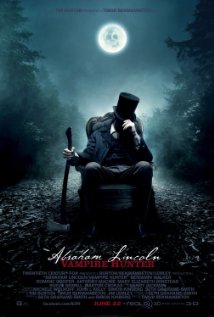
Abraham Lincoln Vampire Slayer – Book Versus Movie

I will try not to have any spoilers here.  For a complete review of my thoughts on the book, you can find them under my comments on Goodreads.com.  The movie and the book are almost completely different stories, with the exception of Abraham Lincoln killing vampires.

Strengths of the Book – Tons of back story on Lincoln as a child, growing up, his struggles to make money, friends, girlfriend, business, law and politics.  In the movie, almost all of this historical background with Lincoln is gone.  The book also has written journal entries from Lincoln that leave you wondering if he really wrote them and they were incorporated ,or if they are made up.  The fight scenes are realistic.  Abraham Lincoln is a strong woodsmen, but not superhuman.

Weaknesses of the Book – The first part is never revisited.  Henry is not explained, either where he comes from, why he works through human surrogates, or anything.  It jumps around, skipping huge chunks of time.  In the book, the vampires are about four times stronger than a man, but otherwise pretty easy to kill.  The ending leaves the vampires running around, so Abraham Lincoln was really only partially successful.

Strengths of the Movie – Great production values, you get to see scenery from 1818 to 1865 which is very well done.  The movie has a great steampunk feel to it, where the book is simply historical vampire fiction.  The vampires are stronger and the fight scenes are much better as a result.  They can go invisible, etc.  I personally also think that the movie strikes a good balance between campy humor and taking it seriously.  People who read the book might like less drama over ten hours.  People seeing a movie want to see President Lincoln kicking vampire butt, which they accomplish well.  The top strength of all – they drop the weak beginning, and actually explain a plausible back story for Henry.

Weaknesses of the Movie – It takes out one of Lincoln’s two friends and replaces him with a slave.  It makes the other friend seem unreliable.  It adds a super villain vampire named Adam that is not existent in the book.  There are a few scenes where Lincoln is wounded, that show wounds from earlier in the movie.  The make up folks or editors got some in the wrong order.  It is mostly special effects and almost no character development.  In truth, you learn very little about Lincoln and the actor portraying him was better at looking like Lincoln than acting like him.  He feels like Captain America before the transformation.  They also make Abraham Lincoln and his new slave sidekick look supernatural in their abilities.  Including, chopping down a tree over a foot thick with one blow.  Training is one thing, super powers another.

Movie Comment – The character Henry, played by Dominic Cooper steals the whole show, relegating Lincoln’s wooden acted character to second fiddle.  Henry is so well played the other performances suffer from, in my opinion, poor casting or acting.

There, you have my own personal views.  I recommend you both read the book and see the movie.  After all, it’s Abraham Lincoln killing vampires, you got to see that right?

2 Comments

Filed under Humor and Observations, Writing

I am now a Goodreads Author

I just joined Goodreads.com as an author and posted two of my books to it.  If you are a member, and you have read either or both of my books, please feel free to rate them.  I must say I had a very pleasant experience with the Goodreads staff.  I sent them an email that I was unsure how to load my books and sent them the ISBN numbers and they did it all for me in a few hours.  Then I told them thank you and I would be joining as an author.  Ten minutes later, they had done that for me too.  I have never seen such good service before.  Thanks to the people at Goodreads and for all of you who take the time to comment on my book(s).

1 Comment

Filed under Writing

The “Perfect Story”

Here it is:

”               ”

I know this because EVERY guide to fiction writing, every agent, every publisher, every list of writing tips says to CUT, CUT and CUT some more.  They never mention that some authors might not be overly wordy.  The possibility has crossed my mind on occasion that even if the vast preponderance of authors write too much, there have to be at least a minute few who write just enough, or even not enough.

If truly you should cut and cut and gut every unnecessary word out of your story, then the best story, the perfect story in fact would be one with no words at all.  I have not once told instead of shown, I have not used to many adverbs.  I did not change tense.  I did not change perspective.  The brilliance of the story with no words at all, is that you are guaranteed perfection, there are no mistakes, no one can even critique your character arcs.

My story of no words is as deep or as shallow as the imagination of the reader themselves.  If they look at a blank page with no cover and laugh, then they simply don’t understand great writing – do they?  If however, they stare, intrigued, let their mind capture the essence, then awards and recognition are sure to come my way.

My only concern now with my perfect book with no words is whether I should submit it to an agent with a blank query letter with no words, or if I should self-publish it on Kindle with no descriptor or title…

I wonder how you would critique the Bible verse – Jesus wept.  Two words, but you have to CUT!

Obviously, I have been facetious to make a point.  In my personal experience, most writers I know don’t write.  They want to write.  Some are even very good at writing from things they read that they wrote long ago.  However, life, jobs, loved ones, ill health, or even the television sap the life out of their creative spirits.  They simply don’t sit down and write.  Then they are all told – CUT, you have written too much.  Wow.

Michael Stackpole told me that you are not a novelist until you have actually written a novel.  I took that to heart and finished my first novel.  He was right.  Actually finishing a novel changes you as much as losing your virginity.  You feel different.  Having sex the first time makes you feel like a real man, or real woman.  Finishing a novel makes you feel like a real novelist.  It still might not make you a good one, but at least you passed the first hurdle.

So, in my continuing effort to debunk common writing advice that is crap – just write.  Write MORE not less.  You don’t even know what to cut until you finish the story and look back.  Imagine editing a movie where you are only given the first ten minutes.  What do you leave in and what do you take out?

Finish.  Ignore everything else.  Write and actually complete something.  Then worry about editing.


1 Comment

Filed under Humor and Observations, Writing

A Tribute To Ray Bradbury

Ray Bradbury was one of the authors that influenced me personally while I was growing up.  Along with Isaac Asimov, Robert Heinlein and others, he is as big a part of my childhood as any of my teachers at schools I attended.  He taught me through his stories.  He will be missed.  My heart goes out to his family.


From his official site:

Ray Bradbury, recipient of the 2000 National Book Foundation Medal for Distinguished Contribution to American Letters, the 2004 National Medal of Arts, and the 2007 Pulitzer Prize Special Citation, died on June 5, 2012, at the age of 91 after a long illness. He lived in Los Angeles.

In a career spanning more than seventy years, Ray Bradbury has inspired generations of readers to dream, think, and create. A prolific author of hundreds of short stories and close to fifty books, as well as numerous poems, essays, operas, plays, teleplays, and screenplays, Bradbury was one of the most celebrated writers of our time. His groundbreaking works include Fahrenheit 451, The Martian Chronicles, The Illustrated Man, Dandelion Wine, and Something Wicked This Way Comes. He wrote the screen play for John Huston’s classic film adaptation of Moby Dick, and was nominated for an Academy Award. He adapted sixty-five of his stories for television’s The Ray Bradbury Theater, and won an Emmy for his teleplay of The Halloween Tree. In 2005, Bradbury published a book of essays titled Bradbury Speaks, in which he wrote: In my later years I have looked in the mirror each day and found a happy person staring back. Occasionally I wonder why I can be so happy. The answer is that every day of my life I’ve worked only for myself and for the joy that comes from writing and creating. The image in my mirror is not optimistic, but the result of optimal behavior.

He is survived by his four daughters, Susan Nixon, Ramona Ostergren, Bettina Karapetian, and Alexandra Bradbury, and eight grandchildren. His wife, Marguerite, predeceased him in 2003, after fifty-seven years of marriage.

Throughout his life, Bradbury liked to recount the story of meeting a carnival magician, Mr. Electrico, in 1932. At the end of his performance Electrico reached out to the twelve-year-old Bradbury, touched the boy with his sword, and commanded, Live forever! Bradbury later said, I decided that was the greatest idea I had ever heard. I started writing every day. I never stopped.

1 Comment

Filed under Uncategorized, Writing

Book Signing June 1st in Payson – Todd’s Books on Main Street

A special shout out to Patti Hulstrand and fellow authors who have allowed me to sit in on a book signing during the Payson First Friday Main Street Art Walk June 1, 2012 from 5pm to 8pm.  We will be out front of Todd’s Books, located at:

408 West Main StreetPaysonAZ 85541 928-474-0560

I will be selling signed copies of my books at a discounted rate.  You can be the first to see me in my new bionic form, with over ten pounds of ceramics, plastic and titanium holding me together post op.


Payson’s Art & Antiques District on historic Main St holds a party on the first Friday of each month and everyone is invited.  You can enjoy live music, check out the many classic cars on display, and indulge in hot dogs and brats served up by the Kiwanis Club.  Most businesses remain open until 8 pm with many offering free refreshments.

First Friday on Main Street Art & Antiques Walk is an event that fits well with Payson’s neighborly tradition.  Walking this historic Art & Antiques District where Payson’s first residents gathered for social events including rodeos and dances; it’s fun to stroll and read the historic markers on many of the local businesses.  Included in the unique and eclectic shops lining Main St from the Beeline to Green Valley Park, are the many friendly faces of local merchants.  Expect a story or two about the history of each store.

Leave a comment

Filed under Writing

I’m Hearing Voices – And Why they should be the same throughout the Story!

In our Writing Group Tonight we Had a Lond Discussion on Writing Voice, Style and When to use Italics for Internal Dialogue.  Surprisingly, this somewhat uncomfortable and unwanted discussion finds itself regularly folded up at our dinner table wishing to be entertained ad nauseum.

I found this site had a nice approach to the topic and have reposted a good portion of one of their articles here:  All of the borrowed parts are italics with my own lame interjections found among them in normal type.

Narrative Voice

Someone in your story has to tell us that Jeff pulled out his gun, that Samantha smiled at the tall stranger, that daylight was breaking over the valley. That someone is the narrator or “author’s persona.”

The author’s persona of a fictional narrative can help or hinder the success of the story. Which persona you adopt depends on what kind of story you are trying to tell, and what kind of emotional atmosphere works best for the story.

The persona develops from the personality and attitude of the narrator, which are expressed by the narrator’s choice of words and incidents. These in turn depend on the point of view of the story.

– It can be very dangerous to your writing if your narrator obtains its own ethics and judgements on events and equally a problem if your narrator in indistinguishable from your main character.   Narrator  – Johhny Bob got the drop on him as usual and put an end to the bloke’s wicked ways.   My preference, “Where is that matey Steve so we can break his leg and collect fer what money he owes me so as I can get back to me drinking with that fresh tart off the harbor swing shift,” Thought Johnny Bob.   Narrator –  Steve sees Johnny Bob just in time, and pulls out his gun, and manages to get in a lucky shot to cap him before he could be nicked himself.

First-person point of view is usually subjective: we learn the narrator’s thoughts, feelings, and reactions to events. In first-person objective, however, the narrator tells us only what people said and did, without comment.

Other first-person modes include:

¶the observer-narrator, outside the main story (examples: Mr. Lockwood in Wuthering Heights, Nick Carraway in The Great Gatsby)

¶detached autobiography (narrator looking back on long-past events)

¶multiple narrators (first-person accounts by several characters)

¶interior monologue (narrator recounts the story as a memory; stream of consciousness is an extreme form of this narrative)

¶dramatic monologue (narrator tells story out loud without major interruption)

¶letters or diary (narrator writes down events as they happen; narrative told through letters is also known as the epistolary novel)

If the point of view is first-person, questions about the persona are simple: the character narrating the story has a particular personality and attitude, which is plausibly expressed by the way he or she describes events.

First person is extremely powerful to write and read, but I find it very dificult.  It just might not be for you.  It might not be for you audience either if they don’t like who is telling them the tail, or if it is unusual in the genre.

The second-person mode is rare: You knocked on the door. You went inside. Very few writers feel the need for it, and still fewer use it effectively.

If the point of view is third-person limited, persona again depends on the single character through whose eyes we witness the story. You may go inside the character’s mind and tell us how that character thinks and feels, or you may describe outside events in terms the character would use. Readers like this point of view because they know whom to “invest” in or identify with.

In third-person objective, we have no entry to anyone’s thoughts or feelings. The author simply describes, without emotion or editorializing, what the characters say and do. The author’s persona here is almost non-existent. Readers may be unsure whose fate they should care about, but it can be very powerful precisely because it invites the reader to supply the emotion that the persona does not. This is the persona of Icelandic sagas, which inspired not only Ernest Hemingway but a whole generation of “hard-boiled” writers.

If the point of view is third-person omniscient, however, the author’s persona can develop in any of several directions.

1. “Episodically limited.” Whoever is the point of view for a particular scene determines the persona. An archbishop sees and describes events from his particular point of view, while a pickpocket does so quite differently. So the narrator, in a scene from the archbishop’s point of view, has a persona quite different from that of the pickpocket: a different vocabulary, a different set of values, a different set of priorities. (As a general rule, point of view should not change during a scene. So if an archbishop is the point of view in a scene involving him and a pickpocket, we shouldn’t suddenly switch to the pickpocket’s point of view until we’ve resolved the scene and moved on to another scene.)

I find this type of perspective most helpful when writing in a Tom Clancy or Clive Cussler style where people and events occur all over the world, and somehow, they will all effect each other before the book is completed.  You still need to give your reader some indication in each scene, or by the number of scenes, who the more important players are.  For instance, half -way through the novel they should know most of the “good-guys” and “bad-guys” and only be unsure of those you wish them to be unsure of.

2. “Occasional interruptor.” The author intervenes from time to time to supply necessary information, but otherwise stays in the background. The dialogue, thoughts and behavior of the characters supply all other information the reader needs.

3. “Editorial commentator.” The author’s persona has a distinct attitude toward the story’s characters and events, and frequently comments on them. The editorial commentator may be a character in the story, often with a name, but is usually at some distance from the main events; in some cases, we may even have an editorial commentator reporting the narrative of someone else about events involving still other people. The editorial commentator is not always reliable; he or she may lie to us, or misunderstand the true significance of events.

Third-person omniscient gives you the most freedom to develop the story, and it works especially well in stories with complex plots or large settings where we must use multiple viewpoints to tell the story. It can, however, cause the reader to feel uncertain about whom to identify with in the story. If you are going to skip from one point of view to another, start doing so early in the story, before the reader has fully identified with the original point of view.

The author’s persona can influence the reader’s reaction by helping the reader to feel close to or distant from the characters. Three major hazards arise from careless use of the persona:

1. Sentimentality. The author’s editorial rhetoric tries to evoke an emotional response that the story’s events cannot evoke by themselves—something like a cheerleader trying to win applause for a team that doesn’t deserve it. A particular problem for the “editorial commentator.”

2. Mannerism. The author’s persona seems more important than the story itself, and the author keeps reminding us of his or her presence through stylistic flamboyance, quirks of diction, or outright editorializing about the characters and events of the story. Also a problem for the editorial commentator. However, if the point of view is first person, and the narrator is a person given to stylistic flamboyance, quirks of diction, and so on, then the problem disappears; the persona is simply that of a rather egotistical individual who likes to show off.

3. Frigidity. The persona’s excessive objectivity trivializes the events of the story, suggesting that the characters’ problems need not be taken seriously: a particular hazard for “hardboiled” fiction in the objective mode, whether first person or third person.

Verb tense can also affect the narrative style of the story. Most stories use the past tense:

I knocked on the door. She pulled out her gun.

This is usually quite adequate although flashbacks can cause awkwardness:

I had knocked on the door. She had pulled out her gun.

A little of that goes a long way.

Be careful to stay consistently in one verb tense unless your narrator is a person who might switch tenses:

So I went to see my probation officer, and she tells me I can’t hang with my old buddies no more.

Some writers achieve a kind of immediacy through use of the present tense:

I knock on the door. She pulls out her gun.

We don’t feel anyone knows the outcome of events because they are occurring as we read, in “real time.” Some writers also enjoy the present tense because it seems “arty” or experimental.

But most readers of genre fiction don’t enjoy the present tense, so editors are often reluctant to let their authors use it. I learned that the hard way by using present tense in my first novel, The Empire of Time; it was enough to keep the manuscript in editorial limbo for months, and the final offer to publish was contingent on changing to past tense. Guess how long I agonized over that artistic decision!

Having reblogged most of that and ommented on it, I would say three things:

1)  Be able to identify the style you write in and try to stay in that style your entire story;

2)  If you know you are only good at one or two voices – just stick with them.

3)  If you are a complete master at writing, with the word at your sole command, think of the story you wish to tell, and use the voice, and the characters and scenes which you believe best tell the story.

1 Comment

Filed under Writing

More Myths Busted – “The Troubled Artist” and “Inspiration through the Use of Drugs”

While writers usually lie to millions of folks – it is what fiction is by definition, they are usually more honest amongst their own inner circle of writers.  You don’t get to that spot easily.  You spend ups and downs, you show your acceptance and they show theirs.  Over time, life reveals people to you.  Then, we few, we happy few, we Band of Brothers…(sorry, I break off easily into Henry V for no reason at all).  But I digress…

Medicines that Affect Your Brain

They may lie to their spouses, friends, dates, roommates, etc, but when it comes right down to it, stoned and drunk people are thinking very little of their next book idea, and even less about actually writing something on it.   Recreationally, they may turn to such things as an excuse to chase the Green Genie or to release their imagination, most of the time they are pissed off they don’t have ideas they think are actually good enough to justify they hard work of writing them down – so they get drunk.

That does not mean that their aren’t stars who are awesome stoned, I wonder what Morrison would have been like if he had been sober?  Stephen King was a master novelist with or without drinks and drugs.  Would Cujo have been better if he could remember having written most of it?  I am only speaking of novelists for the most part here, not performance art, poetry, and other things that I think actually were created to do while high.

In my own experience, I have been on Morphine and Percoset for some time now, legally, through doctors and pain specialists.  First, for two months waiting to excise my dead bones.  The pain from the bones was too much for me to get things done.  With the pain killers, the pain was dulled enough I could write, but my memory came and went on small items.  (Wow, I wrote that same scene in TWO chapters back to back, not just one…)  Now, I have had my dead upper femur, joint and hip removed.  I am still on post op morphine and percoset and I have to tell you – Choice A – pain from Hell you would take anything to stop, Choice B – still a lot of pain but bizarre bad dreams, sweats, and a general lack of ideas that when written on paper, form a sentence.

I am recovering, thanks to God, your prayers, well wishers, my wife who takes care of me and my wonderful doctors, so I hope this recovery time is short.  I have lucid times totalling about 6 hours per day in which I get my contract work done, but not much on my own fun stuff.  I grew up in the drug scene in California in the 60s and 70s but did not participate much.  For a few years around college I drank too much but that was about it.  Still, then and now, I know many who choose the “lifestyle”.  Those who take me into their confidence have all so far agreed that they usually get high to avoid stressing on trying to write when they are stuck.  Very few get their ideas in a clowded state.

The Troubled Artist

I think this myth is a correlation mistaken as a causal relationship.  Forgive me my economics…  To make it clearer – Study shows that drinking diet sodas makes people fatter!  We see that crap all the time.  Then, if they even print it, you find the study.  1,200 people were interviewed.  Those who said they drank more diet sodas were 40% fatter than those that did not.  That is a correlation mistaken as a causal relationship.   I have no doubt that fat people drink more diet soda.  They refuse themselves the sweeter cola because they are fat!  My hypothesis for the same data is that fat people, trying to maintain or lose weight, choose to drink diet sodas.  It is physically impossible to provide a human body an object containing zero calories and expect it to gain weight.

I think a lot of Artists and Novelists who are outstanding live ‘troubled lives”.  I would say that half of people working as dishwashers at bad restaurants lead “troubled” lives.  I would guess nearly 100% of prostitutes or people starving in Africa live “troubled lives.”  So why then are there not agents and publishers seeking out those people to write them books?  I think it is simple correlation.  Most people lead troubled lives, some happen to be authors and poets (I mean by some arguments only around 2,000 novelists at any time are living off their book income).  I reject that troubles make you write better – because you “know.”  Unless you sing or write the Blues, and then any fool knows it is the truth.

Again, within the inner circle of published authors, you are more likely to hear about illness, surgeries, dying loved ones, kids or parents with problems, money issues, cars that stopped working, looking for a job, housing issues, etc.  I have not once heard one say, I am so glad I have all these troubles, because my writing is showing so much more emotional depth now.  Usually, the say, “that project is on hold for days, months, years, because of…hope I can get back on it… may never finish it…

My Writing Mode

Sitting in front of the computer screen, an ice cold Diet Pepsi (because I am fat I guess), a good mood, a clear head, my three dogs lying on my feet or the feet of my wife next  to me on her own computer.  That is hitting on all cylinders for me.  Pain, troubles, drugs, drama are all the opposite of what let’s me write.

I had a post much earlier on this blog on those who die too young due to the “troubled lifestyle”.  River Phoenix, Whitney Houston, Amy Winehouse, Heath Ledger, Michael Jackson and on and on.  As a tip from a fellow writer.  It won’t help your writing.  If you want to write dark stuff, you will experience enough in this world and see enough to have plenty of material.

Leave a comment

Filed under Humor and Observations, Writing